Muscat Wine Guide: Styles, Taste, and How to Drink It

By the Sommy Team — AI-assisted, human-edited.
Updated Sep 10, 2026
Contents (11)
- What Is Muscat Wine
- Muscat Wine in 100 Words
- A Family of 200 Grapes, Not One
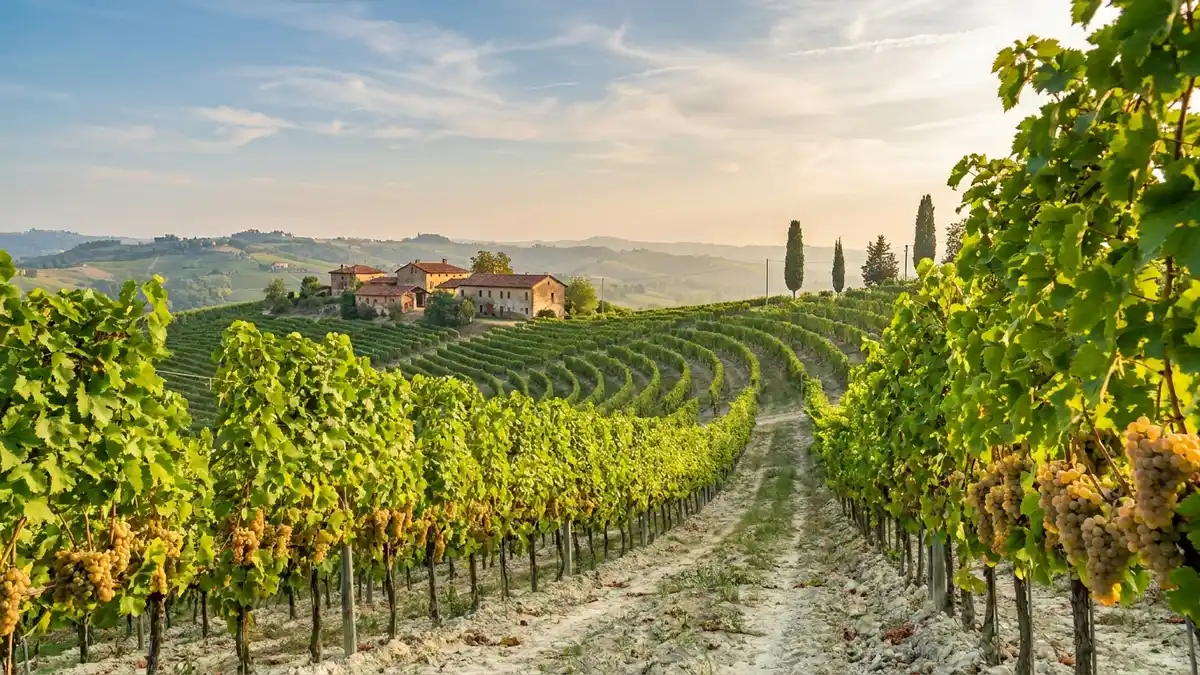
- Where Muscat Comes From
- The Five Styles of Muscat Wine
- What Muscat Smells and Tastes Like
- How to Drink Muscat
- Is Muscatel the Same as Muscat?
- Pairing Muscat with Food
- When to Drink Muscat — and When to Age It
- Why Muscat Belongs in Every Tasting Library
TL;DR
Muscat wine comes from the Muscat grape family, over 200 varieties that share one signature: the smell of fresh grapes and orange blossom. It can be sweet or dry. Alsace makes it dry, Moscato d'Asti is lightly sweet and fizzy, and Vin Doux Naturel and Rutherglen Muscat are sweet and fortified. Most Muscat is white. Serve it chilled and young.
What Is Muscat Wine
Muscat wine is wine made from any member of the Muscat grape family, the most genetically prolific lineage in the wine world and, by most accounts, one of the oldest. Muscat is the only major wine grape that genuinely smells like fresh table grapes, layered with orange blossom, lychee, jasmine, and white peach. It is made into styles ranging from bone-dry whites to off-dry sparkling and richly sweet fortified wines.
Is Muscat red or white? Almost always white. The two grapes that matter most are white-skinned, and the vast majority of Muscat wine pours pale gold, though a few pink and reddish-brown mutations exist.
If you have ever picked up a glass and thought "this smells exactly like grapes," you were almost certainly drinking Muscat. That instant recognition is the family's calling card, and it is why Muscat shows up at every level of the wine world, from a casual brunch Moscato to one of the most age-worthy fortified wines on earth.
Muscat Wine in 100 Words
Muscat is often described as perhaps the oldest cultivated wine grape family in the world, documented by name since the 1230s and comprising over 200 related varieties. Four members matter most. Muscat Blanc à Petits Grains is the noble, finest version, used for top sparkling and fortified wines. Muscat of Alexandria is the warmer-climate workhorse. Moscato Bianco is Italy's name for the noble Muscat, used in Asti DOCG. Muscat Ottonel is the cooler Eastern European cousin. Muscat smells like fresh grapes, orange blossom, lychee, and white peach. Styles run dry, sparkling, sweet, and fortified. Serve chilled and drink young, except aged Rutherglen.
A Family of 200 Grapes, Not One
Muscat is not a single variety. It is a sprawling extended family of over 200 grapes that share certain DNA markers and one signature aromatic compound, linalool (a terpene that creates the rose, citrus blossom, and grapey perfume Muscat is famous for). Linalool is also found in lavender and bergamot, which explains why Muscat sometimes smells more like a perfume counter than a wine.
The family tree is unusually well mapped. According to the ampelographic record summarised in the Wikipedia entry for the Muscat grape, DNA analysis shows that Muscat of Alexandria is itself a natural crossing of Muscat Blanc à Petits Grains and the Greek grape Axina de Tres Bias, and that Muscat of Hamburg, the black-skinned table grape first described in 1858, was confirmed in 2003 to be a cross of Muscat of Alexandria and Schiava Grossa. In other words, the noble small-berried Muscat is the ancestor, and much of the family descends from it in a few traceable steps.
The four Muscats you need to know differ sharply in quality, climate, and the wines they make.
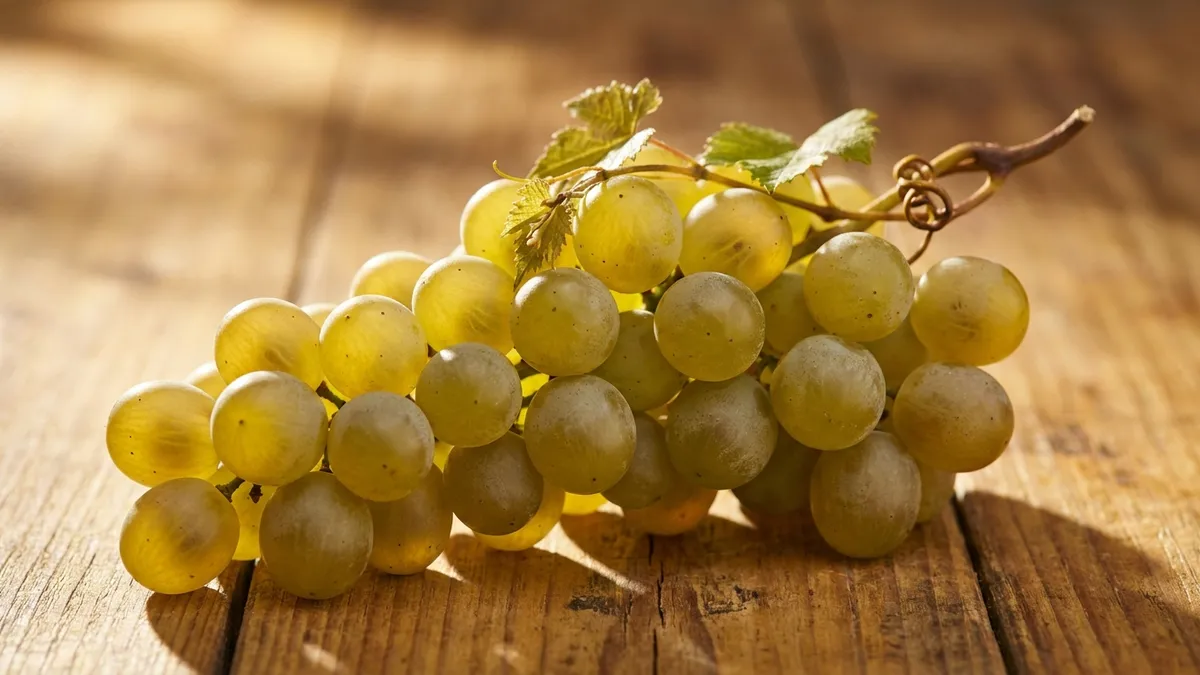
Muscat Blanc à Petits Grains
Muscat Blanc à Petits Grains ("Muscat with small white berries") is the noble, finest member of the family. Small clusters, small berries, low yields, and the most refined, elegant aromatics of any Muscat.
It is the grape behind Asti and Moscato d'Asti, the Vins Doux Naturels of southern France, Austrian Muskateller, and Rutherglen Muscat; the at-a-glance table below lists them side by side.
When the back label or producer notes specify "Muscat à Petits Grains," you are looking at the top tier of the family. Moscato Giallo, the golden Muscat of Trentino-Alto Adige (Goldmuskateller in German), is a separate variety, a direct offspring of Petits Grains rather than the same grape.
Muscat of Alexandria
Muscat of Alexandria is the warm-climate workhorse, with bigger berries, bigger yields, and a broader, oilier, lower-acid profile that leans toward orange peel, candied fruit, and tropical fruit rather than the lifted florals of Petits Grains. It thrives in the heat of southern Spain, southern Italy, North Africa, and the Mediterranean basin where Petits Grains struggles to keep its acidity.
This is the grape behind Spain's Moscatel de Málaga and the dried-grape Passito di Pantelleria, where it is called Zibibbo. It is also widely grown for raisins and as a table grape, a clue to its naturally raisin-friendly flavor profile. In Spain it was the sixth most-planted white grape in 2015, at 10,318 hectares concentrated in Málaga, Alicante, Valencia, and the Canary Islands, according to Spanish viticultural statistics.
Moscato Bianco
Moscato Bianco is Italy's name for Muscat Blanc à Petits Grains. It deserves its own mention because it powers one of the world's most famous wine categories, Asti DOCG and Moscato d'Asti from Piedmont, both described in the styles section below. Our dedicated Moscato wine guide goes deeper on the Italian side of the family, and for how Asti and Moscato d'Asti compare to other bubbles, see our guide to sparkling wine types.
Muscat Ottonel
Muscat Ottonel is the cool-climate Muscat of Eastern Europe: Romania, Hungary, Austria, and Alsace. Bred in France's Loire Valley in 1852, it ripens earlier than the other Muscats and produces wines that are gentler in aroma, softer in body, and easier-drinking.
In Alsace, Muscat Ottonel is often blended with Petits Grains to make Muscat d'Alsace, a fully dry, savory style of Muscat.
The Four Key Muscats at a Glance
| Grape | Climate | Signature wines | Aroma profile |
|---|---|---|---|
| Muscat Blanc à Petits Grains | Cool to warm; small berries, low yields | Asti, Moscato d'Asti, Beaumes-de-Venise, Muskateller, Rutherglen | Orange blossom, white peach, rose; the most refined |
| Muscat of Alexandria | Hot Mediterranean | Moscatel de Málaga, Passito di Pantelleria (Zibibbo) | Orange peel, candied and tropical fruit; broader, lower acid |
| Moscato Bianco | Piedmont hills (same grape as Petits Grains) | Asti DOCG, Moscato d'Asti | Fresh grape, peach, orange blossom; light and fizzy |
| Muscat Ottonel | Cool continental | Muscat d'Alsace (blended), dry Austrian and Hungarian Muscat | Gentle grape and floral notes; softer, quieter |
Where Muscat Comes From
Muscat is genuinely ancient, though its paper trail is shorter than the legends suggest. Roman writers such as Columella and Pliny the Elder described very Muscat-like grapes, including the sweet Apianae ("bee grapes," so called because bees swarmed the ripe fruit), but according to the ampelographic record summarised on Wikipedia there is no solid evidence that these were members of the Muscat family. The first documented use of the word "muscat" for a wine grape appears in De proprietatibus rerum, written by the English Franciscan scholar Bartholomeus Anglicus between 1230 and 1240.
What is not in doubt is the geography. The Mediterranean basin is Muscat's cradle, with origins placed somewhere between Greece and the Levant. Greek and Roman traders spread Muscat-type grapes to southern France, Spain, Italy, and North Africa, and from there the family moved inland to central and eastern Europe. To understand where Muscat sits among the great wine grapes, see our noble grapes guide.
The Five Styles of Muscat Wine
Muscat is one of the most stylistically versatile grapes on earth. The same family produces wines that range from bone dry and savory to syrupy sweet and aged for decades. Five style categories cover almost everything you will encounter.
| Style | Sweetness | Alcohol | Serve at |
|---|---|---|---|
| Off-dry sparkling (Asti, Moscato d'Asti) | Lightly to medium sweet | 5.5 to 7% | 6 to 8°C (43 to 46°F) |
| Dry Muscat (Alsace, Austria, Greece) | Dry | 11.5 to 13% | 8 to 10°C (46 to 50°F) |
| Vin Doux Naturel (Beaumes-de-Venise, Rivesaltes) | Sweet | About 15% | 8 to 12°C (46 to 54°F) |
| Passito (Pantelleria) | Sweet, concentrated | 14 to 15% | 10 to 12°C (50 to 54°F) |
| Aged fortified (Rutherglen) | Very sweet, syrupy | 17 to 18% | 12 to 16°C (54 to 61°F) |
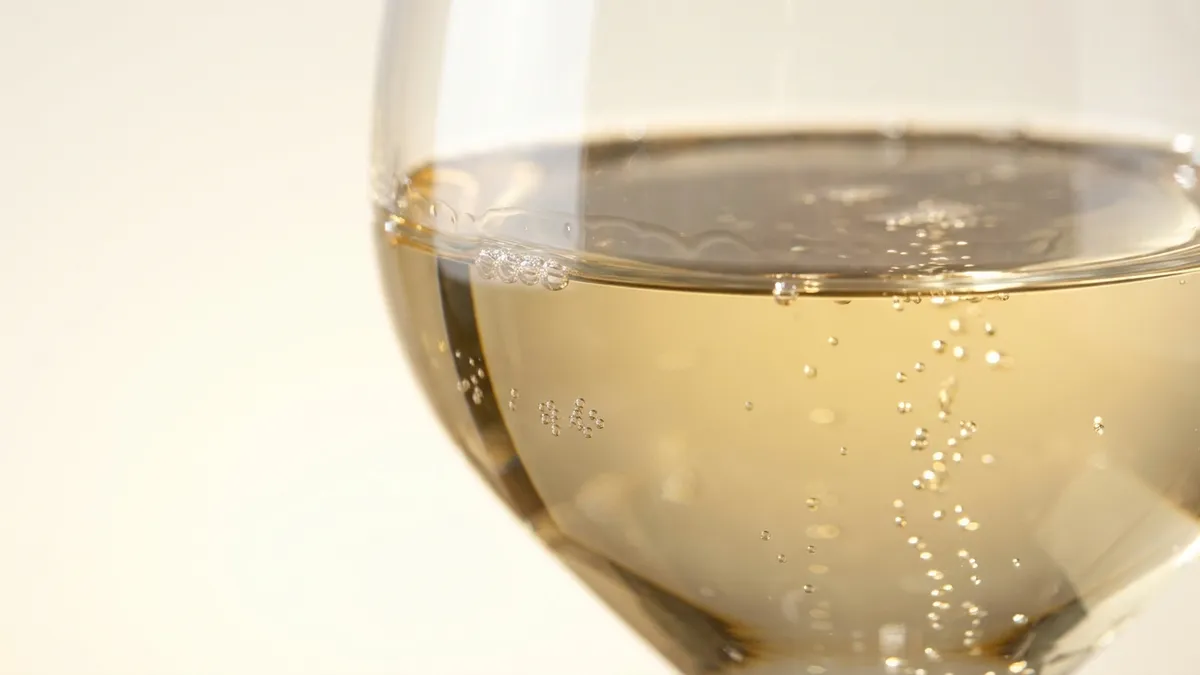
Off-Dry Sparkling — Asti DOCG and Moscato d'Asti
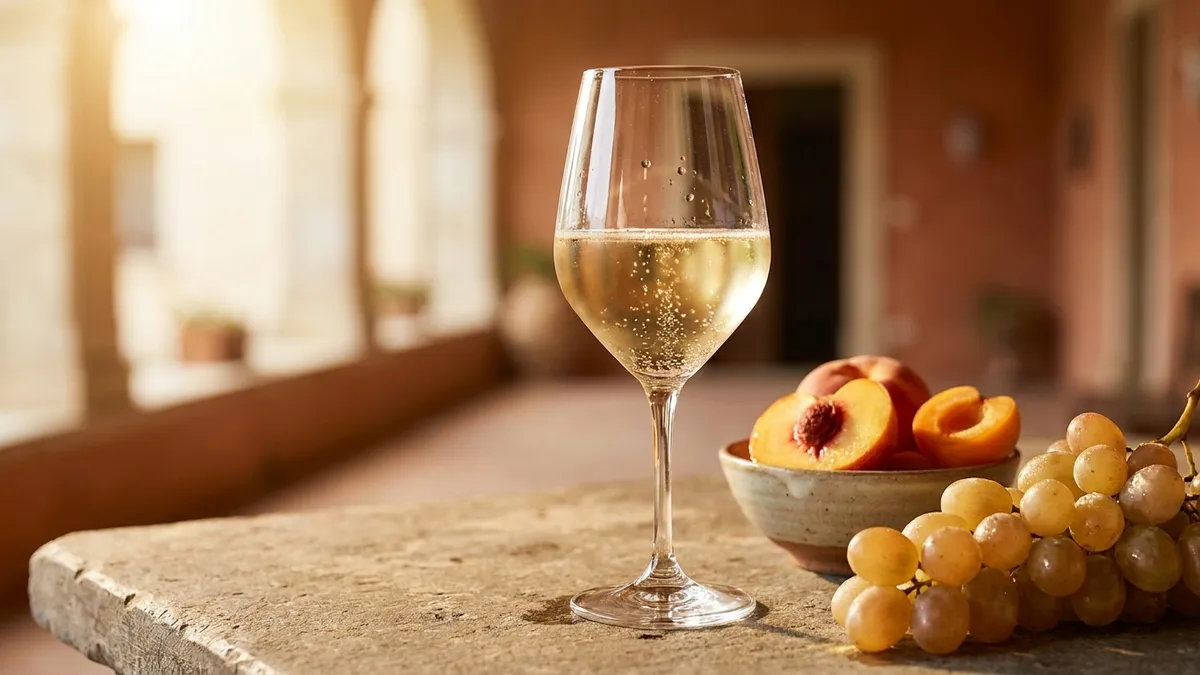
Asti DOCG is the bestselling style of Muscat in the world: fully sparkling, with foamy bubbles and an unmistakable nose of fresh grapes, peach, and orange blossom. It is sweet but not syrupy. Fermentation runs further than for Moscato d'Asti, to 7 to 9.5 percent alcohol, so less grape sugar is left behind, and the current rules allow anything from pas dosé (bone dry) to the classic dolce, all balanced by Moscato Bianco's natural acidity.
Moscato d'Asti is gentler in every way: frizzante rather than fully sparkling, made in smaller artisanal lots, and sweeter than Asti because less of its grape sugar is fermented, leaving residual sugar around 100 grams per liter. Under the Asti DOCG production rules, Moscato d'Asti must finish between 4.5 and 6.5 percent alcohol, and unlike Champagne it undergoes no second fermentation in the bottle; the single fermentation is simply stopped early, leaving natural grape sugar and a gentle fizz. The appellation was created as a DOC in 1967 and promoted to DOCG in 1993.
Sweet Fortified — Vin Doux Naturel
Vin Doux Naturel (VDN) is a French specialty: sweet wine made by stopping fermentation early with a shot of grape spirit, locking in natural grape sugar before yeast can convert it. The result lands around 15 percent alcohol with 100 to 130 grams per liter of residual sugar.
Muscat de Beaumes-de-Venise in the southern Rhône is the most famous Muscat VDN. Pale gold to amber, intensely floral with orange blossom and peach, lighter and fresher than most fortified wines. Muscat de Rivesaltes and Muscat de Frontignan in the Languedoc-Roussillon are similar in style: fragrant, mid-weight, and built for the table rather than for long aging. For more on French sweet and fortified traditions, see our French wine regions guide.
Aged Fortified — Rutherglen Muscat
Rutherglen Muscat from northeast Victoria, Australia, is one of the world's most distinctive fortified wines and the only Muscat truly built for decades of aging. It is made from Muscat à Petits Grains Rouge, the red-skinned mutation called Brown Muscat locally, and aged in a solera-style system where new wine is gradually blended with progressively older barrels.
A voluntary four-tier classification, set up by the region's producers in 1995, ranks the wines in ascending order of richness and average barrel age:
- Rutherglen Muscat, the youngest and freshest tier
- Classic Muscat, richer, averaging roughly 5 to 10 years in cask
- Grand Muscat, concentrated, averaging roughly 10 to 15 years
- Rare Muscat, the top tier, aged a minimum of 20 years
The finest examples are extraordinary: viscous, dark, with toffee, raisin, dark chocolate, marmalade, and dried fig. If this style is new to you, our guide on how to taste fortified wine walks through the extra steps that alcohol and sugar demand. For the wider picture of the country's wines, see our Australian wine guide.
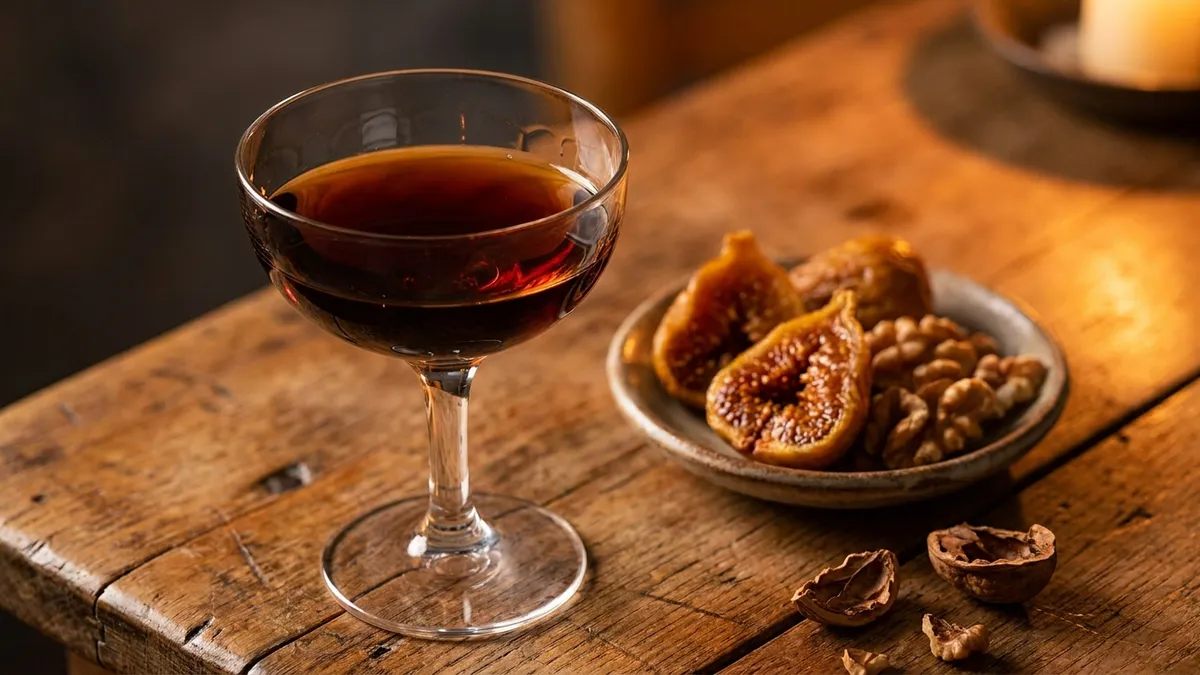
Sweet Passito — Dried-Grape Muscat
In southern Italy, Muscat is sometimes made in the passito style: grapes are harvested fully ripe, then dried on mats or hanging in lofts for weeks to concentrate sugars before pressing. Passito di Pantelleria is the classic example, made from Zibibbo (Muscat of Alexandria) on the volcanic island between Sicily and Tunisia.
The result is rich, golden, and intensely aromatic, with dried apricot, fig, orange peel, and honey, plus the savory edge that volcanic-soil wines often carry. It is a genuine alternative to Sauternes for anyone exploring sweet wines; for a broader tour of the styles, see our dessert wine guide.
Dry Muscat
The least famous style, and often the most surprising. Muscat d'Alsace is fully dry, with all the floral aromatics of the family but a savory, almost bone-dry palate. Muskateller in Austria's Styria region is similar: dry, fragrant, and built for the table. Several Greek islands also make dry Muscat, particularly Samos and Limnos.
Dry Muscat trips up almost everyone the first time. Your nose tells you the wine will be sweet because the aromatics are so loud, then your mouth tastes nothing but a clean, savory, lightly grippy finish. It is one of the great mismatches between aroma and palate in all of wine, and exactly the kind of perceptual gap that the primary, secondary, tertiary aromas guide helps you start to untangle. If you want to train that reflex directly, our explainer on sweet vs dry wine shows how to tell sugar from fruitiness on the palate.
What Muscat Smells and Tastes Like
Muscat is the most aromatic grape in the wine world. Aromas are loud, immediate, and unmistakable. You do not need to swirl hard or work the glass to find them.
Across all styles, the core aromatic profile includes:
- Fresh grapes, the signature, found in almost no other wine grape
- Orange blossom and honeysuckle, bright floral high notes
- Lychee, especially common in warmer-climate Muscats
- White peach and apricot, especially as ripeness rises
- Jasmine and rose petal, in lifted, cool-climate examples
Sweet styles add layers of:
- Dried apricot, raisin, and fig in passito and fortified styles
- Honey, caramel, and toffee in long-aged Rutherglen
- Marmalade and candied orange peel in Vin Doux Naturel
The intensity of these aromas comes from terpenes, naturally occurring aromatic compounds concentrated in the grape skin. Researchers have identified more than 40 different monoterpenes in Muscat grapes, including linalool, geraniol, nerol, and citronellol, according to the published research summarised in the Wikipedia entry for the Muscat grape. Riesling and Gewürztraminer carry the same compounds, but Muscat has them in some of the highest concentrations of any wine grape, which is why even a modest Moscato d'Asti can perfume an entire room when poured. That terpene load is what puts Muscat at the far end of the aromatic vs neutral grapes spectrum. To go deeper on how terpenes and other compounds shape what you smell, see our wine flavor vs aroma guide and the wine aroma wheel guide.
How to Drink Muscat
Drink Muscat chilled, young, and from a glass that funnels aromas toward your nose. Serve sparkling and off-dry styles coldest, at 6 to 8°C (43 to 46°F); dry and Vin Doux Naturel styles at 8 to 12°C (46 to 54°F); and aged Rutherglen only lightly chilled. Never decant it. The aromatics are the point, and cold and freshness protect them.
Should Muscat be chilled? Yes, every style, and colder the sweeter and fizzier it is. Pull a dry Muscat d'Alsace out of the fridge fifteen minutes before pouring, and serve aged Rutherglen only cool: too cold, and its toffee and raisin layers shut down. Our wine serving temperature chart has the full range for every style.
Which glass? A tulip-shaped white wine glass, narrower at the rim than at the bowl, is the right tool for dry, sparkling, and VDN Muscat. The taper concentrates the terpene aromatics where you can smell them. A flute works for Asti but wastes some of its perfume. Fortified Rutherglen belongs in a small dessert or port glass, poured in 50 to 60 ml (about 2 oz) measures. Our wine glass guide covers the logic.
Decant or breathe? No. Decanting is for tannic reds and old wines with sediment. Muscat's volatile floral compounds are exactly what air strips away, so open it, pour it, and drink it. The same logic applies to leftovers: recork a dry or sparkling Muscat, refrigerate it, and finish it within two days. Fortified Muscat, protected by its alcohol and sugar, holds for weeks after opening.
Is Muscatel the Same as Muscat?
Yes. Muscatel is an older English word for Muscat wine, from the Old French and Occitan muscadel, a diminutive of muscat. Spanish and Portuguese use the parallel form Moscatel for the same family. It describes the same grape family, not a separate variety, and in everyday use it usually points to a sweet or fortified Muscat wine rather than a dry one.
The naming sprawl is one reason Muscat confuses people. The same family appears on labels as Muscat (France, Australia, Greece), Moscato (Italy), Moscatel (Spain and Portugal), Muskateller (Austria and Germany), Zibibbo (Sicily), and Muscatel in older English usage. Wines labeled Moscatel de Setúbal from Portugal, Moscatel de Málaga from Spain, and Muscat de Rivesaltes from France are all sweet, fortified members of the same clan. When you see any of these names, expect the fresh-grape aroma, then read the style cues for sweetness: "frizzante" or "d'Asti" means light and fizzy, "Vin Doux Naturel," "Moscatel," or "fortified" means sweet and stronger, and "sec," "trocken," or "dry" means the surprise savory version.
Pairing Muscat with Food
Each style of Muscat pairs differently. The general rule: match the wine's sweetness to the dish, and let the aromatics support rather than fight the flavors.
- Off-dry sparkling Asti and Moscato d'Asti: fresh fruit desserts, peach cobbler, panettone, light brioche pastries, brunch with pancakes and berries
- Dry Alsatian Muscat: green asparagus (a classic pairing, since Muscat is one of the few wines that handles asparagus's grassiness gracefully), Vietnamese spring rolls, mild Indian curries, and steamed white fish with citrus
- Vin Doux Naturel: foie gras, fresh goat cheese, citrus tarts, almond pastries, and lighter chocolate desserts
- Rutherglen Muscat: dark chocolate, sticky toffee pudding, blue cheese, walnut and date desserts, and as a digestif on its own
- Passito di Pantelleria: Sicilian almond biscotti, ricotta-based pastries, dried fruit and nut plates, and stronger blue cheeses
When to Drink Muscat — and When to Age It
Drink non-fortified Muscat within three years of vintage: its volatile floral and fruit compounds fade with bottle age, and a ten-year-old Moscato d'Asti is a faded ghost of the two-year-old. The exception, Rutherglen Muscat in its Grand and Rare tiers, does its aging in cask before bottling, so even fortified Muscat is usually drunk within a few years of release. Use Sommy to log your tasting notes across vintages and develop a feel for when each style hits its peak.
Why Muscat Belongs in Every Tasting Library
Muscat is the rare grape that lets you taste the entire stylistic spectrum of wine within a single family, which makes it one of the most useful grapes to study. The fastest way to learn the family is a side-by-side flight: a dry Muscat d'Alsace, a Moscato d'Asti, a Muscat de Beaumes-de-Venise, and a Rutherglen Classic. Log each glass in Sommy as you go, so every Muscat gets a structured tasting note you can compare later: dry, fizzy, fortified, and aged in one journal, showing how sugar, fizz, and fortification change what your nose and palate report.
Muscat is the only major wine grape that smells exactly like its raw fruit. Once you have that aroma locked in, you will recognize Muscat across every label and every style for the rest of your drinking life.
Sources
- Muscat (grape) — Wikipedia (history, first documented mention, monoterpenes, DNA parentage)
- Asti (wine) — Wikipedia (7–9.5% ABV, single-tank fermentation)
- Moscato d'Asti — Wikipedia (Italian; Asti DOCG disciplinare: 4.5–6.5% ABV range, frizzante, ~100 g/L residual sugar, DOC 1967 / DOCG 1993)
- Muscat of Alexandria — Wikipedia (Spanish plantings 2015, Zibibbo, table and raisin use)
- Muscat blanc à Petits Grains — Wikipedia (Alsace, Samos, Brown Muscat mutation, Muscat Ottonel 1852)
- Moscato Giallo — Wikipedia (Trentino-Alto Adige, Goldmuskateller, parent-offspring relationship with Petits Grains)
- Liqueur Muscat — Wikipedia (1995 four-tier classification, average ages, Brown Muscat, solera-style aging)
Frequently Asked Questions
What does muscat wine taste like?
Muscat is the rare grape that actually smells and tastes like fresh table grapes. On top of that grapey core, expect orange blossom, lychee, white peach, jasmine, and honeysuckle. Sweet styles add apricot, raisin, marmalade, and toffee. The aromatics are unusually loud, which is why Muscat is often called the most aromatic wine grape in the world.
Is muscat wine sweet or dry?
Both. Muscat is most famous for sweet styles, but it is made fully dry in Alsace, in Austria as Muskateller, and on Greek islands such as Samos. Dry Muscat keeps the grape's floral, grapey aromatics but finishes crisp and clean. Most commercial Moscato is off-dry to sweet, which is why many drinkers assume the whole family is sweet.
Is muscat a red or white wine?
Almost always white. The two most important members, Muscat Blanc à Petits Grains and Muscat of Alexandria, are white grapes, and the great majority of Muscat wine is pale gold. Pink and reddish-brown mutations exist, most famously the Brown Muscat behind Australia's Rutherglen Muscat, and Muscat of Hamburg is a black-skinned table grape, but red Muscat wine is a rarity.
What is the difference between muscat and moscato?
Moscato is simply the Italian word for Muscat. Most Moscato on the market is Moscato Bianco, Italy's name for Muscat Blanc à Petits Grains, the noblest member of the family. Moscato d'Asti and Asti DOCG are made from this grape. Outside Italy the same wine is labeled Muscat or Muskateller, but the grape inside the bottle is the same.
Is muscatel the same as muscat?
Yes. Muscatel is an older English word for Muscat wine, from the Old French and Occitan muscadel, a diminutive of muscat. Spanish and Portuguese use the parallel form Moscatel for the same family. It usually refers to sweet or fortified Muscat wines, and in Spain Moscatel de Málaga and Moscatel de Setúbal in Portugal are classic examples. It is not a separate grape. Any wine labeled Muscatel, Moscatel, Moscato, or Muskateller comes from the same Muscat family.
What temperature should muscat be served at?
Chilled, and colder for the sweeter, fizzier styles. Moscato d'Asti and Asti are best around 6 to 8°C (43 to 46°F). Dry Muscat d'Alsace and Muskateller sit at 8 to 10°C (46 to 50°F). Vin Doux Naturel works at 8 to 12°C (46 to 54°F). Aged Rutherglen Muscat should be only lightly chilled or at cool room temperature, around 12 to 16°C (54 to 61°F), so its toffee and raisin aromas open up.
What food goes with muscat wine?
Off-dry Asti and Moscato d'Asti pair with fresh fruit desserts, panettone, and lighter pastries. Dry Alsatian Muscat is a classic match for asparagus and mildly spiced Asian dishes. Sweet fortified Muscat pairs with blue cheese, dark chocolate, foie gras, and tarte Tatin. The general rule: match the wine's sweetness level to the food, and let the aromatics support the dish rather than fight it.
How long does muscat wine age?
Most Muscat wines are made to drink young, usually within one to three years of vintage, to preserve their floral aromatics. The exception is fortified Muscat from Australia's Rutherglen region, which uses a solera-style aging system. Grand and Rare Rutherglen Muscats can spend decades in barrel and develop extraordinary toffee, raisin, and dark chocolate complexity.
Sommy Team
LinkedInFounder & Wine Educator
The Sommy Team is building the world's most approachable wine education app, helping beginners develop real tasting skills through structured courses and AI-guided practice.