Wine Cellar Alternatives: Where to Keep Wine Without One

By the Sommy Team — AI-assisted, human-edited.
Updated Sep 25, 2026
Contents (10)
- Wine Cellar Alternatives, in One Paragraph
- What Does a Cellar Actually Do That You Need to Copy?
- Which Wine Cellar Alternatives Work Best?
- How Long Will the Bottle Wait Before You Open It?
- Is a Closet Good Enough for Wine?
- Is a Kitchen Fridge a Safe Place to Keep Wine?
- When Is a Wine Fridge Worth Buying?
- Does a Screw Cap Change Where You Can Store Wine?
- Which Spots at Home Should Wine Never Go?
- How to Set Up a No-Cellar Storage Spot Tonight
TL;DR
The best wine cellar alternatives copy three things a cellar gives: darkness, a steady temperature near 13°C (55°F) and steady humidity. For bottles opened within a year, a dark closet on an inside wall is enough. Bottles meant to age for years need a wine fridge or rented storage. Heat and sunlight are the real enemies.
Wine Cellar Alternatives, in One Paragraph
The right wine cellar alternatives depend on how long a bottle will wait before you open it. A cellar gives wine three things: darkness, a steady temperature near 13°C (55°F) and steady humidity. Any spot at home that copies those three things is a cellar substitute.
For bottles you will open within a year, a closet or cupboard on an inside wall does the job for free. For bottles meant to age for several years, a wine fridge holds a set temperature year-round. Anywhere between 7 and 18°C (45 to 64°F) is acceptable if the changes are gradual. The spots that ruin wine combine heat and light: windowsills, the top of the fridge, the space by the oven, the garage.
What Does a Cellar Actually Do That You Need to Copy?
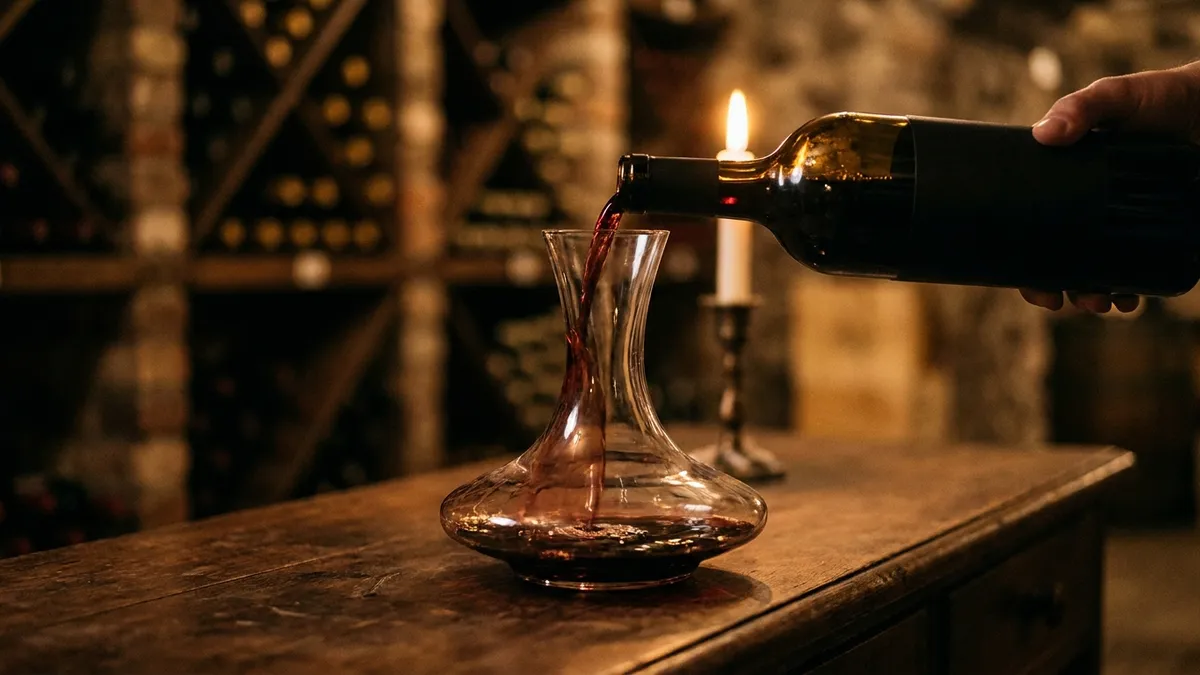
A cellar keeps wine dark, at a steady temperature and at steady humidity. Any spot at home that copies those three things counts as a cellar alternative. The underground part is only a means to that end, since soil and stone hold the air at an even temperature all year.
The target is 13°C (55°F), the figure generally accepted as ideal for long-term storage. It matches the natural temperature of the caves used to store wine in France. The acceptable band is wider: about 7 to 18°C (45 to 64°F), as long as the changes are gradual.
That last condition is the one most homes fail. All corks let a little air through. When the temperature rises and falls, the wine expands and contracts, and that change in pressure pumps air into the bottle. The pumping lets in far more air than a warm but constant temperature would.
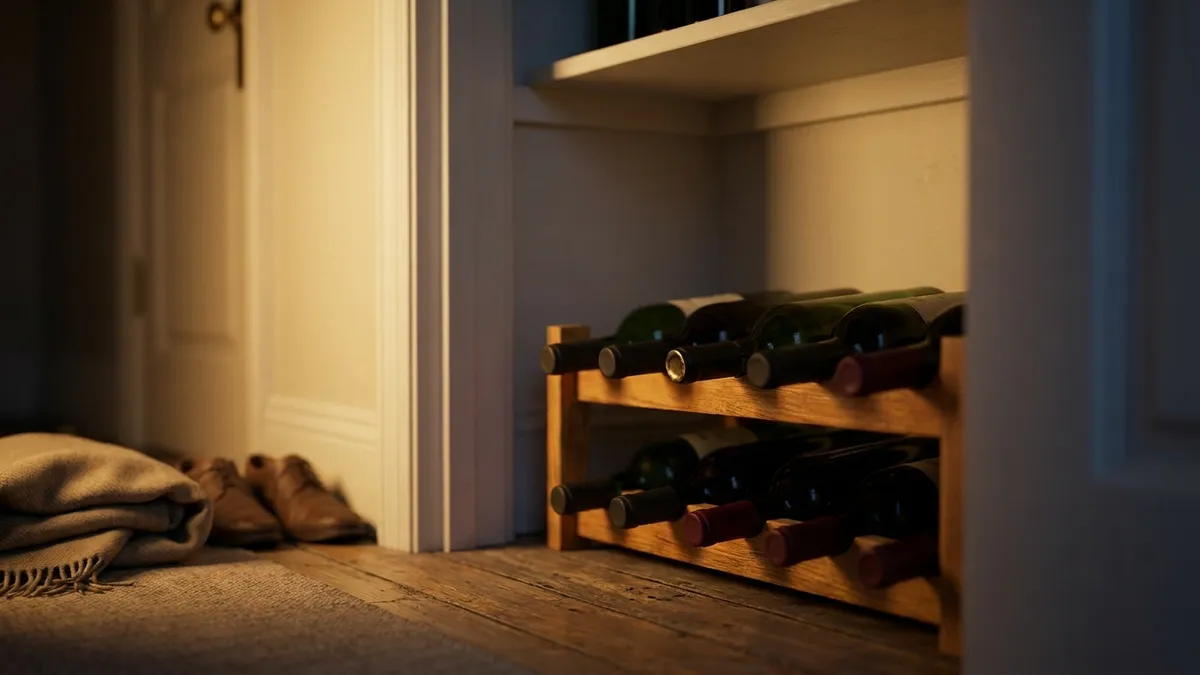
Cellars come in two kinds. A passive cellar is underground and naturally cool, so it needs no power. An active cellar uses insulation plus a cooling unit to hold a set temperature. Every option below is a small version of one or the other: a closet is a passive cellar, and a wine fridge is an active one.
For the full numbers on humidity ranges and cellar climate, see the wine cellar temperature and humidity guide.
Which Wine Cellar Alternatives Work Best?
For most homes, the best cellar alternative is a closet or cupboard on an inside wall, followed by a wine fridge for bottles you plan to age. The table ranks the common options by how steady and dark they stay, and by how long each can safely hold a bottle.
| Option | Temperature | Light | Good for | Do this |
|---|---|---|---|---|
| Closet on an inside wall | Slow to change | Dark with door shut | Up to a year, often longer | Bottles on the floor, away from the water heater |
| Under-bed box | Steady in a cool bedroom | Dark | Months | Use a shallow crate; keep the bed off a radiator wall |
| Low cupboard, inside wall | Fairly steady | Dark | Months | Pick one far from the oven and dishwasher |
| Basement or utility corner | Cool, can be steady | Often dark | Years, if the reading holds | Test for a week; avoid the boiler side |
| Wine fridge | Set and held | Dark or tinted door | Years | Set it to 13°C (55°F) and leave it |
| Kitchen fridge | Too cold, opened often | Dark | A few weeks | Only for bottles you open soon |
| Rented off-site storage | Controlled | Dark | Decades | Only for a large collection |
The rule that falls out of the table is short. If you will open the bottle within a year, put it in a closet. If you plan to hold it longer, give it a wine fridge or a tested cool corner.
The wider room matters too. A closet on an outside wall that faces the afternoon sun can swing as much as the room around it. An inside wall is surrounded by heated or cooled rooms on every side, so it changes slowly.
Rented storage is a real option in most large cities: wine warehouses rent climate-controlled lockers by the case. It only makes sense for bottles that will sit for many years, because every visit to fetch one takes a trip.
How Long Will the Bottle Wait Before You Open It?
Holding time decides how careful you need to be. A bottle you open within a few months needs only shade and no heat spikes. A bottle you keep for years needs the full cellar treatment, because small daily swings add up over that time.
Most wine sold today is made to be opened young. For those bottles, the damage that storage causes builds slowly and has little time to show. Oxidation (air reacting with the wine, turning fresh fruit to bruised apple and nuts) is perhaps the most common wine fault. It needs only oxygen and a catalyst. Winemakers add sulfur dioxide to hold it back, and that protection easily covers a few months on a shelf.
If the bottle will be open within three months, keep it out of the sun and away from heat, and stop worrying. Humidity, bottle position and vibration make no practical difference over that span.
Wine you plan to age is a different case. Normal ageing happens between 10 and 14°C (50 to 57°F). Warmer storage speeds that chemistry up, so a red built to age can taste tired years before its time. For these bottles, the steadiness of the spot matters more than for anything else in the house. The other end of that clock, once the cork is out, is covered in how long wine lasts after opening.
Is a Closet Good Enough for Wine?
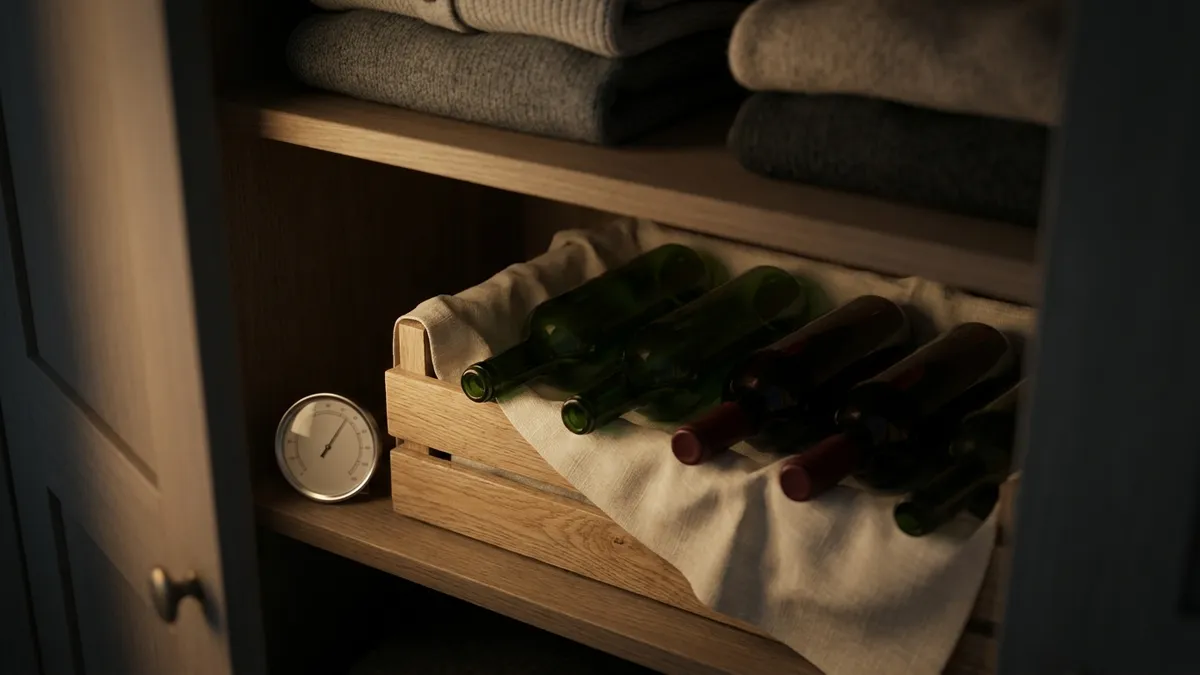
Yes, for most bottles, as long as the closet sits on an inside wall, away from heat sources, and its temperature barely moves from morning to night. A closet is the cheapest passive cellar there is. A closed door already solves the light problem.
The wine trade even has a name for the idea. A wine closet is a small cellar holding fewer than 500 bottles, and a wine room is an above-ground alternative to a basement cellar. Neither needs to be purpose-built for a few dozen bottles.
Choosing the closet is where the work goes:
- Inside wall. It stays closest to the temperature of the home around it.
- Floor level. Warm air rises, so the floor is the coolest part of any closet.
- No appliances. A water heater, boiler or laundry machine next door warms the space in bursts.
- No shared wall with the oven. Kitchens heat up at dinner time every day.
Vibration is the fourth enemy cellars are said to guard against. It is widely repeated, but the evidence for harm from normal household vibration is thin. Keeping bottles off the top of a washing machine is enough.
For a bigger stash, the step up is a simple rack on the closet floor. Our how to store wine at home guide covers racks, crates and a full apartment setup.
Is a Kitchen Fridge a Safe Place to Keep Wine?
Only for a few weeks. A kitchen fridge is a short-term holding pen, not a cellar substitute. It suits a bottle you plan to open this month, but it is too cold, too dry and too busy for one you want to keep for months.
The reasoning comes straight from the numbers above. A kitchen fridge runs near or below the bottom of the 7 to 18°C acceptable band, well under the 13°C ideal. Its air is dry, because the cooling system pulls moisture out. And the door opens many times a day, which sends small temperature swings through every shelf.
None of that matters much over a fortnight. Over months, dry air can shrink a natural cork, and the constant door-opening keeps the pumping going.
If the bottle has a natural cork and you will not open it within a month, take it out of the kitchen fridge and put it in the closet. White and sparkling wines can go back in the fridge for a few hours before serving; the wine serving temperature chart gives the target for each style.
When Is a Wine Fridge Worth Buying?
A wine fridge is worth buying when you hold more bottles than you can drink in a year, or when your home runs warm in summer. It is an active cellar in miniature. It holds a set temperature, usually has a tinted or solid door, and is opened far less often than a kitchen fridge.
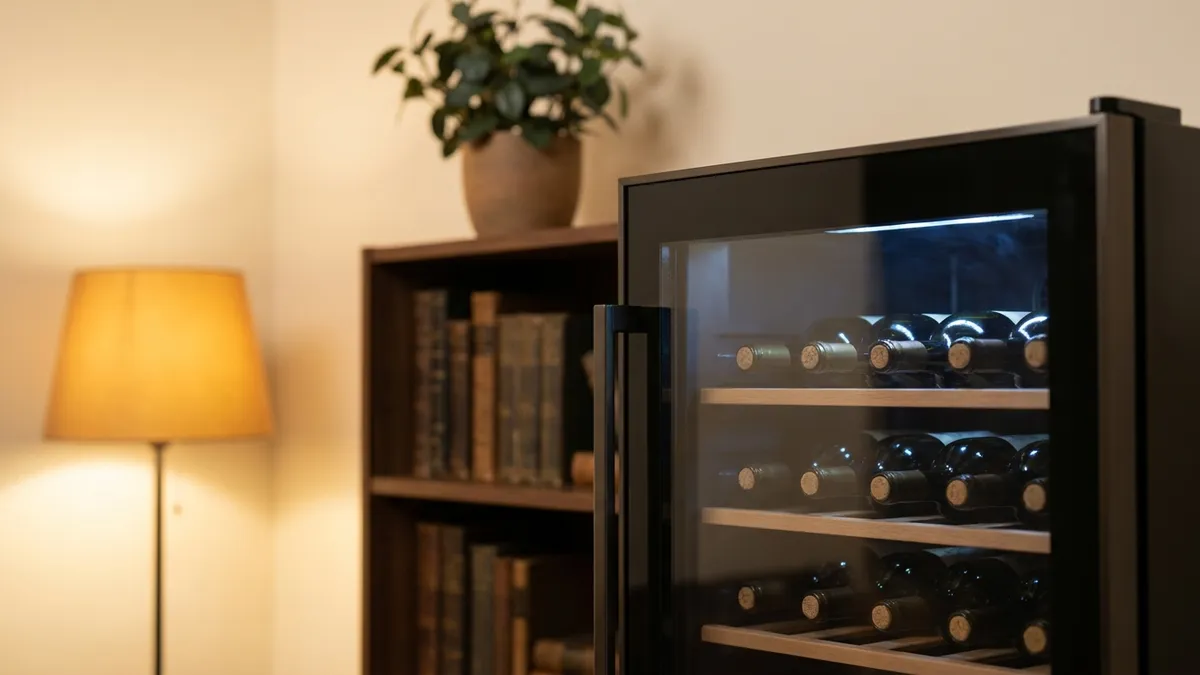
The case for one is strongest in homes with no cool closet at all. Top-floor flats, homes in hot climates and rooms without air conditioning can climb well past 18°C (64°F) in summer. No closet fixes that, because the building itself warms up.
If the rack holds more bottles than the household drinks in a year, or it holds wines built to age, buy a wine fridge and set it to 13°C (55°F). If most bottles are opened within weeks of purchase, the closet still does the job and the money is better spent on the wine.
Size, cooling type and zones are the choices that follow. The wine fridge guide compares compressor and thermoelectric models, single and dual zone, and how many bottles to plan for.
Does a Screw Cap Change Where You Can Store Wine?
Yes: a screw-capped bottle can stand upright in any dark, steady spot. The cap lets almost no air in and has no cork to dry out. Screw caps cut the transfer of oxygen between bottle and air to almost zero, compared with a natural cork.
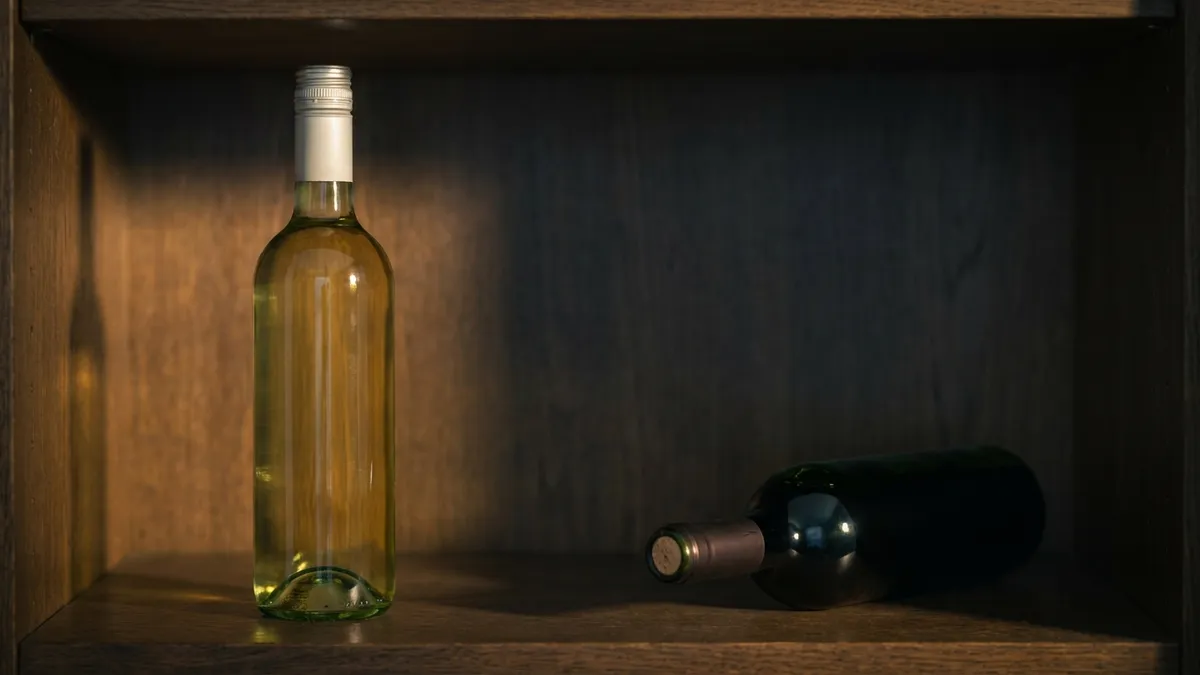
That changes two of the classic rules. Side-lying storage exists to keep a natural cork wet, so it stays swollen and tight in the neck. A screw cap has nothing to keep wet. Humidity control exists for the same reason, and it matters less for screw caps too.
Even for corks, the humidity rule is debated. Some experts hold that dry air shrinks a cork over the years and lets air in. A competing study found the humidity inside a sealed bottle stays near 100% whatever the closure. For bottles kept a year or two, the disagreement makes no practical difference.
The one quirk of screw caps runs the other way. With so little air getting in, a wine can show more reduced character (a struck-match or rubbery smell from too little air) if its chemistry leans that way. Pouring it into a jug for a few minutes often clears it. Our guide to how to smell reduction in wine explains how to spot it.
If it has a screw cap, stand it up and save the rack space for corks. The screw cap vs cork comparison and the guide to horizontal vs vertical wine storage cover closures and position in more depth.
Which Spots at Home Should Wine Never Go?
The worst spots combine heat and light: a sunny windowsill, the top of the fridge, a shelf by the oven, a garage or a parked car. Each one either heats the bottle in daily waves or puts it in direct sun. Often it does both.
Heat damage leaves marks you can see. Wine seeping along the length of the cork, or a cork pushed up above the rim, are signs the bottle got hot enough to expand. The result is cooked wine, flat and jammy, with the fresh fruit gone. The guide to cooked wine and heat damage shows what it tastes like.

Light causes a separate fault. Lightstrike is a wet-cardboard or wet-wool smell caused by ultraviolet and blue light, roughly in the 325 to 450 nm range. Sulfur compounds such as dimethyl sulfide are thought to form in the wine and carry that smell. Tinted glass exists to block that light, which is why clear bottles are the most exposed. The lightstruck wine guide covers how fast it happens.
Red wines rarely become lightstruck, because their phenolic compounds (the colour and tannin from the grape skins) protect them. White, rosé and sparkling wine carry the risk. The darkness myth is overblown: a dim room is rarely a problem, and a shut cupboard door is protection enough.
More traps, from delivery vans to the space above a radiator, are listed in wine storage mistakes.
How to Set Up a No-Cellar Storage Spot Tonight
Start with a sort. Split the bottles into two groups: those to open within a year and those to keep longer. The first group needs only shade and an even temperature. The second group needs the best spot in the home.
Then walk the home and find the coolest inside closet. Clear its floor, lay the cork-sealed bottles on their sides and stand the screw caps up. Put a min/max thermometer beside them and check it next week. If the gap is small, the closet is a cellar. If it is wide, the second group is the reason to look at a wine fridge. More storage basics sit in the serving and storage hub.
A kept bottle deserves a careful tasting on the night it is opened. Sommy's AI-guided tasting mode starts from a photo of the label and walks through look, smell and taste. It saves the notes to a tasting journal, so the next bottle from the same closet has something to compare against. The app is at sommy.wine.
Pour the bottle that has waited longest tonight, then move the rest off the windowsill and onto the closet floor.
Sources
- Wikipedia: Wine cellar (storage temperature, passive and active cellars, wine closets)
- Wikipedia: Wine fault (temperature pumping, heat damage, lightstrike, oxidation)
- Wikipedia: Cork (material) (oxygen transfer through screw caps and corks)
- Wikipedia: Screw cap (wine) (reduced characters under screw cap)
Frequently Asked Questions
What can I use instead of a wine cellar?
A closet or cupboard on an inside wall is the best free option, because it stays dark and its temperature moves slowly. An under-bed box in a cool bedroom works too. For bottles you want to age for years, a wine fridge holds a set temperature all year. Rented off-site wine storage suits a large collection. Avoid the kitchen, the garage and anywhere the sun reaches.
What temperature should wine be stored at without a cellar?
Aim for a spot that stays near 13°C (55°F), the figure generally accepted as ideal. Anywhere between about 7 and 18°C (45 to 64°F) is acceptable, as long as the changes are slow. A closet that sits at 17°C all year beats a room that swings from 12°C at night to 22°C in the afternoon, because the swings push air past the cork.
Is it OK to store wine in a closet?
Yes, for most bottles. Pick a closet on an inside wall, away from the water heater, radiators and any wall that gets afternoon sun. Put the bottles on the floor, where the air is coolest. Leave a min/max thermometer inside for a week. If the gap between the lowest and highest reading is small, the closet is a good cellar substitute.
Can I keep wine in the kitchen fridge?
For a few weeks, yes. A kitchen fridge is colder than the ideal storage temperature, its air is dry, and it is opened many times a day. For a bottle you will open soon, that does little harm. For a cork-sealed bottle you plan to keep for months, move it to a dark closet or a wine fridge instead.
Do I need a wine fridge if I don't have a cellar?
Only if you hold bottles for longer than a year or your home runs warm in summer. Most wine bought today is opened within weeks, and a dark closet protects it well enough. A wine fridge earns its place once you own more bottles than you drink in a year, or once you start buying wines that improve with age.
Does wine with a screw cap need to lie on its side?
No. The side-lying rule exists to keep a natural cork wet so it stays sealed. A screw cap lets almost no air into the bottle and has no cork to dry out, so a screw-capped bottle can stand upright on a shelf. It still needs the same darkness and steady temperature as any other wine.
Where is the worst place to store wine at home?
Anywhere that combines heat and light. A sunny windowsill, the top of the fridge, a shelf beside the oven, a garage and a car boot all qualify. Heat can push wine out past the cork and cook its flavour, and sunlight can give white and sparkling wine a wet-cardboard smell.
Sommy Team
LinkedInFounder & Wine Educator
The Sommy Team is building the world's most approachable wine education app, helping beginners develop real tasting skills through structured courses and AI-guided practice.