Store Wine Horizontal or Vertical? What the Research Says

By the Sommy Team — AI-assisted, human-edited.
Updated Sep 24, 2026
Contents (10)
- Should You Store Wine Horizontal or Vertical?
- Which Position Suits Each Closure?
- Why Does the Lay-It-Flat Rule Exist?
- What Does the Research Say About Bottle Position?
- Is It OK to Store Wine Standing Up?
- Should Screw-Cap Wine Be Stored on Its Side?
- Should Champagne Be Stored Upright or on Its Side?
- What Matters More Than Bottle Position?
- Does Storing Wine on Its Side Affect Sediment?
- How Should You Store Your Wine Tonight?
TL;DR
Lay cork-sealed wine on its side if it will wait more than a few weeks. Screw-cap bottles and unopened Champagne can stand or lie. A 2023 lab study found bottle position made no significant difference to oxygen getting through the cork, while heat did, so a cool, steady spot beats a perfect angle.
The choice to store wine horizontal or vertical comes down to the seal and the calendar. A bottle sealed with natural cork belongs on its side if it will wait for months. For a few weeks, or for any screw cap, the position barely matters. Heat does far more damage than angle ever will.
Should You Store Wine Horizontal or Vertical?
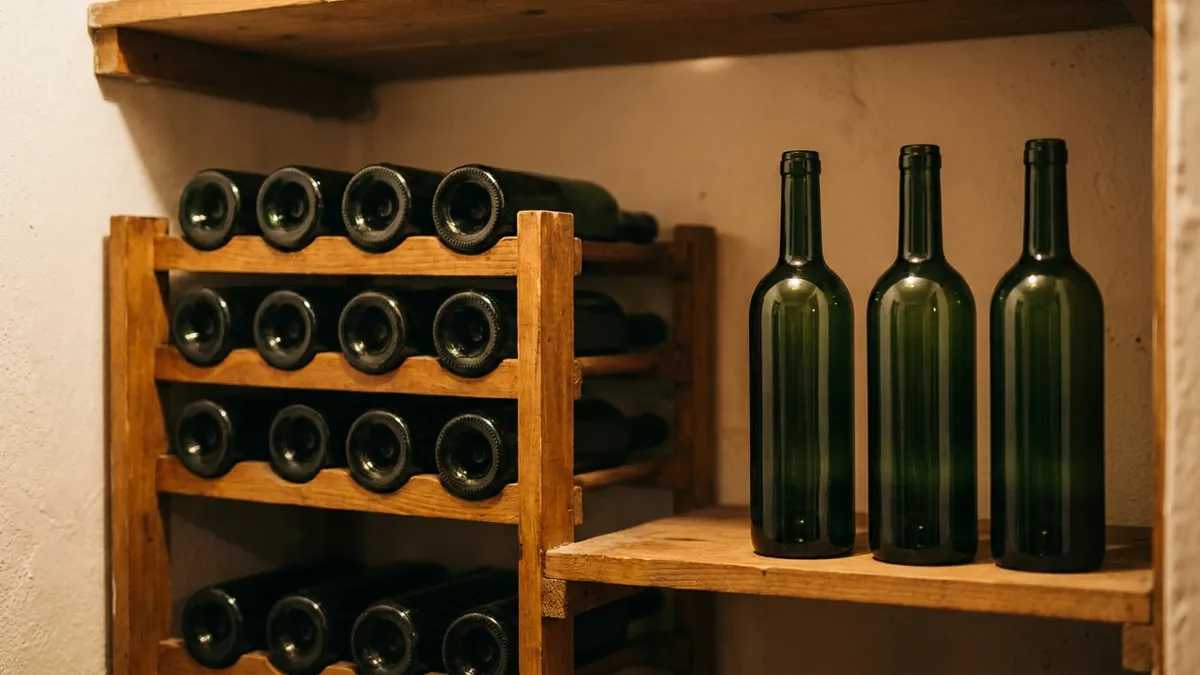
Store cork-sealed wine on its side if you will keep it for more than a few weeks; stand everything else wherever it fits. The side rule protects a natural cork from drying, shrinking and letting air in. Screw caps, most synthetic corks and unopened sparkling wine can stand or lie.
The rule is weaker than its reputation. A 2023 study in PNAS Nexus tested both positions for 24 months and found no significant difference in how much oxygen crossed the cork. Screw caps need no moisture at all. The Champagne houses' trade body says unopened bottles can stand or lie, because pressure keeps the cork moist. Whatever the angle, the storage spot should stay near 10 to 15°C, since chemical reactions in wine roughly double with every 10°C rise.
Which Position Suits Each Closure?
The closure decides the position. Natural cork goes on its side for long holds, while screw caps and sparkling wine can go either way. An opened bottle of any kind should stand upright in the fridge, re-stoppered, until it is finished.
A natural cork is a plug of bark from the cork oak, springy while damp and prone to shrink when dry. A screw cap is an aluminium shell with a liner inside, and it seals without any moisture.
If the closure is natural cork and the bottle will wait more than a few weeks, lay it down.
| Closure | Best position | Why | What to do |
|---|---|---|---|
| Natural cork, still wine | On its side for months or years | A dry cork can shrink and let air in | Rack it flat; upright is fine for a few weeks |
| Screw cap | Either | A metal seal needs no moisture | Stand it up and save rack space for corks |
| Synthetic cork | Either | Plastic does not dry out like bark | Store it like a screw cap |
| Champagne and other sparkling | Either while unopened | Gas pressure keeps the cork moist | Lie it down only for aging over years |
| Opened bottle, any closure | Upright | Less wine touches the air | Re-stopper and keep it in the fridge |
For the trade-offs between the two main seals themselves, from aging to cork taint, see screw cap vs cork.
Why Does the Lay-It-Flat Rule Exist?
The rule exists because a cork that dries out can shrink and let air reach the wine. Wine Spectator's reader column adds that some wine may leak out too. The result is premature oxidation, where a wine loses its fresh fruit and turns flat, brownish and nutty years before it should.
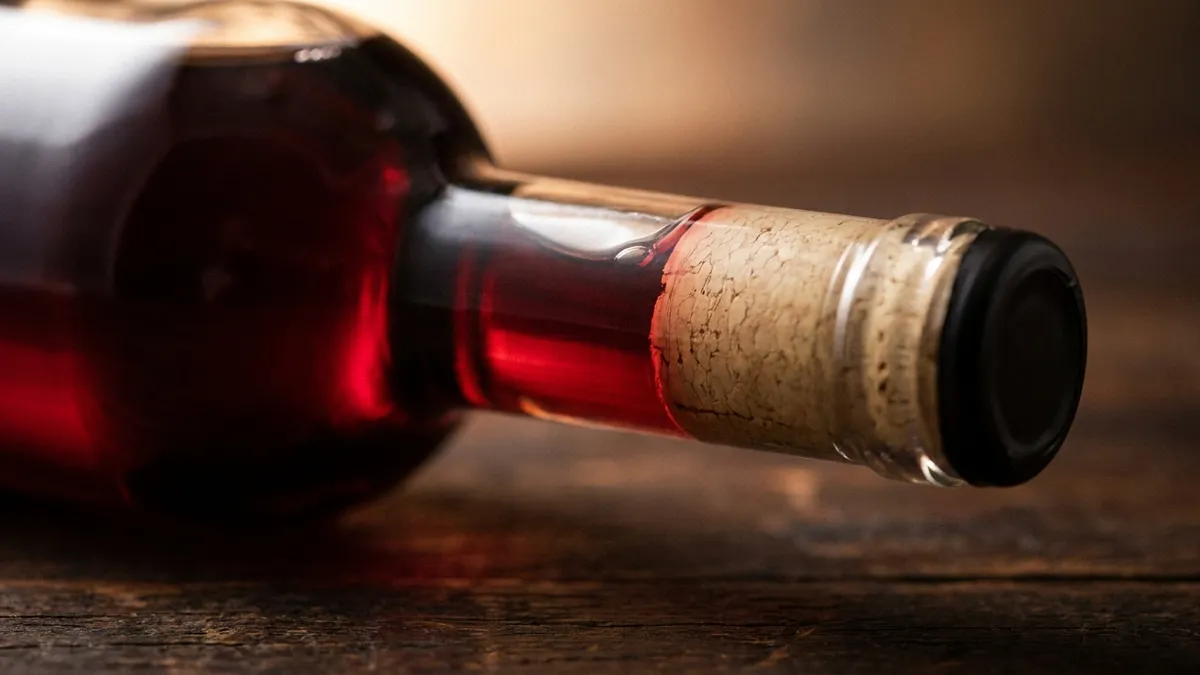
Lying a bottle down keeps the inner face of the cork in contact with wine, so that end stays swollen. The outer end faces the room, and that is where humidity comes in. The same column recommends about 70% relative humidity to protect the parts of the cork the wine does not touch.
There was also a practical reason. Cellar racks, bins and wooden cases were built around bottles lying flat, which stacks more wine into less space. So the habit grew partly for storage efficiency, not only for chemistry.
The warning sign of a failing cork is seepage: sticky residue around the capsule or a stained label. Our guide to oxidized wine describes how that wine then smells and tastes.
What Does the Research Say About Bottle Position?
Lab research finds that bottle position makes little measurable difference to how much oxygen gets through a cork. A 2023 study in PNAS Nexus by Julie Chanut and colleagues sealed bottles of a model wine with natural cork and stored them upright or lying down for 24 months. The storage position had no significant influence on oxygen transfer.
The same study found where the oxygen does get in. At room temperature, nearly 75% of the oxygen transfer happened at the glass-cork interface, the thin seam where the side of the cork presses against the bottle neck, rather than through the cork itself. A cork kept wet by the wine did not seal that seam any better, which helps explain why the angle changed so little.
There is a second reason the angle matters less than the rule suggests. A sealed bottle holds a small pocket of air between the wine and the cork, called the headspace. The Australian Wine Research Institute notes that at bottling, typically more than 60% of the oxygen in the bottle sits in that headspace. That oxygen is sealed in on day one, and no storage position removes it.
The common belief is that lying a bottle down stops oxidation. The research says position barely changes oxygen entry, and temperature changes it a great deal (more on that below). The side rule is still sound advice for long holds, because it costs nothing and a cork can dry in a dry room.
Is It OK to Store Wine Standing Up?
Yes, for a few weeks. Wine Spectator's advice is that storing a bottle upright for a few weeks is fine, and that longer holds call for other options. For a bottle bought for the weekend, whatever the closure, the angle is irrelevant.
If you will open a bottle within a month, stand it wherever is cool and dark. If it will wait longer and has a natural cork, lay it down. The one spot to avoid for long holds is the kitchen fridge. Refrigeration dehumidifies the air, which can dry out a cork quickly, and the door shelf adds vibration and light each time it opens. A few days in the fridge before dinner does no harm.
A dedicated wine fridge solves both problems, since it holds bottles flat in steadier, more humid air. Our wine fridge guide covers what to look for, and the full set of home options is in how to store wine at home.
Once a bottle is open, the rule flips. An opened bottle should stand upright, re-stoppered, in the fridge, because upright leaves a smaller surface of wine exposed to the air inside. How long wine lasts after opening gives the day counts for each style.
Should Screw-Cap Wine Be Stored on Its Side?
No, screw-cap wine does not need to lie down, though lying it flat does no harm. Wine Spectator's column gives the same answer for screw caps. Choose the position that fits the shelf, and save the flat rack for corks.
The seal is a metal shell pressing a liner onto the rim of the bottle, and it does not depend on moisture.
That makes screw caps the easiest bottles to store. If shelf space is tight, stand screw caps upright and give the flat rack to your cork-sealed bottles. Upright storage has one small convenience of its own: any sediment in an older screw-capped red is already at the bottom when you open it.
Should Champagne Be Stored Upright or on Its Side?
Either position works for unopened Champagne, according to the Champagne houses' own trade body. The Union des Maisons de Champagne says Champagne can be stored on its side or upright, since the pressure inside the bottle keeps the cork moist and the seal intact either way.
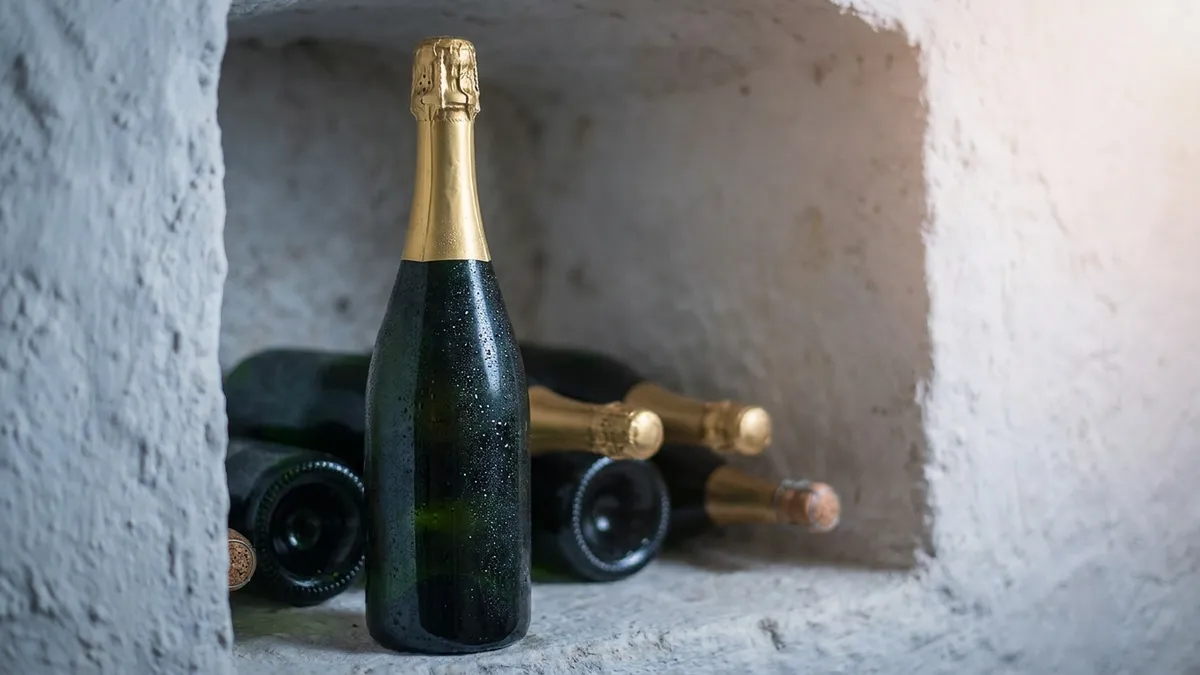
That pressure is considerable. A bottle of Champagne holds about 5 to 6 atmospheres of pressure, meaning five to six times the air pressure around you, or roughly 70 to 90 pounds per square inch. On the trade body's account, the gas pressure, not the wine touching the cork, keeps that cork moist. Some shops quote higher figures, but 5 to 6 is the one a physics reference supports.
The advice is still contested. Wine Spectator's column recommends storing all cork-sealed wine on its side, sparkling included, and older sources claim the opposite about Champagne. The trade body's current guidance is the clearest word available. If you are drinking the bottle within months, stand it up. If you are aging it for years, lie it down, which also matches how cellars are built.
Temperature and humidity matter more. The Champagne houses advise a cool, constant 10 to 12°C, never above 15°C, and humidity no higher than 60 to 70%. For the differences between the main styles of fizz, see Champagne vs Prosecco vs Cava.
What Matters More Than Bottle Position?
Temperature matters far more than position. The widely cited storage range is 10 to 15°C, with up to about 21°C tolerable without long-term damage. Above 25°C, wine risks spoiling and picking up cooked flavours. Chemical reactions in wine roughly double with every 10°C rise, so a bottle at 22°C ages about twice as fast as one at 12°C.
The 2023 cork study measured what heat does to a seal. At 35°C the cork's barrier held for about nine months, then oxygen transfer rose sharply. At 50°C, large amounts of oxygen passed through the glass-cork seam within three months. Our guide to cooked wine and heat damage covers how that tastes.
Steadiness counts as well. Each warm-cool swing makes the wine expand and contract, which pushes at the seal, so a steady spot beats a slightly cooler one that swings. Light, especially sunlight on clear glass, damages aroma compounds, and constant vibration keeps sediment stirred.
If a spot swings more than a few degrees a day, choose a steadier spot over a better angle. The top of the fridge, a cupboard beside the oven and a sunny shelf are the three classic mistakes, whatever way the bottles face.
Does Storing Wine on Its Side Affect Sediment?
Yes: a bottle kept on its side collects sediment, the harmless grit of tannin and colour that older reds throw, along its lower flank. Stand the bottle upright the day before opening so the grit slides down to the base.
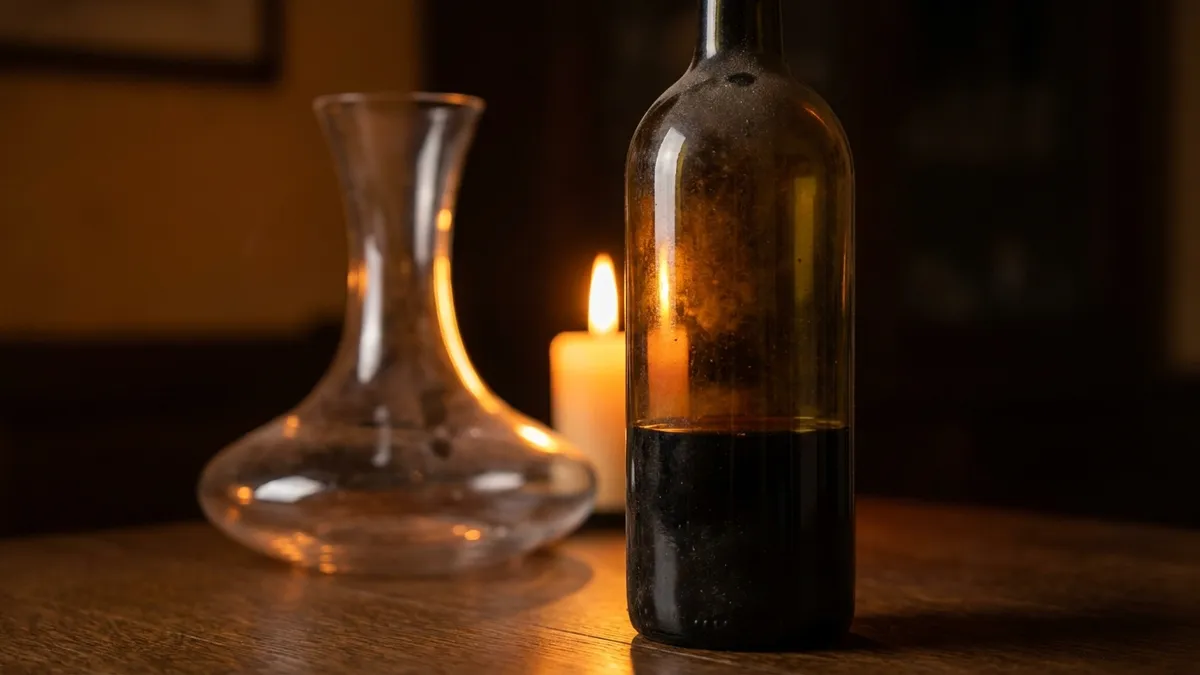
If a red is more than about ten years old, or its label says unfined or unfiltered, give it that day upright before you pour. Then open it without tilting, pour slowly in one motion and stop when dark wisps reach the shoulder. A candle or phone torch behind the neck makes the wisps easy to see. Wine sediment explained walks through each step, and young wines rarely carry enough sediment to need any of this.
Upside-down storage keeps a cork wet too, but it packs sediment against the cork itself. Keep that position for shipping boxes and use a flat rack for anything you plan to keep.
How Should You Store Your Wine Tonight?
Sort the rack by closure and by drinking date. Every cork-sealed bottle meant to wait past next month goes on its side in the coolest, darkest, steadiest spot in the home. Screw caps and bottles for this month can stand beside them.
An interior cupboard well away from the oven is usually that spot. Anything sitting on top of the fridge moves today.
A cheap thermometer in that cupboard settles the question better than any rack. If it reads steady between 10 and 15°C, the angle is a detail. More on storing and serving wine lives in our serving and storage hub.
When one of those bottles finally comes out, Sommy's AI-guided tasting mode at sommy.wine can walk through look, smell and taste from a photo of the label, then save the notes to a tasting journal. Tonight, move the bottles off the top of the fridge, lay the corks flat in the cupboard, then pour a glass from the one that has waited longest.
Sources
- PNAS Nexus (Chanut et al., 2023): A key to wine conservation lies in the glass–cork interface
- Wine Spectator: Should I keep bottles of wine upright or on their sides?
- Wine Spectator: Should I be concerned about wine bottles stored upright in a wine shop or restaurant?
- Wine Spectator: Is it true Champagne shouldn't be stored on its side?
- Union des Maisons de Champagne: Storing your bottles of Champagne
- Australian Wine Research Institute: Oxygen pick-up during packaging, understanding total package oxygen
- Wikipedia: Storage of wine
Frequently Asked Questions
Should wine be stored horizontally or vertically?
Store bottles sealed with natural cork on their side if you plan to keep them for more than a few weeks, because a cork that dries out can shrink and let air in. Screw-cap wine and unopened sparkling wine can go either way. For bottles you will open within a month, the position makes no practical difference. Temperature matters far more than angle.
How long can wine be stored upright?
A few weeks is fine for any bottle, cork or screw cap. Wine Spectator's advice is that storing a bottle upright for a few weeks does no harm, and that longer holds call for other options. Past a month or two, lay cork-sealed bottles on their side in a cool, dark place, and keep them off the kitchen fridge shelf, where the air runs dry.
Should screw-cap wine be stored on its side?
No. A screw cap seals with a metal shell and a liner, so there is no cork that needs to stay moist. Laying the bottle down does no harm either, so choose whatever fits your shelf. Many people stand screw caps upright and save rack space for cork-sealed bottles that will wait months or years.
Should Champagne be stored upright or on its side?
Either works for an unopened bottle. The Union des Maisons de Champagne says Champagne can be stored on its side or upright, because the pressure inside keeps the cork moist and the seal intact. Keep it cool and steady, around 10 to 12°C and never above 15°C. For bottles you plan to age for years, lying them down is the traditional choice.
What happens if a wine cork dries out?
A dry cork can shrink, loosen against the glass and let air reach the wine, which leads to premature oxidation: fading fruit, a brownish tint and a flat, nutty or bruised-apple smell. The usual causes are long upright storage in dry air, such as a kitchen fridge, and a very dry room. Sticky residue around the capsule is the warning sign.
Does storing wine on its side affect sediment?
Yes. In an older red kept on its side, sediment settles along the lower flank of the bottle. Stand the bottle upright for about a day before opening so the grit slides to the bottom, then pour slowly and stop when you see the first dark wisps reach the shoulder. Young wines rarely carry enough sediment to matter.
Can you store wine upside down?
You can, but it gains nothing over lying the bottle flat. Upside down keeps the cork wet, as side storage does, and it leaves sediment packed against the cork of an old red, which makes a clean pour harder. Cardboard wine boxes shipped cork-down are fine for transport. For keeping, use a rack that holds bottles on their sides.
Sommy Team
LinkedInFounder & Wine Educator
The Sommy Team is building the world's most approachable wine education app, helping beginners develop real tasting skills through structured courses and AI-guided practice.