Wine Sediment: Is It Safe and What Does It Mean?

By the Sommy Team — AI-assisted, human-edited.
Updated Apr 29, 2026
Contents (9)
- The Stuff at the Bottom of the Bottle Is Not What You Think
- Wine Sediment, in 90 Seconds
- The Two Kinds of Wine Sediment
- Why Some Wines Have Sediment and Others Never Will
- Is Sediment a Quality Sign or a Quality Problem?
- How to Serve a Wine with Sediment
- Common Sediment Misreadings
- How Sommy Helps You Read a Bottle Faster
- The One-Line Summary
TL;DR
Wine sediment is harmless. The clear crystals on a cork are tartrates — natural acid salts often called wine diamonds. The dark grit at the bottom of an aged red is polymerized tannin and pigment. Both are signs of unfiltered or properly aged wine. Stand the bottle upright for a day, pour slowly, and decant if needed.
The Stuff at the Bottom of the Bottle Is Not What You Think
Sooner or later, every wine drinker pours an older bottle and sees something at the bottom — small clear crystals, a fine dark grit, or a thin dusty line clinging to the inside of the glass. The instinct is to recoil. Something must be wrong with the wine. The bottle must be spoiled. Most people pour the rest down the sink and chalk it up to a bad bottle.
That instinct is almost always wrong. Wine sediment is harmless, predictable, and often a sign of quality rather than fault. It tells you the wine has been bottled honestly, aged properly, or stored at the right temperature for long enough that natural compounds have begun to fall out of solution. Pouring out a sedimented bottle is one of the most common mistakes a beginner makes.
This guide walks through what every kind of wine sediment actually is, why some bottles have it and others never will, and exactly how to serve a sedimented wine so the grit stays in the bottle and the wine in the glass stays bright.
Wine Sediment, in 90 Seconds
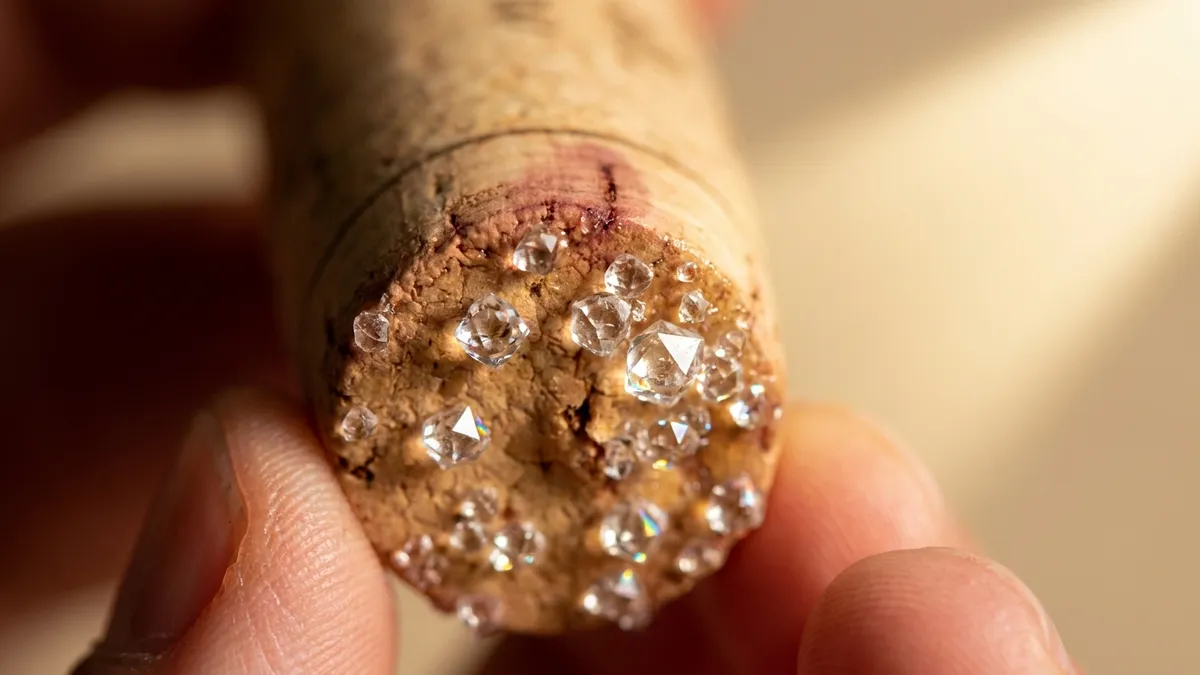
Wine sediment is any solid matter that settles out of a wine over time. There are two main kinds. Tartrate crystals are clear, glassy fragments of potassium bitartrate that form on corks and at the bottoms of bottles when wine spends time in the cold. They are food-grade and harmless. The second kind is the dark, fine grit found in aged red wines: polymerized tannin and pigment that has bonded into chains heavy enough to sink. Both kinds of wine sediment are signs of an unfiltered, naturally made, or properly aged wine. Filtered commercial wines almost never throw sediment, which is why unfiltered wine is where most drinkers first meet it. Stand the bottle upright for a day, pour slowly, and decant if needed — the wine in the glass is fine.

Quick check
One question on what you just read
An older red has dark grit at the bottom of the bottle. What should you do?
Tap an answer to see how you did.
The Two Kinds of Wine Sediment
Almost every speck you will ever see at the bottom of a wine bottle falls into one of two categories. Naming them apart is the first skill to build, because the cause and the meaning are different in each case.
1. Tartrate Crystals, Also Known as Wine Diamonds
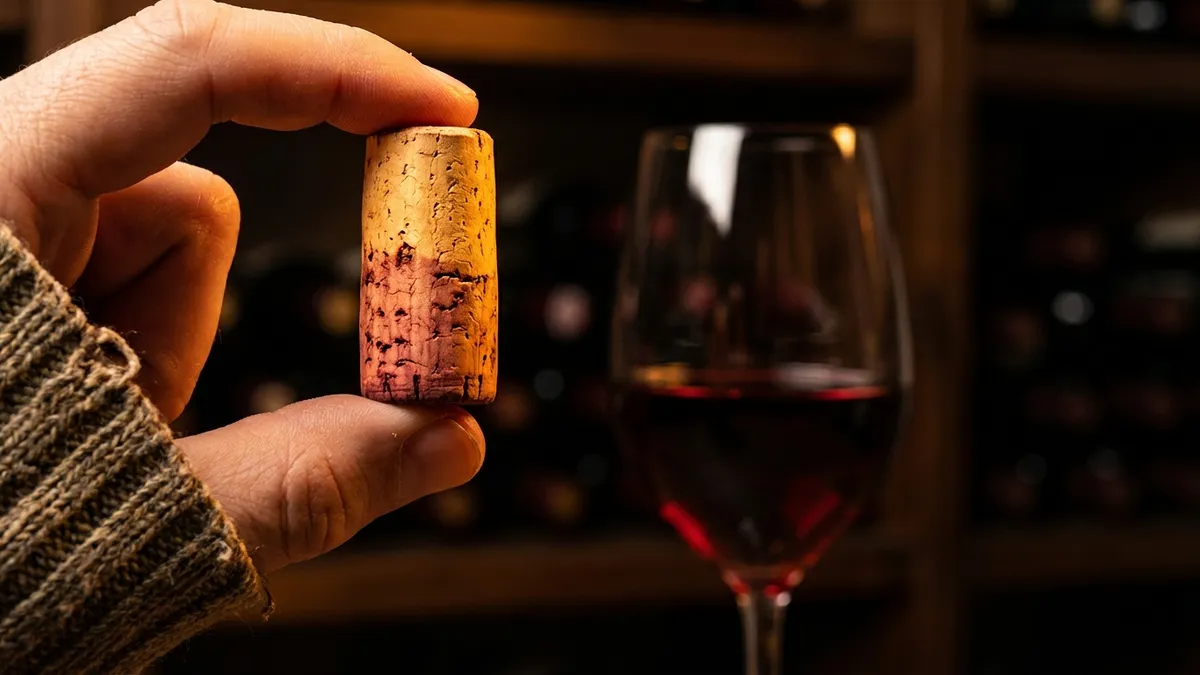
The clear, glassy crystals that form on the bottom of a cork or at the base of a chilled white wine are tartrate crystals (small fragments of potassium bitartrate, a natural salt of tartaric acid). They look like coarse sugar or finely broken glass and are completely tasteless. Many people who find them on a cork assume the wine has somehow grown sugar crystals or that the bottle has been contaminated. Neither is true. For the full deep-dive on these harmless "wine diamonds" — why cold produces them and how to serve around them — see our guide to tartrate crystals in wine.
Tartaric acid is the dominant acid in wine grapes. As wine cools, the acid binds with potassium ions and the resulting salt becomes less soluble, eventually dropping out of solution as a crystal. Cold storage drives the process — a fridge is the most common cause. White wines, rosés, and Champagnes are especially prone because their lower tannin and color load means there is nothing else to keep the crystals suspended.
2. Polymerized Tannin and Color Sediment
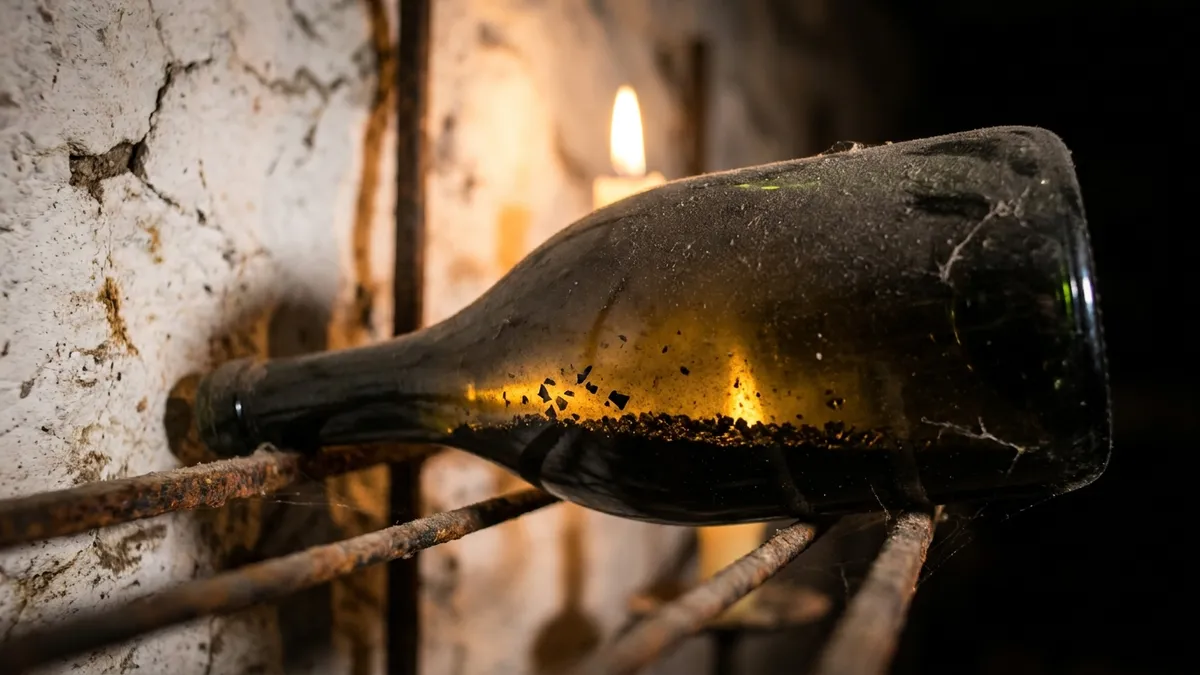
The fine, dark grit at the bottom of an aged red wine is something else entirely. As a red wine ages, tannins (the gripping, drying compounds that give red wine its texture) and anthocyanins (the color pigments) slowly bond together into longer molecular chains. Past a certain length, the chains are too heavy to stay dissolved and they settle at the bottom of the bottle.
This is why an aged red feels softer than a young one. The harshest tannins have literally left the liquid and gone to the floor. The wine on top is brighter, smoother, and more nuanced — the tannin sediment is the price of that softness. For a deeper read on how this transformation changes the experience of drinking, see our guide to tasting young vs aged wine, which traces the same chemistry through the glass.
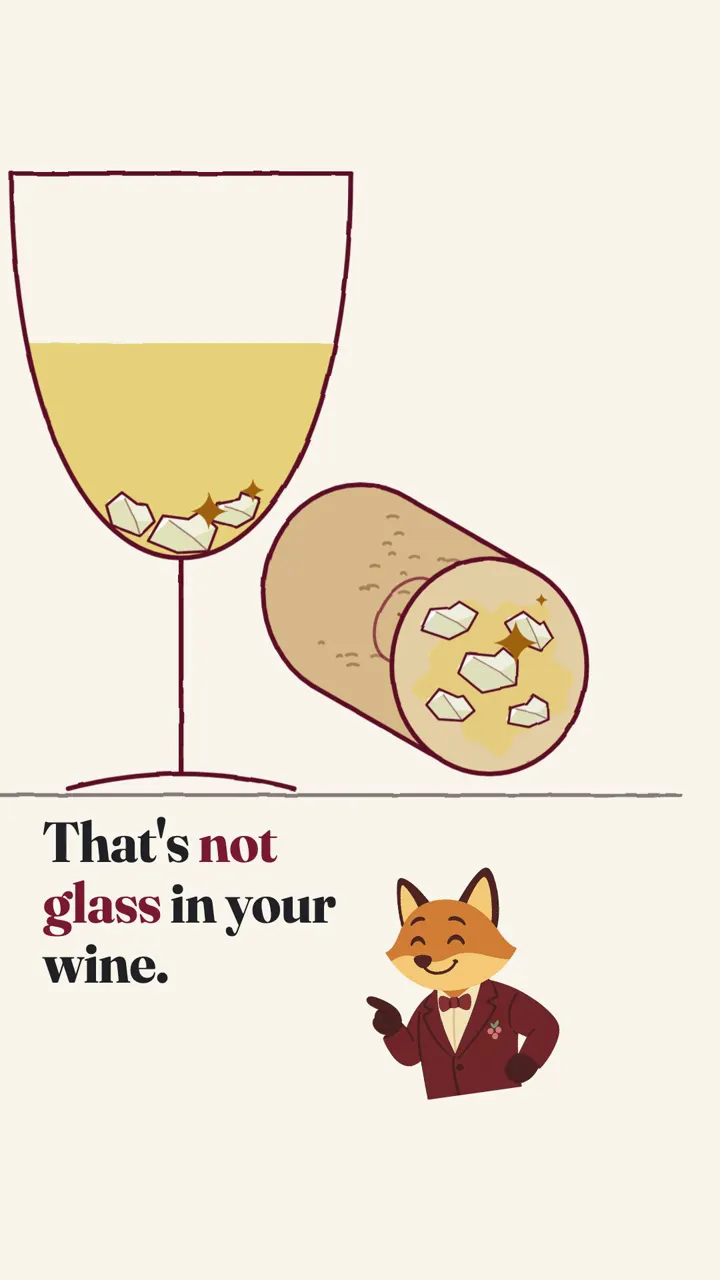
That's not glass in your wine.
Sommy's voice is made with AI.
Read the script
That's not glass in your wine. It's cream of tartar, the same stuff in your baking cupboard. Big wineries chill their wine hard to strip it out. Grapes are full of tartaric acid. Get the wine cold, and it comes out as crystals. Harmless. Send this to whoever would send the bottle back. Next time you see them, crush one between two spoons. So... glass or powder?
Why Some Wines Have Sediment and Others Never Will
The difference between a sedimented bottle and a perfectly clear one usually comes down to two production choices: filtration and aging. Most commercial wines pass through a fine sterile filter before bottling, which strips out every particulate the wine has produced. Sterile filtration removes tartrates, removes any tannin polymers, and produces a wine that will look clean for years.
The wines that retain sediment fall into a few groups.
Aged Red Wines (Eight Years and Up)
Tannic reds built for aging — Bordeaux, Barolo, Brunello, Cabernet Sauvignon, Syrah, Northern Rhône — accumulate tannin and pigment sediment as the cellar years pass. By ten years, the bottom of the bottle has a fine dusty layer. By twenty, it is a sandy line you can rotate around the glass. The classic bordeaux wine guide and barolo wine guide both flag sediment as a feature of the older end of those styles, not a problem.
Cold-Stored Whites and Sparkling Wines
A bottle of Riesling, Chardonnay, or Champagne that lives in a cold fridge for months is doing exactly the chemistry that produces tartrate crystals. The colder and longer the storage, the more crystals you will find on the cork or at the bottom of the bottle. Most Champagne houses use a process called cold stabilization (chilling the wine to near-freezing for a week before bottling so tartrates drop out in the tank instead of in the bottle), but smaller producers and grower Champagnes often skip it.
Unfiltered or Minimum-Intervention Wines
Many natural wines, biodynamic wines, and small-production estate wines are bottled without filtration to preserve texture and aromatic complexity. These wines can throw a faint haze of yeast, protein, or pectin within months of release. The sediment is fine and harmless — sometimes even desirable, since filtration can strip aromatic compounds along with the solids.
Vintage Port
Vintage Port is the one category where heavy sediment is built into the design. The wine is bottled unfiltered after only two years in barrel and then matured in the bottle for decades. By twenty years old, a Vintage Port has a literal sandy layer at the bottom of the bottle that takes a careful decanting through muslin to remove. This is standard. A Vintage Port without sediment would actually be suspect.
What Almost Never Has Sediment
Young commercial whites under five dollars, mass-market rosés, supermarket Pinot Grigio, fresh young reds under five years old, and standard non-vintage sparkling wines are all sterile-filtered and throw no sediment under any normal storage. If one of these wines suddenly has visible particulate, that is genuinely a question to ask the seller.
For more on which grapes produce the kind of structure that sediments well, the pinot noir guide and cabernet sauvignon vs merlot walk through the tannin profiles that drive aging behavior.
Is Sediment a Quality Sign or a Quality Problem?
Here is the reframe that tends to surprise beginners: sediment is not a fault. It is, more often than not, a quality sign.
Filtration is fast, cheap, and removes risk for the producer. It also removes texture, mouthfeel, and aromatic complexity. A producer who chooses to bottle unfiltered is choosing a richer, more textured wine and accepting that it might throw sediment over time. A producer who ages a tannic red for ten years and lets it develop polymerized tannin is delivering a softer, more complex wine than the version drunk young. Both producers are working to a higher standard, not a lower one.
Sediment in an aged Bordeaux is not a flaw. It is the proof that the wine is old enough to be interesting.
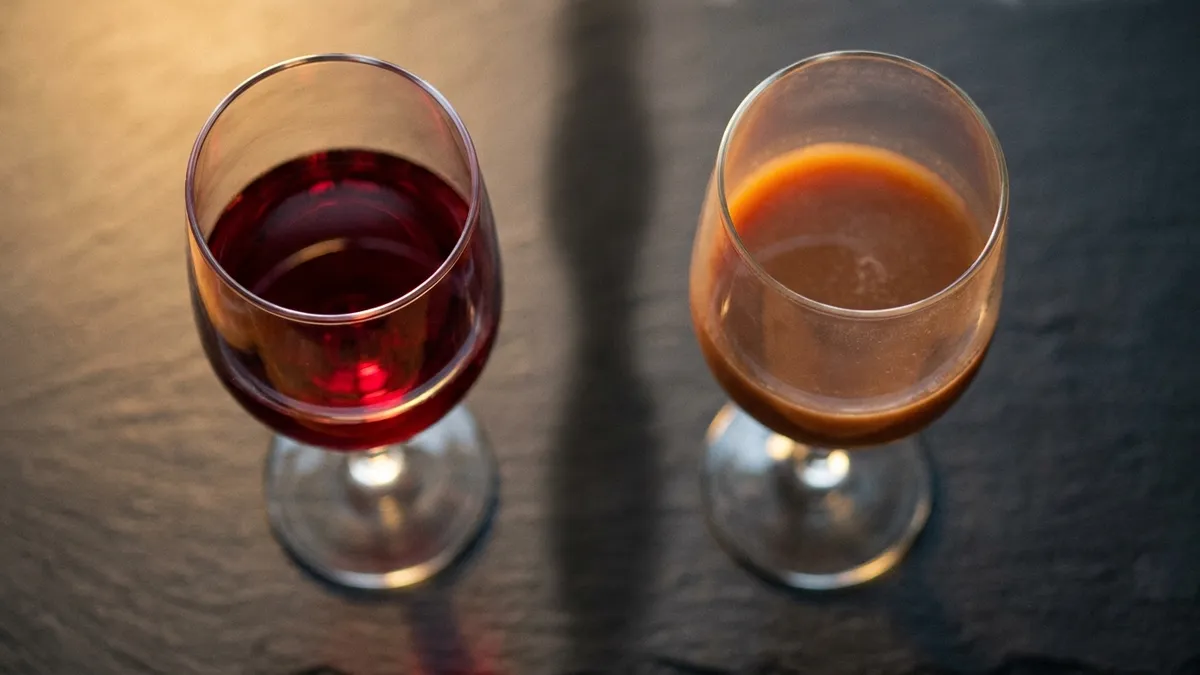
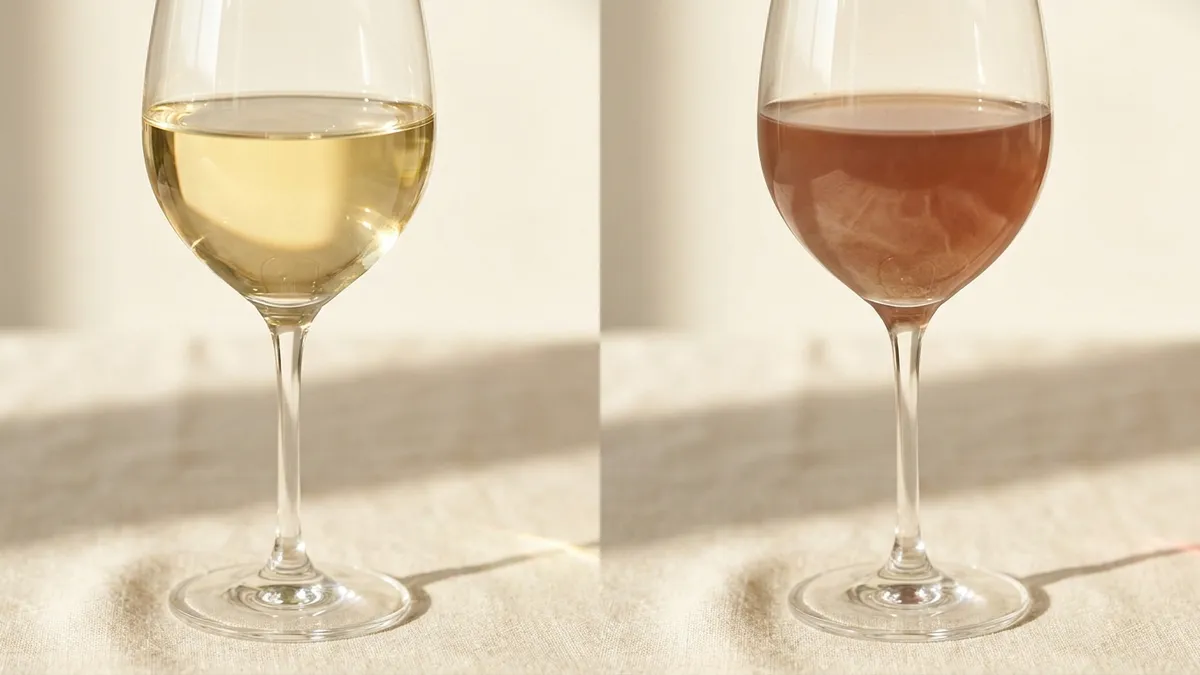
The exception is cloudiness throughout the glass. A wine that looks hazy from top to bottom — not just at the bottom — is a different conversation. Persistent cloudiness can indicate secondary fermentation in the bottle (yeast or bacteria still active, producing CO2 and turbidity), heat damage, or rare microbial contamination. These are real faults. The fingerprint test is simple: sediment settles, cloudiness does not. In a white wine that smells normal, all-over cloudiness is most often protein haze from heat, a cosmetic problem rather than a fault. When that haze comes with bubbles, our guide to refermentation in the bottle shows what to do next. For the broader picture of fault recognition by smell and sight, the faults learning hub walks through every common one with side-by-side comparisons.
How to Serve a Wine with Sediment
The whole point of recognizing sediment is to serve the bottle so the grit stays in the bottle and the glass pours bright. The technique is simple but matters most for older, more expensive wines where one careless tilt ruins the whole pour.
Step 1: Stand the Bottle Upright for 24 Hours
If you know in advance you are opening an aged red, stand the bottle straight up for a full day before serving. Sediment that has accumulated along the side of a horizontally stored bottle takes time to fall to the very bottom. Twelve hours is the minimum, twenty-four is safer. For Vintage Port or anything over twenty years old, two days is not unreasonable.
Step 2: Open the Bottle Without Tilting
Cut the foil and pull the cork with the bottle perfectly vertical. A squeeze-and-twist foil cutter helps here, because it removes the capsule without tipping the bottle. Avoid the temptation to tilt the bottle to see the cork better. Every angle change disturbs the sediment that has just settled.
Step 3: Pour Slowly and Watch the Shoulder
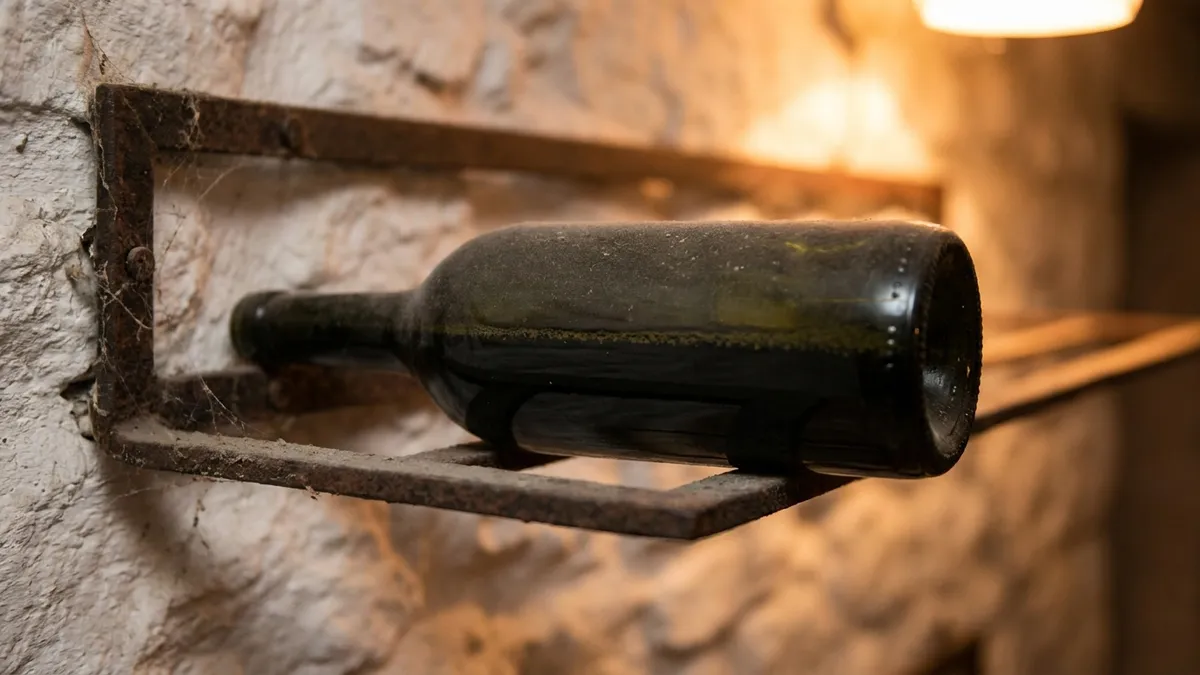
The sommelier trick is a candle or small flashlight placed behind the bottle as you pour. The light shines through the neck, and you can see the moment a dark wisp of sediment reaches the shoulder of the bottle. Stop pouring at that exact moment. The wine you have already poured is clear. The last inch in the bottle holds the sediment and goes down the sink.
For wines with significant sediment, decant through a funnel with a fine mesh screen. The wine pours through smoothly while the screen catches every grain. The decanter holds clear wine ready to serve, and the original bottle becomes a sediment trap. For more on the broader practice of decanting and what it actually does to flavor, see our guide on how to store wine at home, which covers the storage side of the same equation.

Common Sediment Misreadings
A few specific mistakes show up over and over with beginners. Each one is fixable in a sentence.
"There Are White Crystals — The Wine Is Going Bad"
Tartrate crystals are not a sign of spoilage. They are pure tartaric acid salt — the same compound used as cream of tartar in baking. Cold storage produced them, not bacteria. The wine is fine.
"There Is Dark Grit — The Wine Is Spoiled"
Dark grit in an aged red is polymerized tannin. It is the natural endpoint of years of aging. The wine on top of the grit is usually at peak drinking. The bottle is the opposite of spoiled.
"It Looks Cloudy"
Settled sediment at the bottom is not cloudiness. Pour into a clear glass and look at the upper two-thirds of the wine. If the wine itself is bright and clear, you have sediment, not turbidity. If the wine is hazy from top to bottom, that is a real fault to investigate.
"Sweet Wines Have Sugar Crystals"
Sugar does not crystallize out of wine. Even very sweet wines like Sauternes, Tokaji, or Vintage Port still hold their residual sugar in solution. What looks like sugar crystals on a sweet wine cork is, almost without exception, tartrate crystals. The acidity in dessert wines is high enough to drop tartrates faster than dry wines. For more on how dessert wines balance sugar and acid, see our dessert wine guide.

How Sommy Helps You Read a Bottle Faster
Spotting sediment, naming what it means, and serving the wine right are exactly the kind of small skills that separate a confident drinker from a hesitant one. The Sommy app walks beginners through fault and feature recognition with real-time feedback, including the visual cues that show up before you have even sniffed the wine. The same nose-first methodology used to diagnose oxidation, cork taint, or reduction also covers the visible side of the glass.
To round out the broader framework, the guide on develop your wine palate walks through the four pillars of structured evaluation — appearance, aroma, palate, finish — and the Sommy lessons add the corresponding interactive practice that locks the patterns into memory.
Visit sommy.wine to start training your eye and nose for every cue a wine bottle gives you. Wine sediment is one of the easiest to read once you have seen it twice. After that, you spend the rest of your wine life recognizing it instantly — and pouring around it without thinking.
The One-Line Summary
Clear crystals on a cork are wine diamonds, dark grit at the bottom of an aged red is polymerized tannin, both are harmless, and a sedimented bottle is more often a sign of quality than a sign of fault. Stand it up, pour slow, and the wine in the glass will look as bright as the day it was made.
Frequently Asked Questions
Is it safe to drink wine with sediment?
Yes. Wine sediment is completely safe to drink. The clear crystals on a cork or glass are tartaric acid salts — the same food-grade compound used in baking powder. The dark grit at the bottom of an aged red is just polymerized tannin and color pigment that has fallen out of solution over the years. Sediment is gritty, not toxic, and most drinkers simply leave the last splash in the bottle to keep the glass clean.
What are the clear crystals on the bottom of my cork?
Those are tartrate crystals, often called wine diamonds. They form when potassium bitartrate — a natural acid salt in grape juice — drops out of solution at cold temperatures. They are tasteless, odorless, and harmless. White wines stored in a cold fridge are the most common source. The crystals look glassy and prismatic and are often mistaken for sugar or broken glass.
Why do aged red wines have sediment but young ones do not?
Young red wines are almost always filtered before bottling, which removes any solids. As a red wine ages, tannin and pigment molecules slowly bond into longer chains that become too heavy to stay dissolved in the liquid. They settle at the bottom of the bottle as fine, dark grit. This usually starts becoming visible after eight to ten years of cellaring.
How do I avoid sediment in my glass?
Stand the bottle upright for a full day before serving. This lets all the sediment fall to the very bottom of the bottle. Open and pour slowly in a single, smooth motion without tipping back. Stop pouring when you see the first dark wisp reach the shoulder of the bottle. For heavily sedimented wines, decanting through a funnel with a fine mesh works perfectly.
Is white wine sediment different from red wine sediment?
Yes. White wines almost exclusively throw clear tartrate crystals — the same wine diamonds that form on corks. They settle as small glassy shards at the bottom of the bottle. Red wines throw both tartrates and a heavier grit of polymerized tannin and pigment that looks dark, dusty, and grainy. The red sediment is what gives the bottom of an aged Bordeaux or Barolo its sandy texture.
Does sediment mean a wine is faulty or spoiled?
No. Sediment is the opposite of a fault. It usually signals an unfiltered, naturally made, or properly aged wine. A wine being cloudy throughout the glass is a different matter and can indicate heat damage or contamination. Sediment that has settled to the bottom or formed crystals on the cork is not a fault sign — it is a quality sign.
Should I decant a wine with sediment?
Decanting is the cleanest way to separate a wine from heavy sediment. Stand the bottle upright for a day, pour slowly into a decanter with a candle or torch behind the neck, and stop the moment you see dark wisps. The wine in the decanter is clear, and the last splash with the sediment stays in the bottle. This is standard practice for aged Bordeaux, Barolo, and Vintage Port.
Why does Vintage Port have so much sediment?
Vintage Port is bottled unfiltered specifically so that age can develop the complex tertiary flavors collectors prize. The trade-off is that a Vintage Port at twenty or thirty years old can have an actual sandy layer at the bottom of the bottle. Decanting is mandatory for Vintage Port, and traditional service involves pouring through a fine mesh or muslin to catch every last grain.
Sommy Team
LinkedInFounder & Wine Educator
The Sommy Team is building the world's most approachable wine education app, helping beginners develop real tasting skills through structured courses and AI-guided practice.