How to Warm Up Red Wine: 4 Gentle Ways to Fix a Cold Bottle

By the Sommy Team — AI-assisted, human-edited.
Updated Sep 25, 2026
Contents (10)
- How to Warm Up Red Wine, in One Paragraph
- How Cold Is Too Cold for Red Wine?
- Why Does Cold Red Wine Taste Bitter and Flat?
- What Is the Fastest Way to Warm Up Red Wine?
- Does Cupping the Glass Work?
- Does Decanting Warm Red Wine Faster?
- Can You Microwave Red Wine or Use Hot Water?
- Does Red Wine Need to Be Room Temperature?
- Which Reds Should Stay Cool?
- Warm One Glass Two Ways Tonight
TL;DR
To warm up red wine that is too cold, stand the bottle in lukewarm water or cup the glass in your hands, then stop at 15 to 18°C for a full-bodied red. Light reds want only 10 to 13°C. Skip the microwave and hot water, because overshooting past 20°C makes alcohol evaporate noticeably.
The fastest way to fix a red that is too cold is to warm it gently, a few degrees at a time, in a bowl of lukewarm water or in your cupped hands. Cold hides a red wine's smell and makes its grip feel harsher. So when you warm up red wine that came straight from the fridge or a cool cellar, you are giving back the fruit the chill was holding down.
How to Warm Up Red Wine, in One Paragraph
To warm up red wine that is too cold, stand the closed bottle in a bowl of lukewarm water, turn it now and then, and pour a small taste every few minutes. Water moves heat about 24 times better than air, so a bath beats the counter. For a single glass, cup the bowl in both palms and swirl. Stop at 15 to 18°C for a full-bodied red such as Cabernet Sauvignon, and at 10 to 13°C for a light red such as Gamay. Skip the microwave and hot water. Both overshoot easily, and above 20°C alcohol evaporates noticeably and the wine smells hot.
How Cold Is Too Cold for Red Wine?
For a full-bodied red, anything below about 15°C is too cold, and for a light red, anything below about 10°C. The classic guideline from the enologist Émile Peynaud, repeated in the Oxford Companion to Wine, serves tannic reds (reds with plenty of tannin, the drying grip on your gums) at 15 to 18°C.
Where the bottle has been decides how far it has to travel. A kitchen fridge is far colder than any red wine target. A cellar or wine fridge usually sits near 13°C, the traditional temperature of the French caves used to store wine. That is perfect for storage and right for a light red, but a few degrees short for a full-bodied red (body is the weight of the wine in your mouth, like skimmed versus whole milk). If the bottle came from the kitchen fridge, it needs a proper warm-up. If it came from a cellar or wine fridge, a full red needs only a few degrees.
| Where the wine is | About | What a red tastes like | What to do |
|---|---|---|---|
| Kitchen fridge | Far below 10°C | Almost no smell, hard and bitter | Water bath, then taste |
| Cellar or wine fridge | 13°C | Right for light reds, tight for full reds | Pour light reds now; warm full reds a few degrees |
| Light red target | 10–13°C | Fresh, juicy, low grip | Serve as is |
| Full-bodied red target | 15–18°C | Fruit clear, tannin firm but not harsh | Serve as is |
| Conventional room | About 20°C | Alcohol starts to smell hot | Cool it slightly before pouring |
The full style-by-style numbers, whites and sparkling included, are in the wine serving temperature chart. The wine fridge guide and wine cellar temperature and humidity explain why storage runs cooler than serving.
Why Does Cold Red Wine Taste Bitter and Flat?
Cold mutes aroma and makes tannin and bitterness feel stronger, so a chilled red smells faint and tastes hard. Warmth reverses both effects: raise the same wine a few degrees and the smell returns while the grip on your gums eases.
The smell side is simple physics. Wine's scent comes from volatile compounds, molecules that lift off the surface as vapour and reach your nose. Warmer liquid releases more vapour, so a cold wine sends up less scent. The blackberry and plum in a Syrah are still in the glass. There is just less of them in the air above it.
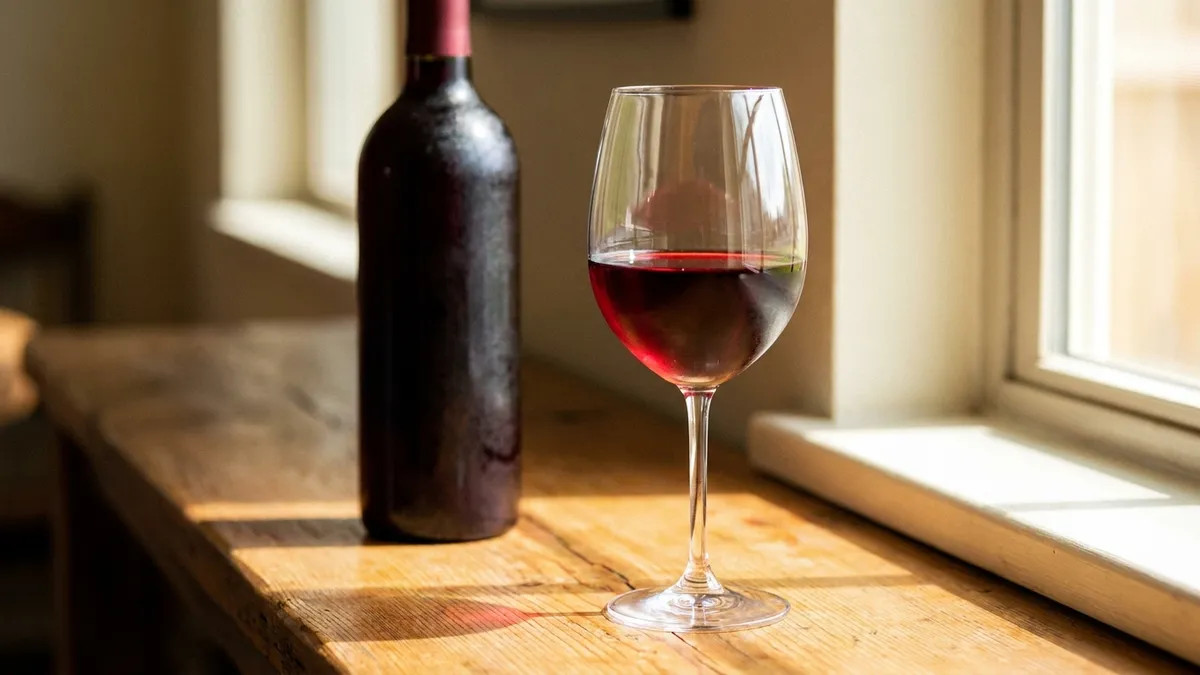
The taste side is about perception. The tannin in the wine is the same at 10°C as at 17°C, yet cold makes it feel rougher and more drying. With the fruit smell muted, that grip stands out even more. A young Cabernet Sauvignon or Nebbiolo, both high in tannin, suffers most. The what are tannins explainer covers where that grip comes from, and how temperature affects wine taste walks through one red at three temperatures.
What Is the Fastest Way to Warm Up Red Wine?
Stand the closed bottle in a bowl of lukewarm water. Water carries heat about 24 times better than air, measured at around 20°C, so a bath warms the glass far faster than the counter can. It is the reverse of the ice-water trick in how to chill wine fast.
Use water that feels comfortable on the inside of your wrist, like a warm bath rather than a hot tap. Fill the bowl high enough to cover the shoulders of the bottle. Turn the bottle now and then, so the wine against the glass mixes with the colder wine in the middle. Keep the cork or cap in.
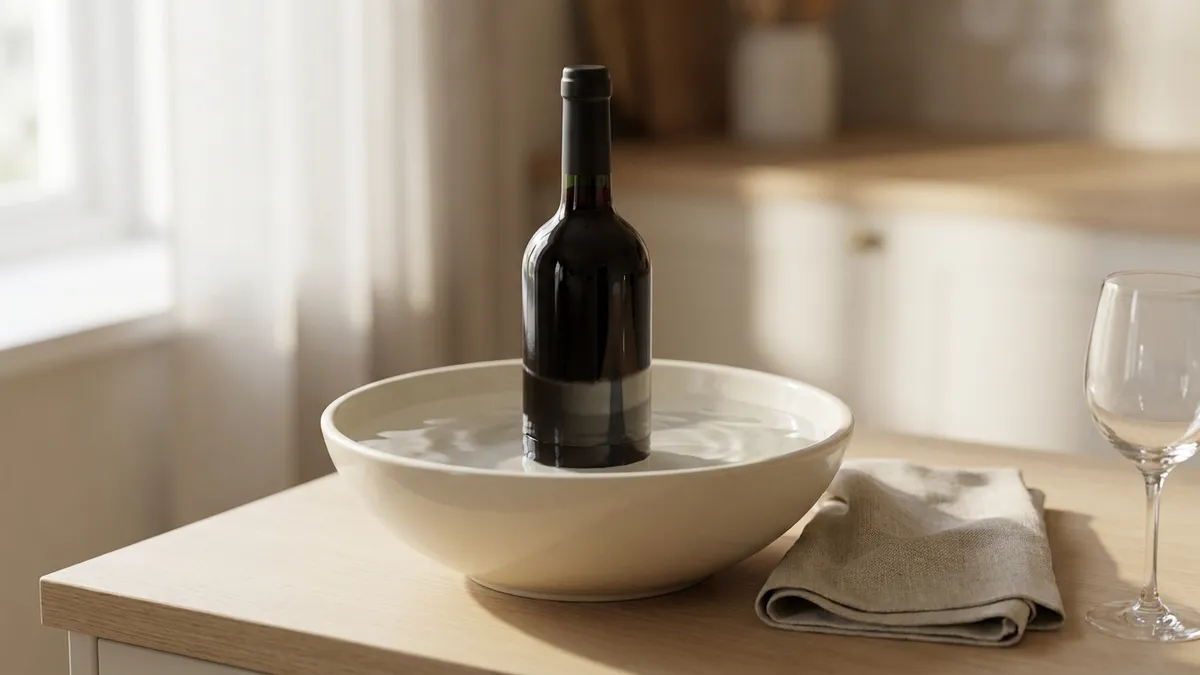
A bath has no fixed timing: a bottle from a 13°C cellar needs a short dip, and one from the kitchen fridge needs much longer. The reliable check is your mouth. Pour a small taste. If the wine smells of fruit and the tannin feels firm but not scratchy, take the bottle out and dry it. If it still smells faint, give it more time. An instant-read kitchen thermometer dipped into that small pour removes the guesswork.
Does Cupping the Glass Work?
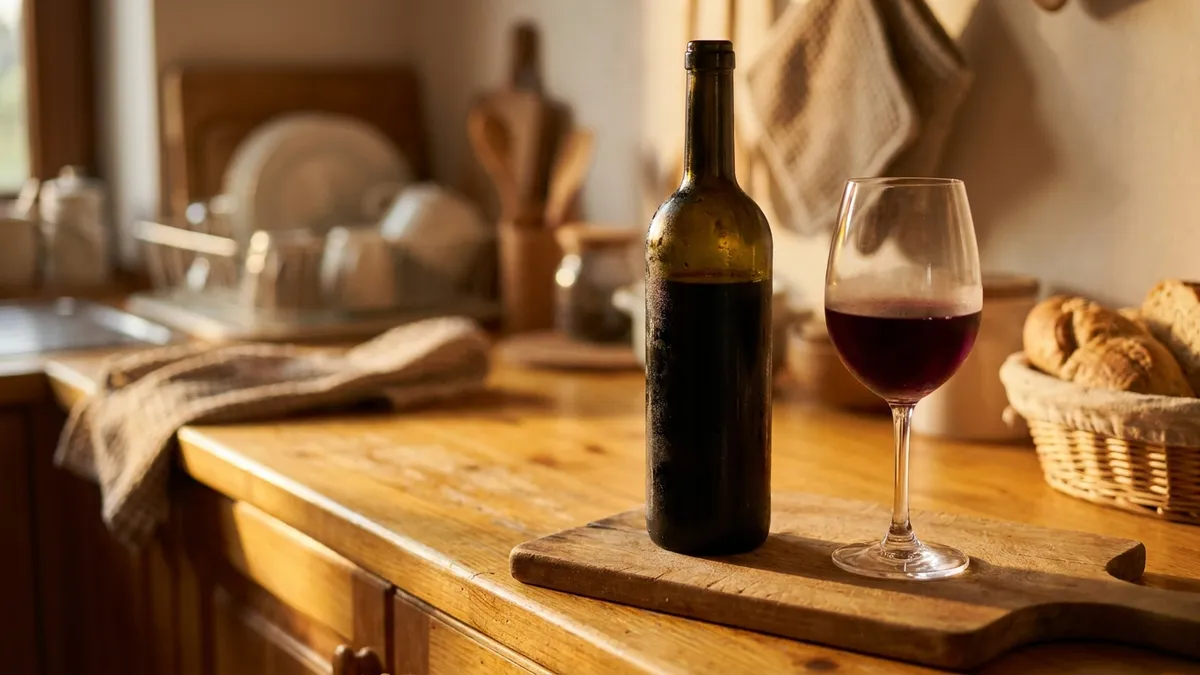
Yes, for one glass, and it is the easiest fix at the table. Hold the bowl in both palms and swirl gently for a few minutes. Body heat passes through the thin glass into the wine, and the swirling mixes the warmer wine at the edge with the colder wine in the middle.
If only one glass is cold, cup it; if the bottle itself is cold, use the bath.
A smaller pour helps. Less wine in the glass means less to warm, so it reaches its target sooner. A thin, wide bowl also warms faster than a thick tumbler. Stems exist to keep a hand off the bowl when a wine is already at temperature, as the wine glass guide explains. Cupping breaks that rule on purpose.
The mouth finishes the job. Once wine is in the mouth, body heat releases more aroma, and that scent travels up the back of the throat to the nose. So a sip held for a moment before swallowing reveals more than a sniff from a cold glass. The how to smell wine guide shows how to use both routes.
Does Decanting Warm Red Wine Faster?
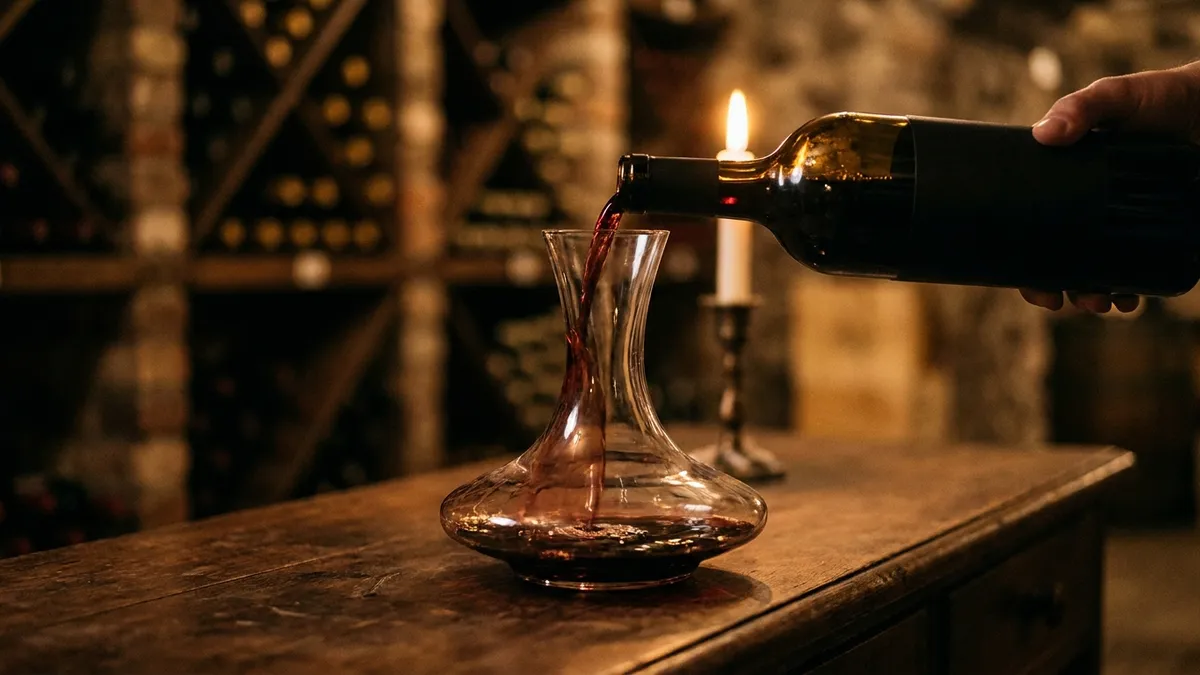
It helps a little. A decanter (a wide glass jug you pour wine into before serving) spreads the wine into a broad, shallow pool. More wine touches glass and air, so it gives up its chill sooner than wine packed into a bottle.
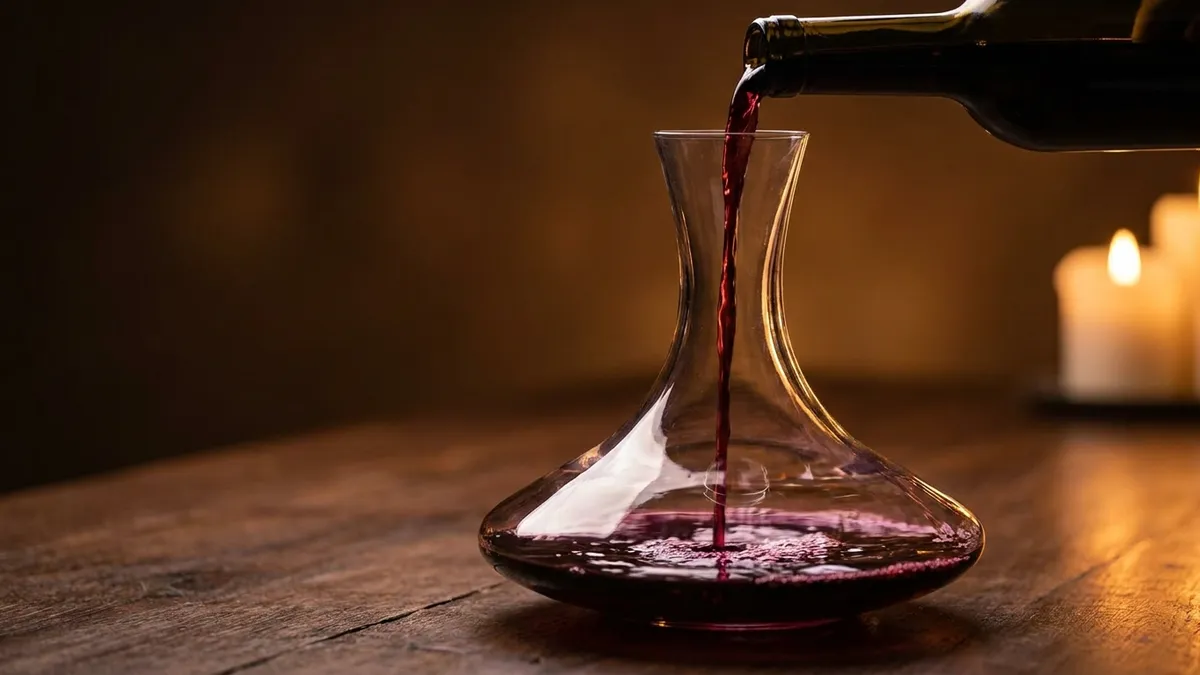
Decanting also gives a young red air, which is the usual reason to do it. So if you planned to decant a young, tannic red anyway, decant it cold and let it warm in the decanter while you cook. Pour an older red with sediment carefully, and warm it in the bottle instead, so the sediment stays put. The steps are in how to decant wine.
The counter is the slowest route of all. A bottle standing in room air warms, but air carries heat so poorly that this takes far longer than a bath. It is fine when dinner is still an hour away, and too slow when the food is on the table.
Can You Microwave Red Wine or Use Hot Water?
No. Both heat too fast and too unevenly, and the real danger is overshooting. Above about 20°C, alcohol evaporates noticeably, so a red that is too warm smells hot and spirity, and the fruit you were trying to bring out gets buried.
A microwave heats the liquid in patches, so part of the wine can run warm while the rest stays cold. You cannot taste it through the door, and a few seconds too long takes it past the target. Hot tap water or a radiator does the same from the outside. If the water feels hot to your hand, it is too hot for wine.
A gentle warm-up will not harm the bottle. Wine can be stored safely anywhere between 7 and 18°C, as long as changes are gradual, so bringing a cold red up a few degrees before dinner is well inside that range. What wine dislikes is sudden, large swings and sustained heat. The cooked wine and heat damage explainer shows what real heat does.
Does Red Wine Need to Be Room Temperature?
Only if the room is cool. "Room temperature" means a cool room here, not a heated one. Wine educators such as the WSET define room temperature for medium and full-bodied reds as 15 to 18°C. In everyday use, room temperature is conventionally about 20°C, and one US dictionary gives 20 to 22°C.
That gap explains why red wine can go wrong in both directions. A bottle left on a warm counter drifts above 18°C and starts to smell of alcohol. A bottle from a cool cellar arrives below 15°C and tastes tight. The rule that fixes both is to aim for a temperature, not a room. If the kitchen is warm and the bottle feels warm to the touch, give a full red a short spell in the fridge before pouring. If the bottle came from the cellar, give it a few minutes in lukewarm water. The wine temperature cheat sheet has quick fixes for both directions.
Which Reds Should Stay Cool?
Light, low-tannin reds are meant to be served cool, around 10 to 13°C, so a bottle from a cellar or wine fridge is often ready to pour. Peynaud recommended soft, lighter reds at 10 to 12°C for refreshment, and the WSET serves light-bodied reds such as Beaujolais "lightly chilled" at 13°C.
These wines have little tannin to turn harsh, so cold does not punish them the way it punishes a Cabernet. A cool pour keeps their acidity fresh and their cherry and raspberry fruit juicy. Gamay, the grape of Beaujolais, is the classic example; the Gamay wine guide and Beaujolais wine guide cover both. Lighter styles of Pinot Noir sit in the same camp, as the Pinot Noir guide explains.
The rule for the shop and the table: if the label says Beaujolais, or the red is pale and light in the glass, skip the warming unless it came straight from the kitchen fridge. If the red is dark, full-bodied and grippy, warm it to 15 to 18°C before you judge it.
Warm One Glass Two Ways Tonight
The quickest way to learn this is to taste it. Take a full-bodied red from the fridge or a cool cellar and pour two small glasses. Leave one alone. Cup the other in your palms and swirl it until it feels no colder than your hands, then taste the pair side by side. If the warmed glass tastes clearly better, warm the rest of the bottle in a lukewarm bath; if both taste the same, the bottle was already close to its target.
The cold glass will smell faint and grip the gums hard. The warmed one will show its fruit and feel softer. For a guide on the next bottle, the Sommy app at sommy.wine has a Wine 101 course and an AI-guided tasting mode that walks through each glass. The rest of the serving and storage topics sit in the serving and storage hub.
Pour the two glasses tonight, taste them side by side, and finish the one that shows more fruit.
Sources
- Wikipedia: Wine (serving temperatures after Peynaud and the Oxford Companion to Wine)
- Wikipedia: Wine tasting (WSET serving temperatures and temperature effects)
- Wikipedia: Wine cellar (storage temperature and gradual change)
- Wikipedia: Room temperature
- Wikipedia: List of thermal conductivities (water and air)
Frequently Asked Questions
How do you warm up red wine quickly?
Stand the closed bottle in a bowl of lukewarm water, the temperature of a comfortable bath, and turn it now and then. Water carries heat into the glass far faster than air does, so this beats leaving the bottle on the counter. Pour a small taste to check, and take it out once the wine smells of fruit and the tannin no longer grips hard.
Can red wine be served too cold?
Yes. Cold mutes aroma and makes tannin and bitterness feel stronger, so an over-chilled full-bodied red smells faint and tastes hard and drying. The classic guideline serves tannic reds at 15 to 18°C. A red straight from a kitchen fridge is far below that, and even a bottle from a 13°C cellar is a few degrees short.
Is it OK to microwave red wine to warm it up?
It is a poor idea. A microwave heats liquid fast and unevenly, so part of the wine can overshoot while the rest stays cold, and you cannot check it through the door. Above about 20°C alcohol evaporates noticeably and the wine starts to smell hot. A bowl of lukewarm water does the same job gently.
Should red wine be served at room temperature?
Only if the room is cool. The advice is usually traced to rooms far cooler than today's heated homes. Wine educators define room temperature for medium and full-bodied reds as 15 to 18°C, while a conventional room sits around 20°C. So a red left on a warm counter often ends up too warm, and one from the cellar too cold.
How long does it take to warm up a cold bottle of red wine?
The starting temperature and the method decide it. A full red from a 13°C cellar needs only a few degrees and gets there fastest in lukewarm water. A bottle straight from the fridge has much further to go. Rather than trusting a clock, pour a small taste every few minutes and stop when the fruit smells clear.
Which red wines should be served cool?
Light, low-tannin reds such as Gamay from Beaujolais and lighter styles of Pinot Noir. The classic guideline serves soft, lighter reds at 10 to 12°C, and wine educators give light-bodied reds about 13°C. These wines have little tannin to turn harsh, so a cool pour tastes fresh and juicy. Warm them only if they came straight from the fridge.
Sommy Team
LinkedInFounder & Wine Educator
The Sommy Team is building the world's most approachable wine education app, helping beginners develop real tasting skills through structured courses and AI-guided practice.