How to Host a Wine Tasting Party at Home

By the Sommy Team — AI-assisted, human-edited.
Updated Apr 17, 2026
Contents (16)
- TLDR
- Why Host One in the First Place
- Pick a Theme Before Anything Else
- Choose the Right Number of Bottles
- Get the Glassware Right
- Temperature and Timing
- Plan the Order
- Food: Less Is More
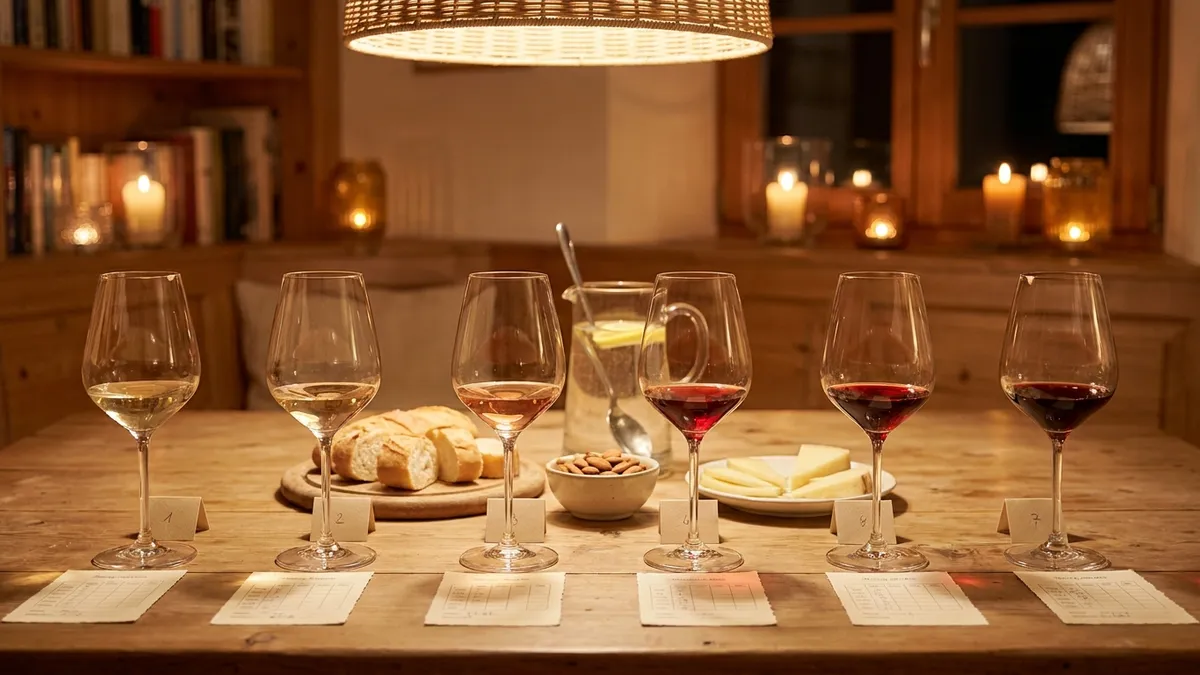
- Set Up Tasting Cards
- The Flow of the Evening
- Small Rituals That Make It Memorable
- Common Mistakes to Avoid
- Budget vs Splurge
- A Sample Plan for Six Guests
- FAQ
- The Bottom Line
TL;DR
A strong home tasting is four to six bottles around one clear theme, 2-ounce pours in identical stemmed glasses, and palate-neutral snacks like plain bread, mild cheese, and water. Serve whites and reds at the right temperatures, pour in a light-to-heavy order, hand out simple tasting cards, and cap the evening around two hours.
TLDR
A good home wine tasting is four to six bottles around a clear theme, 2-ounce pours, light palate-neutral food, and a simple order that moves from light to heavy. Add printed tasting cards, water between wines, and a quick ranking at the end. Two hours, minimal stress, and every guest leaves understanding one thing about wine they did not know before.
Why Host One in the First Place
Most people drink wine with dinner, never comparing two bottles side by side. A wine tasting party at home changes that. The moment you pour two Cabernets from two regions into identical glasses, the differences become obvious. The guest who had been drinking wine passively for years suddenly notices the oak, the acidity, the cherry character. That is the payoff.
A home tasting is also one of the best-value social events you can host. Four bottles split across six guests costs less than dinner out and produces a more memorable evening. There is structure without formality, learning without a classroom, and enough wine for everyone to go home having tasted something they would not have chosen on their own.
This guide walks through every decision that shapes a good tasting — theme, bottles, glasses, food, order, and the small hosting rituals that lift the evening from a dinner to an experience.
Pick a Theme Before Anything Else
The single most important decision is the theme. Four random bottles is a dinner. Four bottles organized around a clear idea is a tasting.
Themes fall into five useful categories:
Grape-focused
Same grape, different places. The single best format for beginners because the comparison is dramatic.
- Four Pinot Noirs from Burgundy, Oregon, California, and New Zealand
- Three Sauvignon Blancs from Sancerre, Marlborough, and Napa Valley
- Five Syrahs from Northern Rhône, Australia, Washington State, South Africa, and Chile
Region-focused
Same region, different grapes or styles. Teaches the regional character that binds the wines together despite varietal differences.
- A tour of Italy: a Nebbiolo, a Sangiovese, a Primitivo, and a Pinot Grigio
- Four Spanish reds spanning Tempranillo-led Rioja, Garnacha, Monastrell, and Bobal
Vintage-focused (a vertical)
Same wine, different years. Our vertical wine tasting guide covers this format in depth.
Price-focused
Same grape, same region, three price tiers. $15, $30, and $50. A direct lesson in what money actually buys in wine.
Blind-focused
A vague theme ("four bold reds") poured blind. The guessing game is the point. Our blind wine tasting tips guide covers the format. A blending night, where guests mix measured samples and rank them blind, works the same way: see wine blending at home.
Pick one theme. Do not try to combine them. A single clear theme beats a clever multi-axis one every time.
Choose the Right Number of Bottles
- Two bottles — a casual tasting for a dinner party of four to six. Minimum viable format.
- Four bottles — the sweet spot for a home tasting with four to eight guests. Enough variety for real comparison, not enough to overwhelm.
- Six bottles — the upper limit for a serious but still casual evening. Plan a palate break halfway through.
- Eight-plus bottles — only if you are running it as a structured multi-hour event with professional discipline. At home, this usually ends in fatigue and blurred impressions.
For a dinner-format tasting with six guests, four bottles is the default. A 750 ml bottle gives twelve 2-oz pours, enough for each of six guests to taste every wine twice.
Keep the featured flight in labeled bottles so the comparison stays honest, but for the welcome pour and the relaxed mingling after the structured tasting, a box of a fresh, crowd-friendly style is hard to beat — it pours around twenty glasses, needs no corkscrew, and stays fresh if the evening runs long. Our boxed wine guide covers which styles suit the format.
Get the Glassware Right
Wrong glassware is the most common hosting mistake. A tasting in tumblers or shot glasses is not a tasting — it is drinking.
Three rules:
- Stemmed tulip shape — a medium bowl with a slightly narrowed rim. One shape works for nearly every wine.
- Identical glasses across the flight — different shapes change aroma release and make comparisons unreliable.
- One glass per wine, per guest — rinsing between wines wastes water and time, and residual moisture dilutes the next pour.
For a four-wine tasting with six guests, you need 24 glasses. Put white cloths and club soda on the table too, and use these red wine stain removal steps if one tips. That sounds like a lot. It is not. A set of six universal wine glasses is inexpensive, and they are useful for every dinner you host for the rest of your life. The upfront investment pays off fast.
Temperature and Timing
Serving temperature is the second most common hosting mistake. Refrigerator-cold white wine locks in most of its aromas. Warm red wine tastes flabby.
Rough targets:
- Sparkling: 6 to 8 °C (43 to 46 °F)
- Light whites: 8 to 11 °C (46 to 52 °F)
- Full whites: 11 to 13 °C (52 to 55 °F)
- Light reds: 13 to 15 °C (55 to 59 °F)
- Full reds: 15 to 17 °C (59 to 63 °F)
If you chill every red 15 to 20 minutes in the refrigerator before serving, you will be roughly in the right zone. If you pull every white from the fridge 15 minutes before serving, you will also be roughly right. Room temperature in most homes is too warm for red and too warm for white — do not trust the label advice "serve at room temperature" literally.
Our wine serving temperature chart goes deeper on which style belongs where.
Plan the Order
The order of the wines matters. Tasting a heavy red before a delicate white means the white will taste thin and disappointing. The rule of thumb used by every sommelier:
Light before heavy. Dry before sweet. White before red. Young before old — with one exception: the oldest red last, because its tertiary character is most delicate.
For a typical four-wine tasting, an ordering like this works:
- Light crisp white (Sauvignon Blanc, Pinot Grigio, or Albariño)
- Rounder white (oaked Chardonnay or Viognier)
- Lighter red (Pinot Noir or Gamay)
- Fuller red (Cabernet Sauvignon or Syrah)
If your theme is grape-focused (four Chardonnays, for example), go from unoaked to oaked or from cool-climate to warm-climate. The progression reveals the stylistic spectrum.
Food: Less Is More
Food for a wine tasting should clean the palate between wines, not compete with them. Heavy food kills perception.
Reliable choices:
- Plain bread or baguette (no seeds, no olives, no strong herbs)
- Unsalted crackers
- Mild cheeses — a young Manchego or a mild Brie, not a blue or washed rind
- Plain crudités (cucumber slices, raw carrots, celery)
- Unsalted almonds or walnuts
- Water crackers with a tiny drizzle of plain olive oil
Avoid:
- Strong cheeses (blue, aged Gruyère, washed rind)
- Vinegar-based dressings and pickled foods
- Chocolate (except at the very end, and only with sweet wines)
- Spicy food
- Anything with heavy garlic or onion
For a longer tasting, plan a proper meal at the end after the wines have been evaluated. The meal is social. The tasting is structured. Do not confuse the two.
Set Up Tasting Cards
A printed tasting card elevates the evening from a casual drink to an event that guests will remember.
A simple card per guest includes:
- Space for the wine name (fill in before or after the tasting)
- A color scale from pale to deep
- A 1-to-5 rating for sweetness, acidity, tannin, body, alcohol
- A line for three aromas
- A one-line overall impression
- A final rank (1 to 4)
A piece of paper, a pen, and 30 seconds of design is enough. Fancy printed cards are charming but not necessary. What matters is that every guest has a small structured framework for their impressions. Without the card, most beginners default to "I like this one."
Our wine tasting notes template guide has a full-length five-section format you can compress onto a card.
The Flow of the Evening
A two-hour home tasting usually runs like this:
- 0:00 — guests arrive, welcome drink (a simple sparkling or a neutral white), brief introduction of the theme
- 0:15 — first wine poured for everyone. Smell, taste, discuss. Cards filled out.
- 0:30 — second wine poured.
- 0:50 — third wine poured. Brief palate break with water and bread.
- 1:10 — fourth wine poured.
- 1:30 — everyone ranks the four wines. Reveal labels if blind. Short discussion of favorites.
- 1:45 — meal starts, with the winning wine or a fresh bottle.
- 2:00 — coffee and chat.
The times are approximate. What matters is that the tasting has a rhythm — arrival, structured tasting, ranking, meal. Guests enjoy the structure because it gives them permission to focus. Without it, tasting dissolves into casual drinking within ten minutes.
Small Rituals That Make It Memorable
A few touches that lift the evening above a dinner with wine:
Pour blind
Wrap the bottles in paper bags or decant into unlabeled carafes. Number them 1 through 4. Reveal at the end. Guests always remember a blind tasting more than a revealed one, because being wrong is funnier than being right.
Assign a role per guest
One person tracks aromas, one tracks structure, one keeps the timer. Everyone contributes something. Nobody feels like a passenger.
Include a ringer
Slip in one wine significantly more expensive than the others, or one made in a deliberately different style. The surprise at the reveal is the memorable moment of the evening.
Close with a sommelier question
At the end, ask each guest to answer one short question: "What did you learn tonight?" or "Which wine surprised you?" or "What would you buy tomorrow?" This closes the evening on a reflective note and helps the lessons stick.
Sommelier note: Avoid teaching. Guide and ask. Most guests come for the social experience, not a class. The best host frames the evening around the comparison and lets the wines do the teaching.
Common Mistakes to Avoid
Six patterns that quietly flatten a tasting:
- Too many wines. Six is a firm upper limit for a casual group. Eight wines means nobody remembers the first three.
- Strong food served during the tasting. A great cheese plate at the start ruins the whole evening. Save the good cheese for after.
- Pouring generous amounts. 2-ounce pours per wine per person is correct. A full glass means fatigue sets in fast.
- Wrong temperatures. Most at-home failures are temperature failures. Use a thermometer once, calibrate your fridge timing, then trust the calibration.
- No structure. Four bottles and no format is just a long cocktail hour. A simple tasting card is enough to create structure without turning it into homework.
- Running too long. Two hours is the sweet spot. Beyond that, palate fatigue and alcohol accumulation degrade the experience.
Budget vs Splurge
You can run a memorable tasting at several price points.
Budget tasting ($60 for four bottles)
Four bottles at $15 each. Same grape from four regions — four Malbecs, four Pinot Noirs, four Rieslings. The comparison still works because the structure of the tasting produces the learning, not the price of the wines.
Mid-range tasting ($120 for four bottles)
$30 per bottle. A clear step up in complexity and typicity. This is the sweet spot where most home tastings live.
Special-occasion tasting ($200-plus for four bottles)
$50 per bottle or more. Use for milestone evenings — a birthday, an anniversary, a celebration. Spend on quality, not quantity; a single $80 bottle matters more than two $40 fillers.
The Sommy app's tasting journal captures each wine your guests evaluate with producer, region, and full tasting note fields, so the notes from a party become searchable months later when you want to buy the winner again.
A Sample Plan for Six Guests
If you want to run your first one this weekend:
- Theme: Pinot Noir around the world
- Wines: A Burgundy Village, an Oregon Willamette Valley, a California Sonoma Coast, a New Zealand Central Otago
- Budget: $120 total ($30 per bottle)
- Glassware: Six universal stemmed glasses per guest (buy a set of 24 the week before)
- Food: Plain baguette, Manchego, water crackers, unsalted almonds, cucumber slices
- Order: Burgundy first (lightest), then Oregon, then Sonoma Coast, then Central Otago (warmest climate, fullest body)
- Duration: 90 minutes of tasting, then a light pasta dinner
Print six copies of a one-page tasting card, chill all four bottles for 15 minutes before serving (yes, all of them — Pinot at 14 to 15 °C is ideal), pour 2-oz pours, and let the comparison do the work.
FAQ
How long should a wine tasting party last?
About 90 minutes for the tasting itself, then another hour for a meal and social time. Total 2 to 2.5 hours. Beyond that, palate fatigue and alcohol accumulation degrade everything — including the conversation.
How many bottles do I need per guest?
Plan 2-oz pours per wine per person. A 750 ml bottle gives 12 pours. For a four-wine tasting with six guests, buy four bottles of your featured wines plus a welcome bottle — five total.
Should I decant the wines?
Decant older reds (10-plus years) and any young tannic red. Do not decant whites, sparkling, or lighter reds. When in doubt, pour a sip as soon as you open the bottle and another 30 minutes later — your own comparison is the best guide.
Do I need to feed guests?
Light palate-neutral snacks during the tasting, yes. A proper meal after the tasting is optional but recommended — most guests will drink wine on an empty stomach for 90 minutes and welcome real food afterward.
What should I do if a guest has had too much?
Slow the pace. Serve more water and bread. Cut pour sizes in half for the remaining wines. A good host reads the room and adjusts without making it obvious. Spitting is always an acceptable option — mention it casually at the start and provide a spit bucket so the option feels normal rather than strange.
Is it rude to ask guests to spit?
Not at all, especially for serious tastings with four-plus wines. Spitting is standard at professional tastings and is the only way to taste six bottles without losing palate accuracy. Frame it as "feel free to spit if you want to stay sharp," and provide a neutral-looking spittoon (a small opaque container works fine).
Should I share the prices of the wines?
Reveal prices after the tasting, not before. Price bias is stronger than most people realize. When guests know one wine costs three times the others, they tend to like it more regardless of what is actually in the glass. Blind the prices for the honest comparison.
The Bottom Line
A good wine tasting party at home is a four-bottle comparison around a clear theme, served in identical glasses at the right temperature, with palate-neutral food and printed tasting cards. Two hours, a simple flow, and a ranking at the end. Guests leave having learned one thing about wine — which is more than any dinner party can usually promise.
Want structured tasting cards that fill themselves in? Sommy's tasting flow captures each wine with a color, nose, palate, and rank field, and lets every guest log to their own account — turning a social evening into a searchable set of notes for everyone involved.
Frequently Asked Questions
How long should a wine tasting party last?
About ninety minutes for the tasting itself, then another hour for a meal and social time — roughly two to two and a half hours total. Beyond that, palate fatigue and alcohol accumulation degrade everything, including the conversation. The tasting portion needs structure; the meal portion can stretch as long as the guests want.
How many bottles do I need per guest?
Plan two-ounce pours per wine per person. A 750 ml bottle gives about twelve pours of that size. For a four-wine tasting with six guests, buy four featured bottles plus a welcome bottle — five total. Add a spare of something approachable in case a bottle is flawed or a guest wants a second pour.
Should I decant the wines before the party?
Decant older reds over about ten years old and any young tannic red that feels tight on opening. Do not decant whites, sparkling, or lighter reds like Pinot Noir. When unsure, pour a sip at open and another thirty minutes later — your own comparison is the most reliable guide for a specific bottle.
How much food should I serve during the tasting?
Light palate-neutral snacks only — plain bread, unsalted crackers, mild cheese, cucumber slices, unsalted almonds. A proper meal waits until after the ranking at the end. Heavy food during the tasting kills perception, and strong cheese or spicy dishes coat the palate for longer than the next wine can recover from.
What should I do if a guest has had too much?
Slow the pace. Serve more water and bread. Cut pour sizes in half for the remaining wines. A good host reads the room and adjusts without making it obvious. Spitting is always an acceptable option — mention it casually at the start and set out a spittoon so the option feels normal rather than strange.
Is it rude to ask guests to spit?
Not at all, especially for serious tastings with four or more wines. Spitting is standard at every professional tasting and is the only way to evaluate six bottles without losing palate accuracy. Frame it warmly — 'feel free to spit if you want to stay sharp' — and provide a neutral opaque container so nobody feels self-conscious.
Should I reveal the prices of the wines?
Reveal prices after the tasting, not before. Price bias is stronger than most people realize. When guests know one wine costs three times the others, they tend to prefer it regardless of what is actually in the glass. Blind the prices along with the labels to produce an honest comparison and a more interesting reveal.
What theme works best for a first-time home tasting?
Same grape, different places. Four Pinot Noirs from Burgundy, Oregon, California, and New Zealand is the classic beginner format because the comparison is dramatic and the learning is immediate. The structure teaches the grape and the regions at the same time, and the wines frame each other through obvious stylistic contrasts.
Sommy Team
LinkedInFounder & Wine Educator
The Sommy Team is building the world's most approachable wine education app, helping beginners develop real tasting skills through structured courses and AI-guided practice.