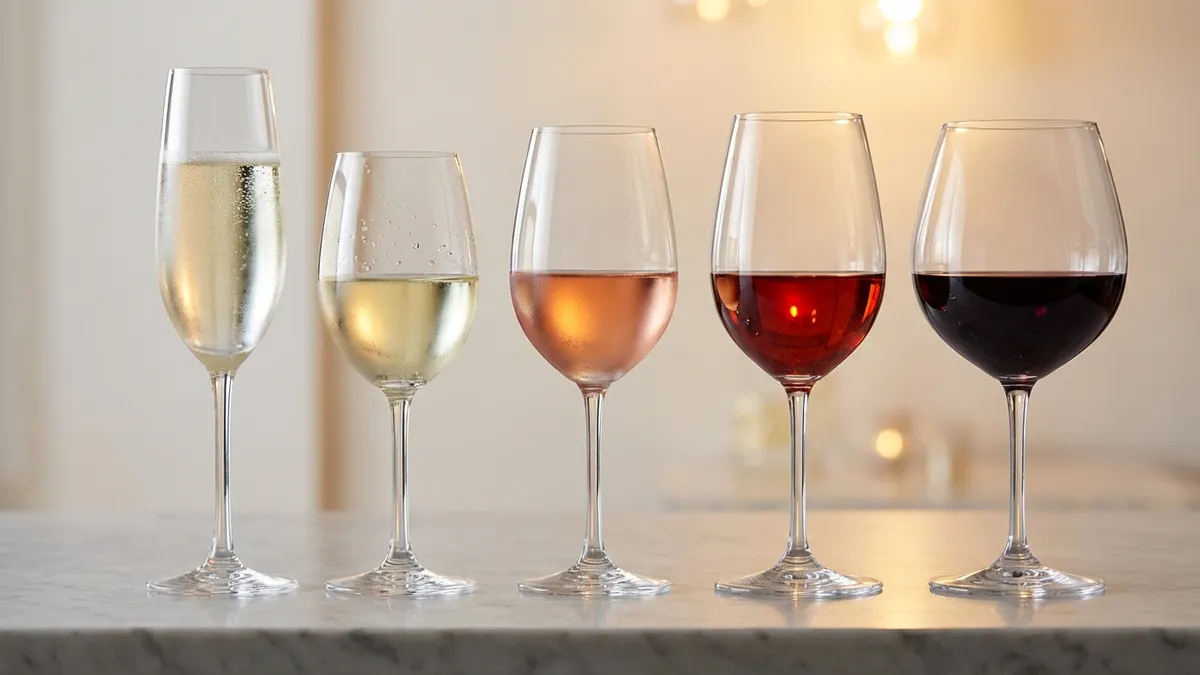
Wine Serving Order at Dinner: Light to Heavy, Dry to Sweet

By the Sommy Team — AI-assisted, human-edited.
Updated Sep 25, 2026
Contents (10)
- Wine Serving Order at Dinner, in One Paragraph
- What Order Do You Serve Wine at a Dinner Party?
- Should White Wine Always Come Before Red?
- Why Do Lighter Wines Go Before Heavier Ones?
- Where Do Sparkling and Sweet Wines Go?
- When Do Sherry, Port and Madeira Get Poured?
- Which Rule Wins When Two of Them Disagree?
- Do Temperature and Decanting Change the Pouring Order?
- What Does a Four-Course Dinner Lineup Look Like?
- How Do You Set Tonight's Order Before Guests Arrive?
TL;DR
At dinner, the courses set the wine order and the classic rules break ties. Pour dry sparkling or fino sherry first, light whites with the starter, fuller whites or reds with the main, sweet wine with dessert, and port after. When rules clash, sweetness and weight outrank colour and age.
At dinner, the courses set the wine serving order and the classic rules only break ties. Pour the driest, lightest and coldest wines first. Let sweetness, weight and alcohol rise as the food gets richer.
Wine Serving Order at Dinner, in One Paragraph
The standard wine serving order for a dinner runs in five slots. A dry sparkling wine or fino sherry comes with nibbles as guests arrive. A light, crisp white goes with the starter. A fuller white or a red follows with the main course, lighter reds before tannic ones. A sweet wine arrives with dessert, and port or sweet Madeira comes after the meal.
Serving temperatures climb in the same direction, from 6 to 10°C for sparkling up to 15 to 18°C for a full-bodied red. Body (a wine's weight in the mouth, like skimmed versus whole milk) decides the order more than colour does. If two rules disagree, apply them in this order: course first, then sweetness, then body and tannin, then colour, then age.
What Order Do You Serve Wine at a Dinner Party?
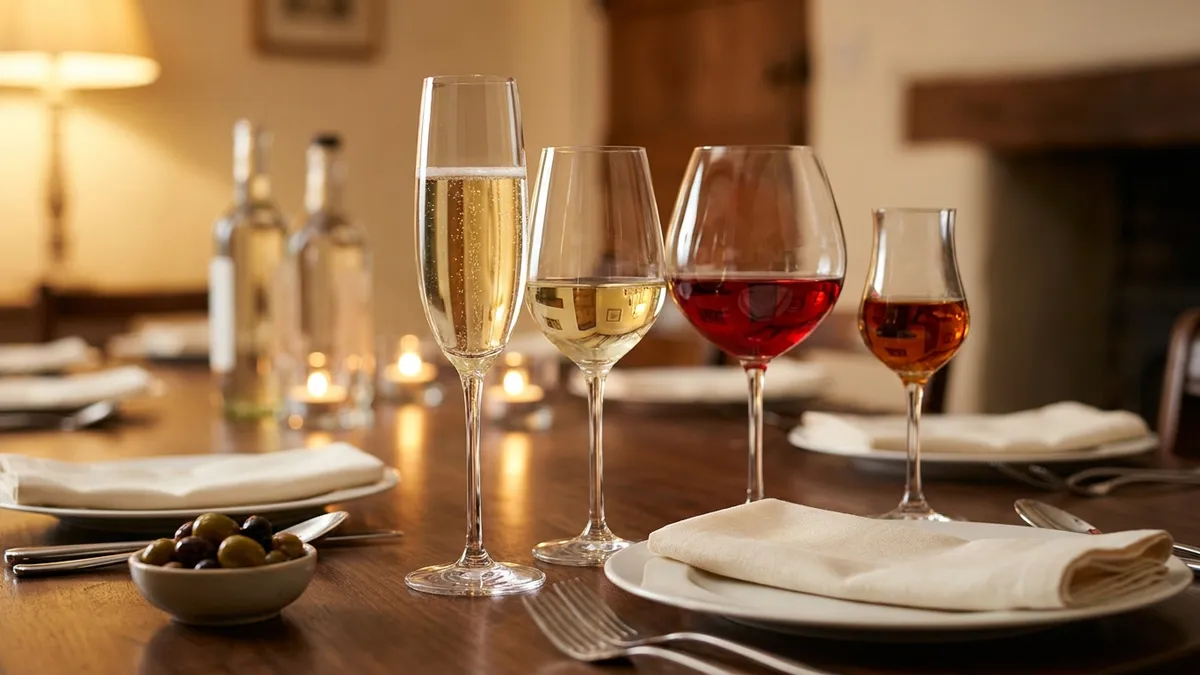
Serve in the order of the courses. A dry sparkling wine or fino sherry comes with nibbles and a light white with the starter. A fuller white or red goes with the main, a sweet wine with dessert, and port or sweet Madeira after the meal. Each wine steps up in weight or sweetness from the one before.
The first pour is the aperitif, a drink before the meal that wakes up appetite rather than filling it. The last is the digestif, a small, strong glass after the plates are cleared. Between them, each course gets the wine that suits its food. The same ladder appears in the wine tasting order chart, but a meal adds food, gaps between courses and glasses left half full.
| Course | Wine style | Label words | Serve at | Host move |
|---|---|---|---|---|
| Aperitif | Dry sparkling or dry white fortified | Brut, Extra Brut, Fino, Amontillado | 6–10°C | Pour as guests arrive; keep the bottle on ice |
| Starter | Light, aromatic or unoaked white | Dry Riesling, Chablis | 8–12°C | Open it when you plate the starter |
| Main, lighter dish | Light red or full white | Beaujolais, Pinot Noir, oaked Chardonnay | 10–16°C | Pour the lighter of the two first |
| Main, richer dish | Medium to full red | Red Burgundy, Cabernet Sauvignon | 14–18°C | Decant a young tannic bottle before guests sit |
| Dessert | Sweet white | Demi-sec, Doux, Sauternes, Trockenbeerenauslese | 6–10°C | Chill it, but take it out of the ice before serving |
| After dinner | Red fortified | Port, sweet Madeira (Malmsey) | Room temperature or slightly cool | Small glasses, with the cheese or nuts |
If a course has no wine of its own, keep the previous glass going. Opening a new bottle out of order costs more than a top-up. The wine glass guide covers which shapes to set at each place, and how many glasses are in a bottle helps you count bottles per course.
Should White Wine Always Come Before Red?
No. Weight decides, not colour. A light red such as Beaujolais is served at 10 to 12°C, cooler than an oaked Chardonnay at 12 to 16°C, and it weighs less in the mouth. On a table with both, the light red can come first and the full white can follow with a richer dish.
"White before red" is a useful shortcut because most whites are lighter than most reds. It fails when the white has spent time in oak (barrels that add vanilla, toast and a rounder texture) and the red is a delicate, low-tannin style. Pinot Noir from a cool region and young Beaujolais are the usual light reds. Oaked Chardonnay and Viognier are the usual heavy whites. The Pinot Noir guide explains why that grape stays light.
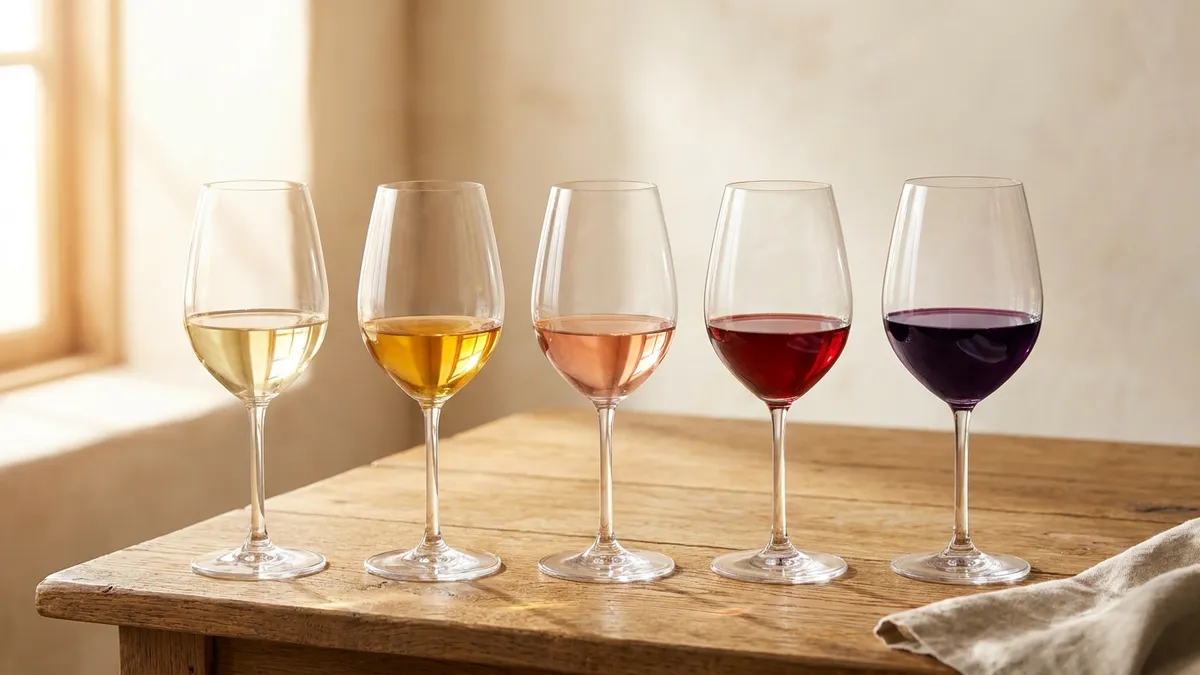
If the white is oaked and full and the red is light, pour the red first. If you are unsure which is heavier, pour a splash of each and compare: the one that feels fuller and rounder in your mouth is the heavier wine.
Why Do Lighter Wines Go Before Heavier Ones?
Heavier wines are deeper in colour and more intense on the nose, so a delicate wine poured after one tastes faint and watery. Professional tasters rely on this. Before taking a sip, they decide the order of a lineup by appearance and aroma alone, according to Wikipedia's wine tasting reference.
Tannin is the drying grip you feel on your gums and inner cheeks, and it adds to the effect. It comes from grape skins, seeds and stems, and from oak barrels. A tannic red leaves a dry, puckery coating behind, so a light wine poured next can seem thin. The what are tannins guide shows how to feel it, and wine palate fatigue explains how your sense of taste tires over a long evening.
If one wine smells stronger and looks darker than another, it goes later.
Where Do Sparkling and Sweet Wines Go?
Dry sparkling goes first and sweet wine goes last. The sweetness word on the label tells you which one you are holding. Dry means no sugar you can taste; fruity is not the same as sweet. A Brut Champagne is dry. A Demi-sec is sweet enough for dessert.
Champagne labels carry a dosage word, which states how much sugar is left in the finished wine after a dose of sugar is added just before corking:
- Extra Brut: less than 6 grams per litre
- Brut: less than 12 grams per litre, the most common style today
- Extra Dry: 12 to 17 grams per litre
- Sec: 17 to 32 grams per litre
- Demi-sec: 32 to 50 grams per litre
- Doux: 50 grams per litre or more
"Extra Dry" is sweeter than Brut, despite its name. If the label says Brut or Extra Brut, pour it first. If it says Demi-sec or Doux, hold it for dessert, and choose a dessert that is no sweeter than the wine.

The aperitif slot for Champagne is fairly new. In the 19th and early 20th centuries, everywhere except Britain, Champagne was drunk after the meal as a dessert wine. The sweeter dosage words are a leftover from that habit.
Sweet wine goes last because sugar changes how the next wine tastes: a dry wine after a sweet one seems sharp and sour. The sweetest dessert wines are botrytized, made from grapes shrivelled by a helpful mould, and often carry more than 200 grams of sugar per litre. The sweet vs dry wine guide and the dessert wine guide cover the styles.
When Do Sherry, Port and Madeira Get Poured?
White fortified wines go before the meal and red fortified wines after it. That is the traditional British split: fino and amontillado sherry as aperitifs, sweet wines with the meal, and port and Madeira afterwards. The deciding factor is sweetness, and colour is only the usual sign of it.
A fortified wine has grape spirit added, which lifts it to about 15 to 20% alcohol. Most table wine sits between 12.5 and 14.5%. That strength explains why port lands at the very end: a glass of it would flatten any table wine poured afterwards.
Fino sherry is bone dry and served cold, so it behaves like a sparkling wine in the order. Port is typically a sweet red wine and closes the evening. Madeira covers both ends, from dry styles drunk as an aperitif to sweet ones taken with dessert. If the sherry or Madeira is dry, serve it before the meal. If it is sweet, serve it after. The sherry wine guide, port wine guide and Madeira wine guide cover each label in detail.
Which Rule Wins When Two of Them Disagree?
Apply them in a fixed order: the course first, then sweetness, then body and tannin, then colour, and age last. A higher rule overrides every rule below it. So a light red can go before a heavy white, and a sweet wine waits for dessert however pale it is.
- Course: the wine goes with the food it was chosen for.
- Sweetness: dry before off-dry before sweet.
- Body and tannin: light before full, soft before grippy.
- Colour: white and rosé before red, all else being equal.
- Age: older before younger, all else being equal.
Take the clash between an old red and a young one. Age sits last on the list, so body and tannin decide. An old red has usually lost tannin and become more delicate, so it goes before the young, grippy one. If the old wine is still powerful and the young one is a light Beaujolais, weight wins and the young wine goes first. Price never enters the list.
The course rule creates one awkward case. If a sweet wine is chosen for a savoury starter, such as a sweet Riesling with foie gras, keep the rest of the meal's wines at least as rich. Otherwise the dry red that follows tastes thin.
Do Temperature and Decanting Change the Pouring Order?
They follow the order rather than change it. Serving temperatures climb in the same direction as the pours, and decanting only decides when each bottle is opened. Chill the first wines hardest, let each later wine be warmer, and open the tannic bottles earliest.
Champagne's ideal drinking temperature is 7 to 9°C. The dessert course is the one place the climb reverses: sweet whites go back to 6 to 10°C. White dessert wines are easy to serve too cold, which mutes their aroma, so take them out of the ice before they are poured. Red dessert wines such as port are served at room temperature or slightly chilled. The wine serving temperature chart has every style.
Decanting does two jobs: separating a wine from its sediment (solids that settle in old reds) and giving it air. Tannin itself softens during winemaking and oak ageing, not in a decanter. Wine writer Karen MacNeil still recommends decanting very tannic wines such as Barolo, Bordeaux, Cabernet Sauvignon, port and Rhône reds. Oenologist Émile Peynaud warned that long air exposure scatters more aroma than it releases.
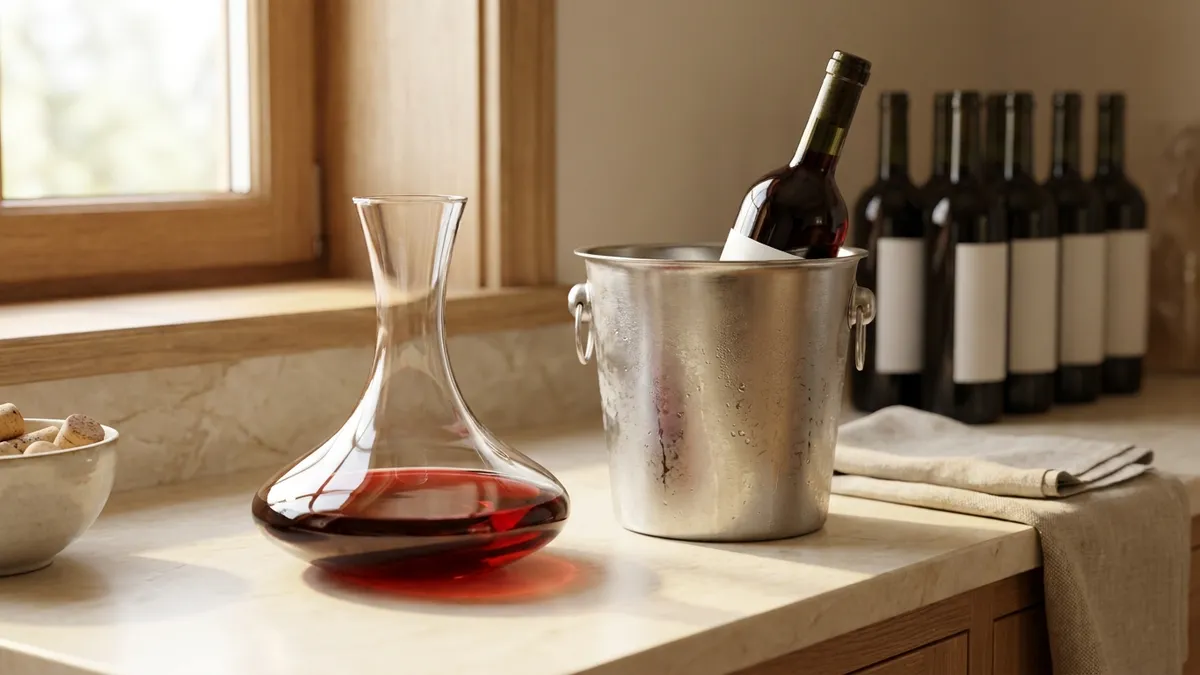
If a young red is very tannic, decant it before guests sit down, so it is ready when the main arrives. If an old red has sediment, stand it upright and decant it just before its course. How to decant wine walks through both.
What Does a Four-Course Dinner Lineup Look Like?
A classic four-course lineup runs Brut sparkling, then a dry Riesling, then Pinot Noir or Cabernet Sauvignon depending on the main, then a sweet white with dessert. Each step is heavier, warmer or sweeter than the last, and the meat on the plate picks the red.
- Aperitif, with olives and salted almonds: Brut sparkling at 7 to 9°C. Its acidity and salt-friendly bubbles keep appetite up.
- Starter, a goat cheese salad or grilled fish: dry Riesling at 8 to 12°C. Its high acidity matches lemon and vinaigrette.
- Main: if it is chicken or salmon, pour Pinot Noir at 14 to 17°C. Low-tannin reds are the usual pick for fish. If it is beef or lamb, pour Cabernet Sauvignon at 15 to 18°C. The meat's fat and protein soften its tannic grip.
- Dessert, a fruit tart: a Sauternes-style sweet white at 6 to 10°C. Its sugar should equal or top the tart's.
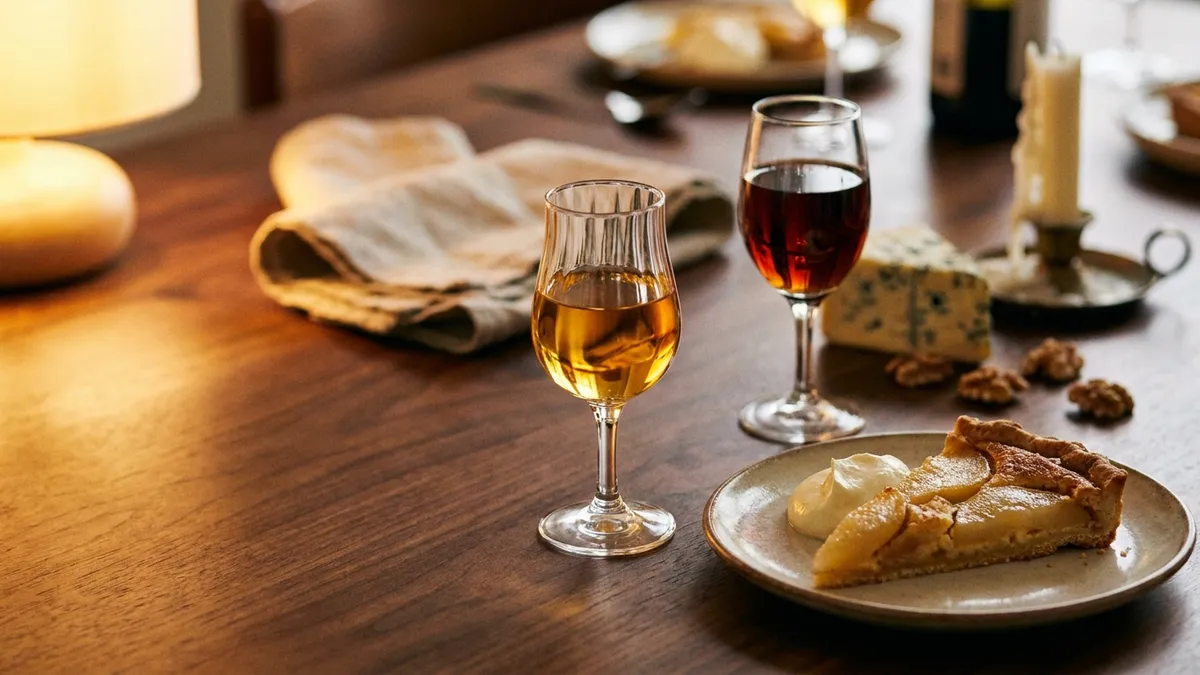
Add port with a blue cheese if the evening runs long. For more pairings by dish, see wine pairing rules and wine with steak.
How Do You Set Tonight's Order Before Guests Arrive?
Line the bottles up on the counter in pouring order, then check each against its course. Read the sweetness word on every label, put the driest and lightest on the left, and move anything sweet or fortified to the right end.
If a label shows no sweetness word, place the bottle by grape and alcohol: the higher the alcohol figure, the further right it goes. Then set the fridge in the same order. The aperitif and dessert bottles go coldest, the whites next, and the reds stay out on the counter. For more on storing and serving at home, the serving and storage hub collects every guide.
Sommy's bite-sized courses, including Wine 101, teach body, tannin and sweetness step by step at sommy.wine. Set your bottles in a row tonight, driest on the left, read each label's sweetness word, and taste a splash of the first and last wine before the doorbell rings.
Sources
- Wikipedia: Wine tasting (tasting order and serving temperatures)
- Wikipedia: Champagne (dosage levels, serving temperature, history)
- Wikipedia: Dessert wine (sugar levels, meal placement, serving)
- Wikipedia: Fortified wine (alcohol level, port and Madeira styles)
- Wikipedia: Decanter (sediment, aeration, MacNeil and Peynaud)
Frequently Asked Questions
What order should wine be served at a dinner party?
Follow the courses. Pour a dry sparkling wine or fino sherry as guests arrive, a light white with the starter, a fuller white or a red with the main, a sweet wine with dessert, and port or sweet Madeira after the meal. Within that frame, dry comes before sweet and light comes before full-bodied.
Should you serve white wine or red wine first?
Usually white, because most whites are lighter than most reds. Weight matters more than colour, though. A light red such as Beaujolais is served cooler than an oaked Chardonnay and weighs less, so if both are on the table, the light red can go first and the full white can follow with a richer dish.
Do you serve sweet wine before or after dinner?
After, with dessert or the cheese. Sweet wine goes last because sugar makes any dry wine poured afterwards taste thin and sharp. The one sweet-looking exception is the aperitif: dry white fortified wines such as fino and amontillado sherry are served before the meal, while sweet red fortified wines such as port are served after it.
Where does Champagne go in the serving order?
At the start, if it is dry. Brut, the most common style today, has less than 12 grams of sugar per litre and works as an aperitif. Demi-sec and Doux Champagnes are sweet, with 32 grams or more, and belong with dessert. In the 19th century, outside Britain, Champagne was mostly drunk after the meal as a dessert wine.
Can you serve red wine before white wine?
Yes, when the red is the lighter wine. A young Beaujolais or light Pinot Noir can come before a full, oaked Chardonnay without any problem. What you should avoid is a big tannic red, such as Cabernet Sauvignon, before a delicate white, because the red's drying grip and intense aroma make the white taste thin.
Should the older wine be served before the younger one?
Usually, but for weight, not status. An old red is often lighter and more delicate than a young one, so it goes first, before a young tannic wine can overwhelm it. If the old wine is still powerful and the young one is light, weight wins and the young wine goes first. Price has nothing to do with it.
Sommy Team
LinkedInFounder & Wine Educator
The Sommy Team is building the world's most approachable wine education app, helping beginners develop real tasting skills through structured courses and AI-guided practice.