Wine Table Setting: Glass Placement, Order and Etiquette

By the Sommy Team — AI-assisted, human-edited.
Updated Oct 1, 2026
Contents (11)
- Wine Table Setting, in One Paragraph
- Which Side Do Wine Glasses Go On?
- How Many Wine Glasses Does Each Guest Need?
- In What Order Should the Glasses Sit?
- Where Does the Water Glass Go?
- Do You Need Different Glasses for Red and White?
- How Full Should You Pour Each Glass?
- How Should You Hold the Glass at the Table?
- When Should Each Wine Come Out of the Fridge?
- What About Napkins, Clearing and Casual Tables?
- Set One Place Tonight
TL;DR
In a wine table setting, the glasses stand on the right, about an inch above the knife tip. Set one glass for each wine you will pour, lined up in pouring order, plus water. Pour about a quarter to a third of the bowl, hold the stem, and clear each glass once its wine is finished.
A wine table setting comes down to one rule: set a glass for each wine you will actually pour, on the right above the knife, lined up in the order you will pour them. Everything else, from the water glass to the napkin, follows from where those glasses stand.
Wine Table Setting, in One Paragraph
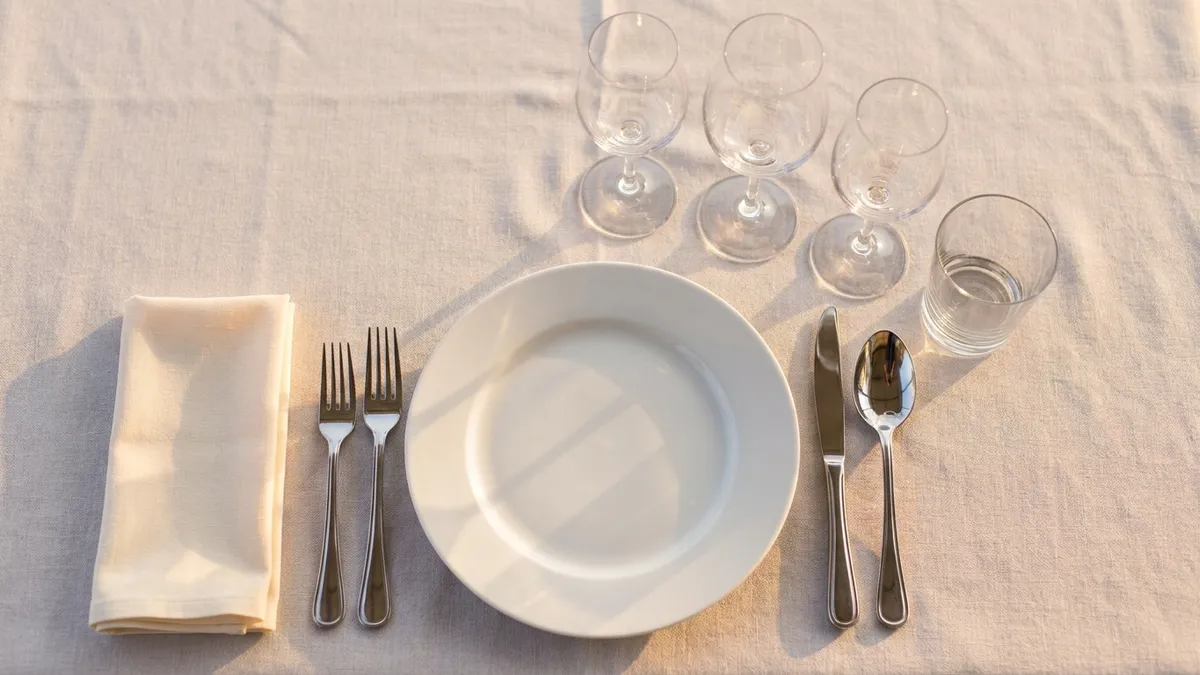
Wine glasses go to the right of the plate, about an inch (2.5 cm) above the tip of the dinner knife. Each guest gets one glass per wine served, plus water. The glasses sit in pouring order, the first wine's glass on the outside, the same way cutlery is used from the outside in. One formal order lists them as white, red, dessert wine and water. Pour about a quarter to a third of each bowl, roughly 125 ml, which gives six glasses per 750 ml bottle. Clear a glass once its wine is finished, before the next wine arrives.
Which Side Do Wine Glasses Go On?
Wine glasses go on the right, about an inch above the tip of the dinner knife, where the drinking hand reaches them. In Western table settings, forks, the butter knife and the napkin sit to the left of the plate. Knives, spoons, stemware (glasses with a stem and foot) and tumblers sit to the right.
The right side matches the hand most guests drink with. A glass above the knife can be lifted without reaching over the plate or a neighbour's bread. The knife blade faces the plate.
If a guest is left-handed, leave the setting as it is. Moving one place's glasses to the left puts them in the neighbour's space, and at a round table that neighbour's glasses are already there.
How Many Wine Glasses Does Each Guest Need?
One for each different wine you will pour, plus a water glass. A template with four glasses at every place looks formal, but a glass that never gets wine is clutter and one more thing to wash. Count the bottles first, then set the table.
| Wines poured | Glasses per place | Layout | What to do |
|---|---|---|---|
| One wine all evening | 1 wine + 1 water | Wine glass above the knife, water beside it | Set this for weeknight dinners and most casual meals |
| Two wines, one per course | 2 wine + 1 water | Short row: first wine outside, second inside | Clear the first glass when the main course arrives |
| Two wines on the table at once | 2 wine + 1 water | Two different shapes, side by side | Use different shapes so guests know which is which |
| Three or four wines | Up to 4 wine + 1 water | Diagonal row in pouring order | Clear each glass as its course ends to keep the row short |
| Sparkling on arrival | No extra glass at the table | Hand flutes out before sitting | Collect flutes before guests sit down |
If two wines share a course, set both glasses before guests sit. If each course brings a new wine, you can also start with fewer glasses and bring the next one out with the next plate. The course-by-course pouring sequence, from aperitif to port, is laid out in the wine serving order at dinner.
For counting bottles, the arithmetic in how many glasses are in a bottle of wine turns guests and pours into a shopping list.
In What Order Should the Glasses Sit?
In the order you will pour, first wine on the outside and each later wine one step closer to the plate. Cutlery works the same way: the utensils in the outermost position are used first. A guest who knows the cutlery rule can read the glasses without being told.
One formal convention lists the glasses in order of use as white wine, red wine, dessert wine and water tumbler, all about an inch above the knives. With more than two glasses, a short diagonal row running down to the right keeps them inside the guest's reach and out of the neighbour's.
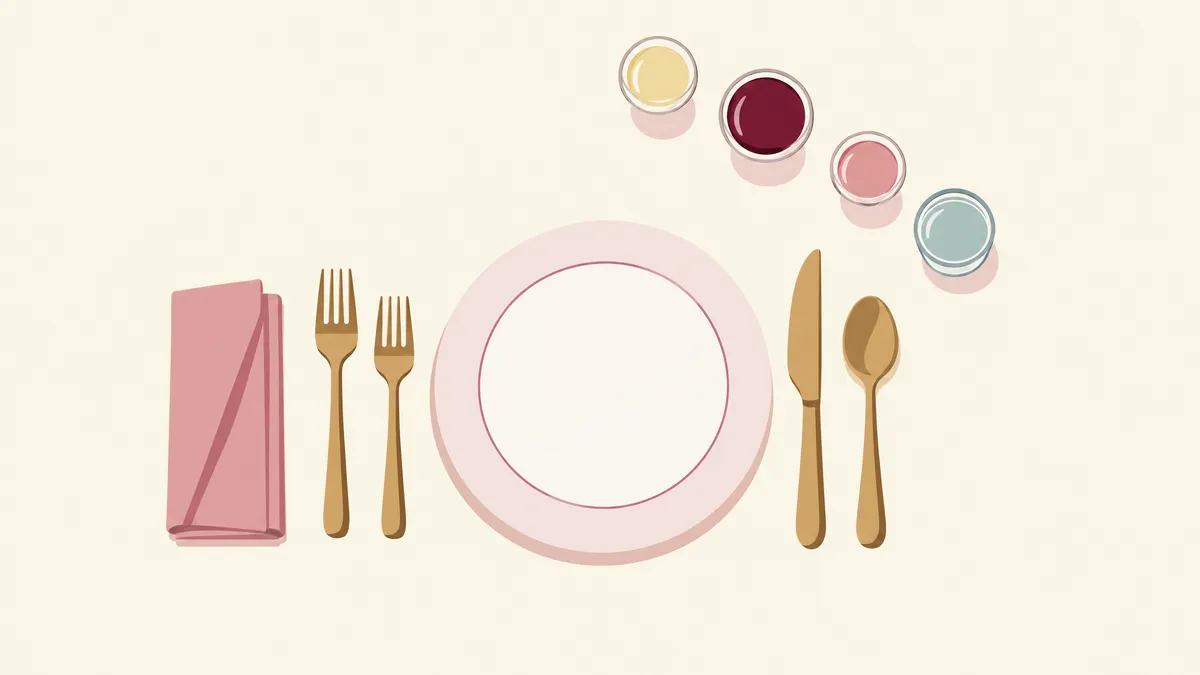
If a wine is finished and its glass is empty, clear that glass before the next wine is poured. The row then shrinks through the meal, and nobody pours a red into a glass still wet with white.
Where Does the Water Glass Go?
With the wine glasses, either at the end of the row or directly above the knife. The conventions differ, so pick one and repeat it at every place. A table where every setting matches looks planned. One where water jumps from place to place looks rushed.
The water glass is usually a tumbler (a glass with no stem) or a plain goblet, so it is easy to tell apart from the wine glasses. If your water glasses have stems and look like your wine glasses, place water above the knife tip. It then stays in the same spot all evening while wine glasses are cleared around it.
Do You Need Different Glasses for Red and White?
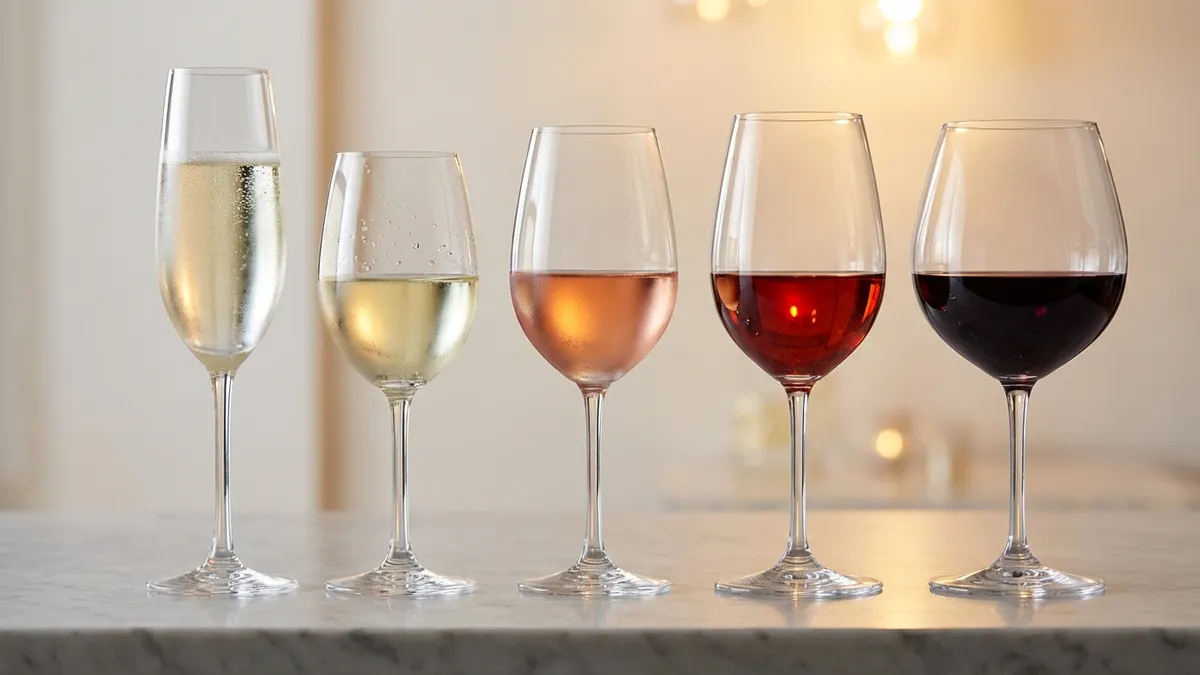
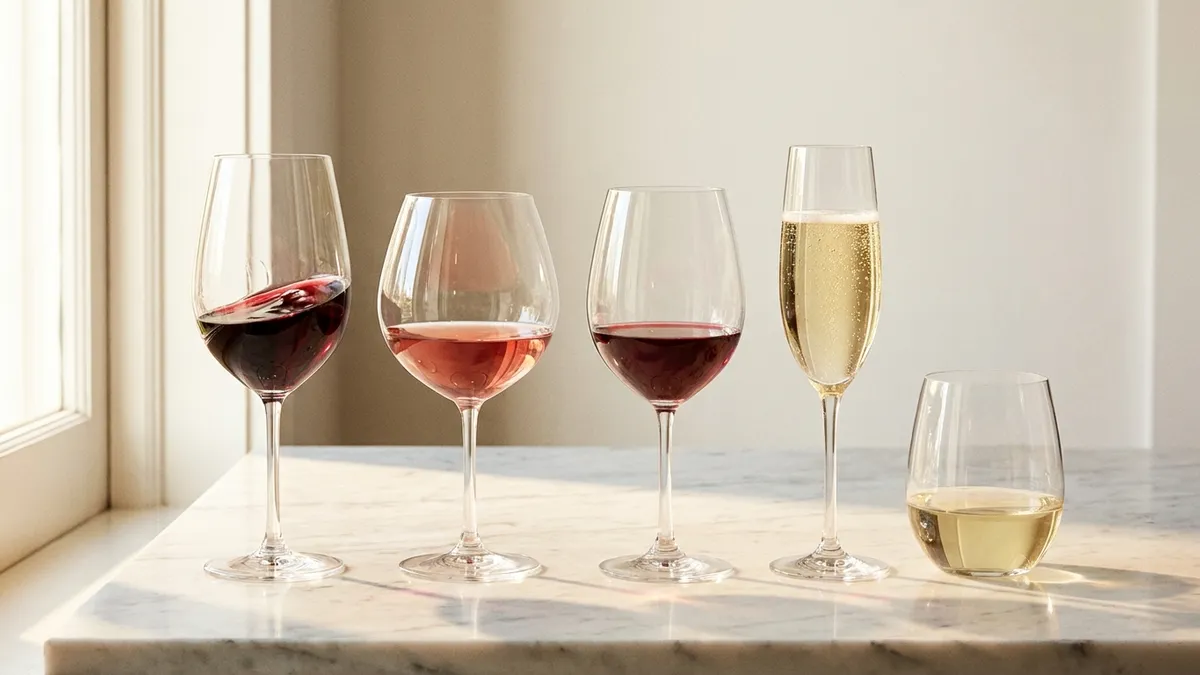
No. The idea that a proper table needs a separate glass shape for every wine is a myth. One all-purpose glass serves red, white and rosé: a stemmed glass with a tulip-shaped bowl, wider at the base and narrower at the rim.
The international standard tasting glass, used by professionals for every style, holds about 215 ml and takes a 50 ml tasting pour.
Separate shapes earn their place in one case: two wines on the table at the same time. Then a larger bowl for the red and a smaller one for the white stop guests mixing them up.
If you own one set of glasses, use it for everything and rinse between wines. If you own two shapes, give the larger bowl to the red. The case for and against shaped glasses is weighed in the wine glass guide, and does wine glass shape affect taste covers what the research found.
How Full Should You Pour Each Glass?
About a quarter to a third of the bowl. The standard pour is 125 ml, one sixth of a 750 ml bottle, so a bottle serves six glasses. Larger 250 ml pours have become common in UK pubs, but at a dinner with several wines they add up fast.
A New York Times wine critic put the rule as a bowl large enough that a pour fills about a quarter of it. The empty space above the wine holds its smell and leaves room to swirl. A glass filled to the brim cannot be swirled without spilling.
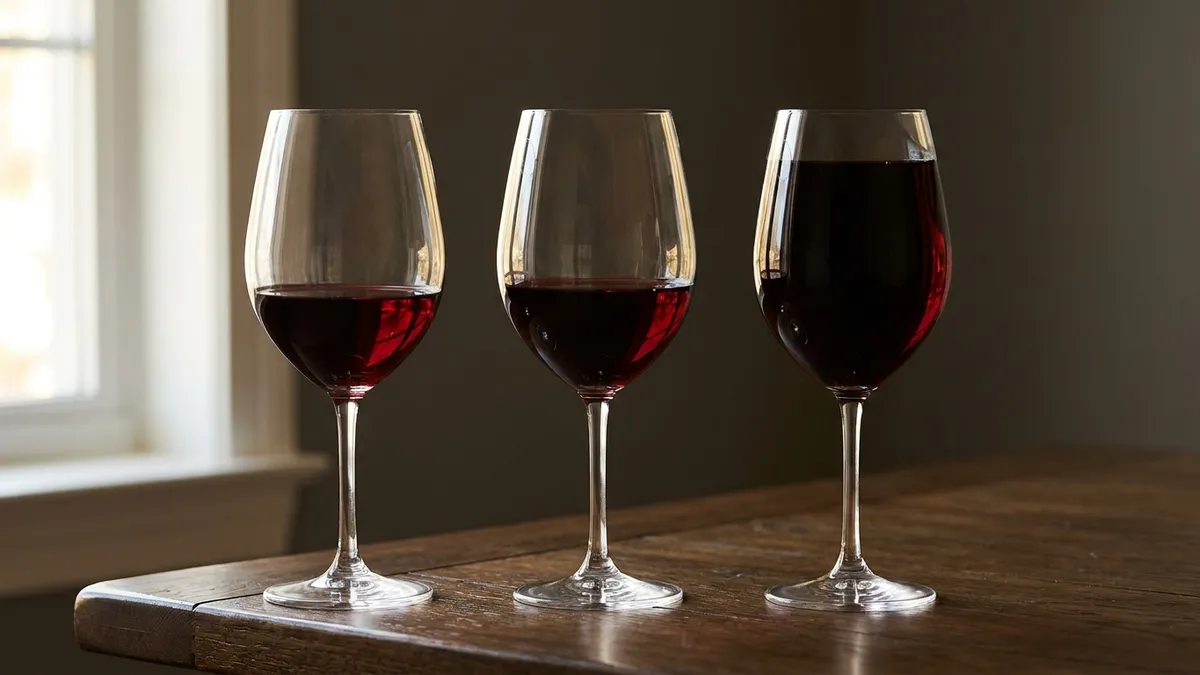
If your glasses are small, keep the level at a third and accept a pour under 125 ml. Top up when a glass is nearly empty. Pour from the guest's right, where the glasses stand, so the bottle never crosses the plate.
How Should You Hold the Glass at the Table?
By the stem. The stem lets you hold the glass without your hand warming the wine, and it keeps fingerprints off the bowl. That matters at the table, where guests hold a glass through toasts, speeches and long conversations between courses.
Warming matters most for chilled wines. A white or sparkling wine held by the bowl through a long toast drifts out of its serving range. A red served just under room temperature warms less in the hand, so holding the bowl for a moment does little harm. If you set stemless glasses, save them for the reds and give chilled wines a stem.
When Should Each Wine Come Out of the Fridge?
Before the table is set, so each wine reaches the glass inside its style's range. Sparkling and sweet wines go in coldest, whites a little warmer, and reds stay just under room temperature. The ranges below follow WSET guidance, the wine school's teaching standard:
- Sparkling: 6 to 10°C
- Sweet wines: 6 to 8°C
- Light and medium whites: 7 to 10°C
- Oaked, full whites: 10 to 13°C
- Light reds: about 13°C
- Medium and full reds: 15 to 18°C
If the main course wine is a red kept in a warm room, give it a short spell in the fridge before dinner. If a white has been in the fridge for days, take it out when you start setting the table, since a home fridge runs colder than any range above. The full chart, with the reasons behind it, is in the wine serving temperature chart. If a red needs air or has sediment, decant it now too, following how to decant wine.
What About Napkins, Clearing and Casual Tables?
At a casual table, the napkin can sit tucked into the wine glass. It is a common informal touch and frees the plate. At a formal setting the napkin goes on the plate or left of the forks instead, and glasses are cleared as each course ends.
Take the napkin out before the first pour. Clear wine glasses as their wine finishes, the same way plates go between courses. Leave the water glass in place until dessert is cleared.
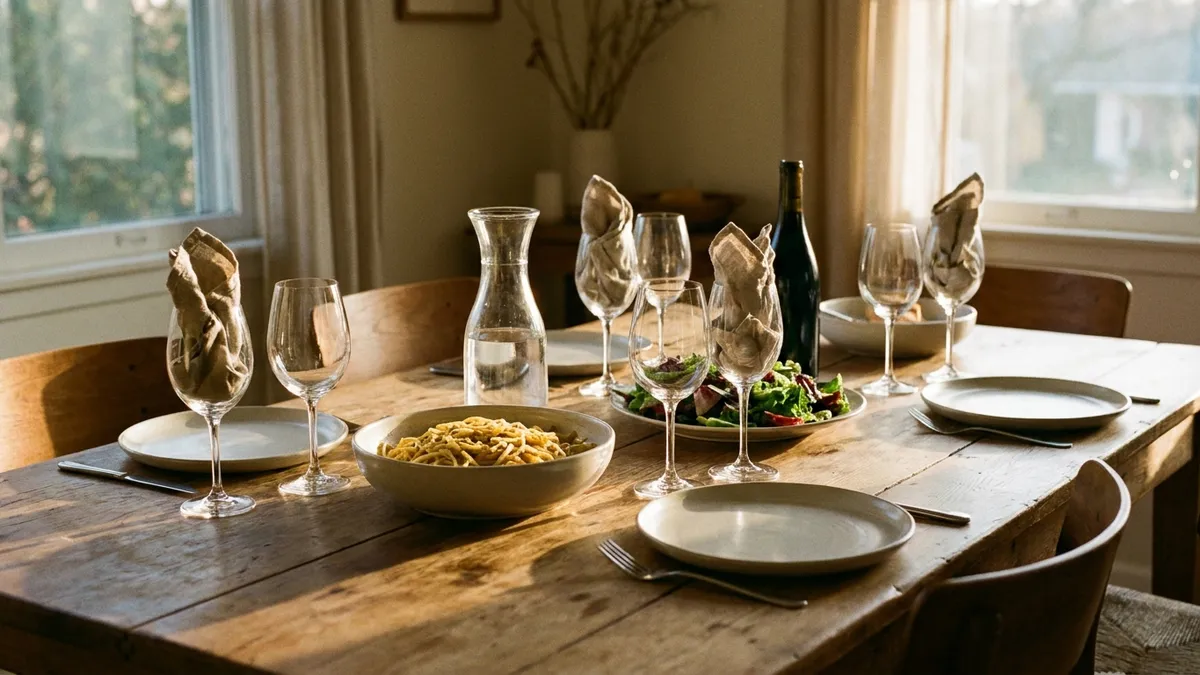
A casual dinner needs one wine glass and one water glass per place, nothing more. Mismatched glasses are fine if every glass has a stem and room to swirl. For a tasting night, which needs identical glasses, follow the setup in how to host a wine tasting at home. Spotty glasses spoil both: how to clean wine glasses covers rinsing and polishing the day before.
Set One Place Tonight
Set a single place at your own table: plate, cutlery, then a wine glass and a water glass above the knife. Pour 125 ml into the wine glass and check where it reaches in the bowl.
If that pour sits around a third of the bowl, the glass is the right size for dinner. Every serving and storage guide sits together in the serving and storage hub. The Sommy app at sommy.wine has a bite-sized Wine 101 course and an AI tasting mode. Tonight: pour that glass, photograph the label, then taste it step by step.
Sources
Frequently Asked Questions
Which side do wine glasses go on in a table setting?
The right. In Western table settings the knives, spoons and all the glassware sit to the right of the dinner plate, while forks and the napkin sit on the left. Wine glasses stand about an inch, or 2.5 cm, above the tip of the dinner knife, so a right-handed guest can reach them without stretching across the plate.
How many wine glasses should each guest have?
One for each different wine you will pour during the meal, plus a water glass. A dinner with one wine needs one wine glass per place. A dinner with a white for the starter and a red for the main needs two. For three or more wines, set them in pouring order and clear each glass once its wine is finished.
Where does the water glass go at a formal dinner?
With the wine glasses, above the knife on the right. One formal convention lists the glasses in order of use as white wine, red wine, dessert wine and water tumbler, which puts water at the end of the row. Other hosts place it directly above the knife. Either works if every place at the table follows the same layout.
Do you need separate glasses for red and white wine at home?
No. One all-purpose stemmed glass with a tulip-shaped bowl, wider at the base and narrower at the rim, serves red, white and rosé. The international standard tasting glass that professionals use for every style holds about 215 ml. Separate shapes only matter when two wines are poured at the same time and guests need to tell their glasses apart.
How full should a wine glass be at dinner?
About a quarter to a third of the bowl. A standard pour is 125 ml, one sixth of a 750 ml bottle, and a good glass is large enough that this fills only part of the bowl. The empty space above the wine holds the aroma and leaves room to swirl. A glass filled to the brim cannot be swirled without spilling.
Can you put the napkin in the wine glass?
At a casual table, yes. Tucking a folded napkin into the wine glass is a common informal touch, and it frees space on the plate. At a formal dinner the napkin goes on the plate or to the left of the forks instead. Take it out of the glass before the first pour so the wine is not poured around it.
Sommy Team
LinkedInFounder & Wine Educator
The Sommy Team is building the world's most approachable wine education app, helping beginners develop real tasting skills through structured courses and AI-guided practice.