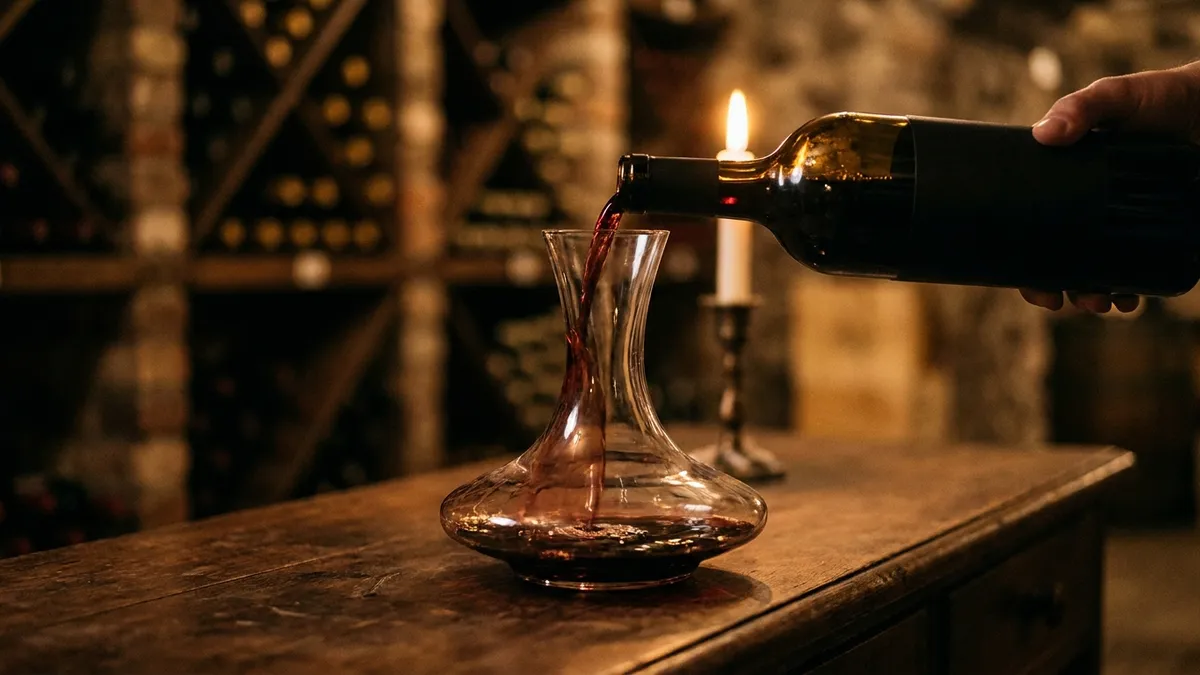
How to Clean Wine Glasses: The Right Way to Wash, Dry, and Store

By the Sommy Team — AI-assisted, human-edited.
Updated Apr 29, 2026
Contents (13)
- Why How to Clean Wine Glasses Matters More Than the Glass You Buy
- How to Clean Wine Glasses, in 90 Seconds
- The Three Enemies of a Clean Wine Glass
- The 5-Step Cleaning Protocol
- Why the Dishwasher Is Risky for Fine Glasses
- The Smell Test: Sniff the Empty Glass First
- Crystal, Hand-Blown, and Universal: Different Care
- Storage: Where Glasses Live Between Pours
- Common Mistakes That Wreck Glasses Quietly
- The Professional Tricks Worth Stealing
- Travelling and Entertaining
- A Casual vs Serious Approach
- Why a Five-Dollar Cloth Saves Fifty-Dollar Wines
TL;DR
Clean wine glasses by rinsing immediately with hot water, hand-washing with one drop of unscented soap, rinsing twice, and polishing with a microfiber cloth while still warm. Skip rinse aid, scented detergent tabs, and paper towels. Store stem-up in a closed cabinet, away from kitchen oils and dust.
Why How to Clean Wine Glasses Matters More Than the Glass You Buy
Most home wine drinkers spend a long time choosing a glass and almost no time thinking about how to clean it. That is backwards. A spotless cheap glass shows wine more honestly than an expensive glass with detergent film on the bowl. Learning how to clean wine glasses properly is the cheapest meaningful upgrade you can make to every bottle you open.
Three quiet enemies do most of the damage: detergent residue, water spots, and absorbed odours. None are visible at a glance — which is why they keep happening. For related setup, our wine glass guide covers shapes worth owning and our wine fridge guide handles temperature. If the decanter needs the same treatment, see how to clean a wine decanter.
How to Clean Wine Glasses, in 90 Seconds
Rinse the glass with hot water immediately after use, before any wine residue dries. Hand wash with one or two drops of unscented dish soap in hot water — never fill the bowl with suds. Rinse twice to flush every trace of soap. While the glass is still warm, polish dry with a microfiber cloth using gentle circular pressure on the bowl and a separate cloth on the stem. Skip the dishwasher for fine and crystal glasses; if you must use it, top rack only, no rinse aid, unscented detergent, and open the door before the heated dry stage. Store stem-up in a closed cabinet away from kitchen smells. Smell the empty glass before pouring — if it smells of anything, rinse and polish again.
The Three Enemies of a Clean Wine Glass
Three problems quietly ruin glasses. Most home pourers run into all three.
The first is detergent residue — a thin invisible film left by dishwasher tabs, scented soap, or insufficient rinsing. In sparkling wine the bubbles collapse faster, and in still wine the film dampens aroma release. You rarely taste it directly. The wine just feels flat without you knowing why.
The second is water spots — mineral deposits left when hard water dries on the glass. Calcium and magnesium salts bond to glass as it dries. The marks are cosmetic at first, but they also signal a glass that was air-dried instead of polished — the larger underlying issue.
The third is smell contamination. Glasses absorb odours like a sponge. Scented dishwasher tabs, fabric softener on a dish towel, garlic in the cupboard, or a cardboard storage box all leave faint traces. Pour wine into a soap-scented glass and the wine smells of soap. Most people blame the wine.
One careful protocol kills all three.
The 5-Step Cleaning Protocol
This is the routine used by sommeliers and serious home tasters. About ninety seconds per glass.
Step 1: Rinse Immediately with Hot Water
Rinse the glass within a few minutes of finishing. Once wine residue dries, it bonds to the glass and needs scrubbing — exactly what fragile bowls do not tolerate. Hot tap water, no soap, ten seconds. That removes ninety percent of the wine.
If you have to leave the glasses longer, fill the bowl with hot water as a holding move. Do not let red wine dry into a tannin ring overnight.
Step 2: Hand Wash with Minimal Soap
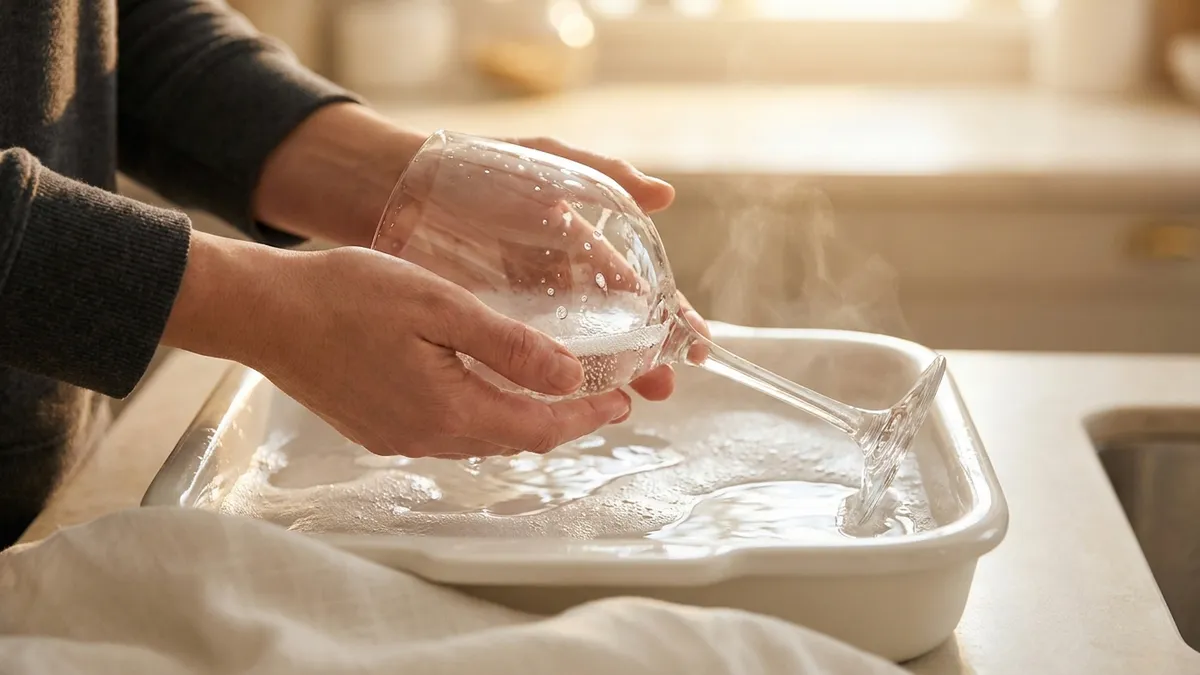
Hot water plus one or two drops of unscented dish soap. The instinct to load up the sponge is wrong — every extra drop is extra residue to rinse out. Cup the bowl in one hand, support the stem gently, wipe the inside with the soft side of a sponge.
Do not twist the stem against a fixed bowl. That is the most common way wine glasses break in a kitchen sink. Move the cloth around the bowl, not the bowl around the cloth.
Step 3: Rinse Twice with Clean Hot Water
Two full rinses, both hot. The first removes most of the soap; the second guarantees no film survives. Hot water rinses cleaner than cold, and a hot glass dries clearer than a cool one. Hold the glass at an angle so water sheets off rather than beading.
If you live with hard water, switch the final rinse to filtered or distilled water.
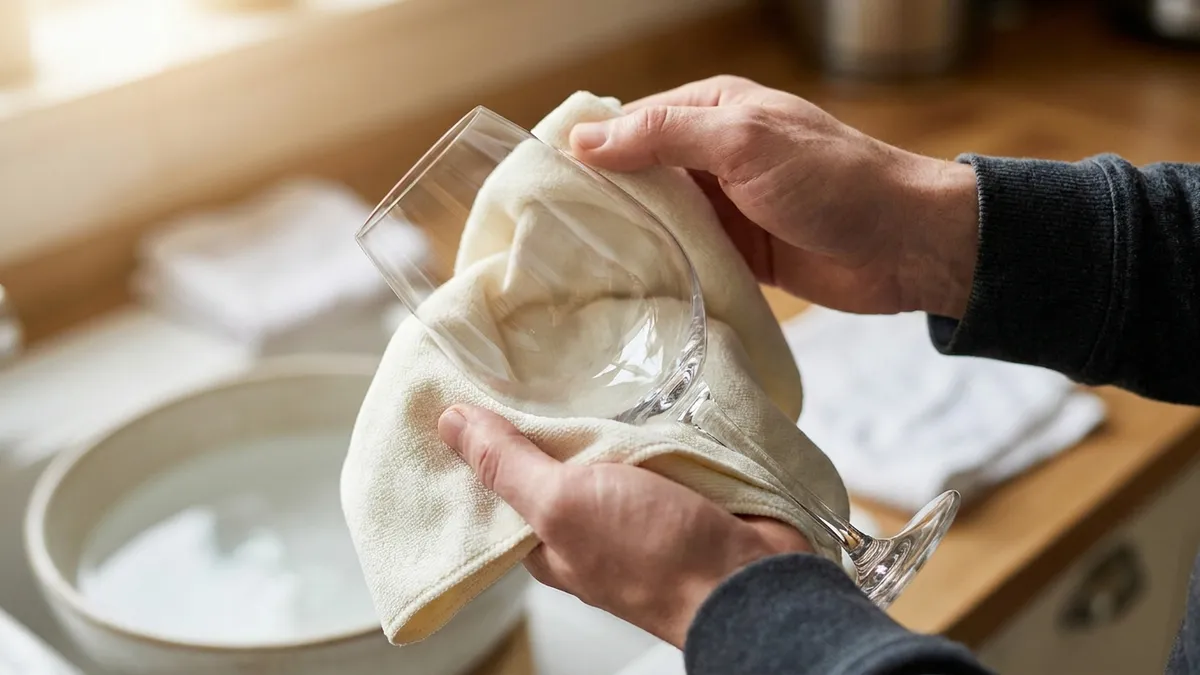
Step 4: Polish Dry with Microfiber While Still Warm
Air drying is the enemy. Every glass that air dries collects water spots — sometimes invisible, always there. Polish while still warm from the rinse, when surface tension is weakest and water releases cleanly.
Use a clean microfiber polishing cloth. Not paper towels — they leave lint that shows up against red wine. Not a cotton dish towel — it sheds fibres and may carry detergent residue from laundry day.
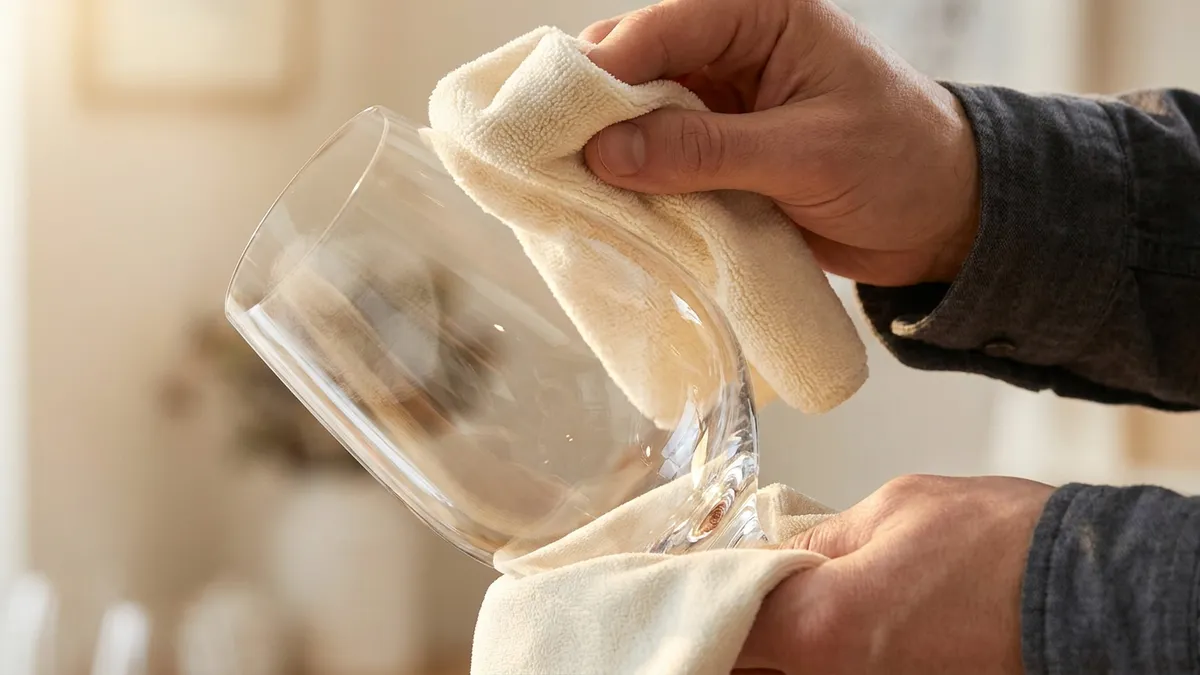
Step 5: A Second Pass for the Bowl
The first pass dries the glass. The second polishes it. Use a separate cloth for the bowl and another for the stem and base, since the base picks up residues from any surface it touches. Gentle circular pressure, inside then outside. Hold the glass to the light — a properly polished glass has zero glare across the bowl.
Why the Dishwasher Is Risky for Fine Glasses
Modern dishwashers can clean wine glasses, but they introduce three problems hand washing does not.
The first is residue — most tabs are heavily scented and intentionally leave a faint film for "shine." The second is heat, which weakens the bond between bowl and stem over time. The third is rinse aid, the single most damaging product you can run through a wine glass cycle. Rinse aid is engineered to leave a thin coating on glass; that coating dampens aromatics and disrupts bubbles in sparkling wine. Empty the reservoir before any wine-glass cycle.
If you accept the trade-offs anyway, follow these rules:
- Top rack only — heat and detergent intensity are highest at the bottom
- Glassware cycle if available, otherwise the gentlest setting
- Unscented detergent, low-residue formula
- No rinse aid — empty the reservoir
- Open the door before heated dry and finish with a microfiber polish
This works for casual everyday glasses. It is genuinely risky for crystal or hand-blown stems. Many serious wine homes keep two tiers: dishwasher-tolerant universals for weeknights, hand-wash-only crystal for proper tastings.
The Smell Test: Sniff the Empty Glass First
The quickest way to spot a problem before the wine pays the price is to smell the empty glass before you pour. A clean, properly polished glass smells of essentially nothing.
If you smell soap, dust, paper, fabric softener, cardboard, or staleness, stop. Rinse with hot water and re-polish. The first wine of the evening is the one most often ruined by glass smell, because the palate has not adjusted yet and the contamination registers as part of the wine.
Practise this on every pour for a week and your nose learns what a truly clean glass smells like. If smell training feels useful more broadly, our guide on how to smell wine and building a wine flavor library extend the skill into the wine itself.
Crystal, Hand-Blown, and Universal: Different Care
Not every glass tolerates the same routine.
Crystal glasses — modern lead-free crystal is thinner and more sensitive to heat shock. Hand wash only, never dishwasher. Avoid filling a cold glass with water just off the boil. Most premium brands void warranty on dishwasher damage.
Lead crystal is rare today, mostly phased out for safety. If you have inherited older lead crystal, hand wash it and avoid storing acidic liquids in it.
Hand-blown glasses — extra fragile, often thinner-walled than the bowl shape suggests. Cup the bowl gently, never twist against the stem, polish slowly. Decades with care, months without.
Universal stems and machine-blown glasses — sturdier, often dishwasher-tolerant on the top rack. The right choice for everyday drinking.
Storage: Where Glasses Live Between Pours
A clean glass is wasted if it sits in a dusty cabinet for a week and absorbs the smell of the kitchen.
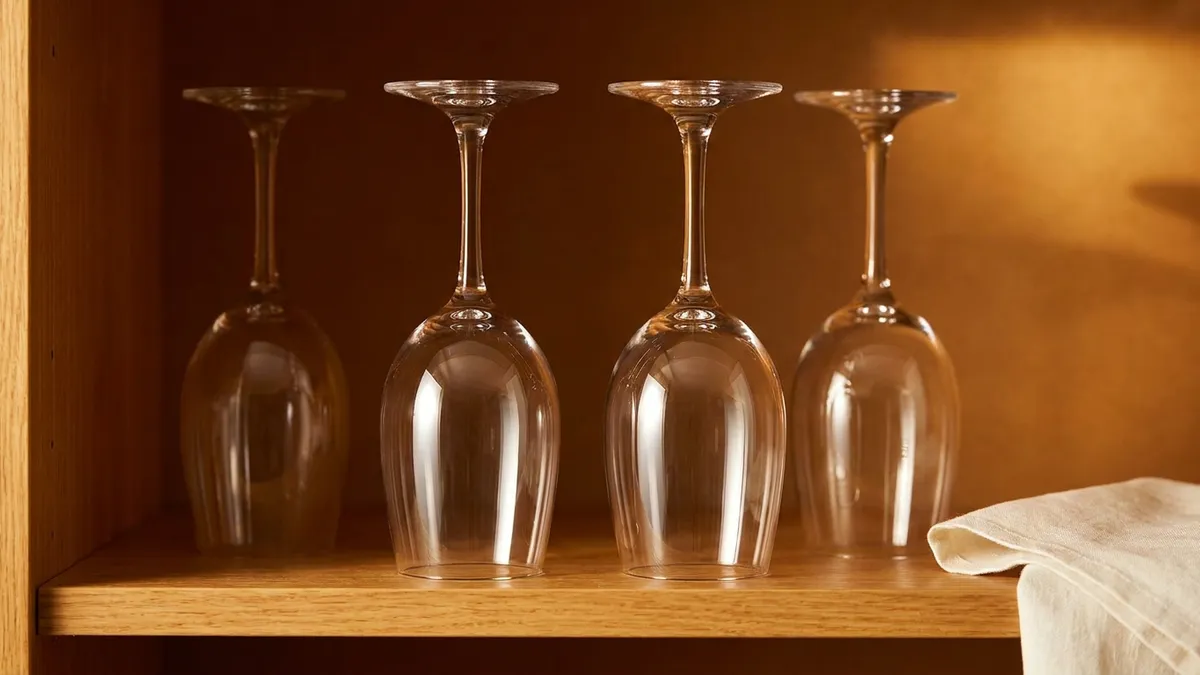
The best home for wine glasses is a closed glass cabinet away from the cooking zone. Closed cabinets keep dust and kitchen smells out.
The classic question is stem-up or stem-down. Stem-up — right side up — is the modern preference. The bowl stays open and air circulates. Stem-down protects the rim from dust but traps stale air inside, which picks up off-aromas from the shelf below over time. If your glasses come out smelling of cardboard, the shelf is the cause. Stem-up plus a clean cabinet solves it.
Hanging stem racks look beautiful but accumulate more dust than enclosed storage.
A few habits that prevent breakage and keep glasses fresh:
- Never stack glasses inside each other — they wedge and chip when separated
- Keep them away from strong kitchen smells — garlic shelf, spice rack, cabinets over the cooktop
- Replace dish towels weekly — old towels carry detergent and absorbed odours
- Cover open shelves with a breathable cloth if a closed cabinet is not available
Common Mistakes That Wreck Glasses Quietly
The habits that quietly cost households a glass per quarter:
- Twisting the stem against a held bowl — the most common breakage move
- Using paper towels to dry — lint that shows up against red wine
- Leaving wine residue overnight — dries into a stubborn ring
- Stacking glasses on a draining rack — chips from rims touching
- Storing near the cooktop — kitchen oils coat the inside of the bowl
- Filling a cold glass with hot water — sudden temperature change cracks crystal
None are dramatic. Each costs a glass eventually. Avoiding them costs nothing.
The Professional Tricks Worth Stealing
The kettle steam trick. For stubborn water spots, hold the bowl over the steam from a boiling kettle for about ten seconds. The steam re-wets residue, and the heat lets the polish cloth release it cleanly. This is how restaurant runners restore glasses on a busy service.
The hard-water rescue. If your tap water leaves marks no matter what you do, switch the final rinse to filtered or distilled water. For stronger mineral buildup, rinse with one part white vinegar to four parts hot water, rinse twice clean, and polish dry.
The tannin-ring fix. Old red wine residue at the bottom of a bowl needs a gentler approach than scrubbing. A teaspoon of bicarbonate of soda in warm water, swirled for a minute, lifts the ring without scratching. Never use bleach — it leaves a smell that survives multiple rinses.
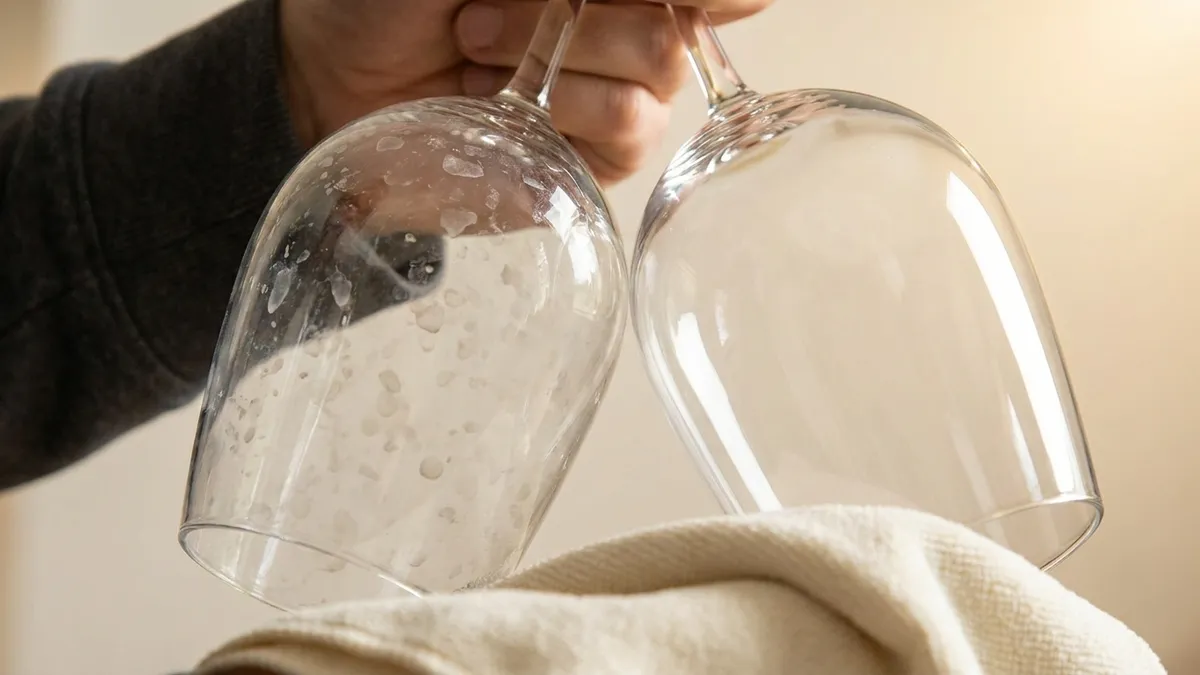
The surface-tension test. Pour an ounce of plain water into a freshly cleaned glass and tip it gently. If the water sheets off cleanly and leaves no drops, the glass is clean. If droplets cling, you have residual detergent.
The polish-at-the-table move. Bring glasses out on a clean linen napkin and give each one a final polish before pouring. If red wine lands on that linen, blot it with cool water first. Guests notice without knowing why.
This is what separates casual drinking from serious tasting — the same difference between rough flavour-spotting and the structured technique you build with the Sommy app, which guides beginners through professional protocols one habit at a time. Our overview at /learn/serving-storage/ ties cleaning, temperature, and storage together in one place.
Travelling and Entertaining
For dinner at someone else's house, wash and polish your glasses at home, transport them in fabric pouches — never paper or cardboard, both leave a smell — and re-rinse at the venue. Wines at someone else's table are often half-ruined by their unfamiliar dish soap on glasses that look clean.
For tastings, wash all glasses the night before and store stem-up. Polish each one at the table. Use one glass per wine if possible — see our wine tasting order guide for sequencing tricks if you have to share.
When comparing similar wines — like Cabernet Sauvignon vs Merlot or Champagne vs Prosecco vs Cava — clean glasses matter even more, because the differences vanish behind any film or off-smell.

A Casual vs Serious Approach
Casual mode — weeknight pour, friends over for pizza. Universal stems, dishwasher on the top rack with unscented detergent and no rinse aid. Skip heated dry, quick microfiber polish, pour.
Serious mode — a tasting, a special bottle, anything you have been saving. Hand wash, two rinses, polish twice, sniff before pouring, store stem-up in a closed cabinet.
Most homes do well with both. The Sommy course library walks new tasters through which habits matter when, and our piece on how to develop your wine palate covers what to do once the glass is clean.
Why a Five-Dollar Cloth Saves Fifty-Dollar Wines
The cheapest meaningful upgrade in any wine kitchen is a dedicated microfiber polishing cloth. A few dollars, lasts a year, rescues every wine you pour from cardboard-glass disappointment.
Clean glasses do not make average wine taste like great wine. They let great wine taste like itself. Spend the ninety seconds, sniff the glass before you pour, and most of the small frustrations of home drinking — flat bottles, weak bubbles, off notes the wine did not deserve — go away on their own.
A bottle is opened once. The glass is forever.
Frequently Asked Questions
What is the best way to clean wine glasses?
Hand wash in hot water with one or two drops of unscented dish soap, rinse twice to remove every trace of suds, and polish dry with a clean microfiber cloth while the glass is still warm. Hot glass dries clearer than cool glass, and microfiber leaves no lint. Skip paper towels, scented detergents, and air-drying — those are the three most common causes of film, spots, and dampened aromas.
Can you put wine glasses in the dishwasher?
You can, but it is the riskiest option. Detergent tabs leave residue on glass, the heat warps stems over time, and rinse aid is genuinely fatal for wine glasses because it is designed to leave a film. If you must use a dishwasher, use the top rack only, an unscented detergent, no rinse aid, a glassware cycle if available, and open the door before the heated dry stage to skip it entirely.
How do you remove water spots from wine glasses?
Water spots come from minerals in hard water, so the fix is either softer water or faster drying. Rinse with distilled water for the final pass, or polish the glass with a microfiber cloth while it is still hot from the rinse. For stubborn existing spots, hold the glass over the steam from a kettle for ten seconds, then wipe with a microfiber cloth. A white-vinegar rinse followed by clean water also works for mineral buildup.
Should you store wine glasses upside down or right side up?
Stem-up — right side up — is the modern preference for fine glasses. Upside-down storage protects the rim from dust but traps stale air inside the bowl, and that stale air picks up off-aromas from cabinets, pantries, and kitchen oils. Stem-up storage in a closed glass cabinet, or covered loosely with a breathable cloth, gives the cleanest pour. Hanging racks look elegant but accumulate more dust over time.
Do you really need to smell a wine glass before pouring?
Yes — and one quick sniff before you pour saves a lot of disappointment. Glass picks up odours from soap, paper, dust, and pantry shelves, and those smells transfer straight into the wine. If the empty glass smells of anything other than nothing, rinse with hot water and polish dry before pouring. The first wine of the night is the one most often ruined by glass smell.
Can you wash crystal wine glasses in the dishwasher?
Almost never. Modern lead-free crystal is sensitive to heat shock and detergent abrasion, and most premium glassware brands explicitly recommend hand washing. Hand-blown stems are even more fragile and can twist or crack under dishwasher water pressure. Universal stems and thicker machine-blown glasses are more dishwasher-tolerant, which is why many homes keep two tiers of glassware: fine for hand wash, casual for the dishwasher.
What kind of cloth should you polish wine glasses with?
A clean microfiber cloth — never paper towels, never standard cotton dish towels. Paper towels leave lint that sticks to wet glass and shows up against red wine. Cotton dish towels shed fibres and carry laundry residue, though in a sparkling flute those few fibres are where the bubbles start. A dedicated microfiber polishing cloth, washed without fabric softener and stored away from kitchen smells, is the cheapest meaningful upgrade in any wine kitchen.
Sommy Team
LinkedInFounder & Wine Educator
The Sommy Team is building the world's most approachable wine education app, helping beginners develop real tasting skills through structured courses and AI-guided practice.