Estate Bottled Wine Meaning: The Four Rules on the Label

By the Sommy Team — AI-assisted, human-edited.
Updated Oct 1, 2026
Contents (10)
- What Does Estate Bottled Mean, in One Paragraph?
- Estate Bottled vs Produced and Bottled vs Bottled By
- Is Estate Bottled Wine Better?
- How Should You Use Estate Bottled When Buying?
- What Must a Winery Do to Print "Estate Bottled"?
- Does the Winery Have to Own the Vineyard?
- Why Does Estate Bottled Need an AVA Name?
- What About "Estate Grown" and Other Estate Words?
- Is Estate Bottling the Same in France, Germany and Italy?
- Check One Label Tonight
TL;DR
On a US label, Estate bottled means the winery sits inside a named AVA, grew every grape on land it owns or leases for at least 3 years inside that AVA, and crushed, fermented, aged and bottled the wine in one continuous process. It proves origin and control, not quality.
Estate bottled wine comes from one winery that grew every grape on land it owns or leases, then made and bottled the wine on site without a break. In the US it is a legal term with four conditions, and a label cannot use it unless it also names an American wine region. It tells you who controlled the grapes. It says nothing about how good the wine tastes.
What Does Estate Bottled Mean, in One Paragraph?
Estate bottled is a legally defined US label term. The winery grew all the grapes on land it owns or controls inside a named AVA (American Viticultural Area, a mapped US grape-growing region such as Napa Valley). It sits inside that area and crushed, fermented, aged and bottled the wine there in one continuous process. "Controls" means a lease of at least 3 years with the winery doing the farming. A wine labeled with an AVA alone needs only 85% of its grapes from that area; an estate bottled wine needs 100% from the winery's own plots inside it. No other phrase may legally signal growing plus bottling.
Estate Bottled vs Produced and Bottled vs Bottled By
Every US wine must name its bottler with "Bottled by" or "Packed by" plus a name and address. That is the bottom of a ladder. Each phrase above it proves one more step happened at the named winery, and Estate bottled is the only one that reaches back into the vineyard.
| Label phrase | What the winery did | Grapes | What to assume in the shop |
|---|---|---|---|
| Bottled by / Packed by | Filled the bottle at the stated address | Could come from anywhere the appellation allows | Bought-in wine; judge it on price and region |
| Cellared, Vinted or Prepared by | Gave the wine cellar treatment (blending, aging, filtering) at the address | Usually bought in, as grapes or finished wine | A house style built from purchased wine |
| Produced by / Made by | Fermented at least 75% of the wine at the address | May all be bought from other growers | The winery made it, but may not have farmed it |
| Estate bottled | Grew, crushed, fermented, aged and bottled in one continuous process | 100% from its own or leased vines inside the named AVA | One team, one place, from vine to bottle |
Cellar treatment is the work done to a wine after fermentation, such as blending, fining, filtering or aging. If the line says "Produced and bottled by", the winery fermented most of the wine but may have bought every grape. If it says only "Bottled by" next to a state name, expect a blend of purchased wine.
Is Estate Bottled Wine Better?
Not by definition. The rule sets where the grapes grew and who handled them, and it contains no taste test, score or minimum quality. A careless grower can make a thin estate wine, and a skilled winemaker who buys fruit from a top vineyard can make a far better one under "Produced and bottled by".
The common myth treats the phrase as a quality seal. It is a traceability seal. The same people farmed the vines, picked the fruit and made the wine, so the bottle reflects one site and one set of decisions. That matters most in small, expensive AVAs, where it confirms that none of the fruit came from cheaper land nearby.
Price follows the same logic. Owning or leasing vineyards ties up money for decades, and a winery cannot top up a short harvest with purchased grapes. Neither fact makes the wine taste better. The link between cost and flavour is broken down in wine price vs quality.
How Should You Use Estate Bottled When Buying?
Use it as a tiebreaker for traceability. If two bottles from one AVA cost about the same, the Estate bottled one tells you whose vineyard is in the glass. If the AVA is small and the price is high, the phrase confirms that every grape grew inside it.
If a cheaper bottle says "Bottled by" and names only a state, it is fine for a weeknight, and the label has promised you nothing about the grapes. If you want to learn what one place tastes like, buy estate bottled wines from one AVA and compare them. Single-AVA estate wines make the cleanest study of terroir, because no outside fruit blurs the site.
Shop staff can help too. Ask which wines on the shelf are estate bottled from one AVA, then pick by grape. The wine shop guide covers the questions that get useful answers.
What Must a Winery Do to Print "Estate Bottled"?
Four things, all at once: name an AVA, sit inside it, grow every grape there on its own or leased land, and make the wine in one continuous process. The federal rule, 27 CFR 4.26, allows the term only when every condition holds:
- The label names an AVA. A state or county name is not enough.
- The winery is located in that AVA.
- It grew all the grapes on land it owns or controls inside the AVA's boundaries.
- It crushed the grapes, fermented the must, and finished, aged and bottled the wine in a continuous process. Must is the crushed juice, with its skins and seeds, before it becomes wine.
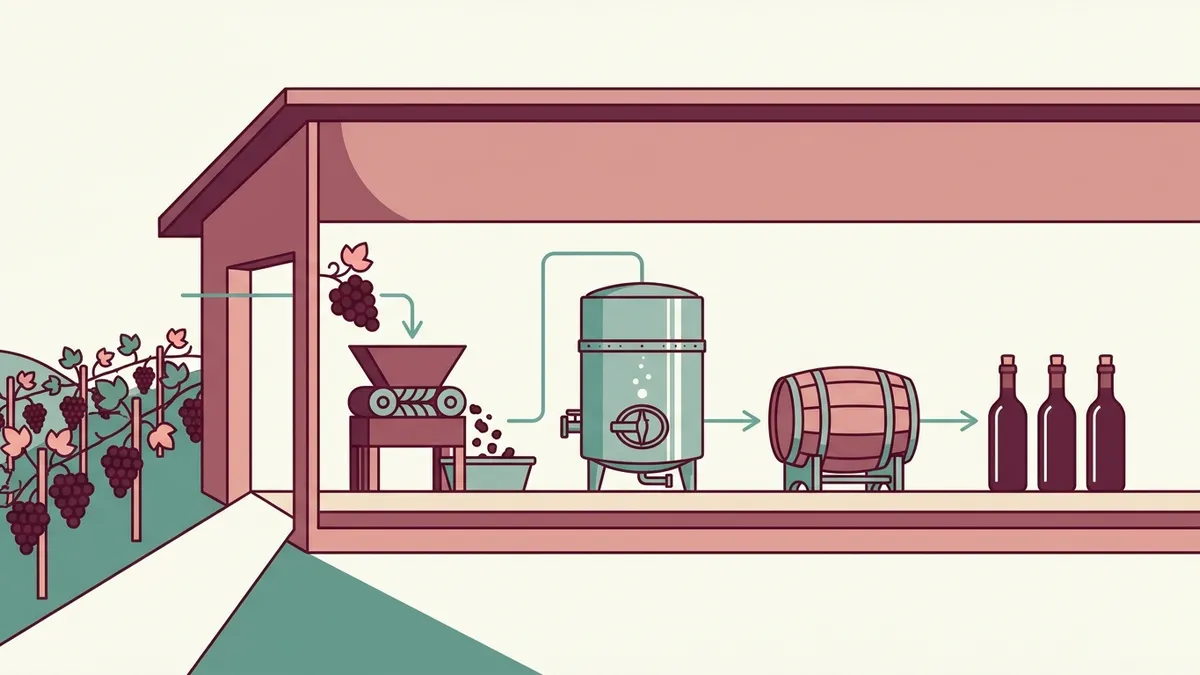
"Continuous" is the part shoppers miss. The wine cannot leave to be fermented at another winery, sold in bulk and bought back, or trucked out for bottling and returned. One operation handles it from crush to cork.
The rule has one exception. Grapes grown by members of a cooperative bottling winery count as grown by the winery itself. So a growers' cooperative inside an AVA can print Estate bottled on wine made from its members' vineyards.
Does the Winery Have to Own the Vineyard?
No. A lease works if it runs at least 3 years and the winery itself does all the vineyard work. Under the rule, "controlled by" means a lease or similar agreement. The winery must have the legal right to perform, and actually perform, all the acts of viticulture (growing grapes: pruning, spraying, canopy work and picking).
That second half matters. A long supply contract with a grower who still farms the land does not count. The winery's own crew has to run the vineyard. Napa Valley wineries with plots spread across several sub-areas show how this plays out on the map; the Napa sub-AVAs guide traces those boundaries.
Why Does Estate Bottled Need an AVA Name?
Because the AVA is the boundary that the 100% rule is measured against. Without a named, mapped area there is no line to keep the grapes inside. An appellation is a protected place name on the label, and US law grades them by how much fruit must come from inside; the appellation guide explains the system.
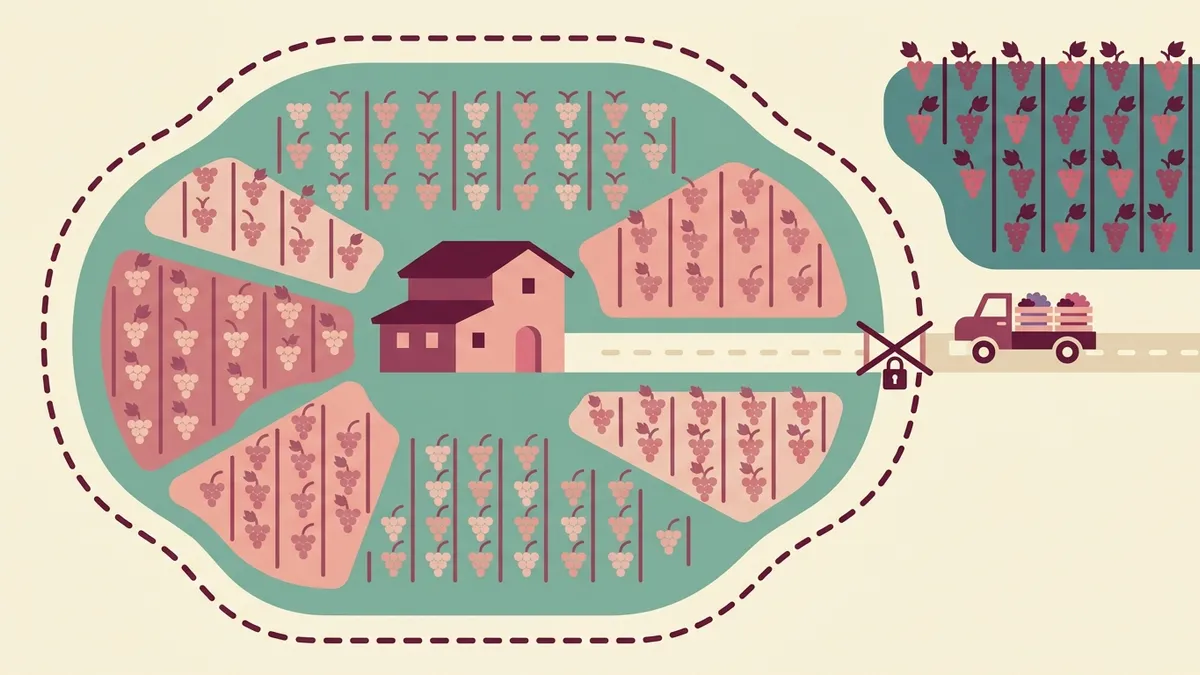
The gaps are large. A state or county name needs at least 75% of the wine from fruit grown there. An AVA name needs at least 85% of the grapes from inside the boundary, and the wine must be finished in the state where the AVA lies. Estate bottled closes the last 15%: every grape comes from inside, and only from the winery's own plots.
So two bottles can both say the same AVA. One may carry 15% fruit from outside it. The one marked Estate bottled cannot carry a single grape from outside the winery's land. The Napa Valley wine guide shows how much an AVA name alone can lift a price.
What About "Estate Grown" and Other Estate Words?
Federal rules define only one phrase for growing plus bottling, and it is Estate bottled. The rule states that no other term may be used on a label to indicate combined growing and bottling conditions, so "Estate Grown" carries no legal promise about who made the wine.
So a front label that says "Estate", "Estate Grown" or "Estate Wine" has not made the legal promise. It may describe where the winery's vines are. Turn the bottle round and look for the exact words Estate bottled near the producer line. If they are missing, read the other estate words as marketing and judge the wine on its AVA and producer line instead. The back label guide sorts every phrase there into defined and undefined.
Is Estate Bottling the Same in France, Germany and Italy?
Similar idea, different law. The US term Estate bottled is tied to AVAs and does not apply in Europe. The EU has its own rule for holding words, the names a property uses for itself, under Commission Delegated Regulation 2019/33, Article 54.
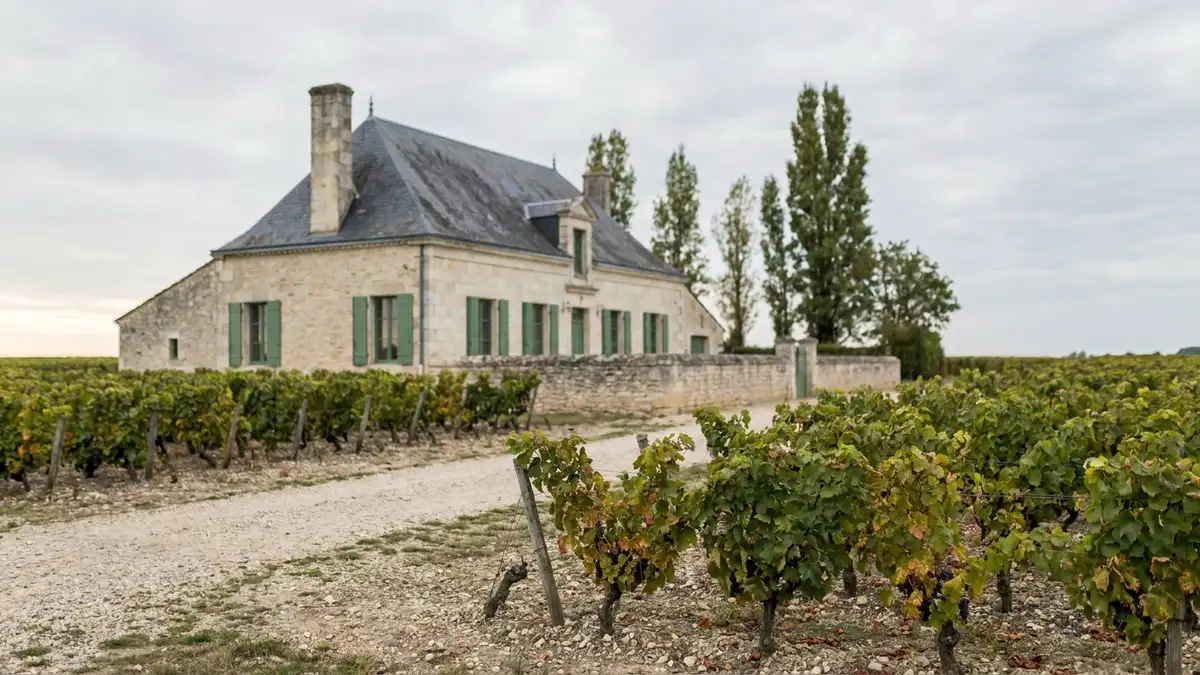
Those words are reserved for wines with a PDO or PGI (a protected designation of origin or geographical indication, the EU's legally defined place names). They may be used only if the wine is made exclusively from grapes harvested in vineyards that holding farms, and the winemaking is carried out entirely on that holding. The listed words include:
- France: Château, Domaine, Clos, Mas
- Germany: Weingut, Schloss, Domäne
- Italy: Castello, Villa, Abbazia
- Portugal: Quinta, Herdade, Casa
So on a protected European wine, "Château" or "Weingut" in the name already carries an estate-style promise. A French phrase like "mis en bouteille au château" adds where the bottling happened. If the label shows a merchant's name and town instead, the wine was most likely bought in and bottled elsewhere. The word order on Old World labels is decoded in how to read a wine label, and the Bordeaux wine guide shows the château system at work.
Check One Label Tonight
Take any bottle in the house, turn it round, and find the line with "by" in it. Place it on the ladder in the table: Bottled, Cellared, Produced, or Estate bottled. Then check whether the front names an AVA or only a state. If it says Estate bottled with an AVA, every grape came from that winery's vines; if it says Bottled by with a state, treat it as a blend of bought-in wine.
More label words and style terms sit together in the wine styles hub, and the Sommy app at sommy.wine has bite-sized courses on France, Italy, Spain and California. Pour a glass tonight, photograph its label in Sommy, and log the producer line.
Sources
- 27 CFR § 4.26: Estate bottled (Cornell Legal Information Institute)
- 27 CFR § 4.25: Appellations of origin (Cornell Legal Information Institute)
- 27 CFR § 4.35: Name and address (Cornell Legal Information Institute)
- Commission Delegated Regulation (EU) 2019/33, Article 54: Indication of the holding
- Commission Delegated Regulation (EU) 2019/33, Annex VI: Terms referring to a holding
Frequently Asked Questions
What does estate bottled mean on a wine label?
It is a US legal term. The winery must be located in the American Viticultural Area named on the label, must have grown all the grapes on land it owns or controls inside that area, and must have crushed, fermented, aged and bottled the wine in one continuous process. A label without an AVA name cannot use it.
Is estate bottled wine better quality?
Not by definition. The federal rule sets conditions on where the grapes grew and who handled them, and it contains no tasting test, score or quality grade. What it does guarantee is traceability: every grape came from that winery's own or leased vineyards inside one named area, so the wine shows that site and that team's farming.
What is the difference between estate bottled and produced and bottled by?
Produced and bottled by means the named winery fermented at least 75% of the wine at the stated address. It may have bought every grape from other growers. Estate bottled goes further: the winery also grew all the grapes on land it owns or leases inside the named AVA, and handled the wine from crush to bottle without a break.
Can a winery buy grapes and still say estate bottled?
No. All the grapes must come from land the winery owns or controls inside the AVA on the label. Controlled means a lease or similar agreement of at least 3 years under which the winery itself does all the vineyard work. One exception: grapes grown by members of a cooperative winery count as grown by that winery.
What does estate grown mean on a wine label?
US federal rules define only one term for combined growing and bottling, and it is Estate bottled. No other term may be used to signal both. So read Estate grown, Estate wine or a bare Estate as a claim about the vineyard at most, and check the back label for the exact phrase Estate bottled before treating it as the legal promise.
Is estate bottled the same in Europe?
The idea is similar but the law is different. In the EU, holding words such as Château, Domaine, Weingut, Castello or Quinta are reserved for wines with a protected origin, and only when every grape came from that holding's vineyards and the winemaking happened entirely on that holding. The US term Estate bottled does not apply there.
Sommy Team
LinkedInFounder & Wine Educator
The Sommy Team is building the world's most approachable wine education app, helping beginners develop real tasting skills through structured courses and AI-guided practice.