Dry White Wine: The Driest Whites and How to Pick One

By the Sommy Team — AI-assisted, human-edited.
Updated Oct 9, 2026
Contents (9)
- What Is a Dry White Wine, in One Paragraph?
- Why Do Some Dry White Wines Taste Sweet?
- Which Dry White Wines Should You Try First?
- What Is the Driest White Wine?
- Is Chardonnay a Dry White Wine?
- Is Pinot Grigio Dry? What About Sauvignon Blanc and Riesling?
- How Do You Spot a Dry White on the Label?
- How Cold Should You Serve a Dry White?
- Which Dry White Wine Is Best for Food and Cooking?
TL;DR
A dry white wine holds at most 4 grams of sugar per litre under EU law, or 9 when its acidity is high. Most whites qualify, so the ones that taste driest are tart, unoaked and from cool places: Muscadet, Assyrtiko, Chablis and Sauvignon Blanc. Oak, ripe fruit and alcohol make a dry white feel sweeter.
Almost every white on the shelf is a legally dry white wine. So the bottles that taste driest are the tart, unoaked ones from cool places, whatever their exact sugar. Muscadet, Assyrtiko, Chablis and Sauvignon Blanc sit at the lean end, and oaked Chardonnay at the round end.
What Is a Dry White Wine, in One Paragraph?
A dry white wine is a white with so little sugar left after fermentation that you cannot taste it. Under EU law a still wine may say dry with up to 4 grams of residual sugar (grape sugar the yeast did not ferment) per litre. It may also say dry with up to 9 grams, provided its total acidity is no more than 2 grams below the sugar. Sparkling wine follows a different scale, where Dry means 17 to 32 grams per litre and tastes sweet. The full legal ladder, reds included, is in what dry wine means.
Why Do Some Dry White Wines Taste Sweet?
Because the tongue never reads sugar on its own. It weighs sugar against acidity (the tartness that makes your mouth water), alcohol, fruit aromas and oak. Two whites with the same grams can taste dry and sweet side by side.
Acidity pushes toward dry. Wine Folly notes that high acidity and bitterness mask the taste of sweetness. The effect is strong enough that a sweet Vouvray, made from high-acid Chenin Blanc in the Loire, can taste dry.
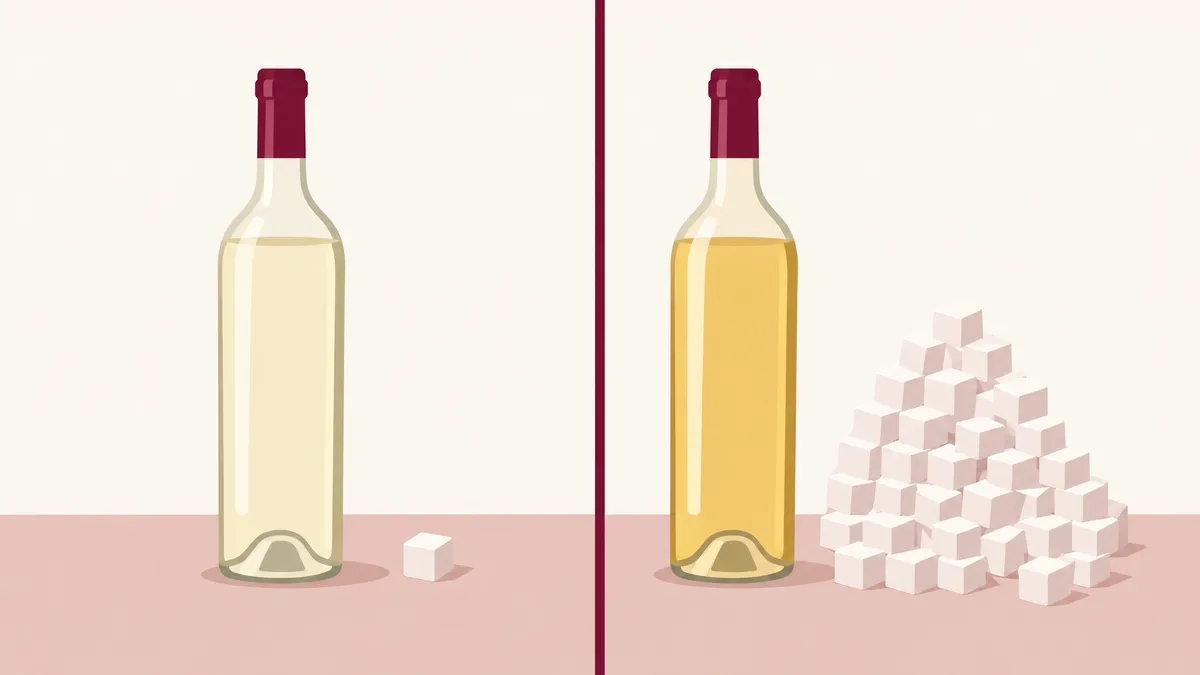
Three things push the other way:
- Ripe fruit aromas. Peach, mango and pineapple smell like sweets, and the brain fills in sugar that is not there.
- Alcohol. A white at 14% feels warm and round, which reads as soft sweetness on the finish.
- Oak. Barrels add vanilla and toast, flavours the brain links with dessert.
Fruity is a smell; sweet is a taste on the tongue. A tropical Sauvignon Blanc can smell like fruit salad and still hold almost no sugar. A method for finding real sugar under the fruit is in how to detect residual sugar.
Which Dry White Wines Should You Try First?
Start with the lean, unoaked group: Muscadet, Assyrtiko, Chablis and Sauvignon Blanc. They show what dry tastes like with nothing softening it. Then move down the table toward the rounder dry styles. Every wine in it is dry; the order is how dry each one feels.
| Wine | Where it is from | Dry feel | Why it tastes that way | Pour it with |
|---|---|---|---|---|
| Muscadet | Loire Valley, France | Leanest | High acid, light body, no oak | Oysters, mussels, fried fish |
| Assyrtiko | Santorini, Greece | Lean, firm | Keeps its acidity even when very ripe | Grilled octopus, feta, lemon potatoes |
| Chablis | Northern Burgundy, France | Lean | Chardonnay from a cool climate | Goat cheese, roast chicken, shellfish |
| Sauvignon Blanc | Loire, New Zealand, Chile | Lean to medium | High acid; tropical styles smell sweeter | Salads, asparagus, herby fish |
| Albariño | Rías Baixas, Spain | Lean to medium | Tart, light body | Prawns, ceviche, tapas |
| Grüner Veltliner | Austria | Medium | Dry with a white-pepper note | Schnitzel, green vegetables |
| Pinot Grigio | Northern Italy | Medium | Light and neutral, low aroma | Aperitif, light pasta, antipasti |
| Pinot Gris | Alsace, France | Round | Fuller body; some bottles off-dry | Pork, mushroom dishes, mild curry |
| Oaked Chardonnay | California, Burgundy, Australia | Roundest | Oak vanilla, buttery malolactic, higher alcohol | Lobster, cream sauces, roast chicken |
If you want the crispest possible glass, pick a white from a cool climate (a place where grapes ripen slowly, so they keep their tartness), with no oak and modest alcohol. If you find those too sharp, step down the table to Grüner Veltliner or Pinot Grigio before you reach for an off-dry wine. The stainless steel vs oak comparison shows why the tank a white ferments in moves it up or down this list.
What Is the Driest White Wine?
There is no single driest white, because most dry whites carry similar, tiny amounts of sugar. Lists that crown one grape are ranking how dry a wine feels, and that comes from acidity, body and oak. On that measure, Muscadet and Assyrtiko are the strongest candidates.
Muscadet comes from the western end of the Loire, and it is made only from one grape, Melon de Bourgogne. Its best bottles say sur lie on the label, meaning the wine rested on its lees (the dead yeast cells left after fermentation) before bottling. That contact adds a faint bready texture without adding sugar. The grape and its region are covered in the Melon de Bourgogne guide.
Assyrtiko is Santorini's grape, and it holds its acidity even when the grapes are very ripe. Most grapes lose tartness as they ripen, which is why warm-climate whites taste softer. Assyrtiko keeps it, so the wine can reach real body and still finish dry and lemony. Growers train the vines low to the ground in a basket shape called kouloura.
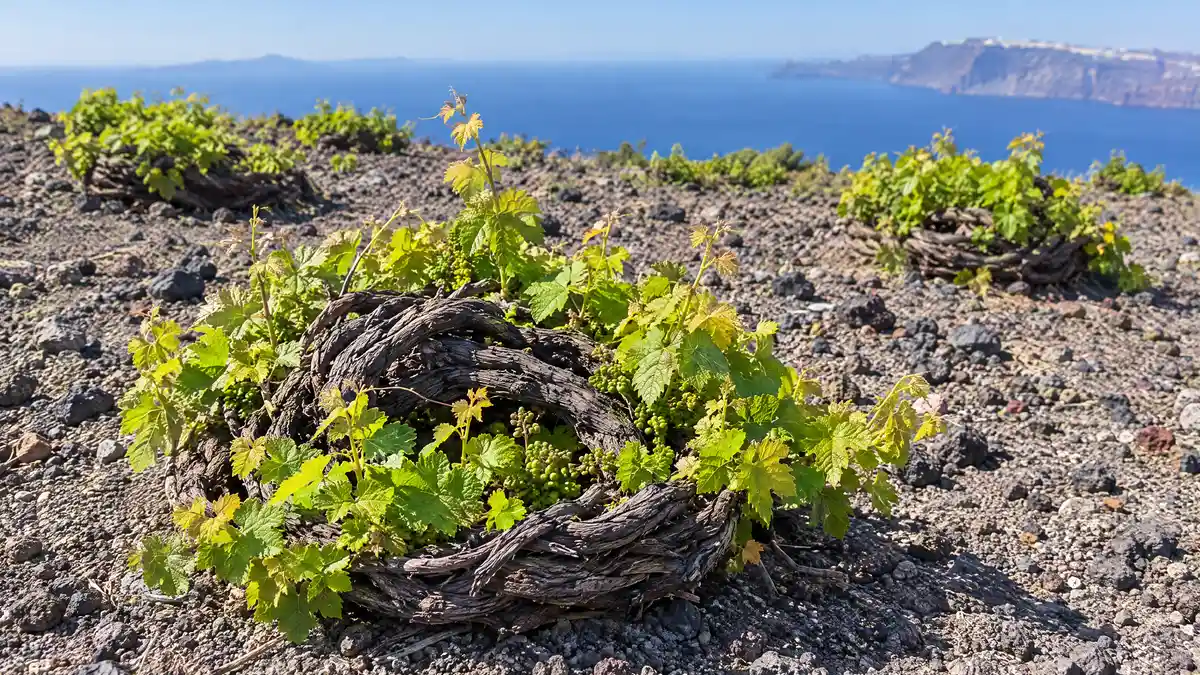
The island and its vines are mapped in the Assyrtiko wine guide.
Is Chardonnay a Dry White Wine?
Yes, almost all Chardonnay is dry. The bottles that taste rich, buttery and faintly sweet get that taste from two winemaking steps: malolactic fermentation and oak barrels. Made without them, a Chardonnay with the same sugar tastes lean and lemony.
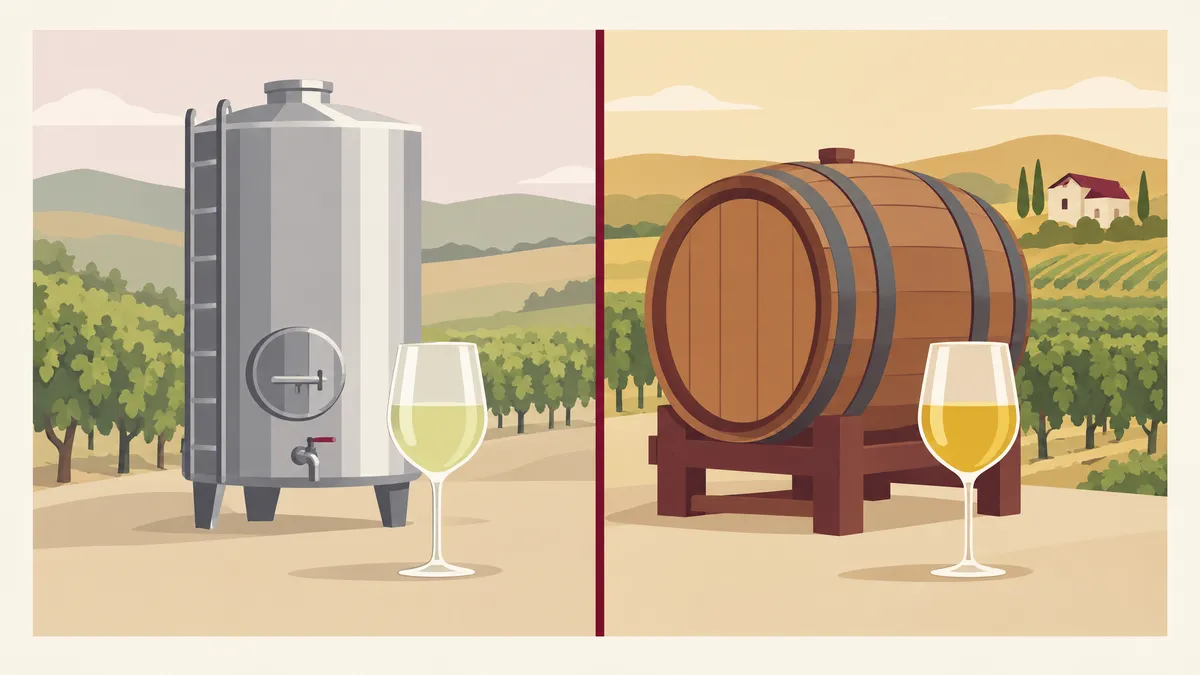
The first is malolactic fermentation (a second fermentation in which bacteria turn tart malic acid into softer lactic acid). It lowers the sharpness and can add a buttery flavour from a compound called diacetyl, and it is especially popular for Chardonnay. That buttery taste carries no sugar at all. The full process is in what malolactic fermentation is.
The second is oak (barrels that add vanilla, toast or spice). Both steps soften the wine, so the same dry grape tastes rounder and seems sweeter.
For the leanest Chardonnay, buy Chablis. All Chablis is 100% Chardonnay, grown in the cool north of Burgundy. It comes in four tiers: Petit Chablis, Chablis, Premier Cru and Grand Cru, the top tier made up of seven named vineyards. If you want green apple and lemon, buy Petit Chablis or plain Chablis. If you want butter and toast, buy a Chardonnay whose back label mentions barrels. The Chablis wine guide maps the tiers.
Is Pinot Grigio Dry? What About Sauvignon Blanc and Riesling?
Italian Pinot Grigio and Sauvignon Blanc are almost always dry; Riesling is the one to check. Pinot Grigio from Italy is usually light-bodied, lean and crisp. The same grape grown in Alsace and labelled Pinot Gris is medium to full-bodied, and some bottles keep a little sugar. The split is laid out in Pinot Grigio vs Pinot Gris.
Sauvignon Blanc runs from aggressively grassy to sweetly tropical in flavour, yet the sugar is usually fermented away. Its grassy, green-pepper smell comes from compounds called methoxypyrazines. The grape does appear in sweet wine, blended with Sémillon in Sauternes, but those bottles are sold as Sauternes. Sauvignon Blanc is usually drunk young, so buy the most recent vintage on the shelf. More in the Sauvignon Blanc wine guide.
Riesling is made in every style from bone dry to dessert sweet. If a German Riesling says Trocken, it is dry. If it carries no sweetness word, read the back label before buying. The Riesling wine guide decodes the label terms.
How Do You Spot a Dry White on the Label?
Look for the dry word in the wine's language: Sec in French, Secco in Italian, Seco in Spanish, Trocken in German. Any of them on a still white means it sits within the legal dry limit. If the label shows no sweetness word, the grape and the region from the table above are the next clue.
Sparkling wine is the trap. On a bubbly label, Dry means 17 to 32 grams of sugar per litre, well above the still-wine limit. If a Prosecco or Cava says Dry or Extra Dry, expect a soft sweetness. If you want it as dry as a still white, buy Brut or Extra Brut; the scale is explained in Champagne vs Prosecco vs Cava.
Back labels often add alcohol and sometimes residual sugar in g/L. If a white shows 12% or less and names no barrel, it will usually taste leaner than one at 14% that mentions oak. More label decoding is in how to read a wine label.
How Cold Should You Serve a Dry White?
Serve a light dry white fridge-cold, then take it out of the fridge for about 15 minutes before pouring. Straight from the fridge, a light white tastes of little but acid. A few minutes in the glass bring back the lemon, apple and herb aromas.
Fuller whites such as oaked Chardonnay need a little longer out, because their vanilla and butter flatten when ice-cold. If the aroma is faint, cup the bowl in your hand for a minute and smell again. If the wine tastes flabby or the alcohol burns, it has warmed too far, so put it back in the fridge for ten minutes. Exact ranges by style are in the wine serving temperature chart, and the full look, smell and taste routine is in how to taste white wine.
Which Dry White Wine Is Best for Food and Cooking?
Choose a tart, unoaked dry white for salty, fatty and lemony food. Acidity cuts through fat and stands up to salt and citrus, and a wine with no sugar keeps the next bite tasting clean. The leaner the dish, the leaner the wine.
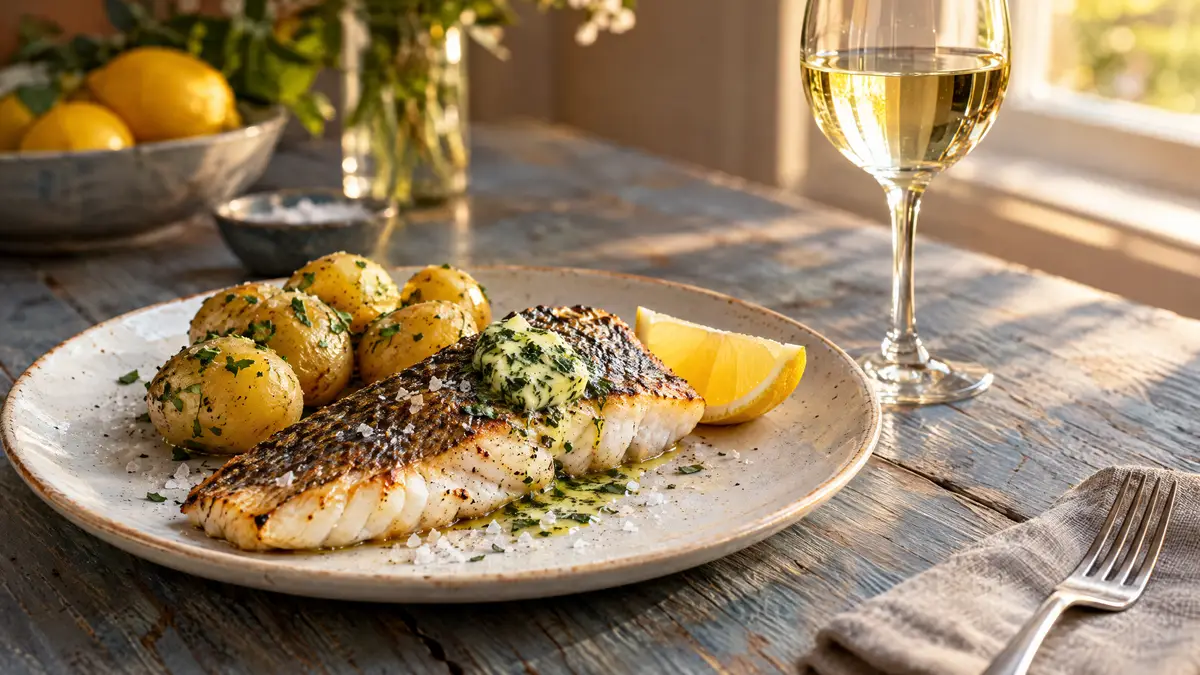
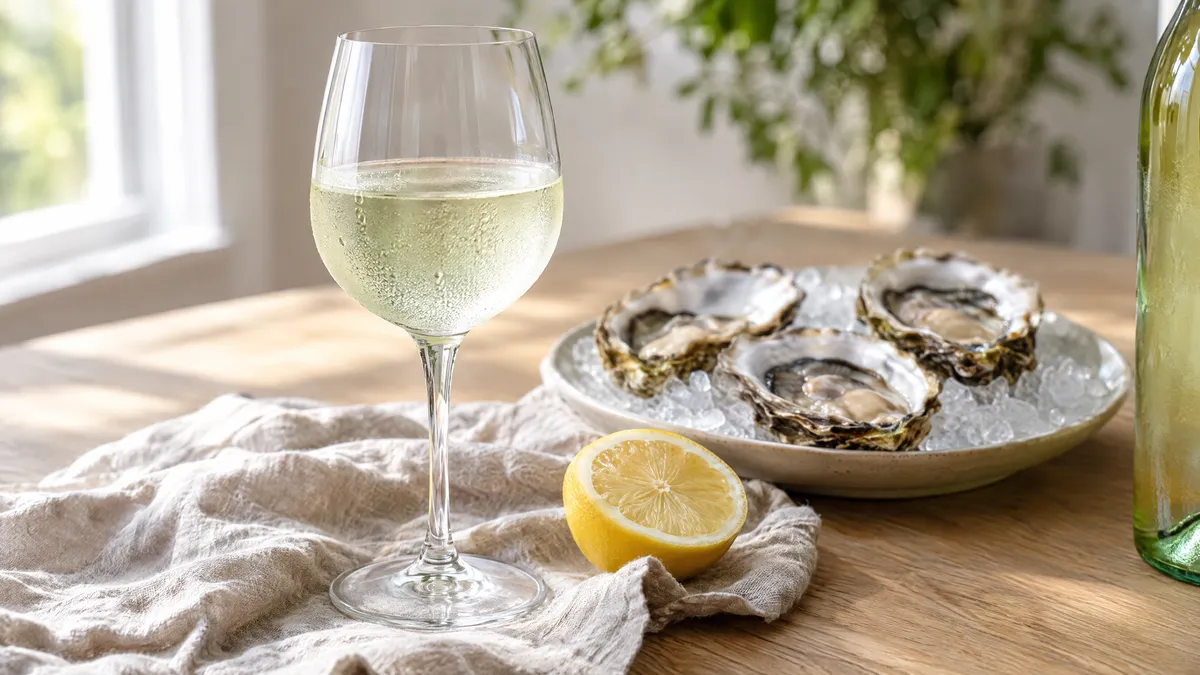
If the plate has lemon or vinegar, pour a high-acid white such as Muscadet or Sauvignon Blanc, because a softer wine tastes flat next to the citrus. If it has cream, butter or a rich sauce, pour an oaked Chardonnay, whose weight matches the fat. Raw shellfish and lean whites are covered in wine with oysters.
For cooking, use an unoaked dry white you would drink. Reducing wine in the pan concentrates everything in it, so oak, sugar or a flat taste get stronger in the sauce. If a recipe says dry white wine, Pinot Grigio, Sauvignon Blanc or Muscadet all work. The cooking wine guide explains why bottles sold as cooking wine are a poor swap.
The rest of the dry, sweet, sparkling and fortified styles sit together in the wine styles hub. Sommy teaches the basics in its Wine 101 course and adds an AI-guided tasting mode for any bottle you photograph. Pour the white you have open tonight, pinch your nose on the first sip and taste whether its sweetness is sugar or smell.
Sources
Frequently Asked Questions
What is the driest white wine?
No single grape wins, because most dry whites hold similar, tiny amounts of sugar. The whites that taste driest combine high acidity, no oak and moderate alcohol. Muscadet, made only from Melon de Bourgogne, Assyrtiko from Santorini, Chablis and cool-climate Sauvignon Blanc are the usual picks for a lean, tart glass with no hint of sweetness.
Is Chardonnay a dry white wine?
Yes, almost all Chardonnay is dry. The buttery, vanilla taste of some bottles comes from malolactic fermentation and oak barrels, not from sugar. Those flavours make it feel rounder and sweeter than it is. For the leanest Chardonnay, buy Chablis or a bottle labelled unoaked, which taste of green apple and lemon instead of butter and toast.
Is Pinot Grigio dry or sweet?
Italian Pinot Grigio is dry in almost every bottle, and usually light-bodied, lean and tart. The same grape made in Alsace under the name Pinot Gris is fuller and can be sweeter, so check the back label there. If a shop calls a white light and crisp and it comes from northern Italy, expect it to be dry.
Is Sauvignon Blanc dry?
Nearly always. Sauvignon Blanc ranges from grassy to tropical in flavour, and the tropical versions can smell sweet, but the sugar is usually fermented away. The grape also goes into sweet Sauternes, blended with Sémillon, though that wine is sold under the Sauternes name, never as Sauvignon Blanc. Drink it young, while its acidity and green aromas are fresh.
Is Riesling a dry white wine?
Sometimes. Riesling is made in every style from bone dry to dessert sweet, so the grape name alone tells you little. Look for Trocken on a German label, which means dry. Many Rieslings from Alsace and Australia are dry too, but the back label or a sweetness scale printed on it is the safest guide before you buy.
What dry white wine is best for cooking?
Use a tart, unoaked dry white you would happily drink, such as Sauvignon Blanc, Pinot Grigio or Muscadet. Reducing wine in a pan concentrates whatever is in it, so oak, sugar or a flat taste get stronger, not weaker. Avoid bottles sold as cooking wine, which often carry added salt, and avoid anything labelled Medium or Sweet.
Is Prosecco a dry wine?
Only when the label says Brut or drier. On sparkling wine the word Dry means 17 to 32 grams of sugar per litre, which tastes noticeably sweet, and Extra Dry sits only a step below that. If you want a sparkling wine that tastes as dry as a still white, buy one labelled Brut, Extra Brut or Brut Nature.
Sommy Team
LinkedInFounder & Wine Educator
The Sommy Team is building the world's most approachable wine education app, helping beginners develop real tasting skills through structured courses and AI-guided practice.