Sweet White Wine Chart: 8 Styles From Off-Dry to Dessert

By the Sommy Team — AI-assisted, human-edited.
Updated Oct 29, 2026
Contents (10)
- What Counts as a Sweet White Wine, in One Paragraph?
- Sweet White Wine Chart: Eight Styles From Off-Dry to Dessert
- How Do You Tell If a White Wine Is Sweet Before Buying?
- Is Riesling Always Sweet?
- What Food Goes With Sweet White Wine?
- How Should You Serve Sweet White Wine?
- Why Is Some White Wine Sweet?
- Which Sweet Whites Are Light and Low in Alcohol?
- What Is Noble Rot, and Which Wines Use It?
- How Is Ice Wine Made?
TL;DR
Sweet white wines run from off-dry Riesling and Gewürztraminer to Moscato d'Asti, Sauternes, Tokaji Aszú and ice wine. EU law calls a still wine sweet from 45 grams of sugar per litre. Read the sweetness word before the grape, expect acidity to make sugar taste lighter, and pour a wine at least as sweet as dessert.
Sweet white wine runs from a Riesling with just enough sugar to calm a Thai curry to a Sauternes thick enough to stand in for dessert. The grape rarely tells you which end you are buying, because Riesling, Chenin Blanc and Furmint are all made both dry and sweet. The sweetness word on the label does, and so does the way the grapes kept their sugar.
What Counts as a Sweet White Wine, in One Paragraph?
Under EU labelling law, a still wine counts as sweet once it holds at least 45 grams of residual sugar (grape sugar the yeast left unfermented) per litre. Below that line it is medium up to 45 grams, medium dry up to 12, and dry up to 4. Two of those limits move with acidity (the tartness that makes your mouth water). A wine with enough acid may carry 9 grams and still say dry, or 18 and still say medium dry, because acid makes sugar taste less sweet. In a shop, a sweet white is anything from medium dry to syrupy.
Sweet White Wine Chart: Eight Styles From Off-Dry to Dessert
Eight styles cover the range, ordered from just-sweet to syrupy. The first rung is off-dry (a trade word for a wine with a little sugar you can just taste), and the last three are true dessert wines.
| Style | Main grape | How it stays sweet | How sweet it tastes | Pick this if |
|---|---|---|---|---|
| Off-dry Riesling (halbtrocken, feinherb) | Riesling | Fermentation stopped with a little sugar left | Just sweet; sharp acid makes it read almost dry | Dinner has chilli heat: Thai, Sichuan, Indian |
| Off-dry Gewürztraminer | Gewürztraminer | Very ripe grapes, some sugar left | Lightly sweet, lychee and rose, softer acid | The food carries ginger or warm spice |
| Vouvray demi-sec or moelleux | Chenin Blanc | Riper or later-picked grapes, sugar left | Off-dry to medium sweet, baked apple and honey | Roast pork with fruit, or a cheese course |
| Moscato d'Asti | Moscato Bianco | Juice chilled almost to freezing to stop the yeast | Clearly sweet but light: 4.5 to 6.5% alcohol, gently fizzy | Lunch outside, brunch or a fruit salad |
| Riesling Spätlese or Auslese (no trocken) | Riesling | Later-picked, riper grapes | Medium to sweet, peach and lime, sharp acid | Fruit desserts, or a sweet-and-sour main |
| Sauternes | Sémillon, Sauvignon Blanc, Muscadelle | Noble rot shrivels the grapes | Very sweet, apricot, honey, marmalade | Blue cheese or an apricot tart |
| Tokaji Aszú | Furmint, Hárslevelű | Noble-rot berries | Very sweet, apricot and orange peel, sharp acid | Fruit tarts, or a glass on its own |
| Ice wine (Eiswein) | Riesling and other hardy grapes | Grapes frozen on the vine | Intensely sweet and tart at once | The wine is the dessert |
If dinner has chilli heat, pick from the top two rows: a little sugar softens the burn, and Riesling's acid keeps the glass fresh. If the wine is the dessert, or arrives with blue cheese, pick from the bottom three. For a warm afternoon, Moscato d'Asti gives clear sweetness at 4.5 to 6.5% alcohol. Off-dry wine by country covers the first rungs in more depth.

Quick check
One question on what you just read
Riesling and Chenin Blanc are made both dry and sweet. What best tells you how sweet a bottle is?
Tap an answer to see how you did.
How Do You Tell If a White Wine Is Sweet Before Buying?
Read the sweetness word first, then the alcohol. EU labels may print medium dry, medium or sweet, or the local word: halbtrocken or demi-sec for medium dry, lieblich or moelleux for medium, süß or doux for sweet. Many dessert wines print no sweetness word at all.
For those, the style words carry the signal: Late Harvest, Vendange Tardive, Spätlese, Auslese and the name Sauternes all point to sugar.
Alcohol is the back-up clue. Sugar the yeast did not eat never became alcohol, so among wines of the same grape, a lower alcohol figure usually means more sugar left. If a German Riesling shows no trocken and a low alcohol figure, expect it to taste sweet.
Retail charts disagree about where off-dry ends, and only the EU words are legal limits. Trust the label word over a shop's chart. The wine sweetness scale sets every term side by side in grams per litre, and how to read a wine label shows where each word sits on the bottle.
Is Riesling Always Sweet?
No. Riesling is made bone dry, off-dry and lusciously sweet, and on a German label the word trocken (dry) marks the dry ones. The confusion comes from the Prädikat words (Germany's ripeness grades): Kabinett, Spätlese, Auslese, Beerenauslese and Trockenbeerenauslese, in rising order.
Those grades measure grape ripeness on the day of picking, not the sugar left in the bottle. Wine Spectator calls it must weight, the amount of sugar in the grapes at harvest. A winemaker can pick at Spätlese ripeness and ferment the juice almost dry, so the finished sweetness "might not exactly correspond" to the grade. Eiswein sometimes slots in between Beerenauslese and Trockenbeerenauslese.
If the label pairs a Prädikat with trocken, the wine is dry. With halbtrocken or feinherb, it is off-dry. With neither, expect sweetness that usually climbs with the grade. The full ladder is in the Prädikat classification guide, and the grape's dry side is in the Riesling wine guide.
What Food Goes With Sweet White Wine?
Pour a wine at least as sweet as the food, and let its acidity work against salt, fat and chilli. When the dessert is sweeter than the wine, the wine tastes sour and thin. Match by what is on the plate:
- Chilli heat. Off-dry Riesling or Gewürztraminer. Sugar softens the burn, and Riesling's moderate alcohol does not fan it. More dishes are in wine with spicy food.
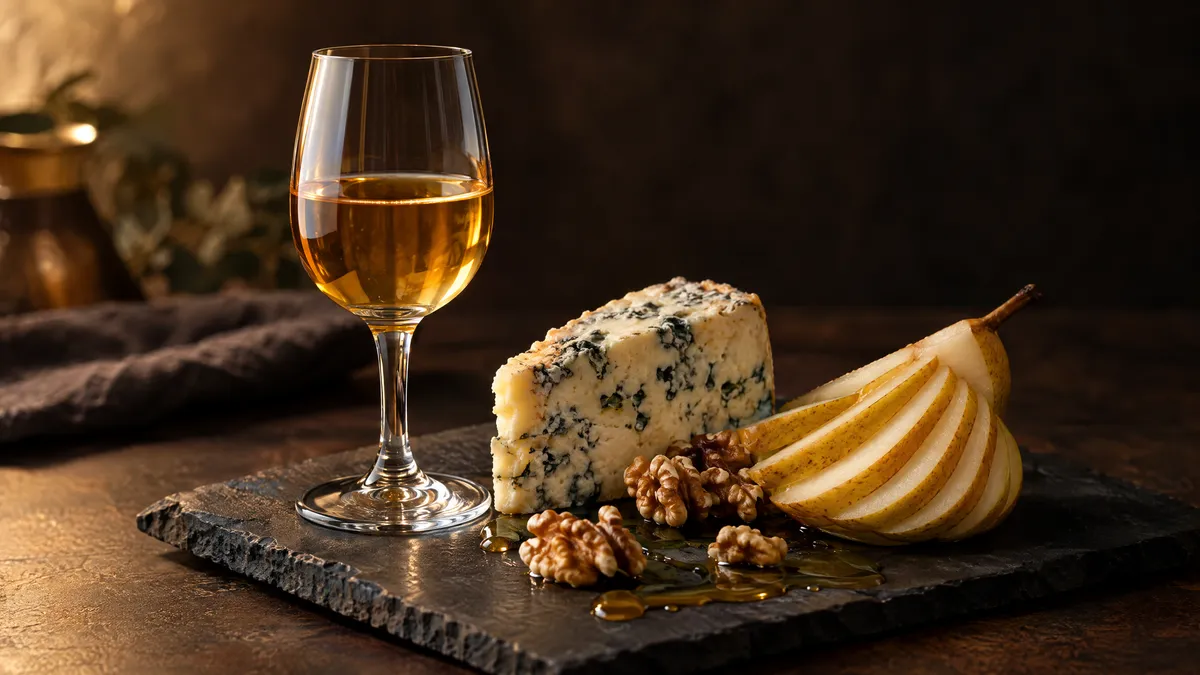
- Salty blue cheese. Sauternes or Tokaji. Sweet and salty balance each other, and the wine's acid cuts the cheese's fat. Wine with blue cheese covers each cheese.
- Fruit tarts. Auslese, Tokaji or ice wine, whose sharp acid matches the fruit's own tang.
- Fresh fruit and light desserts. Moscato d'Asti, whose low alcohol and soft bubbles keep the end of a meal light.
- Fat with fruit. Roast pork with apples or duck with a fruit sauce takes a Vouvray moelleux, whose acid cuts the fat.
How Should You Serve Sweet White Wine?
Cold, in small pours. Chilling makes sugar taste less heavy, while a dessert wine near room temperature feels syrupy; how temperature affects wine taste explains why, and the serving temperature chart gives the range per style. Pour about half the usual glass of a dessert wine, since a few sips at the end of a meal are enough.
If the bottle is a dessert wine, buy a small one. Sauternes and ice wine are often sold in half bottles.
Why Is Some White Wine Sweet?
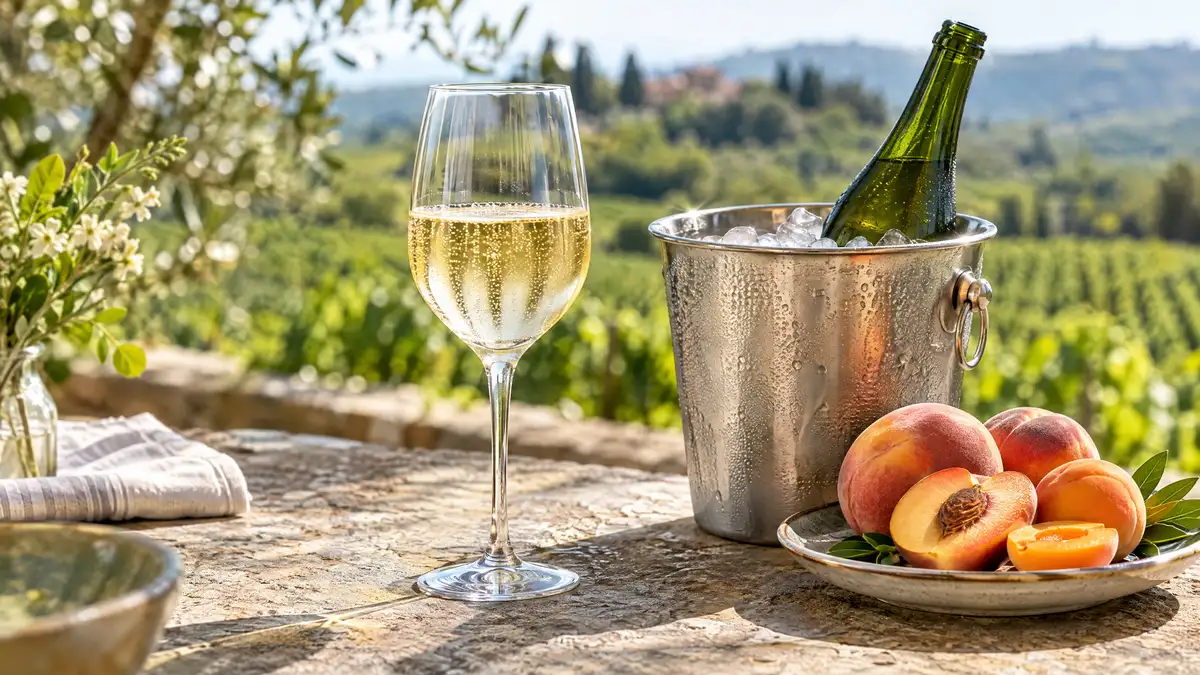
Sweetness is grape sugar the yeast never turned into alcohol. It is the grape's own sugar, not sugar stirred into the finished wine. The route it takes past fermentation decides the style, from light and fizzy to thick and honeyed, and there are three:
- Stopped early. The winemaker halts fermentation while sugar remains, often by chilling the juice so the yeast stops working. Moscato d'Asti is made this way, which keeps its alcohol low.
- Concentrated on the vine. The berries lose water before picking, through noble rot, frost or a late harvest. The juice starts with so much sugar that plenty is left when fermentation ends. Sauternes, Tokaji and ice wine take this route.
- Dried after picking. Grapes rest on mats or racks for weeks or months until they shrivel, the method behind Italy's Vin Santo.
If you want light and fresh, choose the first route. If you want honeyed and deep, choose the second or third. The late harvest wine guide follows the gentlest version of the second route, grapes left longer on the vine.
Which Sweet Whites Are Light and Low in Alcohol?
Moscato d'Asti is the classic light sweet white: 4.5 to 6.5% alcohol, clearly sweet and gently fizzy. It comes from Moscato Bianco grapes in Piedmont. Producers chill the fermenting juice almost to freezing to halt the yeast. The rules require the finished wine to keep enough sugar to make at least 4.5% more alcohol, roughly 80 grams per litre.
The fizz is frizzante (lightly sparkling, softer than Champagne): carbon dioxide from that one short fermentation, with no second fermentation in the bottle. Moscato smells of peach, orange blossom and fresh grape, because Muscat is one of the few grapes whose wine smells of the grape itself. Drink it young and cold. Moscato wine covers the other Moscato styles, and Riesling vs Moscato sets the two sweet whites beginners meet first side by side.
What Is Noble Rot, and Which Wines Use It?
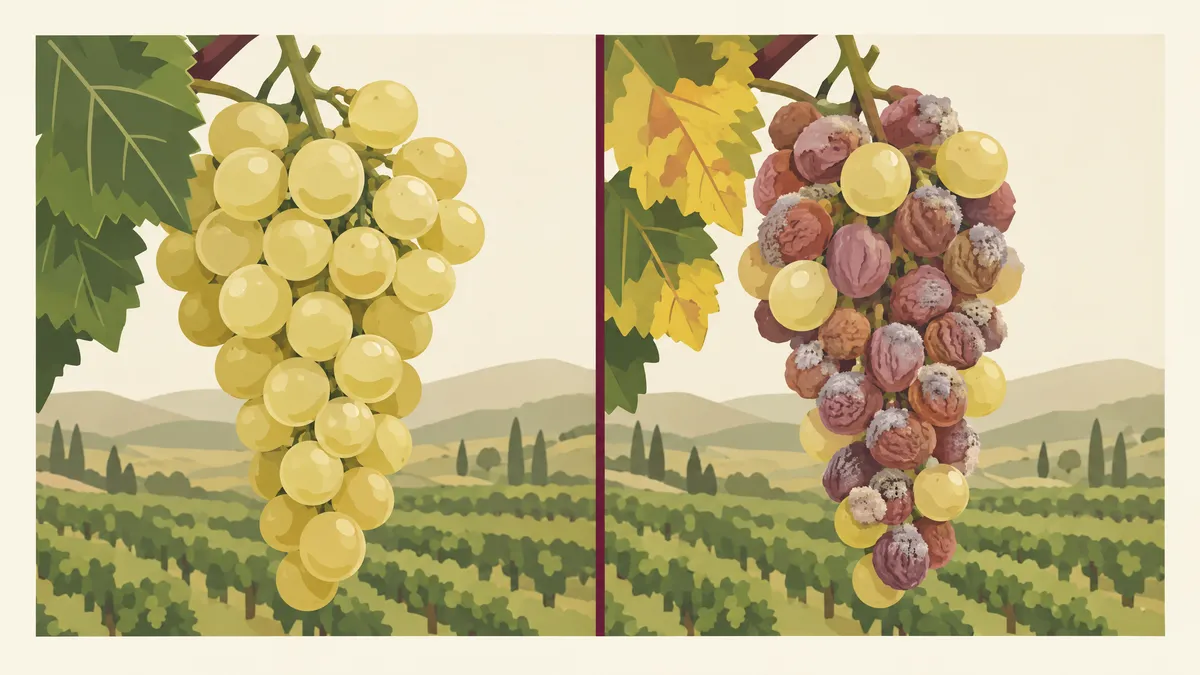
Noble rot is a fungus, Botrytis cinerea, that draws water out of ripe grapes and leaves their sugar and acid behind. The berries shrivel and turn brown-pink under a grey fuzz. They look ruined, but their juice is thick, sweet and still sharp. That acid is why the best botrytis wines taste less cloying than their sugar suggests.
Sauternes, from Bordeaux, is made from Sémillon, Sauvignon Blanc and Muscadelle. It smells of apricot, honey and orange marmalade, and the Sauternes wine guide covers its five villages and the 1855 classification.
Tokaji Aszú comes from Tokaj in north-east Hungary, where Furmint covers 60% of the vineyard area and Hárslevelű another 30%. Its label often carries a puttonyos number, a grade set by the sugar and other solids in the finished wine. A higher number means a sweeter wine. Furmint's dry side is in the Furmint wine guide, and the fungus itself is in noble rot, explained.
How Is Ice Wine Made?
Ice wine is pressed from grapes that froze while still on the vine. The water in each berry stays behind in the press as ice, so only a little thick, sugary juice runs out. The law sets the cold: minus 7 °C or colder in Germany, where the wine is called Eiswein, and minus 8 °C or colder in Canada.
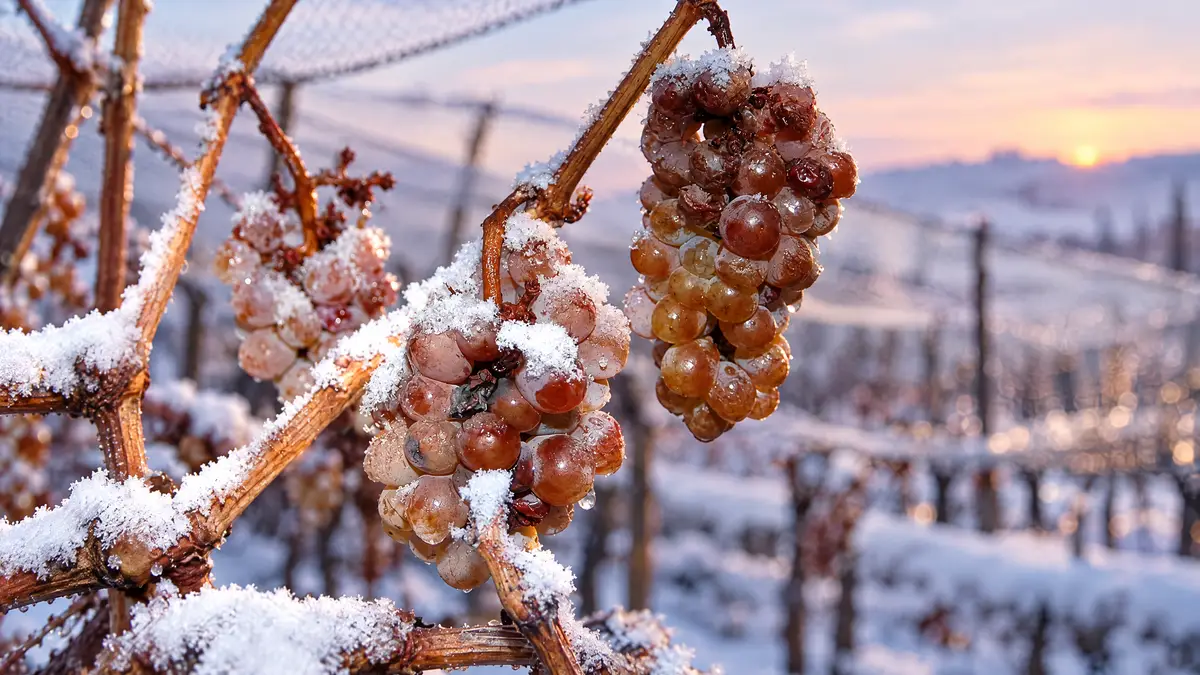
The acid concentrates along with the sugar, so good ice wine tastes intensely sweet and tart at the same time. Pickers often work at night or at first light, and if the frost comes too late the grapes can rot before any ice wine is made. The grapes that freeze best are in the ice wine guide.
The red and fortified sweet styles are in dessert wine types, and the wine styles hub places sweet whites beside sparkling, rosé and fortified wine. The Sommy app at sommy.wine has a Wine 101 course and an AI-guided tasting mode that logs each glass. Chill a Riesling marked halbtrocken or feinherb for an hour tonight, then taste it beside something with chilli.
Sources
Frequently Asked Questions
What is the sweetest white wine?
The sweetest whites come from grapes that lost water before pressing. Trockenbeerenauslese, the top of Germany's ripeness ladder, is made from shrivelled berries. Tokaji's highest grades and ice wine, pressed from grapes frozen on the vine, sit at the same syrupy end. Off-dry Riesling, Gewürztraminer and Moscato d'Asti are far lighter, made to drink with food or on a warm afternoon.
What white wine is sweet but not too sweet?
Look for off-dry styles. A German Riesling marked halbtrocken or feinherb, an off-dry Gewürztraminer or a Vouvray demi-sec carries a little sugar that high acidity keeps fresh. EU labels in English call this medium dry, up to 12 grams of sugar per litre, or 18 when acidity is high. Moscato d'Asti is sweeter but light, at 4.5 to 6.5% alcohol.
Is Moscato sweeter than Riesling?
Usually, but it depends on the Riesling's label word. Moscato d'Asti keeps roughly 80 grams of grape sugar per litre or more, which makes it clearly sweet. Riesling runs from trocken, which is dry, through halbtrocken and Spätlese to Trockenbeerenauslese. A dry or off-dry Riesling is much less sweet than Moscato d'Asti; an Auslese or Trockenbeerenauslese can be sweeter.
Is sweet white wine made with added sugar?
Sauternes, Tokaji, ice wine, Moscato d'Asti and sweet Riesling take their sweetness from the grape's own sugar. Either the winemaker stops fermentation while sugar remains, as with Moscato d'Asti, or the grapes lose water to noble rot, frost or late picking and start with so much sugar that plenty is left when fermentation ends.
How is ice wine made?
Ice wine is pressed from grapes that froze while still hanging on the vine. The water in each berry stays behind as ice, so only a little concentrated, sugary juice runs from the press. German law requires minus 7 °C or colder for Eiswein and Canadian law minus 8 °C or colder. Acid concentrates along with the sugar, so good ice wine tastes sweet and tart.
What is noble rot?
Noble rot is the fungus Botrytis cinerea when it attacks ripe grapes in the right conditions. It draws water out of the berries, which shrivel under a grey fuzz, and leaves sugar and acid concentrated in the juice. Sauternes, made from Sémillon, Sauvignon Blanc and Muscadelle, and Hungary's Tokaji Aszú, made mostly from Furmint, are the two best-known noble-rot wines.
What food goes with sweet white wine?
Match the sweetness level to the plate. Off-dry Riesling and Gewürztraminer soften chilli heat in Thai, Sichuan and Indian food. Sauternes and Tokaji go with salty blue cheese. Moscato d'Asti suits fresh fruit and light desserts. For any dessert, pour a wine at least as sweet as the food; if the dessert is sweeter, the wine tastes sour and thin.
Sommy Team
LinkedInFounder & Wine Educator
The Sommy Team is building the world's most approachable wine education app, helping beginners develop real tasting skills through structured courses and AI-guided practice.