Riesling vs Moscato: Sweetness, Acidity and Fizz Compared

By the Sommy Team — AI-assisted, human-edited.
Updated Oct 9, 2026
Contents (10)
- Riesling vs Moscato, in One Paragraph
- Which Is Sweeter, Riesling or Moscato?
- How Do Riesling and Moscato Compare Side by Side?
- Why Does Riesling Taste Less Sweet at the Same Sugar Level?
- How Can You Tell How Sweet a Bottle Is From the Label?
- What Does Each One Smell and Taste Like?
- Which Food Goes With Riesling or Moscato?
- Which Should a Beginner Try First?
- Are Riesling and Moscato Grapes or Wines?
- How Do You Taste Them Side by Side Tonight?
TL;DR
Moscato d'Asti is sweet, lightly fizzy and only 4.5 to 6.5% alcohol by law. Riesling runs from bone dry to very sweet, and its high acidity makes a sweet Riesling taste less sugary than a Moscato. Read the label words trocken, halbtrocken and d'Asti, and pick Riesling for spicy dinners, Moscato for fruit desserts.
Riesling vs Moscato comes down to range and acidity. Moscato d'Asti is one style: sweet, lightly fizzy and about 5% alcohol. Riesling runs from bone dry to dessert-sweet, and its sharp acidity makes even a sweet bottle taste less sugary than a Moscato. If you want to sip something soft and sweet, pick Moscato; if you want a white that wakes the mouth up, pick Riesling.
Riesling vs Moscato, in One Paragraph
Moscato d'Asti is sweeter, softer, lower in alcohol and lightly sparkling; Riesling is drier on average, much tarter, usually still, and made at every sweetness level. Moscato's rules stop fermentation between 4.5 and 6.5% alcohol, so a large share of grape sugar stays behind as residual sugar (grape sugar left unfermented). Riesling carries high acidity (the tartness that makes your mouth water), so a Riesling with real sugar still tastes balanced. Both smell flowery, because both grapes are rich in the same aroma compounds. Riesling tastes of lime and green apple, Moscato of peach, grape and orange blossom. Moscato is drunk young; good Riesling can age for decades.
Which Is Sweeter, Riesling or Moscato?
Moscato, in nearly all the bottles a shop will sell. The Moscato d'Asti rules demand enough grape sugar for at least 11% alcohol in total, then allow only 4.5 to 6.5% to be fermented. The sugar that never became alcohol stays in the bottle.
That puts Moscato d'Asti far past the 45 grams per litre at which EU labelling law starts calling a still wine sweet.
Riesling has no fixed answer. The myth says Riesling is always sweet; in fact it is made at every level, and the dry styles lead in Alsace, Austria and Australia. Many German exports are off-dry (a little sugar you can just taste), which is where the reputation comes from. The full ladder, from trocken to dessert wine, is laid out in the Riesling wine guide, and the wine sweetness scale places both grapes on one chart.
If the bottle says only Riesling, read the label for a sweetness word before guessing.
How Do Riesling and Moscato Compare Side by Side?
The two differ most in range. Moscato d'Asti is one sweet, low-alcohol, frizzante (lightly fizzy, at most 2.5 bar of pressure) style, made from one grape in one corner of Piedmont. Riesling covers every sweetness level, is usually still, and is grown from Germany to Australia.
| Riesling | Moscato d'Asti | Pick it when | |
|---|---|---|---|
| Grape | Riesling, from the Rhine valley | Moscato Bianco (Muscat Blanc à Petits Grains) | You want to learn one grape well: both are single-grape wines |
| Sweetness | Bone dry to very sweet | Sweet, every time | Riesling for any level; Moscato when you want sweet for sure |
| Acidity | High | Moderate | Riesling with fatty or spicy food; Moscato on its own |
| Alcohol | Low in off-dry German styles, normal in dry ones | 4.5 to 6.5% by law | Moscato for a long lunch or a light glass |
| Bubbles | Usually still | Light fizz, max 2.5 bar | Moscato when you want a gentle sparkle |
| Aromas | Lime, green apple, white flowers; petrol with age | Peach, fresh grape, orange blossom | Riesling for citrus lovers, Moscato for peach lovers |
| Ageing | Good bottles age for decades | Drink young, within a year or two | Riesling to keep, Moscato to open now |
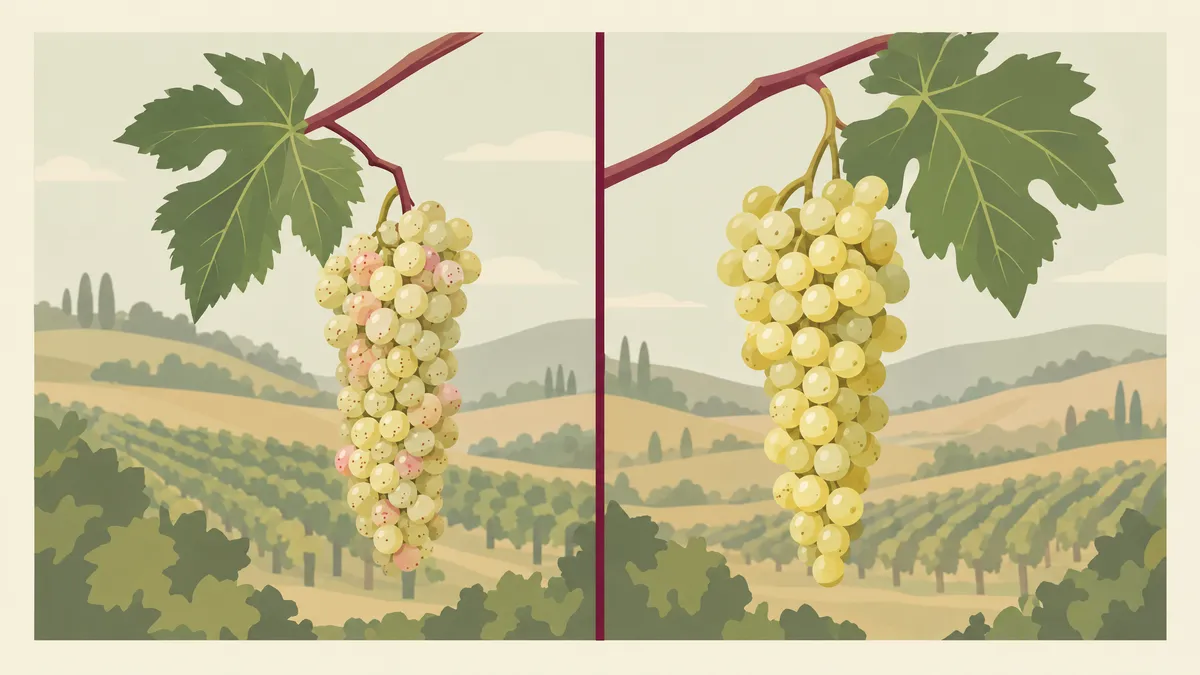
Why Does Riesling Taste Less Sweet at the Same Sugar Level?
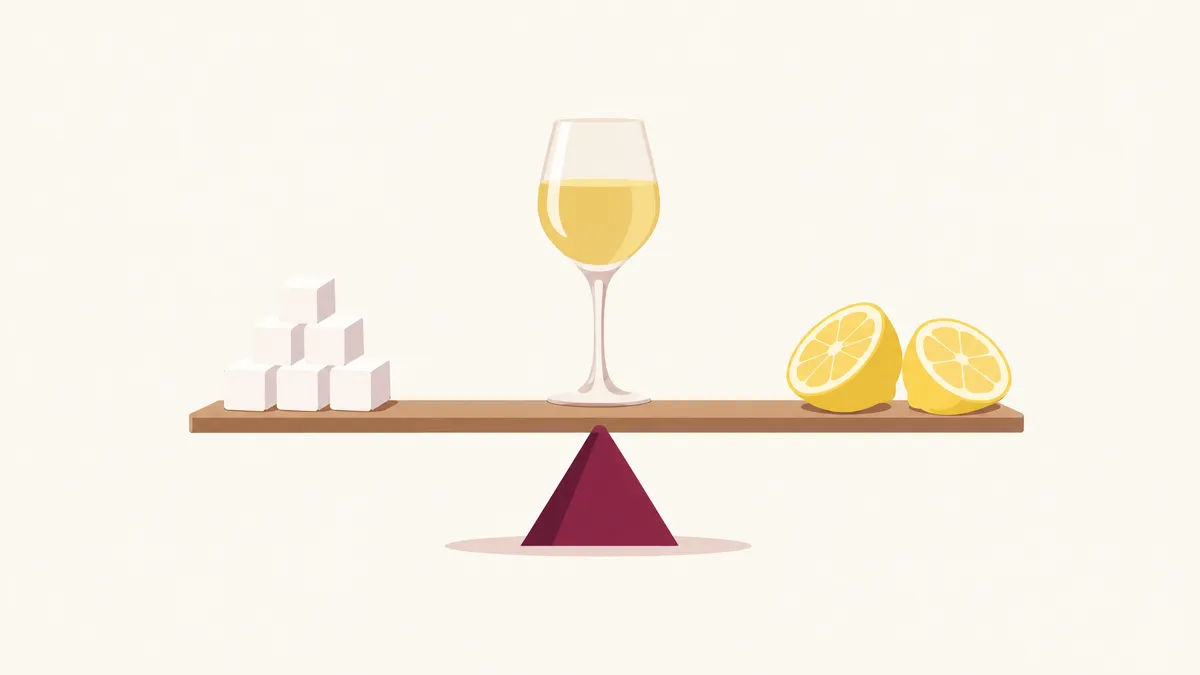
Because Riesling carries much more acidity, and acid cancels part of what the tongue reads as sweet. Sugar and acid pull in opposite directions. A wine with lots of both tastes fresh and lively, while a wine with sugar and little acid tastes soft and rounder, closer to fruit juice.
Moscato has moderate acidity, so its sugar shows plainly. Riesling keeps high acidity even when fully ripe, so a Riesling with noticeable sugar can taste closer to lemonade than to peach juice. This is also why the same grams of sugar on two labels do not predict how sweet two wines will taste. The tug-of-war is covered in wine balance explained, and what is wine acidity shows where to feel it in the mouth.
How Can You Tell How Sweet a Bottle Is From the Label?
Look for a sweetness word, then check the alcohol. EU law sets the limits: a still wine is dry up to 4 grams of sugar per litre, or up to 9 grams if the acidity is high enough. Medium dry runs to 12 grams, or 18 with enough acidity. Medium sweet reaches 45 grams, and anything above is sweet.
German Riesling labels use their own words for those levels:
- Trocken means dry.
- Halbtrocken means medium dry, so lightly sweet.
- Feinherb is an off-dry word with no fixed sugar limit; expect a touch of sweetness.
- Lieblich means medium sweet.
The Prädikat words (Kabinett, Spätlese, Auslese and up) are a trap. They measure how ripe the grapes were at harvest. The finished wine can still be dry or sweet. A Spätlese can be fermented fully dry, and then it says trocken as well. The German wine regions guide shows which areas lean dry and which lean sweet.
Moscato labels are simpler. Moscato d'Asti is sweet and gently fizzy. Asti (or Asti Spumante) is fully sparkling with at least 6% alcohol, and its rules now span from bone dry to sweet, so check the label for a sweetness word there too.
If a German Riesling says trocken, expect dry. If it carries no sweetness word and the alcohol is well below a normal white wine's, expect sugar left in the wine. If it says Moscato d'Asti, expect sweet and about 5%.
What Does Each One Smell and Taste Like?
Both smell flowery, because both grapes are rich in terpenes (aroma compounds found in grape skins), such as linalool. Muscat shares that trait with Riesling and Gewürztraminer. That is why the pair can confuse a beginner on the first sniff. The aromatic vs neutral grapes guide explains why some grapes smell of flowers before any winemaking.
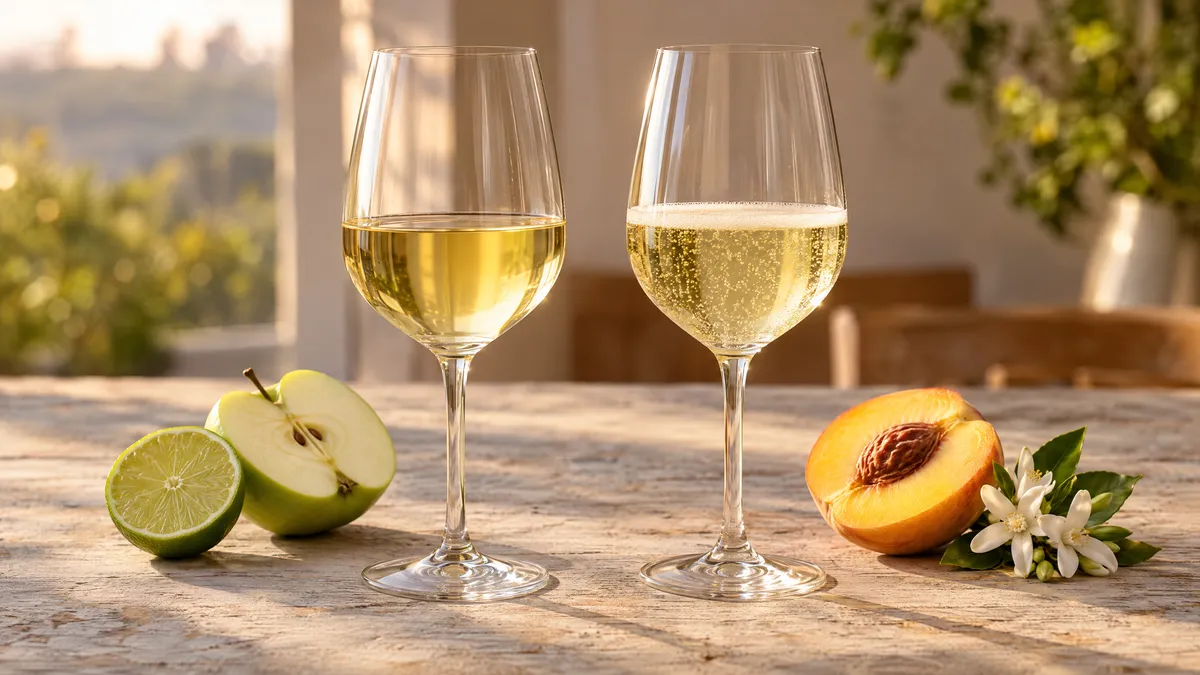
On the palate they split. Riesling tastes of lime and green apple, sharp and fresh, because its acidity stays high even in ripe grapes. Moscato tastes of ripe peach and fresh table grapes, soft and juicy, because moderate acidity lets the sugar and ripe fruit show. Its light foam feels creamy on the tongue.
Age separates them further. Riesling's high acidity and strong fruit give it a long life in the bottle, and aged bottles can smell of petrol or kerosene. The cause is a compound called TDN, which forms as carotenoids from the grape skin break down. It is a mark of age, not a fault. The primary, secondary and tertiary aromas guide covers how such age aromas build. Moscato is bottled to be drunk young, while its grape and blossom smell is strongest.
Which Food Goes With Riesling or Moscato?
Riesling goes with more of the dinner; Moscato goes with dessert, fruit and brunch. Riesling's acidity cuts through fat and salt, and an off-dry one cools chilli heat. Moscato's sugar and low alcohol suit sweet plates that would make a dry wine taste sour.
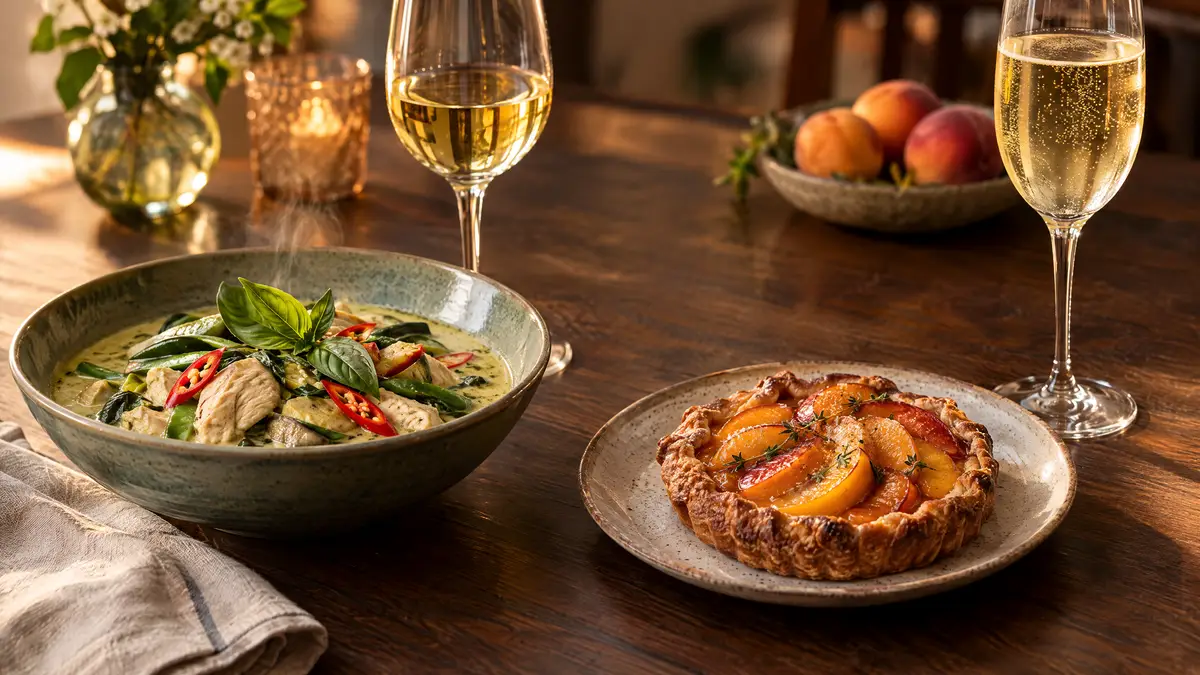
- Chilli heat (Thai curry, Sichuan, spicy tacos): off-dry Riesling, because sugar soothes the burn and low alcohol does not feed it. See wine with spicy food and wine with Thai food.
- Pork, duck and fatty fish: dry or off-dry Riesling, because acid cuts the fat.
- Fruit tarts, peach desserts, panettone: Moscato d'Asti, because its peach and grape flavours repeat the fruit.
- Brunch (fruit and ricotta, pancakes): Moscato d'Asti, because 5% alcohol suits a late morning.
If the dessert is sweeter than the wine, the wine tastes thin and sour, so keep Moscato for light, fruit-based desserts and serve a richer dessert wine with chocolate or caramel.
Which Should a Beginner Try First?
Start with Moscato d'Asti if sweetness and fizz sound good; start with an off-dry German Riesling if you want to learn what acidity does. Moscato is the easier first glass, while Riesling shows sugar and tartness in the same sip.
If dry whites taste sharp or sour to you, buy Moscato d'Asti. If you prefer lemonade to fruit juice, buy a Kabinett or halbtrocken Riesling. If you like crisp, dry whites such as Sauvignon Blanc already, skip ahead to a trocken Riesling. The best wine for beginners list puts both next to other easy first bottles, and low-alcohol wines covers more light options like Moscato.
Are Riesling and Moscato Grapes or Wines?
Riesling is one grape; Moscato is the Italian name for Muscat, a grape family, and also the name of a wine style. Riesling comes from Germany's Rhine valley, and it is still Germany's most planted grape, at about 24,410 hectares in 2022.
Muscat is a family of more than 200 related varieties. The one behind Moscato d'Asti and Asti is Muscat Blanc à Petits Grains, called Moscato Bianco in Piedmont. Moscato d'Asti became a DOC in 1967 and a DOCG (Italy's top tier of protected wine names, with the strictest rules) in 1993. Those letters are why its alcohol, pressure and sweetness are so predictable from bottle to bottle. Other Muscats make dry, still and fortified wines, mapped in the Muscat wine guide and set beside other grapes in the grape varieties hub. The Italian styles, from Moscato d'Asti to sweet Pantelleria, are in the Moscato wine guide.
How Do You Taste Them Side by Side Tonight?
Pour a Moscato d'Asti next to an off-dry Riesling and taste them in alternation, one sip of each, so the differences in sweetness, acidity and fizz show up within the same minute. Chill both in the fridge; the wine serving temperature chart gives the exact range for each style. Use matching glasses and pour the same amount.
Smell both first and name the fruit: lime or peach. Then sip the Moscato, then the Riesling, and notice which one makes your mouth water more. That watering is acidity. Last, judge sweetness, and check whether the more acidic wine tastes drier than you expected. The method for any pair is in how to compare two wines.
Sommy's bite-sized courses, including Wine 101 and a course on Italy, are at sommy.wine.
Pour a cold Moscato d'Asti and a halbtrocken Riesling into matching glasses tonight, and taste them side by side.
Sources
Frequently Asked Questions
Which is sweeter, Riesling or Moscato?
Moscato, in most bottles you will meet. Moscato d'Asti must stop fermenting between 4.5 and 6.5% alcohol, so a large share of grape sugar stays in the wine. Riesling ranges from bone dry to dessert-sweet. Even a sweet Riesling usually tastes less sugary than Moscato, because its high acidity offsets the sugar on your tongue.
Is Moscato the same as Muscat?
Yes. Moscato is the Italian name for Muscat, a family of more than 200 related grape varieties. The best-known Italian Moscato wines, Moscato d'Asti and Asti, are made from Muscat Blanc à Petits Grains, called Moscato Bianco in Piedmont. In Italy the word names both the grape and the wine, which is why the two get confused on shop shelves.
Is Riesling always a sweet wine?
No. Riesling is made at every sweetness level, from bone dry to very sweet dessert wine. Dry styles dominate in Alsace, Austria and Australia, and German bottles marked trocken are dry. The sweet reputation comes from off-dry German exports. Check the label for a sweetness word before buying, because the grape name alone does not tell you.
Which has more alcohol, Riesling or Moscato?
Riesling, nearly always. Moscato d'Asti is legally capped between 4.5 and 6.5% alcohol, and fully sparkling Asti needs at least 6%. Riesling's alcohol follows its style: off-dry German bottles stay low because fermentation stops early, while dry Riesling from Alsace or Australia reaches the strength of a normal white wine.
Is Moscato fizzy?
Moscato d'Asti is lightly fizzy, or frizzante: its rules cap the pressure at 2.5 bar, so the bubbles are soft and settle quickly. Asti, from the same grape and area, is fully sparkling, like other spumante wines. Still and fortified Muscat wines also exist outside Piedmont. Riesling is usually still, apart from German sparkling Sekt.
Why does Riesling smell like petrol?
The petrol or kerosene smell comes from a compound called TDN, which forms as carotenoids from the grape skin break down during bottle ageing. It is a known feature of aged Riesling, not a fault. Sunny vineyards and warm storage bring it out sooner. Young Moscato almost never shows it, because Moscato is sold and drunk young.
Which is better for beginners, Riesling or Moscato?
Start with Moscato d'Asti if dry whites taste sharp to you: it is sweet, soft, low in alcohol and easy to like. Start with an off-dry German Riesling if you want to learn what acidity does, since it shows sugar and tartness together. Tasting both side by side teaches more than either bottle alone.
Sommy Team
LinkedInFounder & Wine Educator
The Sommy Team is building the world's most approachable wine education app, helping beginners develop real tasting skills through structured courses and AI-guided practice.