Noble Rot (Botrytis) Wine: How Mold Makes Great Sweet Wine

By the Sommy Team — AI-assisted, human-edited.
Updated Sep 24, 2026
Contents (10)
- What Is Noble Rot Botrytis Wine?
- How Does Botrytis Turn a Grape Into Sweet Wine?
- Why Is Noble Rot "Noble" and Grey Rot Not?
- Which Wines Are Made From Noble Rot?
- What Do the Sugar Numbers on These Wines Mean?
- What Does Noble Rot Wine Taste Like?
- How Should You Serve and Pair Noble Rot Wine?
- Why Are Noble Rot Wines So Expensive?
- Was Noble Rot Really Discovered by Accident?
- How Can You Taste Noble Rot Tonight?
TL;DR
Noble rot is the fungus Botrytis cinerea working in a humid-then-dry autumn: it pierces grape skins, water evaporates, and the berries shrivel into concentrated sugar and acid. In steady rain the same mold becomes destructive grey rot. Sauternes, Tokaji Aszú and Trockenbeerenauslese are the classic results, each with different legal sugar rules.
What Is Noble Rot Botrytis Wine?
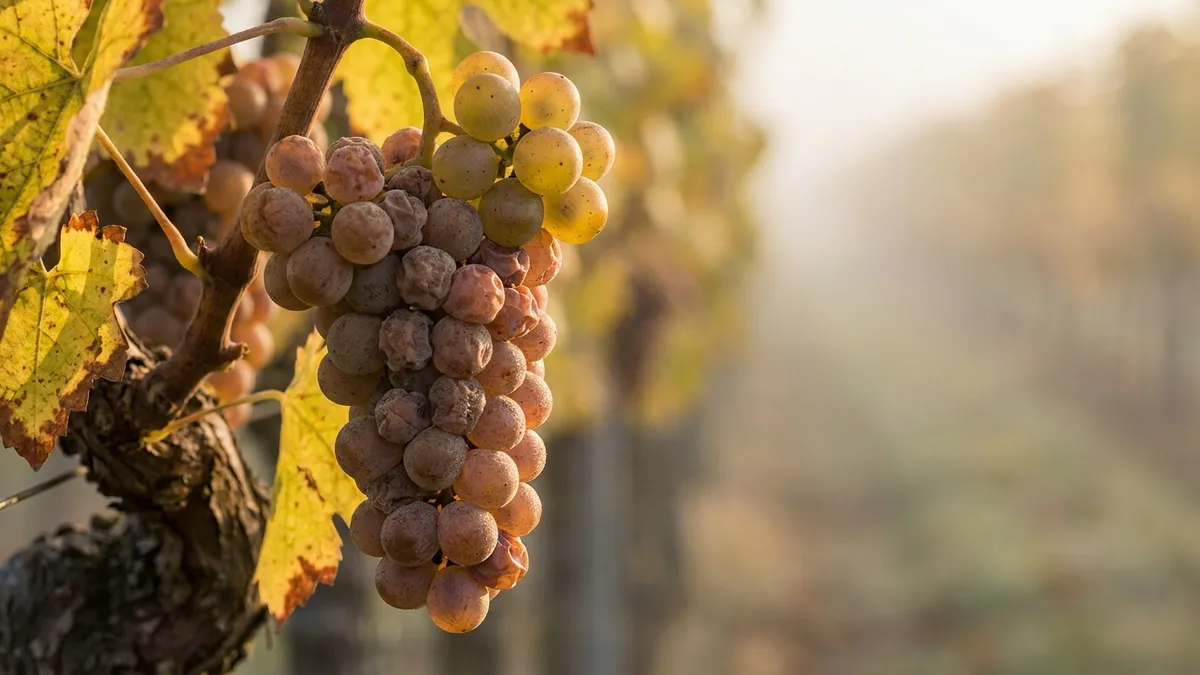
Noble rot botrytis wine is sweet wine made from grapes that a gray fungus has shrivelled on the vine. The fungus is Botrytis cinerea, the same mold that can ruin a harvest. It becomes noble rot only when a humid spell gives way to drier days. Berries then lose water through the pierced skins, up to 60% of their mass.
What is left is concentrated sugar and acid. Sauternes, Tokaji Aszú and Trockenbeerenauslese are the classic results, and each region measures sweetness by a different legal yardstick. A wet autumn turns the same fungus into destructive grey rot, so some vintages make no noble rot wine at all.
How Does Botrytis Turn a Grape Into Sweet Wine?
The fungus pierces the grape skin, water evaporates through the tiny wounds, and everything left behind gets more concentrated. As it feeds, botrytis makes microscopic holes in the skin. Water escapes through them over days and weeks, and a berry can lose up to 60% of its mass. What remains is a wrinkled, brownish berry packed with sugar and acid.
Concentration is only half the story. Botrytis also changes the juice chemically, which is why these wines taste different from sweet wines made by other methods:
- Glycerol, a slightly sweet, oily compound the fungus produces, adds a thick, silky feel on the tongue.
- Gluconic acid forms when botrytis oxidizes the grape's glucose. Yeast and bacteria cannot use it, so the Australian Wine Research Institute notes that winemakers sometimes measure it as a marker of infection.
- Acetic and lactic acid can build up when bacteria join the fungus, and too much tips the wine toward a vinegary edge.
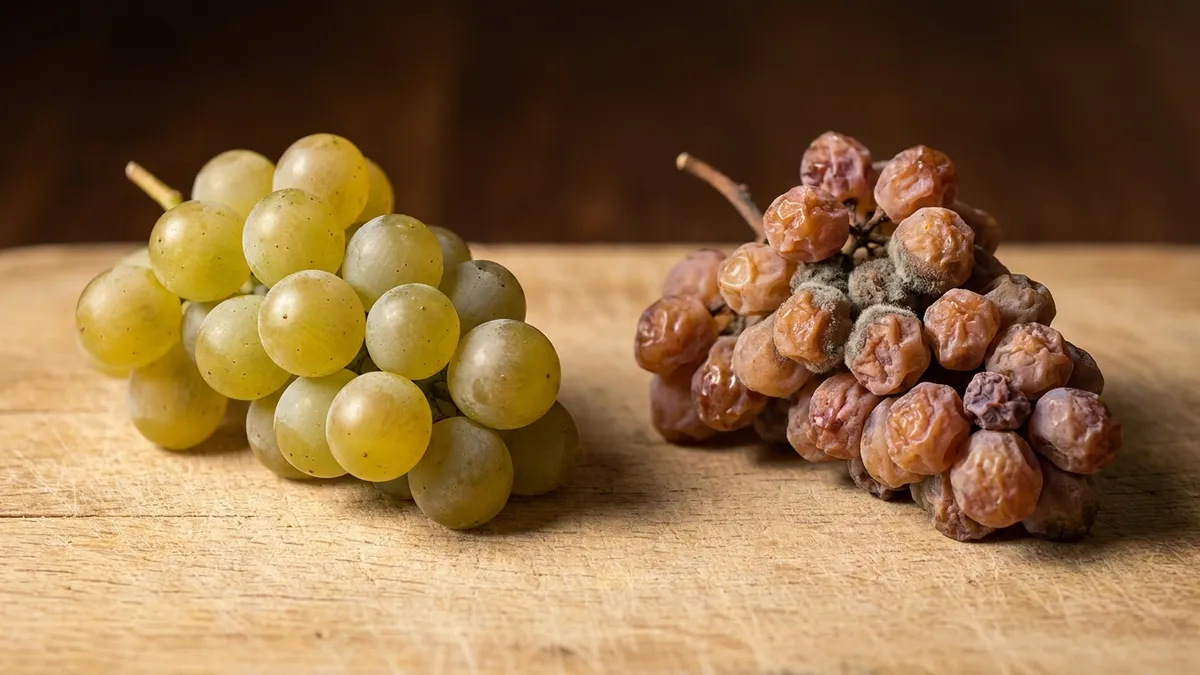
The shrivelled berries give very little juice, and that juice is so dense with sugar that yeast struggles to ferment all of it. Fermentation stops, or the winemaker stops it, with plenty of sugar left over, which is where the sweetness in the glass comes from. For a closer look at how a winemaker's decisions shape residual sweetness, see how to taste residual sugar in wine.
Why Is Noble Rot "Noble" and Grey Rot Not?
Weather decides. Botrytis turns noble only when a humid spell lets it infect ripe grapes and drier days then let the berries shrivel. Infection needs warm, damp conditions, typically around 20°C with humidity above 80%. If sun and breeze follow, the berries partially raisin and the fungus works for the winemaker.
If the weather stays wet, the result is grey rot (also called bunch rot), the destructive form. Rot spreads through whole bunches, berries split, and other molds and bacteria move in. Grey rot disrupts fermentation and changes the taste, aroma and color of the wine, so growers cut it out and throw it away.
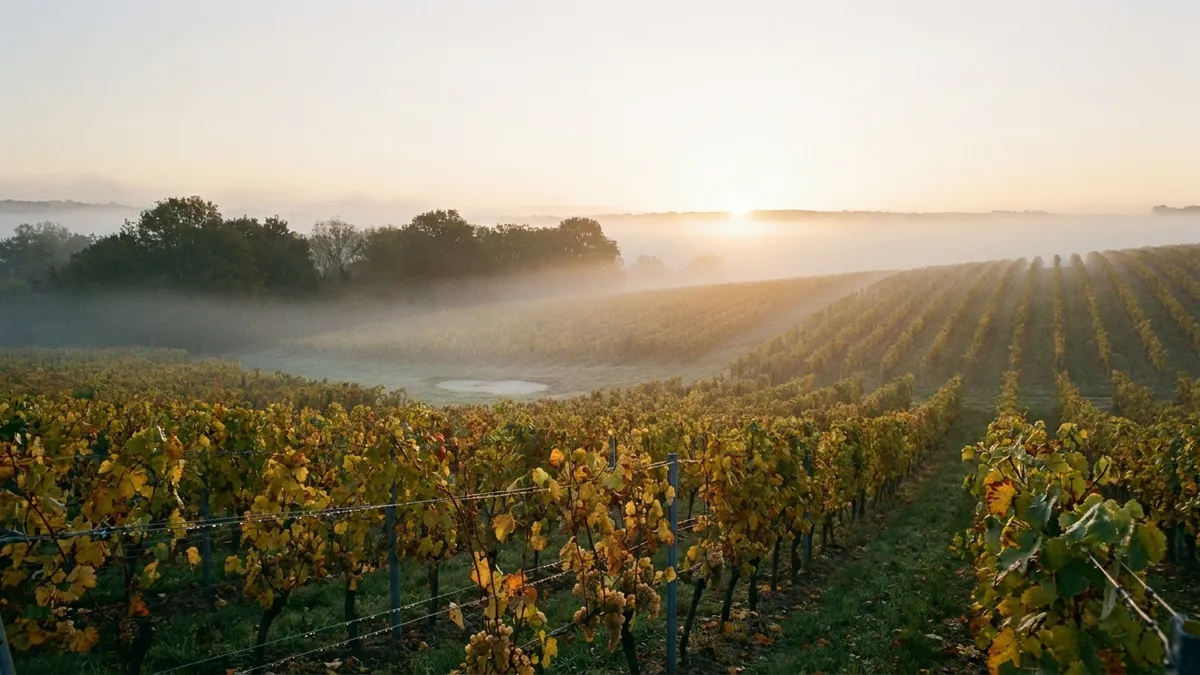
The famous regions share one geography: a river or lake that breeds morning mist, and autumn afternoons warm and dry enough to burn it off. In Sauternes, fog rises where a cool tributary meets a warmer river; the Sauternes wine guide explains that local setup in detail. Even in these places the pattern fails in some years, and the crop goes to grey rot instead.
Which Wines Are Made From Noble Rot?
The classics are Sauternes from Bordeaux, Tokaji Aszú from Hungary, and German and Austrian Trockenbeerenauslese. Riesling and Sémillon are the main botrytis grapes worldwide, and Furmint dominates in Tokaj, where it covers 60% of the vineyard area. Alsace labels its botrytis wines Sélection de Grains Nobles.
Sauternes may be made from four grapes: Sémillon, Sauvignon Blanc, Sauvignon Gris and Muscadelle. Sémillon leads, and the Sémillon wine guide explains why its skin suits the fungus. Tokaji Aszú is built differently. Shrivelled aszú berries are picked separately, mashed into a paste and soaked in base wine or fermenting juice. Sweetness was traditionally counted in puttonyos: baskets of about 25 kilograms of paste added to a 136-litre Gönc cask. The Furmint wine guide covers the grape behind it.
| Wine | Main grapes | Legal sweetness rule | What the number measures | Choose it when |
|---|---|---|---|---|
| Sauternes (Bordeaux) | Sémillon, Sauvignon Blanc, Sauvignon Gris, Muscadelle | Grapes at 221 g/L sugar or more | Sugar in the juice at harvest | You want honey and apricot with a waxy, thick texture |
| Tokaji Aszú (Hungary) | Mostly Furmint | At least 120 g/L residual sugar (from the 2013 harvest) | Sugar left in the finished wine | You want the sharpest acidity and a marmalade edge |
| Trockenbeerenauslese (Mosel, Germany) | Mostly Riesling | At least 150° Oechsle | Density of the juice at harvest | You want high acidity, lower alcohol and very intense sweetness |
| Trockenbeerenauslese (Austria) | Riesling and other white grapes | At least 30° KMW | Sugar weight of the juice on the Austrian scale | You want the same concentration from a warmer climate |
If the label says Sauternes, Barsac, Aszú, Beerenauslese, Trockenbeerenauslese or Sélection de Grains Nobles, noble rot is usually part of the recipe. Other sweet wines rely on different routes; ice wine freezes the grapes instead, and the dessert wine guide maps every method.
What Do the Sugar Numbers on These Wines Mean?
Each region measures something different, so the numbers cannot be compared directly. The Sauternes rule of 221 grams per litre is a ripeness test for the grapes, not a promise of sweetness in the glass. It describes the must (the freshly pressed juice) at harvest.
The same rule demands at least 15% potential alcohol in the must and at least 12% actual alcohol in the finished wine.
Tokaji Aszú is measured at the other end. Since the 2013 harvest, every wine labelled Aszú needs at least 120 grams per litre of residual sugar (sugar left after fermentation) and at least 18 months in barrel. Producers may still print a puttonyos number on the label.
Germany and Austria grade the juice on density scales. Oechsle in Germany and KMW in Austria both track how heavy the must is, and heavier means riper grapes. The name Trockenbeerenauslese means "dried berry selection": the grapes are dry, while the wine is very sweet. The Prädikat wine classification explains the steps below it.
So the rule in a shop: if you want a guaranteed sweetness level, Aszú is the only one of the four whose legal number describes the finished wine. For Sauternes and TBA, read the style name as "very ripe grapes" and expect a sweet wine.
What Does Noble Rot Wine Taste Like?
Sweet, thick and high in acidity (the tartness that makes your mouth water), with honey, dried apricot and a savory edge. Structure comes first. The sugar is obvious on the tip of the tongue, the glycerol makes the wine feel heavy and slow, and the acidity pulls the finish back to fresh.
Then the aromas, each with a cause:
- Dried apricot and candied orange, because water loss concentrates the fruit until it tastes preserved rather than fresh.
- Honey and beeswax, because botrytis wines carry more phenylacetaldehyde, an aroma compound that Wine Folly notes also turns up in buckwheat and milk chocolate.
- A savory, spicy edge like saffron or ginger, from the fungus itself, which sets these wines apart from ice wine or simple late-harvest styles.
Balance is the quality test. Riesling and Furmint bring high natural acidity, so a TBA or an Aszú can taste lighter than its sugar suggests. Sémillon-led Sauternes feels rounder and waxier. For how acidity and sweetness offset each other, read what wine acidity is.
How Should You Serve and Pair Noble Rot Wine?
Serve it cold in small pours, with food that is saltier, fattier or less sweet than the wine. Chill the bottle in the fridge for a few hours, then let the glass warm a little as you drink so the dried fruit comes forward. The wine serving temperature chart gives exact ranges for sweet whites.
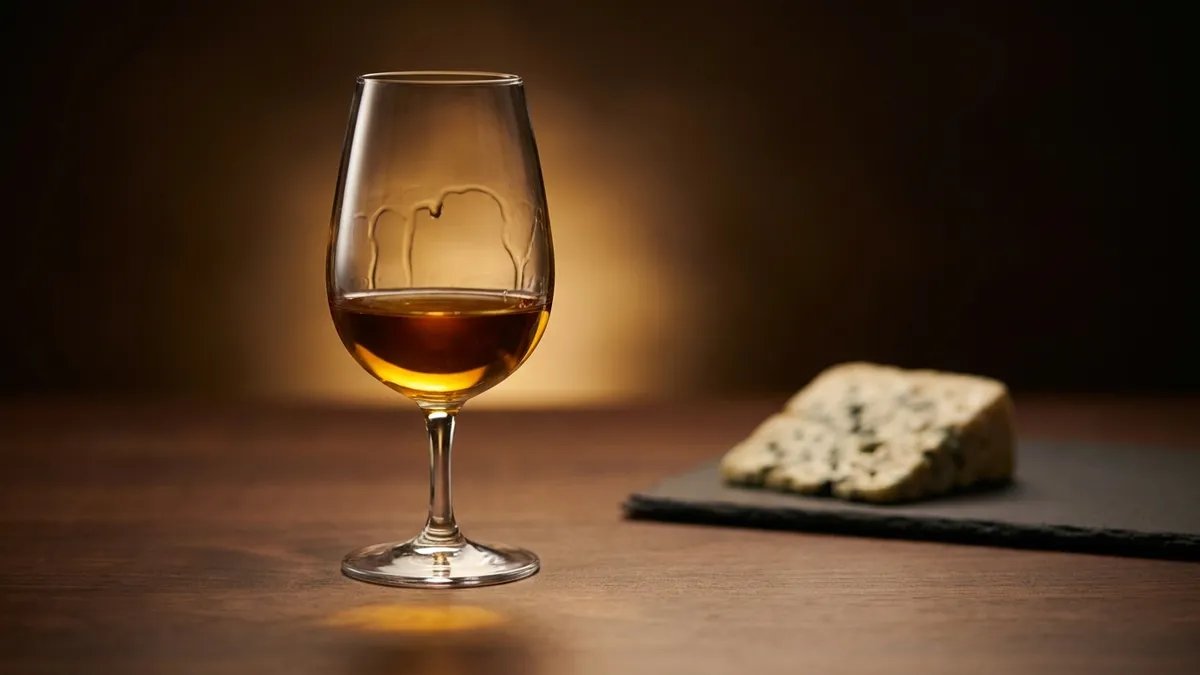
Pairing follows one rule: if the dessert is sweeter than the wine, the wine will taste thin and sour. Choose one of these instead:
- Salty blue cheese, because salt makes sugar taste less heavy and the sugar softens the sharp bite of the mold. The wine and cheese pairing guide has more options.
- Foie gras or rich pâté, because the acidity cuts through fat that would otherwise coat the mouth.
- A lightly sweet fruit tart or almond cake, because the wine stays the sweetest thing on the plate.
- A mildly spiced curry, because sugar calms chilli heat that would make a dry white burn.
An opened bottle keeps longer than a dry white, since sugar and acid slow its decline. Stopper it and keep it in the fridge.
Why Are Noble Rot Wines So Expensive?
Low yields, several picking passes and the constant risk of losing a vintage to weather. Noble rot spreads unevenly, so one bunch may be shrivelled while the next is still plump. Pickers cannot harvest in one sweep, so they return to the same rows again and again.
Sauternes law makes this explicit. The harvest must be picked in successive tries (selective passes through the vineyard), usually three to six depending on the year. Yields are capped at 25 hectolitres per hectare, with an absolute ceiling of 28. Each vine gives very little juice once its berries have shrivelled.
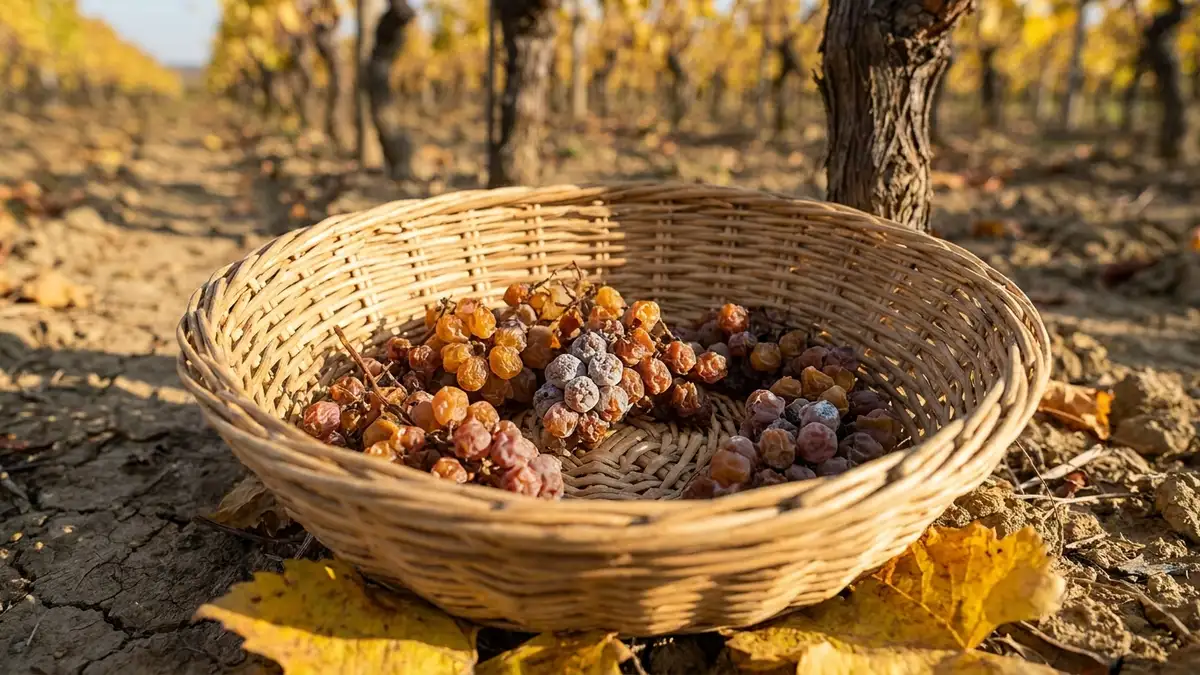
Then there is the weather. A wet autumn brings grey rot instead of noble rot, and the crop is sorted down or lost, so good years carry the cost of bad ones. The wine price vs quality guide shows how scarcity pushes up prices across styles.
If price is the barrier, buy a half bottle. These wines are sipped in small glasses, so a 375 ml bottle goes round a table of friends. The tasting dessert wines properly guide shows how far one small bottle goes at the table.
Was Noble Rot Really Discovered by Accident?
Probably not in the way the story is told. A popular legend says a Sauternes estate owner returned late for the 1847 harvest, found the grapes already rotten, and picked them anyway. Writers at World of Fine Wine describe that tale as a myth.
What the record suggests is a change in the glass. Thomas Jefferson drank the same estate's wine in the 1780s, and most accounts say noble rot winemaking had not yet been adopted there. The wine he drank was a different and less sweet style than modern Sauternes.
The regions today treat noble rot as a managed risk. The legal requirement for multiple tries exists because producers plan their whole harvest around the fungus, rather than hoping for a lucky accident. The broader family of sweet and fortified styles sits in the wine styles hub.
How Can You Taste Noble Rot Tonight?
Pour one botrytis wine next to a sweet wine made another way, and compare. Set a half bottle of Sauternes or Tokaji Aszú beside an ice wine or a late-harvest Riesling. The botrytis glass smells of honey and saffron, while the other tastes of fresher fruit.
If you want a structured way to learn these styles, the Sommy app at sommy.wine pairs short courses with an AI-guided tasting mode: photograph the label and it walks you through each step. Open a half bottle of Sauternes tonight with a wedge of salty blue cheese, and taste the wine before and after a bite.
Sources
Frequently Asked Questions
What is noble rot in wine?
Noble rot is the beneficial form of Botrytis cinerea, a gray fungus that attacks ripe grapes. It makes tiny wounds in the skin, water evaporates, and the berry shrivels, concentrating its sugar and acidity. The fungus also adds its own compounds, such as glycerol and gluconic acid. Wines made from these grapes, like Sauternes and Tokaji Aszú, are sweet, thick and long-lived.
Is noble rot the same as regular mold on grapes?
It is the same fungus, but a different outcome. Botrytis turns noble only when humid weather, around 20°C with humidity above 80%, gives way to drier days so the infected berries shrivel. If the weather stays wet, the same mold becomes grey rot, which spoils the fruit, disrupts fermentation and changes the wine's taste and color. Growers sort those grapes out.
Is botrytis wine safe to drink?
Yes. The fungus works on the grapes in the vineyard, and what reaches the bottle is fermented grape juice like any other wine. Grapes damaged by grey rot are sorted out before pressing, and the regions that make these wines have strict rules on how the grapes are picked.
What wines are made from noble rot?
The best known are Sauternes and Barsac from Bordeaux, Tokaji Aszú from Hungary, and German and Austrian Beerenauslese and Trockenbeerenauslese. Alsace labels its botrytis wines Sélection de Grains Nobles. The main grapes are Sémillon in Bordeaux, Furmint in Tokaj and Riesling in Germany, all thin-skinned enough for the fungus to take hold in the right autumn.
What does noble rot wine taste like?
Sweet and thick, with acidity that keeps it from feeling sticky. The fruit reads as dried apricot and candied orange, with honey and beeswax from the fungus itself. Many also carry a savory, slightly spicy edge, like saffron or ginger. That savory note is the easiest way to tell a botrytis wine from a sweet wine made by freezing or simply leaving grapes to hang.
Why are Sauternes and Tokaji so expensive?
Noble rot spreads unevenly, so pickers pass through the vineyard several times, taking only shrivelled berries. Sauternes law requires successive passes, usually three to six, and caps yields at 25 hectolitres per hectare. A wet autumn can wipe out a vintage entirely. Small crops, extra labor and weather risk all end up in the price, which is why half bottles are the smart way to start.
Sommy Team
LinkedInFounder & Wine Educator
The Sommy Team is building the world's most approachable wine education app, helping beginners develop real tasting skills through structured courses and AI-guided practice.