Laccase Enzyme in Wine — When Botrytis Turns Wine Brown

By the Sommy Team — AI-assisted, human-edited.
Updated Sep 25, 2026
Contents (8)
- What Is the Laccase Enzyme in Wine?
- Noble Rot or Grey Rot: When Does Botrytis Bring Laccase Into Wine?
- Why Doesn't Sulfur Dioxide Stop Laccase?
- What Does Laccase Damage Look and Taste Like?
- How Do Winemakers Keep Laccase Out of the Wine?
- Can a Wine With Laccase Browning Be Saved?
- Why Do Sweet Wine Regions Welcome the Same Fungus?
- How Can You See the Difference Tonight?
TL;DR
Laccase is a browning enzyme made by Botrytis cinerea, the grape fungus behind both noble rot and grey rot. It stays active at wine pH and sulfur dioxide does not readily suppress it, so it browns white wines and fades reds. Winemakers keep it out mainly by keeping rotten grapes out.
Laccase is the browning enzyme that grey rot leaves in grape juice, and sulfur dioxide, the winemaker's usual brake on browning, barely slows it. That one fact explains why the laccase enzyme in wine worries winemakers in a wet harvest, and why the same fungus is welcome in Sauternes.
What Is the Laccase Enzyme in Wine?
Laccase is a browning enzyme that the fungus Botrytis cinerea makes when it infects grapes. It turns white wines brown, drains colour from reds, and strips fresh fruit aroma. An enzyme is a protein that speeds up a chemical reaction without being used up.
Laccase belongs to a class chemists call multicopper oxidases (EC 1.10.3.2): four copper centres let it grab oxygen from the air and use it to break down the juice's colour and flavour compounds. Plants, fungi and bacteria all make laccases, but in wine the problem one comes from Botrytis. Unlike the grape's own browning enzyme, it stays active at wine pH and resists normal doses of sulfur dioxide.
Noble Rot or Grey Rot: When Does Botrytis Bring Laccase Into Wine?
Botrytis brings laccase into wine when rotten fruit is picked for ordinary dry wine, and weather decides whether that fruit rots or shrivels. Noble rot and grey rot are one fungus, not two. Infection starts in warm, humid conditions, typically around 20°C with humidity above 80%.
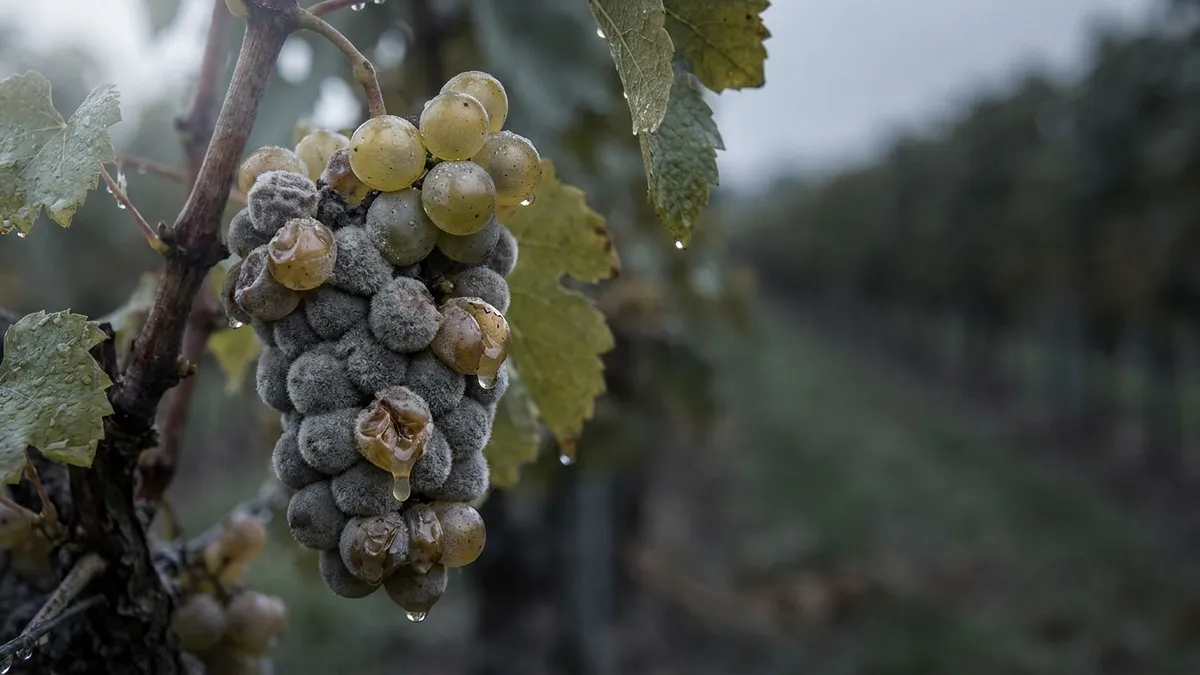
The days that follow decide the outcome. If drier weather follows the humid spell, infected berries lose water through their pierced skins and shrivel. That is noble rot, the good version prized for sweet wine. If the weather stays wet, the berries split, other microbes move in, and the result is grey rot (also called bunch rot), which usually costs the grower the affected bunches.
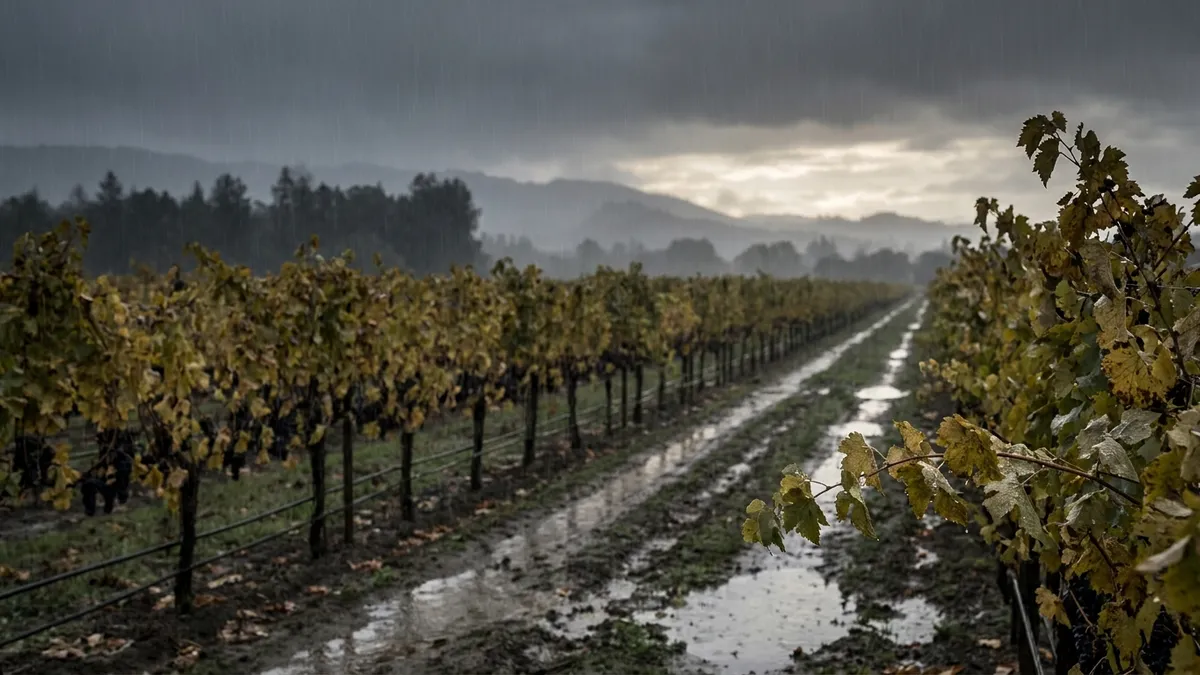
For a dry white or red, both forms are unwelcome, because any Botrytis on the fruit brings its enzymes into the juice.
| Weather at harvest | What happens to the grapes | Laccase risk | What the grower does |
|---|---|---|---|
| Dry and sunny throughout | Little or no infection; berries stay whole | Low | Picks on ripeness; keeps the canopy open for airflow |
| Humid mornings, dry afternoons | Noble rot: berries shrivel and concentrate sugar | Present, but the wine is made sweet on purpose | In sweet-wine regions, picks shrivelled berries in several passes |
| Humid spell, then steady rain | Grey rot: berries split and rot | High | Sorts out rotten bunches; picks early if rot spreads |
| Rain on already split fruit | Grey rot plus other moulds and bacteria | Highest | Drops or discards the affected fruit; accepts the loss |
The rule in the vineyard is simple. If infected berries dry and shrivel after the fog lifts, they belong in a sweet wine; if they split and turn fuzzy in steady rain, they go in the discard crate. The noble rot explainer covers the good side of the fungus in detail.
Why Doesn't Sulfur Dioxide Stop Laccase?
Because laccase stays active at wine pH and sulfur dioxide does not readily suppress it, the usual sulfite dose that tames the grape's own browning enzyme leaves laccase working. Sulfur dioxide (SO2, the preservative behind "contains sulfites") is the standard brake on oxidation, so this exception matters.
Oxidation is probably the most common wine fault for a plain reason: it needs only oxygen and a catalyst, something that speeds the reaction. In fresh grape juice, the first catalyst is the grape's own enzyme, polyphenol oxidase (PPO). Crush a white grape and leave the juice in the air, and PPO starts browning it, the same way a cut apple browns.
Winemakers have long handled PPO. Sulfur dioxide added at the crusher keeps it in check, which is why browning juice from clean grapes is a routine problem rather than a fault. Chemists also know a specific inhibitor of grape PPO, a compound called tropolone.
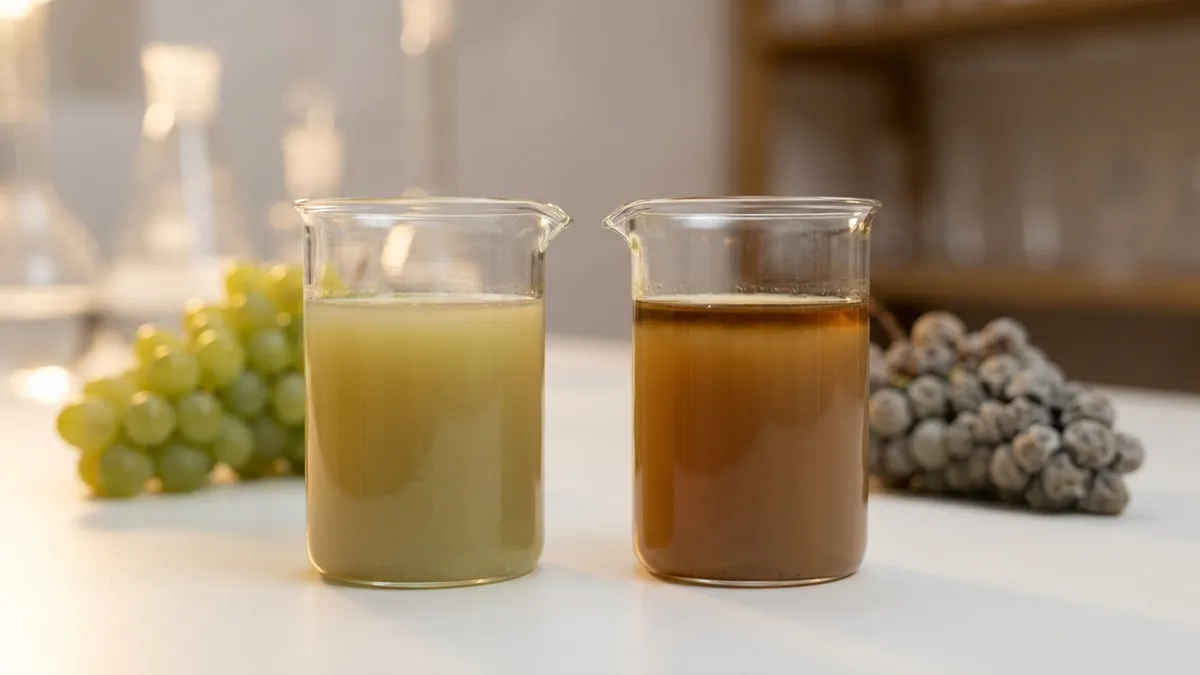
Laccase works differently at the chemical level. Grape PPO attacks one family of phenolic compounds, called ortho-diphenols. Laccase oxidizes a much wider range, including the para-diphenols that PPO leaves alone, turning them into quinones, the reactive molecules that go on to form brown pigments. It is a different enzyme, and the brakes built for PPO do not fit it.
This is where a common piece of advice falls short. "Add more sulfur dioxide" is the standard answer to browning. It holds for the grape's enzyme and fails for the fungus's. A winemaker who crushes rotten fruit and trusts a normal sulfite dose can still end up with brown juice.
The general picture of how oxygen changes a wine, from bruised apple to Sherry-like notes, is in the oxidized wine guide. The sulfites in wine guide explains how SO2 is dosed and labelled.
What Does Laccase Damage Look and Taste Like?
Laccase damage shows as colour first: white wines brown and red wines lose colour, while fresh fruit aromas fade. The enzyme degrades phenolics, the family of compounds that carry a wine's colour, bitterness and much of its flavour and aroma.
The compounds that oxidize most readily are exactly the ones that matter in the glass. Anthocyanins give red wine its colour; catechins and other phenols shape white wine's colour and bite. When they oxidize, colour, flavour and aroma go with them.
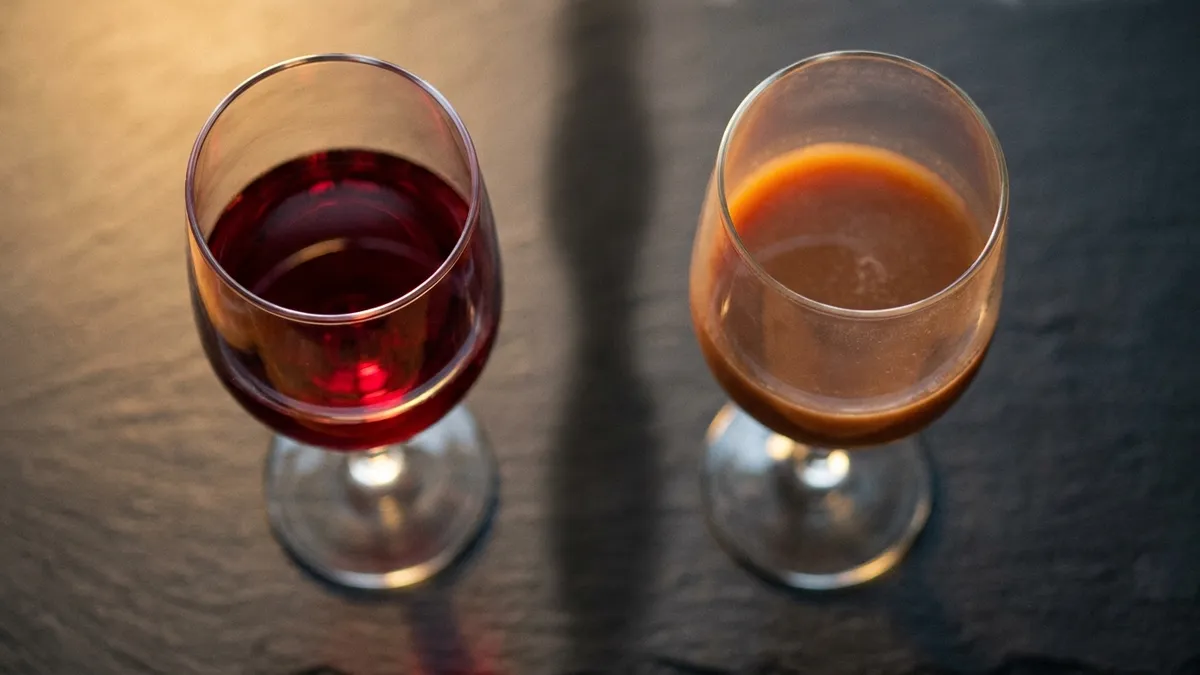
In a white wine, that reads as a young wine that already looks old. A dry white from last year should be pale lemon or straw. A laccase-affected one moves toward deep gold, amber, then a dull, tea-like brown. The fresh citrus and green apple fade, and in their place come bruised apple and a flat, tired finish.
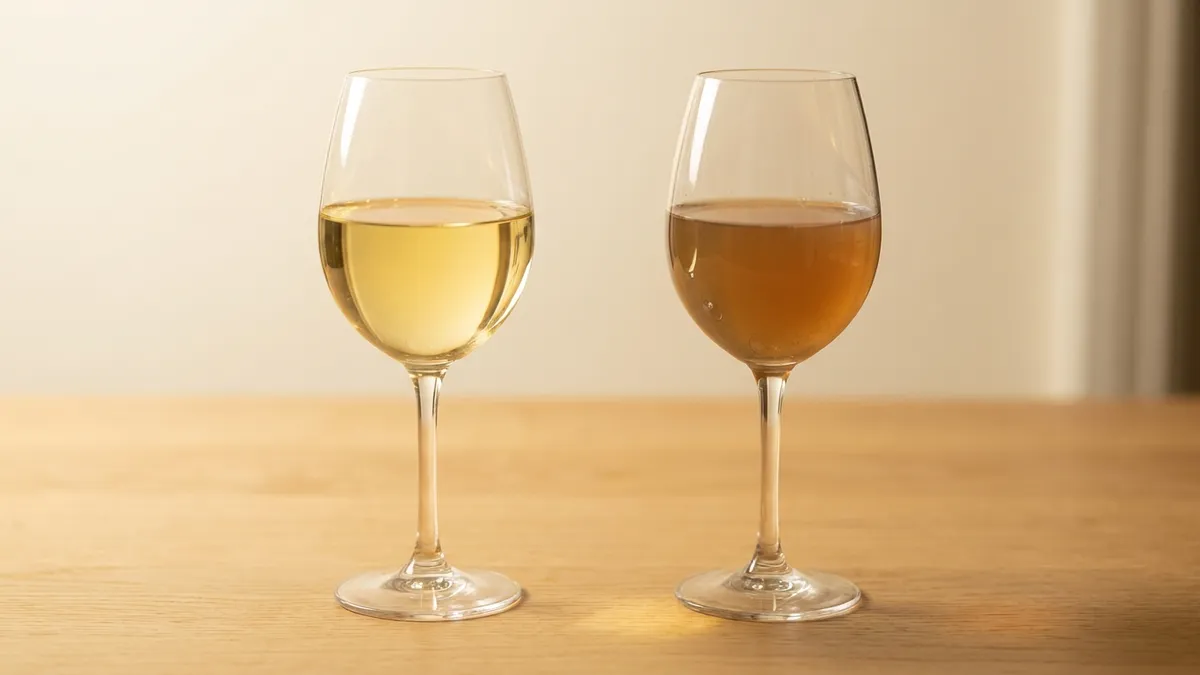
In a red wine the change is quieter, because there is no pale starting point to compare against. The colour turns brick or orange at the rim sooner than its age suggests, and the fresh cherry and plum aromas thin out. The wine colour guide shows the normal colour range for each age.
The glass cannot tell you which enzyme did the damage. Laccase browning looks and smells like any other oxidation. What a drinker can judge is whether the colour fits the age. If a young dry white already looks amber-brown and smells of bruised apple, it is faulty: return it to the shop or use it for cooking. The guide to wine faults vs style covers the cases where deep colour is intended.
How Do Winemakers Keep Laccase Out of the Wine?
Winemakers keep laccase out mainly by keeping rotten grapes out, from the vineyard to the sorting table. Since sulfur dioxide cannot be trusted to stop the enzyme once it is in the juice, the work happens in the vineyard and at harvest, before the press.
The first line is the canopy. Vines with a dense, upright growth habit trap humid air around the bunches, which favours the fungus. Growers thin leaves and choose training systems that let air move through. Fungicide sprays go on at set moments: bloom, bunch closure and veraison (when the grapes change colour), with the bloom spray counted as the most important.
The fungus is hard to get rid of for good. It feeds on dead tissue and forms tough survival structures called sclerotia, which let it wait in the soil from one season to the next and return every wet autumn.
The second line is picking and sorting. When rain brings grey rot, pickers cut out rotten bunches in the row, and a sorting table at the winery catches what they miss. If a bunch shows grey fuzz and split, brownish berries, it goes in the discard crate.
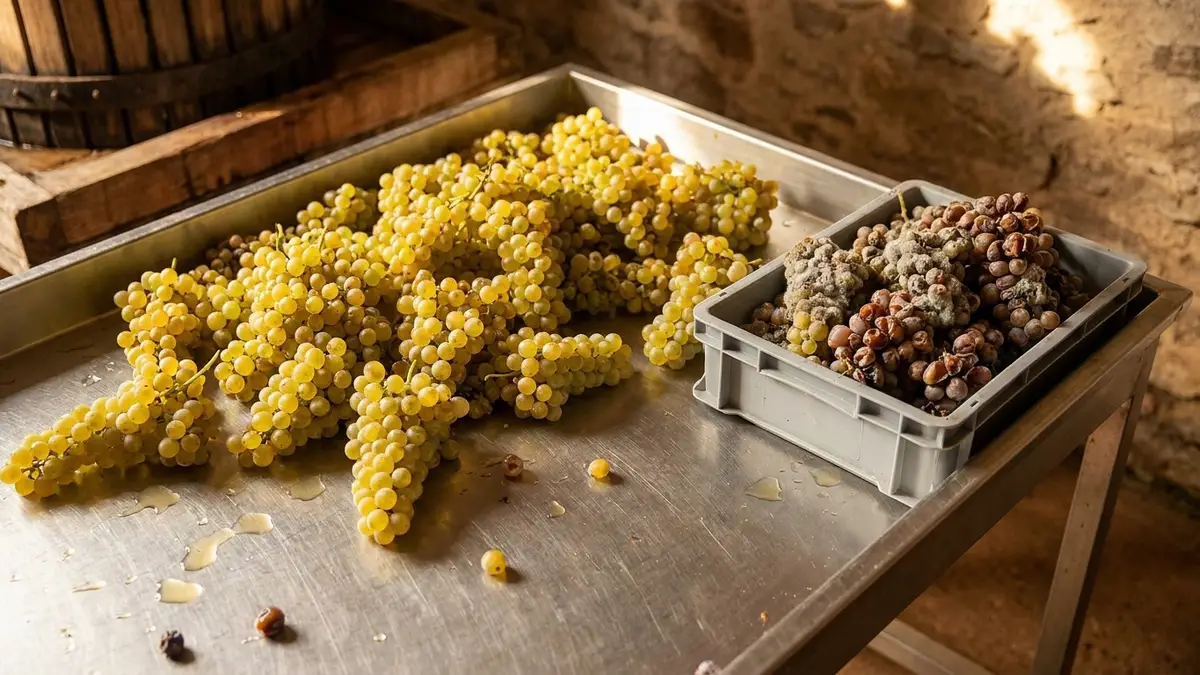
Rotten grapes cause a second problem beyond browning. Botrytis produces an anti-fungal compound that kills yeast, and it often stops fermentation before the wine reaches its intended alcohol. A stuck fermentation like that leaves sugar behind in a wine meant to be dry, so sorting protects the fermentation as well as the colour.
For the smell side of spotting faults in a finished wine, the guide to identifying wine faults by smell walks through each one. The full list of faults sits on the wine faults hub.
Can a Wine With Laccase Browning Be Saved?
Not fully. Sulfur dioxide can bind some oxidation products and soften the smell of a browned wine, but it cannot bring back the colour and fresh fruit that the enzyme has already destroyed. Winemakers add sulfur dioxide and erythorbic acid to protect wine from oxidation, and both also bind with some of the oxidation products.
That binding helps the smell more than the colour. The bruised-apple edge from oxidation can recede once a winemaker adjusts sulfur dioxide. The anthocyanins and phenols the enzyme has already broken down stay broken. A red that has faded stays paler, and a white that has browned does not return to pale lemon.
This is why the prevention in the vineyard carries so much weight. In a wet vintage, a winery that sorts hard makes less wine, and a winery that sorts lightly risks making browning wine. The same trade-off shows up in premature oxidation of white wine, where thin defences let oxygen win years early.
If a young white has already browned, it will not recover in the bottle or the fridge, so drink it soon or cook with it.
Why Do Sweet Wine Regions Welcome the Same Fungus?
Sweet wine regions welcome Botrytis because, in a humid-then-dry autumn, it shrivels grapes into concentrated sugar instead of rotting them. A berry can lose up to 60% of its mass as water evaporates through the pierced skin. Sugar levels in the richest botrytis wines can exceed 200 grams per litre.
The payoff is a style no other method copies. Noble rot concentrates sugar, acid and flavour together, and it adds its own honeyed, waxy character. The classic grapes are thin-skinned whites: Riesling in Germany, Sémillon in Bordeaux, and Furmint for Tokaji Aszú in Hungary. Chenin Blanc, Gewürztraminer and Pinot Blanc also make botrytis wines.
These regions are not immune to grey rot. A wet autumn can still split the fruit, and pickers make several passes to take only the shrivelled berries. The Sauternes wine guide describes how local fog and afternoon sun set up the good version.
The label tells you which story you are drinking. If it says Sauternes, Tokaji Aszú, Beerenauslese or Trockenbeerenauslese, deep gold and honey are the intended style. In a young dry white, the same colour is a warning. The dessert wine guide maps the wider family of sweet wines.
How Can You See the Difference Tonight?
Pour two whites side by side, a young dry one and a botrytis sweet wine, and compare their colour against white paper. The dry white should look pale lemon or straw; the sweet one should look deep gold, because the fungus concentrated its fruit.
Then smell each glass. In the dry white, look for fresh citrus and apple. In the sweet wine, look for honey, dried apricot and a waxy note, the fungus's signature in its noble form. If the dry white smells of bruised apple instead, you have found oxidation in a wine that should not have it.
For a guided version, the Sommy app at sommy.wine has bite-sized courses, from Wine 101 to regional courses on France and more, that teach colour reading before the first sip.
Pour the two glasses tonight, hold them over white paper, and write down where the gold starts.
Sources
- Wikipedia: Laccase (activity in wine, Botrytis cinerea)
- Wikipedia: Polyphenol oxidase (tyrosinase vs laccase, tropolone)
- Zimdars et al. 2017, J Agric Food Chem: Botrytis laccase oxidizes a wide range of grape phenolics
- Wikipedia: Botrytis cinerea (grey rot, yeast inhibition, fungicide timing)
- Wikipedia: Noble rot (conditions, mass loss, sugar levels, grapes)
- Wikipedia: Wine fault (oxidation, sulfur dioxide and erythorbic acid)
Frequently Asked Questions
What is laccase in wine?
Laccase is an enzyme made by fungi that infect grapes, most notably Botrytis cinerea. It uses oxygen to break down phenolic compounds in the juice, which browns white wines and drains colour from reds. It matters because it stays active at wine pH and sulfur dioxide, the usual preservative, does not readily suppress it.
Is Botrytis good or bad for wine?
Both, depending on the weather. When humid mornings give way to dry afternoons, Botrytis shrivels ripe grapes and concentrates their sugar, the noble rot behind Sauternes and Tokaji Aszú. When the weather stays wet, the same fungus becomes grey rot, splits the berries and usually costs the grower the affected bunches. Grey rot is the version that brings laccase trouble into dry wines.
What is the difference between noble rot and grey rot?
They are the same fungus, Botrytis cinerea, with two different outcomes. Noble rot happens when drier weather follows the humid spell that started the infection, so infected berries lose water and shrivel. Grey rot happens when conditions stay wet, so berries split and rot on the vine. The weather sequence, not the organism, decides which one a grower gets.
Does sulfur dioxide stop wine oxidation?
It slows most of it. Sulfur dioxide protects wine from oxidation and binds some oxidation products so they smell less, and it keeps the grape's own browning enzyme in check. The exception is laccase from rotten grapes: it stays active at wine pH and sulfur dioxide does not readily suppress it, so a normal dose is not a reliable safety net.
Can Botrytis-infected grapes still make good wine?
Yes, when the infection is noble rot and the wine is made sweet on purpose. Sauternes, Tokaji Aszú, Beerenauslese and Trockenbeerenauslese all depend on it. For ordinary dry wine, grapes with grey rot are a risk: they carry laccase, and a compound from the fungus can kill yeast and stop fermentation early. Growers sort that fruit out.
Why does my white wine look brown?
Brown colour in a white wine means oxidation: oxygen has reacted with the wine's phenolic compounds. In an old white a deep gold is normal ageing, but in a young white it signals a fault. Causes range from a leaky closure or low sulfur dioxide to laccase from rotten grapes. The glass alone cannot tell you which one, only that the wine has lost freshness.
Sommy Team
LinkedInFounder & Wine Educator
The Sommy Team is building the world's most approachable wine education app, helping beginners develop real tasting skills through structured courses and AI-guided practice.