Wine with Blue Cheese: Sweet, Fortified and Red Picks

By the Sommy Team — AI-assisted, human-edited.
Updated Oct 1, 2026
Contents (9)
- What Wine Goes Best with Blue Cheese?
- Which Wine Goes with Which Blue Cheese?
- Why Does Sweet Wine Work with Blue Cheese?
- Why Do Port and Stilton Go Together?
- What Wine Goes with Roquefort?
- What Wine Goes with Gorgonzola and Milder Blues?
- Can You Drink Red Wine with Blue Cheese?
- Do Sherry, Madeira or Dry White Wine Work?
- How Do You Serve Wine with a Blue Cheese Board?
TL;DR
Blue cheese wants a wine sweeter than its salt. Pour Port with Stilton, Sauternes with Roquefort and off-dry Riesling with creamy Gorgonzola dolce. Tannic dry reds tend to taste harsh beside a salty blue on a board, but a fruity Malbec or Cabernet works once the blue is melted on beef.
Wine with blue cheese works when the glass is sweeter than the cheese is salty. Port beside Stilton and Sauternes beside Roquefort both follow that rule: sugar meets salt, and each tastes better. The sharper the blue, the sweeter the wine it needs. A dry red earns its place only when the cheese is melted onto grilled beef.
What Wine Goes Best with Blue Cheese?
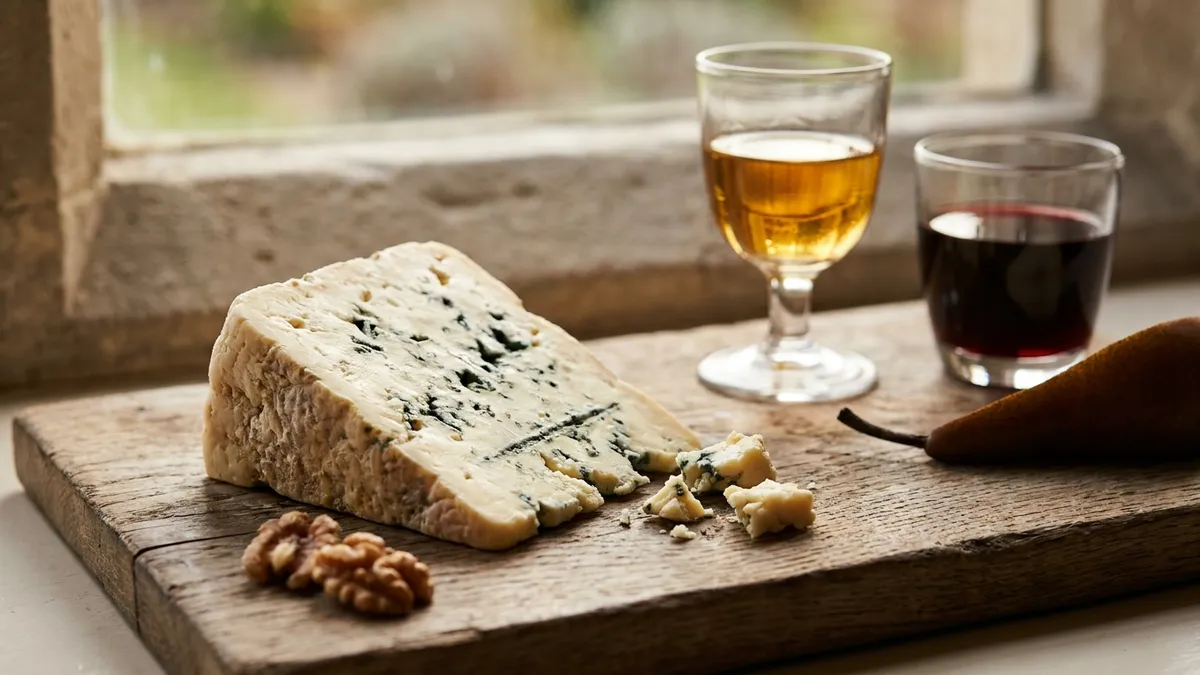
A sweet or fortified wine (grape spirit added, lifting it to about 15 to 22% alcohol) goes best with blue cheese. Port is the classic for Stilton and Sauternes for Roquefort; Tokaji and late-harvest Riesling do the same job. Their sugar softens the salt and the bitter edge of the veins, so the cheese tastes creamier and the wine fruitier.
Mild, creamy blues such as Gorgonzola dolce need less sugar: an off-dry Riesling suits them better than Port. With a blue melted over a burger or steak, the grilled beef sets the rules, and a fruity Malbec or Cabernet Sauvignon works. On a plain cheese board, tannic dry reds tend to taste harsh.
Which Wine Goes with Which Blue Cheese?
Match the wine's sweetness to the cheese's salt and sharpness. A firm, crumbly blue that stings the tongue needs a fortified or very sweet wine. A soft blue you could spread with a spoon needs an off-dry wine (one with a light touch of sweetness you can just taste), because a heavy dessert wine buries it.
| Cheese | Milk and texture | Intensity | Pour this | Why it works |
|---|---|---|---|---|
| Gorgonzola dolce | Cow, soft and buttery | Mild | Off-dry or late-harvest Riesling | Light sugar and high acidity cut the cream without burying it |
| Fourme d'Ambert | Cow, firm but supple | Mild to medium | Late-harvest white or young tawny Port | Gentle salt needs only moderate sweetness |
| Stilton | Cow, dense and creamy | Medium to strong | Ruby or tawny Port | Sugar and 19-22% alcohol stand up to a dense, salty paste |
| Gorgonzola piccante | Cow, firm and crumbly | Strong | Ruby Port or sweet Recioto | Sharp, peppery bite needs a sweet, full-bodied glass |
| Roquefort | Ewe, moist and crumbly | Strong and very salty | Sauternes or Tokaji | Honeyed sugar and fresh acidity soften the salt |
| Blue melted on beef | Any | Set by the meat | Malbec or Cabernet Sauvignon | Grilled fat and protein soften tannin; the cheese is a sauce |
If you only buy one bottle for a mixed board, buy a tawny Port: it is sweet enough for the sharpest blue and nutty enough for aged hard cheeses. Every other style on the board is covered in the wine and cheese pairing guide.
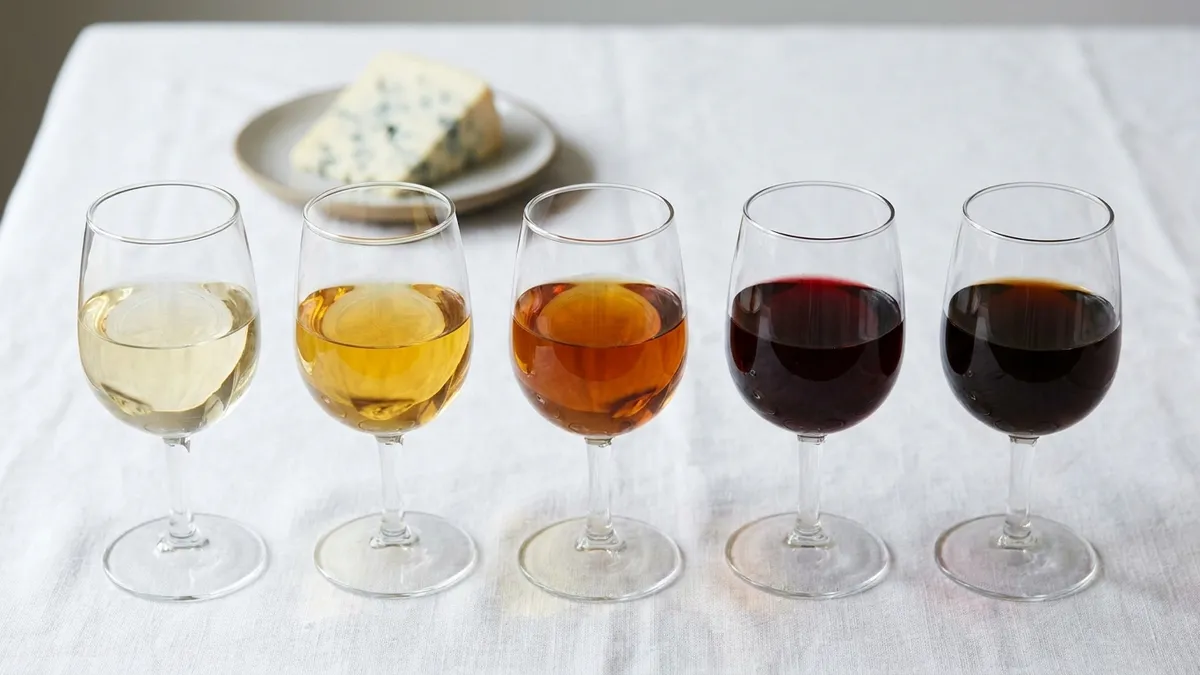
Why Does Sweet Wine Work with Blue Cheese?
Sugar softens the salt and the slight bitterness of the blue veins, so the cheese tastes creamier and the wine tastes fruitier. The wine needs enough sugar to match the cheese's salt, and enough acidity to stop that sugar feeling sticky beside the fat. A dry wine brings neither.
Two things make blue cheese loud. First, salt: the curd is brined or rubbed with dry salt for 24 to 48 hours. Second, the veins. Makers add the mould Penicillium roqueforti, then pierce the young cheese with needles. Air runs down the channels and the mould grows along them, which gives the blue lines, a peppery bite and a faint bitterness.
A sweet wine answers both. The sugar rounds off the salt, the way salted caramel works, and it offsets the bitter edge of the veins. The longer explanation of how food shifts what you taste is in how food changes wine taste.
Dry red wine goes the other way. Tannin (the drying grip on your gums) brings its own bitter edge, and the cheese's bitterness adds to it. That is why a big red can taste metallic beside Roquefort. More on how tannin behaves is in what are tannins.
Why Do Port and Stilton Go Together?
Port is sweet and strong enough to stand up to a dense, salty cheese, and Stilton is creamy enough to round off Port's alcohol. Grape spirit added partway through fermentation stops the yeast, leaving grape sugar in a wine of usually 19 to 22% alcohol.
Stilton is a PDO (Protected Designation of Origin, a legally protected place name) cheese since 1996. It may be made only in Derbyshire, Leicestershire and Nottinghamshire, from pasteurised local milk, and it takes nine to twelve weeks to make and ripen. Despite the name, it cannot be made in the village of Stilton itself, which lies outside those three counties.
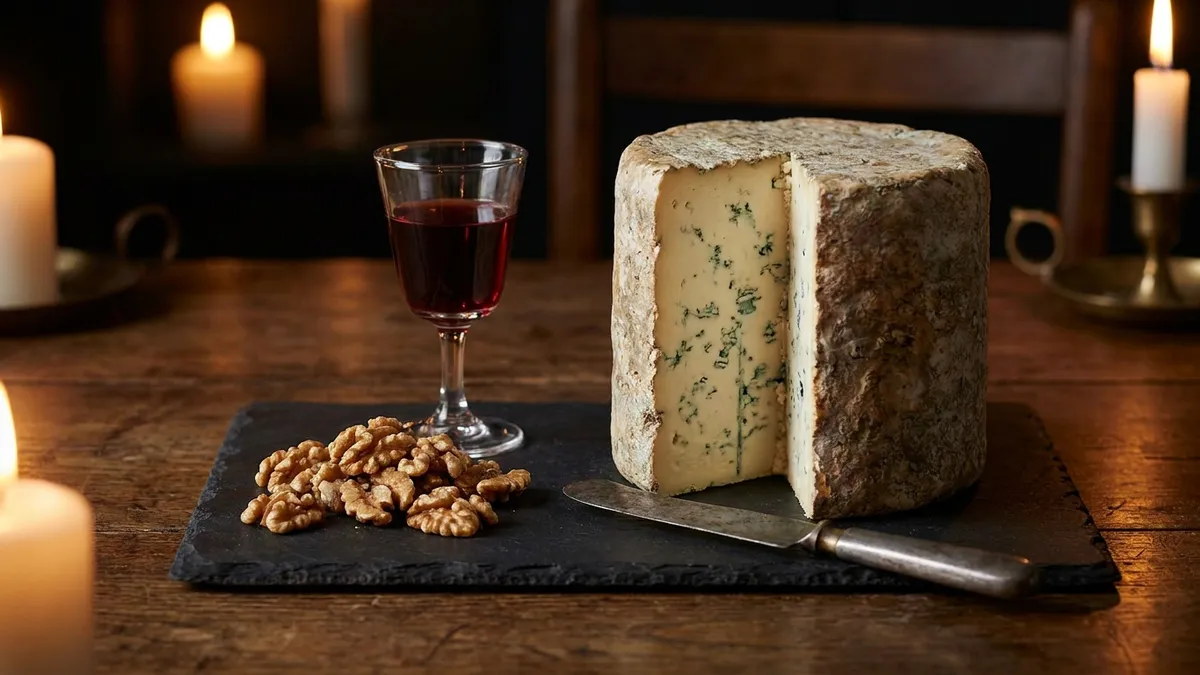
Ruby Port ages briefly and keeps its fresh plum and blackberry fruit. Tawny Port ages in wooden barrels that let in a little air, a slow oxidation (contact with oxygen that turns fruit into nut and toffee flavours). If the Stilton is pale and soft, pour ruby; if it is crumbly with brown edges near the rind, pour tawny. Walnuts on the side help either one, because their slight bitterness picks up the bitterness of the veins. The styles and labels are laid out in the Port wine guide.
What Wine Goes with Roquefort?
Sauternes, the sweet white of Bordeaux, is the classic wine for Roquefort. It is made from Sémillon, Sauvignon Blanc and Muscadelle grapes attacked by noble rot (the fungus Botrytis cinerea, which shrivels ripe grapes and concentrates their sugar). It tastes of honey, apricot and orange peel, with enough acidity to stay fresh.
Roquefort needs that much sugar because it is among the saltiest blues. It is made from raw, whole milk of Lacaune ewes, dry-salted, and ripened only in the natural caves of Roquefort-sur-Soulzon, in the rock falls of the Combalou mountain. It became a protected name in 1925, which the producers call the first cheese PDO.
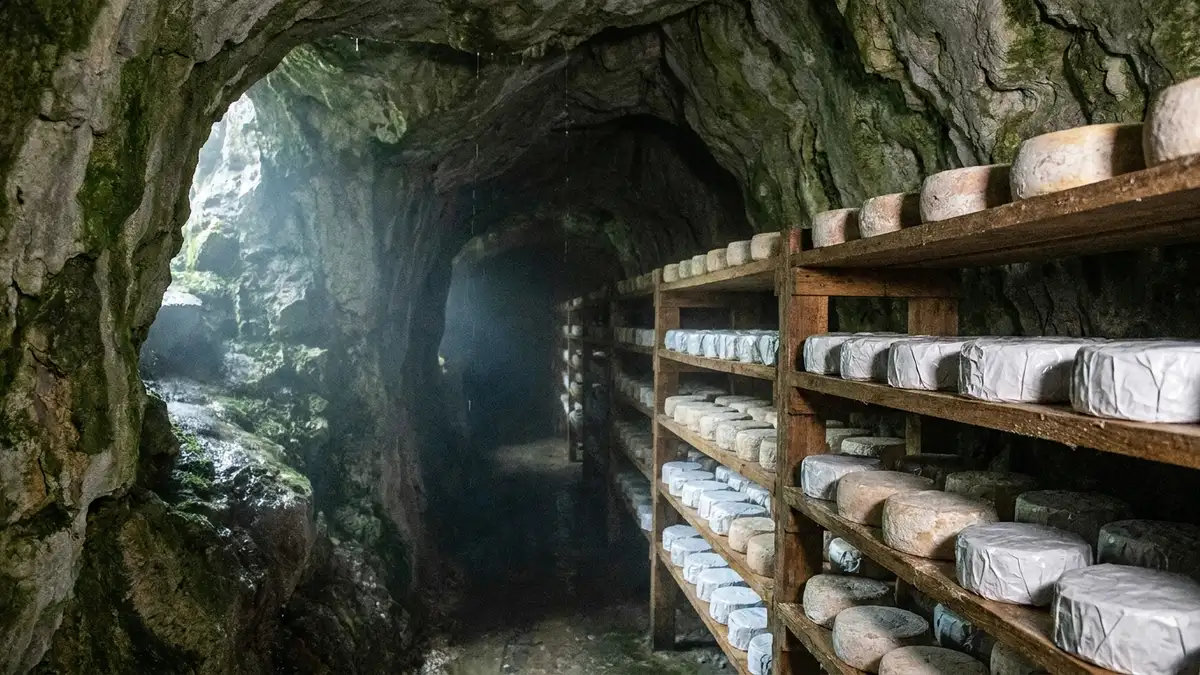
A popular line says the pairing works because "mould meets mould". The echo is a flavour idea, not shared chemistry: the two fungi are different species. Noble rot needs around 20 °C and humidity above 80%, and it can cut a berry's weight by up to 60%, concentrating sugar in the grape. That sugar against the cheese's salt is what links them. Noble rot explained covers how the fungus behaves in the vineyard.
If Sauternes is over budget, buy any botrytis-sweet white, such as Barsac or Tokaji, and expect the same effect. Half bottles are common for these wines, and a few small pours cover a board for four. More on the region and its villages is in the Sauternes wine guide.
What Wine Goes with Gorgonzola and Milder Blues?
Gorgonzola comes in two styles, and each wants a different glass. Gorgonzola dolce is soft, mild and buttery; piccante is firmer, crumbly, pungent and sharper on the tongue. Both are PDO cheeses since 1996, made mainly in Piedmont and Lombardy.
A common belief says the sweetest wine always wins with blue cheese. With mild blues it does not: a very sweet or high-alcohol wine flattens a soft cheese, and you taste only sugar. Gorgonzola dolce wants an off-dry or lightly sweet white with high acidity. A Riesling from Germany labelled Kabinett or Spätlese is the easiest find; the styles are explained in the Riesling wine guide. A late-harvest white, explained in the late-harvest wine guide, works when you want a little more sweetness.
Gorgonzola piccante can take ruby Port or a sweet Italian red such as Recioto della Valpolicella, whose dried-grape sugar and body stand up to the sharper bite.
The French Fourme d'Ambert sits between the two Gorgonzolas. It is a cow's-milk blue aged for at least 28 days, milder and less salty than Roquefort. A late-harvest white or a young tawny Port both suit it.
If the cheese spreads, reach for the lighter, off-dry white; if it crumbles and stings, move up to Port.
Can You Drink Red Wine with Blue Cheese?
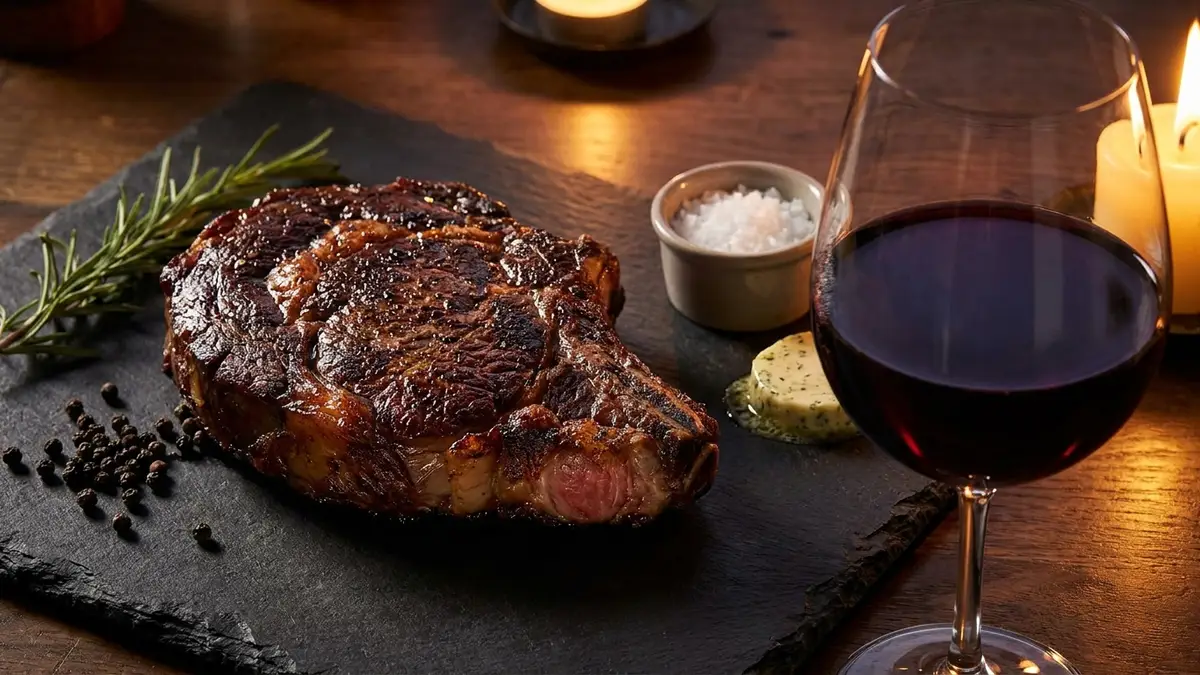
On a cheese board, usually not: a tannic dry red tends to taste harsh and bitter next to salty blue. In a cooked dish the answer changes. Melted on a burger or crumbled over a steak, blue cheese acts as a salty sauce, and the fat and protein of grilled beef soften the wine's tannin.
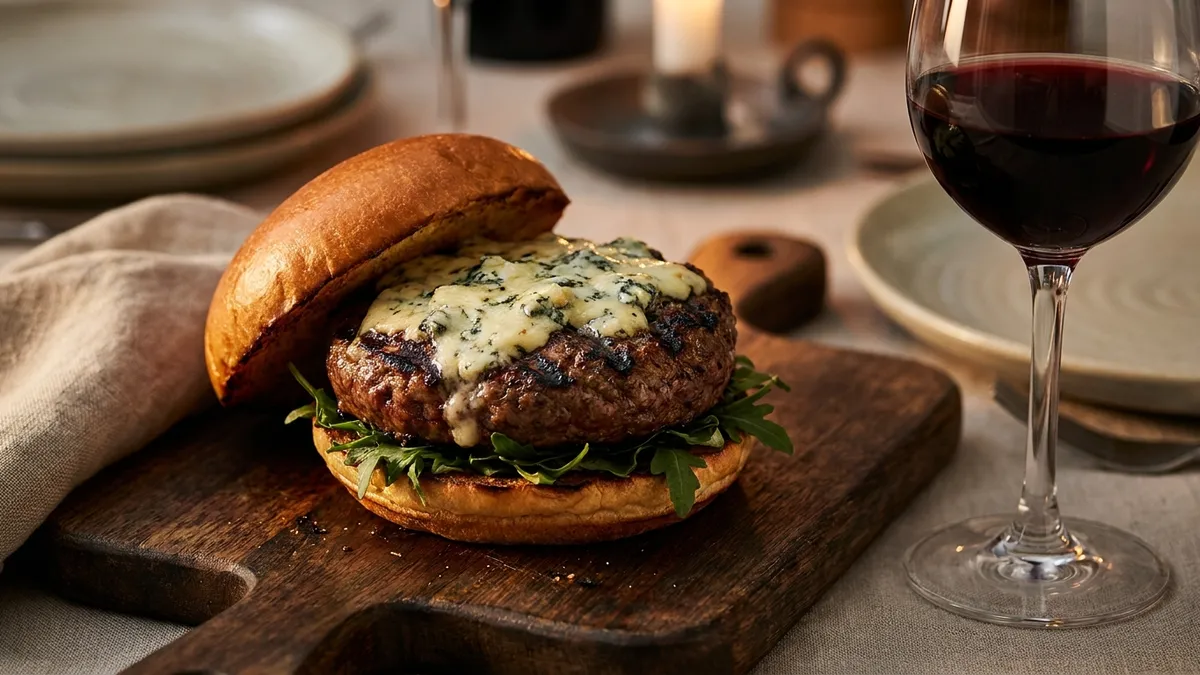
Pick a fruity, full-bodied red for these plates. Malbec from Argentina tastes of ripe plum and blackberry, because long sunny days push its sugar up before harvest, and that ripe fruit stands up to the cheese's salt. A Cabernet Sauvignon does the same job with firmer tannin, so save it for steak rather than a soft burger. The full burger lineup is in wine with burgers, and the cuts that suit Cabernet are in wine with steak.
A blue cheese salad is the third case. Vinegar dressing and a little blue need a crisp white or rosé, and wine with salad shows how to match the dressing.
If the blue is melted on beef, pour a fruity red; if it is on a board, skip the red.
Do Sherry, Madeira or Dry White Wine Work?
Sherry and sweet Madeira work; a plain dry white rarely does. For a dry glass, choose an amontillado or an oloroso sherry. Both have aged with air into nutty, savoury flavours, with the weight and alcohol to sit beside a sharp blue.
A bone-dry white has no sugar to soften the salt, so a sharp blue makes it taste thin and sour. The full range of styles is in the sherry wine guide.
Sweet Madeira, sold as Bual or Malmsey, adds caramel and burnt orange flavours with high acidity, and it handles Stilton as well as Port does. The Madeira wine guide explains those sweetness words on the label.
If you want something dry, choose a nutty sherry; if you want something sweet beyond Port, choose Bual or Malmsey Madeira.
How Do You Serve Wine with a Blue Cheese Board?
Serve the cheese near room temperature and the wine cool, in small pours. Take blue cheese out of the fridge about an hour before eating. Cold cheese tastes mostly of salt, while cheese near room temperature shows its cream and the full peppery bite of its veins.
Temperature for the wine follows its style. Serve Port at about 15 to 20 °C, the cool end of room temperature. Serve Sauternes, Tokaji and late-harvest whites cold from the fridge, and let them warm a little in the glass. The exact ranges by style are in the wine serving temperature chart.
Pour small: about half a normal glass of a dessert or fortified wine per person. These wines are sweet and strong, and a small pour keeps the next sip as sharp as the first. The two-glass method in tasting dessert wines properly shows how to taste them without tiring your palate.
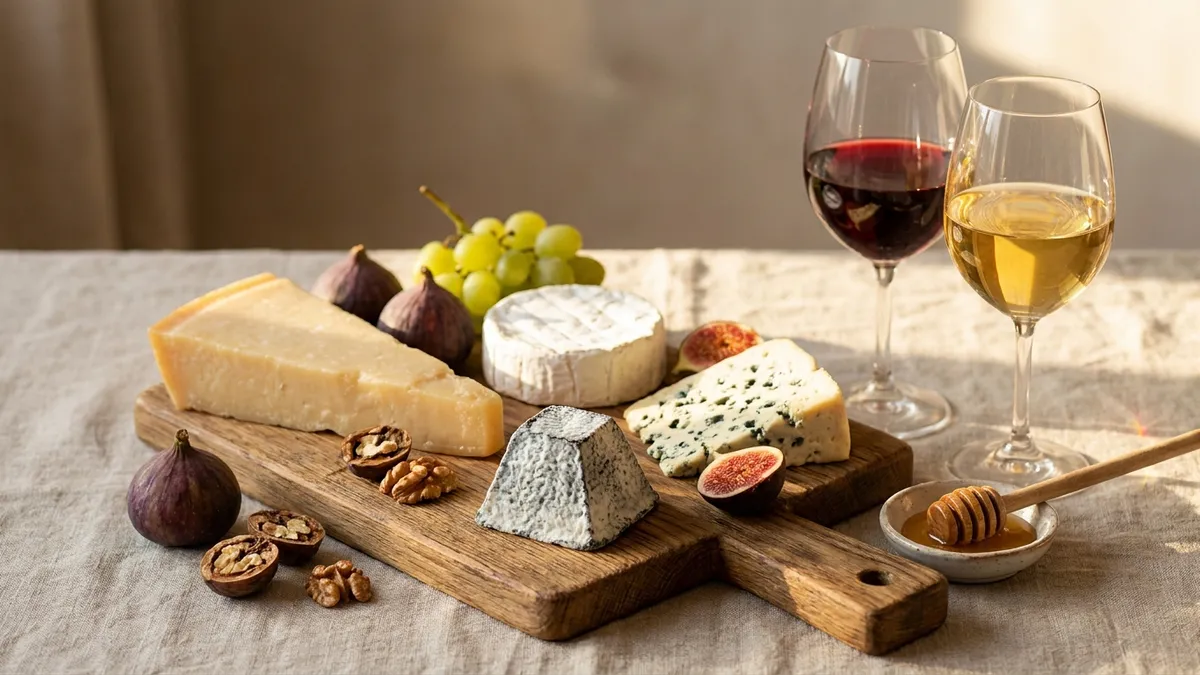
Build the board from mild to strong. Put Gorgonzola dolce or Fourme d'Ambert first, Stilton next, and Roquefort or piccante last. Add walnuts, a ripe pear and a little honey. If the board has only one blue, plan one sweet wine; if it has three, a tawny Port covers all of them.
More cheese and dessert matches sit in the food pairing hub. The Sommy app at sommy.wine has bite-sized courses, including Wine 101, and an AI-guided tasting mode that logs your notes. Buy one blue and a half bottle of sweet wine tonight, then taste the wine alone and again after a bite of cheese, and log both notes.
Sources
Frequently Asked Questions
What is the best wine to drink with blue cheese?
A sweet or fortified wine. Tawny or ruby Port with Stilton and Sauternes with Roquefort are the two classic matches, and Tokaji or late-harvest Riesling do the same job. The sugar softens the cheese's salt and the slight bitterness of its veins. For a mild, creamy blue such as Gorgonzola dolce, pick a lighter off-dry white so the wine does not bury the cheese.
Does red wine go with blue cheese?
On a cheese board, usually not. The strong flavour and bitter edge of the blue veins tend to make a tannic dry red taste harsh and metallic. The exception is a cooked dish: blue cheese melted on a burger or a steak sits next to grilled beef fat, and a fruity red such as Malbec or Cabernet Sauvignon handles that plate well.
Why does Port go so well with Stilton?
Port is sweet and strong, usually 19 to 22% alcohol, so it is not flattened by a dense, salty cheese. Its sugar softens Stilton's salt, and the cheese's creaminess rounds off Port's alcohol. Use ruby Port for a young, creamy Stilton and tawny Port, which has aged in wood and tastes of nuts and caramel, for an older, drier one.
What wine goes with Gorgonzola?
That depends on which Gorgonzola you buy. Gorgonzola dolce is soft, buttery and mild, so an off-dry Riesling or a late-harvest white suits it without swamping it. Gorgonzola piccante is firmer, crumbly and sharp, so it can take a sweeter, stronger wine such as ruby Port or a sweet red like Recioto della Valpolicella.
Can you drink dry white wine with blue cheese?
Rarely with success. A bone-dry white has no sugar to soften the salt, so a sharp blue makes it taste thin and sour. If you want a dry glass, choose a nutty amontillado or oloroso sherry instead, which has the weight and savoury flavour to stand beside the cheese. A mild blue in a salad is the one place a crisp white can still work.
What temperature should Port and blue cheese be served at?
Serve Port at about 15 to 20 °C, which is cool room temperature, and sweet whites such as Sauternes cold from the fridge, letting them warm a little in the glass. Take the blue cheese out of the fridge about an hour ahead. Cold cheese tastes mostly of salt, while cheese near room temperature shows its cream and its full flavour.
Sommy Team
LinkedInFounder & Wine Educator
The Sommy Team is building the world's most approachable wine education app, helping beginners develop real tasting skills through structured courses and AI-guided practice.