Wine with Salad: Yes, It Works (If You Match the Dressing)

By the Sommy Team — AI-assisted, human-edited.
Updated Sep 25, 2026
Contents (11)
- Wine With Salad, in One Paragraph
- What Wine Goes With a Vinaigrette Salad?
- Why Does Vinegar Make Wine Taste Sour or Flat?
- What Wine Goes With Creamy Dressings Like Caesar or Ranch?
- Does Balsamic Dressing Need a Different Wine?
- Which Wine Goes With Lemon and Citrus Dressings?
- What Wine Pairs With Bitter Greens, Goat Cheese or Artichoke?
- Can Red Wine Work With Salad?
- Is Sparkling Wine Good With Salad?
- How Can You Tweak a Salad So It Flatters the Wine?
- What Should You Pour Tonight?
TL;DR
Wine with salad works when the wine is at least as tart as the dressing. Vinegar and lemon call for high-acid whites such as Sauvignon Blanc, Albariño or dry Riesling. Creamy dressings want fuller whites or Brut sparkling wine. Sweet balsamic suits fruity, low-tannin reds like chilled Gamay. Bitter leaves rule out tannic reds.
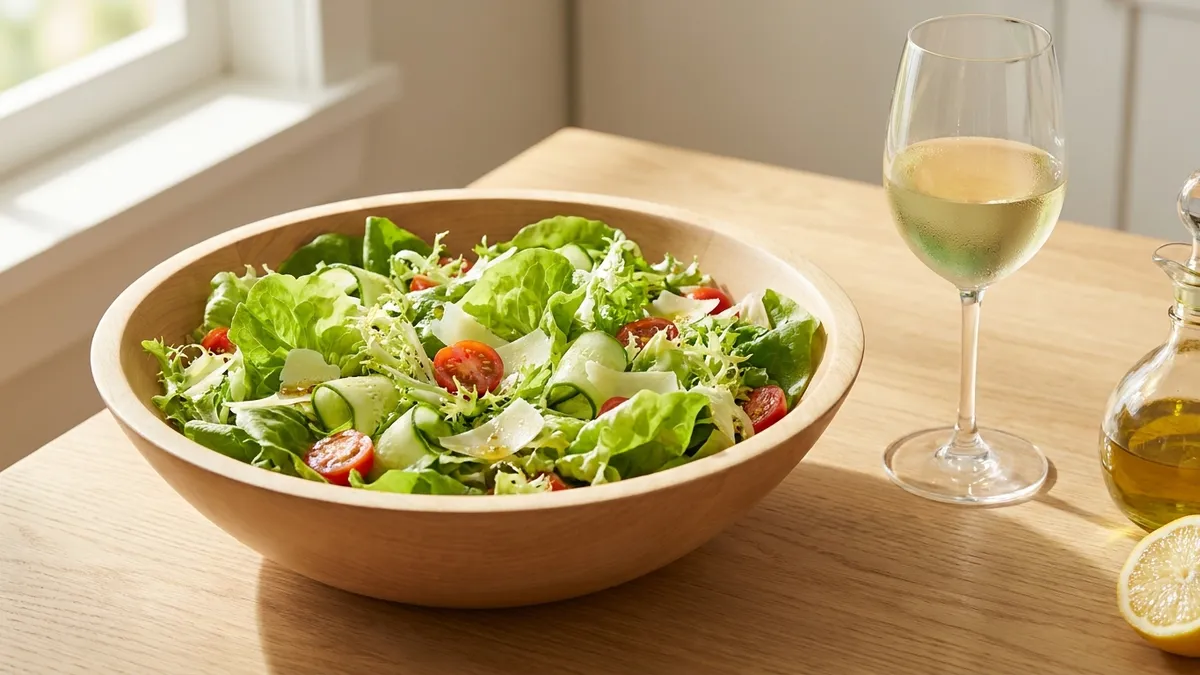
Wine goes with salad whenever the wine is at least as tart as the dressing, so you choose the bottle for the dressing rather than the leaves. The old warning that salad ruins wine with salad pairings comes from one clash: a sharp vinaigrette against a soft wine.
Wine With Salad, in One Paragraph
The best wine with salad is a white with high acidity (the tartness that makes your mouth water), because vinegar and lemon are sourer than any wine. Vinegar is usually 5 to 8% acetic acid, while most wines sit between pH 2.9 and 3.9. With a classic vinaigrette, pour Sauvignon Blanc, Albariño, Grüner Veltliner, dry Riesling or dry rosé. With creamy dressings such as Caesar, choose unoaked Chardonnay, Chenin Blanc or Brut sparkling wine. With sweet balsamic, choose a fruity, low-tannin red like chilled Gamay. With bitter leaves, avoid tannic reds. Adding oil, salt, cheese or meat to the salad makes almost any crisp wine easier to match.
What Wine Goes With a Vinaigrette Salad?
A crisp white with high acidity goes with a vinaigrette salad, because the wine has to match the vinegar's tartness to keep its fruit. Sauvignon Blanc, Albariño, Grüner Veltliner and dry Riesling all qualify. A dry rosé works too. The rule: if the dressing tastes sharper than the wine, the wine will taste thin, so pick the tarter bottle.
The trouble is the dressing, not the leaves. Lettuce, cucumber and herbs barely register against wine. The dressing brings the three things that change how a wine tastes: acid from vinegar or lemon, fat from oil or cream, and sometimes sugar from honey or balsamic. Our explainer on how food changes wine taste shows each of those shifts on its own.
| Dressing | What drives it | Wine style | Pour this |
|---|---|---|---|
| Classic vinaigrette | Acid from vinegar, fat from oil | High-acid, unoaked white or dry rosé | Sauvignon Blanc, Albariño, Grüner Veltliner |
| Lemon or citrus | Citric acid, little fat | Light, zesty white | Vermentino, Assyrtiko, dry Riesling |
| Creamy (ranch, blue cheese) | Fat, salt, mild tang | Fuller white with good acidity | Unoaked Chardonnay, Chenin Blanc, off-dry Riesling with blue cheese |
| Caesar | Salt, egg-and-oil cream, lemon | Bubbles or a crisp white | Brut sparkling wine, Chablis-style Chardonnay |
| Balsamic or honey-mustard | Acid plus sugar | Ripe fruit, low tannin | Chilled Gamay, light Pinot Noir, fruity dry rosé |
| Bitter leaves, goat cheese | Bitterness, tangy cream | Unoaked high-acid white | Loire Sauvignon Blanc, Grüner Veltliner |
For a wider map of how acid, fat, salt and sugar steer every pairing, see the wine and food pairing guide and the rest of our food pairing hub.
Why Does Vinegar Make Wine Taste Sour or Flat?
Vinegar is far sourer than wine, so it resets your palate and makes a softer wine taste thin and flat by comparison. Vinegar contains 4 to 18% acetic acid (the sharp acid that gives vinegar its smell) by volume, and table vinegar is usually diluted to 5 to 8%. Wine's own acids are gentler.
Most wines sit between pH 2.9 and 3.9, and the lower the number, the tarter the wine. Their main acid is tartaric, with malic and a little citric. Acetic acid is in wine too, but only in traces. Most people notice it at around 600 mg/L, and above that level a wine smells of vinegar, a fault covered in our guide to volatile acidity.
Vinegar and wine are close relatives. Vinegar is made by a double fermentation: yeast turns sugar into alcohol, then bacteria turn that alcohol into acetic acid. A wine left open too long starts down the same road.
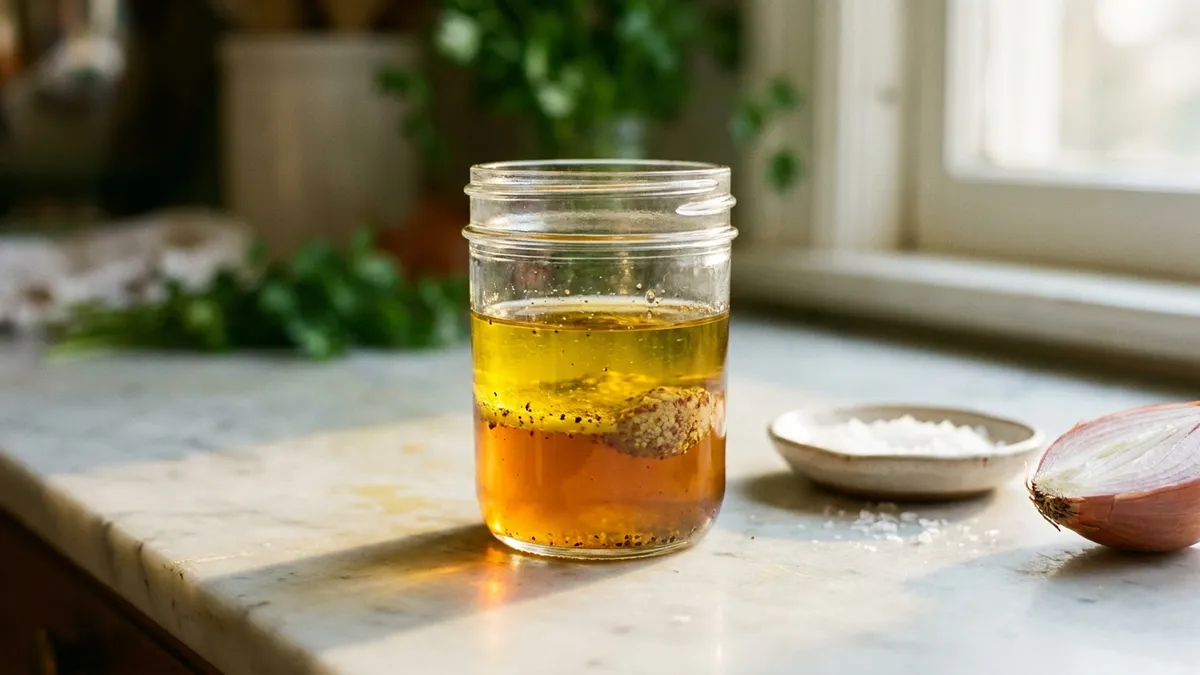
The oil softens the numbers. A classic vinaigrette uses about three parts oil to one part vinegar. That dilutes a 6% vinegar to roughly 1.5% acetic acid across the dressing, and the oil coats your tongue. A wine at the tart end of the pH range can hold its own against that. A soft wine at the other end cannot.
What Wine Goes With Creamy Dressings Like Caesar or Ranch?
Creamy dressings are mostly fat, so they want a white with more body (the weight of the wine in your mouth, like skimmed versus whole milk) that still keeps good acidity. Unoaked Chardonnay and Chenin Blanc fit, and a Brut sparkling wine is the strongest choice for Caesar.
Fat coats the mouth. Olive oil, cream, egg yolk and mayonnaise all leave a slick film on the tongue. A thin, very light white disappears under that coating. A fuller wine with enough acid cuts through it and resets your palate between bites. The rule: if the dressing is creamy, go one step fuller in body than you would for vinaigrette, but never lose the acidity.
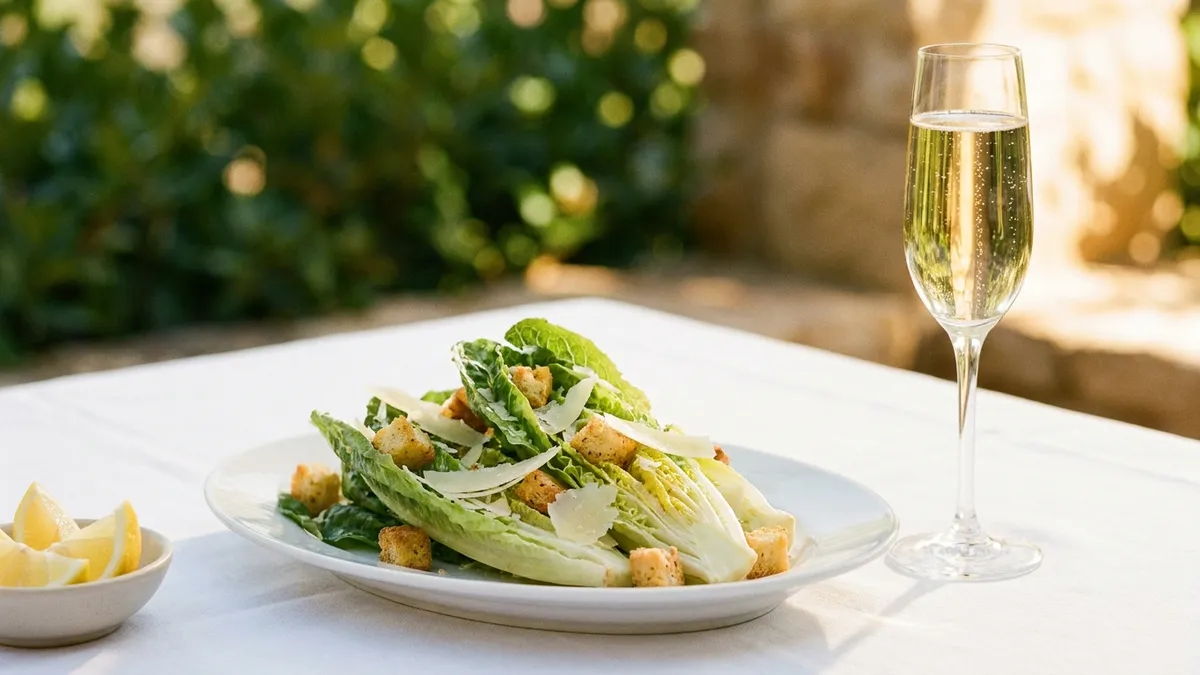
Caesar adds salt from anchovy and hard cheese. Salt makes a wine taste softer and fruitier, which is why crisp, even lean wines taste rounder next to it. Bubbles scrub the cream from your tongue, so a Brut sparkling wine or a Chablis-style unoaked Chardonnay both work.
Blue cheese dressing is the exception. Its strong salt suits a wine with a touch of sugar, such as off-dry Riesling. Riesling keeps high acidity at every sweetness level, from bone-dry to dessert-sweet, so even a slightly sweet one never tastes heavy. Our Riesling wine guide explains how to read its sweetness on the label.
Does Balsamic Dressing Need a Different Wine?
Yes. Balsamic is both sharp and sweet, so it needs a wine with ripe fruit and low tannin, such as a chilled Gamay, a light Pinot Noir or a fruity dry rosé. A lean, bone-dry white can taste sour next to balsamic's sugar.
Commercial Balsamic Vinegar of Modena must contain at least 6 g of acetic acid per 100 g, the same sharpness as table vinegar. It ages for a minimum of two months in wooden barrels, or three years if labelled invecchiato ("aged"). The traditional protected versions from Modena and Reggio Emilia must age at least 12 years and grow thick and sweet as they concentrate.
That sweetness changes the pairing. Sugar in food makes a dry wine taste thinner and more sour, the same effect you notice with dessert. The rule: if the dressing tastes sweet on its own, the wine needs plenty of ripe fruit or a touch of sugar. A thin drizzle of a young balsamic in a vinaigrette works with a fruity rosé. A syrupy balsamic glaze over strawberries and burrata calls for an off-dry wine (one with a little sugar you can taste), such as an off-dry Riesling or rosé.
Honey-mustard dressing follows the same logic, because honey adds sugar on top of the vinegar.
Which Wine Goes With Lemon and Citrus Dressings?
Lemon and citrus dressings take the same high-acid whites as vinaigrette, and they are gentler on wine than vinegar is. Pour a light, zesty white such as Vermentino, Assyrtiko, dry Riesling or Sauvignon Blanc. If the salad also carries fruit, such as orange or mango, pick the riper style of the same grape.
Lemon juice is about 5 to 6% citric acid, similar in strength to table vinegar. Citric acid, though, is one of the acids grapes already make, in small amounts, and it has no smell, while acetic acid brings the sharp vinegar smell. A lemon-and-oil dressing is the easiest salad dressing to pair.
Cool-climate Sauvignon Blanc goes especially well here. It tastes of gooseberry and cut grass, which echoes green leaves, herbs and cucumber. Riper Sauvignon Blanc from warmer places leans towards passion fruit and suits salads with mango, orange segments or grilled prawns. Our Sauvignon Blanc wine guide maps both styles by region.
For Mediterranean salads with olives, feta and tomato, the island whites fit best: the Assyrtiko wine guide and Vermentino wine guide cover both.
What Wine Pairs With Bitter Greens, Goat Cheese or Artichoke?
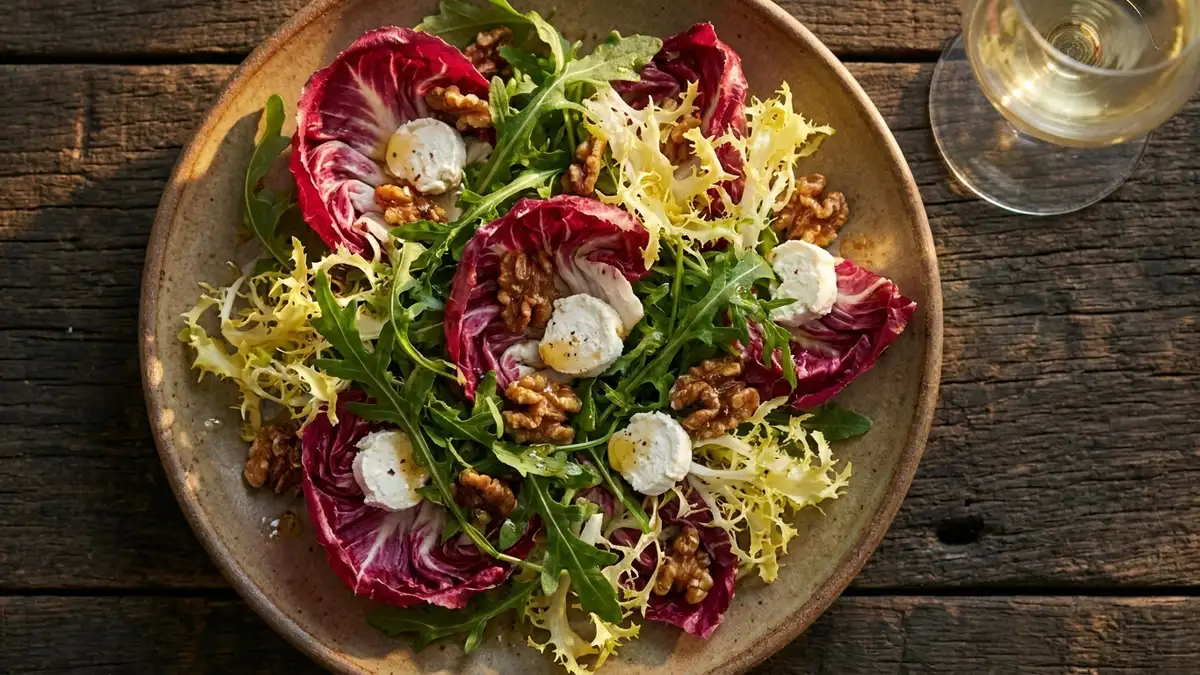
Pick an unoaked, high-acid white and skip tannic reds, because bitter leaves and tannin (the drying grip on your gums) add their bitterness together. Loire Sauvignon Blanc, Grüner Veltliner and Albariño handle radicchio, arugula, endive, walnuts and goat cheese well, because their acidity cuts the cream and they carry no oak.
Tannin makes your mouth feel dry and puckery because it binds to proteins in your saliva. On its own that grip can taste pleasantly firm. Next to radicchio or chicory, which are bitter already, the two sensations stack and the wine tastes harsh. Our guide to wine astringency vs bitterness separates the two feelings. The rule: if the salad is built on bitter leaves, keep the red wine for another course.
Goat cheese is the easy part. Its tangy cream meets Sauvignon Blanc's acidity head-on, which is why Loire Sauvignon Blanc and a goat cheese salad are a classic French pairing. Walnuts bring their own light bitterness, so the same unoaked white suits them.
Artichoke is the hardest vegetable on the plate. It contains cynarin, a compound widely reported to make the next sip of wine or water taste oddly sweet. The effect varies from person to person. A dry, unoaked, high-acid white such as Grüner Veltliner copes best, because it has no oak or sweetness to exaggerate.
Can Red Wine Work With Salad?
Yes, if the red is light, low in tannin and high in acidity, such as Gamay from Beaujolais or a cool-climate Pinot Noir. Serve it slightly chilled, so its fruit tastes fresher and its alcohol less warm. Skip heavy, tannic reds such as Cabernet Sauvignon with any sharp dressing.
The myth that red wine and salad never work comes from the tannic kind. Gamay behaves differently. The acidity of salad dressing and tomatoes can cancel some of the tartness in a Beaujolais, so the wine's fruit comes forward. Our Gamay wine guide explains why the grape is so light and fresh.
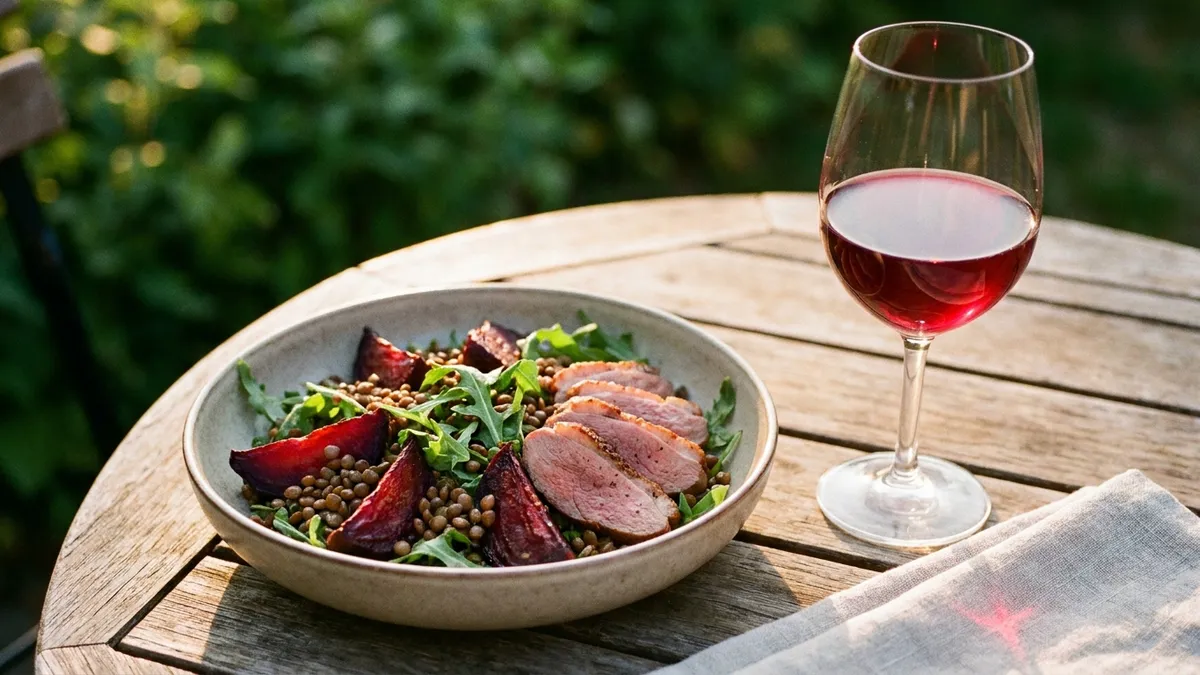
Red wine makes most sense when the salad is a main course. The rule: if the salad carries steak, duck, lentils, roasted beetroot or mushrooms, a light red works, because those foods bring savoury depth and protein that soften tannin. Keep the dressing mild, lean on the oil, and give the bottle a short spell in the fridge so it tastes fresher.
Is Sparkling Wine Good With Salad?
Yes. Sparkling wine brings high acidity and bubbles that clean the palate, so it handles vinaigrette, creamy Caesar and salty cheese alike. Choose Brut for sharp or creamy dressings, and Extra Dry for sweet ones. Traditional-method sparkling wine, with its toasty, bready flavour, suits Caesar's croutons and cheese best.
The sweetness words on a sparkling label are confusing. Brut contains under 12 g of sugar per litre and Extra Brut under 6 g, so both taste dry (no sugar you can taste). Extra Dry, despite its name, is sweeter than Brut, at 12 to 17 g per litre. The rule: with a vinegar or lemon dressing, pick Brut or Extra Brut; with honey-mustard, balsamic glaze or a fruit salad, pick Extra Dry.
Dry rosé plays a similar role, still or sparkling. It has the acidity of a white and a little red-fruit depth, which helps with tomato, grilled vegetables and cured meat. See the rosé wine guide for the driest styles, and sparkling wine types for the full list of sweetness terms.
How Can You Tweak a Salad So It Flatters the Wine?
Use more oil, a gentler vinegar or lemon, and add salt, cheese or protein. Each change lowers the dressing's sharpness or adds weight, so the wine tastes fuller and fruitier next to it. Salt is the fastest of these fixes, because it makes the wine taste softer within a bite.
- More oil. Moving from three parts oil to four dilutes the acid further and coats the tongue.
- A wine-based vinegar. Sherry, red wine and Champagne vinegars are softer and more wine-like than distilled white vinegar.
- Lemon for vinegar. Citric acid sits closer to the acids already in wine.
- Salt, cheese and nuts. Salt softens acidity in wine, and cheese adds fat and savoury depth.
- Protein. Chicken, fish, egg or lentils shift the plate towards a main course and give the wine more to work with.
The rule: if the wine tastes sour next to the salad, fix the dressing before you change the bottle.
What Should You Pour Tonight?
Pour a Sauvignon Blanc or a dry Riesling. One crisp, unoaked white with high acidity covers vinaigrette, lemon and goat cheese salads, which are most of the salads made at home. Keep a chilled Gamay in reserve for balsamic dressings and for any salad topped with meat.
Sommy teaches pairing basics in bite-sized courses, and its AI-guided tasting mode walks through each glass step by step. Pour the white tonight, taste it after both leaves, and dress the salad the way that left the wine tasting fruitiest.
Sources
Frequently Asked Questions
Can you drink wine with salad?
Yes. Salad only clashes with wine when the dressing is sharper than the wine or when bitter leaves meet a tannic red. Choose a wine with high acidity, such as Sauvignon Blanc, Albariño, dry Riesling or a dry rosé, and it will taste fresh next to most vinaigrettes. Adding cheese, nuts, meat or a little more oil to the salad makes the match even easier.
What wine goes with vinaigrette?
A crisp white with high acidity. Sauvignon Blanc, Albariño, Grüner Veltliner, dry Riesling and dry rosé all hold their fruit next to vinegar. A soft, low-acid wine tastes thin and flat beside the same dressing. A vinaigrette made with sherry, red wine or Champagne vinegar is gentler on wine than one made with sharp distilled white vinegar.
What wine goes with Caesar salad?
A Brut sparkling wine or a crisp, unoaked white. Caesar dressing is salty from anchovy and hard cheese, creamy from egg and oil, and sharp from lemon. The bubbles and acidity of a Brut cut through the creaminess, and salt makes a wine taste softer and fruitier. An unoaked Chardonnay or Chenin Blanc works well when you want a still wine.
What wine pairs with balsamic dressing?
A wine with ripe fruit and low tannin. Balsamic is sharp and sweet at once, so a lean, very dry white can taste sour next to it. Try a chilled Gamay, a light Pinot Noir, or a dry rosé with plenty of strawberry fruit. For a thick, syrupy balsamic glaze, a wine with a touch of sweetness, such as off-dry Riesling, keeps its fruit.
Is red wine bad with salad?
Only a heavy, tannic red is a problem. Tannin clashes with vinegar and adds to the bitterness of leaves like radicchio. A light red with low tannin and high acidity, such as Gamay from Beaujolais or a cool-climate Pinot Noir, works well, especially served slightly chilled and with a salad that carries meat, lentils, roasted beetroot or mushrooms.
What wine goes with goat cheese salad?
Sauvignon Blanc, especially from the Loire Valley, is the classic match. Goat cheese is tangy and creamy, and the wine's high acidity cuts through the cream while its citrus and green flavours echo the leaves. Dry rosé and Albariño are good alternatives. Avoid oaky, buttery whites, which turn heavy next to the tang of the cheese.
Sommy Team
LinkedInFounder & Wine Educator
The Sommy Team is building the world's most approachable wine education app, helping beginners develop real tasting skills through structured courses and AI-guided practice.