Astringency vs Bitterness in Wine: How to Tell Them Apart

By the Sommy Team — AI-assisted, human-edited.
Updated Apr 29, 2026
Contents (11)
- What Astringency vs Bitterness Actually Means
- Astringency vs Bitterness, in 100 Words
- Astringency Is a Touch, Not a Taste
- Bitterness Is a Taste, Detected at the Back of the Tongue
- How to Feel the Difference in Your Mouth
- When They Co-Occur, and When They Diverge
- How Aging Changes Each One
- How Food Fixes Each One
- Common Confusions to Avoid
- Train Your Two-Channel Read at Home
- Why This Matters Beyond the Tasting Note
TL;DR
Astringency in wine is a tactile sensation — tannins binding saliva proteins so your mouth feels dry and grippy. Bitterness is one of the five basic tastes, detected by receptors at the back of the tongue. They often appear together but are not the same. Learning to separate them sharpens every tasting note.
What Astringency vs Bitterness Actually Means
Tasters use the words astringency and bitterness as if they meant the same thing. They do not. Mixing them up muddles tasting notes, blurs food pairing logic, and makes it harder to figure out why a particular bottle is or is not working for you. Sorting astringency vs bitterness wine signals is one of the highest-leverage skills in any wine vocabulary.
The short version: astringency is a physical grip you feel across your gums and cheeks. Bitterness is a basic taste detected by receptors mostly at the back of your tongue. They share triggers, they often co-occur, but they are produced by different mechanisms and they live in different sensory channels — touch versus taste.
This guide pulls them apart, shows you how to feel each one in isolation, lists the compounds that drive each, explains how aging and food change both, and gives you exercises to calibrate the difference at home.
Astringency vs Bitterness, in 100 Words
In wine, astringency vs bitterness breaks down like this. Astringency is a tactile sensation — large tannin molecules called proanthocyanidins bind to saliva proteins, pull them out of solution, and leave your mouth dry, rough, and puckering across the cheeks, gums, and tongue surface. Bitterness is one of the five basic tastes, registered by TAS2R receptors concentrated on the back of the tongue, triggered by certain phenolics, alcohol above roughly 14 percent, oxidized polyphenols, and oak compounds. A young Cabernet Sauvignon is astringent and bitter at once. A high-alcohol oxidized white can be bitter without grip. A polished aged Nebbiolo can grip without bitterness.
Astringency Is a Touch, Not a Taste
Astringency is not detected by your taste buds. It is detected by mechanoreceptors — the same nerve endings that tell you whether something is rough or smooth. When you sip a tannic red, the proanthocyanidins (the family of large condensed tannins from grape skins, seeds, and stems) seek out proline-rich proteins in your saliva and bind to them. The saliva-protein complex precipitates out of solution. The slippery film that normally coats your tongue and cheeks thins out, and the soft tissues of your mouth start rubbing against each other directly.
That rubbing is what you feel. Drying. Grip. A sandpaper quality on the gums. A puckering tightness on the inside of the cheeks.
Because the mechanism is mechanical rather than chemical, astringency builds across multiple sips. The third sip of a young Bordeaux feels grippier than the first. Saliva production cannot keep up with the rate of protein binding, so each successive sip works on a slightly drier mouth. Professional tasters call this tannin build and account for it by spitting and pacing.
For a deeper look at the structural role of tannins, see our guide to what are tannins and the broader picture of understanding tannins, acidity, and body.
Bitterness Is a Taste, Detected at the Back of the Tongue
Bitterness is genuinely a taste — one of the five basic tastes alongside sweet, sour, salty, and umami. It is detected by TAS2R receptors, a family of about 25 distinct bitter-taste receptors clustered most densely on the back third of the tongue and the soft palate. When a bitter compound binds to a TAS2R receptor, it triggers a chemical signal to the brain through the same gustatory pathway as sweetness or saltiness.
That is a different sensory channel from astringency. Astringency rides on the trigeminal nerve (touch). Bitterness rides on the gustatory nerves (taste). The two signals reach the brain through different pathways, which is why an experienced taster can describe one without the other.
In wine, bitterness can come from:
- Seed-derived tannins — harsher and more bitter than skin tannins
- Small phenolic compounds like catechins, epicatechins, and quercetin
- High alcohol — ethanol activates bitter receptors above roughly 14 percent ABV
- Oxidized polyphenols — oxidation changes phenolic structure and unlocks new bitter notes
- Oak compounds — particularly from heavy toast or new barrels
- Methoxypyrazines — green, vegetal compounds in underripe Cabernet, Sauvignon Blanc, and Carmenère
- Grape-specific compounds — Vermentino, Verdicchio, and certain Greek varieties carry naturally bitter almond or saline notes
How to Feel the Difference in Your Mouth
The most reliable way to separate astringency vs bitterness in a real glass is to use what tasters call the two-zone check. Take a sip, swirl it around for three seconds, then pay attention to two specific zones in sequence.
Zone One — The Cheeks and Gums (Astringency)
Run your tongue along the inside of your cheeks. Press it gently against your front gums. Notice whether the surface feels:
- Smooth and lubricated — low astringency
- Slightly rough or tightening — moderate astringency
- Sandpaper-rough, puckering, mouth-coating — high astringency
This is a tactile read. There is no "flavor" in this evaluation — only texture.
Zone Two — The Back of the Tongue (Bitterness)
Now swallow or spit, then evaluate the lingering taste at the very back of your tongue and along the soft palate. Notice whether the finish carries:
- Clean, fruit-driven, savory — low bitterness
- A faint coffee or dark-chocolate edge — moderate bitterness
- Sharply bitter, like over-steeped tea or quinine — high bitterness
This is a taste read. You are asking what the wine tastes like at the back of the tongue, not what it feels like on the cheeks.
After a dozen wines tasted with this two-zone approach, the channels start to feel obviously distinct. Astringency lives forward and across; bitterness lives back and central.
When They Co-Occur, and When They Diverge
A young Cabernet Sauvignon delivers both at once — heavy skin tannin produces strong astringency, and seed tannins plus high alcohol push the back of the tongue into bitter territory. That is the default red-wine experience and the reason most tasters fuse the two words.
But the channels can decouple, and recognizing that decoupling is the move that separates a fluent taster from a beginner.
Astringent but Not Bitter
- A polished, fully ripe Nebbiolo with mature skin tannin grips the gums hard but tastes savory, floral, and even sweetly fruited at the back of the tongue.
- A whole-cluster Pinot Noir from a ripe vintage uses stem-derived tannin to add grip without crossing into bitterness, especially after a few years of bottle age.
- A young Sangiovese can dry the cheeks while the finish stays cherry-bright.
Bitter but Not Astringent
- A 15 percent ABV white with no tannin can taste bitter on the finish purely from alcohol activating TAS2R receptors.
- An oxidized white like a flawed Sauvignon Blanc can be sharply bitter without producing any saliva-binding grip.
- Some Mediterranean whites like Vermentino or Verdicchio carry a naturally bitter almond note that has nothing to do with tannin.
- An over-oaked white from heavy new barrel treatment can taste bitter on the finish without mouthfeel grip.
Both, in Balance
- A well-made Cabernet Sauvignon from a strong vintage delivers grippy skin tannin and a faint roasted-coffee bitterness that frames the dark fruit without overwhelming it.
- A young Chianti Classico balances medium astringency with a mild herbal bitterness that classic Sangiovese drinkers actively seek.
For broader context on how these elements sit inside a complete tasting impression, see our guide to wine mouthfeel explained and wine balance explained.
How Aging Changes Each One
Astringency and bitterness do not move in lockstep as a wine ages. Knowing the divergence helps you decide which bottles to drink now and which to hold.
Astringency Generally Softens
Tannin molecules undergo polymerization in the bottle. They bond into longer and longer chains until they exceed the solubility threshold and fall out as sediment. As the dissolved tannin pool shrinks, the saliva-binding effect weakens. A 15-year-old Barolo grips dramatically less than the same wine at three years.
Bitterness Can Move Either Way
Bitterness is less predictable. As large tannin polymers precipitate, smaller bitter phenolics that were bound to them can be liberated, sometimes making the finish more bitter even as the grip drops. Premature oxidation generates new bitter compounds independently. Well-stored wines from grapes with balanced phenolic profiles tend to lose both sensations in tandem. Poorly stored bottles often lose the grip while gaining bitterness — the worst possible trajectory.
For the full picture on how wines evolve, see our guide on tasting young vs aged wine.
How Food Fixes Each One
Pairing wine with food works partly because food intervenes in both the astringency and the bitterness pathways — but through different mechanisms.
Fat and Protein Knock Down Astringency
Tannins are protein-binders. Give them protein from food and they bind there instead of to your saliva. A bite of fatty steak coats the mouth with proteins; the next sip of tannic Cabernet finds those targets first and never reaches your gums. This is the chemistry behind one of the great pairings — see our wine with steak and wine and cheese pairing guides for the practical version.
Salt Mutes Bitterness
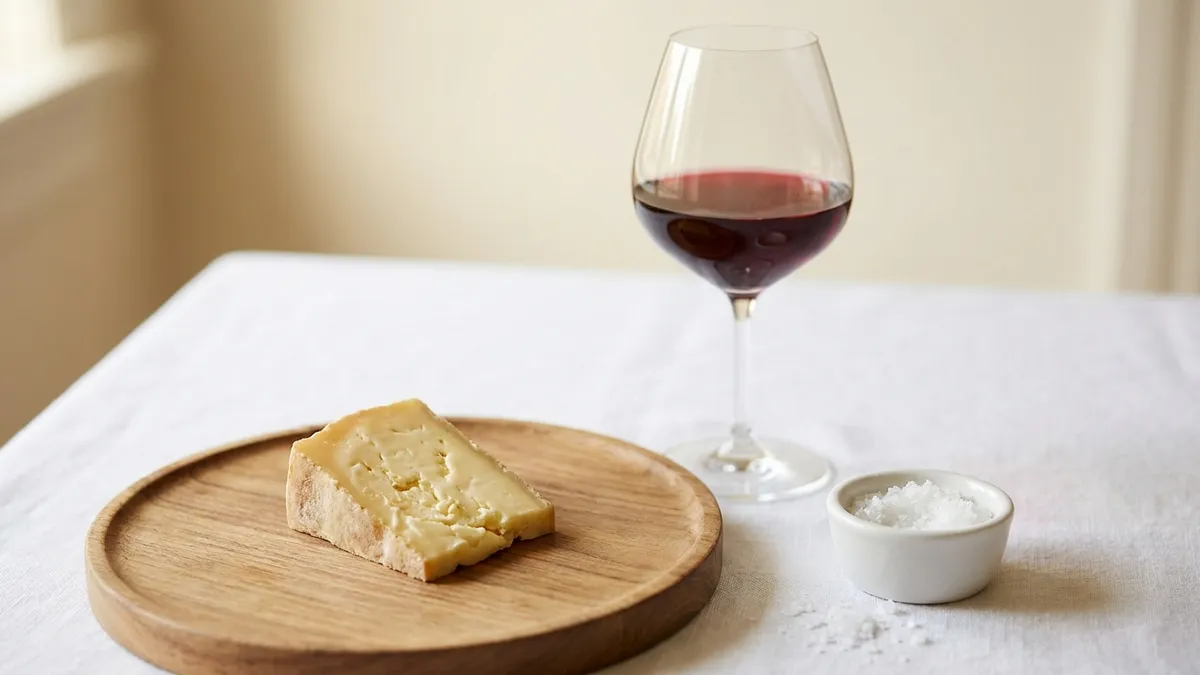
Salt suppresses bitter taste perception at the receptor level — a well-documented taste interaction. A salty hard cheese, cured ham, or salted nuts can quiet a bitter finish remarkably fast. Sugar also masks bitterness, which is why a touch of residual sugar in an off-dry Riesling tames the pepper-heat in Thai food.
Acidity Amplifies Both
High-acid food does not soften wine the way fat or salt does. It tends to sharpen both astringency and bitterness perception by stimulating saliva turnover and raising overall palate alertness. This is why aggressive vinaigrettes can wreck a delicate red wine pairing.
For a wider view, see how food changes wine taste and the wine pairing rules guide.
Common Confusions to Avoid
A few overlapping concepts trip up beginners. Worth getting straight.
- Dryness is not astringency. "Dry" in wine means low residual sugar — a chemistry fact about the bottle. Astringency is a tactile sensation in your mouth. A dry wine can be astringent or smooth; an off-dry wine can be astringent or smooth. See what does dry wine mean for the full distinction.
- Tannic does not automatically mean bitter. Tannins drive astringency by definition. They drive bitterness only sometimes, and mostly through the seed-tannin and unripe-grape pathways. A well-made tannic wine may carry almost no bitterness.
- "Hot" is not bitterness. Alcohol warmth — a burn at the back of the throat from high ABV — is a chemesthetic sensation, separate from bitter taste. The two often co-occur in high-alcohol wines but are not the same thing.
- Green flavors are usually bitterness, not astringency. Underripe grape compounds like methoxypyrazines taste bitter and vegetal, but they do not produce strong saliva-binding. If a wine tastes green and stem-like without much grip, you are probably reading bitterness, not tannin.
For the broader vocabulary needed to talk about these sensations, see our wine tasting vocabulary cheat sheet and the guide on how to describe wine.
Train Your Two-Channel Read at Home
Two simple exercises calibrate the astringency-bitterness split in a single sitting.
The Tea-and-Tonic Drill
Brew a cup of black tea and steep for 10 minutes. Pour a glass of plain tonic water. Taste them in alternation.
- The over-steeped tea delivers heavy astringency — your gums tighten, your tongue feels rough. Some bitterness rides along, but the grip dominates.
- The tonic water delivers heavy bitterness from quinine — sharp at the back of the tongue, finishing clean — without producing any drying grip on the cheeks.
After three rounds, you have a clear template: tea = grip-driven, tonic = taste-driven. Map every wine you taste afterwards onto that two-axis grid.
The Two-Wine Comparison
Open a young Cabernet Sauvignon and an unoaked, low-alcohol Riesling. Taste them side by side using the two-zone check.
- The Cabernet hits both zones — strong astringency, moderate-to-strong bitterness.
- The Riesling typically hits neither zone meaningfully — minimal astringency, low bitterness, a clean fruit-and-acid finish.
Then add a third glass: a 15 percent ABV unoaked Chardonnay or a high-alcohol Viognier. That third wine often has no astringency but a noticeable bitter finish from alcohol. Three glasses, three patterns: astringent-and-bitter, neither, bitter-only.
The Sommy app builds these calibration drills into structured tasting sessions, with guided two-zone evaluations that train your astringency-bitterness separation skill across red, white, and rosé wines. Visit sommy.wine to try the practice mode that walks you through the same exercise with feedback on your reads.
Why This Matters Beyond the Tasting Note
Knowing the difference between astringency and bitterness changes practical decisions:
- Buying decisions — a wine described as "tannic" might be perfectly drinkable now if the tannins are ripe and the bitterness is low. The same descriptor on a different bottle might mean a wine that needs five more years to soften.
- Pairing decisions — astringent wines need fat and protein to balance. Bitter wines need salt and a hint of sweetness. Choosing the right intervention starts with reading the right signal.
- Aging decisions — astringency reliably softens with age. Bitterness does not. Cellaring a wine because "it is too tannic now" assumes the bitterness will soften too, which is not guaranteed. Three quick tests for a wine that is too tannic show whether waiting is worth it.
- Self-knowledge — if you keep finding red wines unpleasant, the question is not "do I dislike tannin" but "which channel is bothering me — the grip or the bitterness." The answer changes which wines work for you.
Once the two channels feel distinct, every other tasting concept gets sharper. Wine balance, wine finish, wine length, and wine structure all depend on accurately reading where each sensation lives. Astringency vs bitterness is the foundation. Get it right and the rest of the tasting vocabulary clicks into place.
Frequently Asked Questions
Is astringency the same as bitterness in wine?
No. Astringency is a tactile sensation produced when tannins bind to proteins in your saliva, leaving your mouth dry and grippy across the cheeks and gums. Bitterness is one of the five basic tastes, detected by TAS2R receptors mostly at the back of the tongue. A wine can be astringent without being bitter, and bitter without being astringent, although tannic reds often produce both at once.
What causes astringency in wine?
Astringency comes mainly from condensed tannins called proanthocyanidins, found in grape skins, seeds, stems, and oak barrels. These large polyphenol molecules bind to the proline-rich proteins in saliva and pull them out of solution. With less protein lubrication, your tongue and cheeks feel rougher and drier. The longer the wine macerates on its skins, the more astringent it tends to be.
What causes bitterness in wine?
Bitterness in wine comes from several sources: small phenolic compounds like catechins and quercetin, certain seed-derived tannins, high alcohol above roughly 14 percent, oxidized polyphenols, hop-like grape compounds in some varieties, and bitter components from oak. Unripe grapes also bring methoxypyrazines and green stem material that taste bitter. Genetics and TAS2R receptor sensitivity make some tasters perceive bitterness much more strongly than others.
Can a wine be astringent without being bitter?
Yes. Mature, well-managed skin tannins from a ripe vintage can produce strong astringency with very little bitterness — think of a polished Nebbiolo that grips the gums but tastes savory and sweet-fruited rather than bitter. Stem-derived tannin in well-handled whole-cluster fermentation can also feel grippy without crossing into bitterness, especially after a few years of bottle age.
Can a wine be bitter without being astringent?
Yes. A high-alcohol white with no tannin can taste bitter on the finish without producing any drying grip. Oxidized white wines, certain varieties like Vermentino or Verdicchio with naturally bitter almond notes, and over-extracted oak treatments all produce bitterness without the saliva-binding signature of astringency. The clue is where you feel it: bitterness sits at the back of the tongue, astringency spreads across the gums and cheeks.
Does food reduce astringency or bitterness?
Both, but through different mechanisms. Fat and protein bind to tannins before they reach your saliva, dropping perceived astringency dramatically — this is why steak and tannic Cabernet pair so well. Salt suppresses bitterness through a known taste interaction at the receptor level, which is why a salty cheese can quiet a bitter finish. Sugar also masks bitterness, while acidity tends to amplify both sensations.
Do astringency and bitterness change as a wine ages?
Astringency softens with age. Tannin molecules polymerize into chains too heavy to stay dissolved and fall out as sediment, so the grip fades. Bitterness can go either way. Phenolics that were bound up in young wine can free as tannin polymers drop out, sometimes making bitterness more obvious. Premature oxidation also generates new bitter compounds. Well-stored wines usually balance both downward, but poorly stored bottles can become more bitter.
Why do some people taste bitterness in wine more than others?
Genetics. The TAS2R38 gene and related bitter-taste receptors vary widely between people, with so-called supertasters perceiving bitterness up to three times more intensely than non-tasters. This is why one drinker calls a Sauvignon Blanc fresh and another calls the same glass harshly bitter. Astringency perception is more uniform, since it depends on saliva chemistry rather than receptor genetics.
Sommy Team
LinkedInFounder & Wine Educator
The Sommy Team is building the world's most approachable wine education app, helping beginners develop real tasting skills through structured courses and AI-guided practice.