What Is Length in Wine? Why the Finish Lingers

By the Sommy Team — AI-assisted, human-edited.
Updated Apr 29, 2026
Contents (10)
- The Seconds That Tell You Everything
- What Is Wine Length, in 60 Seconds
- How Length Differs From Finish
- The Caudalie: One Second of Wine Length
- The Four-Tier Wine Length Scale
- Why Wine Length Correlates With Quality
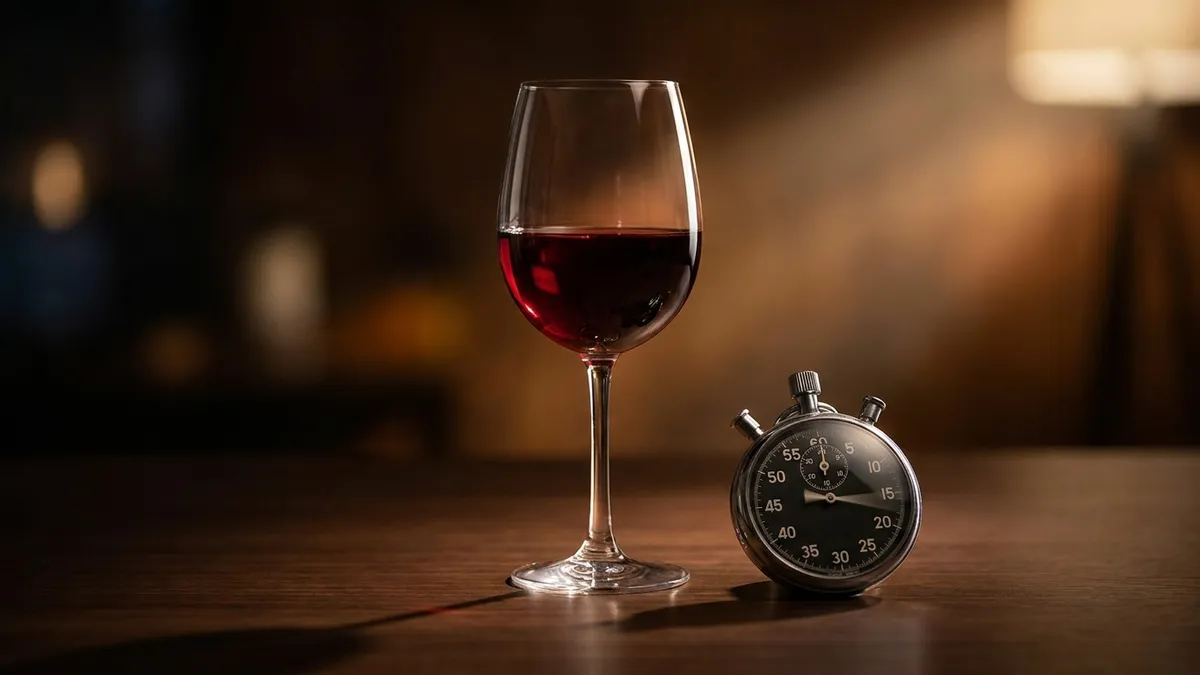
- How to Time Wine Length: The 30-Second Test
- Common Mistakes That Break Length Measurement
- How Length Maps to Wine Style
- Train Your Length Sense, One Glass at a Time
TL;DR
Wine length is the duration that flavor and structure linger after a sip. Sommeliers measure it in caudalies — one second each. Short length fades within five seconds, medium runs five to twelve, long stretches twelve to twenty-five, and exceptional wines push past thirty. Length correlates with concentration, balance, and quality.
The Seconds That Tell You Everything
Most beginners stop tasting the moment they swallow. The wine goes down, the conversation moves on, and the next sip arrives within ten seconds. Sommeliers do something different. They go quiet, sit still, and count. They are measuring wine length — the duration that the flavor and structure of the wine continue to register on the palate after the sip is gone.
The wine length meaning is straightforward: it is the lifespan of the flavor after swallowing or spitting. Short wines fade in a heartbeat. Long wines stretch on for half a minute, layering new notes as the seconds pass. Length is not a vibe or a metaphor — it is something you can time with a stopwatch, and once you start timing it, the gap between simple wines and serious ones becomes obvious.
This guide covers exactly what wine length is, how the caudalie unit works, the four-tier scale sommeliers use, why length tracks so closely with quality, and a clean step-by-step method for timing it on any wine in any glass.
What Is Wine Length, in 60 Seconds
Wine length is the duration the wine's flavor and structure linger on the palate after you swallow or spit. The unit is the caudalie — one caudalie equals one second of persistence. Short length fades within five seconds, medium length runs five to twelve, long length stretches twelve to twenty-five, and exceptional length holds beyond twenty-five with new aromas still emerging. Length correlates with quality because long persistence requires concentration, complexity, and balance — the three structural traits that demand low yields, careful winemaking, and time. To time it, swallow, start a steady silent count, and stop when the flavor is genuinely gone. Skip the first sip, count the third, and write the number down.
How Length Differs From Finish
Length is often used loosely as a synonym for finish, but the two are not the same. The finish is the entire post-swallow experience and has three components:
- Length — how many seconds the flavor and structure persist before fading
- Flavor evolution — whether new aromas emerge, transform, or fade across that span
- Structural residue — the warmth from alcohol, the grip from tannin, the drying edge from acidity
Length answers "how long?" Evolution answers "what changes?" Residue answers "what kind of imprint stays?" A wine can have long length with little evolution — the same flavor just hangs there, intense but static. Another wine can show shorter length but rich evolution in those few seconds, with three distinct aroma waves before silence. The most memorable wines combine long length with active evolution.
For the broader picture of what happens after the sip, the wine finish meaning guide breaks down all three components in detail.
The Caudalie: One Second of Wine Length
The French wine world coined a precise unit for length: the caudalie, pronounced coh-dah-lee. One caudalie equals one second of flavor persistence after the wine leaves the mouth. The term comes from the Latin cauda, meaning tail, a fitting image for the flavor that trails behind a sip.
Bordeaux oenologists and educators formalized the unit in the 1980s, and it now appears in:
- WSET tasting grids
- Court of Master Sommeliers exam scoring
- Formal blind tasting structured assessments
- Many professional wine reviews and judging notes
Caudalies are not folklore. They are a real, repeatable measurement that wine professionals use to compare wines across producers, vintages, and price tiers. Two trained tasters timing the same wine should agree within a couple of seconds.
A Caudalie Scale by Wine Tier
A rough caudalie guide that maps onto the wine market:
- Simple table wine — 1 to 4 caudalies
- Good everyday wine — 4 to 8 caudalies
- Premium wine — 8 to 14 caudalies
- Top-tier wine — 14 to 25 caudalies
- Legendary or aged-greats — 25 to 40 or more caudalies
A young Sauvignon Blanc from a cool climate might show 3 to 4. A well-made Côtes du Rhône can hit 8 to 12. Aged Pinot Noir from a serious appellation often pushes past 15. The unit is not arbitrary — it correlates strongly with concentration, structural balance, and price.
The Four-Tier Wine Length Scale
When you taste, sort length into four tiers rather than chasing exact second-counts. The tiers are easier to remember and more useful for tasting notes.
Short — under 5 seconds
The flavor disappears almost immediately. You swallow, count to three or four, and the palate is already clean. You feel the urge for another sip not because the wine was bad, but because there is nothing left to hold attention.
Short length is normal in light, refreshing styles built for quick drinking — crisp Italian Pinot Grigio, fresh Vinho Verde, simple Provence rosé. Short length is only a problem when a wine claims to be serious and finishes like a soft drink.
Medium — 5 to 12 seconds
Most well-made everyday wines live here. The flavor lingers long enough to matter — you taste the wine for a full breath after swallowing, and the structure still registers. A typical 15 to 25 dollar bottle from a known region usually delivers solid medium length, especially with a few minutes of air.
Long — 12 to 25 seconds
Now you are in serious territory. The flavor still reads at fifteen seconds. New notes may surface — a hint of spice after the fruit fades, a quiet mineral edge, a soft warmth. Long length is the hallmark of premium wines from concentrated grapes, careful viticulture, and balanced winemaking.
Exceptional — 25+ seconds
The flavor is still going at the half-minute mark. New aromas keep arriving. You stop tasting other things in the room because the wine is still working in your mouth. Aged Burgundy, top-tier Bordeaux, mature Barolo, and vintage Champagne are famous for length that stretches well past thirty seconds with continual evolution.
Why Wine Length Correlates With Quality
Length is the most honest single signal of wine quality, and the reason is structural — not mystical. Long length requires three traits, all expensive to produce and impossible to fake.
Concentration
A concentrated wine has more dissolved compounds per millilitre — more sugar, acid, tannin, mineral content, and aromatic molecules. Those compounds do not all evaporate at swallow. They linger, releasing slowly at different rates, stretching the perceptible flavor out across many seconds. Dilute wines fade quickly because there is not much to release.
Concentration comes from low yields in the vineyard, healthy old vines, and gentle winemaking. Low yields mean fewer clusters per vine, which means more flavor packed into each berry. Low yields are expensive because they reduce the wine produced per acre, which is why concentrated wines cost more.
Complexity
A wine with complexity — multiple distinct aromatic layers coexisting — shows different molecules across the length window. Light volatile aromas burn off first. Heavier compounds persist. Tertiary notes from aging emerge late. The result is a finish that does not just last, but evolves. The wine complexity guide covers this layering in depth.
Structural balance
In a balanced wine, acid, tannin, alcohol, and any residual sugar work in proportion. None of them bullies the others off the palate. The result is a long, smooth taper rather than a sharp truncation. Unbalanced wines often show artificially short length because one component — typically harsh acid or aggressive tannin — clears the palate ahead of schedule. The wine balance explainer breaks down what proportional structure looks like.
If a wine is still telling you something at twenty seconds, it has earned your attention. Length is the signature of a wine made with care.
How to Time Wine Length: The 30-Second Test
The technique is absurdly simple, and it works on any wine in any glass. Treat it like a kitchen-timer ritual rather than a guess.
- Warm the wine to its proper temperature. Cold mutes aromatics and shortens length. White wines should be 8 to 12°C, reds 14 to 18°C. The wine serving temperature chart has the full grid.
- Take a real sip — not a tiny taste. Hold the wine on the palate for three or four seconds so retronasal aromas develop. The retronasal smell guide covers why through-the-throat aromas drive most of perceived flavor.
- Swallow or spit cleanly. Do not breathe in sharply afterward, and do not drink water. Either move clears the palate.
- Begin a steady silent count at one second per beat. "One-thousand-one, one-thousand-two." Match the rhythm of a clock, not a heartbeat.
- Stop when the flavor is genuinely gone. Not when it shifts. Not when it fades by half. When you genuinely cannot taste wine character anymore, the count ends.
- Note both the length and what changed across it. "12 caudalies, fruit fades at 4, spice emerges at 7, mineral edge by 10." The number is half the value — the evolution is the rest.
Skip the first sip when you can. The first sip on a fresh palate often reads artificially long. Time the third or fourth sip for a calibrated number.
Common Mistakes That Break Length Measurement
A handful of small habits quietly ruin beginner length counts. Avoid these and your numbers become reliable enough to compare across bottles.
- Mistaking warmth for flavor. The warm sensation from alcohol can linger ten seconds after the actual flavor is gone. Warmth is structural residue, not length. Stop counting when flavor ends, not when warmth ends.
- Counting too fast. Anxious counters compress real seconds into fractions. Use a one-thousand-one rhythm or a real timer the first few times.
- Drinking water or talking mid-count. Both clear the palate and zero out the measurement.
- Timing a cold wine. Cold reds and over-chilled whites can read shorter by 30 to 50 percent. Let the wine warm.
- Timing only one sip. The first sip is unreliable. The second sip may have palate residue from the first. Sip three or four gives the cleanest reading.
- Confusing length with intensity. A loud wine is not necessarily a long wine. Length is duration, not volume.
- Skipping the count entirely. The biggest mistake — most beginners never measure length, so they never develop the calibration. The common wine tasting mistakes guide covers more habits worth breaking.
How Length Maps to Wine Style
Different wine styles have different baseline length expectations. A short finish on a summer rosé is appropriate. A short finish on a Grand Cru is a warning. Calibrate your read against the style.
Crisp white wines
Sauvignon Blanc, Pinot Grigio, Albariño, Vinho Verde — these wines target freshness and quick refreshment. Medium length is the goal. Long length is a pleasant surprise but not the design intent. Compare with the Chardonnay vs Sauvignon Blanc guide for how oak changes the length math on white wines.
Light red wines
Pinot Noir, Gamay, lighter Sangiovese — the goal is elegance with palate-staining persistence. Premium examples deliver long length without heaviness. Aged versions can hit exceptional length while retaining transparency.
Full-bodied red wines
Cabernet Sauvignon, Syrah, Nebbiolo, Tempranillo — built for length. Anything under medium length on a serious red is a quality red flag. Long length is the baseline expectation, and exceptional length is what justifies the premium tier.
Sparkling wines
The mousse texture complicates the read, but the underlying flavor still has measurable length. The bubbles fade quickly; the wine character beneath them carries on. High-quality vintage sparkling wines can sustain length to twenty seconds.
Sweet and fortified wines
The high sugar and high alcohol of dessert and fortified styles produce naturally long length. The bar is higher — long length here is expected, not impressive. Look for evolution and balance alongside the seconds.
Train Your Length Sense, One Glass at a Time
Length awareness is a pure discipline skill, not a talent. The technique is trivial — count after swallowing — and the calibration builds fast. After about ten bottles of timed practice, you will start to feel the difference between a four-second wine and a twenty-second one almost instantly. The numbers become a sense.
Start with a contrast night. Pour two wines side by side from very different price tiers — say, a 12-dollar Pinot Grigio and a 35-dollar white Burgundy. Time both. Write the numbers in your tasting note alongside the flavor evolution. The gap will be obvious, and the contrast teaches the calibration faster than any single-bottle session.
The Sommy app builds length counting into the structured tasting flow. After each sip, the journal asks you to log a caudalie estimate alongside aromas, structure, and overall impression — so you can track length across hundreds of wines and watch your palate sharpen over time. The app's AI guidance also flags when your length read seems off-pattern for a wine's style, helping calibrate faster.
For the broader tasting framework that wraps around length, see the how to taste wine walkthrough and the how to taste wine like a sommelier deep dive. Both feed the post-swallow count into a complete sensory routine.
Visit sommy.wine to start measuring every glass you drink. A little regular practice turns length evaluation into automatic second nature — and once you have it, the difference between a forgettable bottle and a memorable one becomes a number you can read in real time.
Frequently Asked Questions
What is wine length, in plain language?
Wine length is how long the flavor and structure of a wine continue to register on your palate after you swallow or spit. It starts the moment the liquid leaves your mouth and ends when no recognizable wine character remains. Length is one of three core dimensions of the finish, alongside flavor evolution and structural residue.
How do you measure wine length in seconds?
Swallow or spit, then begin a steady silent count — one count per second — without breathing in sharply or sipping water. Stop the count when the flavor truly disappears, not when it merely changes. The number you reach is the length in seconds, also called the caudalie count. Aim for the third or fourth sip, when your palate has settled.
What is a caudalie and where does the term come from?
A caudalie is a French oenological unit where one caudalie equals one second of flavor persistence after a sip. The word comes from the Latin cauda, meaning tail, evoking the trailing flavor a wine leaves behind. Bordeaux sommeliers and educators standardized the term in the 1980s, and it now appears in formal wine exams and judging sheets.
What counts as a short, medium, long, and exceptional wine length?
Short length fades within five seconds, typical of crisp summer whites and simple table wines. Medium runs five to twelve seconds and covers most well-made everyday bottles. Long stretches twelve to twenty-five seconds and signals premium quality. Exceptional length holds beyond twenty-five seconds, often with evolving aromas, and is the hallmark of top-tier and aged wines.
Why does wine length correlate with quality?
Long length requires concentration, complexity, and structural balance — three qualities that cost effort to produce. Concentrated wines have more dissolved compounds to linger. Complex wines reveal new layers as primary aromas fade. Balanced wines avoid harsh truncations from runaway tannin or acid. When the seconds keep going, the wine has the depth to support them.
Can a chilled or young wine show its real length?
Not fully. Cold temperature mutes aromatics and shortens perceived length, sometimes by half. Very young wines also under-show because their primary fruit dominates and tertiary notes have not developed yet. Let red wine warm toward 16 to 18°C and decant young bottles before timing length, otherwise the count under-rates the wine.
Is length the same as the finish?
Length is one component of the finish, not the whole thing. The finish includes length (duration), flavor evolution (how aromas shift across those seconds), and structural residue (warmth, dryness, grip that remain). A wine can have impressive length but a flat finish with no evolution. The most serious wines combine long length with an evolving, layered finish.
Do sommeliers really sit and count after each sip?
In formal blind tastings and certification exams, yes — counting caudalies is part of the structured assessment. In casual settings, experienced tasters internalize the rhythm and feel the difference between short, medium, and long length without overt counting. For beginners, deliberate counting builds the calibration that eventually becomes automatic.
Sommy Team
LinkedInFounder & Wine Educator
The Sommy Team is building the world's most approachable wine education app, helping beginners develop real tasting skills through structured courses and AI-guided practice.