Assyrtiko: The Volcanic White Grape of Santorini

By the Sommy Team — AI-assisted, human-edited.
Updated Apr 29, 2026
Contents (13)
TL;DR
Assyrtiko is Greece's flagship white grape, native to volcanic Santorini. Vines are trained in low basket shapes called kouloura to survive Aegean wind and drought. The wine shows electric acidity, saline minerality, citrus and flint, and ages 10 to 15 years gaining waxy honey notes. Beyond Santorini it now grows in mainland Greece, Australia, and the United States.
What Is Assyrtiko
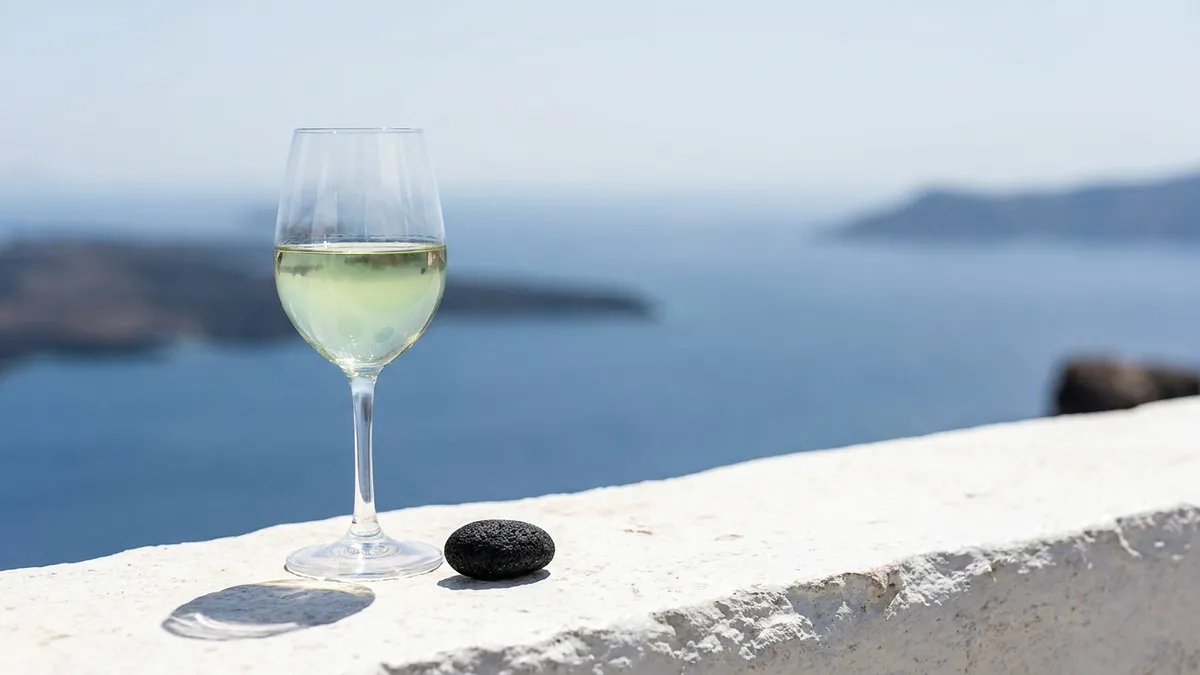
Assyrtiko wine is a dry white made from a Greek grape variety of the same name, native to the volcanic island of Santorini in the Aegean Sea. It has become the flagship white grape of Greece and one of the most distinctive whites in the world — high in acidity, saline on the finish, and capable of aging for over a decade. Pronounced ah-SEER-tee-ko, the variety has been cultivated on Santorini for 3,500 years.
What sets assyrtiko apart is the combination of grape, soil, and training method. The vines grow in pure volcanic ash without irrigation. They are woven into low basket shapes hugging the ground. The wines they produce taste like nothing else — citrus, sea salt, flint, and a tension that rivals the great whites of France.
If you have explored white wine tasting before but stayed inside Sauvignon Blanc and Chardonnay, Assyrtiko is the next step. It rewards what you know about acidity and minerality, and adds something new — the taste of a volcano in the sea.
Assyrtiko in 100 Words
Assyrtiko equals Greece's flagship white grape, native to volcanic Santorini in the Aegean. Vines are trained in distinctive kouloura basket shapes to protect from wind and conserve moisture. Profile: pale lemon-green color, electric high acidity (the highest in the white-grape world), saline minerality from volcanic ash plus sea proximity, citrus zest with green apple and flinty smoke. Oak or barrel aging adds nutty depth. The wine drinks beautifully young; top Santorini Assyrtiko ages 10 to 15 years, gaining waxy honey notes. Beyond Santorini it grows in mainland Greece (Drama, Macedonia) and in Australia and the United States.
A 3,500-Year-Old Grape
Santorini's vineyards are among the oldest continuously cultivated in the world. Archaeological evidence places winemaking on the island at around 1600 BC, before the massive volcanic eruption that gave Santorini its current crescent shape. Pottery fragments, grape seeds, and references in Linear A texts all point to a wine culture that survived earthquakes, eruptions, and empires.
Assyrtiko itself has been documented on Santorini for centuries, and DNA analysis has confirmed its Greek origin. Unlike most European wine grapes, Santorini's vines are also ungrafted — meaning they grow on their own roots rather than American rootstock. The phylloxera louse that devastated European vineyards in the 1860s could not survive in pure volcanic ash, so Santorini was spared. Many vines on the island are over 100 years old, with some plots holding 200-year-old plants still producing fruit.
This continuity matters for taste. Old, ungrafted vines on volcanic soil with no irrigation produce extremely concentrated, low-yield grapes. The wine carries a depth and intensity that younger plantings elsewhere cannot easily replicate.
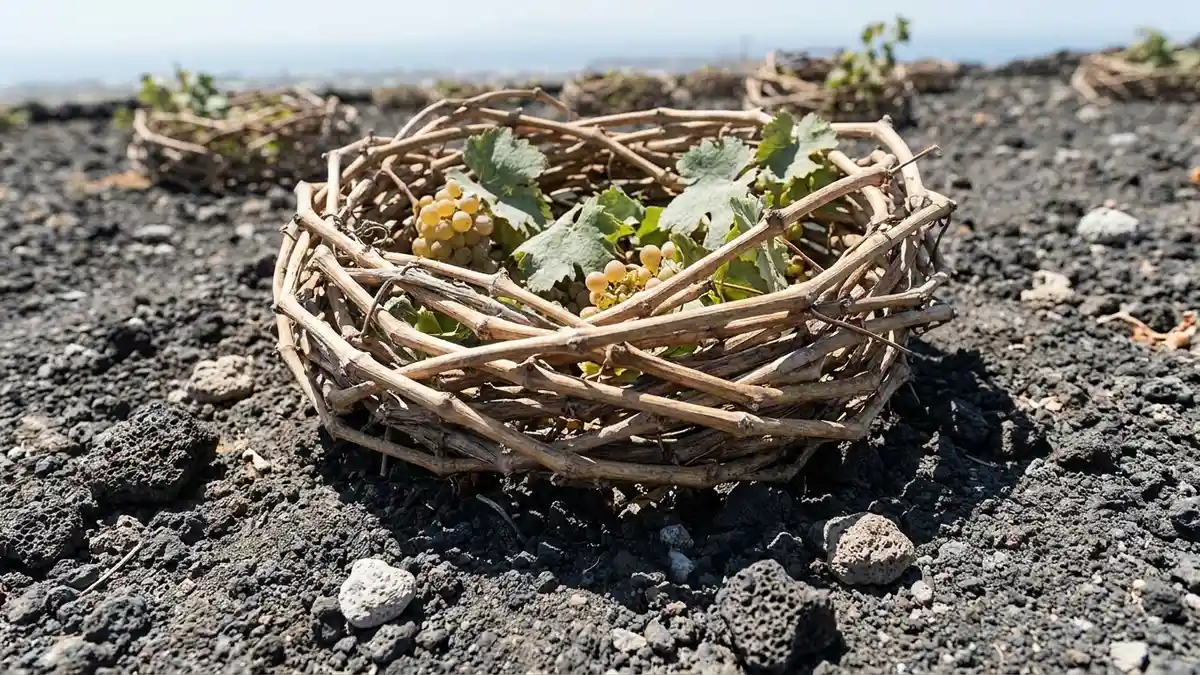
The Kouloura: A Vine Shaped Like a Basket
The single most photographed thing in any Santorini vineyard is the kouloura — a vine trained into a low circular basket shape sitting directly on the ground. The word means "basket" or "wreath" in Greek, and the technique is unique to the island.
Each vine is woven by hand over decades. Cane after cane gets folded into a tight ring, with the bunches hanging inside the basket where they are protected from three things:
- Wind — the Aegean meltemi blows constantly across Santorini in summer. A trellised vine would lose its leaves and fruit. The basket creates a windbreak around itself.
- Sun — at sea level on a treeless island, direct Mediterranean sun is brutal. The basket shades the grapes from above.
- Drought — the basket traps morning fog and dew that condense on the volcanic stones, providing nearly all the water the vine receives in a normal year.
Kouloura training is extraordinarily labor-intensive. There is no machinery — every cane is pruned and woven by hand. Vines are spaced widely (sometimes one vine per ten square meters) to share the limited water. A single trained vineyard can take two to three generations to fully establish.
The result is a vine system that has survived 3,500 years on one of the most extreme growing sites on earth.
Volcanic Terroir: Ash, Pumice, and Sea
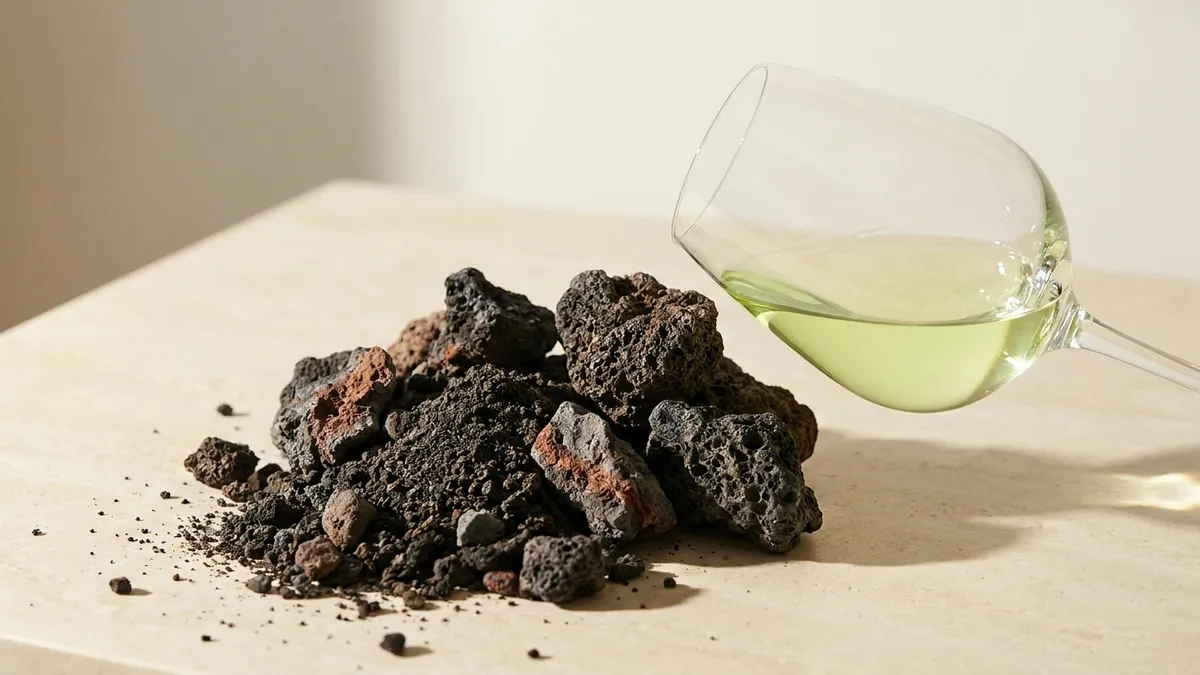
Santorini's soil is unlike almost any other wine region. The caldera — the giant flooded crater left by the 1600 BC eruption — exposed layers of volcanic ash, pumice, and lava rock that have weathered slowly over millennia. The topsoil is a mix of:
- Aspa — fine volcanic ash, light and powdery
- Pumice — porous volcanic rock that retains tiny amounts of moisture
- Lava rock — broken basalt that radiates heat
There is essentially no organic matter. No clay. No limestone. The vines must root deeply to find nutrients, and the soil's high mineral content combined with the surrounding sea air gives the wine its signature salty, smoky character.
This is terroir at its most extreme. Our guide to what is terroir covers the broader concept, and our piece on how soil affects wine taste goes deeper on volcanic soils specifically. Assyrtiko is the textbook example of soil-driven wine — change the soil, and you change the wine more than the grape itself.
The constant exposure to sea spray adds the second layer. The Aegean is one of the saltiest seas in Europe, and the island is small enough that no vineyard sits more than a few kilometers from open water. Salt particles settle on the leaves and grapes, contributing to the saline note that every Assyrtiko shows on the finish.
What Assyrtiko Wine Tastes Like
Tasting Assyrtiko for the first time is memorable because it does not taste like any other major white. The closest comparison is unoaked Chablis Chardonnay, but Assyrtiko is leaner, saltier, and more sun-baked.
Color and Appearance
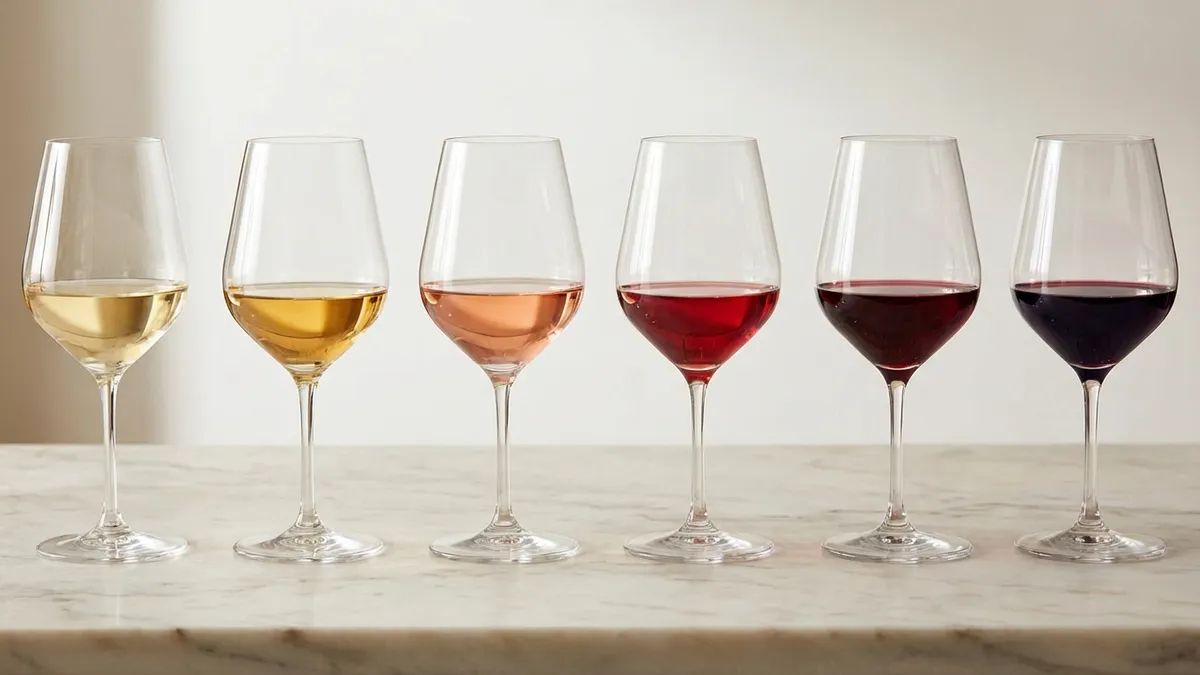
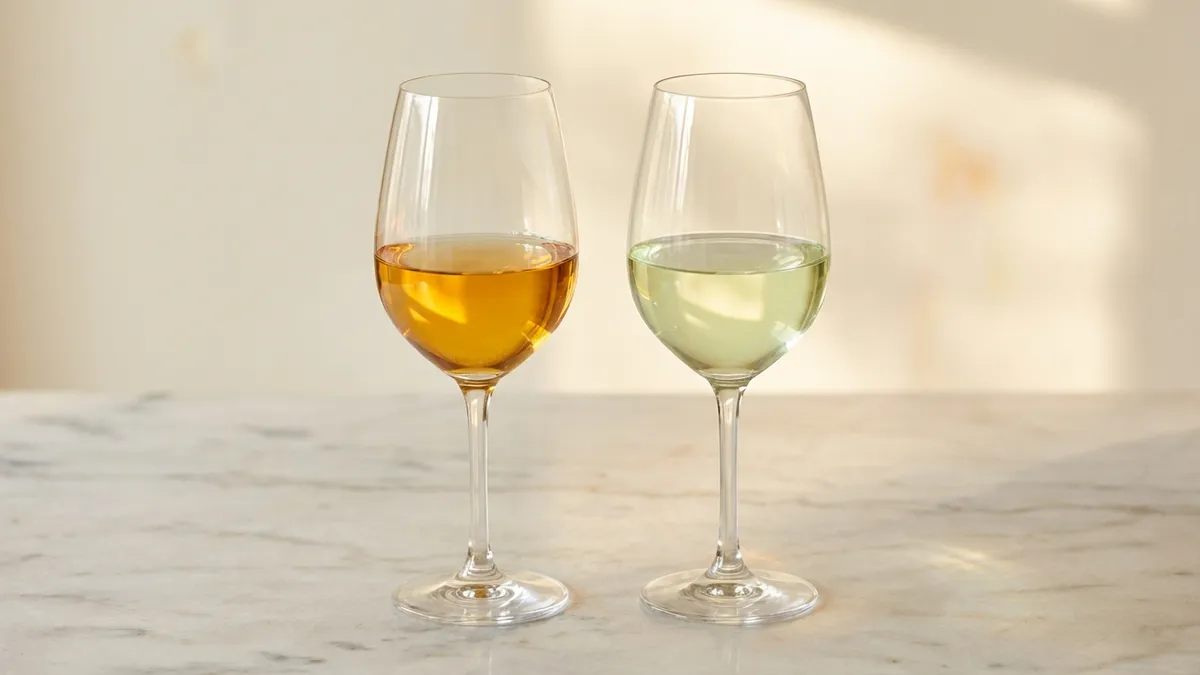
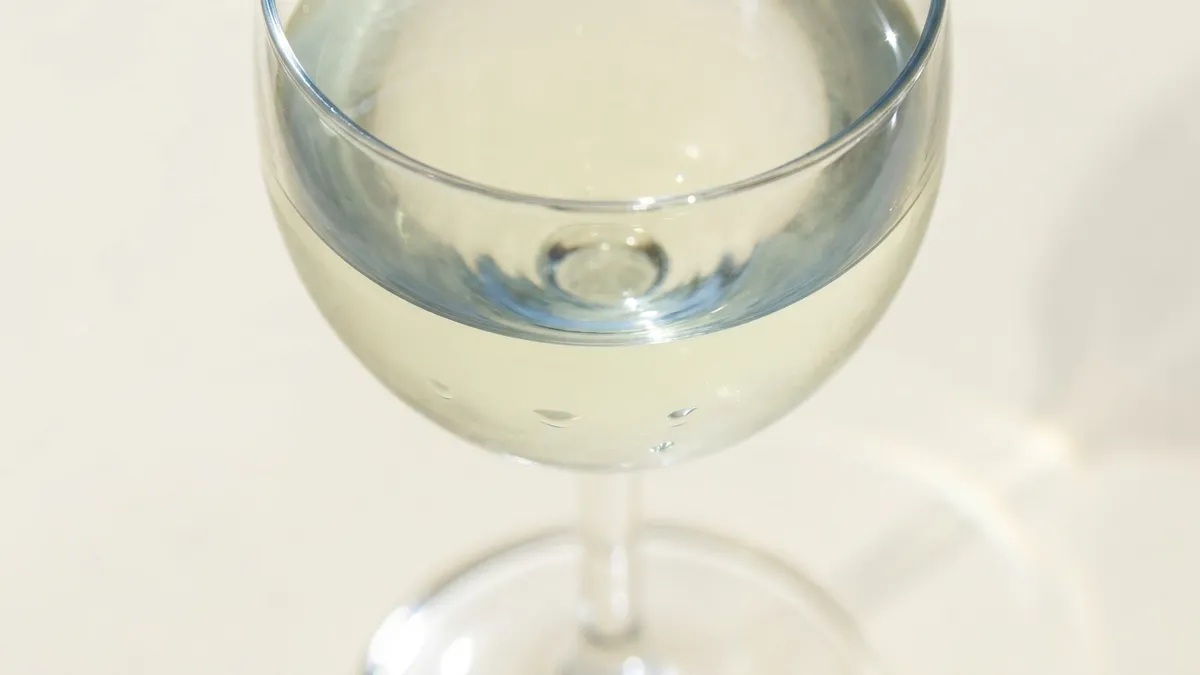
Pale lemon-green with bright clarity. Young bottles can shade toward water-white; older bottles deepen to gold and eventually amber after a decade. Building your reading of color is one of the foundations of wine appearance work, and Assyrtiko gives a clean reference point for the pale end of the white spectrum.
Aroma
- Citrus — lemon zest, lime peel, grapefruit
- Orchard fruit — green apple, white peach, slightly under-ripe pear
- Mineral — flint, wet stone, gunsmoke, sea salt
- Herbs — chamomile, fennel, sometimes a wisp of thyme
The aromas are restrained rather than showy. This is not an aromatic grape like Riesling or Gewürztraminer. The intensity comes from the palate, not the nose.
Palate
This is where Assyrtiko makes its case. Three things define the structure:
- Acidity — among the highest of any white grape grown commercially. The wine feels electric and tongue-watering.
- Body — medium, with surprising weight for its lean profile. Concentrated extract from old, low-yield vines gives it density without richness.
- Salinity — the unmistakable saline finish that comes from sea air and volcanic minerals.
The finish is long, tight, and slightly smoky. Some bottles show a chalky or flinty quality similar to Sancerre. Our guide to wine minerality covers this category — Assyrtiko sits alongside Chablis, Mosel Riesling, and Muscadet as one of the textbook mineral whites in the world.
The Three Main Styles
Not all Assyrtiko is the same. Three styles dominate the market.
Steel-Aged (Unoaked)
The most common and most representative style. Fermented and aged in stainless steel to preserve the grape's natural acidity, fruit, and minerality. This is what most beginners should taste first. Young, taut, citrus-driven, with the saline finish front and center. Drinks beautifully at 1 to 3 years from vintage but rewards 5 to 8 years of aging.
Barrel-Fermented or Oak-Aged
Some producers use neutral oak or extended lees aging to add texture and nutty depth. The acidity remains high, but the wine gains a creamy, almond-and-honey character. These bottles age 8 to 15 years and are often labeled "Reserve" or "Nykteri" (a traditional style fermented overnight). The added complexity makes oak-aged Assyrtiko a more flexible food wine.
Vinsanto
The sweet wine of Santorini, made by sun-drying the grapes for 10 to 14 days before pressing. The juice ferments and ages in oak barrels for at least 24 months — often 4, 8, or even 20 years. The result is dense, concentrated, and unmistakably alive: dried apricot, fig, dark caramel, walnut, and salt, all carried by Assyrtiko's piercing acidity. Vinsanto is technically a dessert wine (see our dessert wine guide for the broader category), but its sharp acidity makes it less cloying than Sauternes or Tokaji.
Food Pairings
Assyrtiko's acidity and salinity make it one of the most food-friendly whites in the world. The principle is simple — salty wine wants salty food, and high-acid wine wants oily or rich food. The same logic runs across a whole Greek, Turkish or Levantine table in wine with Mediterranean food.
Best matches:
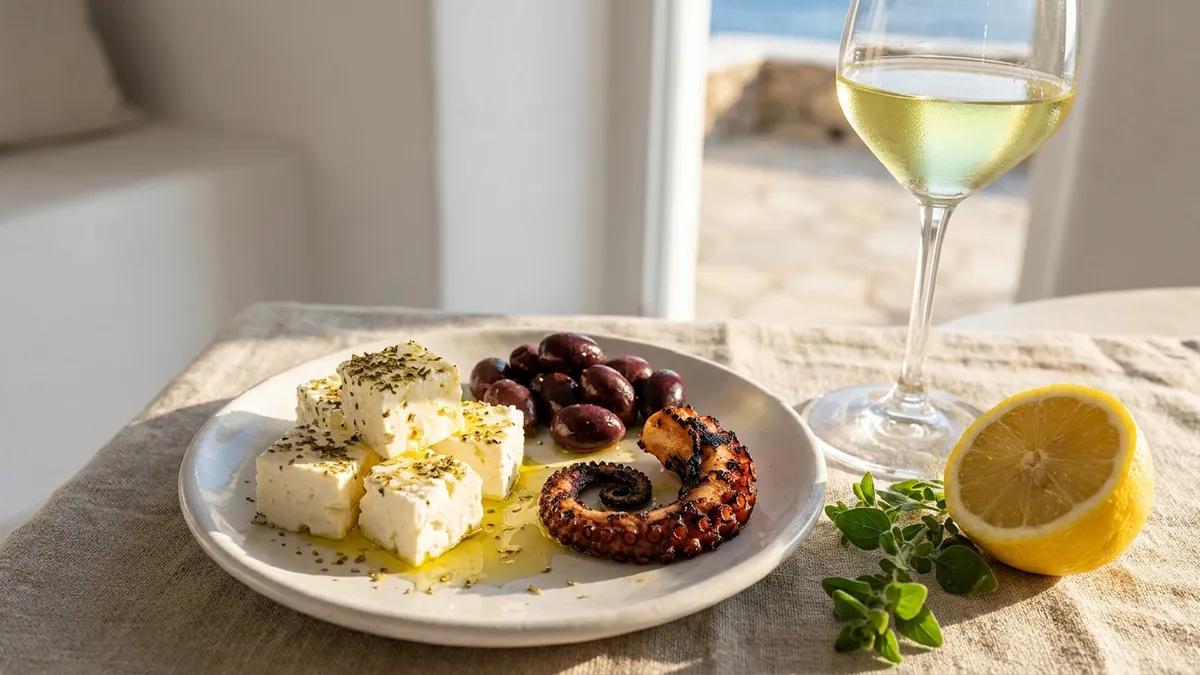
- Seafood — grilled octopus, oysters, sea bass, sardines, anchovies, sushi, ceviche
- Greek mezze — feta, taramasalata (fish-roe dip), tzatziki, grilled vegetables, dolmades, and Levantine dips like sumac-dusted hummus (wine with Middle Eastern food)
- Light pasta — lemon-and-olive-oil dishes, seafood pasta, pesto
- Roast chicken — especially with lemon, olive oil, and herbs
- Salty cheeses — feta, halloumi, manchego, aged pecorino
- Sushi and sashimi — the salinity rivals what sake brings to the same dishes
Oak-aged Assyrtiko handles richer dishes — risotto, creamy chowder, roast pork. Vinsanto pairs with blue cheese, walnut tarts, and dried-fruit desserts.
For a broader framework on these matches, our wine and seafood pairing and wine pairing rules guides cover the underlying logic.
How Assyrtiko Ages
The grape's natural acidity and concentrated extract make it one of the longest-aging whites outside of top-tier Riesling and white Burgundy. The aging arc:
- 0 to 3 years — citrus zest, green apple, sea salt; tight and primary
- 4 to 7 years — orchard fruit deepens, hints of beeswax and toasted bread, salinity remains
- 8 to 15 years — honey, almond, dried apricot, waxy texture; the salt note transforms into something more savory
- 15+ years — rare, but top bottles develop tertiary nut, marmalade, and an almost sherry-like complexity
Aging Assyrtiko at home requires the same conditions as any fine wine — cool, dark, stable, sideways. The wines do not need decanting in their youth, but older bottles benefit from 30 minutes of air. Our piece on tasting young vs aged wine covers what changes happen and why.
Beyond Santorini
Assyrtiko has been planted across mainland Greece for decades, where it also adds acidity to retsina, Greece's resinated white, and global plantings are growing. Mainland and international Assyrtiko shares the variety's structural acidity but loses some of the volcanic-saline character that defines Santorini bottlings.
Mainland Greece
- Drama and Macedonia — northern Greek regions producing fuller, fruitier Assyrtiko, often blended with international varieties
- Halkidiki — coastal sites with a Mediterranean influence; less mineral than Santorini but more affordable
- Attica — vineyards near Athens producing accessible everyday Assyrtiko
International Plantings
- Australia — McLaren Vale and the Adelaide Hills have championed the variety as a heat-tolerant alternative to Sauvignon Blanc
- United States — small plantings in California's Lodi and Santa Barbara, plus Oregon's Willamette Valley
- South Africa — early experiments in the Western Cape
These wines are worth tasting alongside Santorini Assyrtiko to see what travels and what does not. The grape's acidity ports well; the salinity and volcanic character do not.
The Sommy app's tasting flow includes "saline," "flinty," and "stony" among its aroma chips, so as you compare Assyrtiko from different regions you can tag the variations and see which markers consistently belong to the volcanic origin. Building this kind of side-by-side reference is one of the fastest ways to develop your palate — see our palate calibration exercises for structured drills.
Buying Your First Bottle
The benchmark is PDO Santorini — wines labeled with the protected designation must contain at least 75 percent Assyrtiko (most are 100 percent) and come from the island. Expect to spend 25 to 60 dollars for a serious bottle, with reserve and aged versions running higher. Mainland Greek Assyrtiko sits in the 12 to 20 dollar range and is a smart entry point.
What to look for on the back label:
- Vintage — recent vintages (last 3 years) for the freshest expression
- PDO Santorini — the geographic guarantee
- Steel-aged or barrel-aged — pick based on your style preference
- Alcohol — typically 13 to 14 percent; very high for a lean white, reflecting the sun-soaked island
Serve at 8 to 10°C (45 to 50°F) — slightly warmer than most whites to let the saline minerality express. Use a standard white-wine glass; the wine does not need a fancy shape. For more on getting your serving setup right, see our wine serving temperature chart.
Tasting Tips
A focused first encounter with Assyrtiko works best as a comparison tasting:
- Buy a bottle of Santorini Assyrtiko alongside an unoaked Chablis Chardonnay or a young Mosel Riesling
- Pour both at the same temperature, in the same glass shape
- Smell each — note which is more citrus-driven, which is more flinty, which is more saline
- Sip and focus on the finish — Assyrtiko's saline tail should be unmistakable
- Try each with a piece of grilled fish or feta, and note how the salt in the food interacts with the wine
After this exercise, "saline" stops being a vague term and becomes a specific reference point. Our how to compare two wines guide has the broader framework for side-by-side tastings, and our piece on building a wine flavor library shows how to make these comparisons stick.
Sommelier note: Try Assyrtiko with sea-salt-rimmed oysters or a slice of bottarga (cured fish roe). The salt-on-salt match is what every Greek sommelier reaches for first, and it shows you exactly what makes the variety unique.
The Bottom Line
Assyrtiko is the white grape that volcanic Santorini gave the world, and it is unlike anything else in the wine aisle. Electric acidity. Sea-salt finish. Citrus, flint, and quiet smoke. A vine system shaped like a basket, sitting on 3,500-year-old volcanic ash, hand-pruned for centuries.
It rewards beginners because the structural backbone — high acid, low fruit, tight finish — makes every other element easy to read. It rewards experts because few wines age this gracefully, develop this much complexity, or carry this much sense of place. Once you have tasted a real Santorini Assyrtiko, you understand what people mean when they talk about wine as "place in a glass."
Want to track your own Assyrtiko impressions and see how they evolve as you taste wines from Santorini, Drama, and McLaren Vale side by side? The Sommy app's tasting journal lets you tag salinity, flint, and citrus notes and search across your history — turning every bottle into data you can build on.
Frequently Asked Questions
What does assyrtiko wine taste like?
Assyrtiko shows pale lemon-green color with very high acidity, citrus zest, green apple, white peach, and a distinctive saline minerality from volcanic ash and sea air. The finish is long, tight, and slightly smoky or flinty. Oak-aged versions add nutty, waxy depth, while aged Santorini Assyrtiko develops honey, beeswax, and toasted nut character after a decade in bottle.
Where is assyrtiko grown?
Assyrtiko is native to Santorini, a volcanic island in the Aegean Sea, where it has been cultivated for over 3,500 years. It now also grows on mainland Greece in Drama, Macedonia, and Halkidiki, plus emerging plantings in Australia's McLaren Vale, California, and Oregon. Santorini Assyrtiko is the benchmark — bottles labeled PDO Santorini must contain at least 75 percent Assyrtiko.
Why is santorini assyrtiko so expensive?
Santorini's volcanic soil cannot be irrigated, vines are ungrafted because phylloxera cannot survive in volcanic ash, and yields are extremely low. The kouloura basket-vine training is hand-pruned and labor-intensive. Vineyard land is being lost to tourism development, pushing prices higher. A bottle of Santorini Assyrtiko typically costs 25 to 60 dollars compared to 12 to 18 dollars for mainland Greek versions.
How long does assyrtiko age?
Top Santorini Assyrtiko ages 10 to 15 years and occasionally longer. The grape's naturally high acidity and concentrated extract preserve the wine remarkably well. Young bottles taste of citrus and salt, while aged bottles develop honey, beeswax, toasted nuts, and a deeper saline character. Mainland and oak-aged versions age 5 to 8 years. Vinsanto, the sweet sun-dried style, can age 30 years or more.
What food pairs with assyrtiko?
Assyrtiko's high acidity and saline character make it a natural with seafood — grilled octopus, oysters, sea bass, sushi, and ceviche all work. Greek mezze are textbook pairings: feta, tzatziki, dolmades, taramasalata, and grilled vegetables. Oak-aged styles handle richer dishes like roast chicken, lemon risotto, and creamy pasta. The salinity also makes Assyrtiko one of the few whites that pairs with anchovies and salt-cured fish.
Is assyrtiko similar to riesling or sauvignon blanc?
Assyrtiko shares riesling's high acidity and ageability but is drier and more saline, with less stone fruit and no petrol note. It shares sauvignon blanc's citrus and flint but lacks the green herbal character. The closest comparison is unoaked Chablis Chardonnay — same lean, mineral, high-acid profile — but Assyrtiko is more saline and more sun-baked, reflecting its volcanic-island origin rather than chalky northern soils.
What is kouloura vine training?
Kouloura, meaning basket in Greek, is a vine training method unique to Santorini where each vine is woven into a low circular basket shape close to the ground. The basket protects the grapes from constant Aegean winds, traps morning fog and dew for moisture, and shields the fruit from the intense Mediterranean sun. Each vine can live 70 to 200 years and must be hand-pruned, making the system one of the most labor-intensive in viticulture.
Sommy Team
LinkedInFounder & Wine Educator
The Sommy Team is building the world's most approachable wine education app, helping beginners develop real tasting skills through structured courses and AI-guided practice.