Late Harvest Wine: How Extra Hang Time Builds Sweetness

By the Sommy Team — AI-assisted, human-edited.
Updated Sep 24, 2026
Contents (10)
- What Is Late Harvest Wine, Exactly?
- Late Harvest Wine, in 90 Words
- Why Do Grapes Get Sweeter the Longer They Hang?
- What Is Noble Rot, and How Is It Different From Ordinary Late Harvest?
- How Is Ice Wine Different From Late Harvest Wine?
- Which Grapes and Regions Make the Classic Late Harvest Wines?
- How Sweet Is Late Harvest Wine, Really?
- Is Late Harvest Wine Higher in Alcohol Than Regular Wine?
- How Should You Serve and Pair Late Harvest Wine?
- Common Mistakes People Make About Late Harvest Wine
TL;DR
Late harvest wine comes from grapes picked well after the normal harvest, which concentrates their sugar. There are three distinct paths: simple dehydration, botrytis (noble rot), and freezing (ice wine). Each needs a different climate, and Germany, Tokaji, and Sauternes each set legal sweetness rules for their wines.
What Is Late Harvest Wine, Exactly?
Late harvest wine is wine made from grapes left on the vine well past the normal picking date, which concentrates their sugar. Most table-wine grapes come in at 21 to 25 Brix (sugar content in grape juice); late harvest grapes hang for weeks or months more and climb far higher. That extra sugar is why the phrase almost always signals a sweet wine.
Late Harvest Wine, in 90 Words
Late harvest wine gets its sweetness from grapes picked long after the usual harvest date, giving them extra time to lose water and concentrate sugar. There are three distinct routes to that concentration: dehydration on the vine, infection by the fungus botrytis (noble rot), and natural freezing, which makes ice wine. Each route needs a different climate and produces a different style, from a lightly sweet Riesling to the honeyed wines of Sauternes and Tokaji. Fermentation on these heavy musts often stalls near 14 to 15 percent alcohol, leaving sugar behind.
Why Do Grapes Get Sweeter the Longer They Hang?
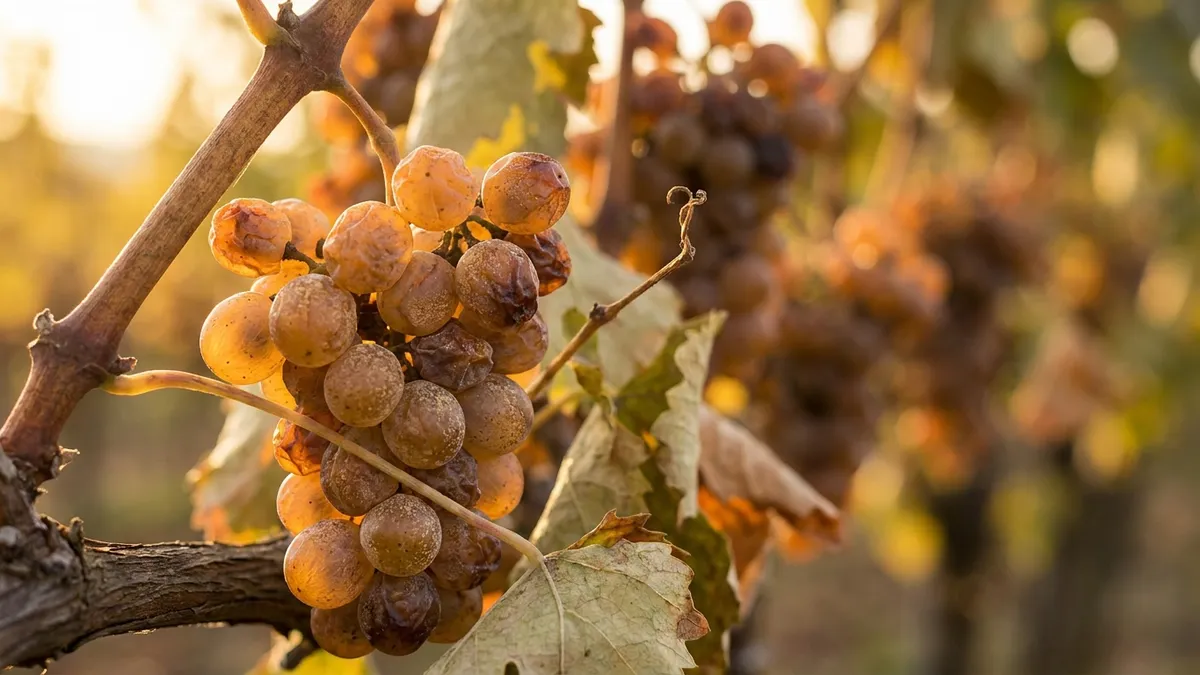
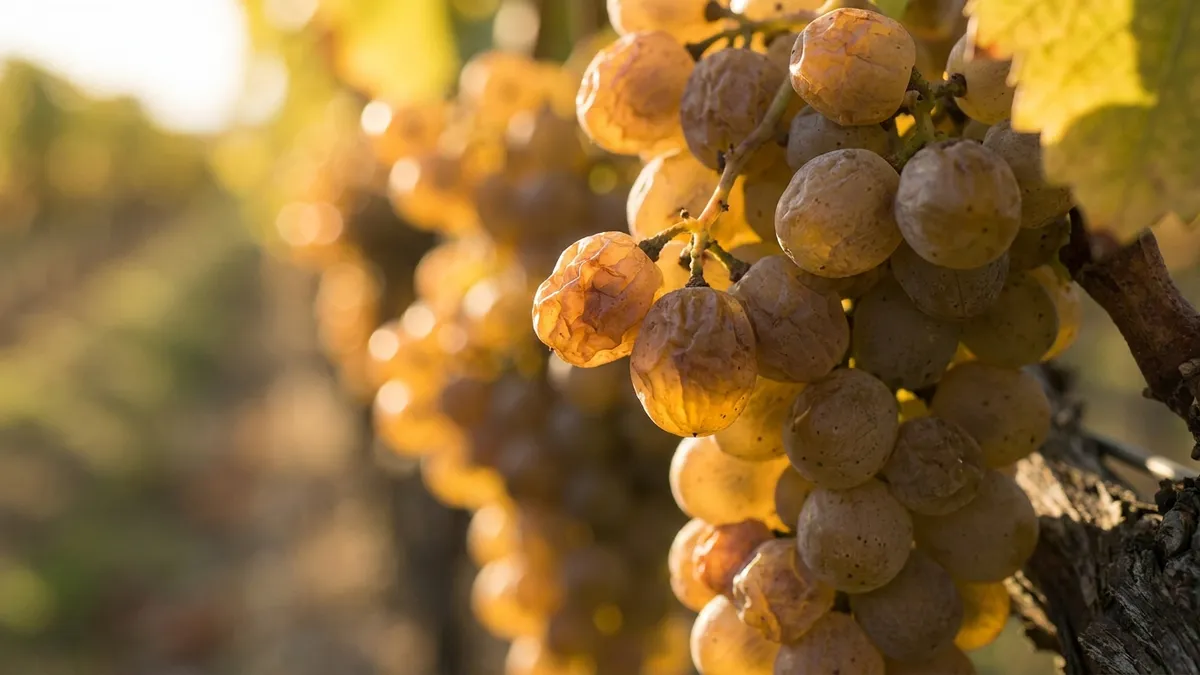
Grapes do not make more sugar once they are ripe; they lose water instead, which concentrates the sugar already there. Left on the vine past normal picking, they slowly dehydrate in sun and wind. They shrink and wrinkle like a raisin in slow motion, while sugar, acid, and flavor compounds stay behind in less juice.
This is the plainest of the three roads to a late harvest wine: no fungus, no frost, only time and dry weather. If a winemaker wants riper flavor and a little extra body without a dessert-sweet style, they pick modestly late. The result is an otherwise table-dry wine, riper and rounder than an earlier pick.
The trade-off is risk. Every extra week on the vine is a week exposed to rain, hail, and rot, so late harvest wines cost more to make than an early, safe pick. Riesling is the grape most associated with this style, because its high acidity keeps the wine from tasting flabby under all that sugar. Our dessert wine guide describes the same dehydration mechanism, with no fungus involved.
What Is Noble Rot, and How Is It Different From Ordinary Late Harvest?
Noble rot is an infection by the fungus Botrytis cinerea that perforates a grape's skin, so water evaporates while sugar and flavor stay inside. It needs warm, humid weather (around 20°C, above 80% humidity) to start, then drier days to keep the grape shrinking instead of rotting. Botrytized grapes can lose up to 60% of their mass, so these wines are labor-intensive and expensive.
Ordinary late harvest wine needs none of that, only sun and time. Noble rot needs a specific organism and a narrow weather cycle. Most wine regions never get that cycle reliably, so Sauternes and Tokaji built their reputations on a microclimate that does.
Botrytis also changes the grape's acids. The fungus consumes much of the tartaric acid and makes gluconic acid and glycerol from the grape's sugars. In Tokaji's Furmint grapes, the ratio of tartaric to malic acid shifts from roughly 2:1 in healthy fruit to 1:3 in botrytized fruit. That acid shift is part of why noble rot wine tastes different from dehydrated late harvest wine.
The table below puts all three paths to a late harvest wine side by side.
| Path | What triggers it | Typical climate need | Example regions/grapes | Typical RS range |
|---|---|---|---|---|
| Extended hang time | Extra weeks or months on the vine, no fungus or frost | Dry, sunny autumn; low disease pressure | Late-picked Riesling (Germany, Alsace) | Moderate; varies widely |
| Botrytis (noble rot) | Botrytis cinerea infection under a humid-then-dry cycle | Morning humidity, afternoon sun (e.g. river mist) | Sauternes (Semillon), Tokaji (Furmint), Beerenauslese/TBA | High to very high |
| Freezing (ice wine) | Grapes freeze naturally on the vine, then get pressed frozen | Sustained hard freeze, roughly -8°C or colder | German/Austrian Eiswein, Canadian icewine | High, similar to Beerenauslese level |
How Is Ice Wine Different From Late Harvest Wine?
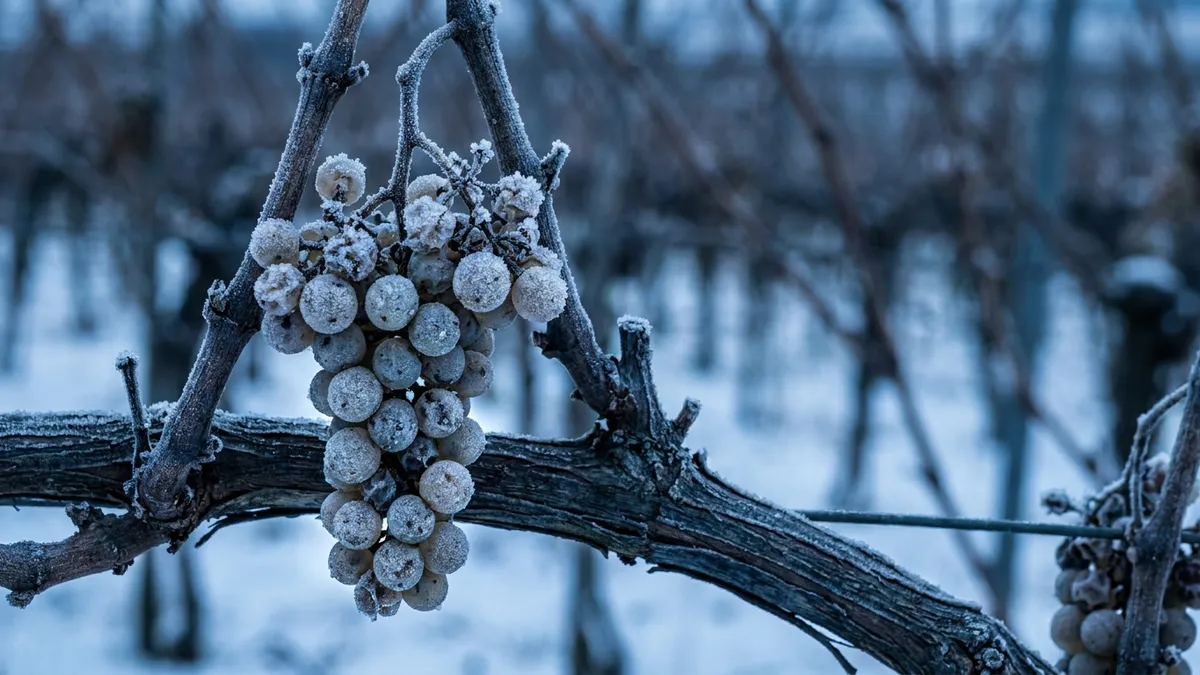
Ice wine is a late harvest wine made from grapes that froze naturally on the vine, usually picked and pressed at roughly -8°C or colder. Freezing turns the grape's water to ice while the dissolved sugar mostly stays liquid. Pressing a frozen cluster yields a small amount of concentrated, unfrozen juice.
As Wine Spectator's Dr. Vinny puts it, all ice wines are also late-harvest wines, but not all late-harvest wines are also ice wines. Germany's rules reflect this. Eiswein must reach the same minimum sugar level as Beerenauslese (a botrytis-driven tier explained below). The classic style avoids botrytis and relies on frost alone.
A hard freeze can arrive any time from November into the new year, so every ice wine vintage is a gamble, and yields are tiny. Pickers harvest the frozen grapes by hand in the middle of the night, when temperatures are lowest. That scarcity and labor explain most of ice wine's premium price. The ice wine and Eiswein guide covers how frost-driven wines are made and served.
Which Grapes and Regions Make the Classic Late Harvest Wines?
Riesling, Semillon, and Furmint anchor the three most-cited late harvest traditions. Each pairs one grape with one climate: Riesling in Germany, Semillon in Sauternes, Furmint in Tokaji.
- Germany: Riesling dominates, prized for acidity that keeps late harvest wines from tasting cloying under heavy sugar.
- Sauternes (France): A blend of Semillon (the backbone, prone to botrytis), Sauvignon Blanc (adds lift and acidity), and a small amount of Muscadelle (perfume). Fermentation here can take up to a year in barrel under the sugar load.
- Tokaji (Hungary): Furmint is the primary grape, often blended with Harslevelu and other local varieties, made in this style since at least the 1600s.
Sauternes owes its noble rot to geography. The cool Ciron river meets the warmer Garonne nearby, and the morning mist burns off under the afternoon sun almost every autumn day. That fog-then-sun cycle is the humid-then-dry pattern botrytis needs, so Sauternes gets noble rot in most vintages while most other regions do not.
Botrytis-driven late harvest wines also come from Beerenauslese and Trockenbeerenauslese in Germany and Austria, Coteaux du Layon in France's Loire Valley, Ausbruch in Austria, and Grasa de Cotnari in Romania. The Riesling wine guide covers Riesling from bone dry to lusciously sweet, and German wine regions maps where these late harvest styles grow.
How Sweet Is Late Harvest Wine, Really?
The country on the label sets the answer, and only some countries use hard numbers. Germany measures sugar in Oechsle (a scale based on grape-must density) and sets a minimum for each tier and region. Tokaji sets a legal minimum in grams of residual sugar per liter. Sauternes sets a high must-sugar minimum but only a modest residual-sugar floor.
Germany: a minimum for every tier
Germany's Prädikat system stacks late harvest tiers by ripeness at picking, each requiring a higher minimum Oechsle reading:
- Spätlese ("late harvest"): traditionally picked at least 7 days after the normal harvest; minimum roughly 76°Oechsle in the Mosel, up to 85°Oechsle in the Rheingau.
- Auslese: hand-selected, very ripe bunches, sometimes with some noble rot character; minimum roughly 83°Oechsle (Mosel) to 95°Oechsle (Rheingau).
- Beerenauslese: individually selected overripe berries, often botrytized; minimum roughly 110°Oechsle (Mosel) to 125°Oechsle (Rheingau).
- Trockenbeerenauslese: shriveled, usually botrytized berries; minimum 150°Oechsle across regions, the highest tier.
- Eiswein: frozen grapes, matching the Beerenauslese must-weight minimum, but made without relying on botrytis.
Tokaji: grams of sugar per liter
Tokaji's rule changed in 2013. Every Tokaji Aszú wine must now contain at least 120 grams of residual sugar per liter. Only wines at 150 g/L or more can carry the top 6 puttonyos label. The older pre-2013 scale ran puttonyos 3 through 6 from roughly 60 to 150 g/L, and it is no longer the legal standard. Aszú wines must also age at least 18 months in barrel under current rules.
Sauternes: sugar in the grapes
Sauternes regulates the grapes more than the finished sweetness. The appellation's rules require hand-picked, nobly rotten grapes with at least 221 grams of sugar per liter of must. They also require a natural potential alcohol of at least 15%, at least 12% actual alcohol in the finished wine, and yields capped at 25 hectoliters per hectare. The residual-sugar floor is 45 g/L, well below what most Sauternes carries, so the must-sugar rule sets the style.
California: a convention without a law
California's "Late Harvest / Select Late Harvest / Special Select Late Harvest" tiers are commonly given as 22, 26, and 30 degrees Brix minimums. Many winery websites repeat them, yet no primary regulatory source setting those numbers as law could be located. Treat 22/26/30 as industry convention, not federal law. The relevant U.S. federal rule is a 1982 TTB ruling still published today. It bars wines made from concentrate, or from sweetened or fortified wine, from using terms like "Late Harvest" on the label. It sets no Brix threshold.
Is Late Harvest Wine Higher in Alcohol Than Regular Wine?
Not necessarily. More sugar in the grape does not automatically mean more alcohol in the glass, because yeast has a limit. As alcohol climbs past roughly 14 to 15%, the osmotic pressure of a sugar-heavy must makes it ever harder for yeast to work. Fermentation often stalls on its own, or the winemaker stops it, with plenty of sugar unconverted.
Sauternes shows this clearly. It must reach at least 12% actual alcohol, and typical bottles land around 14%, close to a full-bodied dry red. Its residual sugar is commonly cited at 8 to 12% by weight, and some bottlings run considerably higher. The sweetness in a late harvest wine is mostly leftover, unfermented sugar.
Sugar, acid, and alcohol all act as preservatives, so these wines age well. A great Sauternes can hold in bottle for 30 years or more and typically peaks around a decade after the vintage. The wine residual sugar and tasting guide shows how sugar, acid, and alcohol balance on the palate. The wine sweetness scale gives words for how sweet a given bottle tastes.
How Should You Serve and Pair Late Harvest Wine?
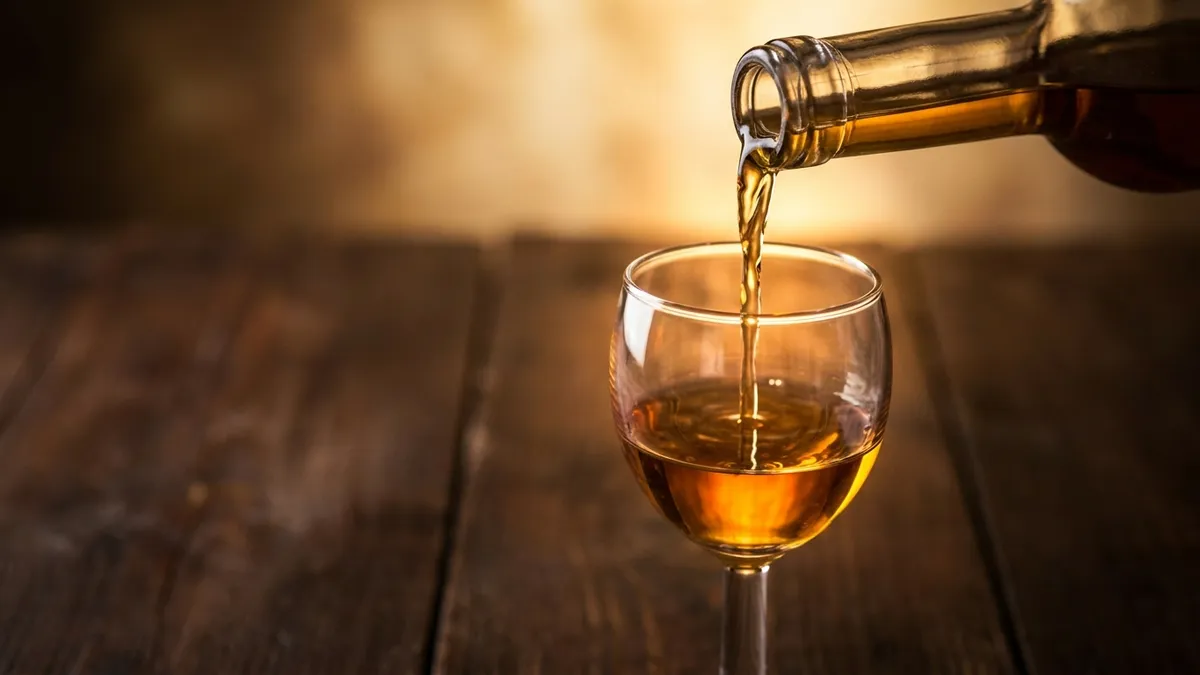
Serve most late harvest wines at 8 to 12°C, in a smaller glass than table wine. If the wine is a lighter, fresher style like late-picked Riesling, serve it at the cool end. If it is one of the richest, most viscous botrytis wines, serve it slightly warmer, because it can taste flat when too cold.
Pour 60 to 90 ml, the standard dessert wine measure, for the intensity and for the cost per bottle in many of these categories. If the wine is a rich noble rot style (Sauternes, Tokaji, Beerenauslese), serve it with blue cheese, foie gras, or a simple fruit tart, where its sweetness and acidity balance salt or fat. If it is a lighter late harvest Riesling, serve it with fruit-based desserts, spiced dishes, or on its own.
Tasting dessert wines properly gives a step-by-step method for sweet, concentrated wines, and the wine serving temperature chart lists serving temperatures for every wine style.
Common Mistakes People Make About Late Harvest Wine
The biggest mix-up is treating "late harvest," "noble rot," and "ice wine" as interchangeable. They are three mechanisms with three climate needs, and only some late harvest wines involve botrytis or frost. The second is assuming late harvest always means syrupy sweet, when many producers pick modestly late for texture and ripeness.
The third is assuming more sweetness means more alcohol; a stalled fermentation leaves the sugar behind. The fourth is quoting California's 22/26/30 Brix tiers as federal law, when no primary regulatory source for them could be located.
For the wider category, visit the wine styles hub. For sweet styles made without extra hang time, see the dessert wine guide.
Sommy's Wine 101 and French regional courses build the tasting words you need here: sweetness, acidity, body. Explore the course library at sommy.wine, then let the AI-guided tasting mode walk you through a real glass. Pour a late-picked Riesling next to a Sauternes or Tokaji tonight, both at 8 to 12°C, and taste for the acidity under the sugar.
Sources
- Wikipedia: Late harvest wine
- Wikipedia: Noble rot
- Wikipedia: German wine classification
- Wikipedia: Puttonyos
- Legifrance: Cahier des charges of the Sauternes AOC
- TTB Ruling 82-4: Use of the terms Late Harvest, Botrytis Infected, and similar
- Wine Spectator (Ask Dr. Vinny): What's the distinction between ice wine and late harvest wine?
Frequently Asked Questions
What is late harvest wine?
Late harvest wine is wine made from grapes deliberately left on the vine past the normal picking date. The extra hang time lets water evaporate from the grape while sugar stays behind, concentrating the juice. The term covers a wide range, from lightly sweet Riesling to intensely sweet Sauternes, and the sweetness can come from simple drying, noble rot, or freezing.
Is late harvest wine always sweet?
Usually, but not always intensely so. Most late harvest wine is noticeably sweet because concentrated sugar does not all convert to alcohol during fermentation. Some producers use modest extra hang time for richer texture and riper fruit flavor in an otherwise dry-leaning wine, so the term spans a wide range rather than one fixed level of sweetness.
What's the difference between late harvest wine and ice wine?
Ice wine is one specific type of late harvest wine. It requires grapes to freeze naturally on the vine, usually at about minus 8 degrees Celsius or colder, so water freezes out and the pressed juice is left concentrated. Every ice wine is a late harvest wine, since the grapes hang for months past normal picking, but most late harvest wines are never frozen.
What's the difference between late harvest wine and noble rot wine?
Late harvest only requires extra hang time; noble rot requires a specific fungus, Botrytis cinerea, to infect the grapes under a narrow combination of humid mornings and dry afternoons. Noble rot wines, such as Sauternes and Tokaji, are always late harvest wines, but plenty of late harvest wines, including most late-picked Riesling, never see botrytis at all.
What grapes are used for late harvest wine?
Riesling is the grape most associated with late harvest wine, thanks to acidity high enough to balance heavy sugar. Sauternes uses Semillon, Sauvignon Blanc, and Muscadelle; Tokaji uses Furmint, along with Harslevelu and other local grapes. Almost any white grape with enough natural acidity can be made in a late harvest style.
Does late harvest wine have more alcohol than regular table wine?
Not necessarily. Late harvest musts carry so much sugar that yeast often struggles once alcohol reaches roughly 14 to 15 percent, so fermentation stalls with sugar left unconverted rather than pushing alcohol higher. Sauternes, for example, typically finishes around 14 percent alcohol, similar to a robust dry red, despite its heavy sweetness.
How should you serve late harvest wine?
Serve most late harvest wines chilled, around 8 to 12 degrees Celsius, in a smaller glass and a smaller pour than table wine, since the concentrated sweetness and flavor go a long way. Pair richer styles with blue cheese, fruit tarts, or nuts, and lighter late harvest Riesling with fruit-based desserts or spiced dishes.
What is noble rot and is it a flaw?
Noble rot is the favorable form of the fungus Botrytis cinerea, which perforates a grape's skin so water evaporates while sugar and flavor concentrate. Under wetter or less cyclical conditions, the same fungus causes destructive gray rot instead. Noble rot is not automatically desirable; it is a narrow, weather-dependent outcome of an otherwise damaging organism.
Sommy Team
LinkedInFounder & Wine Educator
The Sommy Team is building the world's most approachable wine education app, helping beginners develop real tasting skills through structured courses and AI-guided practice.