Wine with Oysters: Why Muscadet, Chablis and Champagne Work

By the Sommy Team — AI-assisted, human-edited.
Updated Sep 25, 2026
Contents (10)
- Wine with Oysters, in One Paragraph
- Why Does High-Acid Wine Work with Oysters?
- Which Wine Should You Pick for Each Oyster Plate?
- Why Is Muscadet the Classic Oyster Wine?
- Chablis or Sancerre: Which Works Better with Oysters?
- Which Champagne Goes Best with Oysters?
- Do Briny and Creamy Oysters Need Different Wines?
- What Wine Goes with Cooked Oysters?
- Can You Drink Red Wine with Oysters?
- How Do You Serve Wine at an Oyster Platter?
TL;DR
The best wine with oysters is dry, high in acidity, and free of oak and tannin. Acid tames brine the way lemon does, while tannin can taste metallic against seafood. Muscadet sur lie, unoaked Chablis, Sancerre and Brut or Extra Brut Champagne all work; sweet Champagne, buttery Chardonnay and tannic reds do not.
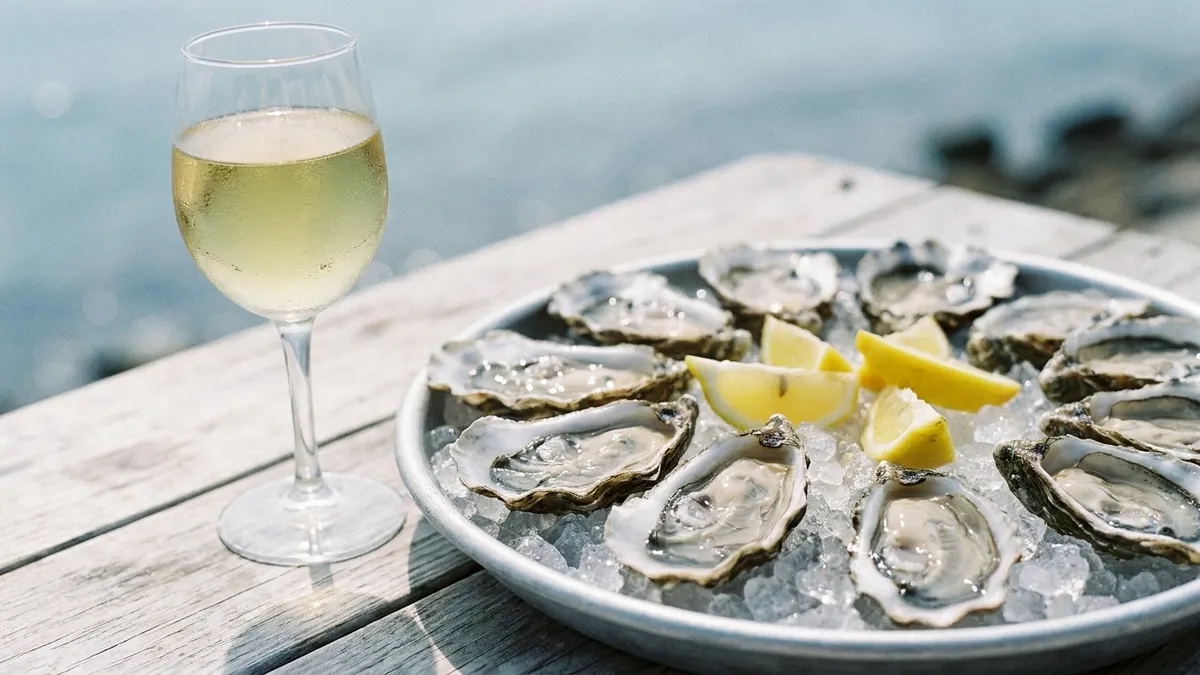
Oysters want a dry white or sparkling wine with high acidity, no oak and no tannin. Acid tames the brine the way a squeeze of lemon does, and tannin can turn metallic against seafood. Choose your wine with oysters by those two rules: high acid in, tannin out.
Wine with Oysters, in One Paragraph
The best wine with oysters is dry, light and sharp. Muscadet sur lie from the western Loire, near Nantes, is the traditional choice: it rarely tops 12% alcohol and is the local match for shellfish. Unoaked Chablis, which must be 100% Chardonnay, brings green-apple acidity and a flinty edge. Sancerre adds the gooseberry scent of Sauvignon Blanc. Brut Champagne, under 12 grams of sugar per litre, or Extra Brut, under 6, adds bubbles for fried or rich oysters. Skip Demi-sec and Doux Champagne, oaky buttery Chardonnay and tannic reds. Match leaner wines to saltier oysters, and let cooked, buttery oysters take a little more body.
Why Does High-Acid Wine Work with Oysters?
Acidity does to an oyster what a squeeze of lemon does: it makes the brine taste less salty and the flesh taste cleaner. Acidity is the tartness in wine that makes your mouth water. Food-pairing writers call acidity a dominant factor in any match.
A raw oyster is mostly salt water and soft, rich flesh. A sip of high-acid wine after it resets your mouth. The salt fades a little, the sweetness of the flesh comes forward, and the wine itself tastes fruitier because salt softens the edge of acid. That trade runs in both directions, which is why a lean wine that seems sharp on its own tastes rounder at the raw bar.
The second rule is about what to leave out. Tannin is the drying grip on your gums from grape skins, seeds and stems, and it lives mostly in red wine. Seafood oils can make tannic wine taste metallic, like sucking a coin.
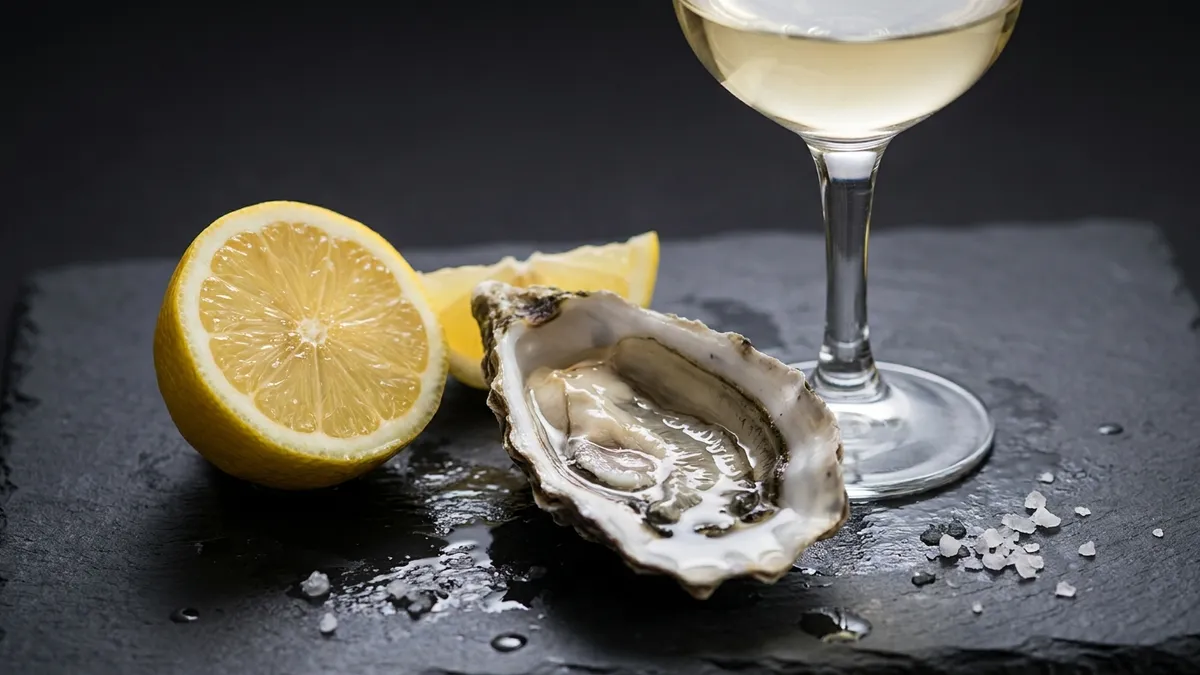
Oak is the third thing to keep low. Barrels add vanilla, toast and a creamy texture, which cover the fresh sea taste you came for. For the wider picture of how acid, salt and fat change a wine, read how food changes wine taste and our explainer on what wine acidity is.
Which Wine Should You Pick for Each Oyster Plate?
Match the wine to what is on the half shell: the saltier and plainer the oyster, the leaner and drier the wine. If the oysters are raw and served with nothing but lemon, pick the leanest wine in the table below. If they come with shallot vinegar, butter or batter, move down the list.
| Wine | Grape and place | Tastes like | Pick it when |
|---|---|---|---|
| Muscadet sur lie | Melon de Bourgogne, western Loire | Lemon, sea spray, a faint bready edge | Plain raw oysters with lemon, especially very salty ones |
| Picpoul de Pinet | Picpoul, Languedoc coast | Lemon, lime, a salty finish | A big platter on a budget |
| Chablis (unoaked) | Chardonnay, northern Burgundy | Green apple, flint, lemon | Creamier raw oysters, or oysters with a squeeze of lemon |
| Sancerre | Sauvignon Blanc, central Loire | Gooseberry, peach, flint | Oysters with mignonette, herbs or shallot vinegar |
| Brut or Extra Brut Champagne | Chardonnay, Pinot Noir, Pinot Meunier | Lemon, green apple, fresh bread | Fried oysters, a celebration platter, mixed raw and cooked |
| Chablis Premier Cru | Chardonnay, northern Burgundy | Riper apple, flint, more weight | Baked oysters with butter or cheese |
Every row shares the same spine: dry, high in acidity, little or no oak. The differences are in weight and scent. Muscadet and Picpoul are the lightest, as our Picpoul de Pinet guide explains. Chablis Premier Cru is the fullest. For the rest of the fish counter, see our guide to wine with seafood.
Why Is Muscadet the Classic Oyster Wine?
Muscadet grows in the Pays Nantais, near Nantes, where Muscadet with local oysters is the region's classic pairing. It is made at the western end of the Loire Valley from Melon de Bourgogne, a white grape the locals call simply "melon". Its rules cap Muscadet made with added sugar at 12% alcohol, which keeps it light.
The grape arrived by accident. After the deep freeze of 1709 killed most of the red vines near Nantes, growers replanted with the hardier Melon de Bourgogne. The grape itself came from Burgundy, where its destruction was ordered in the early 18th century. Genetically it is a cross of Pinot Blanc and Gouais Blanc.
The label word that matters most is sur lie. Lees are the spent yeast cells left after fermentation, and they give wine a bread-like note. A Muscadet sur lie must spend at least a full winter on its lees. It cannot be bottled before March of the year after the harvest, and it goes into bottle straight off its lees. The result is a little more texture and a faint yeasty edge, which rounds out a wine that would otherwise be very lean.
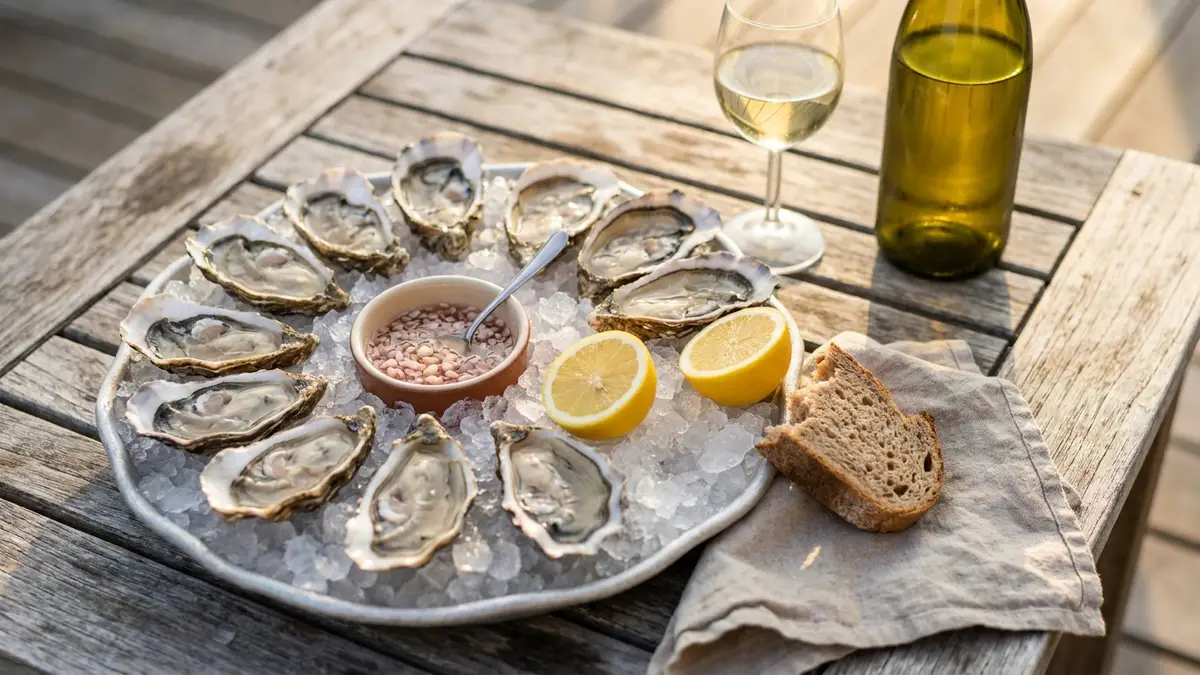
The appellation (a protected place name) on the label also tells you where it comes from. Muscadet-Sèvre et Maine, established in 1936, makes about 80% of all Muscadet, so it is the name you will see most often. If a bottle says "sur lie", expect the fuller, bread-tinged style; if it says nothing, expect a sharper, thinner wine that still works with plain oysters. In the United States, federal law bars American wineries from using the name Muscadet, so a domestic version will say "Melon" or "Melon de Bourgogne". The full grape story is in our Melon de Bourgogne and Muscadet guide.
Chablis or Sancerre: Which Works Better with Oysters?
Both work; pick Chablis for plain raw oysters and Sancerre when the oysters come with shallot vinegar or herbs. Chablis is made only from Chardonnay and is prized for sharp, green-apple acidity. Sancerre, from the central Loire, is Sauvignon Blanc with naturally high acidity and a stronger scent.
Chablis sits about 16 kilometres east of Auxerre, in the cool northern tip of Burgundy. Its Grand Cru and Premier Cru vineyards grow on Kimmeridgian soil, a limestone rich in fossil shells that is credited with giving the wines a flinty, gunflint smell. Most Chablis sees little or no new oak, which is why it tastes so different from warm-climate Chardonnay. The tiers also set rising minimum ripeness, up to 10.5% potential alcohol for Premier Cru and 11% for Grand Cru. Higher tiers are riper and fuller. Our Chablis wine guide walks through all four levels.
Sancerre smells louder. The critic Tom Stevenson describes it as "bone dry, highly aromatic with intense flavors of peaches and gooseberries". Wines from flint soils also show that gunflint smell. The herb and gooseberry scent picks up the chopped shallot and vinegar in a mignonette, the classic French oyster dressing.
If you are eating oysters with only lemon, choose Chablis; if there is mignonette, parsley or chives on the plate, choose Sancerre. Our Sauvignon Blanc guide covers other Sauvignon regions that follow the same logic.
Which Champagne Goes Best with Oysters?
Pick Brut or Extra Brut, two of the driest levels; the sweeter the Champagne, the worse it goes with brine. Oysters with Champagne, huîtres au champagne, is a classic of French cooking, and the bubbles add a scrubbing effect on top of the acidity.
The sweetness is set by the dosage, a small dose of sugar added just before the cork goes in. The label word tells you how much:
- Extra Brut: under 6 grams of sugar per litre. The leanest, best with salty raw oysters.
- Brut: under 12 grams per litre. The everyday choice, dry enough for any oyster.
- Extra Dry: 12 to 17 grams per litre. Slightly sweet despite the name.
- Sec: 17 to 32 grams per litre. Noticeably sweet.
- Demi-sec and Doux: 32 to 50 grams, and over 50 grams per litre. Dessert wines.
If the label says Demi-sec or Doux, save it for dessert. Price does not change this rule: a pricier bottle at the wrong sweetness still clashes with salt.
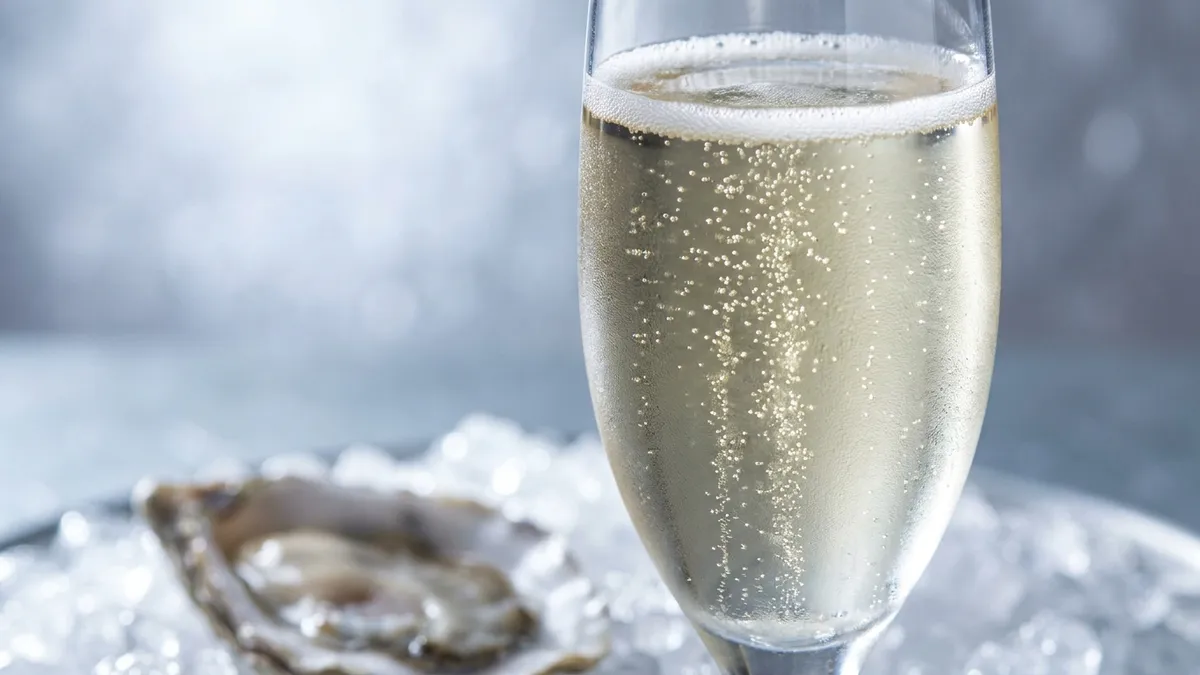
Champagne is made almost entirely from Chardonnay, Pinot Noir and Pinot Meunier. A Blanc de Blancs, made from Chardonnay only, tends to be the leanest and suits raw oysters best. If Champagne is beyond the budget, a Brut Crémant or Cava made the same way works on the same logic. Our comparison of Champagne vs Prosecco vs Cava explains the differences. For the bubbles themselves, read how to taste sparkling wine.
Do Briny and Creamy Oysters Need Different Wines?
Yes: the saltier the oyster, the leaner the wine; the creamier or fruitier the oyster, the more body the wine can carry. Raw oysters vary widely by species and water. Their flavours are described as salty, briny, buttery, metallic or fruity.
Taste the first oyster before you pour. If it is sharply salty and tastes of the sea, reach for the leanest wines in the table: Muscadet, Picpoul or Extra Brut. If it is sweet, creamy or tastes of cucumber and melon, a slightly fuller wine stops the oyster from tasting flat. A Chablis or a Brut Champagne with a little more weight fits there.
A mixed platter needs one wine that covers both ends. Brut Champagne or a Chablis sits in the middle and handles salty and creamy oysters well enough.
What Wine Goes with Cooked Oysters?
Cooking adds fat, so the wine can carry more body, but it still needs high acidity to cut through butter, cream or batter. Oysters are eaten raw, smoked, baked, fried, roasted, stewed, steamed and broiled, and each method changes the match.
- Fried oysters: Brut sparkling wine. The bubbles and acid scrub batter and oil from your mouth.
- Baked with butter, herbs or cheese (such as Oysters Rockefeller): Chablis Premier Cru or another unoaked Chardonnay with some weight.
- Grilled or roasted in the shell: Sancerre or Sauvignon Blanc, which pick up the smoky, herby notes.
- Stewed in cream: a fuller Chablis or a sur lie Muscadet with its bready texture.
- Smoked: Brut Champagne or a dry rosé.
If the dish has butter or cheese, move one step fuller on the table; if it is fried, stay with bubbles. A lightly oaked white (one aged in barrels, which add vanilla and toast) can survive a creamy stew, but keep heavily oaked, buttery Chardonnay off the table. Our guide to what "oaked" means shows how to spot it on a label.
Can You Drink Red Wine with Oysters?
Rarely, because tannin and seafood oils together can taste metallic. Most reds carry enough tannin to clash with oysters, and raw oysters, with nothing on them to soften the effect, make the clash obvious. The problem is tannin, not colour. A few very light reds avoid it.
If you must pour red, keep it to cooked oysters, and choose a light, low-tannin red served cool, such as a young Pinot Noir. A dry rosé is the safer bridge: Sancerre also makes rosé from Pinot Noir, and it keeps the region's high acidity. Our guide to what tannins are explains how to feel the difference in your mouth.
The wines to avoid with oysters fall into four groups:
- Tannic reds: Cabernet Sauvignon, Syrah, Nebbiolo.
- Oaky, buttery Chardonnay: low acid and heavy toast.
- Sweet or off-dry wines: Demi-sec Champagne, sweet Riesling, most Moscato.
- High-alcohol whites: anything around 14% or more, which burns next to salt.
How Do You Serve Wine at an Oyster Platter?
Serve the wine cold, pour small glasses, and taste in the order sip, oyster, sip. Keep the bottle in an ice bucket so it stays sharp through the platter. Our wine serving temperature chart gives the exact range for light whites and sparkling wine.
Start with raw oysters and the leanest wine, then move to cooked oysters and fuller wines. A standard glass holds more than you need, so pour half portions and keep two bottles open to compare. For more pairing rules across a full meal, see our food pairing hub.
Sommy's bite-sized courses and AI-guided tasting mode at sommy.wine help you name what changes in the glass. For tonight: buy half a dozen oysters and one bottle of Muscadet sur lie, then taste them sip, oyster, sip.
Sources
Frequently Asked Questions
What wine goes best with raw oysters?
A dry white or sparkling wine with high acidity and no oak. Muscadet sur lie from the western Loire is the traditional choice, with unoaked Chablis, Sancerre and Brut or Extra Brut Champagne close behind. The acidity works on the oyster like a squeeze of lemon, making the brine taste less salty and the flesh taste cleaner.
Is Chardonnay good with oysters?
Unoaked Chardonnay is; oaked, buttery Chardonnay is not. Unoaked Chardonnay from a cool place, such as Chablis, is one of the classic oyster wines, with sharp green-apple acidity and a flinty edge. Oaked, buttery Chardonnay from a warm climate is a poor match with raw oysters, because its lower acidity and toasty flavours sit heavily on the brine. Save fuller Chardonnay for buttery cooked oysters.
Can you drink red wine with oysters?
Rarely. Tannin, the drying grip found in most red wines, clashes with seafood oils and can make the wine taste metallic. The problem is tannin rather than colour, so a very light, low-tannin red served chilled can get by with cooked oysters. A dry rosé, such as Sancerre rosé made from Pinot Noir, is the safer choice.
What Champagne is best with oysters?
Brut or Extra Brut. Brut Champagne has less than 12 grams of sugar per litre and Extra Brut less than 6, so both stay dry enough to meet the salt of an oyster. Avoid Demi-sec and Doux, which carry 32 to 50 grams and over 50 grams per litre. That sugar clashes with brine and belongs with dessert.
Why does Muscadet go so well with oysters?
Muscadet is light, dry and high in acidity, and it rarely tops 12% alcohol, so it never feels heavy next to a raw oyster. It is made near Nantes, close to the Atlantic, where Muscadet with local oysters is the region's classic pairing. Sur lie bottlings add a faint bready note from resting on their yeast over winter.
What wine goes with Oysters Rockefeller or other cooked oysters?
Cooked oysters carry butter, cheese, breadcrumbs or batter, so the wine can have more body than it would with raw ones while keeping high acidity. A Chablis Premier Cru or an unoaked Chardonnay handles buttery baked dishes like Oysters Rockefeller. A Brut sparkling wine is the best choice for fried oysters, because its acidity and bubbles scrub the fat from your palate.
Sommy Team
LinkedInFounder & Wine Educator
The Sommy Team is building the world's most approachable wine education app, helping beginners develop real tasting skills through structured courses and AI-guided practice.