Chablis Wine Guide: Lean, Mineral Chardonnay at Its Purest

By the Sommy Team — AI-assisted, human-edited.
Updated Jul 24, 2026
Contents (10)
- What Is Chablis Wine?
- Where Chablis Grows: The Coolest Corner of Burgundy
- The Kimmeridgian Secret: Why Chablis Tastes of Stone
- The Four Levels of Chablis: A Quality Ladder
- The Seven Grand Crus of Chablis
- What Does Chablis Taste Like?
- Chablis vs Oaked Chardonnay: The Great Divide
- How to Serve Chablis
- Chablis and Food: Beyond Oysters
- How a Beginner Should Start With Chablis
TL;DR
Chablis is a dry white wine made only from Chardonnay in the cool far north of Burgundy. Its ancient Kimmeridgian oyster-shell soil gives a lean, high-acid, mineral style, usually unoaked. This Chablis wine guide covers its four quality tiers, taste, and how a beginner should start.
What Is Chablis Wine?
This Chablis wine guide begins with one clean fact: Chablis is a dry white wine made entirely from Chardonnay, grown in the cool far north of Burgundy in France. What sets it apart from Chardonnay elsewhere is the cold climate and the fossil-rich soil beneath the vines. Chablis is typically unoaked — made without the vanilla and toast flavors that new oak barrels add — so nothing stands between you and the grape. The house style is lean, bright, and high in acidity (the tart, mouth-watering freshness that makes a wine feel alive), with flavors of lemon, green apple, white flowers, and a striking wet-stone or oyster-shell minerality. There are four quality tiers, from everyday Petit Chablis up to the rare Grand Cru grown on a single famous hillside.
Where Chablis Grows: The Coolest Corner of Burgundy
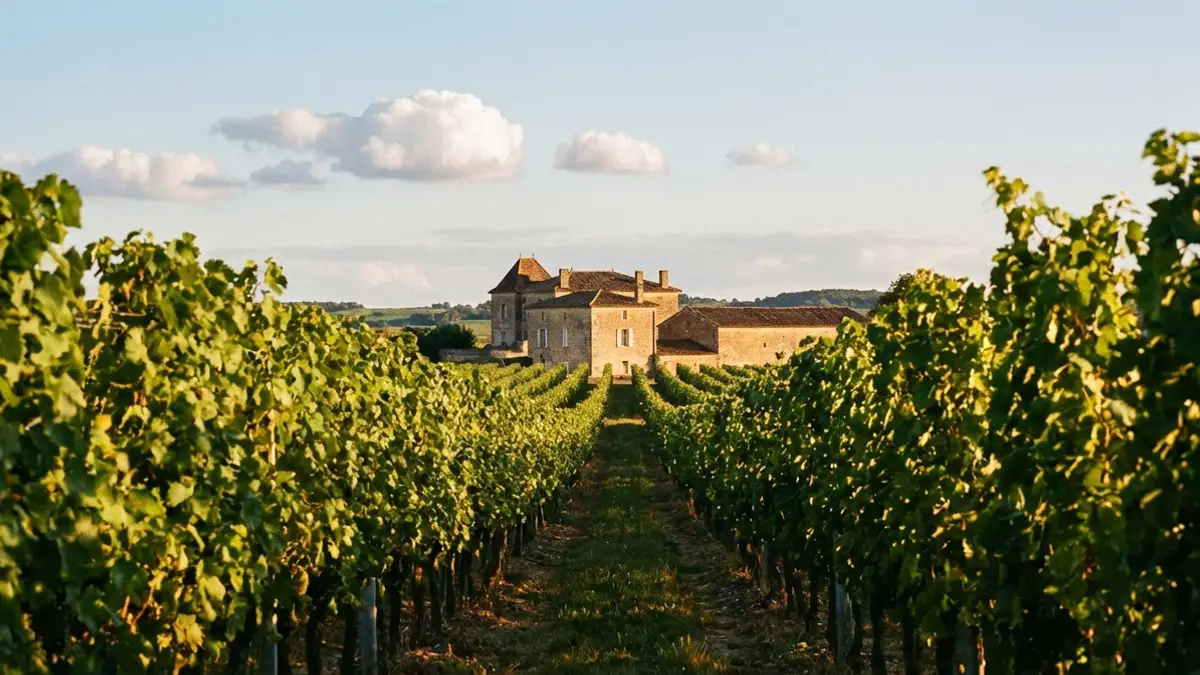
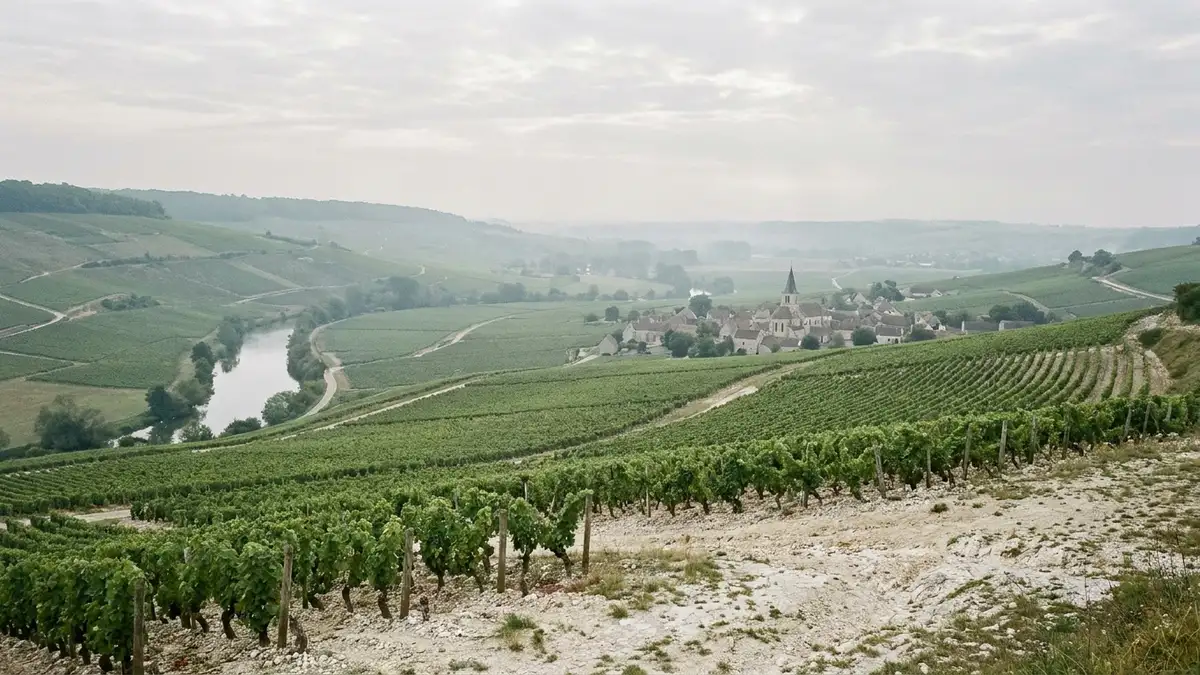
Chablis sits around the small town of the same name, on the Serein river, roughly two hours southeast of Paris. Geographically it is an outlier — closer to the vineyards of Champagne than to the rest of Burgundy's famous Côte d'Or further south. That distance matters, because it puts Chablis in one of France's coolest wine-growing zones.
This is a continental climate: cold winters, warm-but-short summers, and a real risk of spring frost. When frost strikes after the buds have opened, it can wipe out a chunk of the crop overnight. Growers fight back with aspersion — spraying the vines with water so a protective sheath of ice forms around each bud — and with rows of candles and heaters lit among the vines on the coldest nights.
The cool climate is the whole reason Chablis tastes the way it does. Grapes ripen slowly and hold onto their natural acidity, so the wines stay taut, fresh, and lower in alcohol than Chardonnay from warmer places. For the wider picture of how Chablis fits into its home region, our Burgundy wine guide maps the whole ladder from Chablis in the north down to the Mâconnais.
The Kimmeridgian Secret: Why Chablis Tastes of Stone
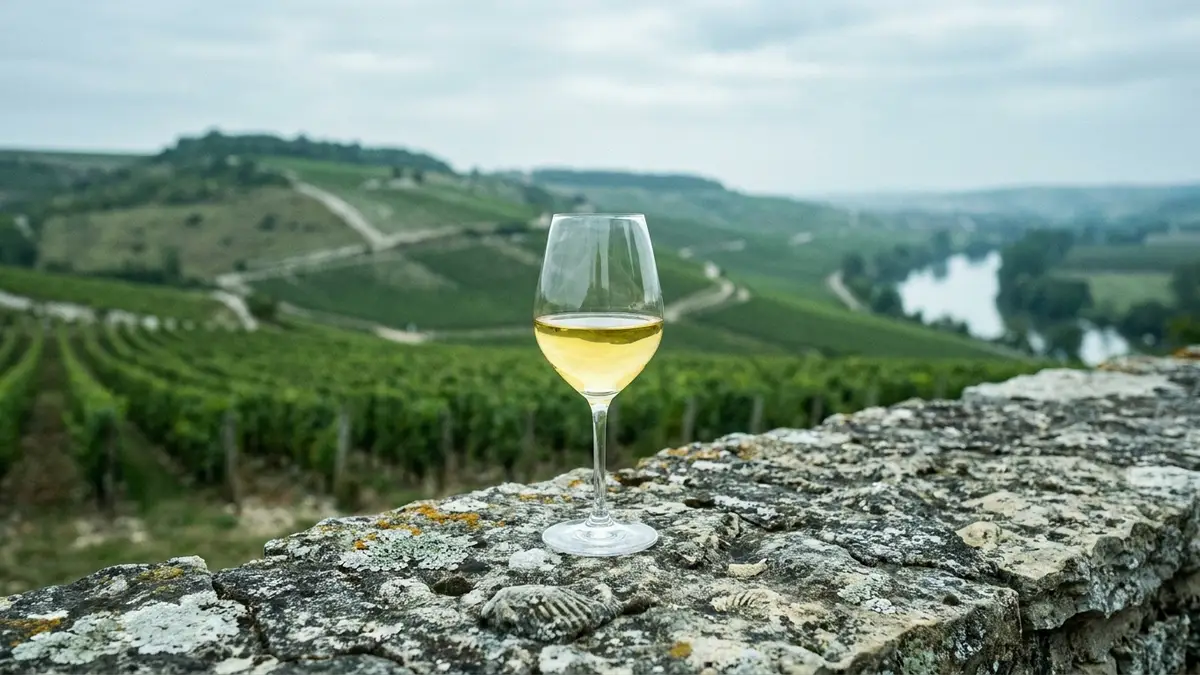
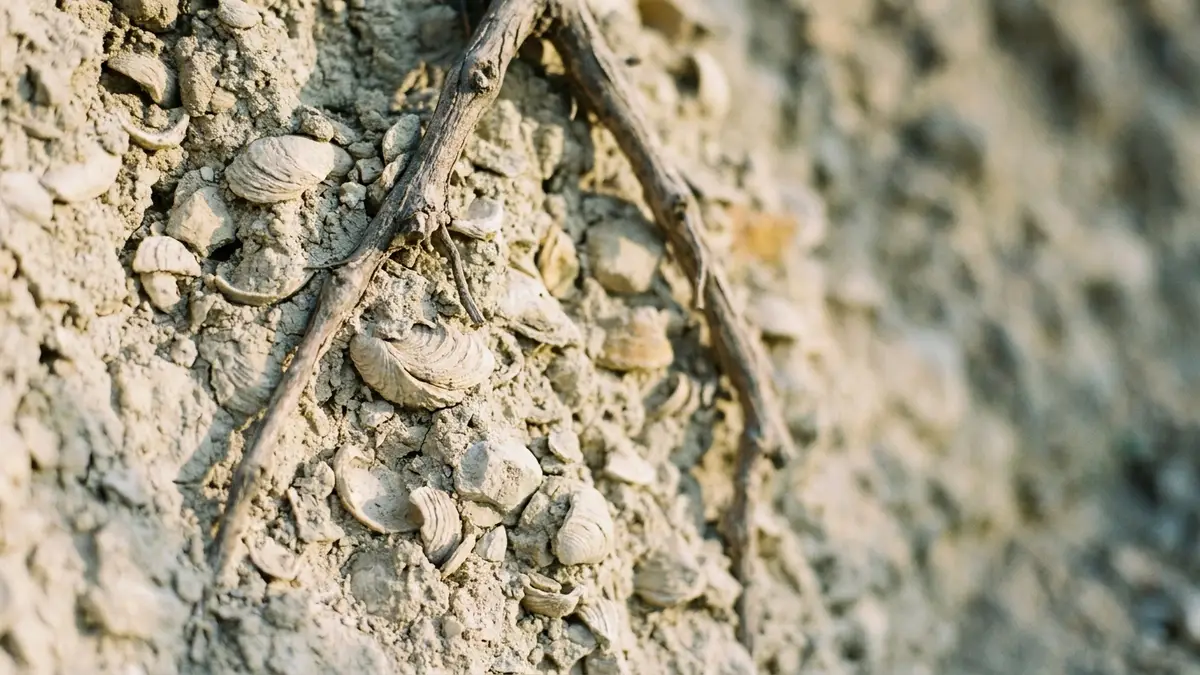
If one idea explains Chablis, it is the soil. The best vineyards grow on Kimmeridgian marl — a mix of limestone and clay packed with tiny fossilized oyster shells, laid down when the whole area lay under a warm sea roughly 150 million years ago. The soil is even named after Kimmeridge, a village on the Dorset coast of England where the same geological layer surfaces.
Many drinkers link this fossil-shell bedrock directly to the wine's flinty, saline, almost oyster-shell character — the quality tasters call minerality (aromas and sensations that suggest wet stone, chalk, or the sea rather than fruit). Whether the shells literally flavor the wine is debated among scientists, but the association is central to how Chablis is understood and sold. To go deeper on that sensation, see our explainer on what minerality in wine means.
There is a second soil in the story. Petit Chablis, the entry tier, grows largely on younger Portlandian limestone on the higher, cooler plateau. It tends to make the lightest, most straightforward wines. The Kimmeridgian slopes are reserved for the higher tiers — which is where the idea of terroir, the way a specific place shapes a wine, does its clearest work. Our guide to what terroir is unpacks how soil, slope, and climate combine in a single glass.
The Four Levels of Chablis: A Quality Ladder
Chablis is organized into four appellations, or legally defined quality tiers, set by France's INAO (the national body that governs wine names and boundaries). Reading the tier off the label is the fastest way to know roughly what you are getting. From the ground up:
| Tier | Where it grows | Style | Best for |
|---|---|---|---|
| Petit Chablis | Higher plateau, younger Portlandian limestone | Lightest and simplest; crisp, citrusy, drink young | Aperitif, oysters, everyday value |
| Chablis | Classic slopes around the town; the majority of production | The benchmark: lean, mineral, unoaked, high acid | Learning the style, seafood, weeknight whites |
| Chablis Premier Cru | Named, better-exposed slopes (climats) | More depth, texture, and aging potential; sometimes light oak | Dinners, gifts, tasting the step up in class |
| Chablis Grand Cru | A single celebrated hillside; the rarest tier | Richest and longest-lived; concentrated, often gently oaked | Special occasions and cellaring |
The village-level Chablis appellation is the large majority of what the region makes, according to the Chablis wine board, which is why it is the tier most beginners meet first. Premier Cru wines come from around forty named slopes, or climats, that catch more sun and give more concentrated fruit. If the words "Premier Cru" and "Grand Cru" feel confusing, our guide to what cru means on a wine label explains the whole system.
The Seven Grand Crus of Chablis
At the top sits Chablis Grand Cru — barely one percent of the region's output. Remarkably, it is not scattered across the district but concentrated on a single, roughly 100-hectare southwest-facing slope on the right bank of the Serein, just above the town. That one hillside is divided into only seven named climats:
- Blanchots
- Bougros
- Les Clos — the largest and most celebrated
- Grenouilles
- Preuses
- Valmur
- Vaudésir
A famous eighth name, La Moutonne, is a monopole (a vineyard owned by a single estate) that straddles Vaudésir and Preuses, though it is not an official Grand Cru of its own. Grand Cru Chablis is the region's most powerful and age-worthy expression: more body, more texture, and often a measured amount of oak. These wines can reward five to fifteen years in the cellar, slowly trading their youthful citrus for honey, toasted nuts, and a smoky, struck-match complexity.
What Does Chablis Taste Like?
Young Chablis leads with high acidity and a lean-to-medium body (how heavy or full the wine feels in your mouth). Think of biting into a green apple or squeezing a lemon: the wine is taut, mouth-watering, and refreshing rather than soft or round.
The core flavors are consistent across the tiers:
- Fruit: lemon, grapefruit, green apple, sometimes a hint of white peach in warmer vintages
- Floral: white flowers and a fresh, hay-like note
- Minerality: wet stone, flint, chalk, and a saline, oyster-shell edge
- With age: honey, hazelnut, and a gentle smokiness in the top tiers
Because Chablis is usually unoaked, none of this is masked by vanilla or coconut. It is Chardonnay stripped to its skeleton — which makes it one of the best wines to learn on. To sharpen the vocabulary for that mouth-watering freshness, see our piece on what acidity in wine is, and for the grape itself, our full Chardonnay wine guide covers how it changes from region to region.
Chablis vs Oaked Chardonnay: The Great Divide
The clearest way to understand Chablis is to set it against the Chardonnay most people know — the ripe, golden, buttery style from warm regions like California or Australia. Same grape, opposite results, because climate and winemaking pull in different directions.
| Chablis | Warm-climate oaked Chardonnay | |
|---|---|---|
| Climate | Cool, northern, continental | Warm to hot |
| Oak | Usually none or neutral barrels | Often new oak — vanilla, toast, spice |
| Acidity | High and cutting | Lower and softer |
| Body | Lean to medium | Medium to full, rounder |
| Flavors | Lemon, green apple, wet stone, salinity | Ripe peach, pineapple, butter, vanilla |
| Feel | Taut and refreshing | Rich and creamy |
Neither is better; they are answers to different questions. But tasting them side by side is one of the fastest lessons in how much a place and a barrel can change a single grape. For more on the flavors barrels add, read what oaked wine means, and for the bigger split between traditional and modern regions, our guide to Old World vs New World wine.
How to Serve Chablis
Chablis rewards a little care in the glass, and getting the basics right takes almost no effort.
- Temperature: serve it cool but not ice-cold, around 10–12°C (50–54°F). Too cold and the minerality and fruit go mute; let a young bottle warm slightly and the aromas open up.
- Glass: a standard white-wine glass is perfect. There is no need for anything special.
- Decanting: young village Chablis needs none, but a Premier Cru or Grand Cru can benefit from twenty minutes of air to unwind.
- Aging: drink Petit Chablis and village Chablis within one to four years for their fresh, zesty prime. Premier Cru rewards three to eight years, and Grand Cru can run well beyond a decade.
Our wine serving temperature chart gives the full range if you want to dial in every style you drink.
Chablis and Food: Beyond Oysters
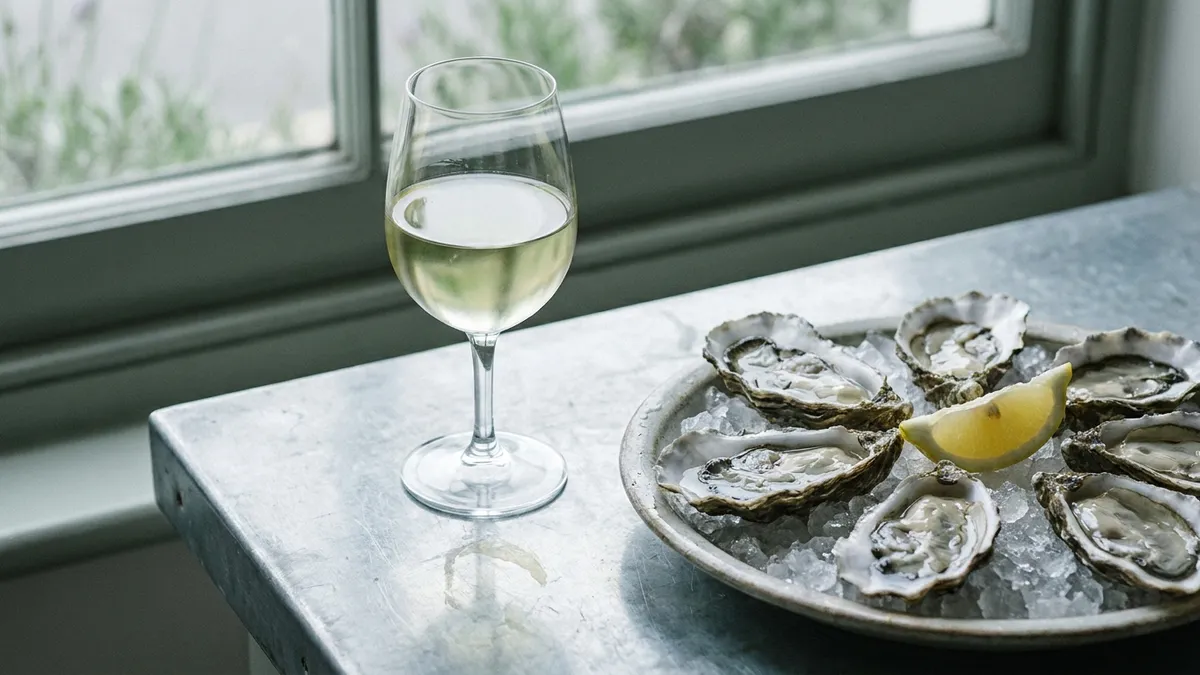
The textbook match is raw oysters, and it is textbook for a reason: the wine's salinity and cutting acidity mirror the briny shellfish, with each making the other taste cleaner. But Chablis is far more versatile than that one pairing suggests.
- Shellfish and sushi: crab, prawns, scallops, and especially sushi and sashimi — the lean acidity cuts fish fat without overwhelming delicate flavors
- Goat cheese: the fresh, tangy chalkiness of a young goat cheese is a natural echo of Chablis minerality
- Roast chicken and creamy fish: richer Premier and Grand Cru wines have the body to handle butter and cream sauces
- Gougères: the local cheese puffs of Burgundy are the classic aperitif snack with a glass of Chablis
The through-line is acidity meeting salt and fat. For the wider logic behind matching crisp whites to the sea, see our guide to pairing wine with seafood.
How a Beginner Should Start With Chablis
You do not need to climb the whole ladder at once. The smartest way in is to taste the tiers and the contrasts that make Chablis such a good teacher. A practical order:
- Start with a village Chablis. This is the cleanest possible introduction to unoaked, cool-climate Chardonnay — bright, mineral, and unmistakably itself.
- Add a Petit Chablis alongside it. Tasted together, you will feel how the plateau soil gives a lighter, simpler wine than the classic slopes.
- Step up to a Premier Cru. Now look for more texture, depth, and length. This is where the extra concentration of a better site becomes obvious.
- Compare Chablis with an oaked Chardonnay. Open a California or Australian bottle next to your Chablis and taste the divide in acidity, oak, and body directly.
- Build the tasting habit. Note the acidity, the lean body, and the flinty, saline edge every time. Our step-by-step guide to how to taste wine gives you the method to do it well.
Sommy turns those comparisons into short, guided lessons — naming the aromas, scoring the structure, and building the vocabulary to describe what you sense in each glass. You can start practising free at sommy.wine, then bring the method to your next bottle of Chablis.
The reward for learning Chablis is a reference point you will use forever. Once your palate knows this lean, stony, high-acid style, every other Chardonnay makes more sense by comparison — and every mineral white you meet has a benchmark to measure against. The Sommy app is built to make that habit stick, turning each bottle into a guided lesson so the next Chablis you open is a little clearer than the last.
Sources
Frequently Asked Questions
What kind of wine is Chablis?
Chablis is a dry white wine made entirely from Chardonnay, grown in the cool northern tip of Burgundy in France. Unlike richer, oak-aged Chardonnay from warmer regions, Chablis is typically unoaked or aged in neutral barrels. The result is lean and high in acidity, with citrus, green apple, white flowers, and a distinctive wet-stone or oyster-shell minerality.
Is Chablis always dry?
Yes. Chablis is always a dry white wine — there is no sweet, red, or rosé version under the name. Its bracing natural acidity can make a young bottle feel almost austere, which is part of its appeal. Any perceived sweetness comes from ripe citrus fruit, not residual sugar. If a label says Chablis, expect a bone-dry, mineral Chardonnay every time.
Is Chablis oaked?
Most Chablis is unoaked or aged in older, neutral barrels that add texture without vanilla or toast flavors, which is why it tastes so pure and mineral. Some Premier Cru and Grand Cru bottles do see a portion of new oak to add roundness and aging potential. As a rule, the higher the tier, the more likely you are to find gentle oak influence.
What are the four levels of Chablis?
Chablis has four quality tiers set by France's INAO. From the ground up they are Petit Chablis, the lightest; Chablis, the classic village wine and the majority of production; Chablis Premier Cru, from better-sited slopes; and Chablis Grand Cru, the rarest, from a single celebrated hillside. Each tier climbs in concentration, complexity, and aging potential.
What does Kimmeridgian soil mean for Chablis?
Kimmeridgian is a type of limestone and marl full of tiny fossilized oyster shells, laid down when the region was a warm sea around 150 million years ago. Chablis Premier Cru and Grand Cru vineyards sit on this soil, and many drinkers link it to the wine's flinty, saline, oyster-shell minerality. Petit Chablis grows mostly on younger Portlandian limestone.
What food pairs with Chablis?
Chablis is the classic partner for raw oysters and shellfish, where its salinity and cutting acidity mirror the briny seafood. It also shines with sushi and sashimi, goat cheese, roast chicken, and creamy fish dishes. Richer Premier Cru and Grand Cru bottles have enough body for lobster, scallops, and even mild soft cheeses. Lean styles keep food fresh rather than weighing it down.
How is Chablis different from other Chardonnay?
Chablis is Chardonnay grown in a cold climate on chalky, fossil-rich soil and usually made without heavy oak. Warmer regions like California or Australia give riper, rounder Chardonnay with tropical fruit and often buttery, vanilla oak notes. Side by side, Chablis is leaner, higher in acidity, and driven by citrus and stone rather than ripe fruit and toast.
Sommy Team
LinkedInFounder & Wine Educator
The Sommy Team is building the world's most approachable wine education app, helping beginners develop real tasting skills through structured courses and AI-guided practice.