Picpoul de Pinet: The Oyster Wine of Southern France

By the Sommy Team — AI-assisted, human-edited.
Updated Jun 17, 2026
Contents (10)
- What Is Picpoul de Pinet Wine?
- What the Name Picpoul Means: The Lip-Stinger Grape
- Picpoul de Pinet Tasting Notes and Flavor Profile
- Where Picpoul Grows: The AOC Picpoul de Pinet
- How Picpoul de Pinet Is Made
- Why Picpoul de Pinet Is the Oyster Wine
- Picpoul de Pinet vs Muscadet vs Albariño
- Picpoul de Pinet and the Wider Languedoc
- How to Buy and Serve Picpoul de Pinet
- Building Your Coastal-White Tasting Skills
TL;DR
Picpoul de Pinet is a crisp, lemon-bright white from France's Languedoc coast near the Étang de Thau lagoon. The Picpoul grape's name means lip-stinger, a nod to its zingy acidity. Expect lemon, lime, white flower, and a saline edge. It is the classic oyster wine and a remarkable value.
What Is Picpoul de Pinet Wine?
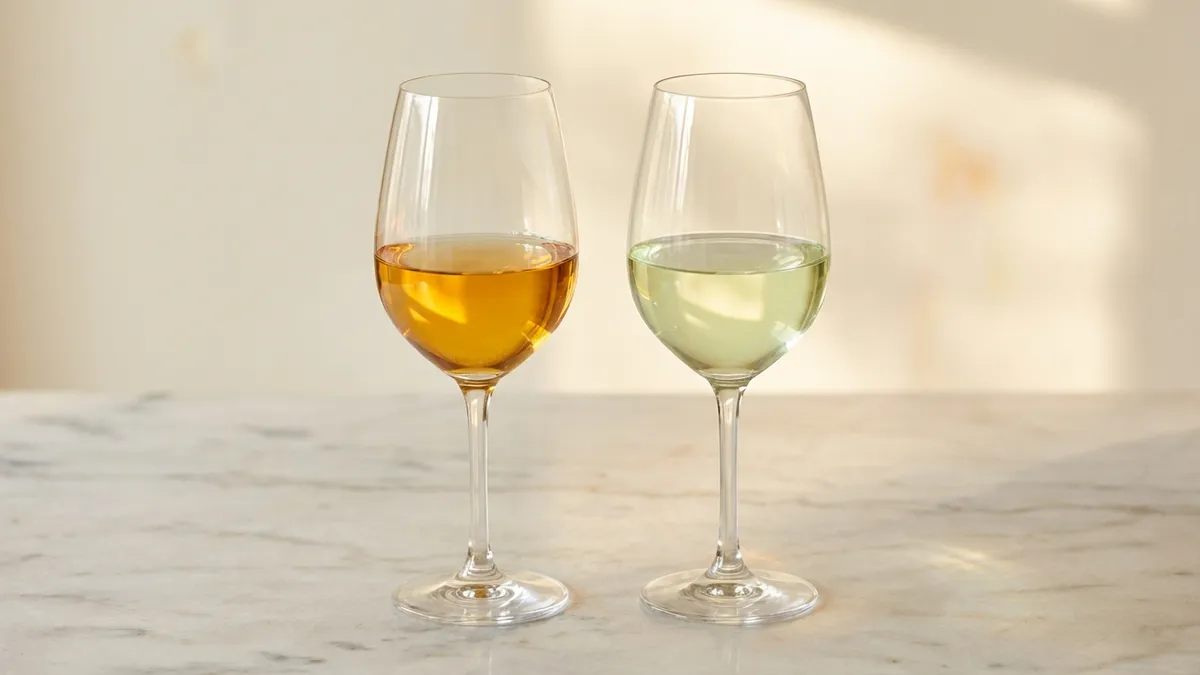
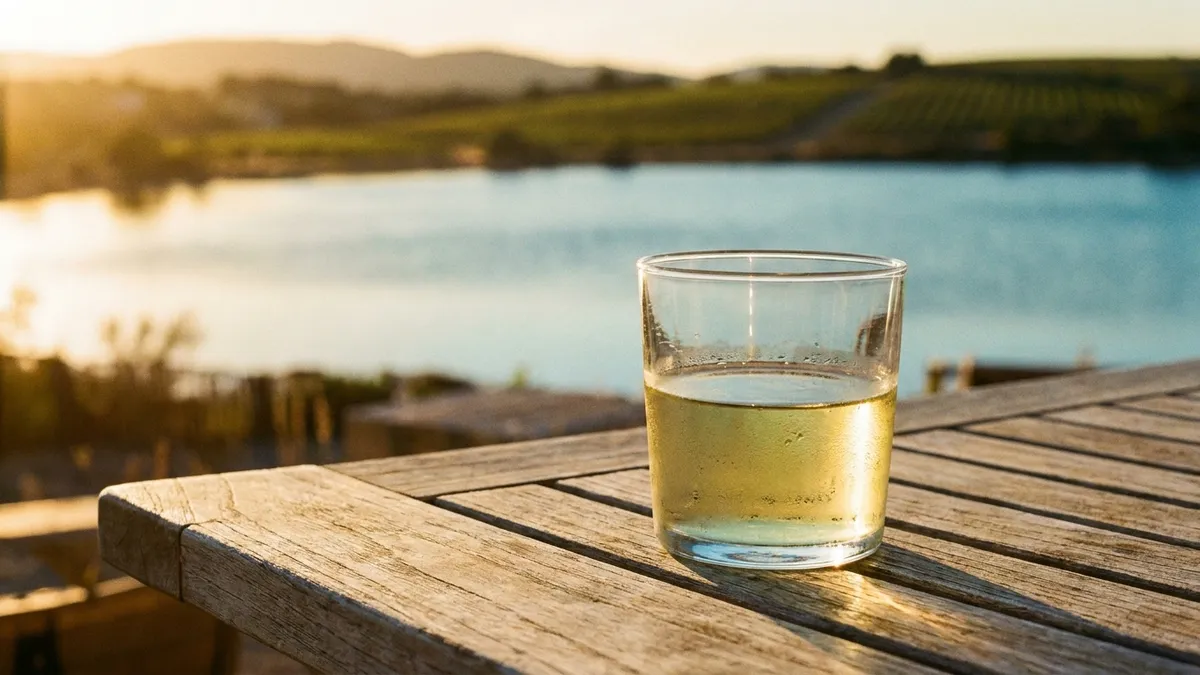
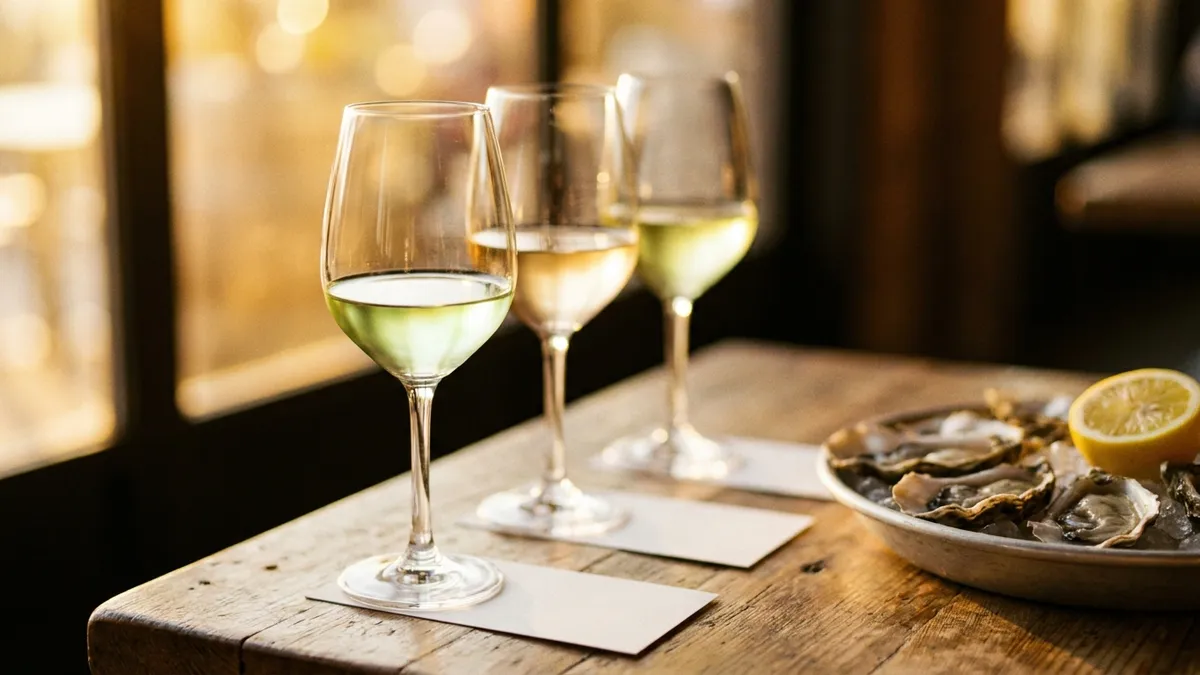
Picpoul de Pinet wine is a crisp, lemon-bright white from the Languedoc coast of southern France, made entirely from the Picpoul grape (also spelled Piquepoul Blanc). It grows around the village of Pinet beside the Étang de Thau, a shallow Mediterranean lagoon famous for its oyster and mussel beds — which is exactly why Picpoul earned its nickname as France's oyster wine. Expect a pale lemon-green color, aromas of fresh lemon, lime, green apple, and white flower, a saline sea-breeze finish, and high, mouth-watering acidity. Most bottles land at 12 to 13 percent alcohol, are bone dry, and cost far less than their quality suggests. Picpoul de Pinet is one of the great everyday seafood whites of the wine world.
What the Name Picpoul Means: The Lip-Stinger Grape
The grape's name tells you almost everything about the wine. Picpoul — from the Occitan language of southern France — translates roughly as "lip-stinger" or "stings the lip," a vivid description of the grape's defining trait: bracing, zingy acidity that makes your mouth water on the first sip.
That acidity is not a flaw to be tamed. It is the whole point. In the warm Mediterranean climate of the Languedoc, where most grapes ripen into soft, low-acid wines, Picpoul holds onto a remarkable freshness. The result is a wine that feels alive in the glass when so many warm-climate whites feel flat.
The white grape behind the AOC is Piquepoul Blanc, the most planted member of a small grape family that also includes pink and black-skinned versions. It is an old variety, documented in the region for centuries, and was historically valued precisely for keeping its acid where other local grapes lost theirs.
If you are still building your sense of how acidity shapes a wine, the high-acid Picpoul is an ideal teacher — the sensation is impossible to miss. The Sommy app walks you through identifying acidity, salinity, and citrus character with side-by-side guided tastings, the exact skills that bring a wine like this into focus.
Picpoul de Pinet Tasting Notes and Flavor Profile
Picpoul is a study in freshness. There is no oak, no buttery richness, no tropical heaviness — just clean citrus, crisp fruit, and a saline lift that pulls you back for another sip. Once you learn its lemon-lime-and-salt signature, it is easy to recognize.
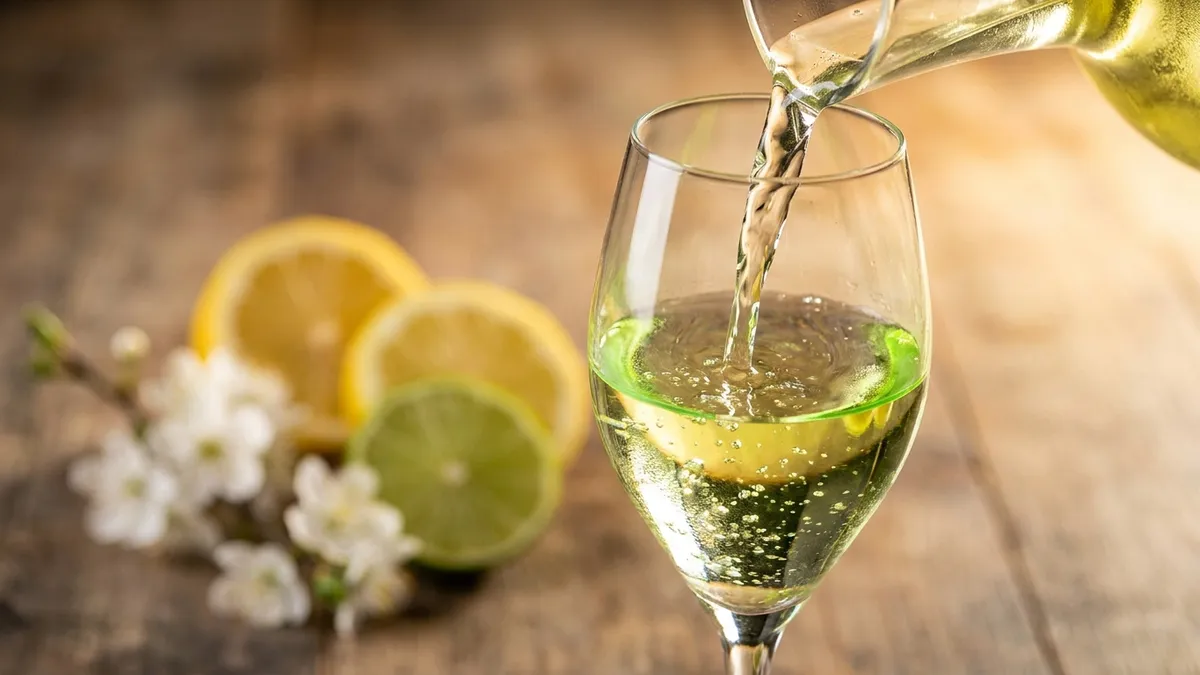
Typical aromas: fresh lemon, lime zest, green apple, white peach, white flower, hawthorn blossom, and a saline, sea-breeze note.
The Core Flavors
- Citrus — fresh lemon and lime lead the way, the wine's calling card
- Orchard and stone fruit — green apple, a touch of white peach or pear in riper years
- Floral — white flower, hawthorn, and a faint orange-blossom lift
- Saline and mineral — a sea-breeze, crushed-shell edge that echoes the coastal vineyards
- Subtle herbal — a whisper of fennel or wild herb on some bottlings
The Structure in the Glass
Picpoul de Pinet's palate is consistent and easy to read:
- Sweetness: bone dry (1/5)
- Acidity: high (4/5) — the lip-stinger bite
- Body: light (2/5)
- Alcohol: moderate-to-low, 12 to 13 percent
The finish is clean and refreshing rather than long and weighty, with that saline tang lingering just enough to invite the next mouthful. For a deeper look at how acidity, body, and structure work together across white wines, see our guide to tannins, acidity, and body.
Where Picpoul Grows: The AOC Picpoul de Pinet
AOC Picpoul de Pinet is the appellation — France's controlled-origin system that defines a region's grapes, boundaries, and rules — covering six villages on the shore of the Étang de Thau in the Hérault department of the eastern Languedoc. Pinet gives the wine its name, but the zone also includes neighboring villages whose vineyards run down toward the lagoon and the Mediterranean beyond.
The appellation has one strict rule that shapes the whole style: the wine must be 100 percent Piquepoul Blanc. There is no blending, no other grape hiding in the bottle. What you taste is the unfiltered character of a single variety grown in one specific coastal pocket — a rarity in the famously blend-happy Languedoc.
The Étang de Thau Terroir
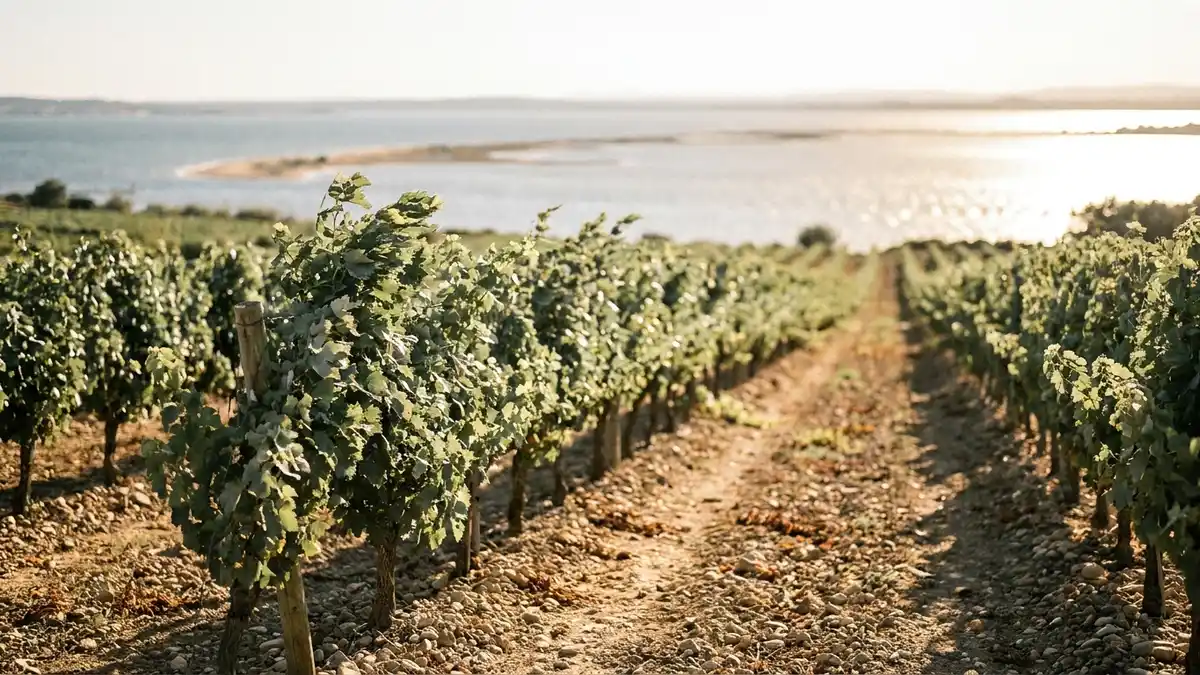
The lagoon is the secret ingredient. The Étang de Thau is a large, shallow saltwater body separated from the Mediterranean by a thin sandbar, and it has moderated this stretch of coast for thousands of years. By day it absorbs heat; by night it releases it, smoothing out the temperature swings that would otherwise push the grapes toward overripeness.
Sea breezes sweep across the vineyards almost constantly, carrying salt air and keeping the vines cool and disease-free. The soils are a mix of limestone, clay, and pebbles that drain well and reflect light back onto the fruit. Together — lagoon, breeze, limestone, sun — these conditions let Picpoul ripen its fruit while clinging to the high acidity that defines it.
The same lagoon that shapes the wine is one of France's most important shellfish nurseries, producing vast quantities of oysters and mussels. Wine and oyster grew up side by side here, which is why the pairing feels less like a clever match and more like an inevitability.
How Picpoul de Pinet Is Made
Picpoul de Pinet is made in a deliberately fresh, unadorned style designed to capture the grape at its most vibrant. The grapes are picked early to preserve acidity, gently pressed, and fermented at cool temperatures in stainless steel tanks. There is almost never any oak, no malolactic fermentation (a secondary fermentation that would soften the acidity), and no extended skin contact.
The wine is bottled within months of harvest and released young. The goal is transparency — letting the lemon, lime, white flower, and salt of a single grape on a single coast come through with nothing in the way. This is part of why Picpoul belongs firmly in the aromatic-leaning, refreshment-first camp of whites rather than the rich, oak-aged camp; our guide to aromatic versus neutral grapes explains where a grape like this sits on that spectrum.
A small number of producers experiment with lees aging or a touch of texture, but the classic, overwhelmingly dominant style is crisp, clean, and immediate. When in doubt, drink Picpoul young.
Why Picpoul de Pinet Is the Oyster Wine
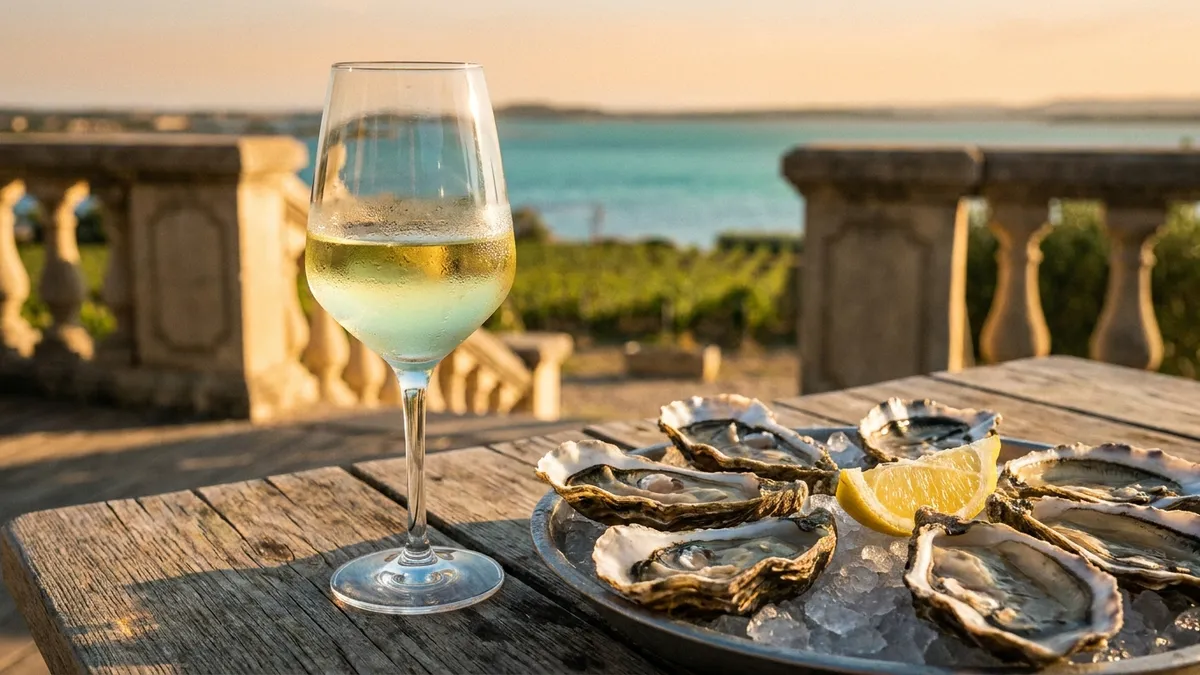
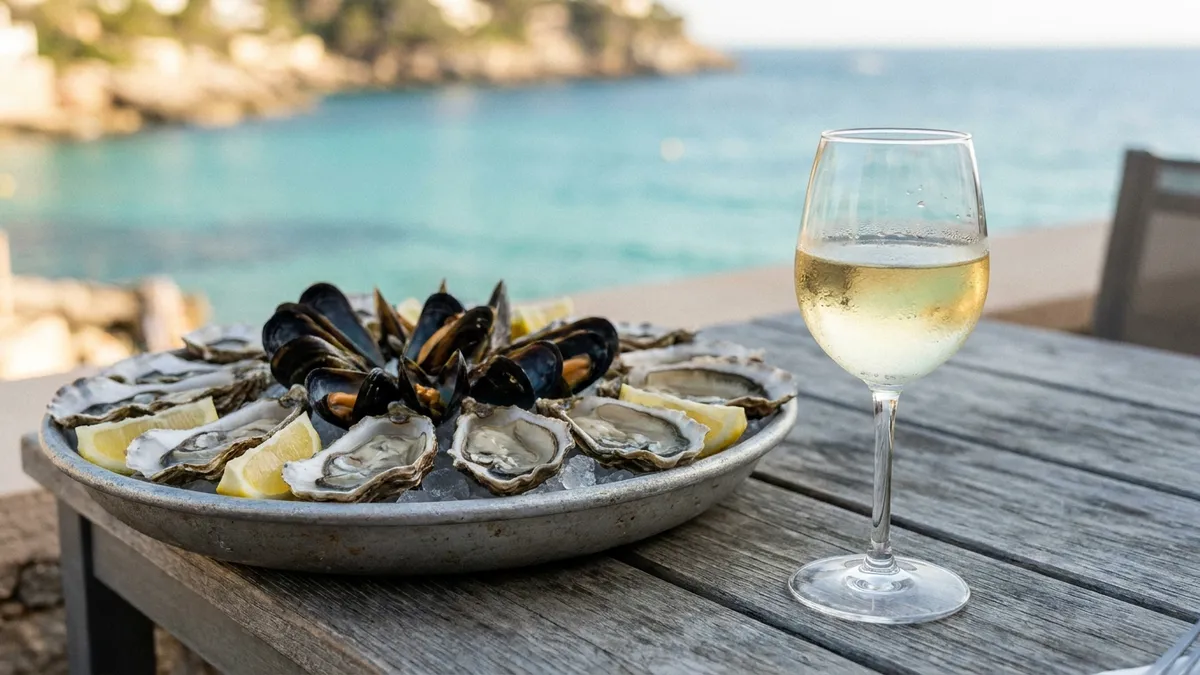
The pairing of Picpoul and oysters is one of the great what-grows-together-goes-together matches in French wine. The vineyards and the oyster beds share the same lagoon, the same salt air, the same coastal sun — and the wine evolved to drink with the shellfish at its doorstep.
The logic is simple and worth learning, because it applies far beyond Picpoul:
- Acidity cuts brine and fat — Picpoul's high acid does for an oyster what a squeeze of lemon does, lifting and refreshing every bite
- Salinity echoes the sea — the wine's saline edge mirrors the briny minerality of fresh shellfish instead of fighting it
- No oak, no tannin — there is nothing heavy to clash with delicate raw seafood, which is exactly the tannin-and-fish clash that ruins so many red-with-fish attempts
Reliable Picpoul Pairings
- Raw oysters — the textbook match, especially the Bouzigues oysters from the same lagoon
- Mussels and clams — steamed with garlic, white wine, and parsley
- Grilled or fried white fish — sea bass, bream, sole, hake
- Fritto misto and calamari — the acid handles the fry
- Ceviche and crudo — the citrus mirrors the lime and lemon in the dish
- Goat cheese — fresh chevre with a chilled Picpoul is a sleeper match
- Sushi and sashimi — light, clean, and oak-free, so nothing clashes with raw fish
What to Avoid
- Heavy cream sauces — Picpoul is too light to stand up to them
- Red meat — there is no body or grip for protein this rich
- Sweet desserts — the wine reads sharp and bitter against sugar
- Anything smoked or heavily charred — the delicate wine simply gets lost
For the full chemistry behind matching whites to shellfish and which styles suit which preparations, see our complete wine and seafood pairing guide.
Picpoul de Pinet vs Muscadet vs Albariño
Picpoul belongs to a small, brilliant club of coastal whites built for seafood — wines that are light, dry, high in acid, and unburdened by oak. The two most useful comparisons are Muscadet from France's Loire coast and Albariño from Spain's Atlantic northwest. All three excel with oysters, but each has its own accent.
- Picpoul de Pinet — Origin: Languedoc, Mediterranean coast · Grape: Piquepoul Blanc · Style: citrus, white flower, saline, light and crisp · Edge: warm-climate freshness, the best value of the three.
- Muscadet — Origin: Loire mouth, Atlantic coast · Grape: Melon de Bourgogne · Style: lean, flinty, often creamy when aged on lees (sur lie) · Edge: the coolest, leanest, most mineral of the three.
- Albariño — Origin: Rías Baixas, Atlantic coast of Spain · Grape: Albariño · Style: white peach, citrus, almond skin, more body and weight · Edge: the most aromatic and full-bodied, with the most fruit.
How they stack up feature by feature:
- Body: Muscadet is the leanest, Picpoul sits light in the middle, Albariño carries the most weight.
- Acidity: all three are high, but Picpoul's lip-stinger bite and Muscadet's flinty cut both edge slightly ahead of Albariño.
- Fruit character: Picpoul leads with lemon-lime, Muscadet with green apple and stone, Albariño with peach and tropical notes.
- Texture: Muscadet sur lie and lees-aged Albariño can turn creamy; classic Picpoul stays crisp and direct.
- Price: Picpoul is typically the best value, Muscadet close behind, Albariño the priciest of the three.
If you love one, the other two are natural next stops. Our Albariño wine guide covers Spain's saline coastal white in depth, and the broader white grapes overview maps out where each of these crisp whites fits among the world's white varieties.
Picpoul de Pinet and the Wider Languedoc
The Languedoc is France's largest wine region by volume, a sweeping arc of vineyards along the Mediterranean from the Rhône to the Spanish border. For much of its history it was known for oceans of cheap, forgettable wine. That story has changed dramatically, and Picpoul de Pinet is one of the appellations that helped change it — proof that the south can make precise, characterful, value-driven wine, not just bulk.
Picpoul stands out in a region dominated by reds and blends. It is one of the few Languedoc whites that has built a genuine international following on the strength of a single grape and a single, repeatable pleasure: a chilled, citrusy glass with a plate of oysters. For the bigger picture of how this coast fits among Bordeaux, Burgundy, the Loire, and the Rhône, see our guide to French wine regions.
It is also worth knowing that Picpoul is a different proposition from France's more famous high-acid whites. Where a Loire Sauvignon Blanc brings grassy, herbaceous bite and a noble white grape like Riesling brings floral intensity and aging potential, Picpoul keeps things simple, saline, and immediate. It is not trying to be profound. It is trying to be the perfect glass for a seafood lunch — and it succeeds completely.
How to Buy and Serve Picpoul de Pinet
When to Drink
Picpoul de Pinet is built for the first one to two years after the vintage. By year three the bright citrus and saline lift begin to fade. The rule of thumb is simple: check the vintage on the label and buy the most recent one you can find.
Serving Temperature
Serve Picpoul cold — between 8 and 10 degrees Celsius (46 to 50 Fahrenheit). Most home fridges run colder than that, around 4 degrees, which mutes the aromatics, so pull the bottle out about 15 minutes before pouring. To chill a room-temperature bottle quickly, an ice-water bath takes roughly 25 minutes.
Glassware
A standard white wine glass with a slightly tapered bowl is ideal. Skip the oversized red-wine glasses, which let the chill dissipate too fast and dull the wine's saline edge.
How to Read the Label
- Picpoul de Pinet — the AOC, your guarantee of 100 percent Piquepoul Blanc from the Étang de Thau zone
- Languedoc — the wider region; a wine labeled only "Languedoc" may not be the real Pinet appellation
- Vintage — recent is best; two years old or less is the sweet spot
Building Your Coastal-White Tasting Skills
Picpoul de Pinet is one of the best wines to learn the role of acidity and salinity, because both are so vivid you cannot miss them. The most rewarding way to understand it is a small side-by-side tasting:
- A young Picpoul de Pinet — the lip-stinger benchmark
- A Muscadet sur lie — to feel how lees aging adds creamy texture
- An Albariño from Rías Baixas — to taste a fuller, more aromatic coastal cousin
Pour all three chilled, blind if you can, with a plate of fresh oysters or grilled white fish. The differences snap into focus: Picpoul's lemon-lime zing, Muscadet's flinty lean, Albariño's peachy weight. This kind of comparative tasting is the fastest way to build real understanding, and it pairs perfectly with learning how to taste wine step by step.
The Sommy app includes guided tastings that train your palate to spot these regional signatures, helping you put words to salinity, citrus, and acidity one glass at a time. Recognizing why a wine tastes like the sea is one of those skills that makes coastal whites click into place — and Picpoul de Pinet, the lip-stinger of the Languedoc, is the perfect place to start.
Sources
- Picpoul de Pinet — Wikipedia
- Piquepoul Blanc — Wikipedia
- Picpoul de Pinet: The Original Oyster Wine — Wine Folly
Frequently Asked Questions
What does Picpoul de Pinet wine taste like?
Picpoul de Pinet tastes crisp and citrus-driven, leading with fresh lemon and lime, green apple, and white flower, finished by a saline, sea-breeze edge. The palate is light-bodied and bone dry with high, mouth-watering acidity and low alcohol around 12 to 13 percent. It is built for freshness rather than richness, so most bottles see no oak at all.
Why is Picpoul called the oyster wine?
Picpoul de Pinet grows beside the Étang de Thau, a Mediterranean lagoon famous for its oyster and mussel beds. The wine evolved next to that shellfish, and its high acidity and saline finish cut through brine and fat the way a squeeze of lemon does. Raw oysters and Picpoul is one of France's textbook what-grows-together pairings.
What does the name Picpoul mean?
Picpoul, also spelled Piquepoul, comes from Occitan and translates roughly as lip-stinger or stings the lip. The name refers to the grape's famously high, zingy acidity, which gives the wine its bracing, mouth-watering bite. The white grape behind the AOC is Piquepoul Blanc, the most planted of the Piquepoul family.
Is Picpoul de Pinet dry or sweet?
Picpoul de Pinet is bone dry. There is essentially no residual sugar in classic examples. The bright citrus fruit and high acidity can read as fresh or even tangy, but the wine itself is fully dry. It is fermented in stainless steel to preserve that crisp, unadorned style, with no sweetness added at any stage.
How does Picpoul compare to Muscadet?
Both are coastal French whites built for oysters, light-bodied, dry, and high in acid. Picpoul de Pinet from the warm Languedoc leans more citrus, white flower, and saline, often with a touch more ripeness. Muscadet from the cool Loire mouth is leaner and flintier, especially when aged on its lees, which adds a creamy, briny texture Picpoul usually skips.
How long does Picpoul de Pinet age?
Picpoul de Pinet is made to be drunk young, ideally within one to two years of the vintage while its lemon-lime freshness and saline lift are at their peak. It is not a wine built for the cellar. Check the vintage on the label and reach for the most recent one you can find for the brightest, most vibrant expression of the grape.
What temperature should you serve Picpoul de Pinet?
Serve Picpoul de Pinet well chilled, between 8 and 10 degrees Celsius, about 46 to 50 Fahrenheit. Too cold and the citrus and floral aromas go quiet; too warm and the wine loses its refreshing edge. Pull the bottle from the fridge roughly 15 minutes before pouring, or chill a warm bottle in an ice-water bath for about 25 minutes.
Is Picpoul de Pinet good value?
Yes. Picpoul de Pinet is one of the best-value white wines in France. Because it comes from the high-volume Languedoc rather than a fashionable name region, prices stay low while quality stays consistent. For an everyday crisp white to drink with seafood or on its own, it delivers far more than its modest price tag would suggest.
Sommy Team
LinkedInFounder & Wine Educator
The Sommy Team is building the world's most approachable wine education app, helping beginners develop real tasting skills through structured courses and AI-guided practice.