Stainless Steel vs Oak Wine: How the Vessel Shapes Taste

By the Sommy Team — AI-assisted, human-edited.
Updated Sep 25, 2026
Contents (10)
- Stainless Steel vs Oak Wine, in One Paragraph
- What Does Each Vessel Actually Do to Wine?
- Which Wines Usually Go in Steel, and Which in Oak?
- Can a Wine Be Fermented in One and Aged in the Other?
- How Can You Tell From the Label or the Glass?
- Does New Oak Taste Different From Old Oak?
- Is Oak-Aged Wine Better or More Expensive Than Steel?
- Are Oak Chips and Staves Real Oak Aging?
- Where Did Barrels and Steel Tanks Come From?
- How Should You Taste the Difference Tonight?
TL;DR
Stainless steel seals wine off from air and adds no flavour, so it keeps fruit and acidity sharp. Oak barrels let in a slow trickle of oxygen and add vanilla, toast and spice. Fermenting and aging are separate choices, a barrel goes nearly neutral after three to five vintages, and oak costs more without being better.
Stainless steel vs oak wine comes down to what the container lets in. Steel lets in nothing, so the grape's fruit and acidity (the tartness that makes your mouth water) stay sharp. An oak barrel lets in a slow trickle of air and adds wood flavours of vanilla, toast and spice.
Stainless Steel vs Oak Wine, in One Paragraph
Stainless steel is sealed, neutral and easy to keep cold, so wine made in it keeps its fresh fruit aromas and crisp acidity, with no wood flavour at all. Oak is porous, so a barrel lets small amounts of oxygen reach the wine for months, softening tannin, while the wood adds vanillin, coconut-scented lactones and smoky eugenol. A new barrel gives the most flavour; after three to five vintages it gives almost none.
Fermenting and aging are separate choices, so one wine can use both vessels. Oak is far costlier: in 2007 a French oak barrel of 225 litres sold for $1,200 or more. Steel is the classic choice for Sauvignon Blanc, Riesling and most rosé. Oak is the classic choice for Cabernet Sauvignon, Rioja and rich Chardonnay.
What Does Each Vessel Actually Do to Wine?
Oak lets a little oxygen in and adds its own flavour; stainless steel does neither. Wood is made of tiny pores and grain lines, so air seeps through the staves and around the bung for as long as the wine sits there. Steel is a solid wall. Inside a sealed tank, the wine meets almost no fresh air.
That slow air matters most for tannin (the drying grip on your gums). In a barrel, gentle oxygen helps tannin molecules link into larger chains, which feel softer in the mouth. Oak also brings its own tannins, called ellagitannins, which help protect the wine from both too much and too little oxygen.
The effect is measurable, because winemakers have copied it. In 1991 a French winemaker, Patrick Ducournau, developed micro-oxygenation: tiny, controlled doses of oxygen bubbled into a steel tank to mimic slow barrel aging faster and for less money. The European Commission authorised it in 1996. The typical dose runs from 0.75 to 3 cubic centimetres of oxygen per litre of wine, over treatments lasting four to eight months.
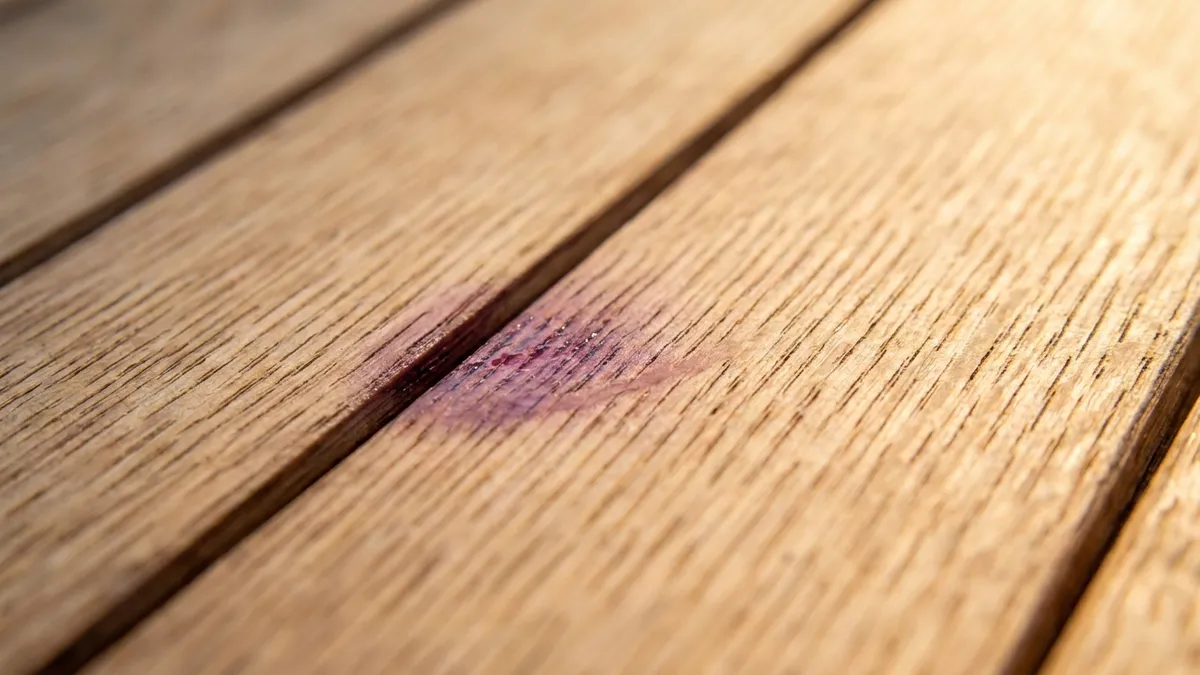
The second job of oak is flavour. The wood releases vanillin (the main compound in vanilla), lactones that smell of coconut, and eugenol, which smells of clove and smoke.
| Vessel | Oxygen reaching the wine | Flavour added | Typical wines | Pick it when you want |
|---|---|---|---|---|
| Stainless steel | Almost none | None | Sauvignon Blanc, Riesling, Pinot Grigio, most rosé | Crisp citrus and green apple, high acidity |
| New oak barrel | Slow, steady trickle | Strong vanilla, toast, coconut, clove | Rich Chardonnay, Cabernet Sauvignon, Rioja | Toasty, creamy whites or softer, rounder reds |
| Old (neutral) oak barrel | Less, falling each year | Little or none after 3 to 5 vintages | Many Pinot Noirs and gentler whites | Texture and softer tannin with no vanilla |
| Steel plus oak chips or staves | Almost none, unless oxygen is added | Oak flavour within weeks | Many everyday Chardonnays and reds | Vanilla at a lower price |
For how oak's flavours show up when you taste, see how to detect oak flavors. The wider picture of air versus no air in winemaking is in oxidative vs reductive winemaking.
Which Wines Usually Go in Steel, and Which in Oak?
Crisp aromatic whites and most rosé are usually made in steel, while Chardonnay and structured reds such as Cabernet Sauvignon, Nebbiolo and Rioja usually spend time in oak. The dividing line is simple. If a wine's appeal is fresh fruit, winemakers protect it in steel. If its appeal is texture and grip, they give it wood and air.
Steel is the home of Sauvignon Blanc, Riesling and Pinot Grigio, grapes prized for their aromas of citrus, green apple and cut grass. Some producers in Chablis reject oak outright as counter to the Chablis style, which keeps that northern Chardonnay lean and tart. Our Chablis guide and Sauvignon Blanc guide cover those styles in full.
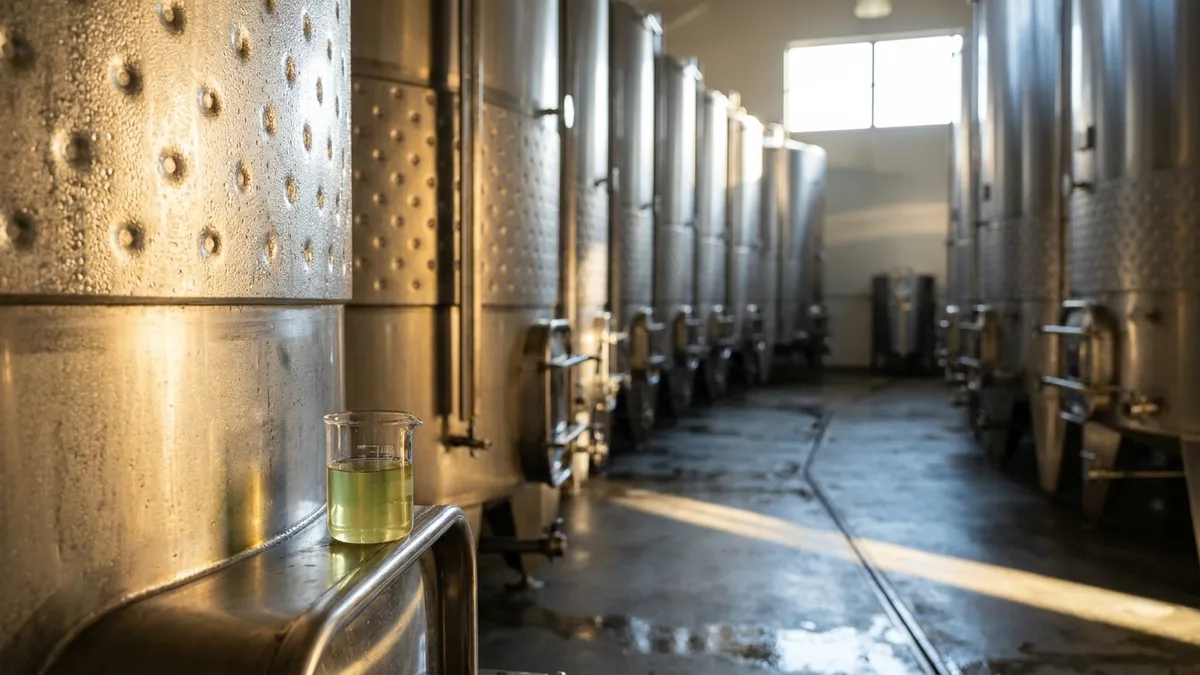
Oak time varies hugely by style. New World Pinot Noir often spends less than a year in barrel. Premium Cabernet Sauvignon may get about two years, and some Nebbiolo four or more. Some Rioja rests up to ten years in American oak, which is why aged Rioja smells so strongly of vanilla; the Rioja guide explains its aging tiers. Chardonnay sits on both sides. From the 1970s, California built a big, full-bodied style around new oak barrels.
If you want fresh citrus and green apple, pick a grape usually made in steel, such as Sauvignon Blanc, Riesling or Chablis. If you want vanilla, toast and a creamy weight, pick a warm-region Chardonnay or any white labelled barrel-fermented.
Can a Wine Be Fermented in One and Aged in the Other?
Yes, because fermentation and aging are two separate choices, and a winemaker picks a vessel for each. Fermentation turns grape sugar into alcohol over days or weeks. Aging then settles the wine for months or years. Those two steps give four combinations:
- All steel: fermented and aged in tanks. The crispest, most fruit-led result, typical of many New World Sauvignon Blancs.
- Steel, then oak: fermented cold in steel to keep aromas, then moved to barrels to gain texture. Common for red wines and some Chardonnays.
- Oak, then steel: fermented in barrel for a creamy texture, then finished in tanks to keep wood flavour light.
- All oak: fermented and aged in barrel. The richest style, classic for many white Burgundies.
The vessel also steers a second process. Malolactic fermentation is a step, usually run by the bacterium Oenococcus oeni, that turns sharp malic acid (the tartness of green apples) into softer lactic acid and releases carbon dioxide. It can also make diacetyl, the compound that smells of butter.
Temperature is one of the levers that decides whether that happens, and steel is easy to keep cold. Malolactic fermentation runs best between 20 and 37°C and is strongly held back below 15°C. Diacetyl forms most readily when it runs warm, between 18 and 25°C. So a Chardonnay kept cool in steel often skips it and tastes of green apple, while one warming in barrel usually goes through it and tastes buttery. The malolactic fermentation explainer has the chemistry, and the Chardonnay guide shows how these choices map to regions.
How Can You Tell From the Label or the Glass?
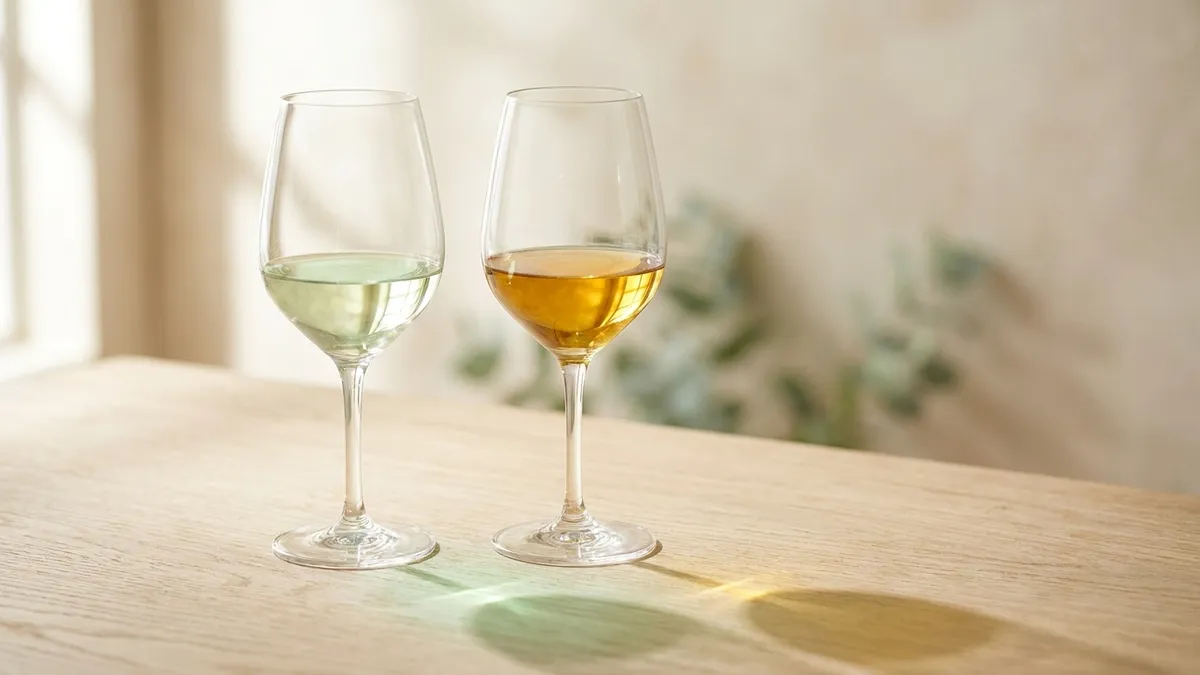
The label sometimes says it outright, and the glass usually does. Deeper gold colour, a vanilla or toast smell and a firmer grip on the gums all point to oak. On the label, "unoaked", "stainless steel" or "no oak" mean steel. "Barrel fermented", "barrel aged" or "oak aged" mean wood.
If a white label says unoaked or stainless steel, expect citrus, apple and a brisk finish. If it says barrel fermented, expect vanilla, cream and a rounder feel. A back label that names months in barrel tells you even more, since longer time means more wood; the wine label guide shows where to find it.
In the glass, barrel-aged whites tend to look deeper gold, because slow air darkens them a little. Smell for vanilla, coconut, toast or clove, and taste for a creamy weight on whites or a firm but fine grip on reds. A steel white smells of the fruit alone and finishes with a mouth-watering snap. The guide to what "oaked" means lists the flavour words that show up on tasting notes.
Does New Oak Taste Different From Old Oak?
Yes, very. A new barrel gives the most flavour, and after three to five vintages it gives little or none. Its ability to pass oxygen also becomes severely limited by then. Winemakers call these older barrels neutral oak: they still add texture and a little air, but almost no vanilla.
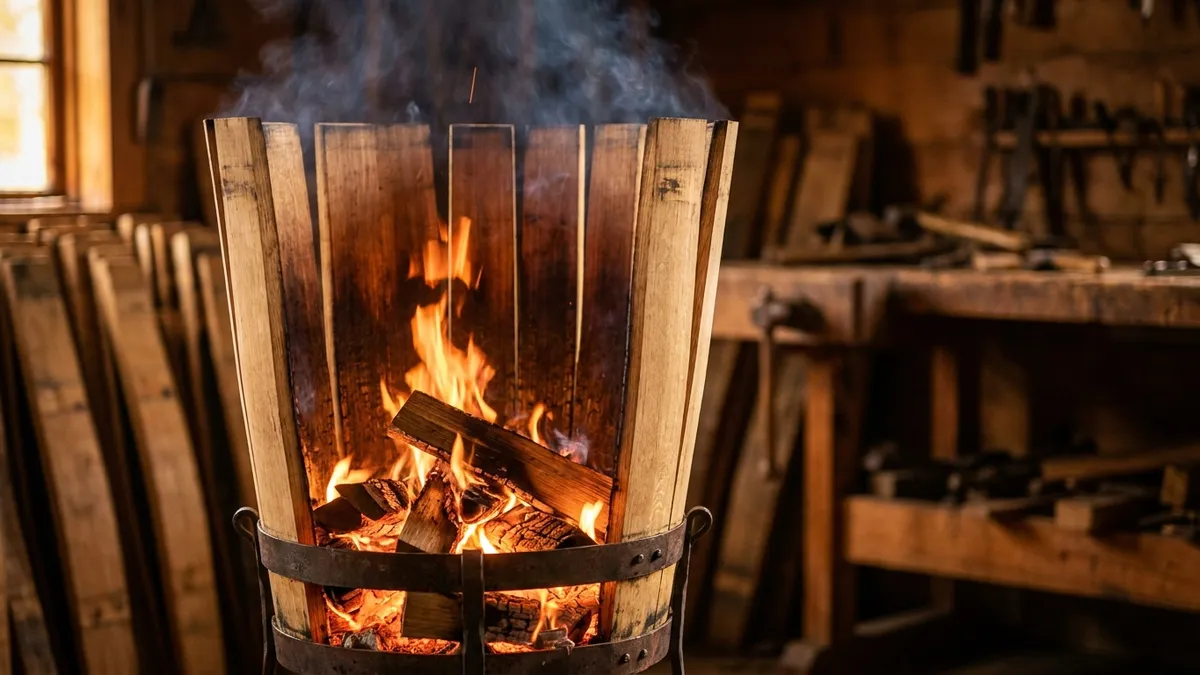
Before a barrel is finished, the cooper heats the inside over a fire, a step called toasting. Toast level changes the flavour. Toasting boosts vanillin and eugenol, and heavy toasting sharply cuts the coconut-scented lactones, so the wine smells more of smoke and spice.
The wood species matters too. American oak holds two to four times as many lactones as French oak, which is why American-oaked wines smell of coconut and sweet vanilla. It also softens a wine's astringency faster, suiting shorter aging of about six to ten months. French oak gives more vanillin and tannin, with a silkier, finer grip. For a detailed look at how tannin feels, see what tannins are.
Is Oak-Aged Wine Better or More Expensive Than Steel?
More expensive to make, yes; better, no. Oak trees for barrels are typically 80 to 120 years old, and one tree gives enough wood for only two 225-litre barrels. The French method of splitting staves leaves just 20 to 25% of the tree usable, and the wood then air-dries for 24 to 36 months.
In late 2007, American oak barrels cost about $600 to $800, and French oak barrels $1,200 and up. American oak is at least twice as economical to produce. A barrel also loses about 21 to 25 litres a year to evaporation, mostly alcohol and water, a loss called the angel's share. Winemakers top it up with more wine. Steel loses almost none.
None of that cost ends up as quality in the glass. Steel is a style choice, not a cheap shortcut. It is how winemakers protect the aromas of Riesling and the tartness of Chablis. A Sauvignon Blanc aged in new oak would lose the grassy lift its fans buy it for.
So choose by the plate. If the dish is light, salty or tart, such as oysters, goat cheese or a lemony salad, pick a steel white, because its acidity matches the acid in the food. If the dish is rich and creamy, such as roast chicken with a butter sauce, pick an oaked white, because its round texture carries the fat.
Are Oak Chips and Staves Real Oak Aging?
They are real oak flavour, added fast, but they skip the slow air of a barrel. Oak chips or staves soaked in wine inside a steel tank can give intense oak flavour within weeks. A barrel needs a year or more to do the same. Without a barrel's pores, though, no extra oxygen arrives unless the winemaker adds micro-oxygenation.
European law banned oak chips until 2006. In 1999 a Bordeaux court fined four wineries over $13,000 for using them. Today they are legal in the EU and common in everyday Chardonnay and red wine.
If an inexpensive white smells loudly of vanilla but feels thin and sharp in the mouth, oak chips or staves are the likely reason. The flavour arrived; the softening that months in barrel would bring did not.
Where Did Barrels and Steel Tanks Come From?
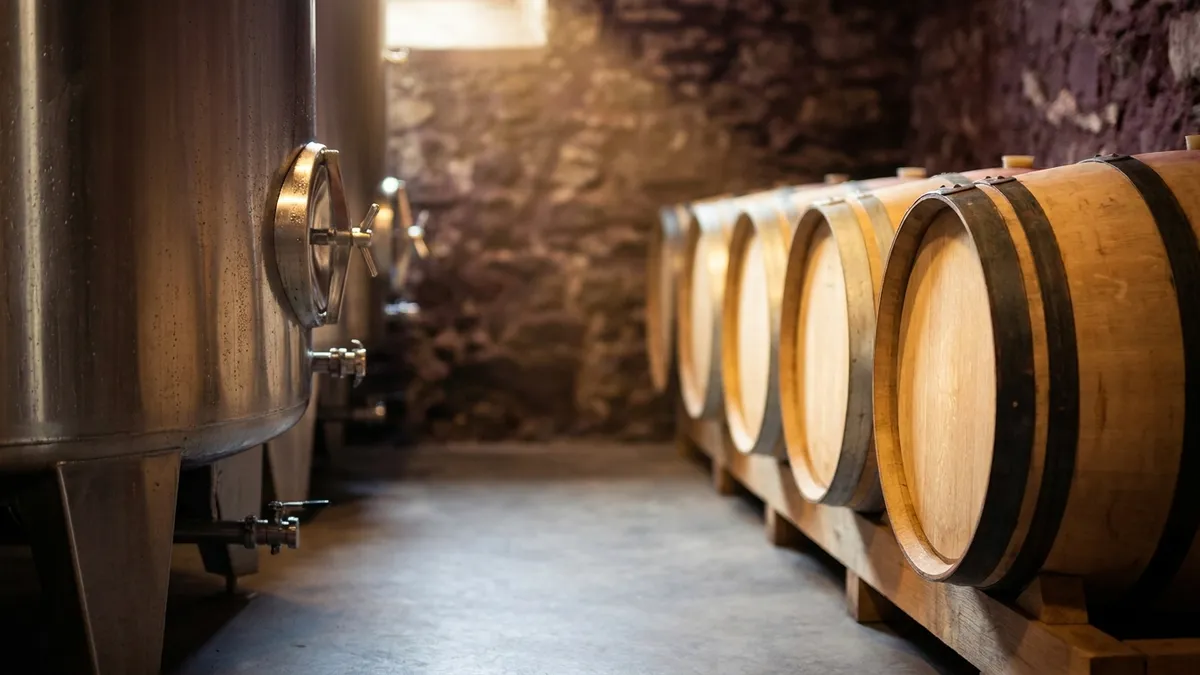
Oak barrels have held wine for at least two thousand years, spreading widely under the Roman Empire. They began as the practical way to ship wine; the flavour was a side effect that winemakers came to prize. Temperature-controlled steel tanks are the modern arrival, and their cold, sealed walls keep today's crisp whites tasting of fresh fruit.
Barrel sizes explain some of the taste differences you meet. A Bordeaux barrel holds 225 litres and a Burgundy barrel 228 litres. The New World hogshead holds 300 litres, and a bigger barrel gives each litre of wine less contact with wood, so the oak reads more gently. You can often tell the origin of a barrel by its hoops: American barrels usually have six, French barrels eight. For more on how these choices define wine types, see the wine styles hub.
How Should You Taste the Difference Tonight?
Buy one unoaked and one oaked Chardonnay and taste them side by side. Same grape, two vessels, so every difference in the glass comes from steel, oak and the choices around them. Look for green apple and a snap in the first, and vanilla, butter and a rounder weight in the second.
For a guide at the table, the Sommy app at sommy.wine reads a photo of each label and walks through look, smell and taste. Its bite-sized courses build the words for what you find. Open both bottles tonight, pour the unoaked one first, and write down which one you would buy again.
Sources
Frequently Asked Questions
Does stainless steel affect the taste of wine?
Stainless steel adds no flavour of its own and lets almost no oxygen reach the wine. That is exactly why winemakers choose it: the grape's own fruit and acidity come through unchanged. A steel-made white usually tastes of citrus, green apple or peach, with a crisp, mouth-watering finish, while the same grape from a barrel picks up vanilla, toast and a rounder, creamier weight.
Why do winemakers age wine in oak barrels?
For two reasons. The wood adds flavour compounds such as vanillin, lactones and eugenol, which read as vanilla, coconut, smoke and clove. The grain also lets a small, steady amount of oxygen reach the wine over months, which helps tannins link into larger, softer molecules. Structured reds such as Cabernet Sauvignon, Nebbiolo and Rioja rely on that slow softening.
Is oak-aged wine better than stainless steel wine?
No. Oak costs more, because barrels take slow-grown trees, years of seasoning and constant replacement, but that cost says nothing about quality. Steel is the deliberate choice for wines whose appeal is fresh fruit and acidity, including Sauvignon Blanc, Riesling and most Chablis. Choose by the style you want tonight: crisp and fruity from steel, rounder and toastier from oak.
What does unoaked mean on a wine label?
Unoaked means the wine was fermented and aged without contact with oak barrels or oak alternatives, almost always in stainless steel, sometimes in concrete. Expect the grape's plain fruit character and brisk acidity, with no vanilla or toast. The word appears most on Chardonnay, where it signals a crisp, apple-led style rather than the buttery, barrel-aged style many drinkers associate with the grape.
Why is some Chardonnay buttery and some not?
The buttery note comes mostly from malolactic fermentation, a bacterial step that turns sharp malic acid into softer lactic acid and can produce diacetyl, the compound that smells of butter. Barrel-aged Chardonnay often goes through it; steel-made Chardonnay kept cool often does not, and tastes of green apple instead. Oak then adds vanilla and toast on top of that creamy base.
How many times can an oak barrel be reused?
Many times, but its flavour fades fast. A new barrel gives the strongest vanilla and toast, and after three to five vintages it gives little or no oak flavour. Its ability to pass oxygen also becomes severely limited by then. Winemakers keep these older neutral barrels for wines that need gentle aging without wood taste, and buy new ones when they want flavour.
Sommy Team
LinkedInFounder & Wine Educator
The Sommy Team is building the world's most approachable wine education app, helping beginners develop real tasting skills through structured courses and AI-guided practice.