How White Wine Is Made: Pressing, Fermenting, Aging

By the Sommy Team — AI-assisted, human-edited.
Updated Oct 1, 2026
Contents (7)
TL;DR
White wine is grape juice pressed away from its skins before it ferments, so it gets almost no colour or tannin. It ferments cool, usually at 18 °C or below, to keep fruit aromas. Malolactic fermentation, oak and lees contact then decide whether it tastes crisp or creamy.
How white wine is made comes down to one early decision: the juice is pressed away from the grape skins before it ferments. Skins carry colour and tannin, so a white wine that never sits on them stays pale and has almost no grip. Everything after that, a cool fermentation and a few cellar choices, decides whether the glass tastes crisp and lemony or round and creamy.
How Is White Wine Made, Step by Step?
White wine is made by pressing the juice off the grapes first, fermenting that juice cool, then shaping it with a few cellar choices before bottling. The defining step is the missing one: no maceration (soaking the juice on its skins). The sequence runs like this:
- Pick the grapes and send them to the press, often as whole bunches.
- Let the juice settle, then add or allow yeast.
- Ferment cool until the sugar becomes alcohol.
- Choose malolactic fermentation, oak and lees contact, or skip them.
- Chill, clear, protect with sulfur dioxide and bottle.
Does White Wine Have to Come From White Grapes?
No. The flesh and juice of almost every grape is pale, so red grapes can make white wine if they are pressed fast and the must (the freshly pressed juice) leaves the skins before it stains. The exception is the small group of teinturier grapes, whose flesh is red too.
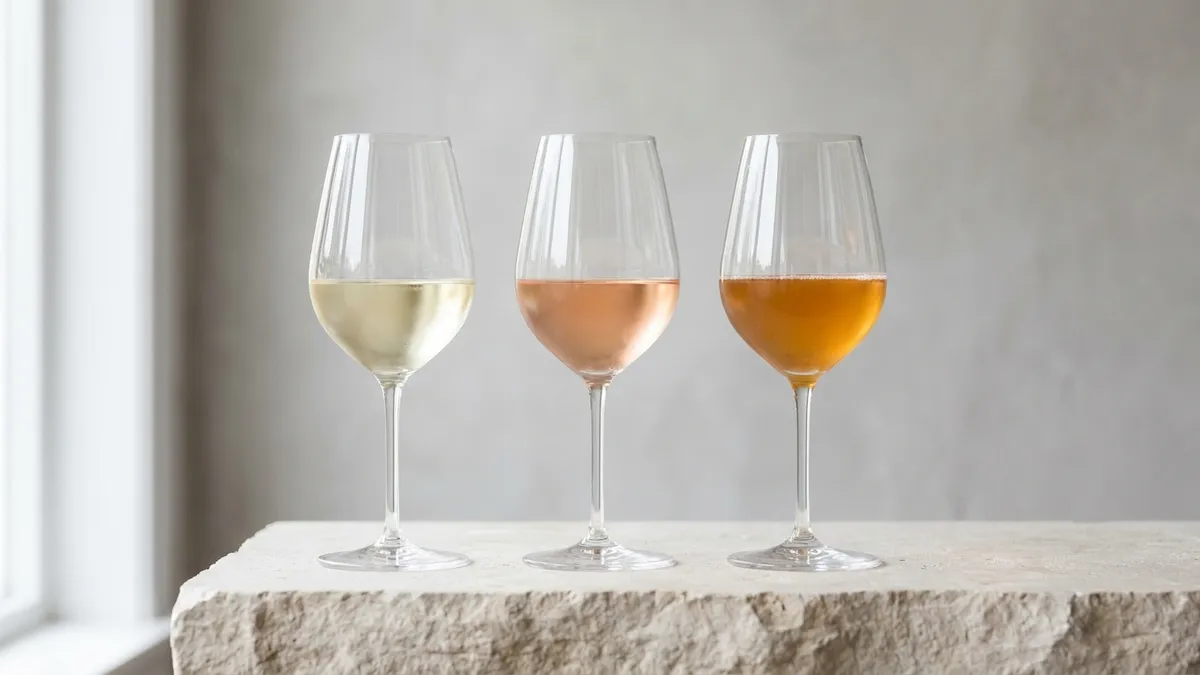
How long the juice touches the skins is the dial that separates the four wine colours. Turn it from zero to weeks and the same juice moves from white to red. Our guide to white wine from red grapes covers the pressing tricks behind pale wine from dark-skinned grapes.
| Wine | Grapes | Skin contact | Colour in the glass | Pour it with |
|---|---|---|---|---|
| White | White (or red, pressed fast) | None, or a few hours for some aromatic grapes | Water-white to gold | Oysters, salads, goat cheese, roast chicken |
| Blanc de noirs | Red | None, pressed gently | Pale gold, faint bronze | Aperitif, fried snacks, smoked fish |
| Rosé | Red | A few hours | Pale pink to salmon | Grilled vegetables, charcuterie, summer lunches |
| Orange | White | Days to months | Amber to deep orange | Spiced dishes, hard cheese, mushrooms |
| Red | Red | Days to weeks, during fermentation | Ruby to purple | Red meat, stews, aged cheese |
If a label says blanc de noirs, expect a pale wine made from red grapes, usually sparkling. If it says orange or skin-contact, expect a white grape made like a red, with some tannin; orange wine explained covers that style, and the rosé wine guide covers the hours-long version.
Why Is White Wine Pressed Before It Ferments?
Because the skins hold colour and tannin, and a white wine wants neither. Many white grapes skip the destemmer and crusher and go from the picking bins straight to the press. Many are pressed as whole bunches, which gives a more delicate, paler wine with fewer bitter skin compounds.
The first juice to run out under light pressure is the free-run juice, the cleanest and most delicate. As pressure rises, the later press fractions come out harsher and carry more skin material. Winemakers often keep them apart and blend some back only if the wine needs more weight.
Two kinds of press dominate. A pneumatic press inflates a bag of air or water inside a drum and squeezes the grapes gently against its walls. A basket press, one of the earliest mechanical designs, pushes a plate down onto a slatted cage of grapes.
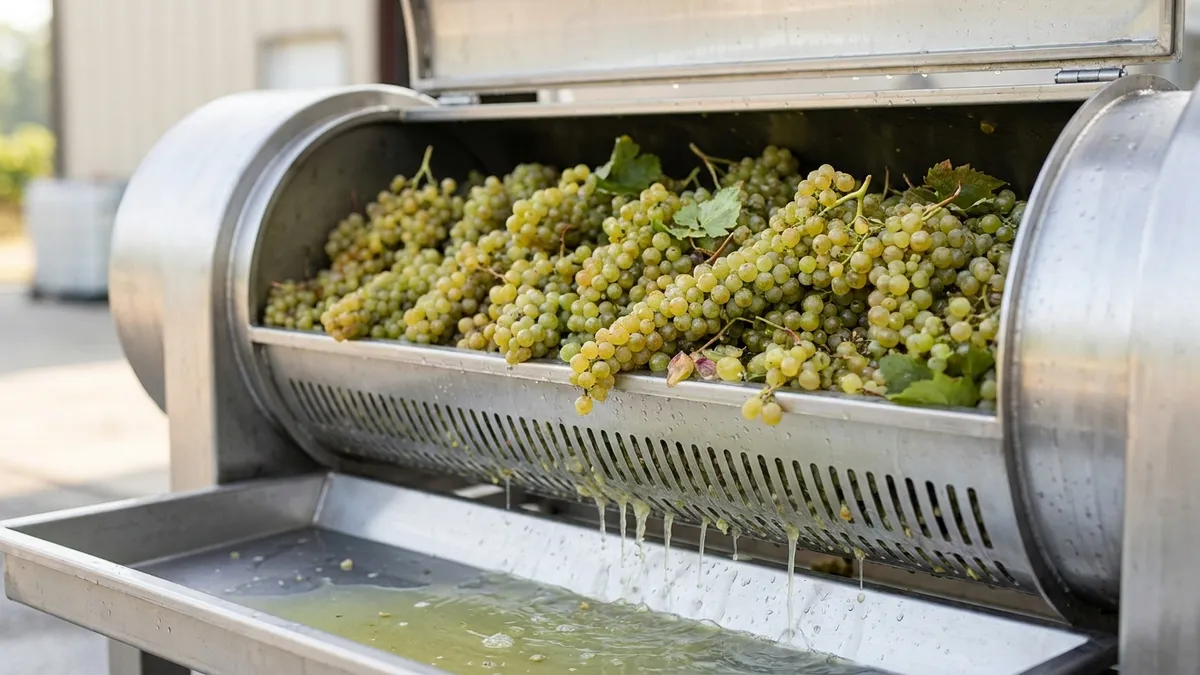
Some white grapes get a short soak first. Sauvignon Blanc and Sémillon are sometimes left on their skins for a limited time before pressing, to draw out more aroma. If a back label mentions brief skin contact on a Sauvignon Blanc, expect a more fragrant wine with a touch more texture; the Sauvignon Blanc guide shows where that style comes from.
Why Does White Wine Ferment Cool?
Cool fermentation keeps the fruit and flower aromas that make a white smell fresh. Most whites ferment at 18 °C or below, often around 15 to 18 °C, against roughly 20 to 30 °C for reds. At red-wine temperatures, more of the delicate fruity aromas would be lost.
The worker is yeast, usually the species Saccharomyces cerevisiae, which turns grape sugar into alcohol and carbon dioxide. It works in juice as acidic as wine, which normally sits between pH 2.8 and 4. The full chemistry is in our guide to wine yeast and fermentation.
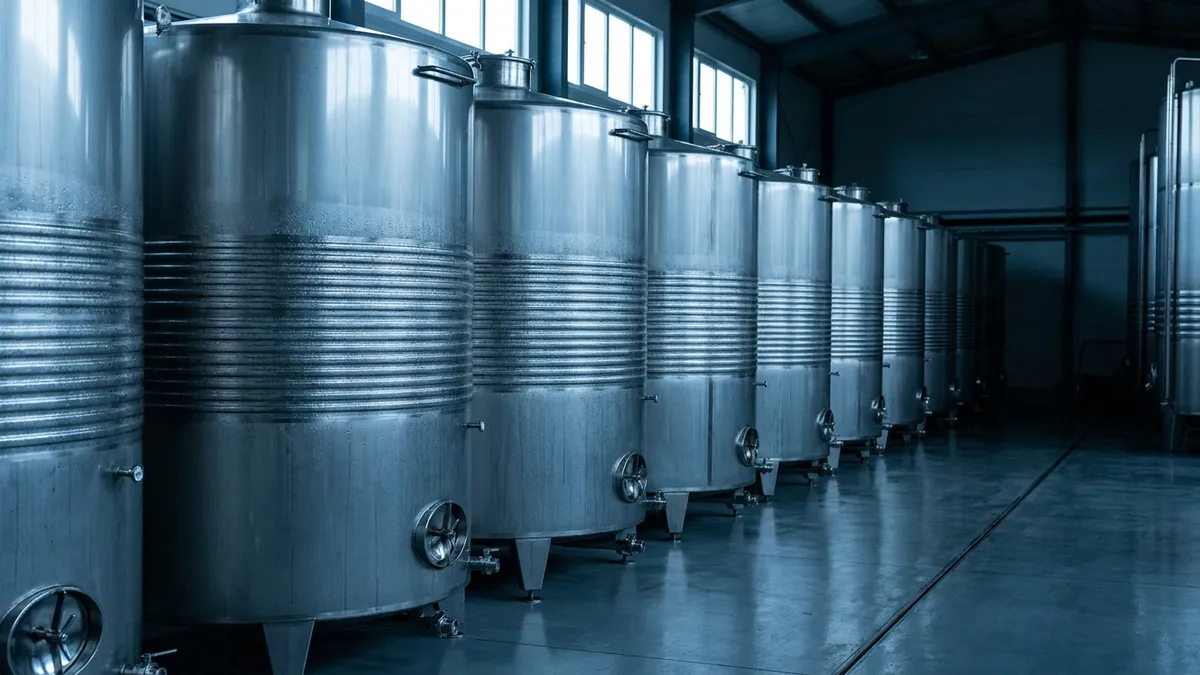
Winemakers watch for a stuck fermentation, when the yeast stalls, often for lack of nutrients, before the wine is dry. They often add sulfur dioxide at two points in white winemaking: before fermentation and right after it finishes. It blocks spoilage bacteria and slows oxidation, which keeps pale juice from browning.
Which Cellar Choices Change the Taste Most?
Three switches: malolactic fermentation, oak, and time on the lees. Each can be on or off. Together they explain why two Chardonnays from the same year can taste like lemon juice or like buttered toast, and each one leaves a word on the label.
| Style | Malolactic | Oak | Lees | Buy it if you want |
|---|---|---|---|---|
| Crisp, unoaked (Chablis, Sauvignon Blanc) | Usual in Chablis, often blocked in Sauvignon Blanc | No, steel or old vats | Short | Lemon, green apple, high acidity with shellfish |
| Aromatic (Riesling, Gewürztraminer) | Usually avoided | No | Short | Pure fruit and flowers, spicy food |
| Fresh and textured (Muscadet sur lie) | Usually no | No | Months, bottled off the lees | A bready edge with oysters |
| Rich (Burgundy-style Chardonnay) | Often yes | Barrel-fermented and aged | Stirred | Cream, hazelnut, toast with roast chicken or lobster |
If you like your whites crisp and sharp, buy unoaked or stainless steel wines and Riesling. If you like them round and creamy, buy barrel-fermented Chardonnay or anything labelled sur lie.
Malolactic fermentation: where the butter comes from
Malolactic fermentation is a second, bacterial fermentation that turns the grape's tart malic acid, the acid of green apples, into softer lactic acid. The bacterium is usually Oenococcus oeni. A byproduct called diacetyl smells of butter, which is why some Chardonnay tastes like buttered popcorn.
Butter is malolactic, not oak. Winemakers making Riesling and Gewürztraminer usually avoid it to keep their sharp, fruity edge. Chablis is the twist: most of it does go through malolactic and still tastes crisp. Our guide to malolactic fermentation covers how winemakers stop it, and the Chardonnay wine guide maps which regions let it run.
Oak or stainless steel: what changes in the glass
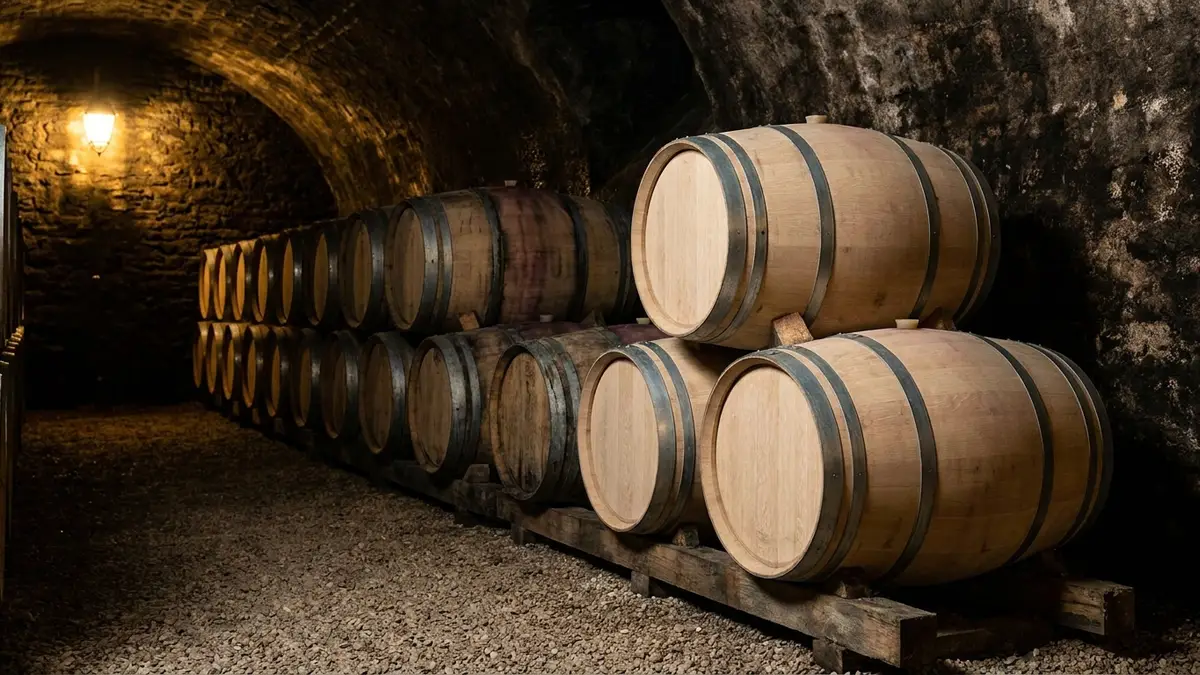
Steel adds nothing, so the grape's fruit and acidity (the tartness that makes your mouth water) stay sharp. Stainless steel is a style choice, not a sign of a cheap wine. Oak adds vanilla, toast and spice. The standard Bordeaux barrel holds 225 litres, and after 3 to 5 vintages it may give little or no oak flavour.
When a white ferments in the barrel rather than only aging there, it tends to come out paler and silkier. Our stainless steel vs oak comparison covers how the two vessels differ, and what oaked means lists the flavours each barrel gives.
Lees: why sur lie wines feel creamy
The lees are the spent yeast cells that sink after fermentation. Leaving a wine on them adds creaminess and a bready edge while keeping it fresh. Sur lie wines, like Muscadet from the Loire, are bottled straight off the lees without first being moved to a clean tank.
In Burgundy, winemakers often stir the lees back into the wine, a step called bâtonnage, for more texture.
What Happens to White Wine Before Bottling?
The wine is chilled, cleared and protected so it stays stable and clean in the bottle. Cold stabilization cools it to near freezing so tartaric acid crystals form in the tank before bottling. The crystals are then left behind when the wine is drawn off.
Crystals that still appear in a bottle are harmless. If you find them, leave the last sip in the bottle; tartrate crystals explains what they are.
Fining clears haze by adding a material that binds the cloudy particles so they settle out. Bentonite is a clay. Others come from animals: egg whites, casein from milk, gelatin and isinglass from fish. The agent rarely appears on the label. If a white needs to be vegan, look for a vegan statement from the producer; the vegan wine guide lists the markers.
A final dose of sulfur dioxide guards against oxidation and bacteria in the bottle. The rules on how much is allowed, and what "contains sulfites" means, are in our sulfites in wine guide.
How Can You Read the Winemaking on a Label?
Three label words do most of the work: unoaked or stainless steel, barrel-fermented, and sur lie. Each one names a switch from the cellar, so a back label can tell you before you pull the cork whether a white will taste sharp, toasty or creamy.
- Unoaked, stainless steel or inox means no oak flavour: expect crisp fruit and high acidity.
- Barrel-fermented means oak from the start: expect vanilla, toast and a silky texture.
- Sur lie means months on the lees: expect a creamy, bready edge on a fresh wine.
- Blanc de noirs means red grapes made white: expect pale gold with a faint bronze tint.
If none of these words appear, the grape and place carry the clue. A cool region and an aromatic grape like Riesling point to steel or neutral vats and no malolactic; Chardonnay from a warm region often points to oak. The full decoding is in how to read a wine label, and the tasting order for whites is in how to taste white wine.
The other ways cellars shape a wine, from fortifying to bubbles, sit together in the wine styles hub. The Sommy app has a Wine 101 course with bite-sized lessons on how wine is made. Pour a white tonight, find one of the three label words on the back, and taste for the switch it names.
Sources
Frequently Asked Questions
How is white wine made step by step?
Grapes are picked and often go straight to the press, sometimes as whole bunches. The juice settles, then yeast ferments it cool, usually at 18 °C or below, turning sugar into alcohol and carbon dioxide. The wine may then go through malolactic fermentation, rest in oak or steel, and sit on its lees. Finally it is chilled, cleared, protected with sulfur dioxide and bottled.
Can white wine be made from red grapes?
Yes. The flesh and juice of almost every grape is pale, and the colour sits in the skins. Press red grapes quickly and gently, ferment the juice away from the skins, and the wine comes out pale gold, often with a faint bronze tint. Sparkling blanc de noirs is the best-known example. Rare teinturier grapes with red flesh cannot make white wine.
Why is white wine pressed before fermentation but red wine after?
Colour and tannin come from the skins, and alcohol helps pull them out. Red wine ferments on its skins to collect both, then gets pressed. White wine wants neither, so the juice is pressed off first and ferments alone. That is why most whites have almost no tannin and why their structure comes from acidity instead.
What temperature is white wine fermented at?
Most white wines ferment at 18 °C or below, often around 15 to 18 °C, compared with roughly 20 to 30 °C for reds. Cooler fermentation runs more slowly and keeps the delicate fruit and flower aromas that a warmer tank would lose. That is the main reason white wineries are full of steel tanks with cooling jackets.
Why does some Chardonnay taste buttery?
The butter comes from malolactic fermentation. Bacteria turn the grape's tart malic acid into softer lactic acid, and a byproduct called diacetyl smells like butter. Oak is a separate choice that adds vanilla and toast. A Chardonnay can have butter without oak, oak without butter, both or neither. Most Chablis goes through malolactic but skips new oak, and still tastes crisp and lemony.
What does sur lie mean on a wine label?
Sur lie is French for 'on the lees'. The lees are the spent yeast cells that settle after fermentation. A sur lie wine rests on them for months and is bottled straight from them without being moved to a clean tank first. The contact adds a creamy texture and a bready edge while keeping the wine fresh. Muscadet from the Loire is the classic example.
Are all white wines vegan?
Not always. Many wines are cleared with fining agents before bottling, and some of those come from animals: egg whites, milk protein called casein, gelatin and isinglass from fish. Others, like bentonite clay, are not. Fining agents rarely appear on the label, so a white wine is only certainly vegan when the producer says so.
Sommy Team
LinkedInFounder & Wine Educator
The Sommy Team is building the world's most approachable wine education app, helping beginners develop real tasting skills through structured courses and AI-guided practice.