Can You Make White Wine from Red Grapes? Yes, Here Is How

By the Sommy Team — AI-assisted, human-edited.
Updated Jun 17, 2026
Contents (9)
- Can You Make White Wine from Red Grapes?
- Where Wine Color Actually Comes From
- A Rare Exception: Teinturier Grapes
- How Winemakers Make Pale Wine from Dark Grapes
- Blanc de Noirs: White from Black Grapes in Champagne
- Still Wines Made the Same Way
- Rose Sits in the Middle
- The Reverse Barely Works: Red Wine from White Grapes
- Putting It Together
TL;DR
Yes, you can make white wine from red grapes because the pulp of nearly every grape is clear or pale green — color lives only in the skins. Press red grapes and ferment the juice without skin contact, and you get a pale, faintly bronze wine like blanc de noirs Champagne.
Can You Make White Wine from Red Grapes?
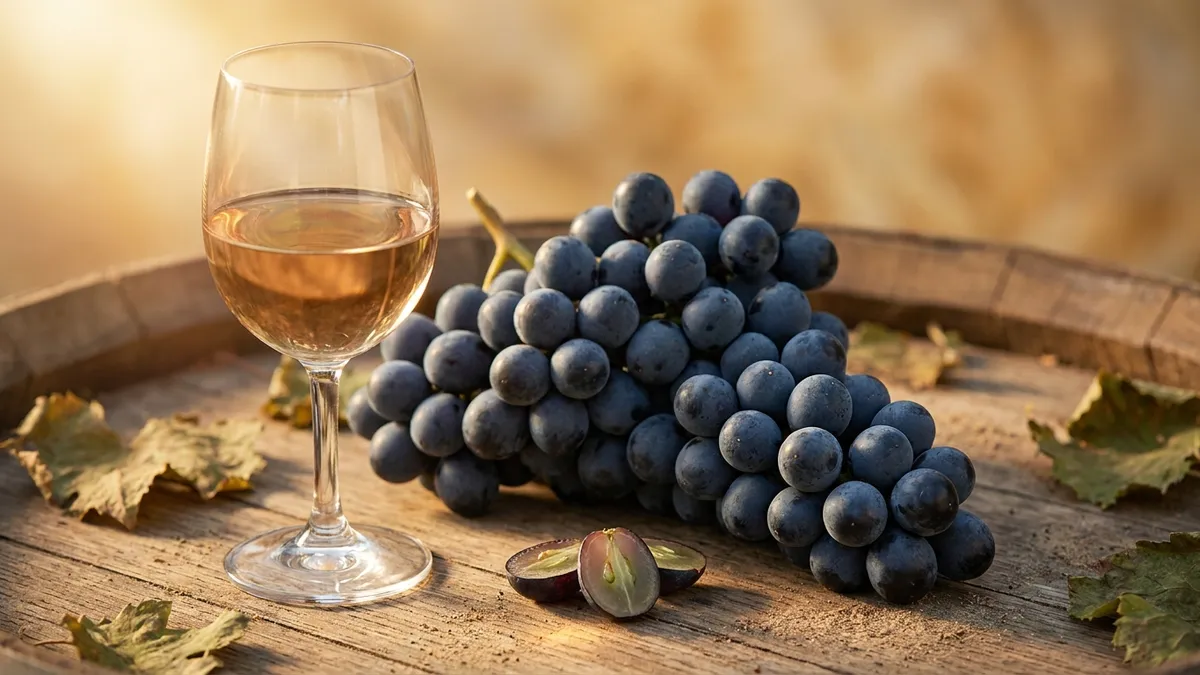
Yes, you can make white wine from red grapes, and winemakers do it on purpose every year. The trick is one fact most drinkers never learn: the juice inside almost every wine grape is clear or pale green, no matter what color the skin is. Color lives in the skins, not the pulp. Press a dark-skinned red grape gently, run the clear juice off before it picks up much pigment, and ferment it with no skin contact, and the result is a pale, white-style wine. The most famous example is blanc de noirs Champagne, made entirely from red Pinot Noir and Meunier yet poured pale gold. Still pale wines work the same way. The finished wine usually looks faintly bronze rather than water-white, because a little pigment always sneaks through.
Where Wine Color Actually Comes From
The single idea that makes everything else click is this: grape pulp is almost always colorless. Cut open a Cabernet Sauvignon grape and a Chardonnay grape side by side, and the flesh inside looks identical — clear, slightly green, watery. The dramatic difference between a deep purple red and a pale straw white happens in the skin.
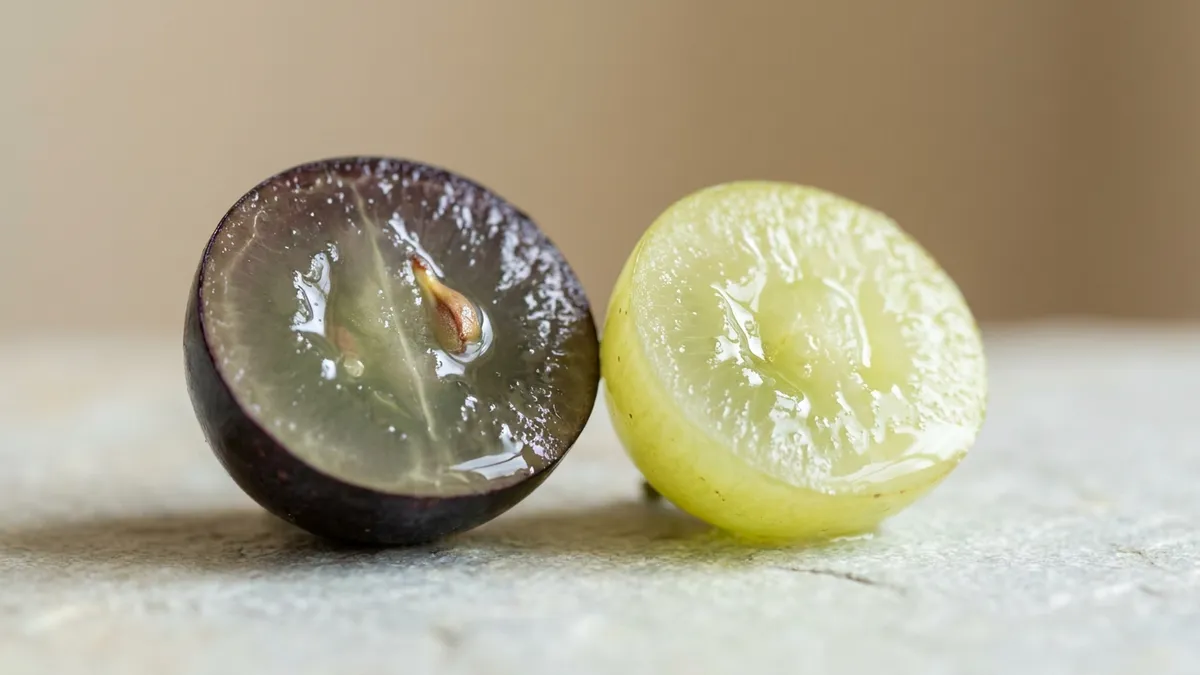
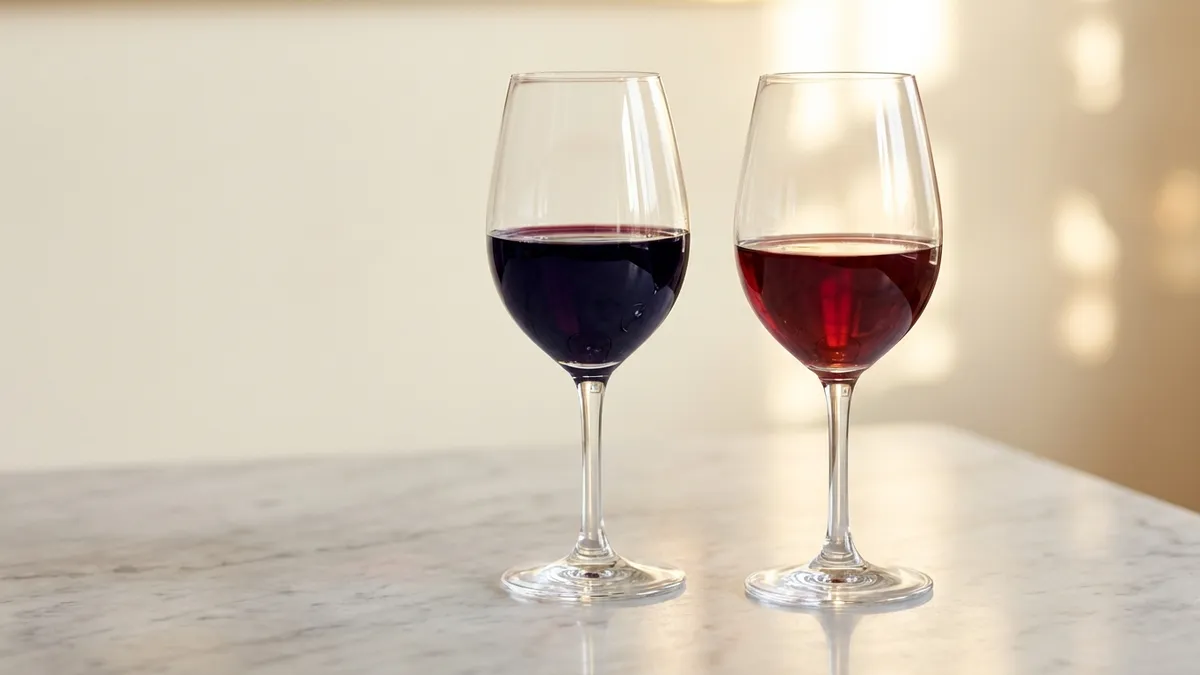
Skins of dark grapes are packed with pigment compounds called anthocyanins (the molecules that give red and purple plants their color). When red wine ferments, the juice sits in contact with those skins for days or weeks, and the alcohol pulls the anthocyanins out into the wine. That extraction is what turns clear juice into ruby, garnet, or inky purple liquid. The same process drags out tannins (the drying, grippy compounds that give red wine its structure and bite).
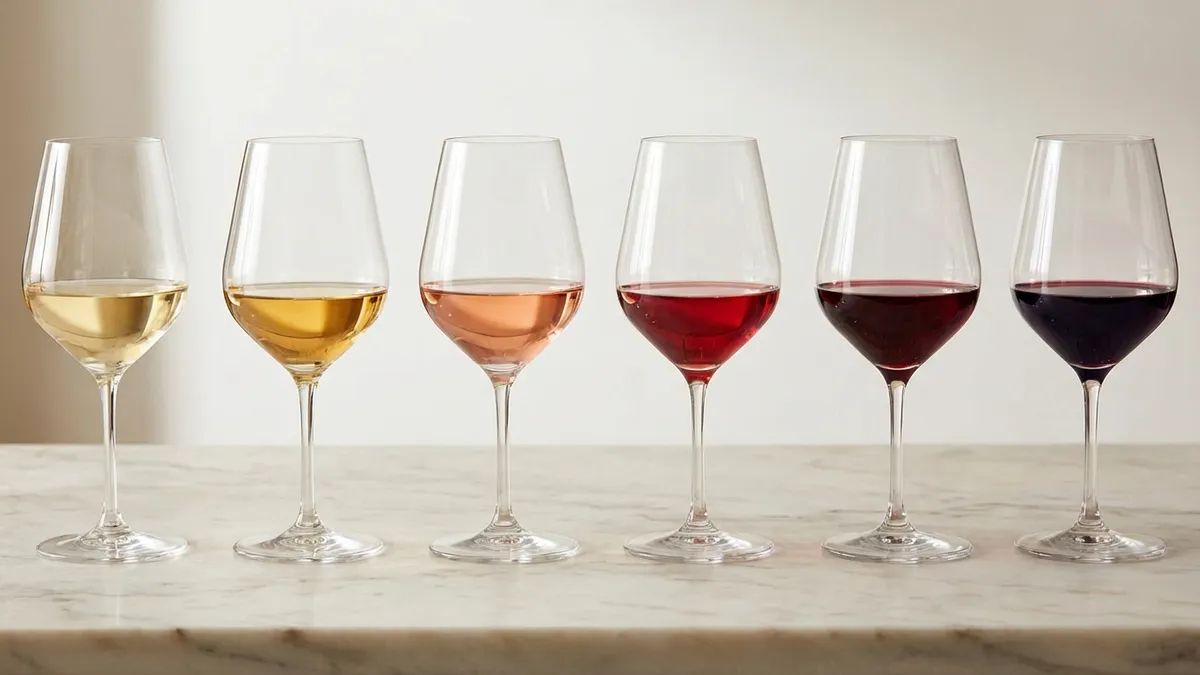
So the color of any wine is really a story about skin contact:
- Red wine — dark-skinned grapes fermented in long contact with their skins, extracting maximum pigment and tannin.
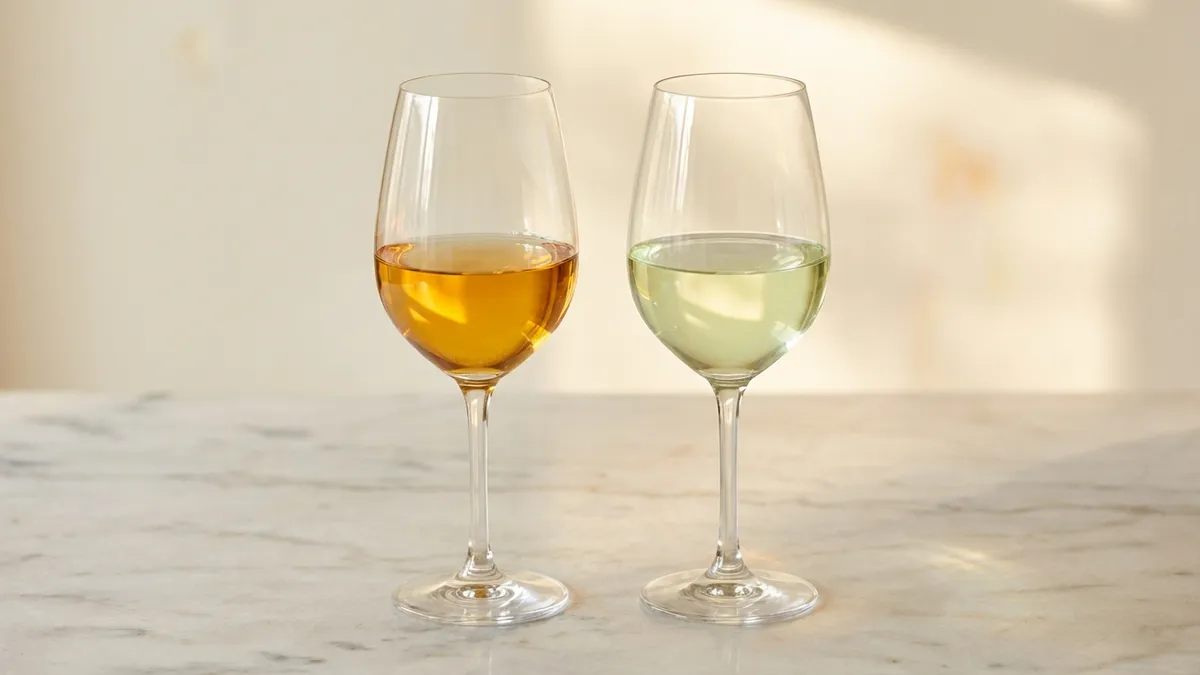
- White wine — pale or dark grapes pressed first, with the clear juice fermented away from the skins.
- Rose wine — dark-skinned grapes with a short, controlled rest on the skins, just long enough to tint the juice pink.
Once you see color as a dial controlled by skin contact rather than a fixed property of the grape, making white wine from red grapes stops sounding strange and starts sounding obvious.
Sommelier tip: The next time you look at a glass, remember that the color in front of you is mostly a record of how long the juice touched the skins, not a guarantee of which grape went in.
A Rare Exception: Teinturier Grapes
There is one small wrinkle worth knowing. A handful of grape varieties, called teinturier grapes (French for "dyer"), have red-stained flesh and red juice, not just red skins. Alicante Bouschet is the best-known example. These are the genuine exceptions to the colorless-pulp rule, and they are used in tiny quantities to deepen the color of some blends.
For practically every grape you will ever drink, though, the pulp is clear. Teinturiers are the asterisk, not the norm — and they are exactly why you cannot easily flip the trick the other way around, which we will come back to.
How Winemakers Make Pale Wine from Dark Grapes
Turning red grapes into white wine is a matter of timing and gentleness. Speed and a soft touch keep pigment out of the juice.
Press First, Ferment Without Skins
In ordinary red winemaking, the grapes are crushed and the juice ferments right on top of the skins. To make white-style wine from red grapes, the winemaker reverses the order:
- Whole-cluster or whole-berry pressing — the grapes are pressed gently and quickly so the juice runs off before it sits on the broken skins.
- Juice run-off — the clear or barely tinted juice is separated from the skins immediately, often within minutes.
- Skin-free fermentation — the juice ferments alone, the same way classic white wine is made, so no extra pigment or tannin is extracted.
The result is a wine with the freshness, acidity, and aromatics of the juice, but none of the color, tannin, or dark-fruit grip that skin contact would have added. To understand what those structural elements do to a wine, the guide to tannins, acidity, and body breaks each one down.
Why It Looks Bronze, Not Water-White
Even the gentlest press is not perfect. A trace of pigment and phenolic material always crosses from skin to juice during crushing and pressing. That is why white wine from red grapes is rarely as pale as, say, a young unoaked white from green grapes.
- Pale gold to bronze — the typical color, a warm straw shade with a faint coppery or pinkish edge.
- The harder the press, the deeper the tint — squeeze more firmly and more pigment comes out, pushing the wine toward salmon or onion-skin.
- The faster the run-off, the paler the wine — quick, soft pressing keeps the juice closest to colorless.
That faint bronze cast is not a flaw. It is the visual signature of the grape's origin, and a useful clue when you are practicing your eye. Building that kind of observation is exactly what structured wine tasting practice trains, and the Sommy app walks you through color assessment step by step so the difference between a true white and a blanc de noirs becomes easy to spot.
Blanc de Noirs: White from Black Grapes in Champagne
The clearest real-world proof that you can make white wine from red grapes is blanc de noirs, French for "white from blacks." It is a pale wine — usually sparkling Champagne — made entirely from dark-skinned red grapes.
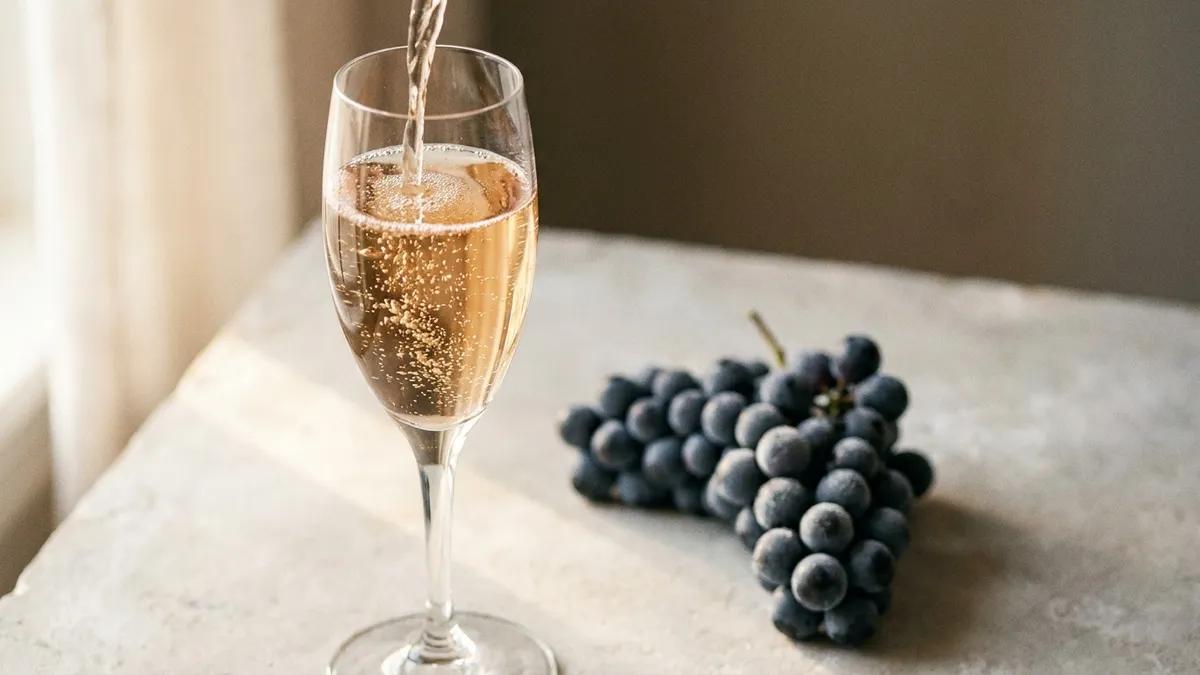
Champagne is built on three main grapes, two of them red:
- Pinot Noir — a noble red grape that brings structure, body, and aging potential to the blend.
- Meunier — another dark-skinned red grape, softer and fruitier, prized for approachability and early charm.
- Chardonnay — the white grape of the trio, used on its own in blanc de blancs (white from whites).
A blanc de noirs uses only the two red grapes, Pinot Noir and Meunier, pressed so quickly and gently that the juice never reddens. Both Pinot Noir and the white workhorse Chardonnay have their own dedicated guides if you want to go deeper on the grapes behind Champagne, and the broader noble grapes overview puts them in context with the rest of the wine world.
The reason Champagne can lean so heavily on red grapes comes down to that same pressing discipline. Sparkling-wine houses press whole clusters in wide, shallow presses precisely to keep skin contact to a minimum. If you are curious how this fits into the wider category, the guide to sparkling wine grapes covers which varieties go into bubbles around the world, and the comparison of Champagne, Prosecco, and Cava shows how method and grape choice shape the final glass.
The takeaway: A glass of pale, fizzy blanc de noirs is poured from grapes dark enough to make a deep red wine. Only the winemaking changed.
Still Wines Made the Same Way
Sparkling wine gets the spotlight, but the technique works for still, non-fizzy wines too. Some producers make pale, dry still wines from red grapes by pressing and fermenting without skin contact. These are less common and rarely labeled blanc de noirs, but they exist, and they show off the grape's fruit in a lighter, fresher form than a full red ever could.
A still white from Pinot Noir, for instance, tends to show:
- Pale color — straw to faint bronze, just like the sparkling version.
- No tannin — without skin contact there is nothing to make the wine grippy or drying.
- Delicate red-berry hints — a whisper of strawberry or cherry from the trace of skin, layered under apple and citrus.
It tastes like a white wine, not a watered-down red, because almost everything that defines red wine — the color, the tannin, the dark fruit — comes from the skins that were left behind.
Rose Sits in the Middle
If white-from-red skips skin contact and red wine maximizes it, rose sits neatly between the two. Rose is made from dark-skinned grapes given a short, deliberate rest on their skins, long enough to tint the juice pink but not long enough to build a full red.
- White from red grapes — essentially no skin contact, so the wine stays pale gold.
- Rose — a few hours to a couple of days of skin contact, enough to pull out pink pigment but little tannin.
- Red wine — days or weeks of skin contact, extracting full color and tannin.
The pink in your glass is simply the dial set partway. For the full picture of how pink wine is made and the styles it comes in, the rose wine guide covers it in detail. Seeing rose as a midpoint makes the whole color spectrum click into place.
Skin contact is the period during which grape juice sits in contact with the grape skins, extracting color, tannin, and flavor. More skin contact means a darker, more tannic wine; little or no skin contact keeps a wine pale.
The Reverse Barely Works: Red Wine from White Grapes
Here is where the symmetry breaks. You can make white wine from red grapes with ease, but you cannot easily make red wine from white grapes. The reason is the same fact that started this whole article: color lives in the skins.
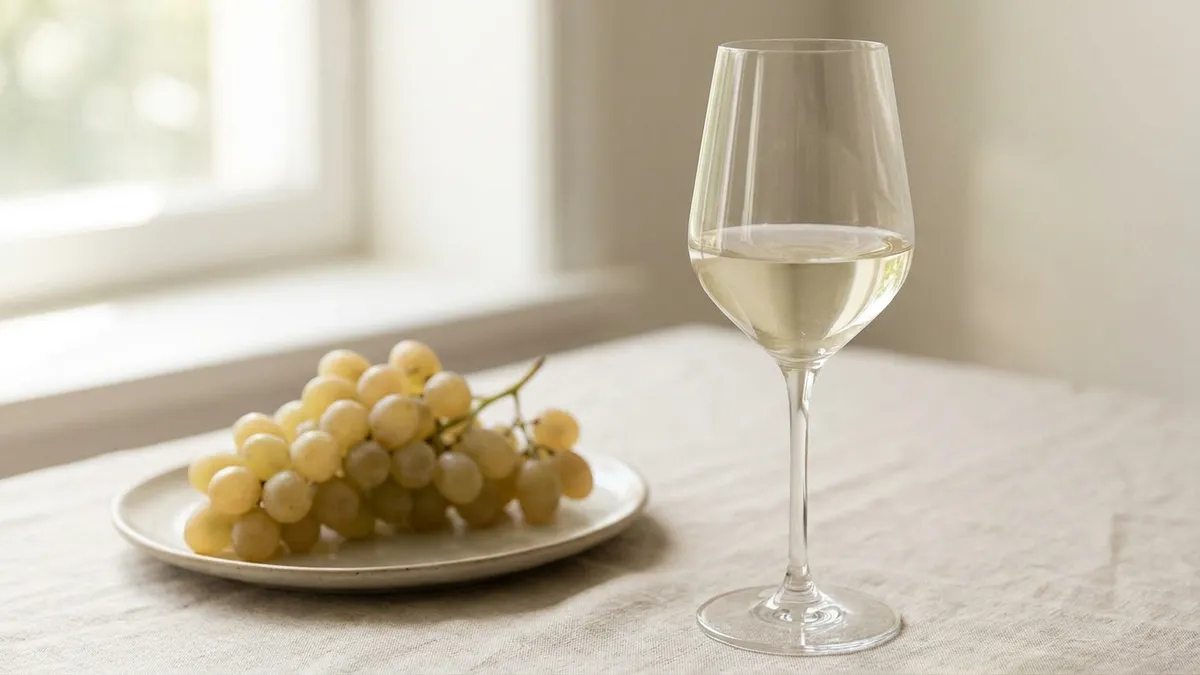
White grapes have pale green or golden skins with little or no red pigment. There is simply nothing in them to extract. No matter how long you ferment white-grape juice on its skins, you will not get ruby or garnet — you will get a deeper, more textured, possibly amber-toned white wine (sometimes called an orange or skin-contact wine), but never a true red.
The asymmetry comes down to what each grape carries:
- Red grapes — pigment-rich dark skins plus clear pulp, so the winemaker can choose to extract color or leave it behind.
- White grapes — pale skins with no red pigment to extract, so there is no red color to draw out in the first place.
The only workarounds are the teinturier grapes mentioned earlier, with their genuinely red flesh, or blending in pigment from a colored variety. Neither lets you conjure red wine from a pale-skinned grape on its own. That difference in skin character is also why some grapes can do things others cannot, a theme explored in the look at thick versus thin-skinned grapes and the surprising ways grapes that look the same can taste different.
Putting It Together
The headline answer is simple: yes, white wine from red grapes is real, common, and delicious. It works because grape pulp is almost always clear, so color is a winemaking decision made at the press, not a fixed trait of the fruit. Skip skin contact and a dark grape gives a pale wine; allow a little and you get rose; allow a lot and you get red.
That one principle — color lives in the skins — unlocks blanc de noirs Champagne, pale still wines from Pinot Noir, the entire rose category, and the reason the trick cannot be reversed for white grapes. Once it clicks, you read wine in a deeper way: the color in your glass becomes a clue about how the wine was made, not just what went into it.
Learning to connect what you see, smell, and taste is exactly the skill that turns a casual drinker into a confident one. The Sommy app builds that skill one glass at a time, with guided practice that helps you put words to color, aroma, and structure. Start noticing the faint bronze in a blanc de noirs, and you have already begun tasting like someone who understands what is in the glass.
Sources
Frequently Asked Questions
Can you really make white wine from red grapes?
Yes. The flesh and juice of almost every wine grape are clear or pale green, so color comes only from the skins. If you press red grapes gently and ferment the juice without leaving it in contact with the skins, you get a pale, white-style wine. Blanc de noirs Champagne is the most famous example, made from red Pinot Noir and Meunier.
What is blanc de noirs wine?
Blanc de noirs means white from blacks. It is a pale wine, usually sparkling Champagne, made entirely from dark-skinned red grapes such as Pinot Noir and Meunier. The grapes are pressed quickly and the juice ferments with no skin contact, so the wine stays pale gold to faintly bronze rather than turning red or pink.
Why isn't white wine from red grapes completely colorless?
Even gentle pressing extracts a tiny amount of pigment and phenolic compounds from the skins, and the juice picks up subtle tints. That is why these wines often look pale gold, straw, or faintly bronze rather than water-white. The faster and softer the pressing, the paler the result, but a slight warm tint is normal.
What is the difference between this and rose wine?
Rose is made by letting red-grape juice rest on its dark skins for a short time, usually a few hours to a couple of days, which extracts just enough pigment to turn the wine pink. White wine from red grapes skips skin contact entirely, so almost no pigment is extracted and the wine stays pale gold instead of pink.
Can you make red wine from white grapes?
Not easily. White grapes have pale skins with little or no red pigment, so there is nothing to color the wine deep red. You cannot reverse the process the way you can with red grapes. The closest options are using a red-fleshed teinturier grape or adding pigment from other sources, which is why genuine red wine from white grapes is essentially impossible.
Which grapes are used to make blanc de noirs?
The two main grapes are Pinot Noir and Meunier, both dark-skinned red varieties grown widely in Champagne. Pinot Noir gives structure and aging potential, while Meunier adds fruit and approachability. Some still pale wines are also made this way from other red grapes, though Pinot Noir and Meunier are by far the most common choices.
Does white wine from red grapes taste like red wine?
No. Without skin contact, the wine has no tannin and very little of the dark-fruit character that defines red wine. It tastes like a white wine — crisp, fresh, often with apple, citrus, or stone-fruit notes and sometimes a faint red-berry hint. The texture and aromatics come from the juice, not the skins.
Is grape juice colored or clear inside the grape?
The juice and pulp inside almost every wine grape are clear or pale green, regardless of skin color. Slice open a red grape and the inside looks the same as a green grape. The deep red, purple, and black colors we associate with grapes live entirely in the skin, which is why winemakers control color by controlling skin contact.
Sommy Team
LinkedInFounder & Wine Educator
The Sommy Team is building the world's most approachable wine education app, helping beginners develop real tasting skills through structured courses and AI-guided practice.