Fruity White Wine Types: Which to Pick, by Fruit Family

By the Sommy Team — AI-assisted, human-edited.
Updated Oct 29, 2026
Contents (6)
TL;DR
The fruitiest white wines come from six grapes in three fruit families: Muscat, Gewürztraminer and Torrontés smell grapey and floral, Riesling and Viognier of apple and peach, Sauvignon Blanc of passion fruit or grass. Fruit is aroma and sweetness is sugar, so a dry label word or under 4 g/L means dry.
Fruity white wine types smell of grapes, peach or passion fruit, and most of them can be bottled fully dry. The fruit comes from scent molecules in the grape skins. The sugar is a separate matter, decided by how far fermentation runs, and the label can tell you the result. So pick a fruit family first, then read the label for sweetness.
Fruity White Wine Types, in One Paragraph
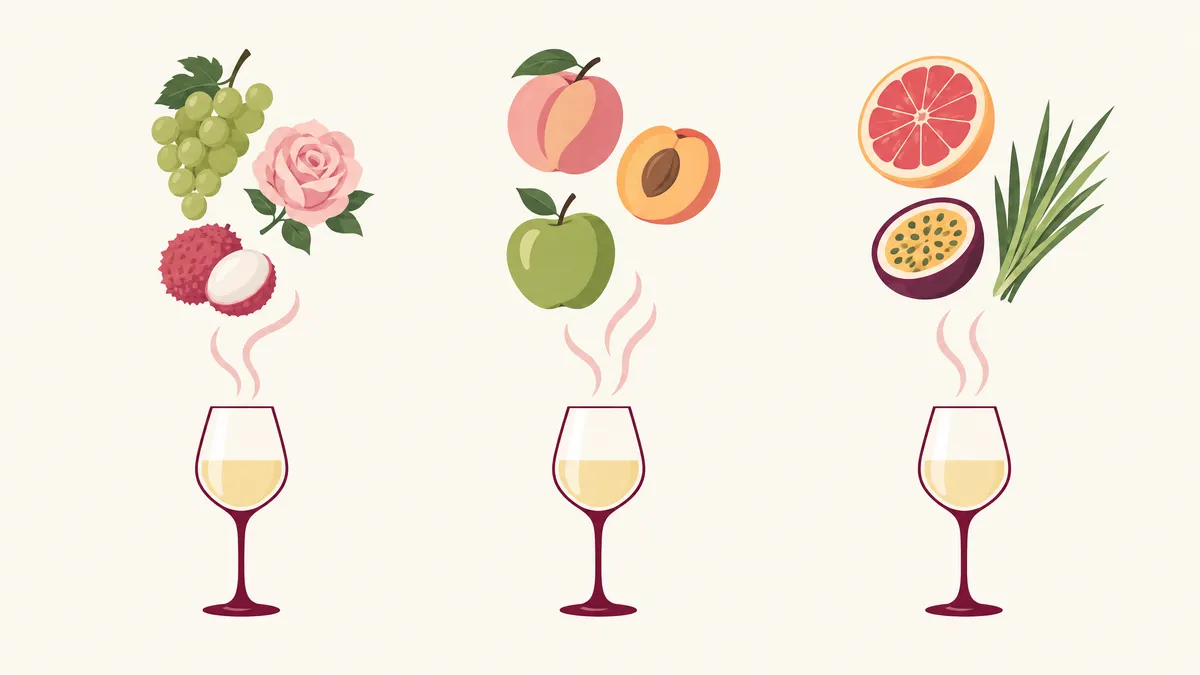
Six grapes make the fruitiest whites, and they fall into three families. Muscat, Gewürztraminer and Torrontés are grapey and floral, smelling of fresh grapes, roses and lychee. Riesling and Viognier are orchard and stone fruit, smelling of apple, pear and peach. Sauvignon Blanc is the tropical one, smelling of passion fruit when grown warm and cut grass when grown cool. Each of the six can be made dry. The two that most need a label check are Moscato d'Asti, which is sweet, and German Riesling, which runs from fully dry to sweet. The white grapes overview places these six among 20 white varieties.
| Grape | Fruit family | Smells of | What to expect | Pick it if |
|---|---|---|---|---|
| Muscat (Moscato) | Grapey and floral | Fresh grapes, flowers | Dry from Alsace; sweet and light as Moscato d'Asti | You want a wine that smells like the grape itself |
| Gewürztraminer | Grapey and floral | Lychee, rose, passion fruit | Low acidity, soft feel; dry to sweet | You like strong perfume and a round, soft glass |
| Torrontés | Grapey and floral | Peach, apricot, flowers | Usually dry, medium acidity | You want Muscat-style perfume with no sugar |
| Riesling | Orchard and stone fruit | Apple when cool, citrus and peach when warm | High acidity; trocken (dry) to sweet | You want fruit with mouth-watering tartness |
| Viognier | Orchard and stone fruit | Peach, pear, violet | Low acidity, full body | You want ripe fruit in a rich, soft white |
| Sauvignon Blanc | Citrus and tropical | Passion fruit when warm, cut grass when cool | Fresh and crisp | You want fruit with a green, zesty edge |
If you want fruit you can smell from across the table, start with the grapey and floral rows. If you want fruit with bite, start with Riesling.
Is a Fruity White Wine the Same as a Sweet One?
No. Fruitiness is aroma, made by the grape, and sweetness is residual sugar (grape sugar the yeast did not turn into alcohol). A wine can smell of ripe peach and hold almost no sugar. The brain links a fruit smell with sugar, so it can taste sweetness that is not there.
Two other things move the feeling of sweetness. Acidity (the tartness that makes your mouth water) hides sugar: a sweet Vouvray can taste dry because its acidity is so high. Alcohol does the opposite, so a dry wine with a high alcohol figure can taste sweet. That is why a soft, low-acid Gewürztraminer can seem sugary at the same sugar level as a crisp Riesling that tastes dry. The full ladder of label words is on the wine sweetness scale.
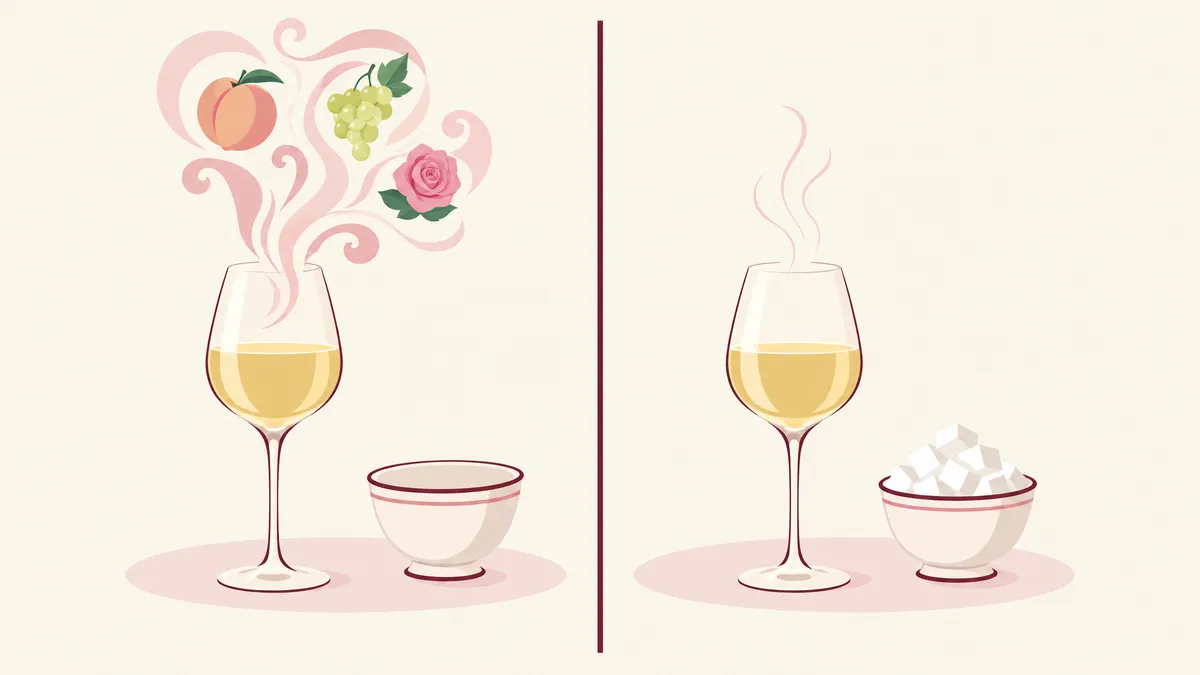
The test is the finish. If sugar is present, it coats the tongue and lingers after you swallow. If only aroma is present, the fruit fades and the mouth feels clean.

Quick check
One question on what you just read
A still white wine smells of ripe peach. What tells you it is not sweet?
Tap an answer to see how you did.
Which Fruity White Wines Smell Most Grapey and Floral?
Muscat, Gewürztraminer and Torrontés smell the most like fresh grapes, roses and lychee. Their skins carry high levels of terpenes (scent molecules that grapes also share with flowers and citrus peel). In Muscat the grapey smell comes mainly from three terpenes: linalool, geraniol and nerol.
Muscat is a large family of related grapes, and the family makes both sweet and dry wines. Muscat Blanc à Petits Grains is the main grape in Italy's sparkling Asti and the source of the grapey smell in Moscato d'Asti. Muscat Ottonel from Alsace and Central Europe usually makes dry, highly perfumed wine. If the label says Moscato d'Asti, expect sweet and light; if it says Muscat from Alsace, expect dry. The Muscat guide sorts the family and the Moscato guide covers the sweet Italian style.
Gewürztraminer shares its aroma compounds with lychees, which is why the two smell alike. Another molecule, rose oxide, adds the rose. Dry versions can also smell of passion fruit. The grape builds a lot of sugar and holds little acidity, so in hot places it can taste heavy. The Gewürztraminer guide covers its Alsace home.
Torrontés is one of Argentina's most widely planted white grapes. Its best-known type, Torrontés Riojano, smells close to Muscat and Gewürztraminer, with peach and apricot on top. It smells sweet but is usually made dry, as the Torrontés guide explains.
Which Fruity Whites Taste of Peach and Apple?
Riesling and Viognier are the stone-fruit whites, smelling of apple, pear and peach. Riesling pairs that fruit with high acidity and a crisp finish. Viognier pairs it with low acidity and a fuller body, so the same peach feels soft and round.
Riesling fruit is pronounced, and some of its smell comes from the same terpenes as Muscat. Where it grows changes the fruit: cool regions like Germany's Mosel give apple and other tree fruit, and warmer places give citrus and peach. The Riesling guide maps those regions.
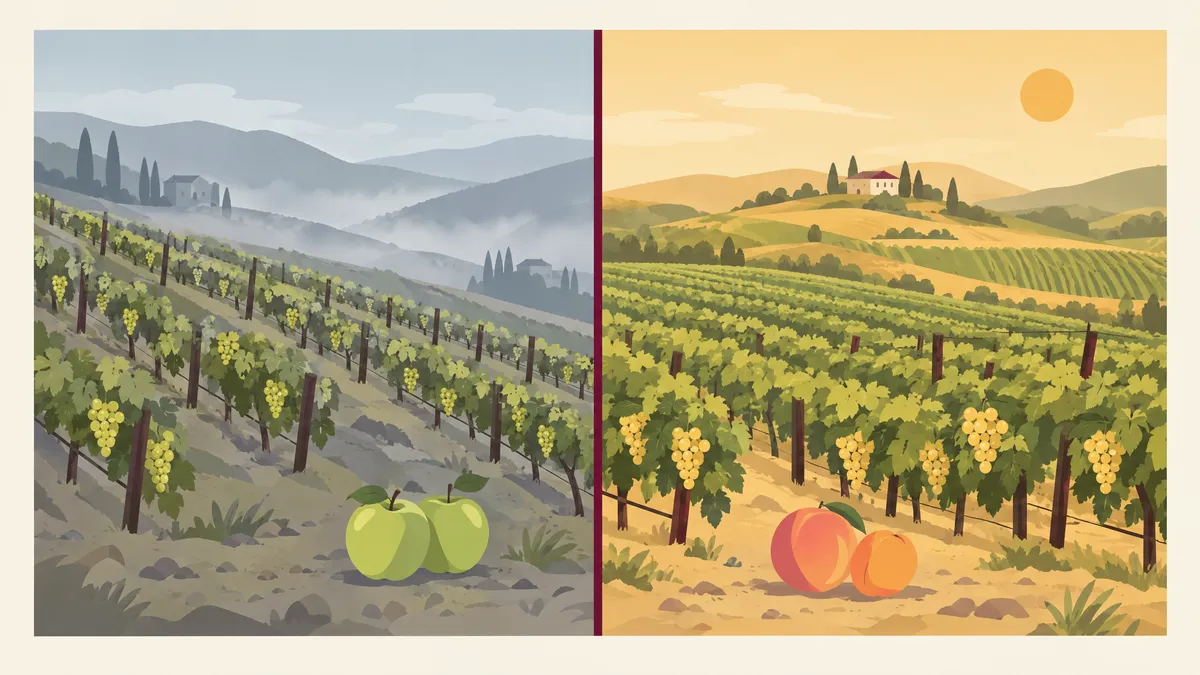
Viognier smells of peach, pear and violets. Its full body (the weight of the wine in the mouth, like whole milk against skimmed) makes it feel lush. It is the only grape allowed in Condrieu, in France's northern Rhône. The Viognier guide covers its other homes.
If you want peach with a crisp, clean finish, choose Riesling. If you want peach that feels round and soft, choose Viognier.
Is Sauvignon Blanc a Fruity White Wine?
Yes, when it is grown somewhere warm. Sauvignon Blanc swings with climate, from sharply grassy in cool places to sweetly tropical in riper ones. Green-pepper compounds give the grass of cool sites, and thiols (sulfur compounds that smell of passion fruit and boxwood) give the tropical side.
If you want passion fruit rather than grass, choose a Sauvignon Blanc from a warmer, riper site. The Sauvignon Blanc guide sorts its regions by style, and aromatic vs neutral grapes sets all six of these grapes against plainer whites like Chardonnay.
How Do You Pick a Fruity White That Is Not Sweet?
Read the label for a dryness word or a sugar figure, then choose a grape whose acidity keeps the fruit crisp. Under EU rules a still wine labelled dry holds at most 4 grams of sugar per litre, or up to 9 if its acidity is no more than 2 grams below the sugar.
If the label says dry, sec or trocken (German for dry), the wine is dry however fruity it smells. If the back label lists sugar, 4 g/L or less is dry. The back label guide shows where that number sits, and dry white wine lists the whites that taste driest.
Pick this if you want fruity but not sweet:
- Grapey and floral, no sugar: dry Muscat from Alsace or Torrontés.
- Peach with bite: Riesling labelled trocken.
- Peach, soft and full: Viognier.
- Tropical and zesty: a warm-grown Sauvignon Blanc.
- A little sugar on purpose: an off-dry wine such as a medium-dry Riesling, where the acidity balances the sweetness.
The rest of the white family sits in the grape varieties hub. The Sommy app adds bite-sized courses and a tasting mode where you photograph the label and get walked through each step. Buy one bottle from the pick-this-if list tonight and smell it before you sip.
Sources
Frequently Asked Questions
What is the fruitiest white wine?
Muscat is the white that smells most like fresh grapes, because its skins carry high levels of the scent molecules linalool, geraniol and nerol. Gewürztraminer and Torrontés come close, with lychee and rose in the first and peach and apricot in the second. All three can smell sweet in the glass even when the wine is fully dry.
What white wines are fruity but not sweet?
Dry Muscat from Alsace, Torrontés from Argentina, trocken Riesling from Germany, Viognier and Sauvignon Blanc all smell strongly of fruit with little or no sugar. Check the label for a dryness word such as dry, sec or trocken, or a back-label sugar figure of 4 grams per litre or less. Any of these will taste fruity without tasting sweet.
Is fruity wine the same as sweet wine?
No. Fruitiness is aroma, made by scent molecules in the grape skins. Sweetness is residual sugar, the grape sugar the yeast did not turn into alcohol. A wine can smell of ripe peach and hold almost no sugar, and the brain can read that fruit smell as sweetness. High acidity can also make a sweet wine taste drier than it is.
Is Riesling a fruity or a sweet wine?
Riesling is always fruity and only sometimes sweet. Its natural acidity is high and its fruit pronounced, with apple in cool regions like the Mosel and citrus and peach in warmer ones. German Riesling runs from fully dry, labelled trocken, through off-dry to sweet, so the label word decides the sugar, not the grape.
Is Moscato the fruitiest white wine?
Moscato is one of the fruitiest, because it comes from the Muscat family, whose wines smell of fresh grapes and flowers. Moscato d'Asti is the sweet, light version most people meet first. The same grape family also makes dry wines, such as Muscat Ottonel from Alsace and Central Europe, which keep the grapey perfume without the sugar.
Is Sauvignon Blanc a fruity white wine?
It can be. Sauvignon Blanc swings with climate, from sharply grassy in cool places to sweetly tropical in riper ones. The passion fruit smell comes from sulfur compounds called thiols, the grassy smell from green-pepper compounds. If you want the fruity side, choose one grown in a warmer, riper site and drink it young.
Sommy Team
LinkedInFounder & Wine Educator
The Sommy Team is building the world's most approachable wine education app, helping beginners develop real tasting skills through structured courses and AI-guided practice.