Torrontés: Argentina's Aromatic White Grape

By the Sommy Team — AI-assisted, human-edited.
Updated Apr 29, 2026
Contents (11)
TL;DR
Torrontés is Argentina's signature aromatic white grape, grown mostly in Salta's high-altitude Cafayate region between 1,700 and 3,000 meters. It smells of jasmine, rose, and orange blossom but tastes dry and crisp, often with a faint bitter finish. Three sub-varieties exist, with Torrontés Riojano producing the finest wines, descended from Muscat of Alexandria.
Torrontés wine is Argentina's most distinctive aromatic white — a grape with an extravagant floral perfume that tricks first-time drinkers into expecting sweetness, then surprises them with a dry, crisp finish. It is grown almost nowhere else in the world. While Argentina's Mendoza region gets the spotlight for Malbec, Torrontés is the white wine that defines the country's identity, and its finest expressions come from vineyards perched between 1,700 and 3,000 meters along the Andes.
This guide covers the three Torrontés sub-varieties, why Salta's Cafayate region produces the benchmark style, how to read the grape's surprising aromatic-to-palate contrast, and how to pair it with food.
What Is Torrontés Wine, in 90 Words
Torrontés wine is Argentina's signature aromatic white grape, grown mostly in Salta's high-altitude Cafayate region at 1,700 to 3,000 meters elevation. There are three sub-varieties — Torrontés Riojano (the famous one), Torrontés Sanjuanino, and Torrontés Mendocino — with Riojano producing nearly all premium examples. The wine smells intensely of jasmine, rose, and orange blossom but tastes dry with crisp acid and an occasional faintly bitter finish. Genetically descended from Muscat of Alexandria crossed with Listán Prieto, the grape pairs beautifully with spicy Asian food, ceviche, and goat cheese, and is best drunk young within one to two years.
A Brief History of the Grape
Torrontés is one of the few truly native Argentine grape varieties — though "native" needs an asterisk. The grape itself was born in Argentina, but its parents arrived from elsewhere. DNA analysis carried out in the 2000s confirmed that Torrontés Riojano (the most important of the three sub-varieties) is a natural cross between Muscat of Alexandria (an ancient Mediterranean aromatic grape) and Listán Prieto (a Spanish black grape that conquistadors carried to the New World in the 1500s).
The cross likely happened spontaneously in Argentina's northern provinces sometime after the arrival of Spanish vines, making Torrontés genuinely Argentine in a way that Malbec — a French import — is not. By the 19th century, the grape was widely planted across the country's warmer northern valleys, where its parent's vigorous habits suited the rugged terrain.
For most of the 20th century, Torrontés was treated as a workhorse grape used for cheap, high-volume wine. Quality-driven winemaking only arrived in the 1990s, when producers in Salta's high-altitude Cafayate Valley began bottling single-vineyard Torrontés that showed the grape was capable of genuine elegance and complexity. Today it remains one of the most quietly underrated white wines in the world.
The Three Sub-Varieties
When a label simply says "Torrontés," there is more going on than the name suggests. Argentina actually grows three distinct sub-varieties, and they are not interchangeable.
Torrontés Riojano is the star. Named for its historical association with the La Rioja province (not the Spanish Rioja region — different country, similar name), it is the most aromatic, the most balanced, and the only sub-variety that consistently produces world-class wine. Almost every premium Argentine Torrontés on a wine shop shelf is Riojano. It thrives in high-altitude sites and produces the signature jasmine-and-orange-blossom perfume.
Torrontés Sanjuanino is associated with the warmer San Juan province north of Mendoza. The wines are coarser, less aromatic, and often used for blending or bulk wine. Some producers are working to elevate Sanjuanino's reputation, but it remains the middle child of the three sub-varieties.
Torrontés Mendocino is the least aromatic and the least prestigious. Mostly grown in lower-elevation parts of Mendoza, it now appears almost exclusively in inexpensive blends. If you find a wine labeled simply "Torrontés," it is overwhelmingly likely to be Riojano — the other two are rarely bottled as varietal wines for export.
The takeaway: when a sommelier or wine writer talks about Torrontés, they mean Riojano unless they say otherwise.
Why Cafayate Matters
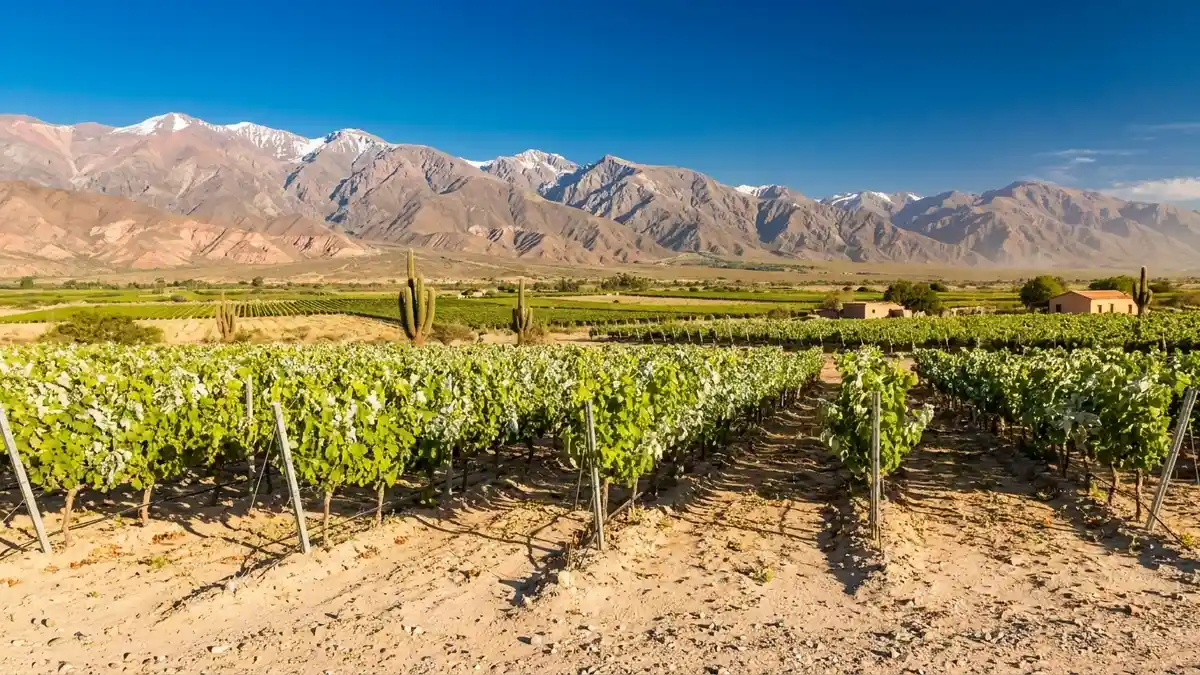
The Cafayate Valley, part of Argentina's Calchaquí Valleys in Salta province, is to Torrontés what the Mosel is to Riesling — the spiritual home and the benchmark for the style. The conditions are extreme:
- Elevation: most premium vineyards sit between 1,700 and 2,000 meters, with experimental plantings climbing past 3,000 meters
- Diurnal swing: daytime highs of 30 to 35°C drop to 10 to 15°C at night, a temperature swing of 20°C or more
- UV intensity: roughly 40 percent stronger than at sea level, due to thinner atmosphere and clear desert skies
- Rainfall: under 200 mm per year — essentially desert, irrigated by Andean snowmelt
This combination matters because Torrontés is unusually responsive to altitude. The grape's aromatic precursors — the molecules that become jasmine, rose, and orange blossom in the finished wine — develop in the grape skin in response to UV exposure. More sunlight, more aromatic compounds. At the same time, the cold nights preserve acidity that would otherwise burn off in the heat, keeping the wine fresh and mouth-watering rather than flabby and tropical.
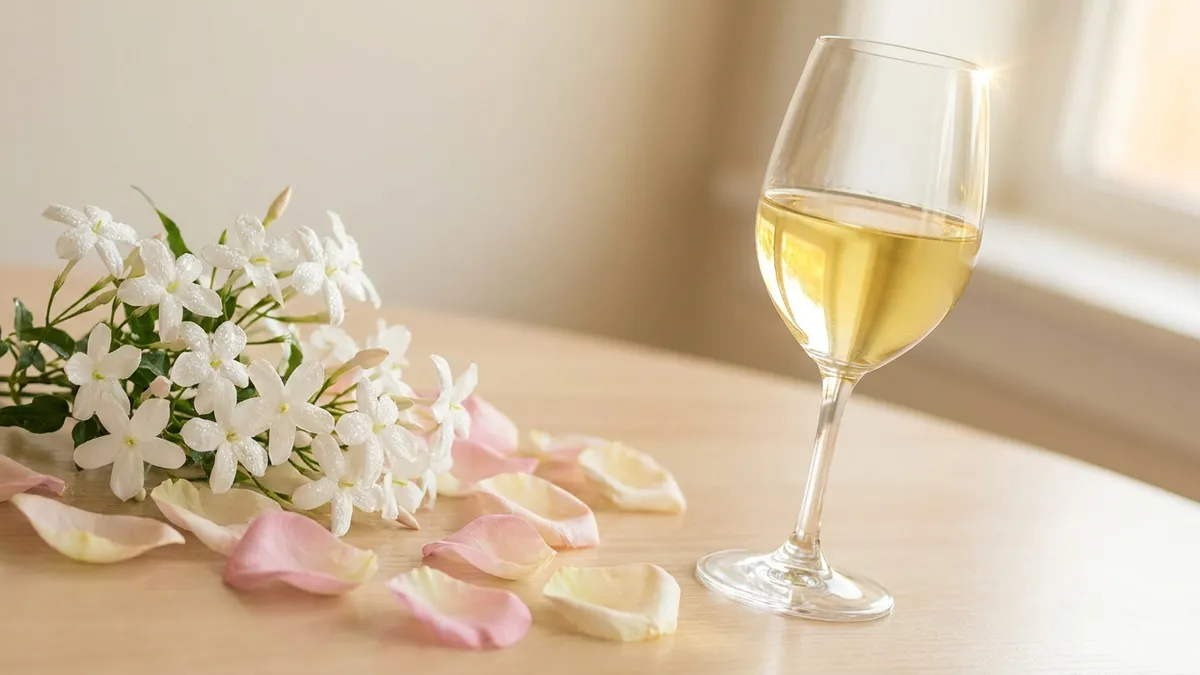
The result is a wine that smells almost impossibly perfumed — a glass of high-altitude Cafayate Torrontés will fill the air around your table — but tastes precise, dry, and refreshing. Lower-elevation Torrontés from warmer parts of Mendoza or San Juan can still be pleasant, but it tends to taste flatter, less aromatic, and sometimes bitter without the balancing acidity. Once you have tasted a good Cafayate example, the difference is unmistakable.
The Aromatic Profile
Torrontés is one of the most floral white wines in commercial production. The signature aroma vocabulary includes:
- Jasmine — the most distinctive note, intensely floral and slightly sweet-smelling
- Rose petal — soft, perfumed, sometimes shading toward Turkish delight
- Orange blossom — citrusy and floral at once
- Peach and apricot — ripe stone fruit, never tropical
- Lychee — a tell-tale Muscat-family note inherited from the grape's parentage
- Pink grapefruit and lemon zest — citrus brightness underneath the florals
- Honeysuckle and white flowers — rounding out the bouquet
For a primer on identifying these notes systematically, see the guide to floral notes in wine and how to smell wine properly.
A useful comparison: Torrontés is sometimes described as Gewürztraminer's lighter, brighter cousin. Both share the rose-and-lychee Muscat lineage, but Gewürztraminer is fuller-bodied, lower in acid, and oilier in texture. Torrontés keeps the perfume but pairs it with a leaner, fresher palate.
The Dry-Palate Paradox
Here is the trap that catches almost every first-time Torrontés drinker: the nose smells sweet, the palate is dry. Many people sniff a glass, register the perfume, and unconsciously assume the wine will taste like a sweet Moscato or off-dry Riesling. Then they take a sip and find a crisp, acidic, dry wine — and feel disappointed because their brain set them up to expect something else.
This is not a flaw of the wine. It is a quirk of human perception. Aromas associated with sweet things (jasmine, rose, ripe peach) prime the brain to expect sugar, and when the sugar does not arrive, the wine can taste oddly austere even though the acidity level is appropriate for its style.
The fix is awareness. Tell yourself before you taste: this will smell sweet and taste dry. Once you stop expecting sugar, the wine reveals itself as a refreshing, food-friendly white with one of the most distinctive aromatic profiles in the world. This is exactly the kind of perceptual recalibration that structured tasting practice — like the kind built into the Sommy app — is designed to teach.
The Bitter Finish
Many Torrontés bottles, especially from warmer or lower-elevation sites, show a faint bitterness on the finish — a slightly grippy, almost rind-like quality similar to the bitterness of grapefruit pith. This is typical of the grape, not a fault. It comes from phenolic compounds in the skins, which accumulate during the grape's long sun exposure.
In the best Cafayate examples, the bitter finish is subtle, well-integrated, and even adds savory complexity. In lesser examples, it can dominate, leaving the wine feeling harsh on the tail. Producers manage this through careful pressing (pressing too hard extracts more phenolics) and limiting skin contact during fermentation.
For drinkers, the lesson is to look for high-altitude Salta examples and the most recent vintage. Both factors push the bitter finish into the "interesting accent" category rather than the "distracting flaw" one.
Food Pairings
Torrontés is one of the most versatile food wines in the aromatic-white category, and its strengths align almost perfectly with the cuisines that intimidate other whites.
- Spicy Asian food — Thai, Vietnamese, mild Sichuan, and Korean dishes. Torrontés has the aromatic intensity to stand up to fish sauce, ginger, lemongrass, and chili without being overwhelmed. See the guide to wine with spicy food for the science behind why this pairing works.
- Ceviche — the high acidity and citrus notes echo the lime cure on the fish, while the florals add a perfumed lift.
- Goat cheese — fresh, tangy chèvre with herbs is a classic pairing. The wine's acidity cuts the cheese's fat, while the florals complement the herbal notes.
- Sushi and sashimi — the clean palate and absence of oak make Torrontés a natural with raw fish.
- Empanadas — particularly chicken, cheese, or vegetable empanadas. Beef empanadas are better with Malbec.
- Summer salads with citrus vinaigrette — herbs, citrus, and Torrontés are made for each other.
- Grilled white fish — sea bass, snapper, or branzino with lemon and olive oil.
For more pairing ideas, see the comprehensive wine and food pairing guide.
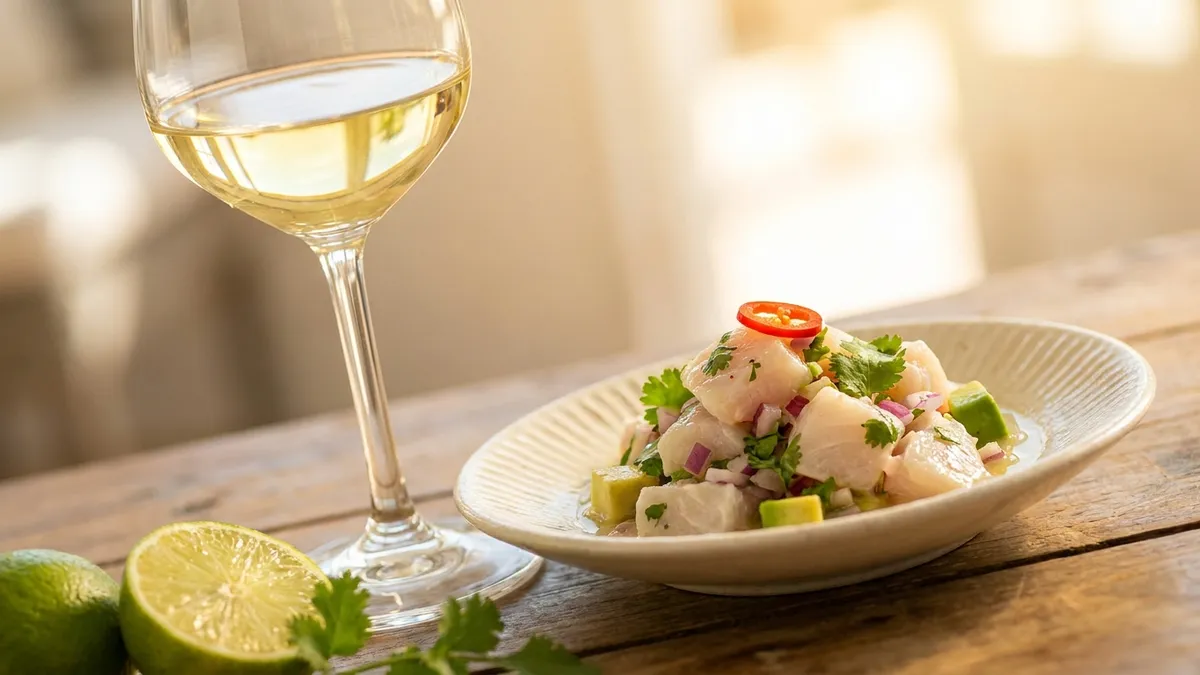
What does not work as well: rich cream sauces, heavy cheeses, red meat, or anything dominated by oak and butter. Torrontés is a wine of perfume and freshness, not weight and richness, and pairing it against weightier dishes drowns its aromatics.
Drink Young, Always
One of the most important rules with Torrontés: drink it young. The grape's appeal is built almost entirely on its primary aromatics — the explosive floral perfume that arrives when the wine is fresh. Those aromatics fade quickly, and they do not transform into complex tertiary notes the way Riesling's primary aromatics do. A two-year-old Torrontés can already feel tired, and a four-year-old bottle is usually past its prime.
When buying, look for the most recent vintage on the shelf. In the northern hemisphere, that means current-year or one-year-old bottles by late winter. The serving temperature also matters — Torrontés is at its best chilled to 8 to 10°C, cold enough to keep the perfume tight but not so cold that the aromatics shut down. Serve it in a tulip-shaped white wine glass that concentrates the bouquet at the rim.
Where Torrontés Sits Among the Aromatic Whites
Torrontés is part of a small club of intensely aromatic white grapes. Compared to its peers:
| Grape | Typical Aroma | Sweetness | Acidity | Best Region |
|---|---|---|---|---|
| Torrontés | Jasmine, rose, orange blossom | Dry | Crisp | Cafayate, Argentina |
| Gewürztraminer | Lychee, rose, ginger | Off-dry to dry | Low | Alsace, France |
| Muscat (dry) | Grape, orange peel, jasmine | Dry to sweet | Medium | Many regions |
| Riesling | Lime, peach, mineral | Dry to very sweet | Very high | Mosel, Germany |
| Viognier | Apricot, honeysuckle, peach | Dry | Low | Condrieu, France |
Torrontés stands out for the combination of intense Muscat-family perfume with a bone-dry, crisp palate — a balance Gewürztraminer cannot quite hit, and that other Muscat-family wines rarely match. Among the six noble grapes, Torrontés does not appear, but it deserves a place in any serious aromatic-white tasting flight.
Building Your Torrontés Tasting Skills
Torrontés is a fantastic grape for training your nose. The aromatics are so vivid and well-defined that even a beginner can pick out jasmine, rose, and orange blossom with a little focused practice. Pour a glass blind alongside a Sauvignon Blanc or a dry Riesling and the difference in perfume intensity is immediately obvious.
Try a focused comparison: a Cafayate Torrontés from a producer in Salta next to a lower-elevation Mendoza example. The aromatic difference between high-altitude and warm-valley Torrontés is one of the clearest demonstrations of how terroir shapes wine, and it requires no special equipment beyond two glasses and a willingness to pay attention.
The Sommy app's structured tasting exercises walk you through identifying the floral, citrus, and stone fruit aromas that define grapes like Torrontés — building the vocabulary one sip at a time. Argentina's signature white may be quietly underrated on wine lists worldwide, but in a glass it is one of the most distinctive and rewarding wines you can pour.
Frequently Asked Questions
Is Torrontés wine sweet?
No, despite its intensely floral aroma, Torrontés is almost always fermented dry. The perfume of jasmine, rose, and orange blossom tricks many tasters into expecting sweetness, but the palate is crisp and acidic. This contrast between aromatic richness and dry palate is the grape's signature trait and a common point of confusion for beginners.
What does Torrontés wine taste like?
Torrontés smells of jasmine, rose petal, orange blossom, peach, and lychee, with a perfume so intense it can fill a room. The palate is dry, light to medium bodied, with crisp acidity, citrus and stone fruit flavors, and often a faint bitter or grippy finish. It is one of the most aromatic dry white wines in the world.
Where is Torrontés grown?
Torrontés is grown almost exclusively in Argentina, with the finest examples coming from Salta's Cafayate Valley at 1,700 to 3,000 meters elevation. It is also planted in La Rioja, Catamarca, San Juan, and parts of Mendoza. Outside Argentina, small plantings exist in Chile, Spain, and Uruguay, but the grape's quality reputation is built almost entirely on Argentine Salta.
What are the three Torrontés sub-varieties?
The three are Torrontés Riojano, Torrontés Sanjuanino, and Torrontés Mendocino. Riojano is the finest and most planted, responsible for nearly all premium Argentine Torrontés. Sanjuanino tends to be coarser and is often used for blending. Mendocino is the least aromatic and now mostly relegated to bulk wine. When a label simply says Torrontés, it almost always means Riojano.
Why is Cafayate important for Torrontés?
Cafayate's altitude of 1,700 to 2,000 meters delivers extreme UV intensity and a 20°C diurnal swing between day and night. The intense light builds aromatic compounds in the grape skins, while the cold nights preserve acidity. The result is Torrontés with extraordinary floral perfume and a refreshing, mouth-watering finish — qualities that lower-elevation sites cannot match.
What food pairs well with Torrontés?
Torrontés is a natural partner for spicy Asian food, ceviche, sushi, fresh goat cheese, and herb-driven dishes. Its aromatic intensity holds up against Thai, Vietnamese, and Indian flavors, while the crisp acidity refreshes the palate between bites. It also works beautifully with empanadas, summer salads, and grilled white fish with citrus.
How long does Torrontés age?
Torrontés is best drunk young — within one to two years of the vintage. The grape's primary attraction is its vibrant, perfumed aromatics, which fade rapidly with age. Unlike Riesling or Chenin Blanc, Torrontés lacks the structural acidity and phenolic backbone needed for long aging. Look for the most recent vintage on the shelf for the best experience.
Is Torrontés related to other grape varieties?
Yes. DNA analysis confirmed that Torrontés Riojano is a natural cross between Muscat of Alexandria and Listán Prieto, an old Spanish black grape brought to the Americas by colonizers. The Muscat parentage explains the grape's intense floral perfume, while the Listán Prieto contributes structure. The cross likely happened spontaneously in Argentina centuries ago.
Sommy Team
LinkedInFounder & Wine Educator
The Sommy Team is building the world's most approachable wine education app, helping beginners develop real tasting skills through structured courses and AI-guided practice.