Protein Haze in Wine: Why Your White Wine Went Cloudy

By the Sommy Team — AI-assisted, human-edited.
Updated Sep 25, 2026
Contents (10)
- What Is Protein Haze in Wine, in One Paragraph?
- Is Cloudy White Wine Safe to Drink?
- Protein Haze, Tartrate Crystals or a Fault: How Do You Tell Them Apart?
- What Should You Do With a Hazy Bottle?
- Why Does Heat Turn a Clear White Wine Cloudy?
- Why Do Grapes Make Proteins That Cloud Their Own Wine?
- How Do Winemakers Prevent Protein Haze?
- Are There Alternatives to Bentonite?
- Why Does Natural or Unfiltered Wine Look Cloudy?
- How Do You Keep White Wine Clear at Home?
TL;DR
Protein haze is a soft cloudiness in white wine caused by grape proteins that unfold in warmth and clump together. It cannot be tasted and is safe to drink. Tartrate crystals settle on the bottom after cold; protein haze hangs through the glass after heat. Winemakers prevent it with bentonite clay before bottling.
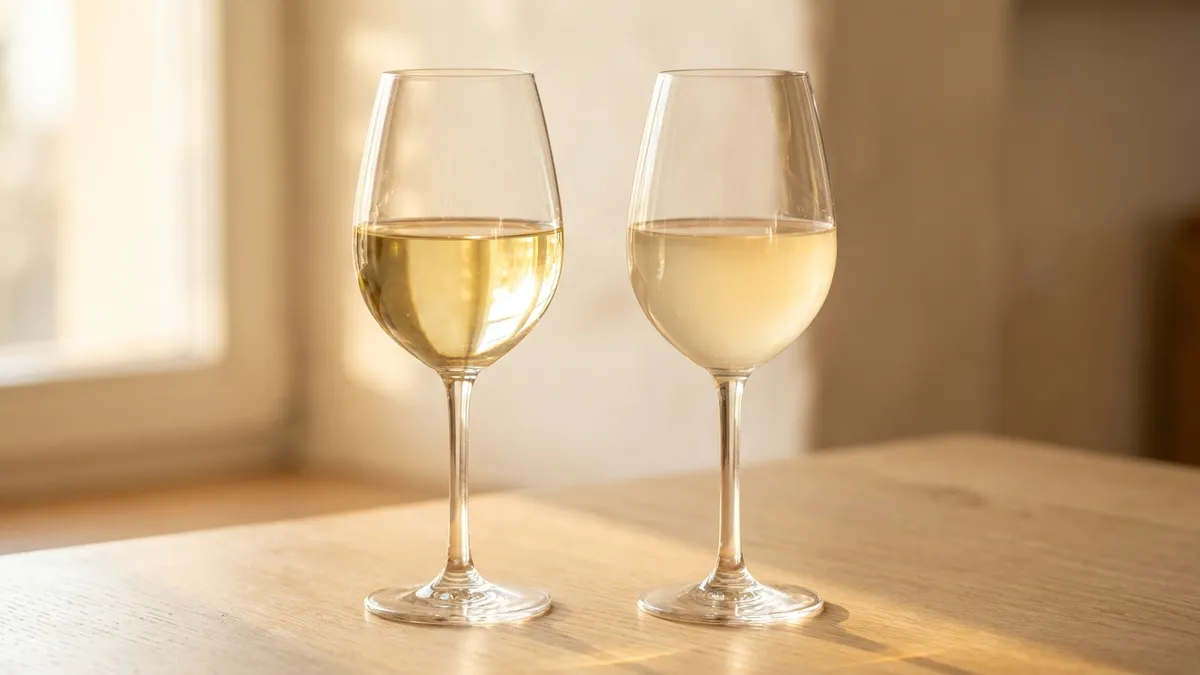
A white wine that turns cloudy in the bottle has usually been too warm, and the cloud is grape protein. That is protein haze in wine: a soft, even haze that looks alarming, cannot be tasted, and is safe to drink. Proteins from the grape survive fermentation, sit invisibly in the wine for months, and then clump when the bottle warms up. It shows up mostly in whites and rosés, because red wines usually carry enough tannin to pull those proteins out as they age.
What Is Protein Haze in Wine, in One Paragraph?
Protein haze is a cloudiness in white or rosé wine made of grape proteins that have unfolded and stuck together. A 2015 review in the Journal of Agricultural and Food Chemistry calls it "an esthetic problem": the proteins come from the grape, survive winemaking, and drop out of solution "over time" as the wine warms. Grape protein in wine ranges from about 10 to 300 mg/L. Winemakers remove it with a clay called bentonite, dosed between 60 and 1,800 mg/L. Skip or under-dose that step, then leave the bottle somewhere warm, and the haze follows.
Is Cloudy White Wine Safe to Drink?
Yes, when the cloudiness is protein haze. Purdue University's enology extension puts it plainly: "Protein hazes cannot be tasted; they are a purely aesthetic, visual problem in wine." The proteins came from the grapes, and the same proteins were in the wine when it was clear. Clumping changes only how they scatter light, so the flavour stays the same.
That makes a hazy white different from a spoiled one. Spoilage comes with a smell, because the microbes behind it produce vinegar, solvent or barnyard aromas as they grow. Protein haze produces nothing. A bottle that smelled of lemon and green apple before it went cloudy smells of lemon and green apple afterwards.
If the wine smells clean and the only problem is how it looks, drink it. If the haze comes with fizz in a still wine, a vinegar smell or a musty note, treat it as a fault. Our guide on how to tell if wine has gone bad lists the next checks.
Protein Haze, Tartrate Crystals or a Fault: How Do You Tell Them Apart?
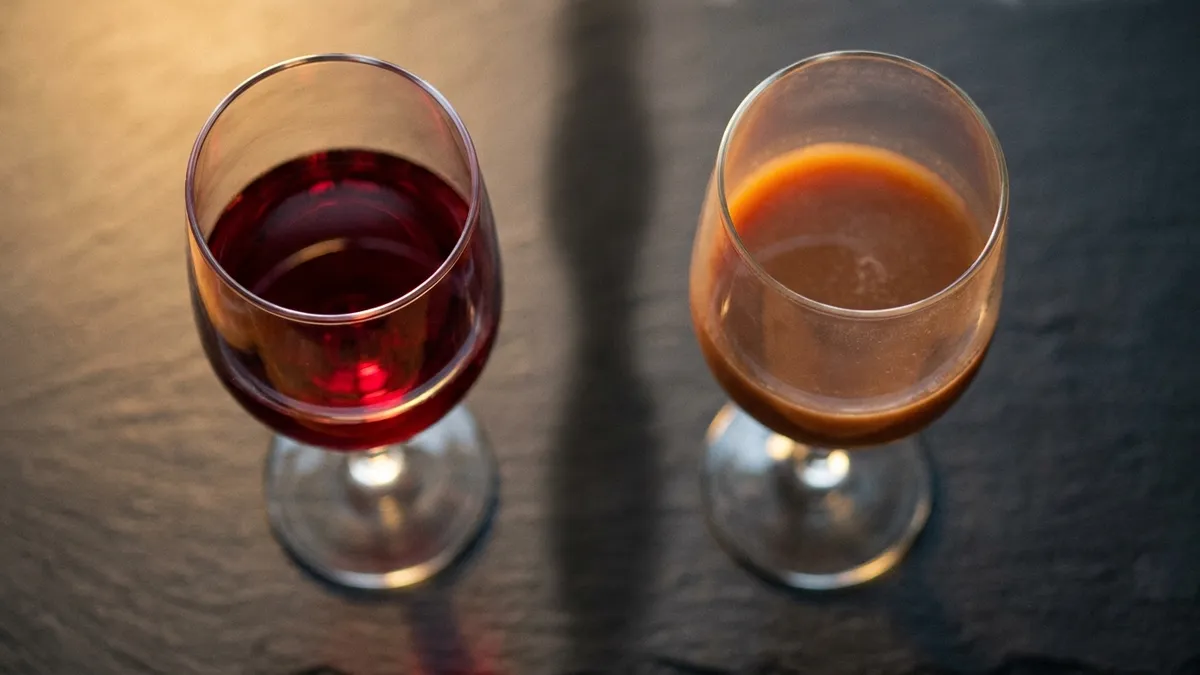
Check where the cloudiness sits and what the wine smells of. Protein haze hangs evenly through the glass and smells normal. Crystals and sediment sink. A microbial problem usually hangs and smells wrong. The 2015 review names these three causes of cloudy bottled wine: protein, tartrates and microbes.
The pair people confuse most is protein haze and tartrates (crystals of potassium bitartrate, a salt of the grape's main acid). They look alike at a glance and come from opposite triggers. Tartrates form when wine gets cold and, as Wine Spectator's Dr. Vinny notes, "never dissolve back into the liquid". Protein haze forms when wine gets warm. Winemakers fight the two with separate steps: bentonite for protein and cold stabilisation (chilling the wine near freezing so the crystals drop out in the tank) for tartrates.
| What you see | Likely cause | Trigger | Changes the taste? | What to do |
|---|---|---|---|---|
| Soft, even, milky haze through the whole glass | Protein haze | Warmth: hot car, sunny shelf, warm transport | No | Smell it; if clean, drink it |
| Clear glassy flakes on the bottom or the cork | Tartrate crystals | Cold: fridge, winter shipping | No | Pour gently and leave the last sip |
| Fine dark or beige grit that settles | Sediment or lees | Age in reds; unfiltered bottling in any wine | Slightly gritty if poured | Stand upright a day, then pour slowly |
| Cloudiness with fizz in a still wine or an off smell | Microbial spoilage or refermentation | Live yeast or bacteria in the bottle | Yes: sour, solvent or musty | Do not serve; return the bottle |
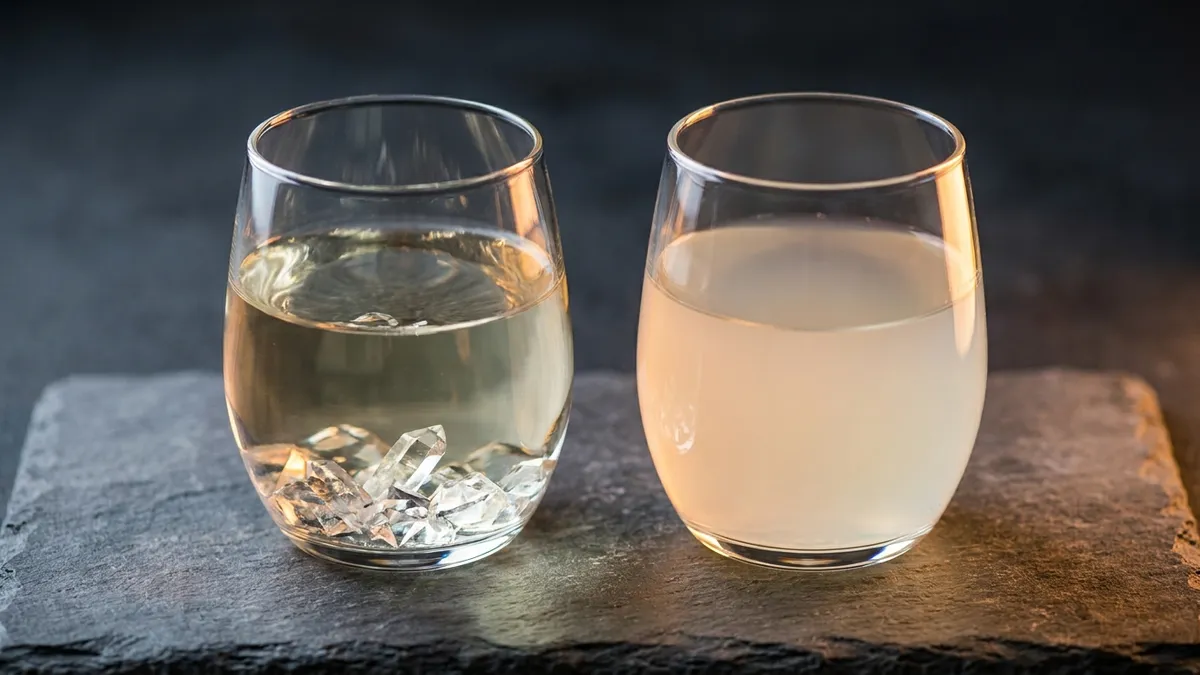
If the cloudiness sits at the bottom and the wine smells clean, you are looking at crystals or sediment. If it hangs everywhere and still smells clean, it is almost certainly protein. The full stories of the first two are in our guides to tartrate crystals and wine sediment, and refermentation in the bottle covers the fizzy case.
What Should You Do With a Hazy Bottle?
Smell it first, then decide. A clean smell of fruit, flowers or citrus means the haze is cosmetic, and the wine will taste the way it was made to taste. An off smell means stop, whatever the wine looks like. Our checklist on identifying wine faults by smell lists the smells to rule out.

Chilling will not clear it. Once the unstable proteins have clumped, the specks stay in suspension, and cold can add a second layer of trouble in the form of tartrate crystals. The clay treatment that removes haze is a winery job, so at home the choice is simply whether to serve the bottle.
If you are hosting and the look bothers you, pour the wine into a jug or decanter and serve it away from bright backlight, where the haze is least visible. If the bottle is new and was sold as a clear, filtered wine, ask the shop about it, because haze in a finished white means it was stored warm or not fully stabilised.
Why Does Heat Turn a Clear White Wine Cloudy?
Warmth makes the proteins unfold, and unfolded proteins stick together into specks big enough to scatter light. Folded, each protein is a small, tight ball that floats unseen. Unfolded, its sticky inner surfaces are exposed, and neighbouring proteins grab on. The clumps grow until the wine goes milky.
Two protein families cause most of it. Chitinases (enzymes that break down chitin, the tough material in fungal cell walls) unfold at around 55°C and never refold, so once damaged they keep clumping. The stable thaumatin-like proteins (TLPs, named after a sweet protein they resemble) unfold at around 61 to 62°C and can refold as the wine cools. Those numbers come from lab measurements summarised in the 2015 review. The damage builds up slowly at much lower temperatures than that.
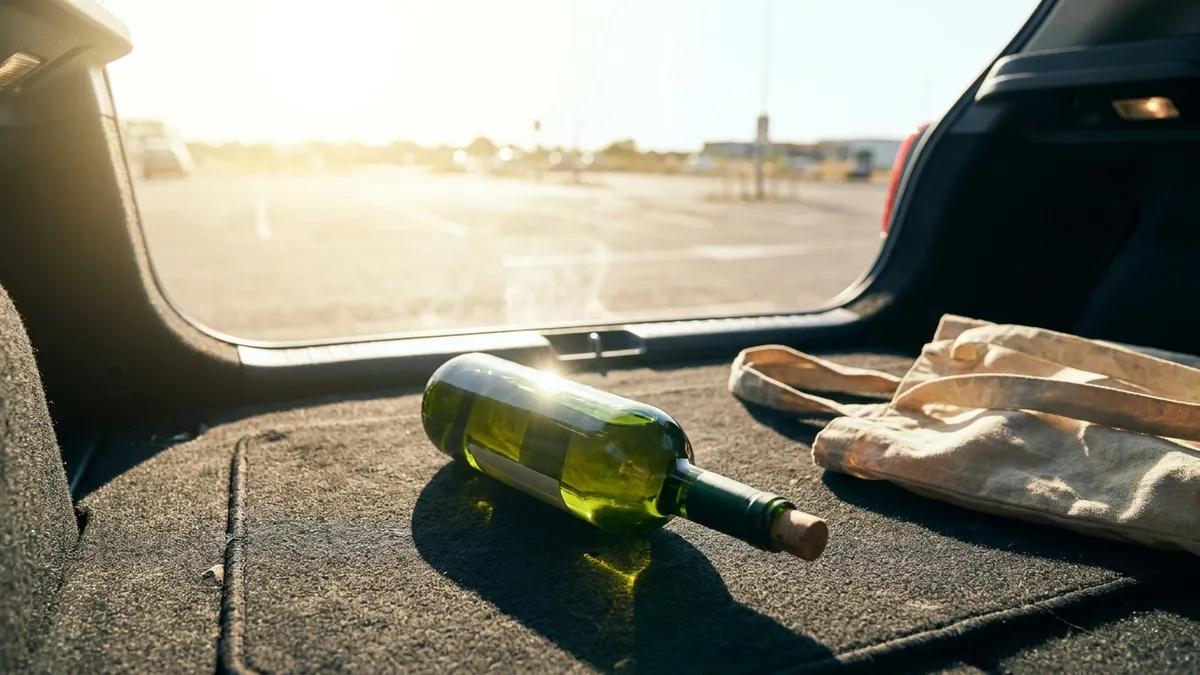
The review's predicted half-lives, calculated for a model wine, show why a hot car matters more than a slow year in the cellar. At 20°C, chitinases have a half-life of about 1 year, and TLPs more than 1,000 years. At 35°C, the chitinase half-life falls to about 14 hours, and the TLP half-life to 180 years. So chitinases are the usual culprit, and half a day in a 35°C boot does roughly what a year on a 20°C shelf does.
Two other features of the wine decide how fast haze appears. Acidity protects: in one study of Erbaluce, an Italian white grape, wine at pH 3.0 stayed clear when heated to 80°C. The same wine at pH 3.30 went hazy at 60°C. Sulfate, a salt present naturally in wine, speeds up clumping sharply. That is why the amount of protein alone predicts haze poorly, and two wines with the same protein load can react in opposite ways. For what heat does to the rest of the wine, see our guide to cooked wine and heat damage.
Why Do Grapes Make Proteins That Cloud Their Own Wine?
The proteins are part of the vine's defence against disease, and they are built tough enough to survive fermentation. Scientists call them pathogenesis-related proteins, or PR proteins: proteins a plant makes to fight fungi and other attackers. Chitinases, for example, attack the chitin in fungal cell walls.
The 2015 review describes the haze-forming ones as small (under 35 kDa, a unit of molecular weight), compact and ball-shaped. They carry a positive electric charge at wine's acidity and tolerate the low pH of juice and wine. The review describes them as highly stable during winemaking, so they pass through fermentation intact. Red wines are fermented on their skins, and skin tannins bind and drop most of these proteins out.
Disease changes the load. Juice from grapes infected with Botrytis cinerea, the fungus behind noble rot, had significantly lower levels of PR proteins than juice from healthy grapes, while powdery mildew infection had the opposite effect. The likely reason is the fungus's own enzymes: one Botrytis protease, BcAP8, breaks down grape chitinases, and wines made from juice treated with it formed significantly less heat haze. The sweet wines described in our noble rot explainer tend to start with less haze-forming protein than a clean-fruit white.
How Do Winemakers Prevent Protein Haze?
Almost always with bentonite, a clay that grabs proteins and drags them to the bottom of the tank. Clay particles carry a negative charge and the proteins a positive one, so they bind and sink together. This clarifying step is called fining. The 2015 review says protein stability in commercial winemaking "is almost always achieved" this way.
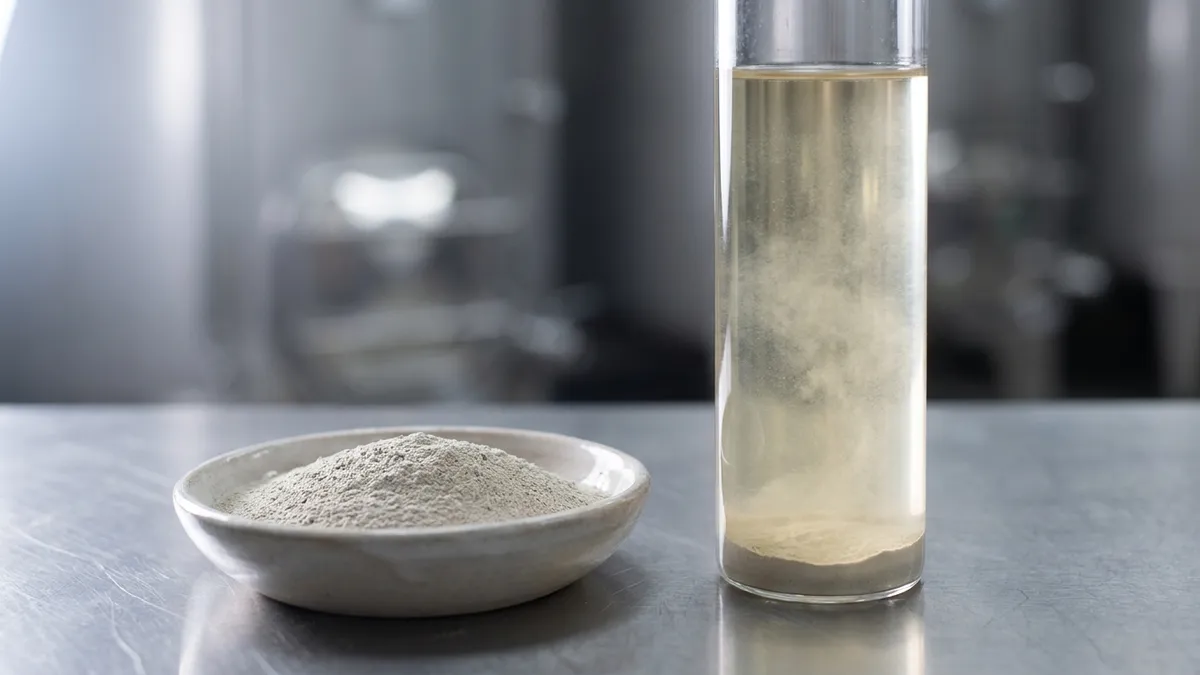
The dose is set by testing each wine. Purdue's enology professor Christian Butzke notes that removing the protein takes about six times its weight in clay. With protein at 10 to 300 mg/L, additions run from 60 to 1,800 mg/L, a spread of more than an order of magnitude between wines and vintages. Too little clay leaves unstable protein behind. Too much binds "desirable aroma compounds" along with it.
To find the right dose, winemakers run a bench trial. The Australian Wine Research Institute's method adds bentonite to samples at a range of doses, typically 0.1 to 1.0 g/L. Each fined and filtered sample then goes through a heat test: Purdue lists 49°C for 48 hours or 90°C for one hour as common versions. The lowest dose that stays clear wins. Bentonite works better at lower pH, because the proteins carry a stronger positive charge in more acidic wine.
The fix has a price. Protein-bound bentonite settles loosely, and the review puts the lees at around 3 to 10% of the original wine volume. Across the global wine trade, that lost wine and quality is estimated at around US$1 billion a year. Because it is a clay, bentonite is also one of the fining agents behind vegan wine.
Are There Alternatives to Bentonite?
Yes: heating the juice fast, alone or with a heat-tolerant enzyme, removes the same proteins, and one enzyme method is approved in Australia. Both treat the juice before fermentation, so no clay touches the finished wine and no wine is lost in clay lees.
- Flash heating. Purdue describes a high-temperature short-time treatment, similar to milk pasteurisation, at 80°C for 5 seconds. It "generally does not affect the quality of the fermented wine".
- Heat plus enzyme. Heating juice to 75°C for 1 minute with a heat-tolerant protease called AGP gave wines that were heat stable and almost free of haze-forming proteins. The 2015 review reports that AGP was recently approved for Australian winemaking and that its cost compared favourably with bentonite.
- Botrytis enzyme. The BcAP8 protease, taken from the noble rot fungus, breaks down chitinases without any heating. So far it has been shown to work in trials.
Bentonite still dominates in commercial cellars. The alternatives appeal most for aromatic whites, where the aroma bentonite can strip is the point of the wine.
Why Does Natural or Unfiltered Wine Look Cloudy?
Usually because the winemaker chose not to filter or fine it, so yeast and fine lees (spent yeast, which can add bread notes) stay in the wine. That cloudiness is there from the day of bottling, and it often settles if the bottle stands still for a day.
As Wine Spectator's Dr. Vinny puts it, "most wines start out cloudy, and some winemakers like to bottle their wine unfiltered and unfined." Protein haze appears later, in a wine that was bottled clear. If the label says unfiltered, unfined or "natural", expect a haze and stand the bottle upright for a day so the heaviest particles settle. If a wine sold as bright and filtered turns cloudy on your shelf, suspect protein and warmth. Our natural wine explainer covers the style, and the wine appearance guide has the full clarity scale from brilliant to cloudy.
How Do You Keep White Wine Clear at Home?
Keep whites cool and out of hot cars. The ride home matters as much as the rack, for the half-life reasons in the heat section. Put wine in the car last, keep it out of the boot on a hot day, and store it away from windows, radiators and the top of the fridge.
Our guide to storing wine at home covers the rest, and the faults hub maps every other thing that can go wrong in a bottle.
If a bottle has already spent an afternoon in the heat, drink it in the next few weeks rather than cellaring it. Low-pH wines with little protein may never haze, but heat can still age the rest of the wine early.
The Sommy app at sommy.wine teaches the look step as the first move of every tasting, alongside bite-sized courses such as Wine 101. Pour a white tonight and hold the glass up to a candle before your first sip. Check whether the flame looks sharp or blurred, and say the clarity word out loud.
Sources
- Van Sluyter et al. (2015), Wine Protein Haze: Mechanisms of Formation and Advances in Prevention, Journal of Agricultural and Food Chemistry
- Purdue Extension FS-53-W: Fining with Bentonite (Christian Butzke)
- Australian Wine Research Institute: Conducting a bentonite fining trial
- Wine Spectator, Ask Dr. Vinny: Why did my clear wine turn cloudy overnight?
Frequently Asked Questions
Is cloudy white wine safe to drink?
If the cloudiness is protein haze, yes. Protein haze is a purely visual problem: grape proteins have clumped into specks big enough to scatter light, and they cannot be tasted. Smell the wine before you drink it. A clean, fruity smell means the haze is cosmetic. Vinegar, nail polish, wet cardboard or fizz in a still wine points to a real fault instead.
Why did my white wine go cloudy?
The most likely cause is heat. Grape proteins that survived winemaking unfold when the bottle gets warm, then stick together into a visible haze. A hot car, a sunny shelf or a warm delivery van can all trigger it. If the wine went cloudy after a night in the fridge and the specks sank to the bottom, you are looking at tartrate crystals instead.
What is the difference between protein haze and tartrate crystals?
Protein haze is triggered by warmth and hangs evenly through the wine as a soft, milky cloud. Tartrate crystals are triggered by cold and form hard, glassy flakes that sink to the bottom or cling to the cork. Both are harmless and neither changes the flavour. Winemakers prevent haze with bentonite clay and crystals with cold stabilisation, two separate steps.
Does protein haze change how wine tastes?
No. Purdue University's enology extension states that protein hazes cannot be tasted. The same wine that tasted fresh and fruity before it went cloudy will taste the same afterwards. What can change the flavour is heavy treatment against haze: too much bentonite at the winery can strip some aroma compounds along with the proteins, which is why good winemakers test the dose first.
What is bentonite in wine?
Bentonite is a clay that winemakers stir into white wine to remove the proteins that cause haze. The clay particles carry a negative charge, the proteins carry a positive one, so they bind and sink together to the bottom of the tank. The wine is then drawn off above the sediment. Because it is a clay, bentonite is also suitable for vegan wines.
Why is some natural wine cloudy?
Most natural and low-intervention wines are cloudy by choice. The winemaker skips filtering and fining, so yeast cells and fine lees stay suspended in the wine. That cloudiness is part of the style and is present from the day of bottling. Protein haze is different: it appears later, in a wine that was clear when bottled, usually after exposure to warmth.
Can you fix a cloudy bottle of wine at home?
Not reliably. Protein specks are far too fine to settle quickly, and the clay treatment that removes them belongs in a winery. What you can do is decide whether to drink the bottle. If it smells clean and fruity, serve it as it is; the haze has no flavour. If you are hosting and care about looks, pour it into a jug or decanter away from bright light.
Sommy Team
LinkedInFounder & Wine Educator
The Sommy Team is building the world's most approachable wine education app, helping beginners develop real tasting skills through structured courses and AI-guided practice.