Copper Haze in Wine: What It Looks Like and Why It Forms

By the Sommy Team — AI-assisted, human-edited.
Updated Oct 1, 2026
Contents (8)
- What Is Copper Haze in Wine, in One Paragraph?
- How Do You Tell Copper Haze From Other Cloudy Wine?
- What Should You Do With a Hazy Bottle?
- What Causes Copper Haze to Form?
- Where Does the Copper in Wine Come From?
- Why Do Winemakers Add Copper to Wine?
- How Do Winemakers Prevent and Treat Copper Haze?
- Why Are Red Wines Rarely Affected?
TL;DR
Copper haze, or copper casse, is a cloud of copper sulfide that forms in a sealed bottle when leftover copper meets sulfur without oxygen, faster in warmth. It shows as pale flecks or a brown deposit, mainly in whites and rosés. The copper comes from vineyard sprays or a rotten-egg fix in the cellar.
Copper haze is what happens when a winery's fix for one fault plants a second one. Copper is added to clear a rotten-egg smell, or it rides in on vineyard sprays. If too much stays in the wine, it reacts with sulfur in the sealed bottle and drops out as a cloud. Winemakers call it copper casse (casse is French for "break"). Copper haze in wine shows up in whites and rosés after bottling, and no amount of chilling or decanting makes it go away.
What Is Copper Haze in Wine, in One Paragraph?
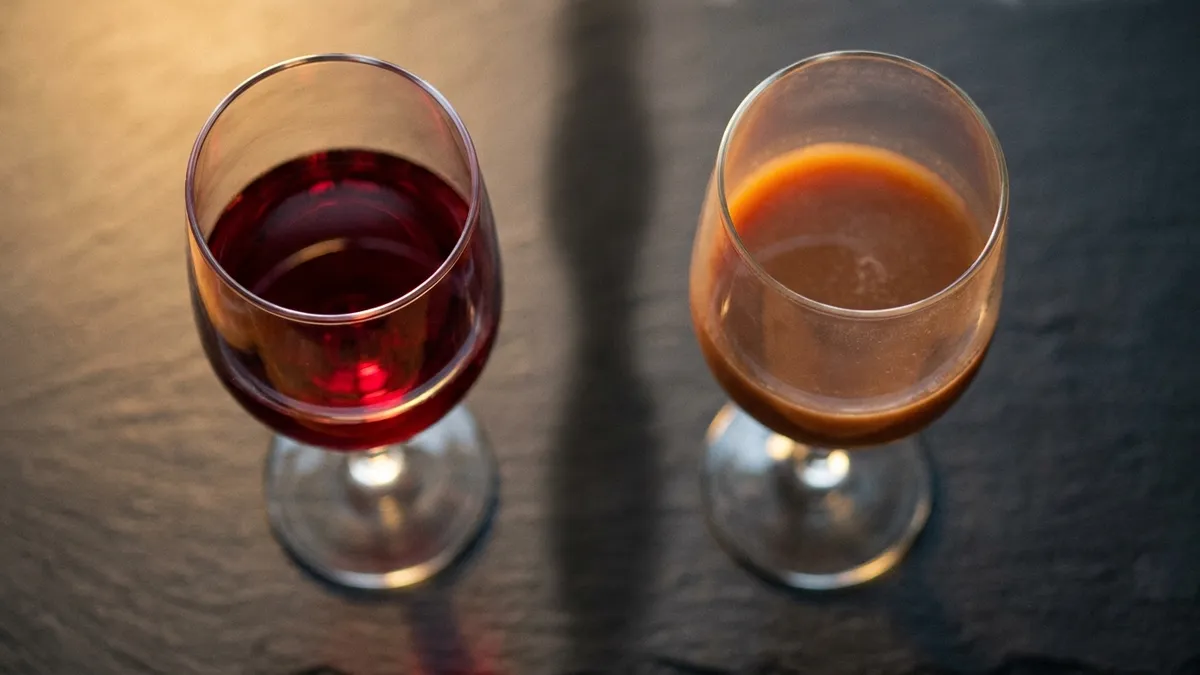
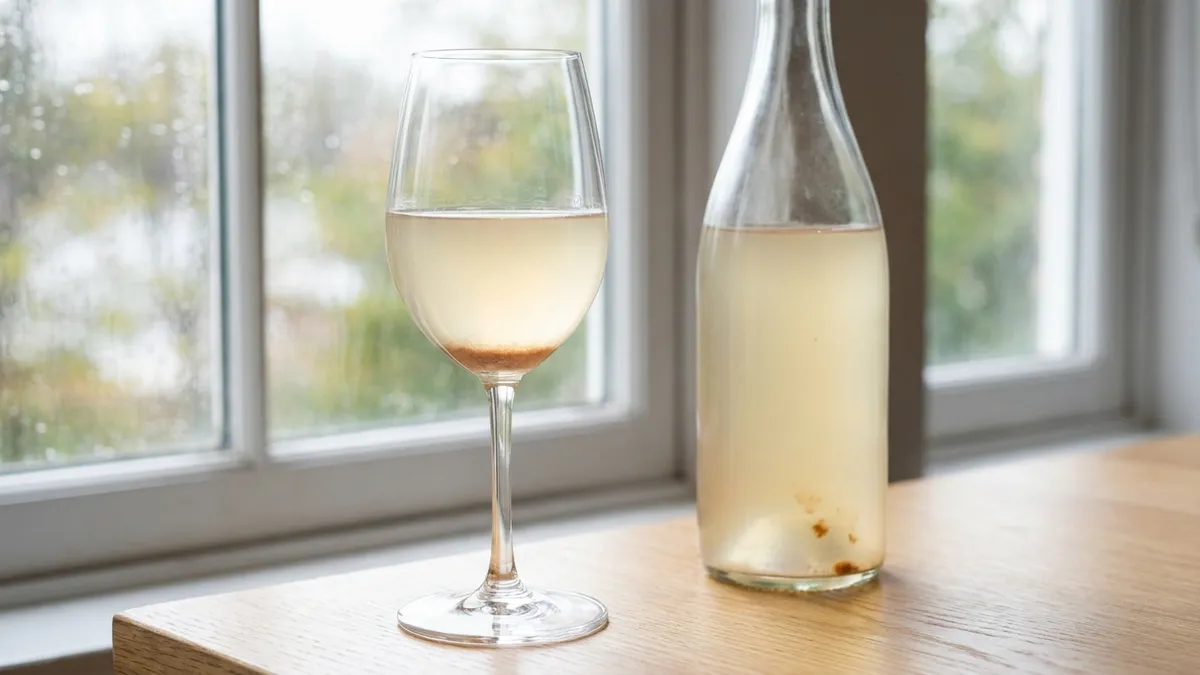
Copper haze is a cloud of copper sulfide (copper locked together with sulfur into a solid) that forms in a sealed bottle. Copper left in the wine meets sulfur from the winery's preservative, the bottle holds almost no oxygen, and warm storage speeds the reaction. On its own, copper sulfide shows as pale flecks hanging in the wine. When the wine's proteins clump with it, it becomes a brown deposit that settles on the bottom. Freshly fermented wine carries only about 0.3 to 0.4 mg/L of copper, too little to haze. Trouble starts when vineyard sprays or a late copper addition push the level higher.
How Do You Tell Copper Haze From Other Cloudy Wine?
Look at the colour of what is floating or settled, and think about where the bottle has been. Clear glassy flakes after the fridge are tartrates. An even milky cloud after a hot car is protein. A dull white or rosé with pale flecks or a brown deposit, after months in a warm rack, points to copper.
| Cause | Usual trigger | What you see | Most at risk | What to do |
|---|---|---|---|---|
| Copper haze (copper casse) | Months sealed without air, warm storage | Pale suspended flecks, or a brown deposit that settles | Whites and rosés | Return a bottle sold as clear |
| Protein haze | Heat: hot car, sunny shelf | Soft, even, milky cloud through the glass | Whites, some rosés | Smell it; if clean, serve it |
| Tartrate crystals | Cold: fridge, winter shipping | Clear, hard, glassy flakes on the bottom or cork | Whites and rosés | Pour gently, leave the last sip |
| Sediment | Years of age, or unfiltered bottling | Dark grit or beige lees that settle | Older reds, natural wines | Stand the bottle upright, then decant |
| Refermentation | Live yeast eating leftover sugar | Cloud plus bubbles in a still wine | Any wine with leftover sugar | Do not serve; return it |
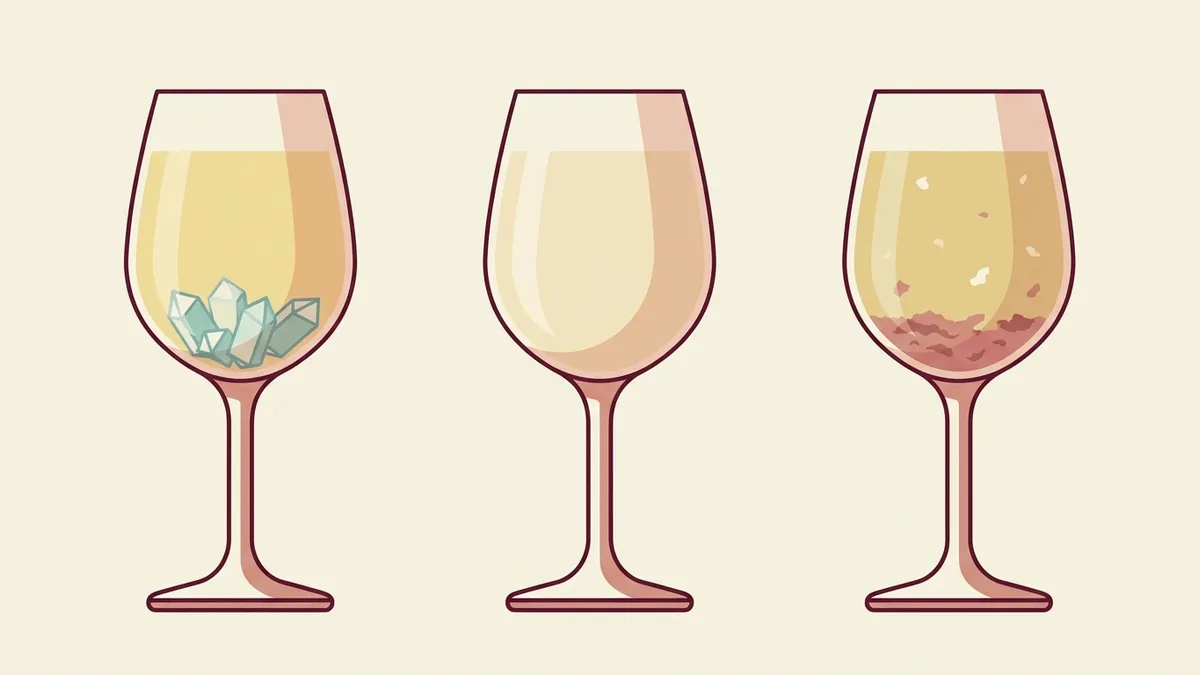
The two harmless lookalikes have full guides of their own: tartrate crystals and wine sediment. Heat haze is covered in the guide to protein haze, and fizzy cloudiness in refermentation in the bottle.
What Should You Do With a Hazy Bottle?
Smell it, look at it against a light, and take a clear wine that has turned cloudy back to the shop. Once copper sulfide has formed in the bottle, it is a visual fault that no fridge, decanter or filter at home can reverse.
Start with the label. If it says unfiltered or unfined, a soft haze is the style, and the guide to natural wine explains why. If it is a filtered white or rosé that was clear when you bought it, the haze formed in the bottle.
Then smell. Copper is a catalyst for oxidation, and leftover copper sulfide can release hydrogen sulfide again during bottle ageing, so a copper-hazed wine can also smell flat, struck-match or eggy. A second fault in the nose strengthens the case.
If the wine is a white or rosé, sold as clear, with brown deposit or pale flecks and no fridge in its recent past, return it. If it threw glassy crystals after a night in the fridge, pour it. If you open a hazy bottle at the table and decide to serve it, pour it slowly into a jug or decanter and leave the deposit behind. The full check for every colour problem, from brown reds to pink-tinged whites, is in the guide to wine colour faults.
What Causes Copper Haze to Form?
Copper haze needs three things at once: copper left in the wine, sulfur to bind it, and a lack of oxygen. A sealed bottle supplies all three, because the cork or screwcap keeps air out for months while the wine sits on a shop shelf or in your rack.
The sulfur comes from sulfur dioxide (SO2, the preservative almost every winery adds). In a reductive state (very little oxygen around), copper and the sulfur from SO2 both shift into forms that lock together as copper sulfide. Heat speeds this up, so a case stored in a warm garage clouds sooner than one kept in a cool cellar. The pull between oxygen and sulfur in winemaking is the subject of oxidative vs reductive winemaking.
Copper sulfide alone makes fine pale flecks. The brown deposit appears when the wine's proteins (natural grape proteins that survive into white wine) clump around the copper sulfide and grow large enough to sink.
Where Does the Copper in Wine Come From?
Mostly from the vineyard. The Australian Wine Research Institute (AWRI) names copper-based sprays as the major source, with a smaller share taken up from the soil. Copper sprays fight mildew, and organic growers rely on them too, as organic vs conventional wine explains.
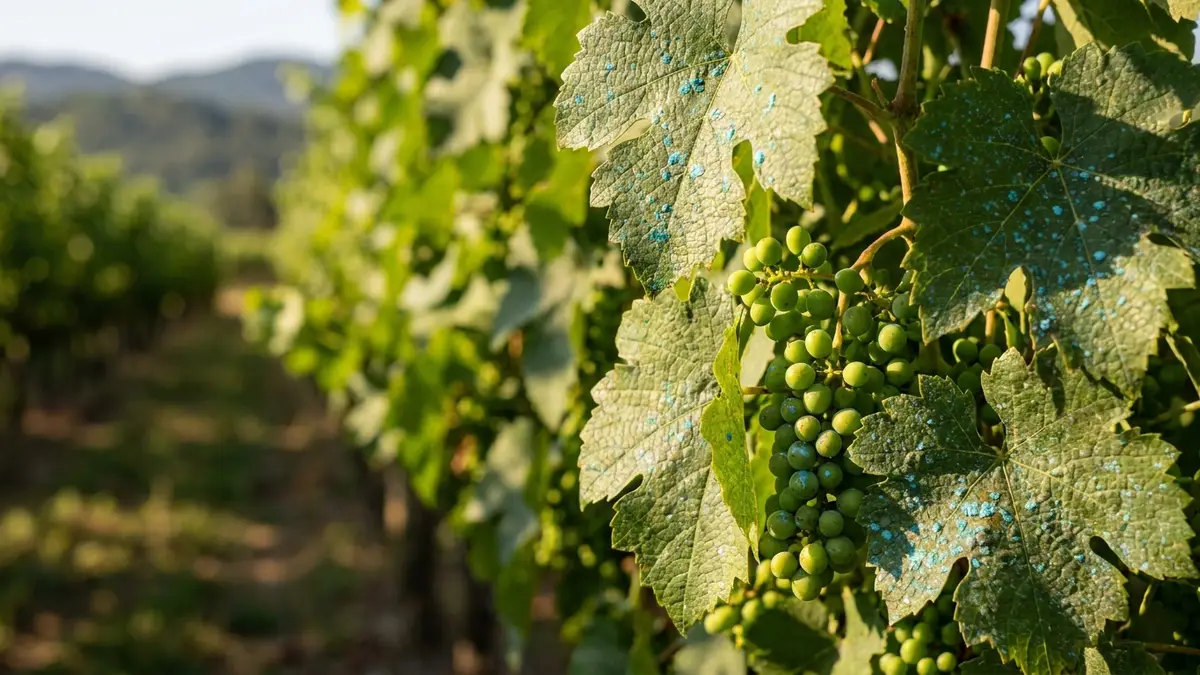
The difference sprays make is large. According to the AWRI, juice from unsprayed vines usually carries less than 0.5 mg/L of copper, while sprayed fruit can range from under 1 to more than 15 mg/L.
Fermentation does most of the cleaning. Yeast binds copper, sulfides lock it up, and both settle out with the lees (spent yeast at the bottom of the tank). That is how new wine ends up near 0.3 to 0.4 mg/L.
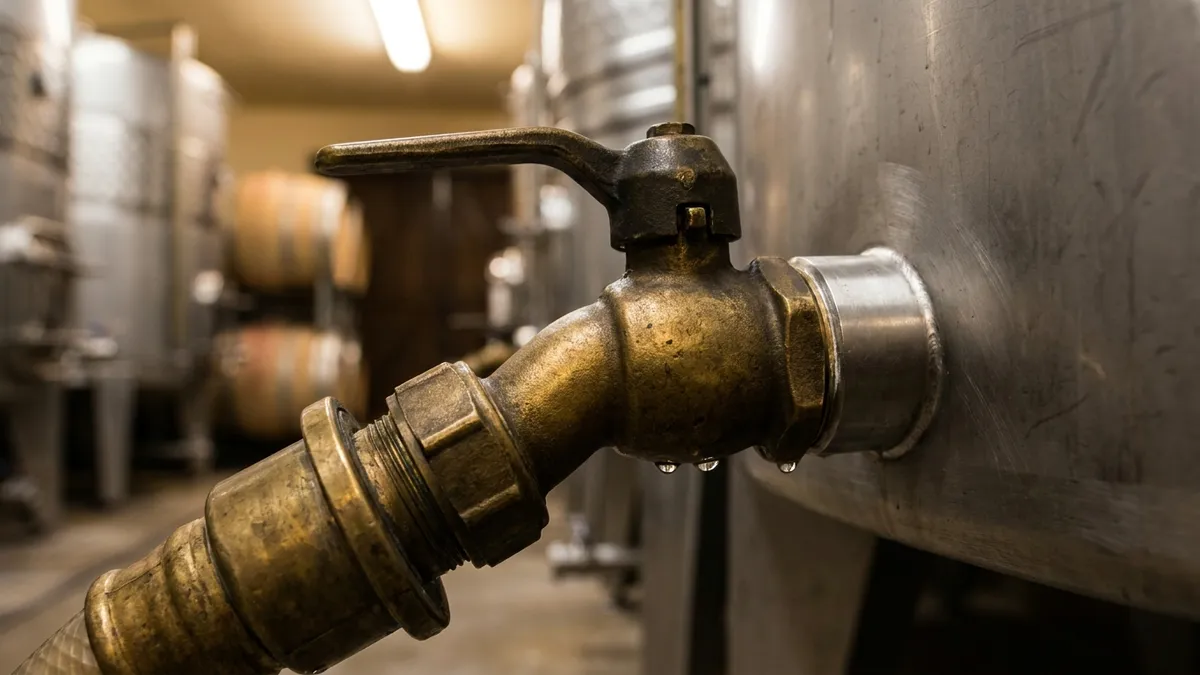
The cellar can add copper back. Unprotected brass or bronze fittings on pumps, valves and hoses used to leach copper into juice and wine. The AWRI treats those fittings as a source from the past, so today the larger risk is copper added on purpose.
Why Do Winemakers Add Copper to Wine?
To remove the rotten-egg smell of hydrogen sulfide (H2S, a gas some yeast make when the juice runs short of nitrogen). Copper sulfate binds it as solid copper sulfide that can then be settled or filtered out. Some reductive ferments are given air instead.
This is the surprise behind copper haze: the cure for a smell fault is the cause of a visual one. A small, early dose binds the hydrogen sulfide and leaves with it. A large or late dose leaves free copper in the wine at bottling.
The AWRI advises against adding copper just before bottling unless the wine actually smells reduced. Its reasons are a higher risk of copper haze after bottling and copper's role as a catalyst for oxidation. Research it cites found a third: wines given copper sulfate at bottling built up more hydrogen sulfide and methanethiol (another sulfur off-smell) during bottle ageing. The smell side of the story is in hydrogen sulfide in wine and how to smell reduction in wine.
How Do Winemakers Prevent and Treat Copper Haze?
By adding as little copper as possible, as early as possible, and by stripping out the proteins that turn specks into a visible deposit. Feeding the yeast enough nitrogen keeps hydrogen sulfide low, which means less need for a copper fix in the first place.
Bentonite (a fine clay that grabs proteins and drops them out) is the main tool. Fining a white with bentonite to prevent protein haze also lowers the risk of copper haze, because the brown deposit needs those proteins.
When copper is already too high, the old answer is blue fining (adding potassium ferrocyanide, which binds iron and copper so they can be removed), a tightly regulated, cellar-only treatment that is banned in many countries. Gum arabic, a natural plant gum, is added to lower the risk of copper casse. Filtration helps too: in a 2022 lab study, depth filters made with diatomaceous earth removed sulfide-bound copper from wine more efficiently than membrane filters.
None of these steps works once the cork is in. The line between a flaw you can live with and a fault you return is drawn in wine flaws vs faults.
Why Are Red Wines Rarely Affected?
Their tannin. In a red wine, tannin (the drying grip on your gums) binds the proteins that would otherwise build a brown deposit around copper sulfide, so the copper stays out of sight. Reds throw their own deposit, most often sediment from age.
That makes copper haze a white and rosé fault. Pale, protein-rich whites and rosés are the bottles to watch, and they are also where any haze shows most against the light.
Copper haze sits with cork taint, oxidation and reduction in the wine faults hub. The Sommy app at sommy.wine teaches the look, smell and taste steps in bite-sized courses, starting with Wine 101. Pour your next white tonight, hold it against white paper to check its clarity, then photograph the label and taste it through the look, smell and taste steps.
Sources
- Australian Wine Research Institute: Copper (winemaking FAQ)
- Wikipédia: Casse cuivreuse (copper casse, in French)
- Wikipedia: Glossary of winemaking terms (blue fining, casse)
- Zhang et al. (2022), Sulfide-bound copper removal from red and white wine using membrane and depth filters, Food Chemistry
- Wikipedia: Clarification and stabilization of wine (protein haze, bentonite, cold stabilisation)
Frequently Asked Questions
What is copper haze in wine?
Copper haze, also called copper casse, is a cloudiness that forms after bottling when copper left in the wine reacts with sulfur and drops out as copper sulfide. On its own it shows as pale suspended flecks. When the wine's proteins join in, it becomes a brown deposit that settles. It is a fault in a wine that was sold as clear.
What causes copper casse?
Leftover copper plus sulfur, in a bottle with little oxygen, sped up by warm storage. The copper usually comes from copper-based vineyard sprays, which can push juice from under 1 to over 15 mg/L, or from copper sulfate a winemaker added to remove a rotten-egg smell. Fermentation strips most of it out; trouble starts when too much is added late.
Is copper haze the same as tartrate crystals?
No. Tartrate crystals are clear, hard, glassy flakes of a grape acid salt that form when wine gets cold, and they do not readily dissolve back. Copper haze forms in a sealed bottle without air and shows as soft pale flecks or a brown deposit. A wine that threw crystals in the fridge is fine to pour; copper haze is a winery fault.
Why do red wines rarely get copper haze?
Their tannin. In red wine, tannin binds the proteins that would otherwise clump with copper sulfide into a visible brown deposit, so the copper stays out of sight. That is why copper haze is a white and rosé problem, and why protein-rich whites are the most exposed. Removing proteins with bentonite clay before bottling lowers the risk.
Can you remove copper haze from a bottle at home?
No. The treatments for excess copper, such as fining with potassium ferrocyanide or adding gum arabic to keep it in solution, are cellar steps done before bottling. At home you can only pour the clear wine off a settled deposit through a jug or decanter. If a white or rosé sold as clear has thrown a brown deposit, the better move is to return it.
Why do winemakers add copper to wine?
To remove hydrogen sulfide, the rotten-egg smell some fermentations throw off. Copper sulfate binds it as solid copper sulfide that can be settled or filtered out. The trouble is leftover copper. The Australian Wine Research Institute advises against adding copper just before bottling unless the wine actually smells reduced, because it raises the risk of copper haze later.
Sommy Team
LinkedInFounder & Wine Educator
The Sommy Team is building the world's most approachable wine education app, helping beginners develop real tasting skills through structured courses and AI-guided practice.