Wine Color Faults: Brown, Cloudy and Unusual Hues Decoded

By the Sommy Team — AI-assisted, human-edited.
Updated Sep 25, 2026
Contents (9)
- Wine Color Faults, in One Paragraph
- Is This Wine Color Normal or a Fault?
- Why Is My Red Wine Turning Brown or Brick?
- Why Is My White Wine Turning Deep Gold or Brown?
- Why Is My Wine Cloudy or Hazy?
- What Are the Crystals or Flakes in My Wine?
- Is Orange or Pink-Tinged Wine a Fault?
- Can You Spot a Corked or Brett Wine by Its Color?
- When Should an Odd Color Make You Return the Bottle?
TL;DR
Wine color faults depend on context. Brown is normal in Oloroso Sherry and aged reds, but a fault in a young table wine. Tartrate crystals and unfiltered haze are harmless. Haze plus fizz in a still wine signals refermentation. Cork taint and Brett have no color sign, so always smell before judging.
Wine color faults come down to one test: the colour has to fit the style and the age on the label. A brown Oloroso Sherry is doing its job. A brown two-year-old Pinot Grigio has gone wrong. Colour alone rarely condemns a bottle, but it tells you where to point your nose next.
Wine Color Faults, in One Paragraph
Most wine color faults are oxidation or heat damage, which turn whites deep gold or brown and push reds to brick. Aged reds turn brick-rimmed normally, and Sherry, Madeira and orange wine are amber or brown on purpose. Cloudiness is a fault when a wine meant to be clear hazes from unstable proteins, excess copper or iron, or yeast refermenting leftover sugar. Unfiltered haze and clear tartrate crystals are harmless. Cork taint and Brettanomyces change smell only, so no colour clue will catch them. The working rule: compare the colour with the vintage and style on the label, then smell before you decide.
Is This Wine Color Normal or a Fault?
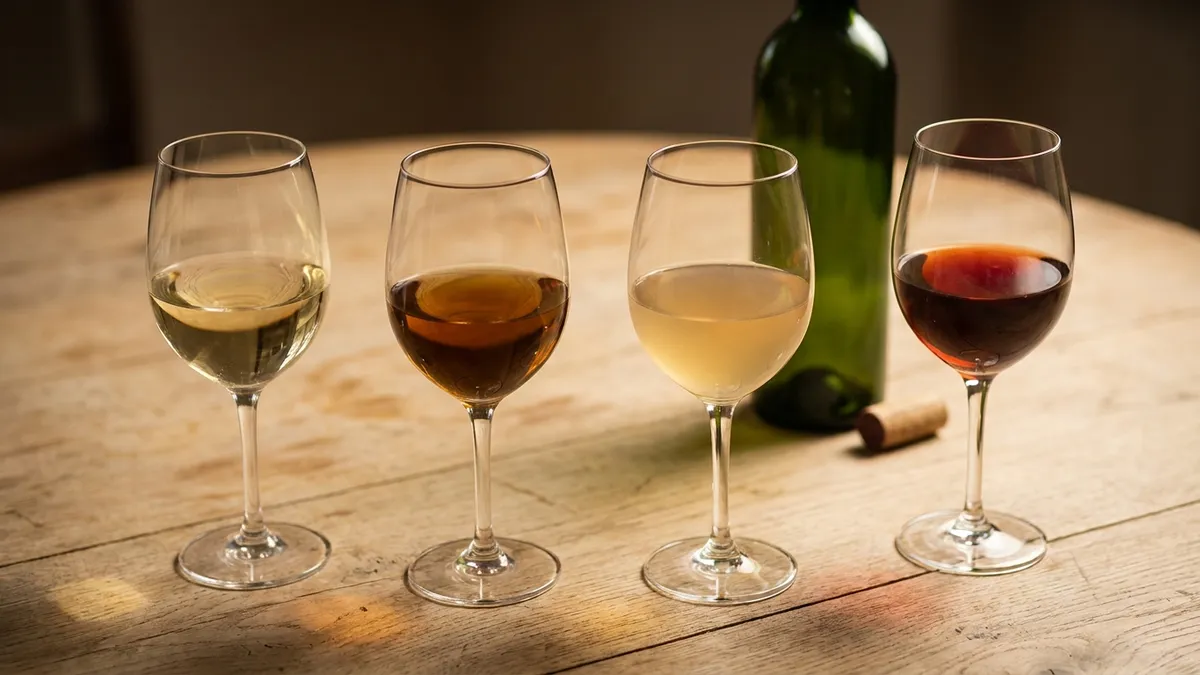
Judge any unusual colour against two things on the label: the style and the vintage. A colour that fits both is normal. A colour that is right for the style but years too early for the vintage is the most common fault.
The table covers the colours that make people stop and stare at a glass. Read across to the last column for what to do tonight.
| What you see | Normal when | A fault when | What to do |
|---|---|---|---|
| Amber or brown white | Oloroso Sherry, Madeira, very old sweet whites | A young table white with a flat, bruised-apple smell | Check the vintage, smell, return if the fruit is gone |
| Brick or orange rim on a red | A red with many years in bottle | A young red, often with a pushed-up cork | Check the cork and vintage; suspect heat damage |
| Hazy or cloudy | Unfiltered or natural wine, sold as such | A wine meant to be clear, or haze with fizz | Read the back label; return a fizzy still wine |
| Clear, glassy crystals | Almost always: they are tartrates | Never a fault | Pour gently and leave the last centimetre |
| Dark flakes in a red | An older red throwing sediment | Rarely a fault | Stand the bottle upright a day, then decant |
| Amber-orange white | Skin-contact (orange) wine | A white never meant to see skins, smelling flat | Read the label for skin contact or orange |
| Salmon or onion-skin rosé | Many dry rosés are this colour | Rarely a fault on its own | Judge by smell and freshness, not shade |
If the colour matches the style word on the label, drink it. If the colour looks older than the vintage, smell the wine before you take a sip. For the full range of normal colours by grape and age, see what wine colour means.
Why Is My Red Wine Turning Brown or Brick?
A red that shifts toward brick is normal after years in bottle, and a fault when a young wine gets there early, usually through heat. Check the vintage on the label first, then look at the cork, because a heat-damaged bottle often leaves marks on it.
Red wine takes its colour from phenolics, the pigment and tannin compounds in grape skins. The red and purple pigments among them are called anthocyanins. As a red ages, reactions between these molecules and small amounts of oxygen brown the wine, moving it from red toward a more tawny colour. Chemists call this slow change autoxidation. The edge of the wine, tilted over white paper, shows it first.
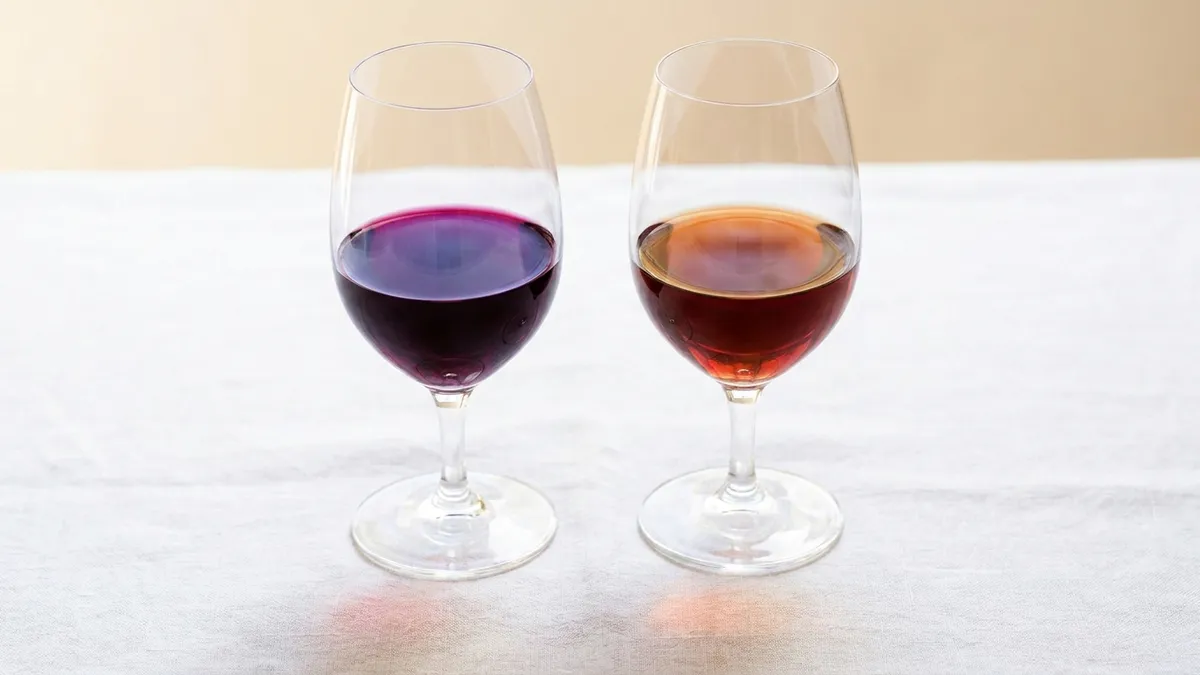
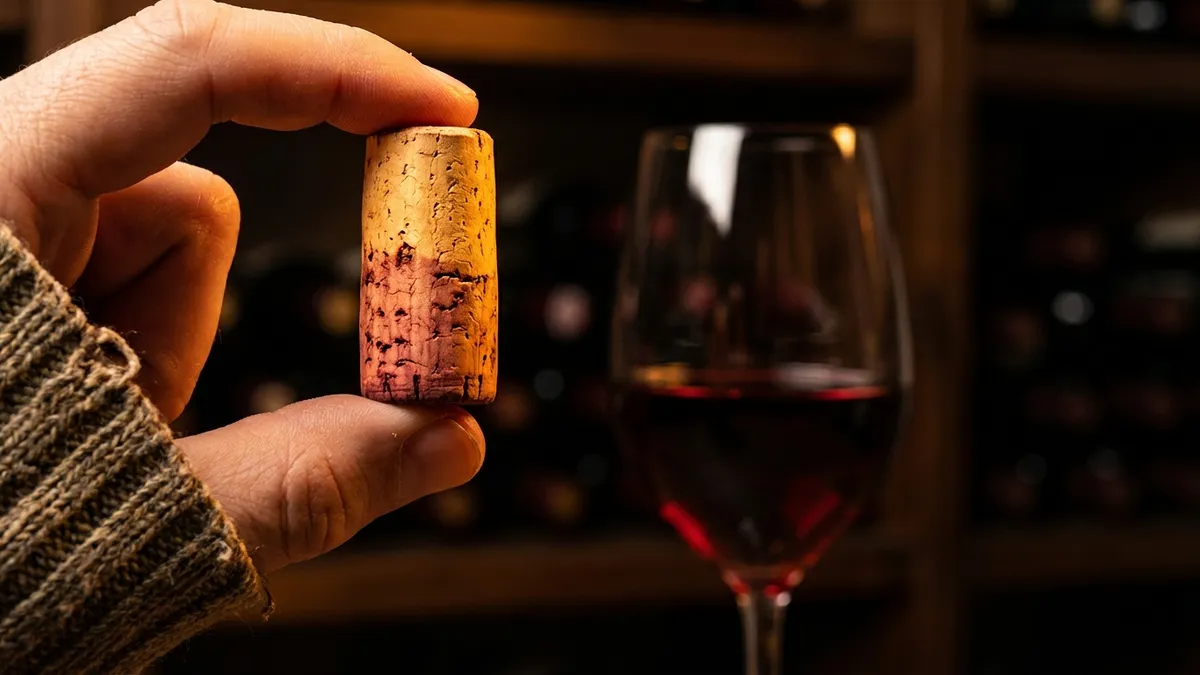
Heat speeds the same browning. A red that sat in a hot car or a warm shop window can take on a brick colour years before its time. The bottle often shows it too. A trace of wine along the side of the cork, a cork partly pushed out, or wine on top of the cork under the capsule all point to heat damage.
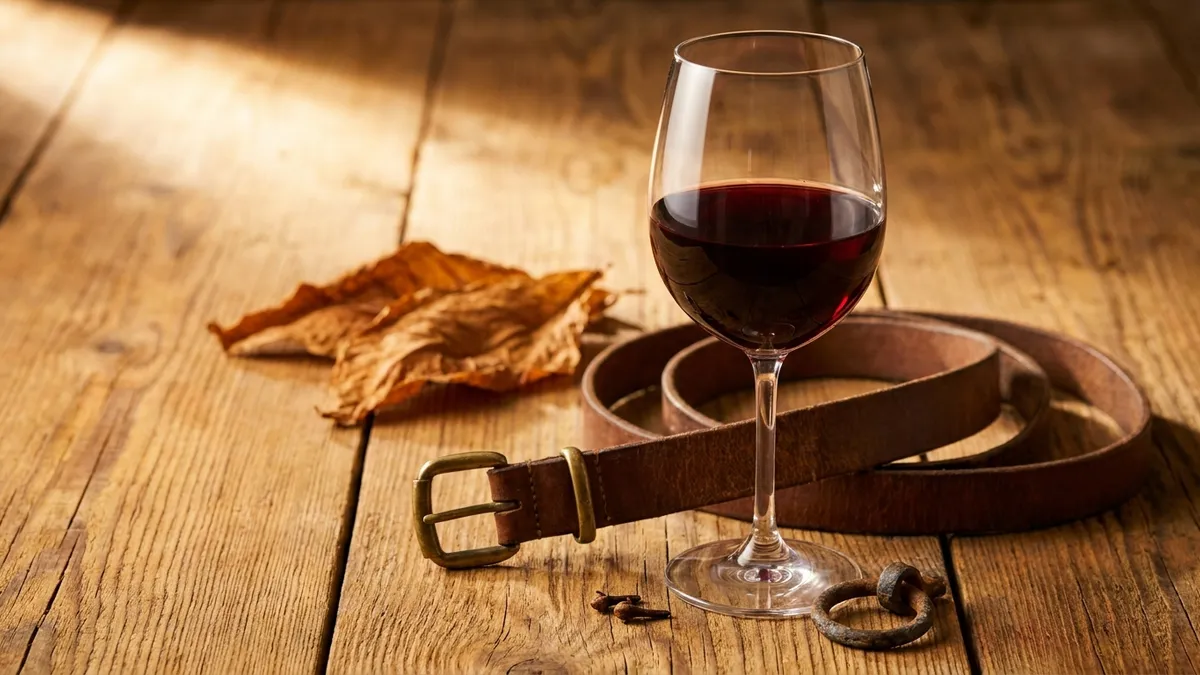
If a red under five years old is brick at the rim and the cork has pushed up, suspect heat and return the bottle. If the red is fifteen years old and brick at the rim, that is normal age, and the fruit should still be there under the leather and dried-cherry smells. The guide to cooked wine and heat damage covers the jammy, stewed smell that confirms it, and wine colour and age shows the normal pace year by year.
Why Is My White Wine Turning Deep Gold or Brown?
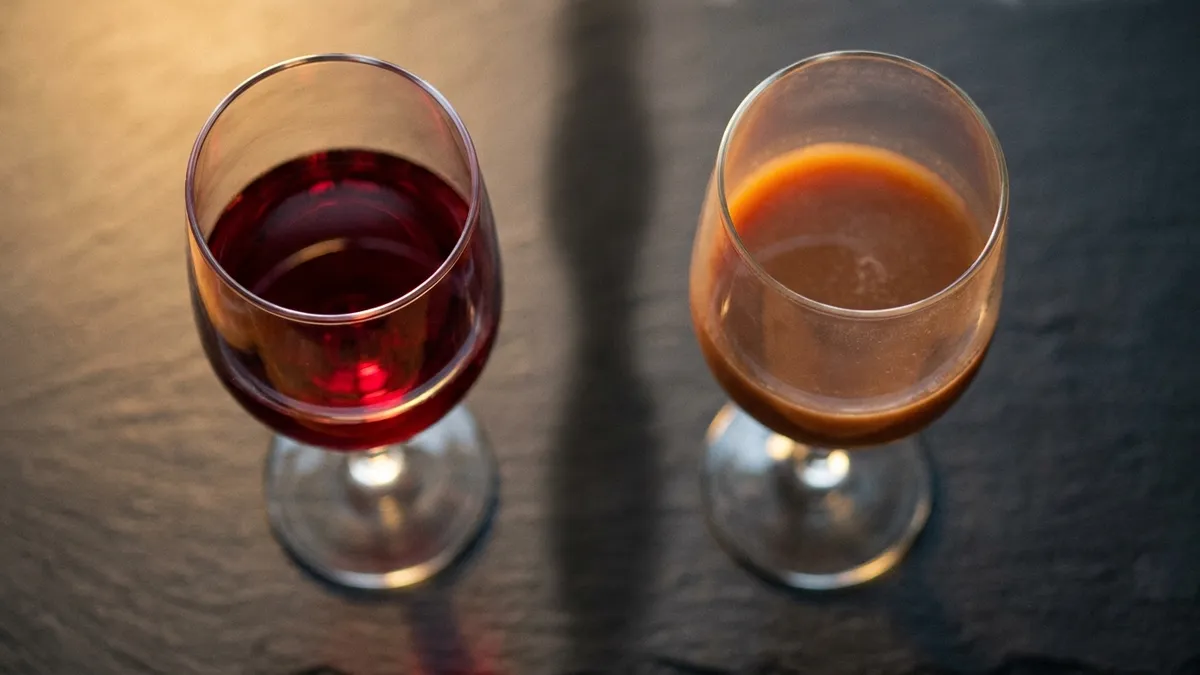
Oxidation is the usual cause. It is a fault in a young table white and the intended style of Oloroso Sherry and Madeira. The same deep gold means opposite things depending on the label, so read the style word and the harvest year before you judge the glass.
Oxidation is the reaction of wine with oxygen, and it is perhaps the most common wine fault. The first compounds to go are the phenolics. When they oxidise, the wine loses colour, flavour and aroma together, a change tasters call flattening. The fresh pear or citrus disappears, and what remains smells of bruised apple and walnut. The oxidized wine explainer maps how that smell worsens.
Winemakers guard against it with sulfur dioxide (SO2, the "contains sulfites" on the label), which protects wine from oxygen and spoilage bacteria. Without enough of it, a white browns and loses the flavours of its grape. When browning shows up in whites that were built to age, the trade calls it premox, short for premature oxidation. The premature oxidation guide covers that story in full.
When brown is the style
Brown is sometimes the goal. Maderization, heating and oxidising a wine, darkens it and gives a Sherry-like character. It counts as a fault in most wines, but it is deliberate in Madeira and certain dessert wines. Sherry shows both sides in one region. Fino ages under a film of yeast called flor, which shields it from air, so it stays pale. Oloroso grows no flor, oxidises slowly and turns a deep brown. The Sherry wine guide explains the range.
If a young white is amber and smells of bruised apple, return it. If the label says Oloroso, Madeira or amber, that colour is the style.
Why Is My Wine Cloudy or Hazy?
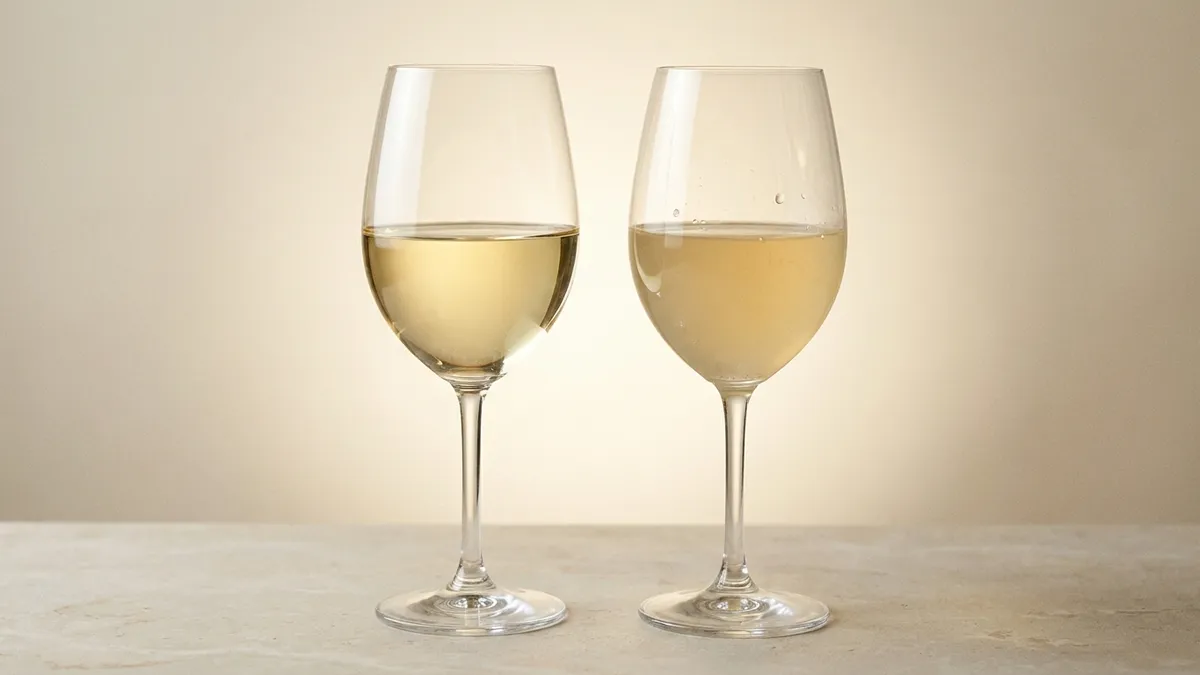
Haze has four common causes, and two of them are harmless: an unfiltered style and loose tartrate crystals. The other two, unstable proteins or metals and refermentation, are faults in a wine that was meant to be clear. The back label and a close look for bubbles tell them apart.
Unfiltered by design
Many natural and low-intervention wines skip filtering and fining (adding a material that grabs particles and drops them out before bottling). They can look softly hazy from the day they are bottled. The back label often says unfiltered or unfined. The guide to natural wine covers the style.
Proteins and metals
Unusual breaks in a wine's colour or clarity can signal excess copper, iron or proteins that were not removed during fining or filtering. Some white wines carry heat-unstable proteins that clump into a haze when the wine goes through big temperature swings. Winemakers prevent it with bentonite, a clay used for fining. Copper and iron can enter from metal winery equipment or vineyard sprays such as Bordeaux mixture.
Refermentation
Sometimes yeast wakes up and starts eating the sugar left in a bottled wine. That second fermentation clouds the wine with new yeast cells and adds gas. Bubbles in a wine that was never meant to sparkle are the giveaway. The refermentation guide covers the causes in detail.
If a still wine is hazy and prickles on your tongue, it has refermented, and the bottle should go back. If it is hazy, smells fresh and the label says unfiltered, it is the style.
What Are the Crystals or Flakes in My Wine?
Clear, glassy crystals on the cork or at the bottom of the bottle are tartrates, and they are harmless. Dark flakes in an old red are sediment, which is also normal. Neither says anything about the flavour, and neither is a reason to return the bottle.
Tartrates are crystals of potassium bitartrate. It is the same salt sold as cream of tartar, and it forms naturally during fermentation from the grape's tartaric acid. Cold makes it crystallise unpredictably, which is why a bottle from the fridge or a winter delivery often shows them. People sometimes mistake them for broken glass.
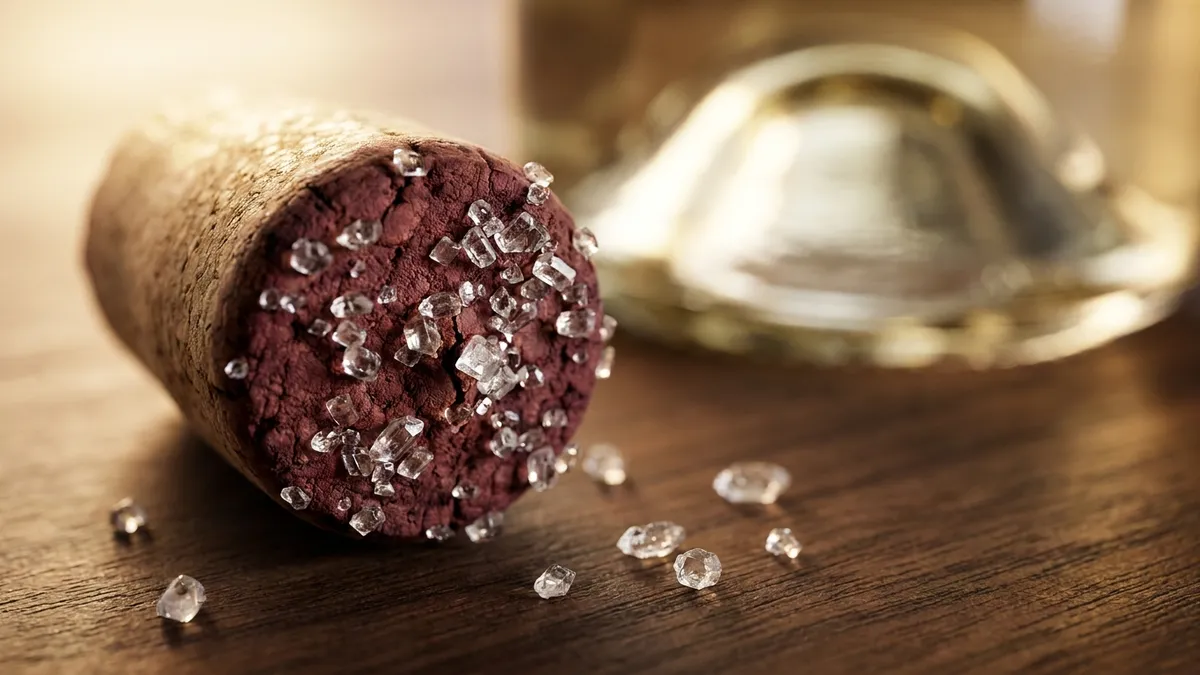
Many wineries prevent them with cold stabilisation, chilling the wine to near freezing before bottling so the crystals drop out in the tank. Not every producer does it, because the step can change the wine's profile. Seeing crystals says nothing bad about the wine inside. The guide to tartrate crystals has more.
If the crystals are clear and glassy, pour gently and leave the last centimetre in the bottle. If the flakes are dark and powdery in an older red, stand the bottle upright for a day and decant it, as the guide to wine sediment shows.
Is Orange or Pink-Tinged Wine a Fault?
Usually neither colour is a fault: grape skins make both on purpose. The only question is how long the juice sat with them, from a few hours for a pale rosé to months for a deep orange wine. A flat smell is the sign that something went wrong.
Orange wine is white wine made the way red wine is made. The grape skins stay in contact with the juice for days or even months, and they give the wine an amber-orange colour and some tannin (the drying grip on your gums). The method goes back thousands of years in Georgia, where wine ferments in buried clay jars called qvevri. The label term "orange wine" is recent: a British importer coined it in 2004. The orange wine explainer covers how it tastes.
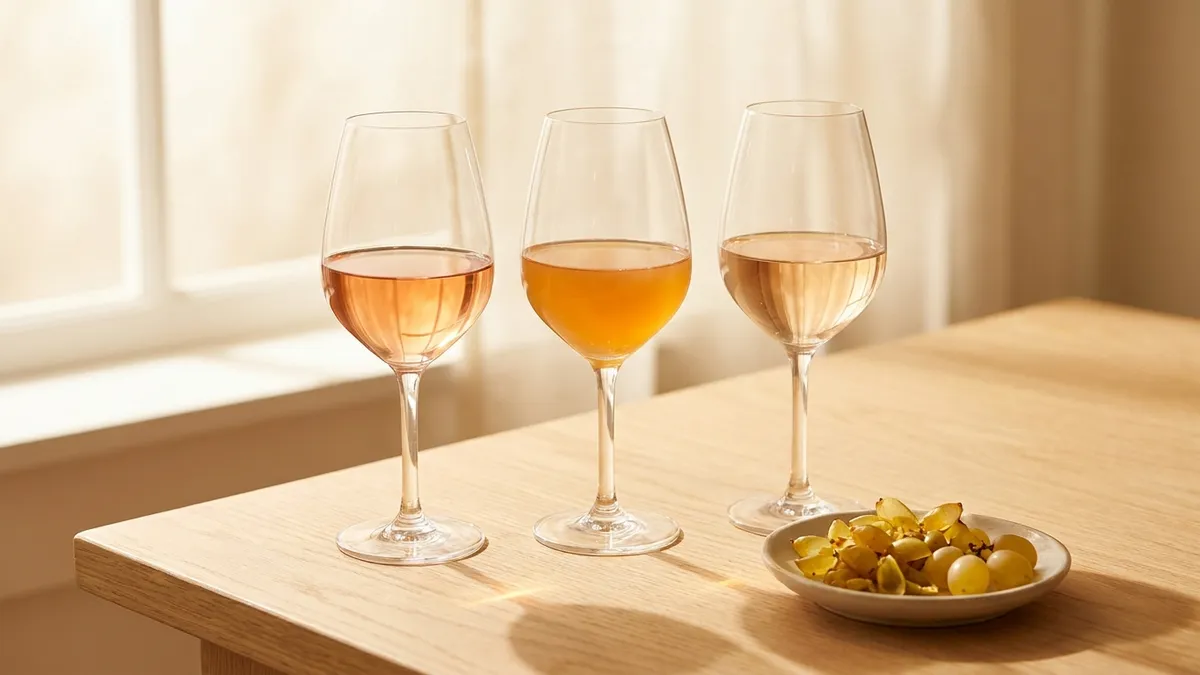
Rosé works the same way on a shorter clock. With the skin-contact method, red grape skins stay in the juice for about two to twenty hours, and the longer they stay, the deeper the colour. That is why rosé runs from a pale onion-skin orange to a vivid near-purple, depending on the grape. A rosé carries only about 20 to 50 mg/L of anthocyanins, against more than 250 mg/L in a red wine.
Red grapes pressed quickly, before the skins release pigment, can make a white wine, as explained in white wine from red grapes. A faint copper blush in such a wine can be normal. If the label says skin contact, orange or amber, the colour is the style. If a plain white turns orange and smells flat, treat it as oxidation.
Can You Spot a Corked or Brett Wine by Its Color?
No. Cork taint and Brettanomyces are smell faults, not colour faults. A wine carrying either looks exactly like a sound bottle, with the same hue, the same clarity and the same rim, so the only way to find them is to swirl and sniff.
Cork taint comes from TCA, a compound that gives a musty, wet-cardboard smell. Sensitive tasters notice it in traces far too small to tint a wine. Brettanomyces, a spoilage yeast, brings band-aid, barnyard, bacon or smoky smells, with no documented effect on colour. So crystals, sediment or a brick rim never mean a wine is corked. Train your nose with the guides to spotting a corked wine and Brett in wine.
When Should an Odd Color Make You Return the Bottle?
Return the bottle when an odd colour arrives with a second sign that confirms it: a missing fruit smell, fizz in a still wine, or a pushed-up cork. One clue alone can mislead, because oak, age and style all shift colour. Two clues together rarely do.
- Brown or amber in a young white plus a flat, bruised-apple smell: oxidised.
- Brick rim in a young red plus a raised cork or wine stains on the cork: heat-damaged.
- Haze in a still wine plus bubbles or a prickle: refermented.
- Haze in a wine meant to be clear, with no unfiltered wording on the label: unstable.
Shops generally take back a faulty bottle that comes back mostly full with its cork. In a restaurant, describe what you see and smell in plain words. The guide on when to send wine back covers the wording, and the faults hub lists every fault to rule out, with wine fault vs style covering the grey zone.
Sommy is a wine-education app with bite-sized courses, including Wine 101, and an AI-guided tasting mode where you photograph a label and are walked through look, smell and taste. Start at sommy.wine. Tonight, pour any wine you have open, tilt it over a white sheet of paper, name its colour and clarity, and check both against the label before your first sip.
Sources
- Wikipedia: Wine fault (oxidation, heat damage, refermentation, colour breaks)
- Wikipedia: Wine color (pigments and browning with age)
- Wikipedia: Clarification and stabilization of wine (protein haze, metals, cold stabilisation)
- Wikipedia: Orange wine
- Wikipedia: Rosé (skin contact time and anthocyanin levels)
Frequently Asked Questions
Why does my wine look brown?
Brown usually means oxidation, the reaction of wine with oxygen, or heat damage. In an old red, a brick or tawny rim is normal aging. In a young white or red it is a fault, especially with a flat, bruised-apple smell. Some styles are brown on purpose, including Oloroso Sherry, tawny Port and Madeira, so check the style on the label first.
Is cloudy wine bad?
Not always. Unfiltered and natural wines can be hazy by design, and loose tartrate crystals can cloud a pour for a moment. Haze is a fault when a wine meant to be clear turns cloudy from unstable proteins, excess copper or iron, or yeast refermenting leftover sugar. Haze with fizz in a still wine points to refermentation, and that bottle should go back.
What are the crystals in my wine?
They are tartrates, crystals of potassium bitartrate, the same compound sold as cream of tartar. They form naturally from the grape's tartaric acid and often drop out when a wine gets cold. They are harmless, though people sometimes mistake them for broken glass. Pour the wine gently and leave the last centimetre in the bottle.
Why is my red wine orange at the rim?
An orange or brick rim is the normal sign of an aged red. Over years in bottle, browning reactions move red wine from ruby toward tawny, and the change shows first at the thin edge. It becomes a warning only in a young red, where heat damage is the usual cause. Check the vintage and the cork before deciding.
Is orange wine a wine fault?
No. Orange wine is white wine made like a red: the juice stays in contact with the grape skins for days or months, and the skins give it an amber colour and some grip. The method goes back thousands of years in Georgia, where wine is made in clay vessels called qvevri. Judge it by smell and taste, not by colour.
Can you tell if wine is corked by looking at it?
No. Cork taint is caused by a compound called TCA, and it changes only the smell and taste, giving a musty, wet-cardboard note. A corked wine looks exactly like a sound one. The same is true of Brettanomyces, a yeast that brings band-aid or barnyard smells. Smell the wine to find these faults.
Sommy Team
LinkedInFounder & Wine Educator
The Sommy Team is building the world's most approachable wine education app, helping beginners develop real tasting skills through structured courses and AI-guided practice.