Hydrogen Sulfide in Wine — The Rotten Egg Smell Explained

By the Sommy Team — AI-assisted, human-edited.
Updated Sep 24, 2026

Contents (9)
- Hydrogen Sulfide in Wine, in 120 Words
- Is It Hydrogen Sulfide, Sulfites or Cork Taint?
- What Should You Do When Your Wine Smells of Rotten Egg?
- Should You Send a Rotten-Egg Wine Back?
- Why Does Fermentation Make Hydrogen Sulfide?
- What Happens If Hydrogen Sulfide Stays in the Wine?
- How Do Winemakers Prevent Hydrogen Sulfide?
- Why Do Some Screwcap Wines Smell More of Sulfur?
- How Can You Train Your Nose to Catch It?
TL;DR
Hydrogen sulfide is the gas behind a rotten-egg smell in wine. Yeast make it when fermenting juice runs short of nitrogen. Noses pick it up at 1 to 2 micrograms per litre. Caught early, fifteen minutes of air often clears it; left in the wine, it turns into mercaptans, which smell of onion and rubber and rarely clear.
A rotten-egg smell in a freshly poured glass comes from hydrogen sulfide in wine, a gas that yeast make when they run short of nitrogen during fermentation. Air removes it, but only while it is still hydrogen sulfide. Left in the wine, it reacts into harder, oniony compounds that no decanter can fix. That one fact decides whether you wait fifteen minutes or send the bottle back.
Hydrogen Sulfide in Wine, in 120 Words
Hydrogen sulfide (H2S, the gas that gives rotten eggs their smell) is a by-product of yeast fermentation. It forms mostly when the grape juice lacks nitrogen, the nutrient yeast need most. The human nose picks it up in wine at around 1 to 2 micrograms per litre, one or two millionths of a gram. A wine carrying it is called reduced (a sulfur smell from too little air).
Hydrogen sulfide is a separate molecule from the sulfur dioxide behind "contains sulfites" labels, and has nothing to do with cork taint. Fifteen minutes of air often clears a mild case. If the gas sits in the wine, it reacts into mercaptans, detectable at about 1.5 micrograms per litre, which smell of onion and rubber and rarely clear.
Is It Hydrogen Sulfide, Sulfites or Cork Taint?
A rotten-egg smell is hydrogen sulfide; a sharp struck-match smell is sulfur dioxide (the preservative behind "contains sulfites" on a label); a wet-cardboard smell is cork taint. All three get called "a sulfur smell" at the table, yet they come from different molecules with different fixes.
The sulfites myth is the one worth clearing up first. The rotten egg is not sulfites. Sulfur dioxide is added on purpose to protect wine, and the law caps it. The EU allows 150 milligrams per litre in dry red wine and 200 in dry white and rosé. The US allows 350 for any wine. Wine under 10 milligrams per litre needs no sulfite warning. When too much is added, it smells of matchsticks, burnt rubber or mothballs, a fault tasters call sulfitic. Our guide to sulfites in wine covers the label side.
Hydrogen sulfide works at a far smaller scale. Its detection level of 1 to 2 micrograms per litre is tens of thousands of times lower than the sulfite limits above. A trace too small to see or measure at home still dominates the first sniff.
| What you smell | Molecule | Where it comes from | What to do |
|---|---|---|---|
| Rotten egg, spoiled garlic | Hydrogen sulfide (H2S) | Yeast short of nitrogen during fermentation | Swirl, 15 minutes in a jug, smell again |
| Onion, rubber, skunk | Mercaptans | H2S left to react in the wine | Air rarely helps; return the bottle |
| Struck match, mothballs | Sulfur dioxide (sulfites) | Preservative added in excess | Swirl hard; it usually fades in minutes |
| Cooked cabbage, canned corn | Dimethyl sulfide (DMS) | Sulfur compound above 30 µg/L in whites, 50 in reds | Faint is fine; strong means return it |
| Wet cardboard, damp cellar | TCA (cork taint) | Contaminated cork, not fermentation | Nothing fixes it; return the bottle |
For the corked row, how to tell if wine is corked walks through the damp-cardboard test. The wider family of struck-match and rubbery smells is mapped in sulfur smell in wine.
What Should You Do When Your Wine Smells of Rotten Egg?
Swirl the glass hard, pour the rest of the wine into a jug or decanter for fifteen minutes, then smell again. Hydrogen sulfide is a gas at room temperature. It boils at about minus 60°C, so some of it escapes every time the wine meets air.
Start with the glass in your hand. Swirl it for thirty seconds and take two short sniffs. A faint egg smell that is already fading means the wine was only lightly reduced.
If the smell holds, pour the rest of the bottle into a wide jug. Pour from a height so the wine splashes, because a broken surface releases gas faster. Set a timer for fifteen minutes and leave it alone. The technique is laid out step by step in how to decant wine.
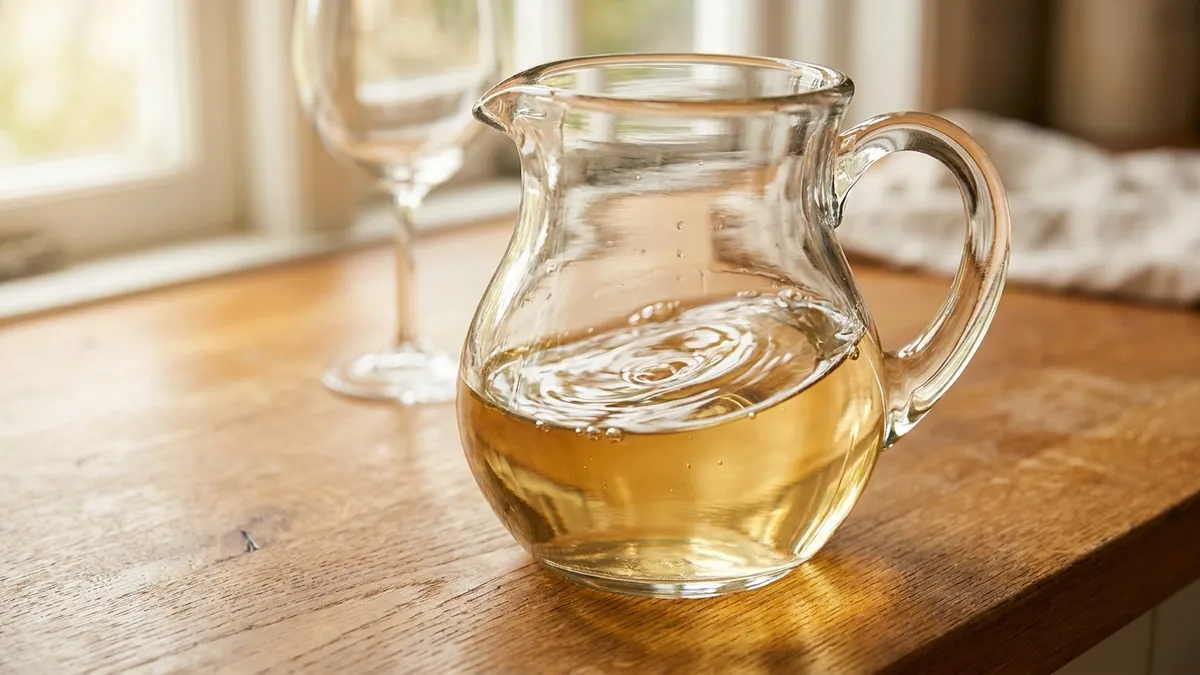
After fifteen minutes, pour a fresh glass. If the egg smell has faded and fruit shows through, drink the wine. If it is still there, or has shifted towards onion, rubber or burnt garlic, stop troubleshooting: the gas has already reacted into something air cannot move.
Some drinkers drop a clean copper coin into the glass at this point, since copper reacts with sulfur compounds. How reliably a coin works is anecdotal, so treat it as an experiment after the air test. The fuller set of home fixes for struck-match and rubbery smells lives in how to smell reduction in wine.
Should You Send a Rotten-Egg Wine Back?
Yes, if the rotten-egg smell is still there after fifteen minutes of air. That is a fault, and a restaurant or wine shop should replace it. A smell that faded with air only needed time in the glass, so keep drinking that one.
At a restaurant, the small taste the server pours is the moment to check. If it smells of egg, say so plainly and ask for a few minutes with the wine in the glass or a carafe. If the smell survives, ask for a replacement bottle. At home, keep the bottle and closure and take them back to the shop within a week or two. When to send wine back covers the etiquette in full.
Why Does Fermentation Make Hydrogen Sulfide?
Yeast make hydrogen sulfide when they run short of nitrogen, their most important nutrient. Yeast turn sulfur from the juice into sulfide, then need nitrogen to build it into amino acids. Starved of nitrogen, they cannot use the sulfide up, so it escapes as gas into the fermenting juice and can linger in the finished wine.
The nitrogen yeast can use is called yeast assimilable nitrogen, or YAN. It comes from the grape juice itself. Yeast need it to build two sulfur-carrying amino acids, cysteine and methionine. When YAN runs out mid-fermentation, the sulfide meant for them has nowhere to go, and the rotten-egg gas bubbles out with the carbon dioxide. Our explainer on wine yeast and fermentation covers the rest of what yeast do in the tank.
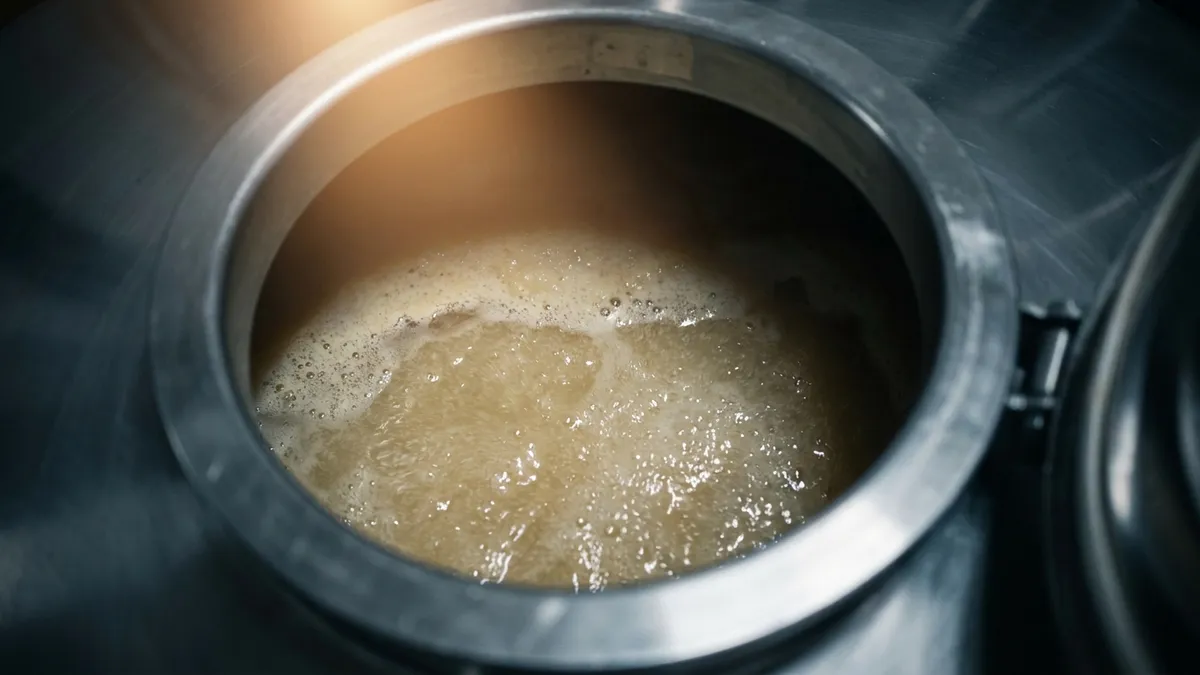
Riper grapes need more nitrogen, because more sugar means a longer, harder fermentation. Ripeness is measured in Brix (the percentage of sugar in the juice). UC Davis guidance scales the YAN target with it: 200 milligrams of nitrogen per litre at 21 Brix, 250 at 23, 300 at 25 and 350 at 27. Juice from very ripe grapes therefore needs the closest watching.
More nitrogen is not a simple cure. Too much of certain nitrogen sources, glutamic acid and alanine among them, can also push some yeast strains to make hydrogen sulfide. The target is nitrogen matched to the sugar level of each tank.
What Happens If Hydrogen Sulfide Stays in the Wine?
It reacts with other parts of the wine and becomes mercaptans (sulfur compounds that smell of onion, rubber and skunk), which are far harder to remove. It can also form disulfides, adding further off-smells. The longer the gas sits, the more of it changes form.
The risk rises when finished wine sits too long on its lees (the spent yeast that settle after fermentation). Hydrogen sulfide reacts with wine components such as ethanol there, and the mercaptans that result are noticeable at about 1.5 micrograms per litre. That is about as low as the level for hydrogen sulfide itself.
That change is why the fifteen-minute test works as a dividing line. Hydrogen sulfide is a gas that air can carry off. Mercaptans are heavier and far less volatile, so fifteen minutes in a jug barely touches them. A wine that smells of onion or rubber rather than egg is usually past saving.
Not every sulfur compound in this family is a fault. Grapefruit mercaptan gives grapefruit its scent, and a related compound helps roasted coffee smell like coffee. The difference is which molecule forms and how much.
How Do Winemakers Prevent Hydrogen Sulfide?
Winemakers measure the nitrogen in the juice, top it up with diammonium phosphate (DAP, a nitrogen supplement) when it runs low, and move finished wine off its lees. Those three steps stop most rotten-egg faults before bottling. Nitrogen stops the gas forming, and racking stops any that formed from turning into mercaptans.
The measuring comes first. Enologists work within a YAN range of about 150 to 400 milligrams per litre, adjusted for the sugar level in each tank. Juice that falls short gets DAP before the yeast run hungry.
After fermentation, the winemaker racks the wine (pumps or siphons it off its sediment into a clean tank). Racking limits the contact between any leftover hydrogen sulfide and the lees, which is where mercaptans form. Wines aged on their lees on purpose, for bread and brioche smells, need closer watching for exactly this reason. The trade-off between oxygen and sulfur in the cellar is the subject of oxidative vs reductive winemaking.
Why Do Some Screwcap Wines Smell More of Sulfur?
A screwcap lets in far less oxygen than cork, so it preserves whatever reductive character the wine already had rather than slowly airing it away. The screwcap does not create hydrogen sulfide. It seals in what was there at bottling, and that sulfur meets the air for the first time when the cap comes off.
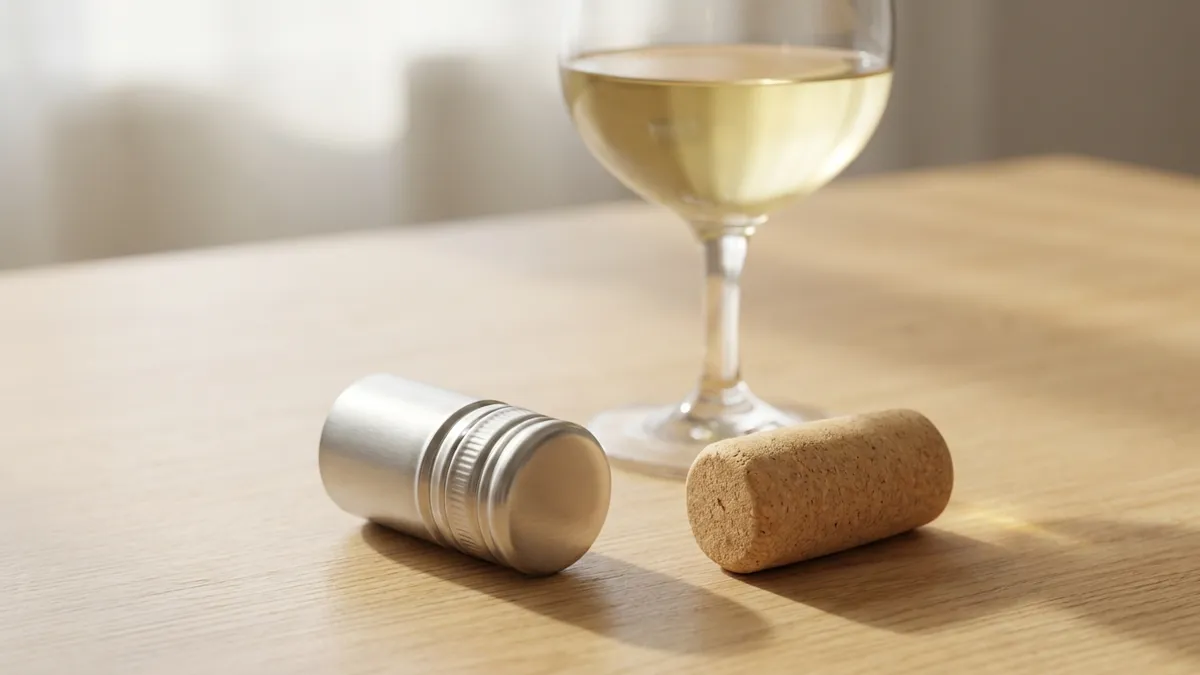
The trade is worth making for most wines. Screwcaps cut the two faults that plague cork, oxidation and cork taint. Uptake grew fast: in New Zealand, screwcap use went from 1% of wines in 2001 to 70% in 2004. In the UK, consumer approval rose from 41% in 2003 to 85% in 2011.
What changes is the first minute after opening. In a wine with reductive chemistry, the sealed-in sulfur can read as a pleasant flinty pungency or as a fault, depending on how much there is. The closure debate in full is in screw cap vs cork.
How Can You Train Your Nose to Catch It?
Learn three reference smells side by side: the sulfur whiff of an overcooked hard-boiled egg, a freshly struck match, and damp cardboard. Those three stand in for hydrogen sulfide, sulfur dioxide and cork taint, the three smells most often confused.
Smell each for a few seconds, then smell a glass of clean wine in between. Doing this once fixes the difference in memory far better than reading about it. The same method works for every fault in how to identify wine faults by smell, and how to smell wine covers the sniffing technique itself.
Most bottles never show a trace of rotten egg, but the ones that do teach fast. The Sommy app at sommy.wine has bite-sized courses, from Wine 101 to regional courses, that build the smell vocabulary this takes, and more fault guides sit in the wine faults hub. Tonight, pour your first glass and smell it before you sip. Then smell it again after ten minutes and name what changed.
Sources
- Wikipedia: Wine fault (hydrogen sulfide, mercaptans, sulfur dioxide, DMS)
- Wikipedia: Yeast assimilable nitrogen (nitrogen needs, UC Davis targets)
- Wikipedia: Screw cap (wine)
- AWRI: Wine faults (hydrogen sulfide and mercaptan thresholds)
- Jiranek et al. (1996): H2S release by nitrogen-starved wine yeast
- EU Regulation 2019/934: maximum sulfur dioxide in wine
- Wikipedia: Sulfur dioxide (US limit, sulfite labelling)
- Wikipedia: Hydrogen sulfide (properties and exposure data)
Frequently Asked Questions
Why does my wine smell like rotten eggs?
The smell is hydrogen sulfide, a gas that yeast produce during fermentation, mostly when the grape juice runs short of nitrogen. Without enough nitrogen, yeast cannot build the sulfide they make into amino acids, so the spare sulfide escapes as hydrogen sulfide. Winemakers usually remove it before bottling, but traces can survive, especially in wines sealed with very little oxygen. Swirl the glass and give it fifteen minutes of air before deciding the bottle is faulty.
Is hydrogen sulfide the same as sulfites in wine?
No. Sulfites come from sulfur dioxide, a preservative added to almost every wine and the reason labels say contains sulfites. In excess it smells of a struck match or burnt rubber. Hydrogen sulfide is a different sulfur compound that yeast make during fermentation, and it smells of rotten egg. A wine can carry sulfites without any rotten-egg smell, and the two have separate causes and fixes.
Is wine with hydrogen sulfide safe to drink?
The rotten-egg smell is treated as a quality fault, not a food-safety alarm. The frightening toxicity figures for hydrogen sulfide describe people breathing concentrated gas in industrial settings, measured in parts per million of air. A faulty glass holds traces measured in micrograms per litre. Still, a wine that smells bad gives no pleasure, so send it back or open another bottle rather than forcing it down.
Does decanting get rid of the rotten egg smell?
Often, if the smell is still hydrogen sulfide. It is a volatile gas, so pouring the wine into a jug or decanter and waiting fifteen minutes lets much of it escape. Decanting works far less well once the gas has reacted into mercaptans, which smell of onion, rubber or skunk. If the egg smell survives fifteen minutes of air, or turns oniony, the bottle is faulty.
Does the copper penny trick work on wine?
Some drinkers drop a clean copper coin into a glass that smells of rotten egg, because copper reacts with sulfur compounds. How well a coin works at the table is anecdotal, and results vary with the coin and the wine. Treat it as an experiment after the air test, not a cure. If fifteen minutes of air has not cleared the smell, the more reliable move is to return the bottle.
Is a rotten egg smell the same as corked wine?
No. Corked wine is caused by a compound called TCA and smells of wet cardboard or a damp basement, with the fruit muted. A rotten-egg smell comes from hydrogen sulfide made during fermentation. The two behave differently in the glass: hydrogen sulfide often fades with air, while cork taint stays put or seems stronger as the fruit fades. Both are good reasons to return a bottle.
Sommy Team
LinkedInFounder & Wine Educator
The Sommy Team is building the world's most approachable wine education app, helping beginners develop real tasting skills through structured courses and AI-guided practice.