Excess SO2 in Wine: The Burnt Match Smell That Fades

By the Sommy Team — AI-assisted, human-edited.
Updated Sep 25, 2026
Contents (10)
- What Is Excess SO2 in Wine?
- What Does Too Much SO2 Smell Like?
- Is It Sulfur Dioxide or a Rotten Egg Smell?
- Does the Burnt Match Smell Go Away With Air?
- Should You Send Back a Wine That Smells of Burnt Matches?
- Why Do Some Wines Carry More SO2 Than Others?
- How Much SO2 Is Legally Allowed in Wine?
- Do Organic and Natural Wines Have No Sulfites?
- Is a Wine That Smells of Burnt Matches Safe to Drink?
- How Can You Train Your Nose to Spot SO2?
TL;DR
Excess SO2 in wine smells like a just-struck match and pricks the inside of your nose. Free SO2 becomes noticeable above about 50 ppm. The part you smell is a gas, so a hard swirl or a pour into a jug usually clears it. A sting that survives air marks a sulfitic wine.
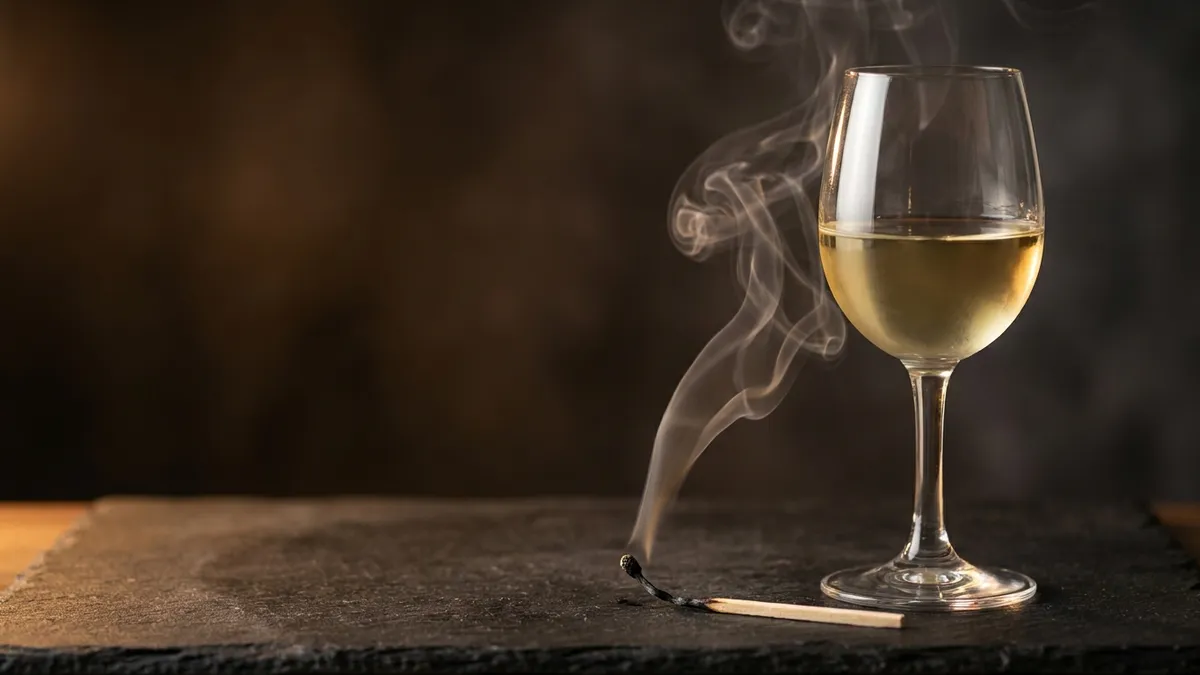
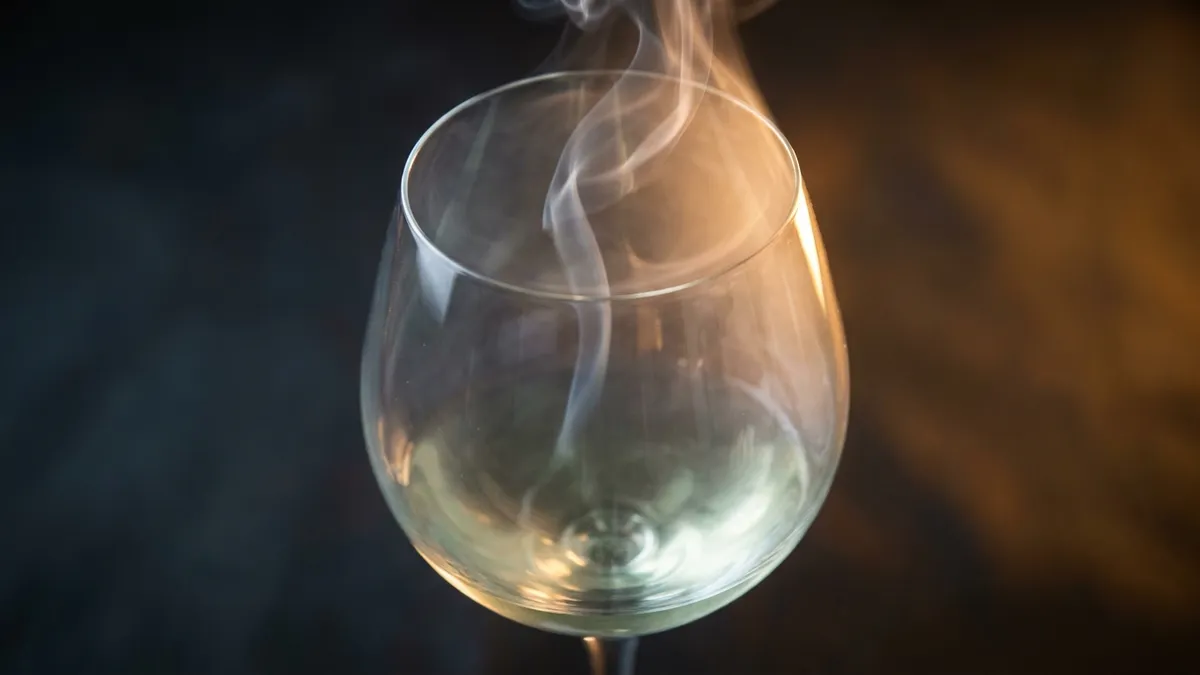
Excess SO2 in wine smells like a match you have just struck, and it stings high inside the nose before any fruit comes through. That sting is sulfur dioxide, the preservative found in almost all wine. The part you smell is a gas, so most of it leaves the glass after a hard swirl. Only a prickle that survives air marks a wine that was given too much.
What Is Excess SO2 in Wine?
Excess SO2 is a wine that carries more free sulfur dioxide than its style needs, enough that the preservative shows up as a smell. Sulfur dioxide (SO2) is added by winemakers to stop microbes and slow the effects of oxygen, and at normal levels you cannot smell it. Once free SO2 passes about 50 parts per million, the nose picks it up as burnt match, burnt rubber or a sharp prickle. The trade calls such a wine sulfitic.
Most of the time the smell is a burst trapped in a freshly sealed bottle, and it fades after a minute of swirling. When it keeps stinging after air, the dose was too high. It is a winemaking fault, but a mild one.
What Does Too Much SO2 Smell Like?
Too much SO2 smells like a match the second after you strike it, and it often arrives as a sharp prickle high in the nose before any aroma registers. Some people describe burnt rubber or mothballs instead. The prickle is the useful clue, because few other wine smells are felt as much as they are smelled.
Strength is measured in ppm (parts per million, the same as milligrams per litre in wine). Below about 50 ppm of free SO2, most tasters notice nothing at all. Above it, the smell moves to the front of the glass and flattens the fruit behind it.
You meet it most often in three situations:
- A bottle opened minutes ago, where the gas has been trapped under the closure since bottling.
- Pale, young whites and rosés, which get larger doses than reds.
- Sweet wines, which carry the most SO2 of all.
The prickle can also make a wine taste sharper and thinner than it is, with a faintly bitter, dusty edge on the finish. That effect disappears along with the smell once the gas has gone.
Is It Sulfur Dioxide or a Rotten Egg Smell?
They are two different sulfur compounds with two different causes. Sulfur dioxide is added by the winemaker as a preservative. Rotten egg is hydrogen sulfide, a gas that yeast make when a fermentation runs short of nitrogen. Winemakers feed tanks a nitrogen supplement called DAP to prevent it.
Hydrogen sulfide belongs to a family of smells called reduction, the sulfur notes that build up when a wine sees too little air. The trap is that a struck match in the glass is not always SO2. Some white wines made with little oxygen show a flinty, struck-match note from reductive compounds instead. The tell is the prickle: SO2 stings the nose, while reductive flint smells like a smoking match without the burn. The full rotten-egg story sits in the guide to hydrogen sulfide in wine, and the flinty end is covered in how to smell reduction in wine.
| What you notice | Likely cause | Does air fix it? | What to do tonight |
|---|---|---|---|
| Burnt match plus a prickle in the nose, right after opening | Free SO2 trapped at bottling | Yes, usually within a few swirls | Swirl hard, smell again, then drink |
| Burnt match prickle that stays after swirling | Too much SO2 added (sulfitic) | Partly; a jug pour helps | Pour into a jug, wait, retaste; return it if the sting remains |
| Flinty struck match with no sting | Mild reduction, often deliberate in some whites | Often softens | Enjoy it as a style note |
| Rotten egg | Hydrogen sulfide from stressed yeast | Sometimes, with splashing or copper | Splash into a jug; if it lingers, open another bottle |
| Wet cardboard, damp cellar | Cork taint (TCA) | Never | Stop and replace the bottle |
If the smell is musty rather than sulfurous, it is not sulfur at all: see how to tell if wine is corked. The broader three-way sort sits in the guide to the sulfur smell in wine.
Does the Burnt Match Smell Go Away With Air?
Usually, yes, because the part of SO2 you smell is a gas. Wine holds sulfur dioxide in two states. Free SO2 floats loose in the wine, and a share of it sits in its gaseous, smellable form. Only that loose share can reach your nose.
Bound SO2 has latched onto other compounds in the wine and is neither active nor noticeable. Together they make total SO2, the number that labels and laws refer to.
A swirl throws the loose gas out of the glass. That is why a burnt match smell on a freshly opened bottle often vanishes after a few turns of the wrist. A sulfitic wine is different because it holds so much free SO2 that the glass keeps releasing more.
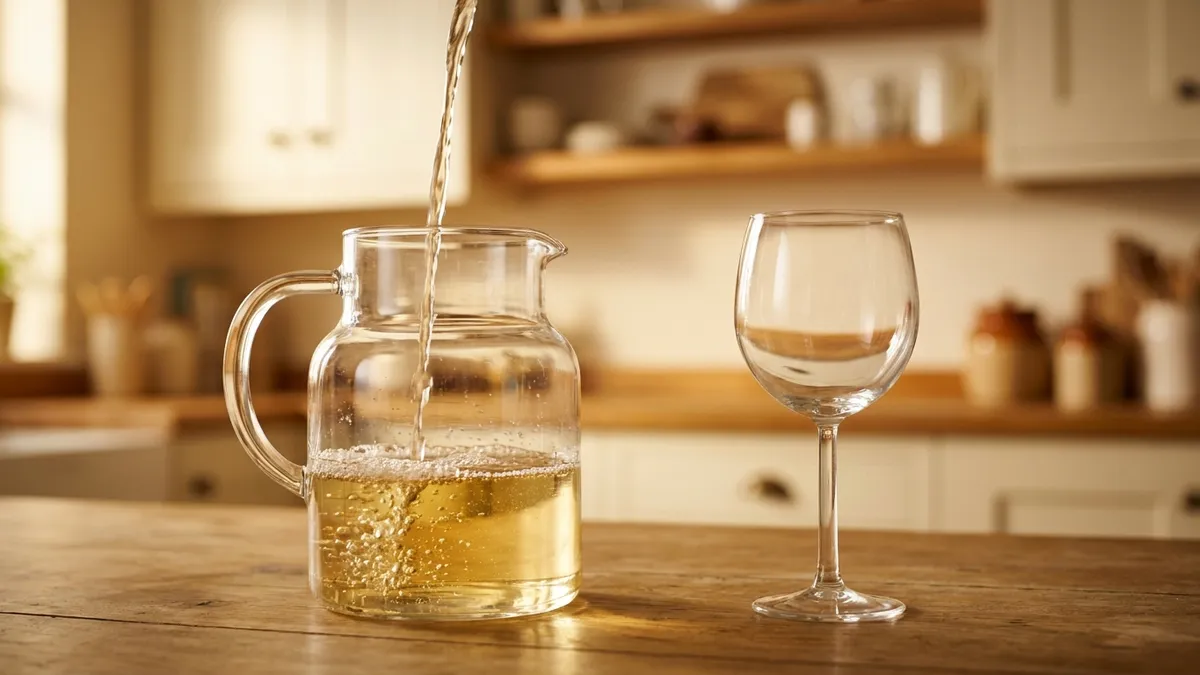
If the prickle fades after a hard swirl, the wine was just freshly sealed, so drink it. If it still stings after you pour the wine into a jug and give it a few minutes, the wine is sulfitic, and more air will only soften it. A wide jug works as well as a fancy decanter, because what matters is the surface the wine spreads across; the steps are in how to decant wine.
Should You Send Back a Wine That Smells of Burnt Matches?
Not on the first sniff. A just-opened bottle often releases a burst of SO2 that clears in the time it takes to pour a second glass. Sending it back at that point returns a sound wine, so give the glass a swirl and a second sniff first.
If the burnt match and the prickle survive a hard swirl and a few more minutes, the wine is sulfitic, and a restaurant should take it back as a fault. Say what you smell: "a strong burnt match smell and a sting in the nose that has not cleared." A named smell is easier for a server to confirm than a vague "something is off." The rules for when a return is fair, and when it is only a dislike of the style, are in when to send wine back.
Why Do Some Wines Carry More SO2 Than Others?
Winemakers add SO2 to stop microbes and oxygen, and some wines need more protection than others. It works as an antibiotic against bacteria and as a shield against oxidation, the reaction that browns a wine and strips its grape flavours. A wine with weak natural defences gets a bigger dose.
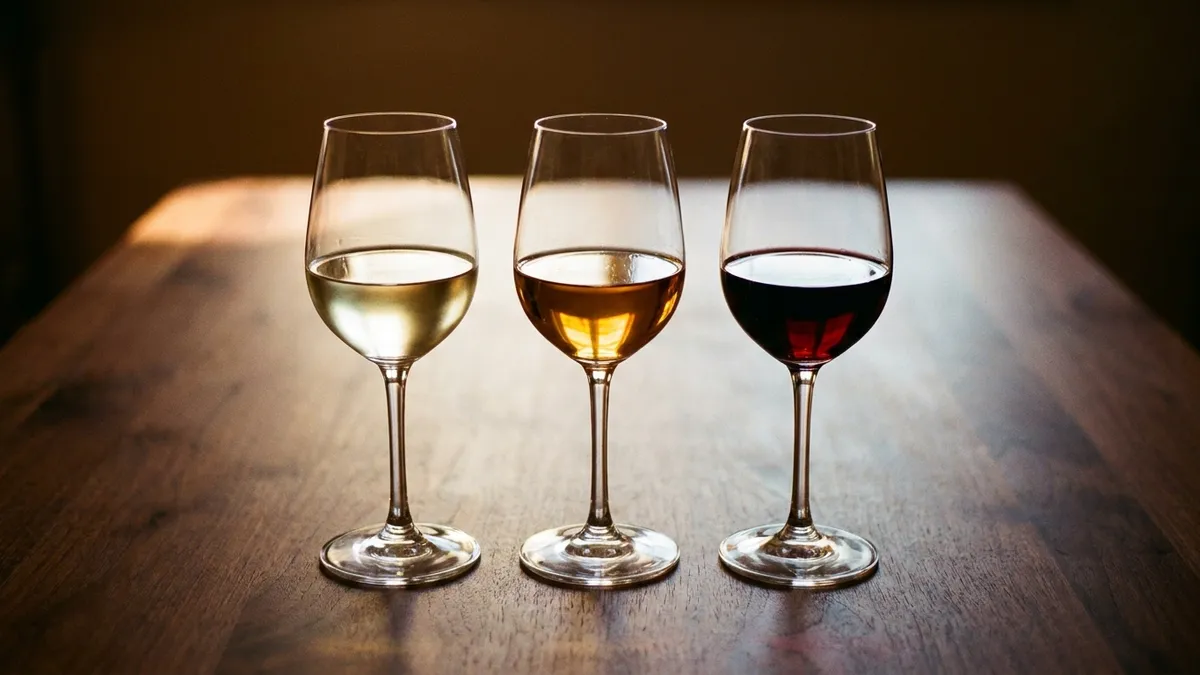
Colour is the first factor. A typical dry red carries about 50 to 75 mg/L, while a dry white sits around 100 mg/L. Red wines contain colour and tannin compounds that help them resist oxygen, so they need less added help.
Sugar is the second. Sweet wines carry more SO2 than dry ones, because leftover sugar could feed yeast and restart fermentation in the bottle.
Acidity is the third, and it works in the winemaker's favour. pH is the measure of acidity, where a lower number means a tarter wine. At lower pH, more of the free SO2 sits in its active, gaseous form, called molecular SO2. A crisp, high-acid white can therefore be protected with less, while a softer, low-acid wine needs a bigger dose to do the same job.
If the prickle bothers you, reach for a dry red over a sweet white, because on average it carries the least SO2 of the common styles.
How Much SO2 Is Legally Allowed in Wine?
In the US a wine may hold up to 350 ppm of total SO2; in the EU a dry red is capped at 150 mg/L and a dry white or rosé at 200 mg/L. Both figures count total SO2, the free and bound parts added together.
EU caps rise to 200 mg/L for reds and 250 mg/L for whites and rosés once a wine has 5 g/L of sugar or more. Certain late-harvest and sweet styles are allowed 300, 350 or 400 mg/L.
These limits explain the label, not the smell. A wine can sit comfortably inside the law and still smell sulfitic, because the law counts total SO2 while your nose only reads the free, gaseous part. On the other side, a wine can carry a lot of bound SO2 and smell of nothing.
The label line "contains sulfites" is required in both the US and the EU once total SO2 passes 10 ppm. Fermentation alone makes up to about 10 mg/L, so the absence of that line tells you the wine is close to the natural floor. It does not mean zero. The full label rules sit in sulfites in wine.
Do Organic and Natural Wines Have No Sulfites?
No. Yeast make some sulfur dioxide during every fermentation, so no wine is entirely free of it, organic or not. An organic label limits the SO2 a winemaker may add on top of that natural amount, and the rules differ between the US and the EU.
In the US, wine sold as USDA Organic may not have any added sulfites, and it must test under about 20 ppm. Wine labeled "made with organic grapes" can have added sulfites, up to 100 ppm in total. In the EU, organic wine may include added sulfites, at lower maximum levels than conventional wine.
If you want the lowest added SO2 on a US shelf, look for the USDA Organic seal rather than "made with organic grapes." For how the two farming systems differ beyond sulfites, see organic vs conventional wine. Low-SO2 bottles carry their own trade-off: with less protection, they are more exposed to oxygen and bacteria, which is part of why natural wine varies so much from bottle to bottle.
Is a Wine That Smells of Burnt Matches Safe to Drink?
For most people, yes. Excess SO2 is a dosing fault: the winemaker added more preservative than the wine needed, and the burnt match smell is the result. The wine underneath has not turned in the way an oxidized wine or a bacterial fault has.
The exception is a small group of people who react to sulfites. Such reactions are rare in the general population, and the "contains sulfites" line exists so that those people can check before they pour.
For everyone else, the question is enjoyment rather than safety. A sulfitic wine that softens after a jug pour is worth finishing. One that still stings after air is a fault worth reporting.
How Can You Train Your Nose to Spot SO2?
Open a young white and smell it the moment you pour, then again after a hard swirl. A crisp, pale white or a sweet white in its first year gives you the best chance of catching the prickle. Those styles carry the largest doses.
Time the swirl at about thirty seconds. Note whether the burnt match faded, stayed or turned into fruit. After a few bottles the prickle becomes easy to recognise, and you stop mistaking a freshly opened wine for a faulty one. The guide on how to identify wine faults by smell sets this next to the other common faults, all under the wine faults hub.
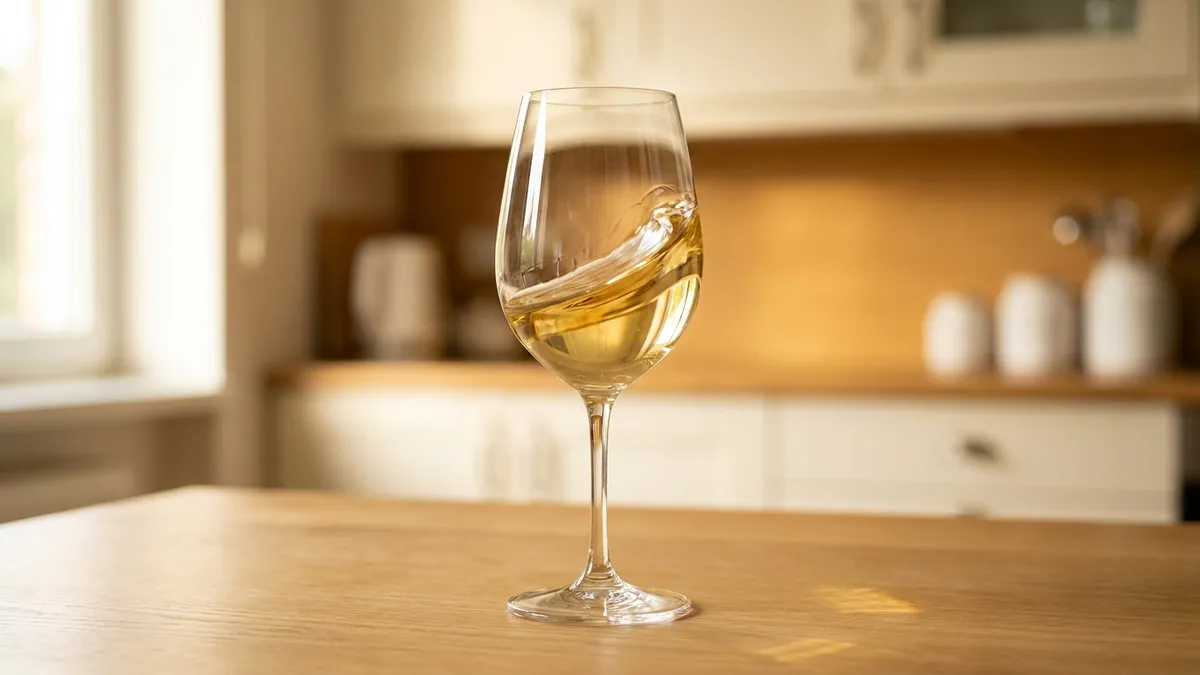
If you want a guide to smelling wine step by step, the Sommy app at sommy.wine has a Wine 101 course that builds the same two-sniff habit. Pour the palest, youngest white you have tonight and smell it twice, once at the pour and once after a hard swirl.
Sources
Frequently Asked Questions
What does too much sulfite smell like in wine?
Too much sulfur dioxide smells like a match the moment after you strike it. It can also read as burnt rubber or mothballs, and it often arrives as a sharp prickle inside the nose rather than a smell you can place. Wines with this problem are called sulfitic. Free SO2 usually becomes noticeable once it passes about 50 ppm.
Does the burnt match smell in wine go away?
Usually, yes. The form of sulfur dioxide you smell is a gas, and swirling or pouring the wine into a jug gives it room to escape the glass. Swirl hard, wait, and smell again. If the prickle has faded, the wine was simply freshly sealed. If it still stings after a jug pour and a short wait, the wine carries more SO2 than it should.
What is the difference between SO2 and rotten egg smell in wine?
They come from two different compounds. Sulfur dioxide is a preservative the winemaker adds, and it smells like a burnt match with a prickle in the nose. Rotten egg is hydrogen sulfide, which yeast make when a fermentation runs short of nitrogen. Air clears SO2 easily. Hydrogen sulfide sometimes clears with air or copper, but if it lingers it can turn into harder-to-shift rubbery compounds.
How much sulfur dioxide is allowed in wine?
In the US, wine may contain up to 350 ppm of total sulfur dioxide. EU rules are tighter: 150 mg/L for dry reds and 200 mg/L for dry whites and rosés, rising to 200 and 250 mg/L once a wine has 5 g/L of sugar or more, with higher caps for some sweet styles. Any wine above 10 ppm must say it contains sulfites.
Do organic wines have no sulfites?
No. Fermentation makes some sulfur dioxide on its own, up to about 10 mg/L, so no wine is completely free of it. In the US, wine labeled USDA Organic cannot have any added sulfites and must test under about 20 ppm. Wine labeled made with organic grapes may have added sulfites, up to 100 ppm in total. EU organic wine allows added sulfites at lower caps than conventional wine.
Can you send back a wine that smells of burnt matches?
Not on the first sniff. Swirl the glass hard, wait a moment, and smell it again, because a freshly opened bottle often carries a burst of SO2 that clears fast. If the burnt match smell and nose prickle survive the swirl and a few more minutes in the glass, the wine is sulfitic. Describe that clearly to the server and ask for a replacement.
Why do white and sweet wines have more sulfites?
White wines lack the colour compounds that help red wines resist oxygen, so winemakers add more sulfur dioxide to protect them: roughly 100 mg/L in a typical dry white against about 50 to 75 mg/L in a dry red. Sweet wines need extra again, because leftover sugar could restart fermentation in the bottle. That is why EU law allows higher caps for them.
Sommy Team
LinkedInFounder & Wine Educator
The Sommy Team is building the world's most approachable wine education app, helping beginners develop real tasting skills through structured courses and AI-guided practice.