Wine Too Tannic? Why It Grips and How to Fix It Tonight

By the Sommy Team — AI-assisted, human-edited.
Updated Oct 1, 2026
Contents (9)
- What Does It Mean When Wine Is Too Tannic, in One Paragraph?
- Why Does Tannin Make Your Mouth Feel Dry and Rough?
- Is It the Wine, or the Way You Are Drinking It?
- How Do You Fix a Wine That Is Too Tannic Tonight?
- Does Decanting Soften Tannins?
- Where Does the Extra Tannin Come From?
- Will a Too-Tannic Wine Get Better With Age?
- How Can You Spot an Over-Tannic Wine Before You Buy?
- Try the Three Tests Tonight
TL;DR
A wine is too tannic when the drying grip outlasts the fruit. Tannin binds the proteins in saliva, so the mouth feels rough. Fat and protein, a slightly warmer glass and smaller sips ease it tonight. Years in bottle soften tannin; a few hours in a decanter reportedly does not.
A wine too tannic to enjoy is one where the drying grip on your gums lasts longer than the fruit. Usually the cure is on the plate: fat and protein give tannin something to grab other than your mouth. Years in the bottle soften tannin too, but only when there is ripe fruit underneath.
What Does It Mean When Wine Is Too Tannic, in One Paragraph?
A wine is too tannic when the drying grip on your gums is stronger than the fruit, acidity and alcohol around it, so the grip is what you remember after the sip. Tannin (the drying grip on your gums) comes from grape skins, seeds, stems and oak. High tannin alone is no fault: a young Nebbiolo with plenty of cherry fruit can be firm and still in balance. Over-tannic means out of proportion. The usual causes are heavy extraction in the winery, a young age, a cold glass or a sip taken without food. It is rarely spoilage, so the bottle is usually worth rescuing rather than returning.
Why Does Tannin Make Your Mouth Feel Dry and Rough?
Tannin grabs the proteins in your saliva and makes them clump and drop out, so saliva stops lubricating and your gums and tongue feel rough. That feeling is astringency (the drying, puckering texture tannin leaves behind). It belongs to the wine's texture, alongside body and weight, which our guide to wine mouthfeel maps out.
Astringency is a feeling, not a taste. In experiments, people whose taste nerves were numbed could still sense it. It only disappeared when the nerves that carry touch from the face were blocked too. Bitterness, by contrast, is a taste on the tongue. Over-tannic reds often bring both, which is why they get described as "bitter" when the real problem is grip. Our side-by-side on astringency vs bitterness shows how to pull the two apart.
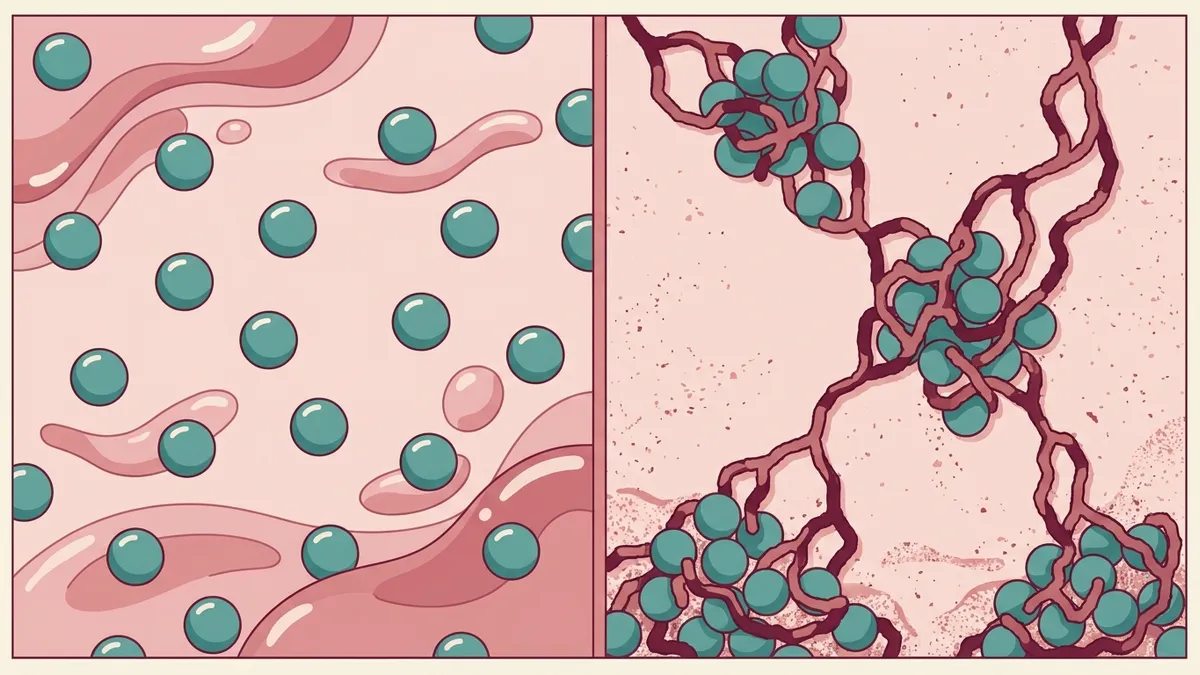
The drying feel has nothing to do with sugar. A wine described as dry on the label simply has no sugar you can taste; a sweet red can still grip your gums.
Is It the Wine, or the Way You Are Drinking It?
Often it is the setting. A cold glass, an empty stomach and a sip taken without food all make the same wine read harsher. Cooler serving temperatures emphasise acidity and tannin while muting aroma, so a red straight from a cold cellar or fridge loses fruit and gains grip at once.
| What you notice | Likely cause | Quick check | What to do |
|---|---|---|---|
| Grip hits hard, smell is faint | Wine served too cold | Glass feels cool in the hand | Cup the bowl for a few minutes, then sip again |
| Rough gums on the first sip, better on the third | No food, dry mouth | Take a bite of cheese and re-sip | Serve it with the meal, not before |
| Grip plus deep purple colour and plenty of fruit | Young wine built to age | Fruit still there after food and warmth | Drink with fatty food or cellar the rest |
| Grip and bitterness, little fruit even with food | Over-extraction or green tannin | Nothing improves after all three tests | Cook with it |
| Woody, sawdusty dryness on the finish | Heavy new oak | Smells of vanilla and toast | Pair with grilled or smoked meat |
If the glass feels cold in your hand, warm it before you judge the tannin. Our wine serving temperature chart gives the target range for each style of red.
How Do You Fix a Wine That Is Too Tannic Tonight?
Eat something with fat and protein, let the glass warm a few degrees, and take smaller sips. Each step works on a different cause: food on the saliva, warmth on the temperature, small sips on how much of the mouth the wine coats. If the fruit still does not show after all three, cook with it.
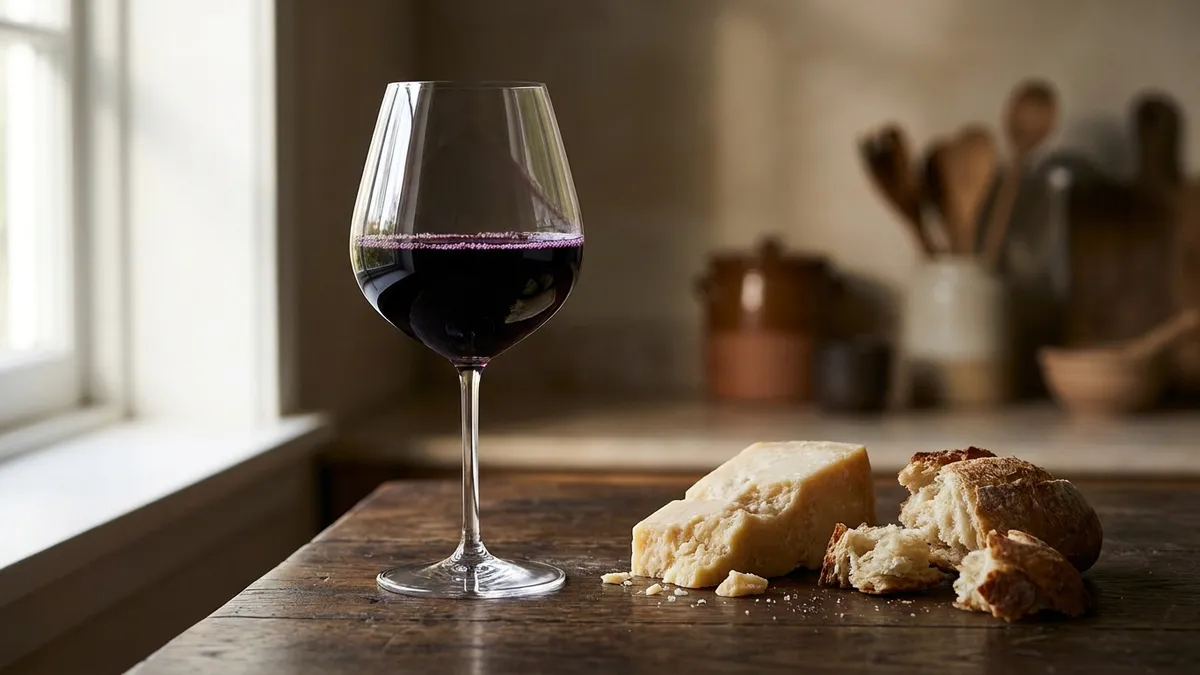
Fat and protein first. Tannin binds protein, so the likely reason food helps is that it hands the tannin something to grab other than your saliva. That step is inference from the mechanism, but it matches how tannic reds have long been served. Aged hard cheese, steak, lamb chops and buttered bread all work. Salty food is often said to help the fruit stand out too. Our wine and cheese pairing guide lists the cheeses that stand up to big reds.
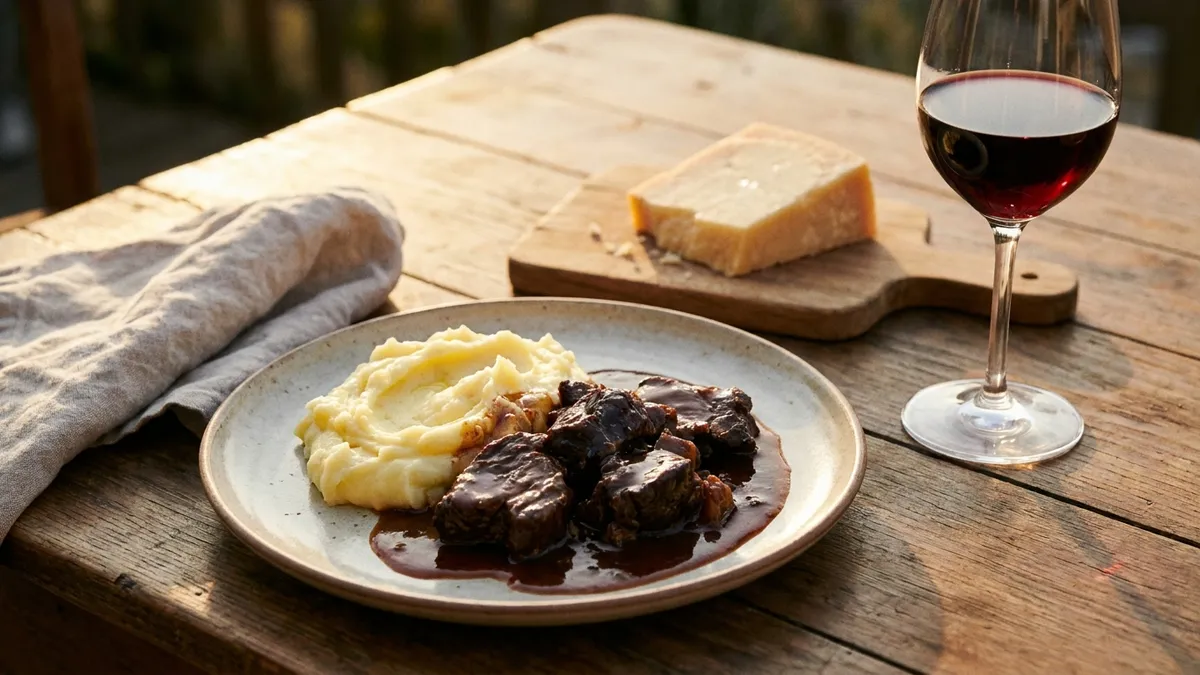
Then warmth and smaller sips. Tannin feels harder in a cool glass, so a few minutes in your hand helps. A small sip coats less of the mouth, and the saliva you have left can keep up.
Then judge. If the grip eases with food and ripe fruit comes through, the wine is food wine: serve it with dinner and stop sipping it on its own. If even food leaves only grip and bitterness, the wine is out of balance. Pour it into a beef stew or a red-wine braise, where long cooking and meat proteins take the edge off. More ideas are in leftover wine uses.
Does Decanting Soften Tannins?
Not much. It has been reported that a few hours in a decanter does not soften tannins, which runs against one of the most repeated tips in wine. Air still lifts aroma, so the fruit is easier to smell and the grip stands less alone.
Our piece on whether decanting changes flavour covers what air does and does not change.
So decant a young tannic red for aroma, then serve it with food. The step-by-step method, including the sediment pour for older bottles, is in how to decant wine. If dinner is in ten minutes, skip the decanter and put the cheese on the table instead.
Where Does the Extra Tannin Come From?
From grape skins, seeds and stems, from oak barrels, and from how long and how hot the winemaker extracts them. Winemakers can also add tannin powder. The grape sets the starting amount, and the cellar decides how much of it reaches the bottle.
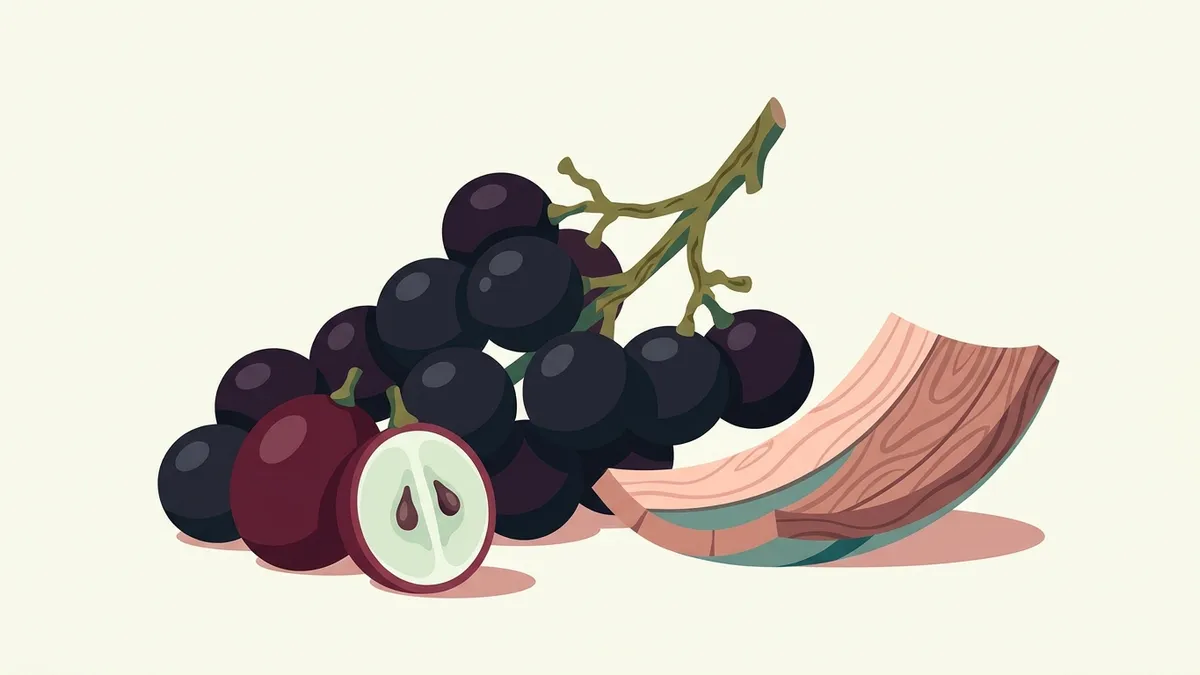
The main lever is maceration (soaking the juice with skins, seeds and stems). The longer the contact, the more tannin ends up in the wine. Heat and alcohol speed it up: warmer fermentations and rising alcohol act as solvents and pull more out. Too much extraction can make some tannins harsh enough that most drinkers find the wine unapproachable.
Oak (barrels that add vanilla, toast or spice) is the second source. Wine aged in charred oak absorbs tannin from the wood, so a young red in a lot of new oak carries grape tannin and wood tannin at once. Our guide to what oaked means explains how to read that on a label.
Wineries also have a tool to pull tannin back. Fining (adding a substance that binds unwanted compounds so they settle out) can use egg-white albumin, casein from milk or gelatin, all of which bind to tannin.
Will a Too-Tannic Wine Get Better With Age?
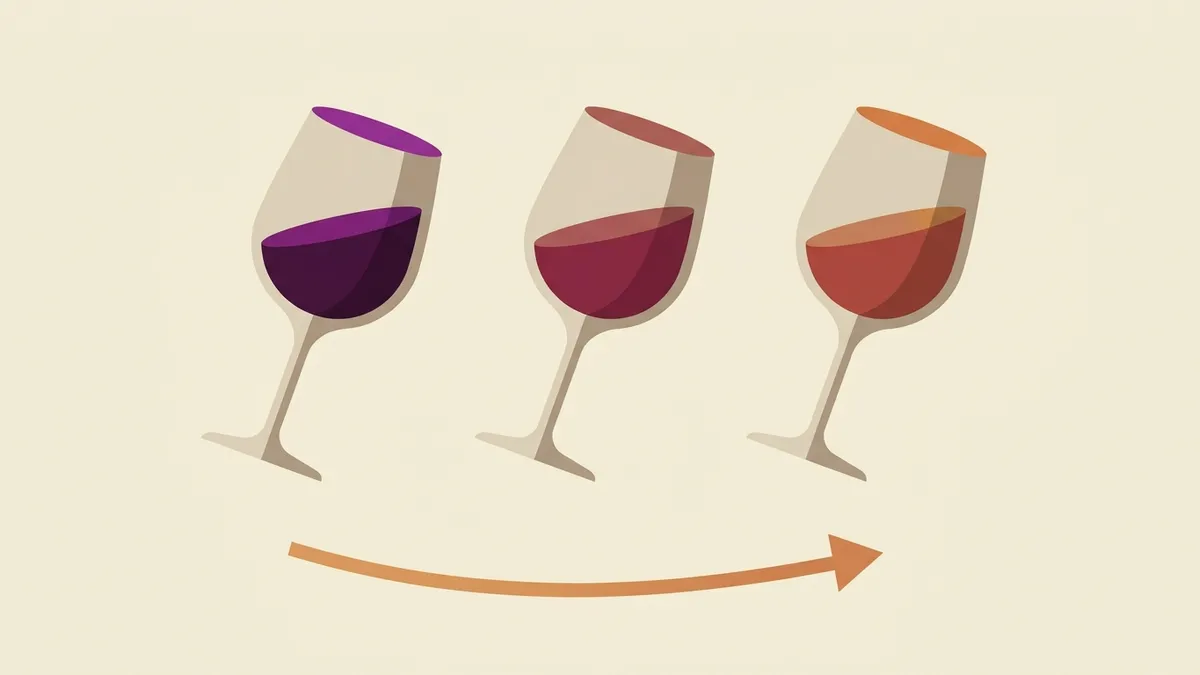
Sometimes. As wine ages, tannins link into long chains that feel softer and less tannic. Heavily extracted wines can build tannins that soften over a longer period and give the wine a longer life. Colour changes alongside: pigments react with tannins as the wine ages, which is part of why young purple shifts toward garnet and brick.
Softer tannin does not create fruit that was never there. A wine with big tannin and thin fruit ends up dull and drying in old age, a pattern our guide to wine balance describes in detail. If ripe fruit shows after the food and warmth tests, cellar the other bottles. If only grip and bitterness remain, drink or cook with them now. To feel the difference age makes, try the pairings in tasting young vs aged wine.
How Can You Spot an Over-Tannic Wine Before You Buy?
Read the grape, the age and the oak. If the label names a young, thick-skinned grape, heavy new oak or long maceration, expect firm tannin and plan food for it. The vintage on the label tells you the age; these four grapes carry the most grip.
- Tannat has a name often linked to its tannin; see the Tannat guide.
- Nebbiolo pairs pale colour with high tannin, which surprises people who judge by colour; see the Nebbiolo guide.
- Sagrantino from Umbria is one of the most tannic grapes grown anywhere; see the Sagrantino guide.
- Cabernet Sauvignon has thick skins and is often aged in new oak; see the Cabernet Sauvignon guide.
If the wine is one of these and only two or three years old, buy it for a meal with fat and protein. If you want a red for an evening without food, pick a thin-skinned grape such as Pinot Noir or Gamay. Our primer on what tannins are ranks more grapes from low to high.
Try the Three Tests Tonight
Over-tannic reds sit in the gap between style and fault, the same line drawn in wine fault vs style and across the wine faults hub. Telling a badly timed bottle from an unbalanced one takes three sips.
Sommy's bite-sized courses at sommy.wine, starting with Wine 101, teach tannin by how it feels on your gums. Pour a glass of the youngest red in the house tonight and cut a piece of hard cheese. Taste it through the three tests before you call the bottle too tannic.
Sources
Frequently Asked Questions
Why does my red wine taste so dry and rough?
Tannin binds to the proteins in your saliva and makes them clump and drop out, so saliva stops lubricating your mouth. Your gums and tongue then feel rough and dry. The wine may have no sugar at all, but the dryness you feel is texture. A young red from thick-skinned grapes, served cool and without food, shows this most.
How do you fix a wine that is too tannic?
Eat something with fat and protein, such as hard cheese, steak or buttered bread, then sip again. Let the glass warm a few degrees if it feels cold, because cool temperatures make tannin feel harder. Take smaller sips. If the fruit still does not show after that, use the bottle for a beef stew or braise rather than forcing it down.
Does decanting soften tannins?
Not much. It has been reported that decanting for a few hours does not soften tannins. Air can still help by lifting aroma, so the fruit is easier to smell and the wine feels less one-sided. Decant a young tannic red for aroma and serve it with food, but expect the grip on your gums to stay.
Will a too-tannic wine get better with age?
It can. As wine ages, tannins join into longer chains that feel softer and less drying. That only helps a wine with ripe fruit and acidity under the grip. If a young wine shows nothing but tannin and bitterness, even after food and warmth, extra years will soften the grip but leave little fruit behind.
Is tannin the same as bitterness?
No. Tannin's grip is a touch sensation: people with numbed taste nerves still feel it, through the nerves that sense texture. Bitterness is a taste on the tongue. The two often come together in young reds, especially from seed tannin, but a wine can be very grippy without tasting bitter, and bitter without feeling grippy.
Which wines are most likely to taste too tannic?
Young reds from thick-skinned grapes such as Tannat, Nebbiolo, Sagrantino and Cabernet Sauvignon, wines aged in a lot of new oak, and wines made with long skin contact. These are often built for food and for ageing. Opened young and sipped alone, they are the bottles most people describe as too tannic.
Sommy Team
LinkedInFounder & Wine Educator
The Sommy Team is building the world's most approachable wine education app, helping beginners develop real tasting skills through structured courses and AI-guided practice.