Microbial Spoilage in Wine: Brett, Vinegar and Mouse

By the Sommy Team — AI-assisted, human-edited.
Updated Sep 25, 2026
Contents (9)
- What Is Microbial Spoilage in Wine?
- Which Microbes Spoil Wine, and How Do You Tell Them Apart?
- How Can You Tell If Your Bottle Is Spoiled?
- What Does Brett Smell Like?
- Why Does Some Wine Smell Like Vinegar?
- What Do Lactic Acid Bacteria Do to Wine?
- Is Wild Yeast Wine Spoiled Wine?
- How Do Winemakers Stop Microbial Spoilage?
- How Do You Train Your Nose to Spot Spoilage?
TL;DR
Microbial spoilage in wine is damage done by yeast or bacteria that grow after the winemaker loses control. Brett yeast smells of band-aids and stables, acetic acid bacteria turn wine to vinegar with oxygen, and lactic acid bacteria cause mousy, geranium and slimy faults. Sulfur dioxide, air-tight containers and clean, cool cellars prevent all three.
A glass of microbial spoilage wine smells wrong in a way you can learn to read, because almost every case traces to one of three microbe families, and each one leaves its own smell. A yeast called Brett smells of band-aids and horse stables. Vinegar bacteria smell of salad dressing and nail polish. A third group, lactic acid bacteria, makes a wine taste of stale crackers after you swallow, or turns it slimy. Name the smell, and you have named the microbe.
What Is Microbial Spoilage in Wine?
Microbial spoilage in wine is damage done by yeast or bacteria that grow where the winemaker did not want them. Three families cause nearly all of it. Brettanomyces, or Brett, is a yeast that lives in barrels and smells of band-aids above about 140 micrograms per litre. Acetic acid bacteria turn alcohol into vinegar whenever they get oxygen.
Most tasters notice that vinegar at about 0.6 to 0.7 grams per litre. Lactic acid bacteria (the microbes that also soften wine on purpose) cause mousy, geranium and slimy faults. Sulfur dioxide, full containers, clean barrels and cool cellars keep all three out. Spoilage is a flavour problem, and once the compounds form they stay in the bottle.
Which Microbes Spoil Wine, and How Do You Tell Them Apart?
Three families do almost all of it: Brettanomyces yeast, acetic acid bacteria and lactic acid bacteria. Each needs a different opening. Brett wants leftover sugar and an old barrel. Vinegar bacteria want air. Lactic acid bacteria want low acidity and little sulfur dioxide.
That split matters in the glass, because each family leaves a fingerprint you can smell or feel. The table below maps each one to what it makes, how it shows up, and what to do with the bottle in front of you.
| Microbe | What lets it grow | What it makes | How you notice it | What to do with the bottle |
|---|---|---|---|---|
| Brettanomyces (yeast) | Leftover sugar, old barrels, low sulfur dioxide | 4-ethylphenol, 4-ethylguaiacol, isovaleric acid | Band-aid, horse stable, smoky bacon, clove, sweaty cheese | Faint and leathery: drink it. Band-aid over the fruit: send it back |
| Acetic acid bacteria (Acetobacter, Gluconobacter) | Oxygen: half-empty barrels, weak seals, bottles left open | Acetic acid, then ethyl acetate | Vinegar, salad dressing, nail polish remover | Sour and solvent-like: pour it out, do not age it |
| Lactic acid bacteria: mousiness | High pH, low sulfur dioxide | Tetrahydropyridines | Clean nose, stale cracker or mouse cage after swallowing | Rub a drop on your hand and sniff; if mousy, return it |
| Lactic acid bacteria: geranium taint | Potassium sorbate added to a wine that still has bacteria | 2-ethoxyhexa-3,5-diene | Crushed geranium leaves | No fix: return it |
| Lactic acid bacteria: ropiness | pH above 3.5, low sulfur dioxide | Slimy dextrins and polysaccharides | Oily, stringy pour; thick in the mouth | Return it; the texture will not clear |
The table covers the faults a drinker actually meets. It leaves out cork taint on purpose, because no microbe grows in a corked bottle.
How Can You Tell If Your Bottle Is Spoiled?
Smell before you sip, then name the family from the table. Pour a small measure, swirl for a few seconds, and take two short sniffs. The first check is whether the fruit is still there or something else has replaced it.
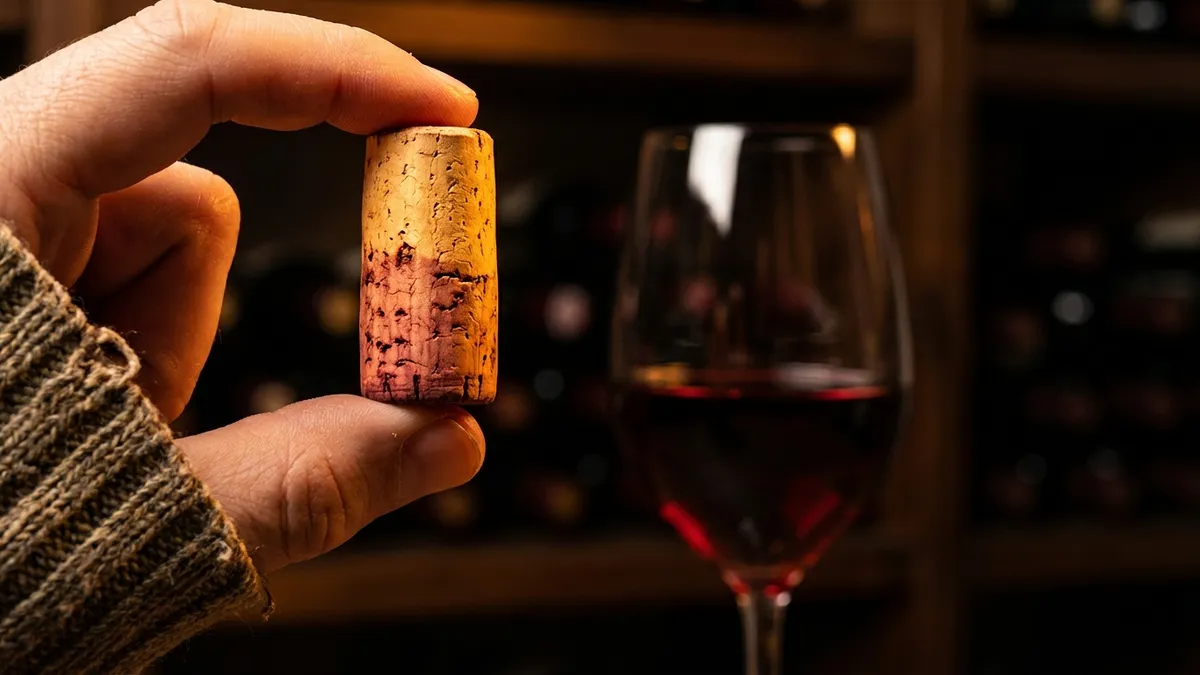
If the wine smells of wet cardboard or a damp basement, it is cork taint, a chemical fault covered in how to tell if wine is corked. If it smells of vinegar or nail polish, bacteria had air. If it smells of band-aids, a stable or smoky bacon, suspect Brett. If the nose is clean but the finish turns to stale crackers a few seconds after you swallow, suspect mouse.
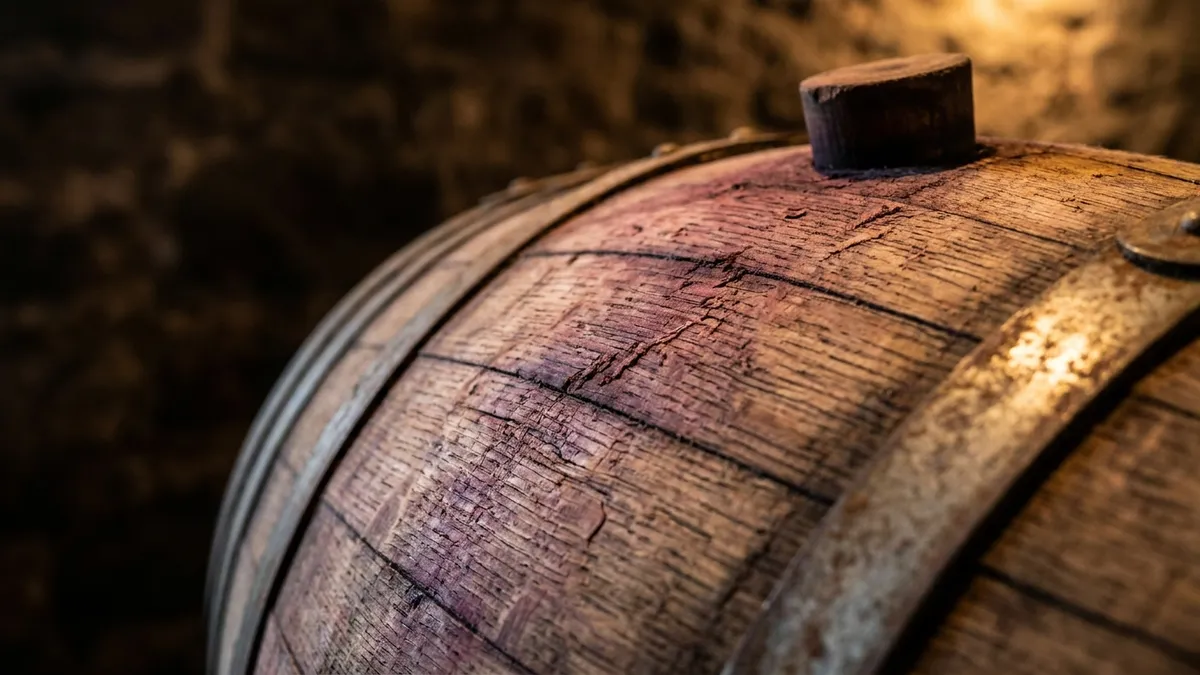
Temperature changes the read. A wine straight from the fridge releases little aroma, so a faint fault can hide until it warms. Give a cold bottle five minutes before you judge it. The full sniffing routine, with the non-microbial faults alongside, is in how to identify wine faults by smell.
Some of these smells belong to a style at low levels. A trace of leather in an old southern Rhône red or a lift of vinegar in Amarone can be intended. The line is simple: if the off-note sits beside the fruit, it is character; if it has replaced the fruit, it is a fault. Wine fault vs style shows where the measured thresholds put that line.
What Does Brett Smell Like?
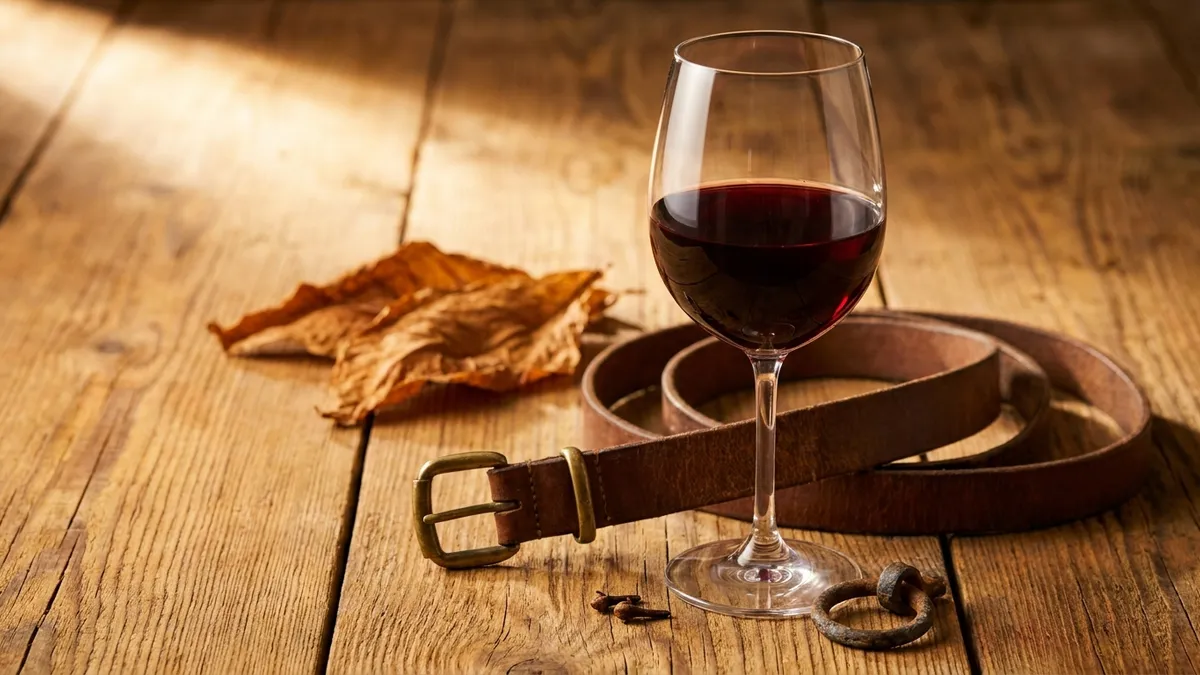
Brett smells of band-aids, a horse stable, smoky bacon or clove, and sometimes sweaty cheese. Each smell comes from one compound. 4-ethylphenol gives band-aid, barnyard and antiseptic above about 140 micrograms per litre. 4-ethylguaiacol gives bacon, spice, clove and smoke, but only above about 600.
The third compound, isovaleric acid, adds a sweaty, cheesy, rancid edge. A Brett-heavy wine usually loses its fresh plum and cherry at the same time, so the glass smells animal where it used to smell of fruit.
Brett is a yeast, from a different genus than the Saccharomyces yeast that ferments most wine. It lives best in barrel-aged red wine for two reasons. It can feed on cellobiose, a sugar that comes from the wood, and the rough inside of a barrel gives it places to hide from cleaning. A single old barrel can carry a colony from one vintage to the next.
Winemakers control it mainly with sulfur dioxide, to which Brett is particularly sensitive. Two other tools help. Fermenting the wine until residual sugar is below 1.0 gram per litre leaves Brett little to eat. Sterile filtration before bottling strains out the living cells. The smell compounds already made stay behind, so a Brett-heavy wine cannot be cleaned up. The full descriptor list and the regions where Brett is part of the style are in what is Brett in wine.
Why Does Some Wine Smell Like Vinegar?
A vinegary wine has been taken over by acetic acid bacteria, which turn alcohol into acetic acid whenever they get oxygen. The main culprits belong to two groups, Acetobacter and Gluconobacter. The measured result is called volatile acidity, or VA: the acids that evaporate from the glass, mostly acetic acid.
Sound grapes carry almost no VA, because it is made by microbes. Yeast make a little during a normal fermentation, according to the Australian Wine Research Institute. High levels in a stored wine usually mean bacteria. Winemakers throw out mouldy grapes at harvest because rot carries acetic acid bacteria into the cellar.
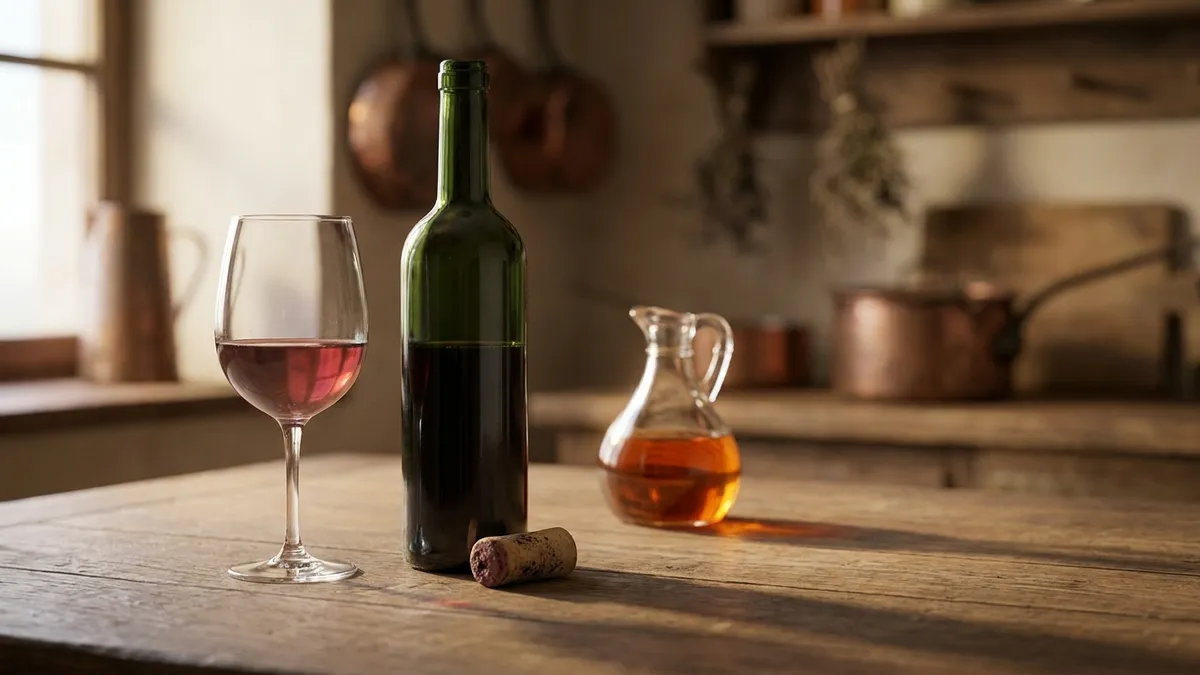
Most tasters start to smell acetic acid at around 0.6 to 0.7 grams per litre, and sources differ widely on the exact figure. Above 1.2 to 1.3 grams per litre it becomes unpleasant. At that point the fruit is flat, the finish prickles, and a nail polish smell from ethyl acetate may join the vinegar.
Oxygen is the switch. A barrel that is not topped up, a tank with headspace, or a bottle open on the counter for a week all give the bacteria what they need. Filling containers to the top and adding sulfur dioxide both limit their growth. The stages from gentle lift to solvent are laid out in volatile acidity in wine, and the related bruised-apple fault is in oxidized wine explained.
What Do Lactic Acid Bacteria Do to Wine?
Lactic acid bacteria cause three faults you are likely to meet: mousiness, geranium taint and a slimy texture called ropiness. The same family runs malolactic fermentation, the planned step that softens sharp malic acid in most reds. Trouble starts when the wrong strains grow. The planned version is explained in what is malolactic fermentation.
The risk rises with pH, the chemist's scale for acidity, where a higher number means a less acidic wine. Low-acid, high-pH wine gives the bacteria room and weakens sulfur dioxide at the same time.
Mousiness
Mousy taint tastes of stale crackers, popcorn or a mouse cage, but only after the wine is in your mouth. Its main compound does not evaporate at the pH of wine, so the glass smells clean. Saliva is less acidic, and once the wine mixes with it the compound is released and reaches your nose from the back of the throat. Brett can make the same compounds, but lactic acid bacteria are the usual cause. Mousy wine taint has the hand-rub test that catches it without a sip.
Geranium taint
Geranium taint smells like crushed geranium leaves. It forms when lactic acid bacteria break down potassium sorbate, a preservative sometimes added to sweet wines to stop yeast. The resulting compound is noticeable at just 1 nanogram per litre, so a trace ruins a bottle. The chemistry and the wines most at risk are in geranium taint in wine.
Ropiness
A ropy wine pours like thin oil and feels thick and slippery. Certain lactic acid bacteria, mainly Leuconostoc and Pediococcus, produce slimy chains of dextrins and polysaccharides. It tends to appear in wines with pH above 3.5 and little sulfur dioxide.
Is Wild Yeast Wine Spoiled Wine?
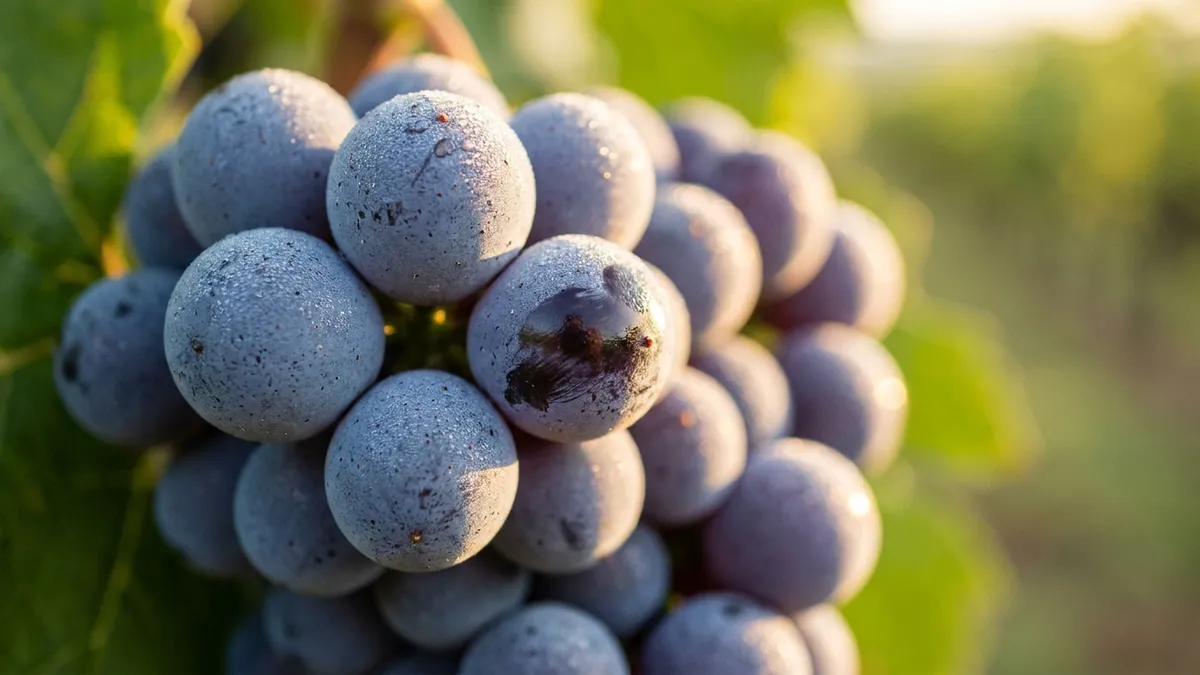
No. Wild yeast starts a fermentation; spoilage organisms are the ones that take over a finished wine later. Yeast already lives on grapes, often visible as the powdery, dusty coat on the skins, called the bloom. A spontaneous fermentation lets those yeasts do the work instead of adding a cultured strain.
That choice has real risks, and they are different from spoilage. The main one is a fermentation that stops before all the sugar is gone, which leaves food for Brett later. Wild ferments also often produce extra acetic acid. Most winemakers add cultured yeast instead, because a wild ferment changes with whichever yeasts happen to be on the grapes.
So a wild-fermented wine starts with a higher chance of problems, but it is not spoiled by definition. It spoils only if Brett or bacteria take over afterwards, when sulfur dioxide, cool temperatures or clean, full containers are missing. Many natural wines combine wild yeast with little or no added sulfur dioxide. That combination removes two protections at once, which is why mouse and Brett turn up more often in that style. The yeast side of the story is in wine yeast and fermentation.
How Do Winemakers Stop Microbial Spoilage?
With sulfur dioxide, air-tight containers, clean barrels and cool cellars. Sulfur dioxide (SO2, the "contains sulfites" on the label) is the main tool. Many shoppers believe sulfites make wine go bad, but the opposite is true: SO2 stops bacteria and yeast and slows oxidation.
Its active form, molecular SO2, shrinks as pH rises. For mousiness, the Australian Wine Research Institute advises winemakers to work red wines at 50 to 80 milligrams per litre of total SO2, and more for high-pH wines. Above 50 ppm of free SO2, the sulfur itself becomes noticeable in the smell and taste, so there is a ceiling on how much helps.
The law sets limits too. The US allows up to 350 ppm of total SO2 in wine. The EU allows 150 ppm for dry reds and 200 ppm for dry whites and rosés, with higher limits for sweet wines. The full label story is in sulfites in wine.
The rest is housekeeping. Barrels and tanks are kept full so bacteria get no air. Cellars are kept cool. Barrels, hoses and pumps are cleaned hard, because a single dirty barrel can seed a cellar.
How Do You Train Your Nose to Spot Spoilage?
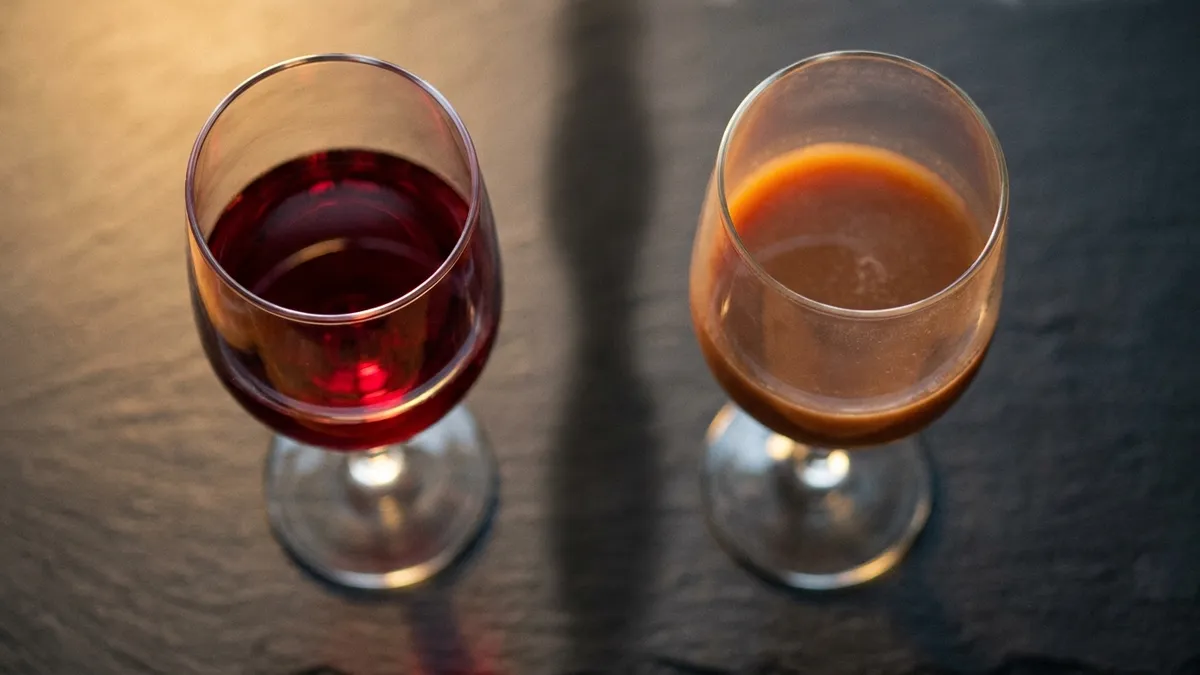
Smell one deliberately faulty sample next to a clean glass of the same wine. Vinegar is the easiest fault to fake at home with a kitchen cruet. Once that smell has a name in your memory, you catch it in a real bottle on the first sniff.
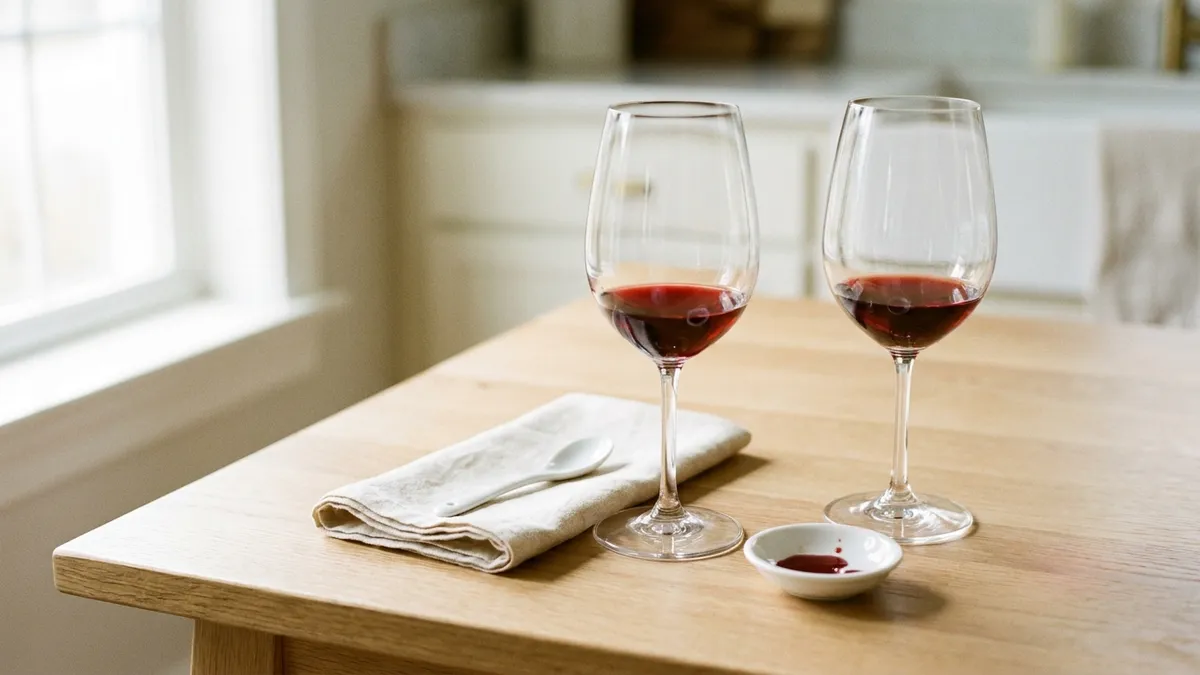
If the clean glass and the spiked glass smell alike, add a few more drops of vinegar until the difference is clear, then halve the dose to find your own threshold. Brett is harder to fake, but a fresh band-aid and a pinch of smoked paprika make useful memory anchors for its antiseptic and smoky sides. Sniff them one at a time and write down what you smell.
Sommy's bite-sized courses, starting with Wine 101 at sommy.wine, teach the smell vocabulary that makes these faults easy to name. Every fault in the family is mapped in the wine faults hub. Tonight, have someone add half a teaspoon of red wine vinegar to one of two glasses of the same red. Then pour your attention into each glass: smell both blind and taste which one prickles.
Sources
- Australian Wine Research Institute: Wine flavours, faults and taints
- Wikipedia: Wine fault (Brett compounds, volatile acidity, mousiness, geranium taint, ropiness)
- Wikipedia: Brettanomyces (barrels, cellobiose and SO2 control)
- Wikipedia: Sulfur dioxide (use in wine and the US limit)
- EUR-Lex: Commission Delegated Regulation (EU) 2019/934, Annex I Part B (sulphur dioxide limits)
- Wikipedia: Winemaking (wild yeast, volatile acidity and acetic acid bacteria)
Frequently Asked Questions
What causes microbial spoilage in wine?
Yeast or bacteria that grow in the wine after the winemaker loses control of it. The usual openings are oxygen from a half-empty barrel or tank, too little sulfur dioxide, dirty barrels and hoses, leftover sugar, high pH and warm storage. Brettanomyces yeast, acetic acid bacteria and lactic acid bacteria cause almost every case, and each one leaves its own smell or texture behind.
Is Brettanomyces a bacteria or a yeast?
Brettanomyces is a yeast, a different genus from the Saccharomyces yeast that ferments most wine. It lives in cellars and especially in oak barrels, where it feeds on a wood sugar called cellobiose. It produces 4-ethylphenol, which smells of band-aids and horse stables above about 140 micrograms per litre, and 4-ethylguaiacol, which smells of smoky bacon and clove above about 600.
Why does my wine smell like vinegar?
Acetic acid bacteria, mainly from the Acetobacter and Gluconobacter groups, have turned some of the alcohol into acetic acid, the acid in vinegar. They need oxygen to do it, so the usual cause is air: a bottle left open for days, a weak seal, or a barrel that was not kept full. Most tasters notice it at around 0.6 to 0.7 grams per litre.
What is the difference between Brett and cork taint?
Brett is a living yeast that grows inside the wine and makes band-aid, stable and smoky bacon smells. Cork taint is a chemical called TCA that reaches the wine from a contaminated cork or cellar, with no microbe growing in the bottle. Corked wine smells of wet cardboard and damp basement and tastes flat. A screw-capped wine can carry Brett but is almost never corked.
Is wild yeast wine spoiled?
No. Wild or spontaneous fermentation uses the yeasts already living on the grape skins, and it is a winemaking choice, not a fault. Its real risks are a fermentation that stops with sugar left over and extra vinegary acetic acid. Spoilage happens later, when Brett or bacteria take over a finished wine that has lost its protection from sulfur dioxide, cool temperatures or clean, full containers.
Does sulfur dioxide stop wine from spoiling?
Yes, it is the main defence. Sulfur dioxide stops bacteria and yeast and slows oxidation, and Brett is particularly sensitive to it. Its active form shrinks as a wine's pH rises, so low-acid wines need more. The US allows up to 350 ppm total, while the EU allows 150 ppm for dry reds and 200 ppm for dry whites and rosés.
What is mousy taint in wine?
Mousy taint is a microbial fault, usually from lactic acid bacteria and sometimes Brett, that tastes of stale crackers or a mouse cage on the finish. You cannot smell it in the glass, because its compounds do not evaporate at wine's acidity. When the wine meets saliva, which is less acidic, the compounds are released in your mouth. It is most common in wines made with little or no added sulfur dioxide.
Sommy Team
LinkedInFounder & Wine Educator
The Sommy Team is building the world's most approachable wine education app, helping beginners develop real tasting skills through structured courses and AI-guided practice.