Geranium Taint in Wine: The Floral Fault From Sorbic Acid

By the Sommy Team — AI-assisted, human-edited.
Updated Sep 24, 2026
Contents (10)
- What Is Geranium Taint in Wine, in One Paragraph?
- What Does Geranium Taint Smell Like?
- How Do You Tell Geranium Taint From a Floral Wine?
- Which Wines Are Most Likely to Have Geranium Taint?
- What Causes Geranium Taint?
- Why Do Winemakers Add Potassium Sorbate at All?
- How Little of the Compound Does It Take?
- How Do Winemakers Prevent Geranium Taint?
- Is Geranium-Tainted Wine Safe, and Can You Fix It?
- How Can You Train Your Nose to Spot It?
TL;DR
Geranium taint is a wine fault that smells of crushed geranium leaves. Lactic acid bacteria turn the preservative potassium sorbate into 2-ethoxyhexa-3,5-diene, which the nose detects at about 1 ng/L. It shows up mainly in sweetened, sparkling and home-made wines. Nothing at home removes it, so return a tainted bottle.
Geranium taint is the crushed-leaf smell that appears when bacteria feed on the preservative in a sweetened wine. Your nose can pick it up at about one nanogram per litre. The geranium taint wine fault starts at the end of winemaking, when sorbate goes into a sweet wine that still holds live bacteria.
What Is Geranium Taint in Wine, in One Paragraph?
Geranium taint is a wine fault (a defect that overrides the wine's intended taste) that makes a wine smell of crushed geranium leaves. It forms when lactic acid bacteria feed on potassium sorbate, a preservative added to stop sweetened wine from fermenting again. The bacteria and the wine's own acid and alcohol turn the sorbate into 2-ethoxyhexa-3,5-diene, a compound the nose detects at about 1 ng/L. Sweet, sparkling and home-made wines carry the most risk, because those are the wines that get sorbate. The smell does not fade with air. If you find geranium taint in wine you bought, re-cork the bottle and take it back.
What Does Geranium Taint Smell Like?
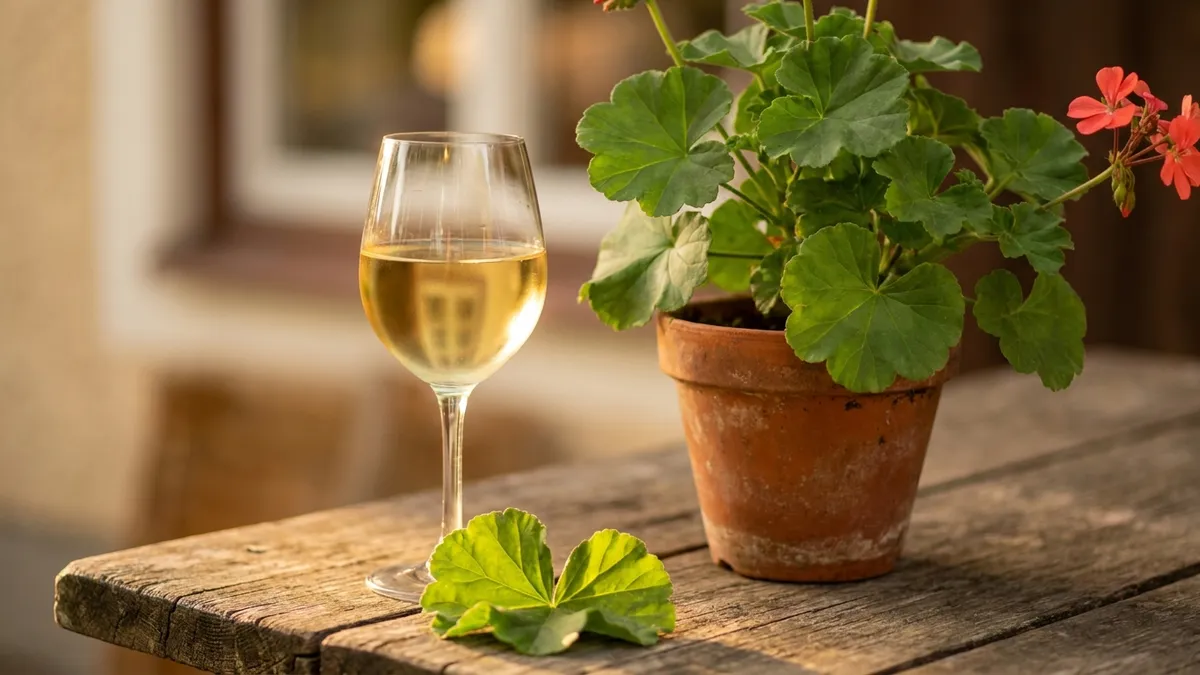
It smells of a geranium leaf rubbed between your fingers. The note is green, sharp and a little bitter, with none of the sweetness of the flower's petals. The Wikipedia entry on wine faults describes it as a taint "reminiscent of geranium leaves".
In the glass, the smell sits on top of the fruit rather than blending into it. A sweet white that should smell of ripe peach or honey instead leads with something like a garden centre greenhouse.
On the palate, the fault shows most in the finish. The sweetness arrives first, then a leafy, harsh aftertaste lingers after you swallow. That aftertaste is the clue that separates a fault from a grape that simply has a green streak.
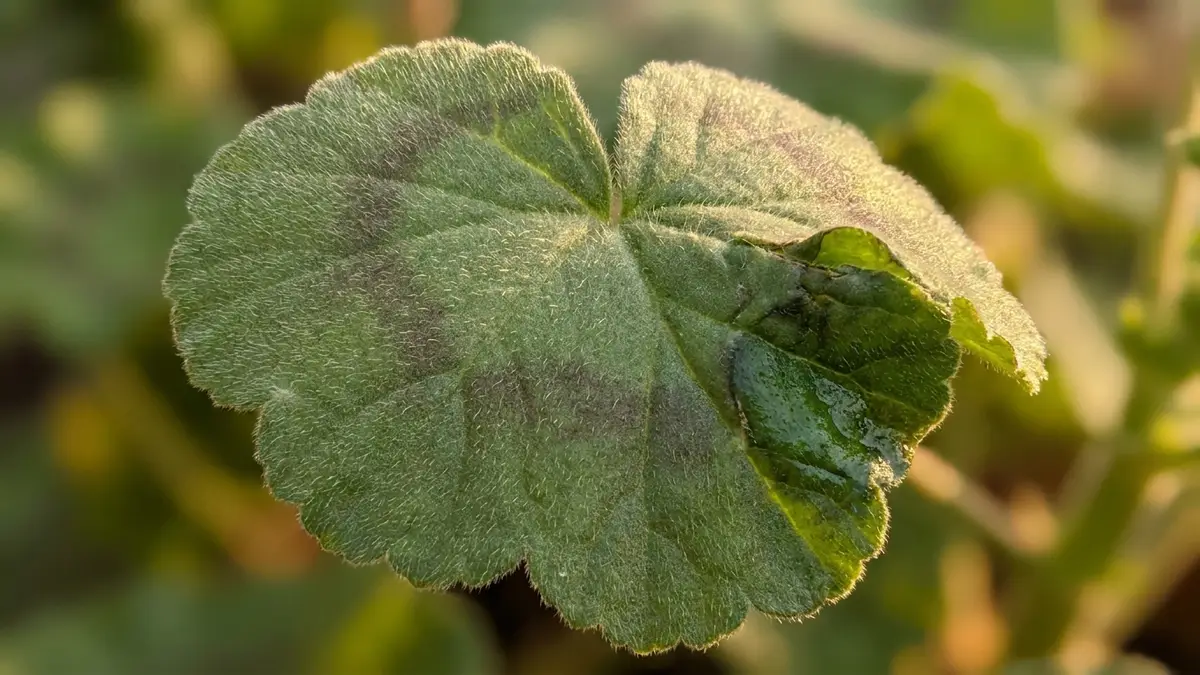
Once you have met it, geranium taint is hard to mistake. Beginners who have never smelled a real geranium leaf are the ones who miss it, so the plant is the best teacher. For the other fault smells a nose should know, the guide to identifying wine faults by smell covers each family.
How Do You Tell Geranium Taint From a Floral Wine?
Check the style of the wine first. A sweet or off-dry wine (one with a light, noticeable sweetness) that smells of green crushed leaf is a suspect. A dry Muscat or Torrontés that smells of rose petals is showing its grape.
The confusion is real, because grapes carry their own geranium-linked molecule. Geraniol, a natural grape aroma, is the compound found in geraniums and roses, and it gives aromatic grapes their perfumed lift. Our guide to floral notes in wine explains how these grape compounds work. Geraniol smells of petals and perfume. Geranium taint smells of the leaf and the stem.
A second sorbate fault adds to the muddle. Some moulds and yeasts break sorbate down into 1,3-pentadiene, which smells of kerosene or petroleum. That is a different microbe, a different compound and a different smell, even though both faults start with the same preservative.
| Smell in the glass | What causes it | Fault or normal? | What to do |
|---|---|---|---|
| Crushed geranium leaf, green and bitter | Lactic acid bacteria turning sorbate into 2-ethoxyhexa-3,5-diene | Fault | Re-cork and return the bottle |
| Kerosene or petroleum | Moulds or yeasts turning sorbate into 1,3-pentadiene | Fault | Re-cork and return the bottle |
| Rose petal, perfume, orange blossom | Geraniol and other grape aromas | Normal | Drink it; it is the grape |
| Wet cardboard, damp cellar | TCA, usually from the cork | Fault | Return it; see the corked-wine guide |
| Butter, cream, popcorn | Diacetyl from malolactic fermentation | Normal style | Drink it; it is a winemaking choice |
If the wine is sweet or off-dry and smells green and leafy, treat it as geranium taint. If it is a dry aromatic grape and smells of petals, it is the grape at work. Wet cardboard points elsewhere, and our guide on how to tell if wine is corked takes it from there.
Which Wines Are Most Likely to Have Geranium Taint?
Sweet wines, sparkling wines and home-made wines carry the most risk, because those are the wines that get potassium sorbate. The additive is used mainly in sweet wines, sparkling wines and some hard ciders, and only occasionally in dry table wine.
Sweetened wines need it most. Any wine that has sugar added back before bottling, or that stops fermenting with sugar left, can restart fermentation in the bottle if live yeast survives. Sorbate is one way to prevent that. So semi-sweet whites, sweet rosés and fruity sparkling wines are the usual places to meet the fault. Our sweet vs dry wine guide explains how those styles are made.
Home-made wine is the other hot spot. Home winemakers often use sorbate to stop a sweet wine's fermentation, and a home cellar rarely has the filters that keep bacteria out. A fruit wine from a friend's garage is a likelier source than a shop shelf.
Dry reds are the least likely, since they rarely need a yeast inhibitor. If a label says sweet, semi-sweet or medium, or the bottle is home-made, give the first sniff extra attention. If it is a dry red, geranium is very unlikely and another fault is the better guess.
What Causes Geranium Taint?
Lactic acid bacteria cause it, by feeding on potassium sorbate that was added to the finished wine. The name describes the smell only. It has nothing to do with real geranium plants, pesticides or the vineyard. The fault forms inside the tank or bottle.
These lactic acid bacteria belong to the same family that runs malolactic fermentation (the process that softens sharp malic acid into gentler lactic acid). The main species are Oenococcus oeni and various Lactobacillus and Pediococcus strains. The guide to malolactic fermentation explains why winemakers use them on purpose in most reds and buttery whites.

The chemistry runs in three steps:
- Step one: the bacteria convert sorbic acid into an alcohol called sorbinol.
- Step two: the wine's natural acidity rearranges sorbinol into a related alcohol, 3,5-hexadien-2-ol.
- Step three: that alcohol reacts with the wine's ethanol to form 2-ethoxyhexa-3,5-diene, the geranium-leaf compound.
Step three needs ethanol, so the fault does not usually appear in must (unfermented grape juice). It is a problem of finished wine. That timing matters, since sorbate is added at the end, just before bottling, when a winemaker may assume the wine is stable.
Why Do Winemakers Add Potassium Sorbate at All?
Potassium sorbate stops leftover yeast from fermenting the sugar in a sweetened wine again. It does not kill the yeast. It leaves any surviving yeast unable to multiply, so the sugar stays put and the bottle stays still. Without it, or a sterile filter, a sweet wine can start fizzing in the bottle.
Sorbate works alongside sulfite, usually added as potassium metabisulfite. Sulfite handles oxygen and bacteria, while sorbate handles yeast. For the sulfite side, see our guide to sulfites in wine.
In the United States, federal rules approve sorbic acid and potassium sorbate "to sterilize and preserve wine; to inhibit mold growth and secondary fermentation". The same rule caps sorbic acid in finished wine at 300 mg/L. That cap is measured in milligrams, a million times more than the nanograms of fault compound that spoil the smell.
For the drinker, this explains why fault risk tracks the label. A dry wine that fermented all its sugar has nothing left for yeast to eat, so it seldom needs sorbate. A sweet or fruity wine with sugar in the bottle does. A "sweet" label is also a clue that sorbate may be inside. A refermenting bottle is its own fault, covered in our piece on refermentation in the bottle.
How Little of the Compound Does It Take?
About one nanogram per litre, written 1 ng/L (a billionth of a gram in a litre of wine), is enough. At that level, 2-ethoxyhexa-3,5-diene crosses its sensory threshold and the leafy smell appears over the fruit. That threshold is why a trace amount can cover the peach and honey of a sweet white.
Cork taint gives a useful comparison. Experts can detect TCA at 1 to 2 ng/L, and one specially trained group reached 0.3 ng/L. Studies of ordinary drinkers put the level at which they reject a corked wine at around 3.1 to 3.7 ng/L. Geranium taint sits in that same tiny range.
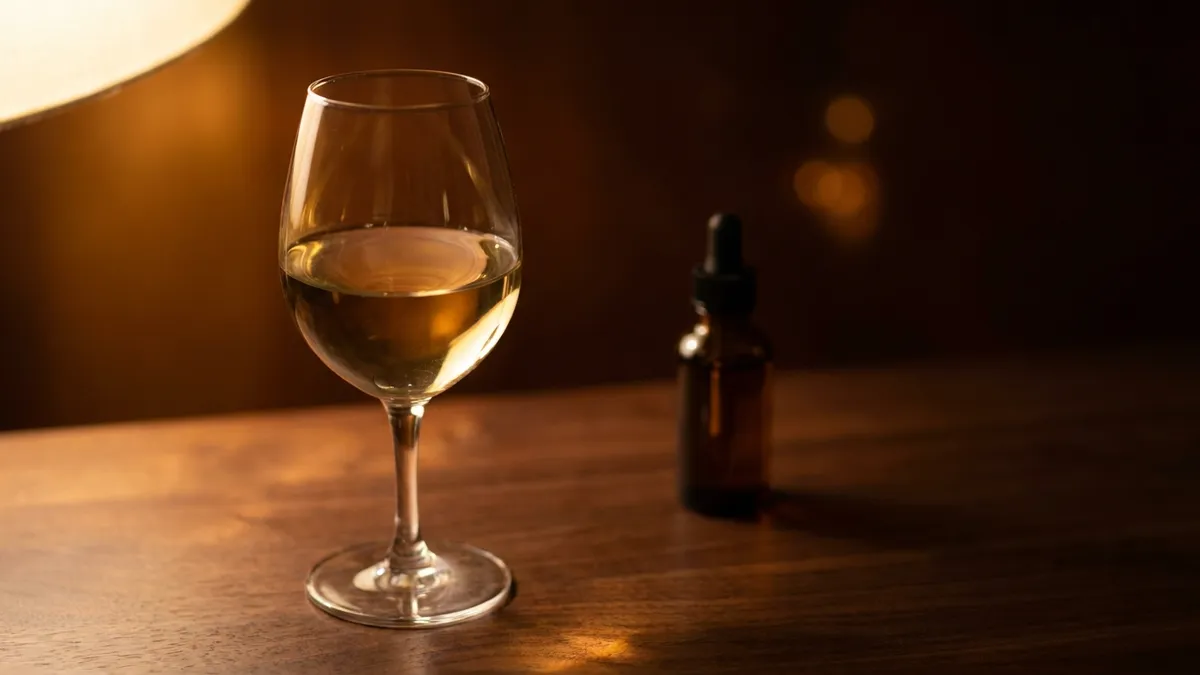
A small conversion of the preservative can ruin a whole tank. Winemakers add sorbate by the milligram per litre, and the fault compound only needs to reach the nanogram level. Of all the sorbate in a bottle, a tiny fraction turned into the diene is enough to mask the fruit.
How Do Winemakers Prevent Geranium Taint?
Winemakers prevent it by keeping sorbate to a minimum and keeping lactic acid bacteria out of any wine that gets it. The Wikipedia summary of wine faults notes that sorbate use "is generally kept to a minimum due to the possibility of the taint developing".
The logic follows from the cause. Without live bacteria, sorbate has nothing to convert it. Commercial cellars remove or suppress bacteria with the same tools used to block malolactic fermentation: fine filtration, sulfite and cool temperatures. A wine that has gone through malolactic fermentation can still carry a large population of these bacteria, so it is a poor candidate for sorbate unless the bacteria are filtered out first.
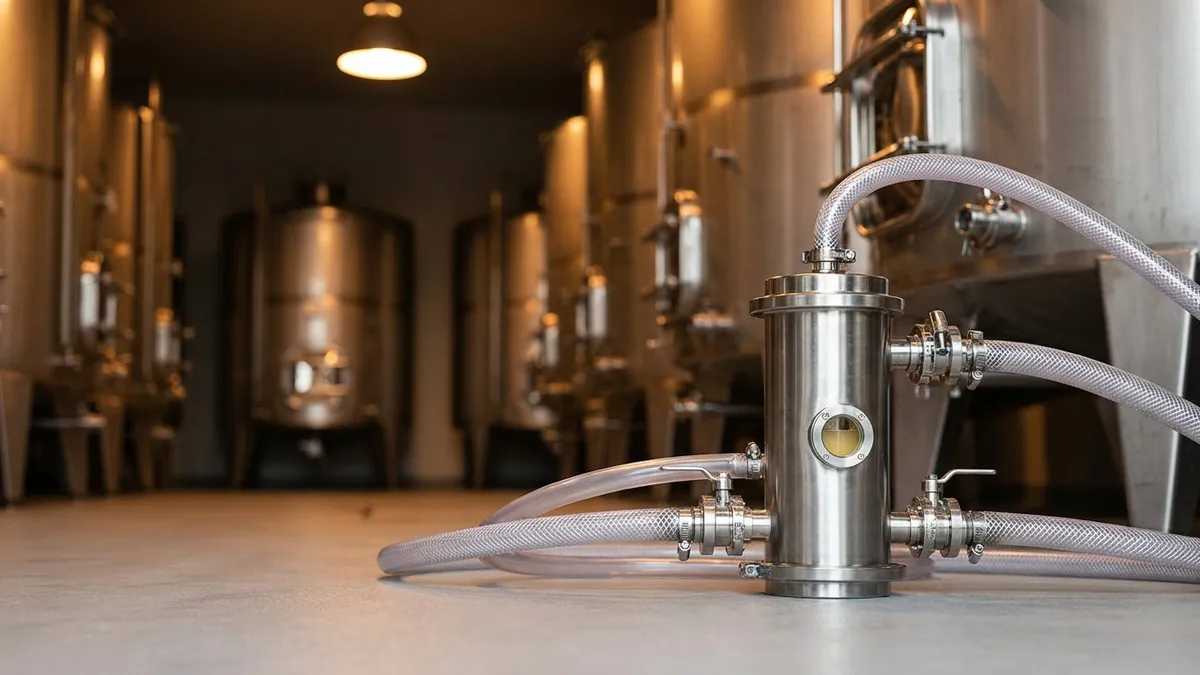
Commercial cellars filter as a matter of routine, and home cellars often cannot. That gap is why home-made sweet wine carries more risk than shop wine.
Is Geranium-Tainted Wine Safe, and Can You Fix It?
Geranium taint is a smell fault, and nothing at home removes it. The wine has not spoiled the way food spoils. The compound forms in trace amounts from a preservative approved for wine. The bottle tastes wrong and will stay that way.
Air will not help. Swirling and decanting clear a struck-match reduction smell because that smell comes from a gas that escapes. Geranium taint comes from a compound dissolved in the wine, and it stays. Our guide to how to smell reduction in wine covers the fault that does blow off.
Cooking is not a reliable rescue either, because the leafy note can carry into the sauce. If you find the fault in a bought bottle, re-cork it and take it back with the receipt, and ask for an exchange. If it is home-made, pour it away and check the sorbate and filtering steps before the next batch. For every other sign that a bottle has turned, see how to tell if wine has gone bad, and for the line between a fault and a harmless quirk, wine flaws vs faults. Every fault in this family sits in our wine faults hub.
How Can You Train Your Nose to Spot It?
Rub a real geranium leaf between your fingers and smell it next to a glass of off-dry wine. The pairing teaches both halves of the test at once. The leaf gives the green bitterness, and the wine gives the clean peach or apple fruit a sound sweet wine shows.
Repeat it with a floral grape such as Muscat or Torrontés. Petal on one side, leaf on the other, and the difference stops being abstract. The more reference smells you store, the faster any fault jumps out. Our piece on whether you can train your sense of smell explains why this works.
Sommy, the wine-education app at sommy.wine, builds this kind of reference library through bite-sized courses and AI-guided tastings. Crush one geranium leaf tonight. Then pour a small glass of off-dry white and taste it right after you smell your fingers.
Sources
- Wikipedia: Wine fault (geranium taint and 2-ethoxyhexa-3,5-diene)
- Wikipedia: Potassium sorbate (use in wine)
- Wikipedia: Sorbic acid (1,3-pentadiene and the kerosene odour)
- 27 CFR § 24.246: Materials authorized for the treatment of wine (Cornell LII)
- Wikipedia: Cork taint (TCA detection and rejection thresholds)
Frequently Asked Questions
What does geranium taint smell like in wine?
It smells of a geranium leaf crushed between your fingers: green, sharp and slightly bitter, with no sweetness of petals. The smell sits on top of the wine's fruit and does not fade with air. On the palate the finish tastes leafy and harsh. If a sweet or off-dry wine smells like a potted geranium plant, geranium taint is the likely cause.
What causes geranium taint in wine?
Lactic acid bacteria cause it. When a finished wine contains the preservative potassium sorbate and live bacteria of the same family that runs malolactic fermentation, the bacteria turn the sorbic acid into an alcohol. The wine's acidity and alcohol then convert that into 2-ethoxyhexa-3,5-diene, the compound that smells of geranium leaves.
Is wine with geranium taint safe to drink?
Geranium taint is a smell fault. The compound forms in trace amounts from a preservative that is approved for wine, and it does not mean the bottle has spoiled the way food spoils. The problem is taste: the leafy smell will not fade, so there is little pleasure in finishing the bottle. Re-cork it and return it to the shop.
Can you get rid of geranium taint?
Not at home. Swirling or decanting helps a struck-match reduction smell, which is a gas that escapes into the air, but geranium taint comes from a compound dissolved in the wine and it stays put. Cooking with the wine may carry the leafy note into the dish. The practical fix is a refund or exchange.
Why do winemakers add potassium sorbate to wine?
Potassium sorbate stops leftover yeast from multiplying, so a wine that was sweetened before bottling does not start fermenting again in the bottle. It is used together with sulfite. Sweet wines, sparkling wines and some ciders get it most often. US rules cap sorbic acid in finished wine at 300 mg/L.
What is the difference between geranium taint and cork taint?
They come from different places. Cork taint is TCA, usually picked up from a contaminated cork, and it smells of wet cardboard or a damp cellar. Geranium taint forms inside the wine when bacteria meet sorbate, and it smells of green crushed leaves. Both are noticed at tiny levels, around one to a few nanograms per litre.
Sommy Team
LinkedInFounder & Wine Educator
The Sommy Team is building the world's most approachable wine education app, helping beginners develop real tasting skills through structured courses and AI-guided practice.