Can You Train Your Sense of Smell for Wine? Yes, and Here Is How

By the Sommy Team — AI-assisted, human-edited.
Updated Apr 29, 2026
Contents (11)
- TLDR
- How to Train Sense of Smell for Wine, in 120 Words
- The Science: Why Smell Is Trainable
- Build a Beginner Scent Library (Week 1)
- Add Wine-Specific Anchors (Weeks 2-4)
- The Sniffing Technique That Actually Works
- Drills That Build Recall Fast
- Common Mistakes That Stall Progress
- What a Twelve-Week Timeline Looks Like
- Signs Your Training Is Working
- The Bottom Line
TL;DR
Yes — you can train your sense of smell for wine, and the research is unambiguous. Daily exposure to four to six reference smells for at least four weeks measurably improves identification, and twelve-week protocols restore smell after anosmia. Build a thirty-aroma kit, sniff daily, name aromas out loud, then deconstruct what shows up in the glass.
TLDR
Yes — your sense of smell is trainable. Olfactory training is well-documented in clinical research, used to recover smell after viral infections, and proven to expand aroma vocabulary in wine students. A daily five to ten minute drill on four to six reference scents, scaled up to a thirty-aroma library, builds measurable recall in weeks. The bottleneck for most beginners is naming, not detection.
How to Train Sense of Smell for Wine, in 120 Words
To train your sense of smell for wine, smell isolated single-aroma references daily, name each one out loud, and only then take that vocabulary into the glass. Start with four to six kitchen-sourced smells — lemon peel, cinnamon, ground coffee, fresh rose, eucalyptus, clove — sniffed with eyes closed for thirty seconds each. Repeat once or twice a day for at least four weeks. Layer in wine-specific anchors at week two: red cherry, blackcurrant, vanilla, black pepper, wet stone. By week twelve, you should hold a thirty-aroma reference library that you can recognize cold. Then deconstruct what shows up in your glass — fruit category first, then specific aroma, then how it shifts with air.
The Science: Why Smell Is Trainable
A common myth says smell is fixed — a born gift that some people get and the rest fake. The research disagrees clearly.
The olfactory bulb (the brain region that processes smell) is one of the few areas of the adult brain where new neurons form throughout life. Smell receptors in the nose are also replaced on a roughly 30 to 60 day cycle. Both facts mean the system stays plastic — your wiring is rebuilt monthly, regardless of age.
The most robust evidence comes from olfactory training trials originally designed for post-viral smell loss. The protocol is simple: four reference smells (often rose, lemon, eucalyptus, clove), sniffed twice a day for twelve weeks. Across multiple studies, patients with anosmia (total smell loss) and hyposmia (reduced smell) showed measurable improvement on standardized identification tests. The same training method has been adapted for healthy noses with the same outcome — sharper recall, larger vocabulary.
The bottleneck is rarely the nose itself. Healthy adults detect thousands of distinct odors. The problem is naming. Smell and language live in different brain regions, and the link between "this smell" and "the word for it" only strengthens when you actively practice it. That is why silent sniffing barely works and named, repeated sniffing works fast.
Build a Beginner Scent Library (Week 1)
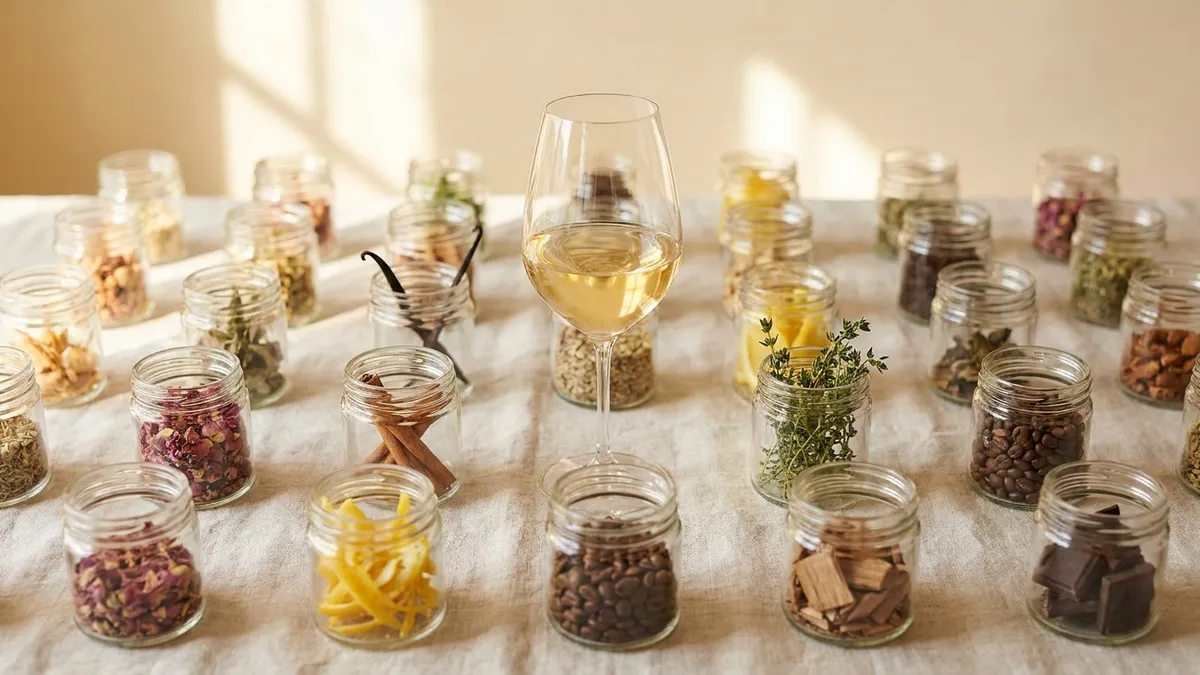
Before any wine, build the library. The goal of the first week is to anchor four to six reference smells so firmly that you recognize each one cold, eyes closed, in under three seconds.
What to gather
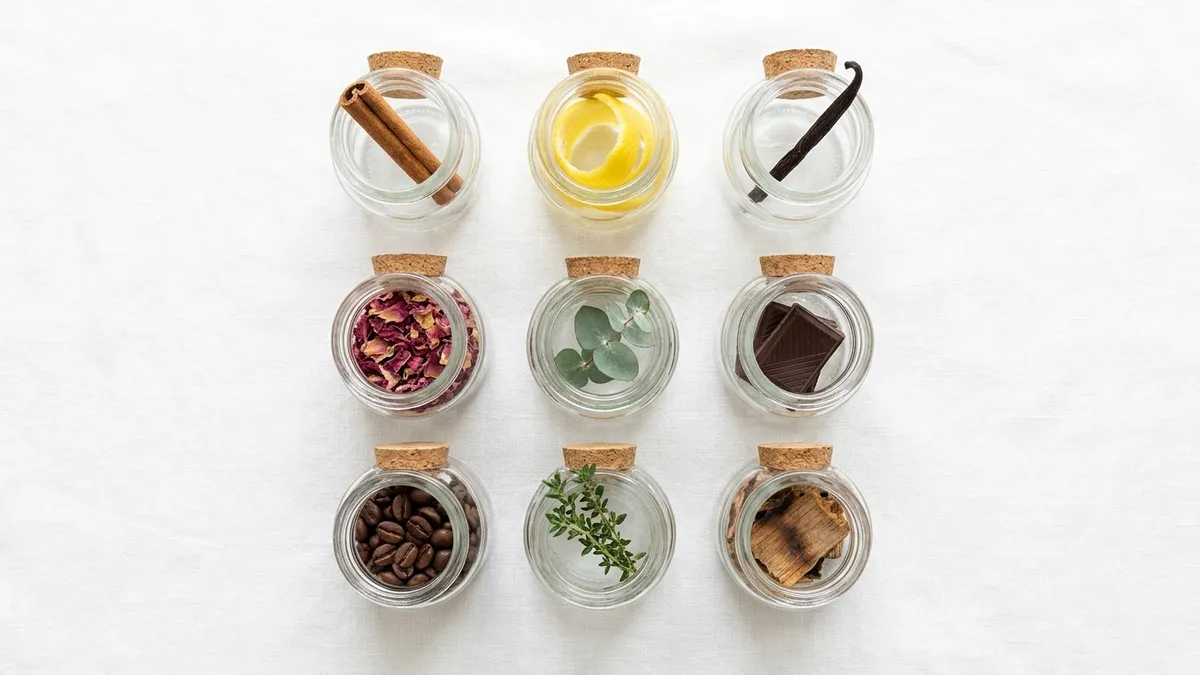
Aim for ingredients you already have in your kitchen or can buy in one trip. Strong, single-source aromas work best:
- Lemon peel — bright citrus, the cleanest reference for "citrus fruit"
- Cinnamon stick — sweet warm spice, common in oaked reds
- Ground coffee — toast and roast notes, found in oaked Cabernet and Syrah
- Fresh rose petals — floral, especially relevant for Pinot Noir and Gewurztraminer
- Eucalyptus leaves or oil — herbaceous, the textbook minty note in Cabernet
- Whole cloves — baking spice, common in oak-aged reds
These six are the most-studied beginner set in olfactory training research. They cover four broad aroma families, which gives your nose a starting frame for almost any wine.
How to drill them
Set a five-minute timer. For each scent:
- Close your eyes.
- Sniff for ten seconds — short, gentle inhales, not a single deep pull.
- Say the name out loud. "Lemon peel." Then "Lemon peel" again.
- Sniff once more, holding the name in mind.
- Move to the next jar.
Do this once in the morning and once in the evening if you can. Two short sessions outperform one long one because smell adapts within minutes — your nose tunes out a steady aroma fast, so short repeated exposures teach more than marathons.
After three to four weeks, every scent in the kit should feel familiar. That is the foundation. Without it, wine smells like "wine" forever.
Add Wine-Specific Anchors (Weeks 2-4)
Once the kitchen six are confident, layer in references that map directly onto common wine aromas, the same ones sold in aroma kits like Le Nez du Vin. The Sommy app organizes these by category in its tasting flow, but you can build the same set yourself.
The red fruit set
- Red cherry — fresh or maraschino. The signature note in Pinot Noir and young Sangiovese.
- Strawberry — fresh ripe, not jam. Light reds and rosé.
- Raspberry — fresh. Cool-climate Pinot Noir, Grenache.
The black fruit set
- Blackcurrant — the textbook Cabernet Sauvignon note. Frozen blackcurrants from a grocery store work fine.
- Blackberry — fresh or compote. Syrah, Malbec, Merlot.
- Plum — fresh dark plum. Merlot, Tempranillo.
The oak and aging set
- Vanilla extract — pure, not artificial. The signature American oak note.
- Toast — actual toasted bread, smelled hot. French oak character.
- Cedar pencil shavings — sharpen a cedar pencil, save the shavings. Aged Cabernet.
The mineral and earth set
- Wet stone — pour water on a clean rock or unglazed tile, sniff. Riesling, Chablis.
- Forest floor — damp leaves and earth from a park, in a small jar. Aged Burgundy, Barolo.
By week four, you should hold roughly twenty named references. Our primary, secondary, and tertiary aromas breakdown explains why these specific categories matter — each cluster maps onto a different stage of how a wine is made and aged.
The Sniffing Technique That Actually Works
Most beginners sniff wrong. They take one deep, hard pull and then try to interpret a confused mix. A trained nose works very differently.
Short, gentle, repeated
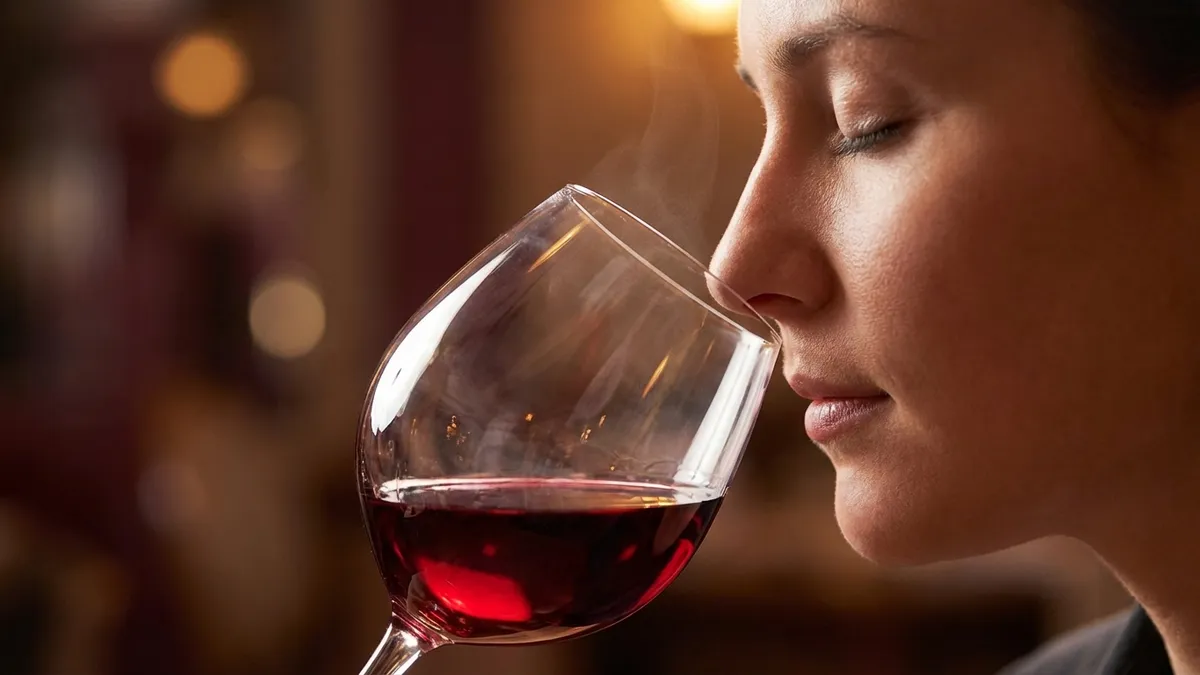
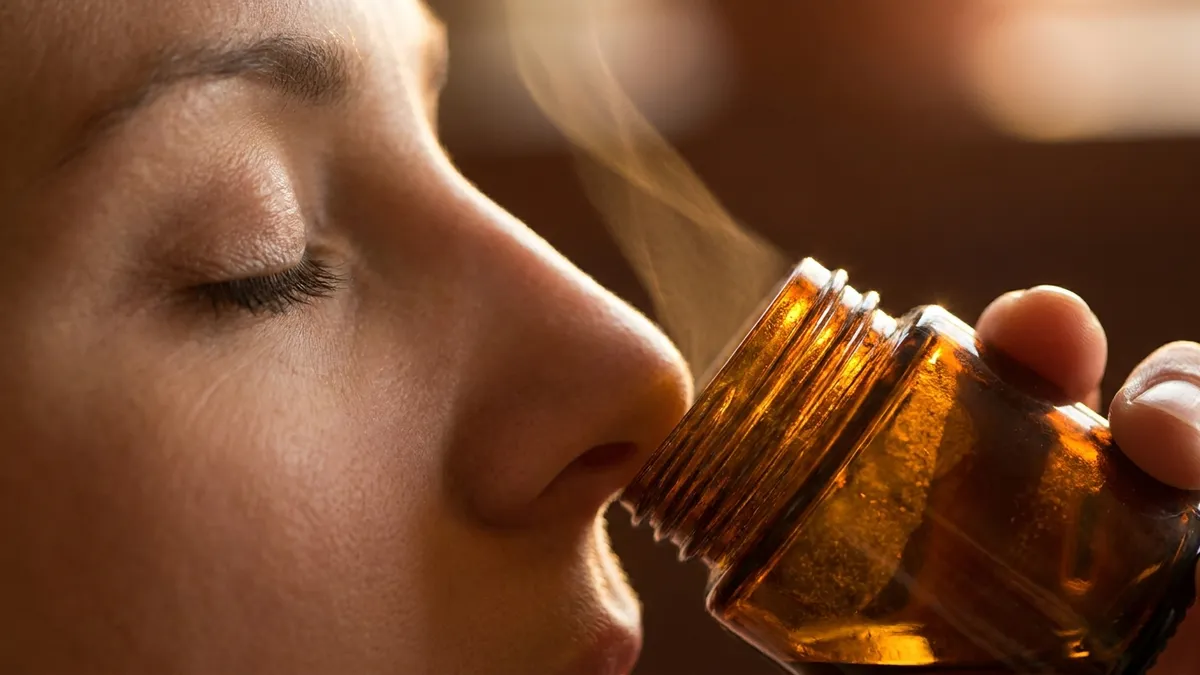
Use short bunny-style sniffs — three or four quick inhales over two seconds, the way a dog samples the air. This brings small refreshed bursts of aroma to the receptors instead of overwhelming them. A single hard pull saturates the sensors and shuts the channel for several seconds.
Pull the glass close, then a few inches away, then close again. Distance changes which compounds reach you first. Lighter, more volatile aromas (citrus, floral) come off the top; heavier ones (oak, leather, earth) sit closer to the wine.
Swirl, then sniff
Swirling releases more volatile compounds. The full method lives in our how to swirl wine guide, but the short version: a five second swirl on a flat surface usually doubles the aroma you can detect compared to a still glass.
Mouth-open inhalation
Try sniffing with your mouth slightly open. This sends air across both your nose and the back of your throat, which activates retronasal smell (smell perceived from inside the mouth, where flavor actually happens). The full mechanic is covered in our retronasal smell in wine breakdown — for training purposes, it doubles the data your brain receives from one inhale.
Drills That Build Recall Fast
Library work alone is not enough. Three drills move the library into active recall — the ability to name an aroma in real time.
Drill 1: The blind single-aroma test
Have a partner pour each of your reference scents into identical opaque jars, in random order. Sniff and name each one without looking. Score yourself. Aim for 80 percent accuracy by week four.
This is the gold-standard test in olfactory training research and it works because the surprise of being wrong burns the correct answer into memory faster than passive review.
Drill 2: The two-aroma blend
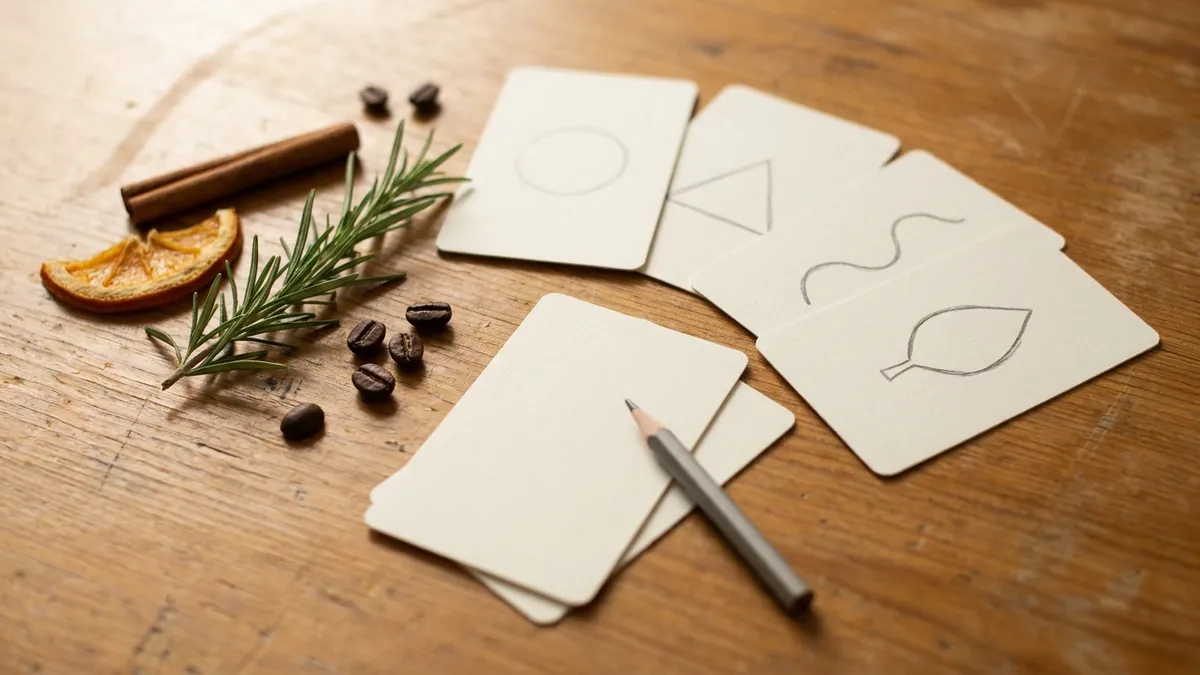
Mix two reference scents in one jar — a cinnamon stick and a coffee bean, for example. Sniff and try to name both components. Most beginners catch one and miss the other. Practicing this builds the ability to isolate notes in a real wine, where dozens of compounds compete for attention.
Drill 3: The wine deconstruction
Pour a wine and apply the framework in reverse. Smell first. Without thinking, name the broad family — fruit, floral, spice, earthy. Then narrow. If fruit, which kind — red, black, citrus, tropical? If red fruit, which one — cherry, strawberry, raspberry? Move from general to specific.
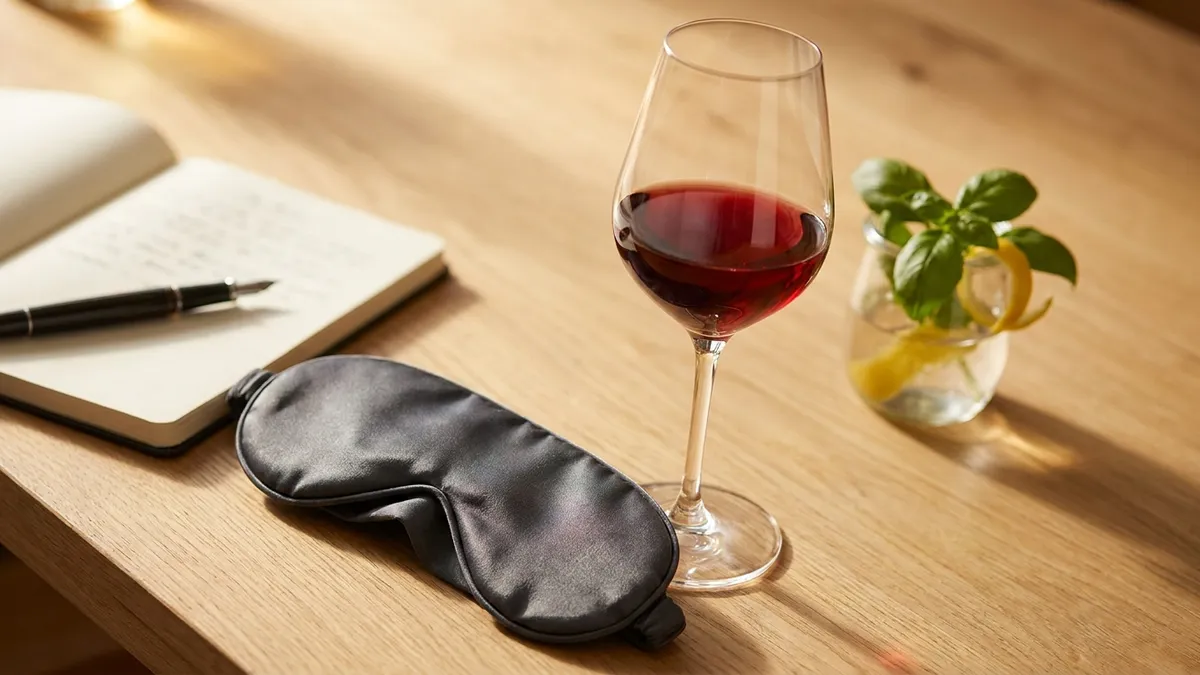
Write each guess down. Read the back label only after. Your accuracy will climb fast because you are no longer fishing for words — you are pulling from a trained library. Our how to describe wine and wine aroma wheel guide give you the vocabulary scaffold to lean on.
Sommelier note: Train when your nose is clear. Late morning, before lunch and coffee, is the cleanest window. After a heavy meal or with a stuffy nose, training results suffer noticeably.
Common Mistakes That Stall Progress
These are the patterns that break otherwise solid training plans:
- Skipping the naming step. Sniffing in silence builds detection but not recall. Always say the name out loud.
- Training too long in one session. Smell adapts within minutes. Two five-minute sessions outperform one twenty-minute marathon.
- Inconsistent schedules. Three sessions a week beats one heroic Saturday. Plasticity needs frequency.
- Reading tasting notes before sniffing. The label primes your brain and you stop looking for anything else. Smell first, label second.
- Using artificial flavorings. Synthetic vanilla and "cherry candy" smell different from the real thing. Train on the real reference.
- Comparing yourself to others. Detection thresholds vary genetically. Some people are anosmic to specific compounds (rotundone, the pepper note in Syrah, is a known one). Train against your own baseline, not someone else's.
The biggest stall, by far, is volume drinking without library work. You can taste a hundred wines and barely improve if you never train the references. Library first, wine second.
What a Twelve-Week Timeline Looks Like
A realistic, research-aligned plan:
- Weeks 1-2 — Six kitchen references (lemon, cinnamon, coffee, rose, eucalyptus, clove), twice daily sniffing, names spoken aloud.
- Weeks 3-4 — Add ten wine-specific anchors (red cherry, blackcurrant, vanilla, black pepper, wet stone, etc.). Begin blind single-aroma drills with a partner or random-order self-tests.
- Weeks 5-8 — Build to thirty named references. Add the two-aroma blend drill. Begin wine deconstruction sessions twice a week, smelling first and reading labels last.
- Weeks 9-12 — Reference library is stable. Drills shift to whole wines, with deliberate variation across grape, region, and age. Track which aromas you consistently miss and add them to the library.
By week twelve, expect to recognize fifteen to twenty aromas in real wine, name three to five in any glass, and disagree with back labels on grounds you can defend. That is the standard outcome of clinical olfactory training, and it transfers cleanly to wine.
For the wine-side practice, the Sommy app ships with a structured aroma guide that walks through the same categories one at a time, with audio prompts and a spaced-repetition system that surfaces the references you keep missing. Many learners use it to scaffold the daily drill that the kitchen library alone makes hard to schedule.
Signs Your Training Is Working
Progress in smell training is rarely linear. You will spend two weeks thinking nothing has changed, and then one evening you will sniff a glass and instantly say "blackcurrant and cedar" without effort. That sudden-recognition pattern is normal — recall thresholds tend to cross all at once after weeks of quiet build-up.
Reliable signs of progress:
- You catch yourself naming aromas in food and other drinks, automatically.
- Wine descriptions on the back of bottles start to make sense rather than sound made-up.
- You disagree with a friend's tasting note and can defend your version with a specific reference.
- You smell something familiar in a wine and a memory surfaces — your grandmother's kitchen, a forest from childhood. That cross-modal recall means the library is integrated.
For deeper structure work alongside the smell training, our how to taste wine and develop your wine palate guides cover the broader skill stack — sight, structure, finish, and comparison drills that pair naturally with a trained nose.
The Bottom Line
You can train your sense of smell for wine. The research is settled, the protocols are simple, and the gains are measurable in weeks rather than years. The single highest-leverage move is to build a thirty-aroma reference library and drill it daily for twelve weeks — kitchen ingredients first, wine-specific anchors second, named out loud every time. After that, what shows up in the glass starts naming itself.
Frequently Asked Questions
Is the sense of smell really trainable, or is it fixed at birth?
It is trainable. The olfactory bulb is one of the few brain regions where new neurons form throughout life, and identification accuracy improves measurably with practice. Studies of post-viral smell loss, perfumery students, and sommelier trainees all show consistent gains across ages. Daily, deliberate sniffing of named reference scents drives the change — passive exposure does not.
How long does it take to notice a difference?
Most people notice sharper recall in three to four weeks of daily five to ten minute sessions. Clinical olfactory training trials use a twelve-week minimum to document large gains, and serious wine students keep training for one to three years to reach pro-level identification. The key is consistency — short daily reps beat occasional long marathons every time.
What scents should I start with?
Start with four to six everyday smells you can easily source: lemon peel, cinnamon, fresh rose, eucalyptus, ground coffee, and clove are common in published smell-training protocols. Once those are confident, layer in wine-specific anchors — red cherry, blackcurrant, vanilla, black pepper, wet stone, and green pepper. Aim for thirty named references within twelve weeks.
Why does naming the aroma out loud matter?
Smell and language sit in different brain regions and need an active link to fire together. Saying the name out loud, rather than just thinking it, strengthens the path from nose to vocabulary. Without that link, you can detect a smell but stay stuck at vague impressions. Research on aroma identification consistently shows the bottleneck is naming, not detection.
Can older adults still train their sense of smell?
Yes. Olfactory training has been studied specifically in older adults and in patients recovering from post-viral smell loss, with measurable gains documented in both groups. Sensitivity does decline gradually with age, but trained noses at sixty outperform untrained noses at twenty for known references. The trainable part of smell — recall — barely cares about age.
Will sniffing wine on its own train my nose?
Not as efficiently as training with isolated single-aroma references first. Wine contains hundreds of compounds at once, which makes it difficult to learn what any single aroma actually smells like. Train on simple references — one ingredient, one name — until each is solid, then deconstruct what you find in the glass. The single-source library is the lever; wine is where you apply it.
Do allergies, smoking, or coffee block training progress?
Temporarily, yes. A blocked nose, a recent cigarette, or a fresh coffee all dull sensitivity for an hour or more. Train when your nose is clear — late morning is ideal. Smoking dulls smell long-term, but quitting restores most sensitivity within weeks. None of these are dealbreakers, but factoring them into when you train will sharpen your results.
Sommy Team
LinkedInFounder & Wine Educator
The Sommy Team is building the world's most approachable wine education app, helping beginners develop real tasting skills through structured courses and AI-guided practice.