Smoke Taint in Wine: How Wildfires Affect Vineyards

By the Sommy Team — AI-assisted, human-edited.
Updated Sep 24, 2026
Contents (9)
- Smoke Taint in Wine, in One Paragraph
- What Does Smoke-Tainted Wine Taste Like?
- Is Every Smoky Wine Smoke-Tainted?
- Why Does Smoke Taint Show Up Only After Fermentation?
- How Do Winemakers Test for Smoke Taint?
- Can Smoke Taint Be Removed From Wine?
- Which Wine Regions Have Wildfires Hit?
- Is Smoke-Tainted Wine Safe to Drink?
- What Should You Do With a Bottle You Suspect?
TL;DR
Smoke taint happens when wildfire smoke compounds bind to sugars inside grapes. Bound, they have no smell, so the fruit and juice seem clean. Fermentation, bottle age and even saliva release them, giving ashy, bacon-like flavours that linger after you swallow. Labs test for guaiacol and 4-methylguaiacol; treatments reduce the taint but rarely erase it.
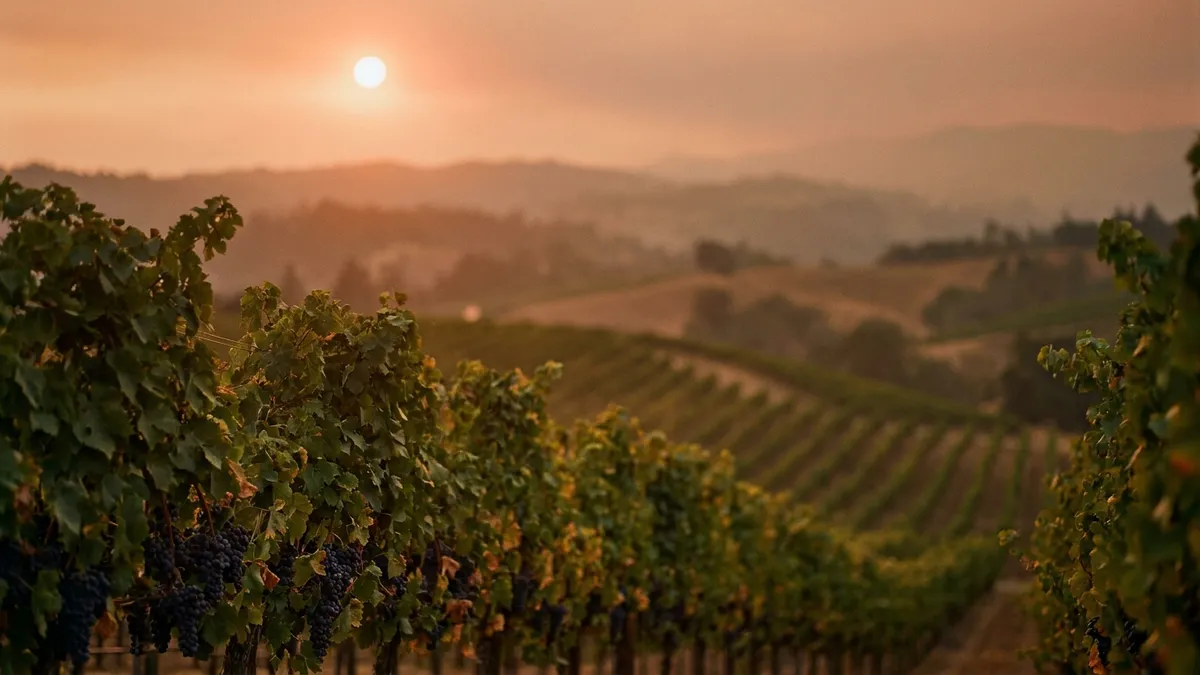
Smoke taint is what happens when wildfire smoke drifts through a vineyard and soaks into the grapes, leaving a wine that tastes of ash, campfire or smoked bacon. The strange part is the timing. The grapes can look and taste clean on harvest day, and the smoke only shows up once the juice becomes wine. Since 2017, wildfires near vineyards in South Africa, California and Australia have turned that delay into a real risk for whole vintages.
Smoke Taint in Wine, in One Paragraph
Smoke taint in wine starts when wildfire smoke reaches ripening grapes. Smoke compounds, chiefly guaiacol and methylguaiacol, get inside the berries and bind to sugar, which leaves them without any smell. Fermentation, time in barrel or bottle, and even the enzymes in your saliva break that bond. The released compounds taste of wood smoke, chargrill, smoked meat, bacon or ashtray, and the taste hangs on after you swallow. Severity runs from barely noticeable to undrinkable.
Labs test grapes about three weeks before harvest for guaiacol and 4-methylguaiacol. Winemakers can reduce the taint with gentle handling, fining and filtration, but they cannot reliably strip out the bound compounds still waiting in the wine.
What Does Smoke-Tainted Wine Taste Like?
Smoke-tainted wine smells and tastes of wood smoke, chargrill, smoked meat, bacon or, at its worst, an ashtray. The most telling sign comes after the sip: the ashy taste hangs on long after the wine has been swallowed or spat out, as if you had licked a cold fireplace.
Severity varies as much as it does with cork taint. A lightly affected wine may just seem a little flat, with the fruit dulled and a faint smoky edge on the finish. A badly affected one is hard to drink at all, because the ash takes over every sip. Our guide on how to tell if wine is corked describes the same sliding scale for a different fault.
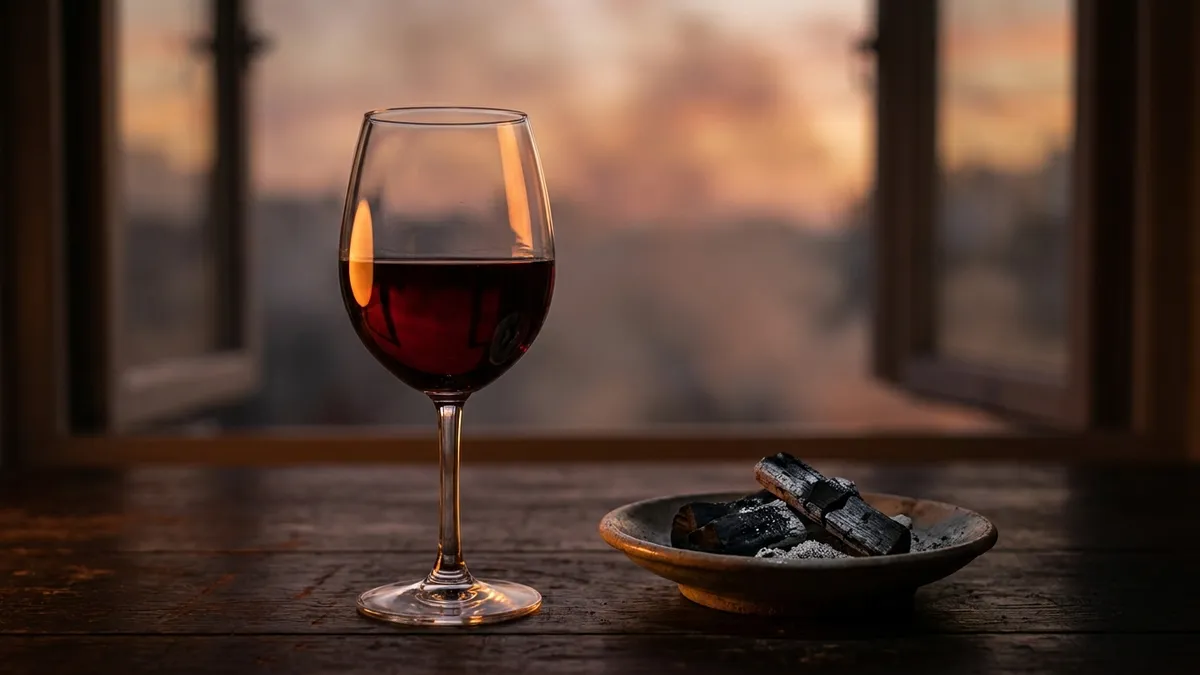
Two things make smoke taint easy to miss on the first sniff. The aroma can be muted, because some of the smoke compounds are still bound and silent in the glass. Then the flavour grows in the mouth, since saliva frees more of them as you taste. A wine can pass a quick sniff and fail on the finish, which is why the finish is where to look.
Is Every Smoky Wine Smoke-Tainted?
No. Most smoky notes in a glass come from toasted oak barrels or from brett, and the way to tell them apart is where the smoke sits and how long it lasts. This is the most common mix-up about smoke taint, and it matters, because smoke from a barrel is a choice the winemaker made on purpose.
Oak is wood used to age wine; barrels are toasted over a fire before use, and that toast adds vanilla, clove and a smoky, spicy edge. Guaiacol itself is a normal part of wood smoke, formed when the wood's lignin burns, and it is the same compound that gives some whiskies their smoky, peaty taste. So a wine can smell of smoke for reasons that have nothing to do with a wildfire. Our guide to oak flavours in wine tasting maps which toast level gives which note.
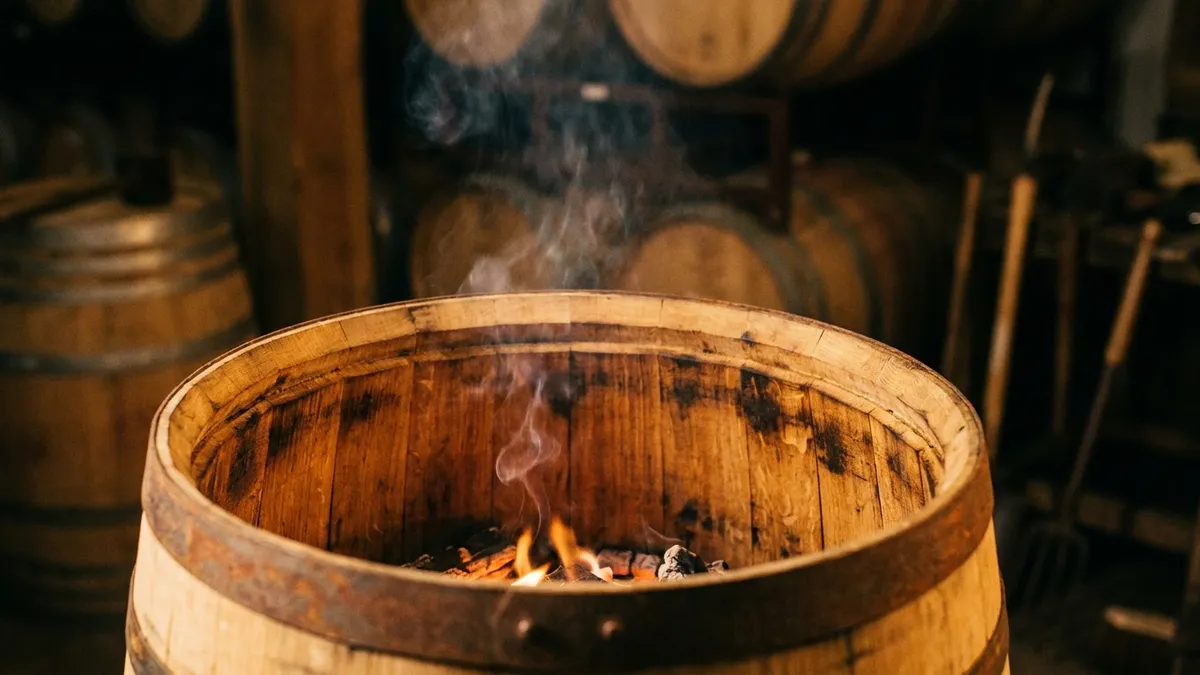
Brett is a wild yeast that can live in barrels and cellars; its compounds read as barnyard, clove and smoked meat. The brett in wine explainer covers it in full. A struck-match or rubbery smell is different again, usually reduction (a sulphur smell from too little air), which often fades when the wine is poured into a jug.
| Source | What it smells like | Where you notice it | Fault? | What to do |
|---|---|---|---|---|
| Toasted oak | Smoke with vanilla, clove, toast, mocha | Mostly on the nose, fades after swallowing | No, a style choice | Enjoy it; pair with grilled or charred food |
| Smoke taint | Ash, campfire, smoked bacon, ashtray | Grows in the mouth, lingers on the finish | Yes | Return the bottle like a corked one |
| Brett | Barnyard, clove, smoked meat, band-aid | On the nose, can dry out the fruit | Depends on the level | Keep it if fruit still shows; return it if barnyard dominates |
| Reduction | Struck match, rubber, boiled egg | On the nose right after opening | Mild cases fade | Pour into a jug and retaste after 15 minutes |
If the smoke sits beside vanilla and clove and fades when you swallow, it is almost certainly oak. If it turns to ash and stays on the back of your tongue after the wine is gone, suspect smoke taint.
Why Does Smoke Taint Show Up Only After Fermentation?
Because the smoke compounds inside the grape are locked onto sugar molecules, which leaves them odourless until fermentation, time in barrel or bottle, or your own saliva breaks the bond. A grower tasting the fruit on harvest day finds nothing wrong, and the smoke only appears in the fermenting tank.
Wildfire smoke carries volatile phenols, small aromatic compounds released when wood burns. The main ones behind smoke taint are guaiacol and methylguaiacol, with cresols, syringol and methylsyringol also involved. When smoke settles on a vineyard, these compounds get into the berries. Inside the grape, the vine attaches them to sugar, forming glycosides (a smell compound bound to a sugar). In bound form they have no smell and no taste.
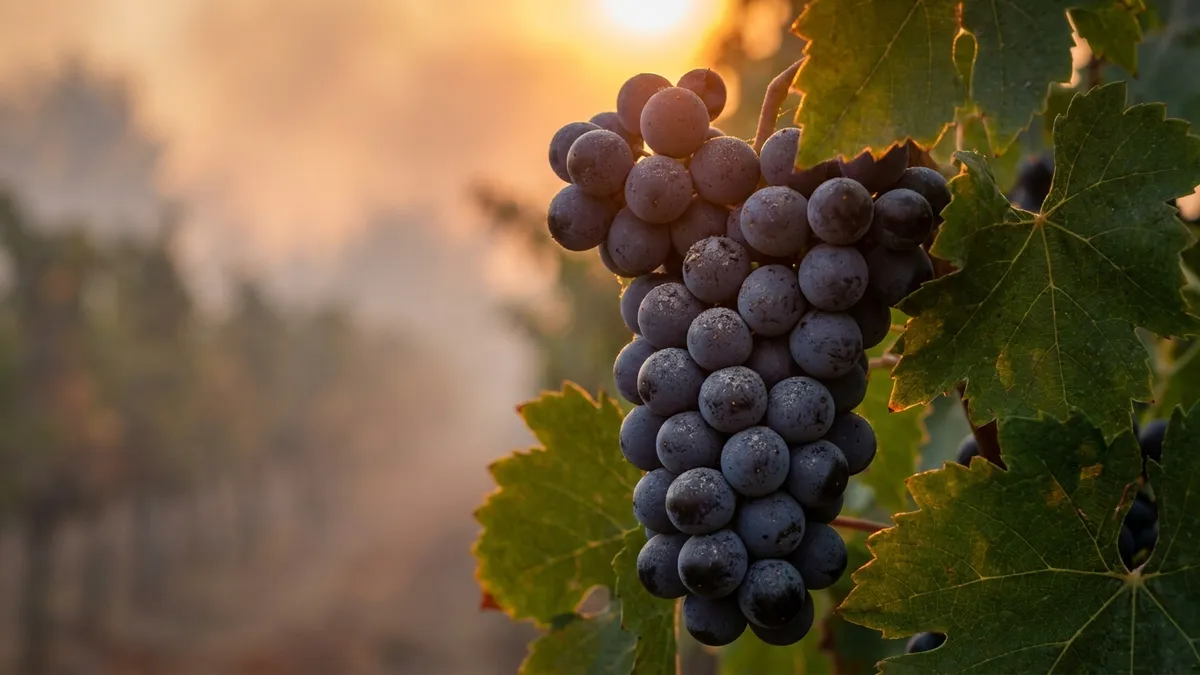
The berries taste of grapes, and the fresh juice smells of juice. Then fermentation starts to split the sugar from the phenols, and the smoky flavour appears in the tank. The Australian Wine Research Institute (AWRI) notes that the split can also happen slowly in barrel or bottle, so a wine that tasted acceptable at release can grow smokier with age.
The last release point is the drinker. Enzymes in saliva can break the same bond during tasting, freeing smoke flavour in the mouth while the wine is still being tasted.
How Do Winemakers Test for Smoke Taint?
Labs measure guaiacol and 4-methylguaiacol, the two main smoke markers, along with the sugar-bound forms that have not been released yet. Measuring only the free compounds would miss much of the problem, because the bound share is what turns into smoke flavour later.
AWRI, a leading research body on the subject, recommends testing grapes from any vineyard exposed to smoke after flowering has finished, and sampling about three weeks before harvest. The lead time matters. Samples must travel, be analysed and come back before the pick date, so the decision to harvest, sell or leave fruit can be made in time.
The numbers involved are tiny. In AWRI's figures for Chardonnay grapes, fruit with no significant smoke flavour had a median of 3.0 micrograms of guaiacol per kilogram, while fruit with significant smoke flavour had a median of 14. About 11 millionths of a gram per kilo of grapes separates fruit that tastes clean from fruit that tastes of smoke.
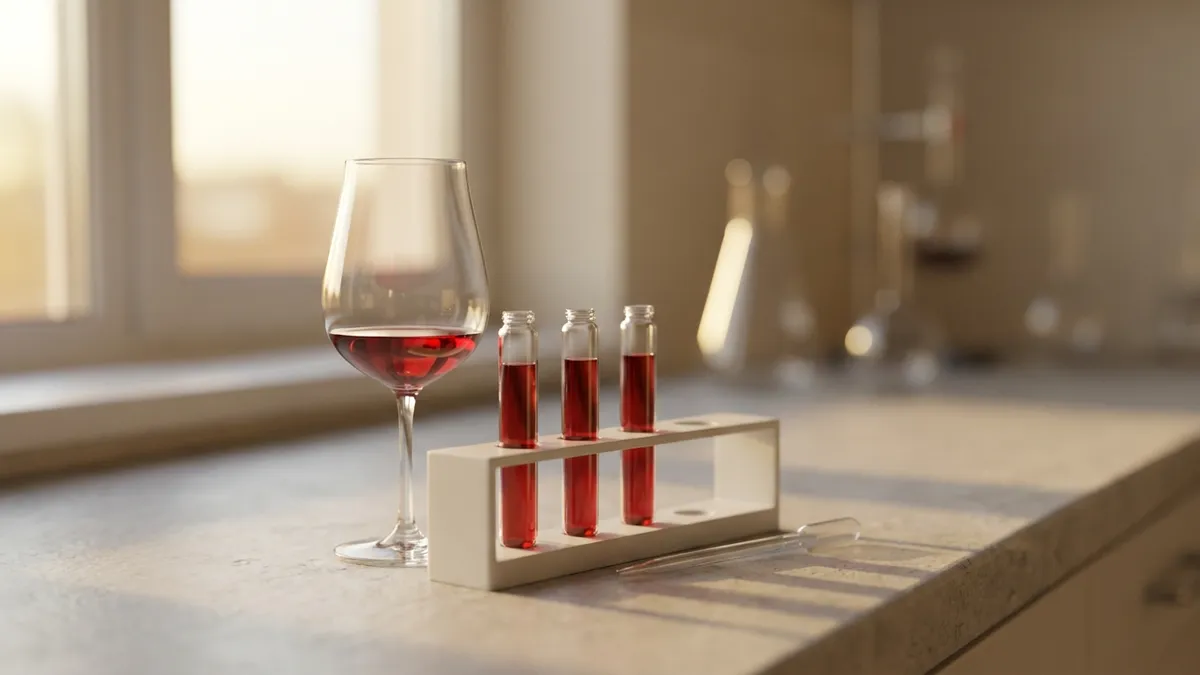
Testing a finished wine works too, and AWRI accepts only wine from overseas customers because of biosecurity rules on grapes. By then, the choices left are about treatment rather than whether to pick.
Can Smoke Taint Be Removed From Wine?
Partly. Winemakers can lower smoke flavour with careful handling at harvest and a range of cellar treatments, from fining to reverse osmosis, but none of them reliably removes the bound compounds still waiting to be released. A treated wine can taste clean at bottling and turn smokier later.
The first defences happen at harvest and in the press. AWRI's list of steps includes:
- Hand harvesting, which is gentler on the berries than machines.
- Leaving out leaves, which carry smoke residue of their own.
- Keeping fruit cool between the vineyard and the winery.
- Separating press fractions, keeping the gently pressed juice apart from the harder-pressed portion.
Maceration, the time juice spends soaking with the skins, is the next lever. Keeping skin contact short limits how much smoke passes into the wine, which is a problem for red wines, since reds take their colour and tannin (the drying grip on your gums) from the skins.
In the cellar, the options widen. Fining (adding an agent that binds unwanted compounds so they can be removed) is one. Others include reverse osmosis, activated carbon, nanofiltration, enzymes that break the glycosides early, added tannins, untoasted oak chips and blending the affected wine with unaffected wine. Each one can strip out good aromas along with the smoke.
Which Wine Regions Have Wildfires Hit?
Documented smoke events include the late-2017 fires in South Africa, the October 2017 Northern California fires, the 2019-20 Australian bushfire season and the 2020 Glass Fire in Northern California. The pattern matters on a label: the risk belongs to a specific place and a specific vintage (the harvest year printed on the bottle).
The Glass Fire burned 67,484 acres across Napa and Sonoma counties between 27 September and 20 October 2020. For the wider picture of the two counties, see the Napa Valley wine guide and the Sonoma wine guide. In Australia, the 2019-20 bushfire season burned through the southern summer, while grapes were ripening; the Australian wine guide maps the country's main regions.
None of this means all wine from those places and years is tainted. Smoke drifts unevenly, and a vineyard a few valleys away may have been untouched. If a red comes from a region and vintage with a major nearby fire, buy one bottle and taste it before you buy a case. The vintage guide explains how to read the year on a label.
Is Smoke-Tainted Wine Safe to Drink?
AWRI treats smoke taint as a flavour problem and a question of whether drinkers accept the taste. Its published guidance centres on how the wine smells and tastes, and on how consumers react to it. It does not frame smoke taint as a food-safety warning.
In practice, a tainted bottle is a faulty bottle. A shop or restaurant should take it back or replace it, just as it would a corked wine. For the other faults you might meet, the guide to identifying wine faults by smell sorts them by aroma, and wine flaws vs faults explains where a quirk ends and a fault begins. The full set of fault guides lives in the wine faults hub.
What Should You Do With a Bottle You Suspect?
Taste it the way a lab cannot: sip, swallow and wait 30 seconds. If the ash builds while the fruit fades, you have your answer. If the smoke softens into vanilla and spice, the barrel is the source and the wine is fine.
Sommy's bite-sized courses, from Wine 101 to regional lessons on California, France, Italy and Spain, build the tasting habits that make a fault like this easy to spot; start at sommy.wine. Tonight, open any barrel-aged red, take a sip, swallow, and count to 30 while you note exactly where the smoke goes.
Sources
Frequently Asked Questions
What is smoke taint in wine?
Smoke taint is a wine fault caused by wildfire smoke reaching grapes on the vine. Smoke compounds called volatile phenols, mainly guaiacol and methylguaiacol, soak into the berries and bind to sugars. Once released during winemaking, they give the wine flavours of wood smoke, chargrill, smoked meat, bacon or ashtray, ranging from barely noticeable to undrinkable.
Can you taste smoke taint in grapes before harvest?
Usually not. Inside the grape, most smoke compounds are locked onto sugar molecules as glycosides, which have no smell or taste. The berries and fresh juice can seem perfectly clean. The bond breaks during fermentation, over time in barrel or bottle, and even in the mouth, so the smoky flavour appears after the fruit has already been turned into wine.
How do you tell smoke taint from oak in wine?
Watch where the smoke sits and how long it lasts. Toasted oak gives smoke alongside vanilla and clove, mostly on the nose, and fades after you swallow. Smoke taint tastes ashy or like smoked meat, sits at the back of the mouth, and lingers long after the wine is gone. If the ash is still there 30 seconds later, suspect taint.
Can smoke taint be removed from wine?
Only partly. Winemakers can reduce it with hand harvesting, leaving out leaves, keeping fruit cool, limiting skin contact, separating press fractions, fining, reverse osmosis, activated carbon, nanofiltration, enzymes, untoasted oak chips or blending. None of these reliably removes the sugar-bound compounds still waiting in the wine, so taint can reappear later in the bottle.
Which wine regions have been affected by smoke taint?
Documented smoke events include the late-2017 wildfires in South Africa, the October 2017 Northern California fires, the 2019-20 Australian bushfire season and the 2020 Glass Fire, which burned 67,484 acres across Napa and Sonoma between 27 September and 20 October 2020. Not every wine from those years is tainted; it depends on each vineyard's exposure.
How do winemakers test for smoke taint?
Labs measure the free smoke markers guaiacol and 4-methylguaiacol, plus the sugar-bound forms that have not yet been released. The Australian Wine Research Institute advises sending grape samples about three weeks before harvest so results arrive in time, and testing any vineyard exposed to smoke after flowering has finished.
Sommy Team
LinkedInFounder & Wine Educator
The Sommy Team is building the world's most approachable wine education app, helping beginners develop real tasting skills through structured courses and AI-guided practice.