Sonoma County Wine Guide: Beyond Napa's Neighbor

By the Sommy Team — AI-assisted, human-edited.
Updated Jun 17, 2026
Contents (12)
- What Is Sonoma Wine?
- The Sonoma Wine Guide to a County of Many Climates
- Fog: The Engine Behind Sonoma's Best Wines
- Russian River Valley and Sonoma Coast: Cool-Climate Pinot and Chardonnay
- Dry Creek Valley and Rockpile: Old-Vine Zinfandel Country
- Alexander Valley and Knights Valley: Sonoma's Cabernet Heartland
- How Sonoma's AVAs Fit Together
- Sonoma vs Napa: Why the Comparison Misses the Point
- What Makes Sonoma Distinctive
- How a Beginner Should Start with Sonoma
- Sonoma Among the Great Cool-Climate Regions
- The Reward of Learning Sonoma
TL;DR
Sonoma County is California's most diverse wine region, far larger and cooler than neighbouring Napa. Coastal fog feeds elegant Pinot Noir and Chardonnay in the Russian River Valley and Sonoma Coast, while inland warmth ripens old-vine Zinfandel and Alexander Valley Cabernet. This Sonoma wine guide shows beginners where to start.
What Is Sonoma Wine?
This Sonoma wine guide begins by clearing up the region's biggest misconception: Sonoma is not simply Napa's quieter neighbour. Sonoma County is California's most diverse wine region — larger, cooler, and far more varied than the famous valley one ridge to the east. Where Napa built its reputation on a single grape in a single warm valley, Sonoma spans dozens of microclimates, from fog-soaked coastline to sun-baked inland ridges. That range is the whole story. Cool coastal districts like the Russian River Valley and Sonoma Coast make elegant Pinot Noir and Chardonnay, while warmer inland valleys ripen old-vine Zinfandel and structured Cabernet Sauvignon. Learn how fog divides the county, and Sonoma stops being confusing and starts making sense.
The Sonoma Wine Guide to a County of Many Climates
Sonoma County sits on the Pacific coast of Northern California, north of San Francisco and west of the Napa Valley, separated from it by the Mayacamas Mountains. It is roughly twice the size of Napa, and that scale matters because it holds a wider span of climates than almost any other wine county in the world. The single most important force shaping those climates is the Pacific Ocean and the cold fog it sends inland each night. Where fog reaches, the air stays cool and grapes ripen slowly, favouring Pinot Noir and Chardonnay. Where the hills block the fog, summer heat builds and bold grapes thrive — Zinfandel in Dry Creek and Rockpile, Cabernet Sauvignon in Alexander Valley. This climatic split is what makes a Sonoma wine guide different from a guide to any single-grape region: you are really learning several regions stacked into one county.
Fog: The Engine Behind Sonoma's Best Wines
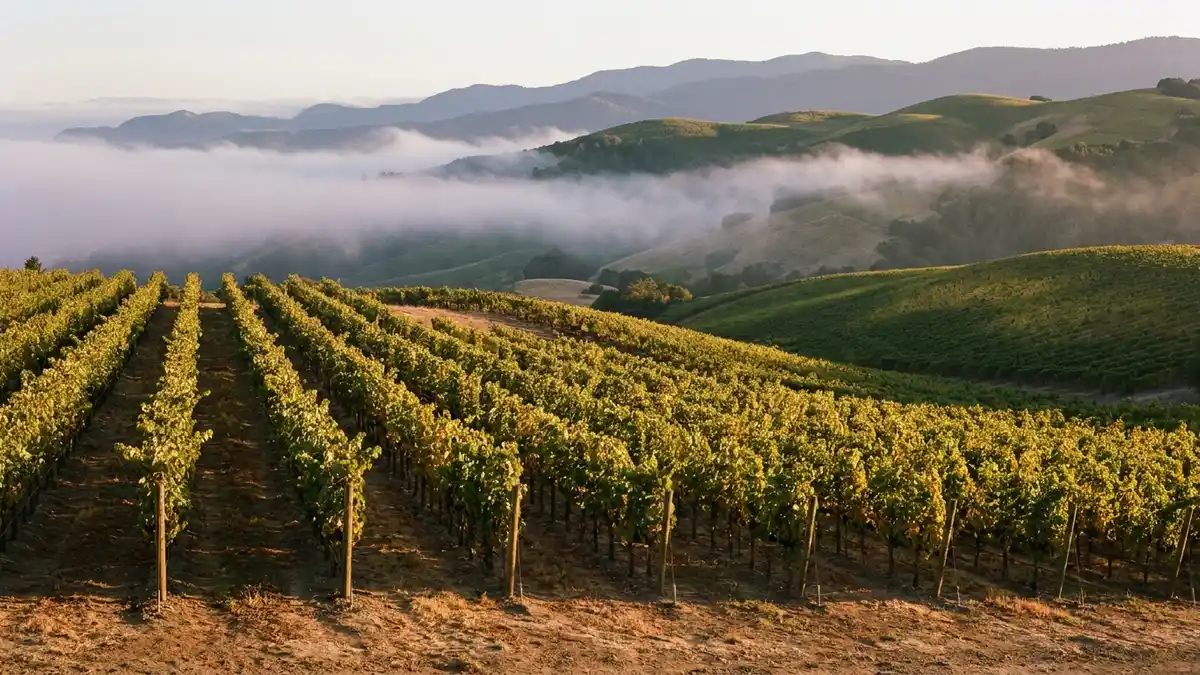
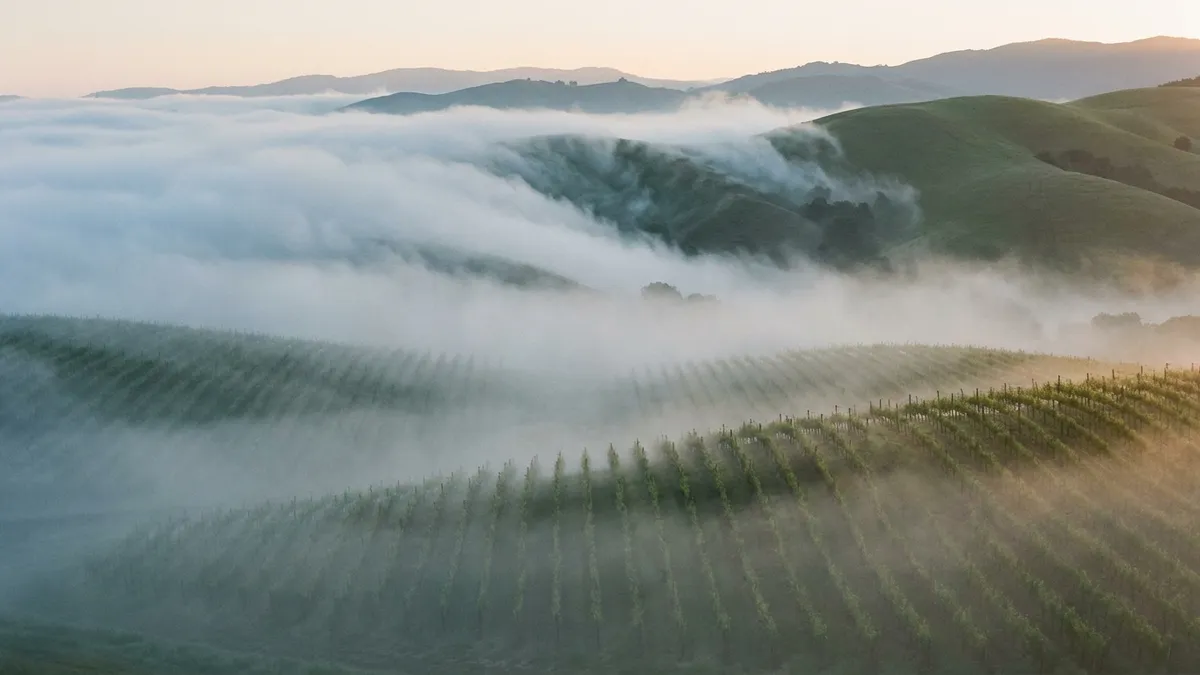
To understand Sonoma, start with the weather rather than the grapes. The Pacific produces a band of cold fog that rolls inland overnight through gaps in the coastal hills — most famously the Petaluma Gap, a low corridor that funnels marine air deep into the southern county. The fog blankets the vines until late morning, then burns off under the afternoon sun.
This daily rhythm is the secret to elegance. Cool nights and foggy mornings slow the grapes' ripening, which preserves natural acidity (the tart, mouth-watering freshness that gives wine its lift) while sugars build gradually. The result is wine with ripe California fruit but the bright, lively backbone of a much cooler climate.
The grapes that love this most are Pinot Noir and Chardonnay, both naturally suited to cool conditions. It is no accident that Sonoma's most celebrated cool-climate wines come from exactly the places the fog reaches first and lingers longest.
Russian River Valley and Sonoma Coast: Cool-Climate Pinot and Chardonnay
The two AVAs that built Sonoma's modern fame both live in the fog's path. They are the place to start if you want to understand why cool-climate California can rival the great regions of the world.
- Russian River Valley: The county's flagship cool-climate zone, named for the river that carves a path to the sea and pulls fog inland nearly every summer night. Its Pinot Noir is perfumed and savory — red cherry, cranberry, baking spice, and a forest-floor earthiness — with bright acidity and silky tannins (the grippy, drying sensation that gives red wine structure). Its Chardonnay balances ripe apple and citrus with a creamy texture from oak and malolactic fermentation (a secondary fermentation that softens sharp acidity into a rounder feel).
- Sonoma Coast: A vast, cooler AVA hugging the Pacific, where fog and wind keep things even crisper. The best sites sit on high ridges that poke above the fog line. Pinot Noir here leans taut and red-fruited; Chardonnay turns leaner and more mineral. This is Sonoma at its most restrained and age-worthy.
- Green Valley of Russian River Valley: A small, especially foggy pocket within the larger valley, prized for taut, high-acid Pinot Noir and Chardonnay and for sparkling-wine base grapes.
If you want the full picture of these two grapes beyond Sonoma, our Pinot Noir guide and our Chardonnay wine guide cover how they behave around the world. Sonoma's versions sit right between Old World restraint and New World ripeness — a useful midpoint for any learner.
Dry Creek Valley and Rockpile: Old-Vine Zinfandel Country
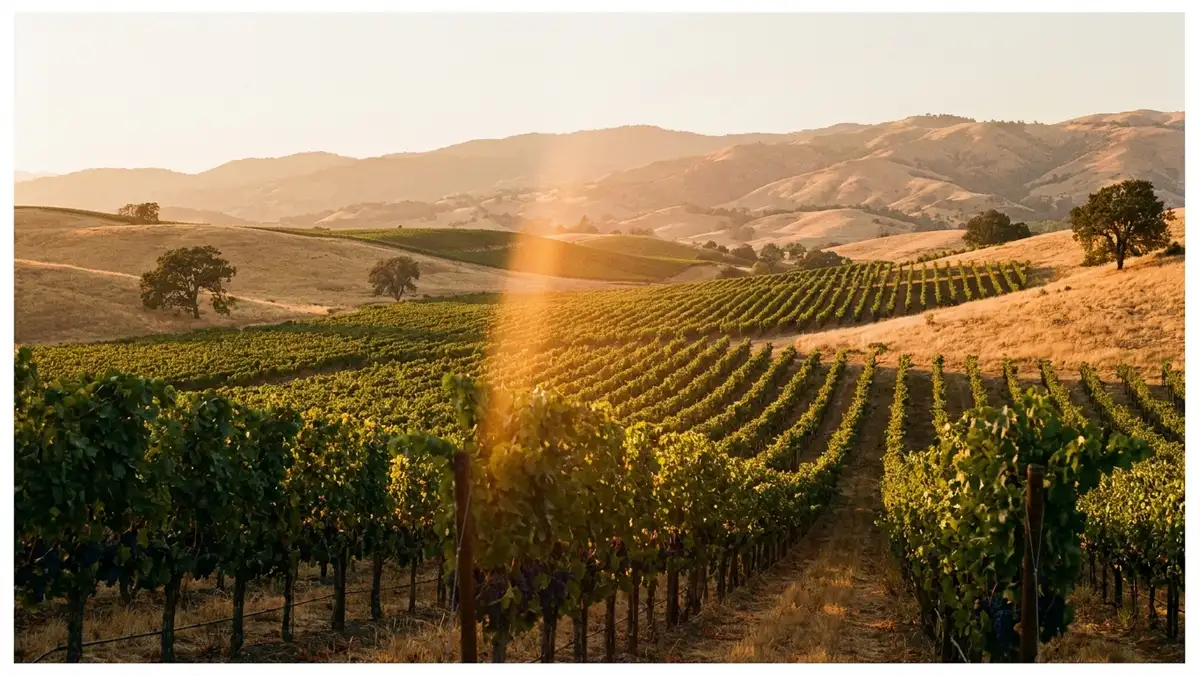
Drive inland away from the coast and the fog thins, the temperature climbs, and the wine changes entirely. This warmer half of Sonoma is Zinfandel territory, and it grows some of the oldest vines in California.
- Dry Creek Valley: A small, sun-warmed valley that is the spiritual home of Sonoma Zinfandel. Many vineyards here hold gnarled, head-trained vines that are 80, 100, or even 120 years old. These old vines yield tiny crops of intensely flavoured grapes, making Zinfandel that is brambly, jammy, and spicy — black raspberry, blueberry, black pepper, and a warm hit of alcohol. The valley also makes excellent Rhône-style whites and a punchy local Sauvignon Blanc.
- Rockpile: A small, high-elevation AVA on rugged ridges above Lake Sonoma, sitting above the fog line where intense mountain sun and thin, rocky soils concentrate flavour. Its Zinfandel and Cabernet are powerful, structured, and built to age — some of the most muscular reds in the county.
Zinfandel is California's signature heritage grape, and Sonoma's old-vine sites are the best classroom for it. Our Zinfandel guide explains why the same grape can taste like sweet pink wine in one bottle and a bold, peppery red in another — a contrast Dry Creek makes vivid.
Old vines give less fruit but more flavour. The struggle of a century-old vine is what you taste in a great Dry Creek Zinfandel.
Alexander Valley and Knights Valley: Sonoma's Cabernet Heartland
Sonoma is not only cool-climate Pinot and brawny Zinfandel. In the sheltered, sunny northeast of the county, Cabernet Sauvignon ripens to a softer, more approachable style than its Napa counterpart across the mountains.
- Alexander Valley: A broad, warm valley along the upper Russian River that is Sonoma's Cabernet engine. The wines are plush and generous — ripe black cherry, cassis, chocolate, and a signature note of dusty cocoa — with rounder, friendlier tannins than the firmer Cabernets of Napa. This makes Alexander Valley Cabernet an easy entry point into serious California red.
- Knights Valley: A small, warm AVA tucked between Alexander Valley and Napa's northern edge, even hotter and known for ripe, full-bodied Cabernet Sauvignon.
- Chalk Hill: A warm hillside AVA on Russian River Valley's eastern flank, named for its pale volcanic-ash soils. It is best known for rich, textured Chardonnay, with some red grapes on its higher, warmer slopes — a bridge between the cool coast and the warm interior.
For how this grape behaves across regions, see our Cabernet Sauvignon wine guide. Sonoma's take rewards beginners precisely because its softer tannins make the wine drinkable younger than the structured Cabernets that demand years of patience elsewhere.
How Sonoma's AVAs Fit Together
Sonoma County contains around 19 AVAs — short for American Viticultural Areas, the official boundaries that define where wine grapes are grown in the United States. Unlike Europe's appellation systems, an AVA only certifies geography; it does not dictate which grapes you must plant or how you must make the wine. That freedom is exactly why Sonoma can grow everything.
The AVAs nest inside one another like a set of bowls. A wide county-wide name such as Sonoma County sits at the broadest level. Inside it sit large climate zones like the Sonoma Coast or Northern Sonoma. Inside those sit the specific, character-rich districts a beginner actually wants to learn:
- Cool, fog-driven AVAs: Russian River Valley, Sonoma Coast, Green Valley, Petaluma Gap, Carneros (shared with Napa) — Pinot Noir, Chardonnay, and sparkling base wines.
- Warm, inland AVAs: Dry Creek Valley, Rockpile, Alexander Valley, Knights Valley, Chalk Hill — Zinfandel, Cabernet Sauvignon, and rich Chardonnay.
The pattern to remember: the narrower and more specific the AVA on a Sonoma label, the more it tells you about climate and likely style. A bottle labelled simply "Sonoma County" is a blend from across the region; one labelled "Russian River Valley" is making a promise about cool-climate fruit. The Sommy app's California wine course walks through real Sonoma labels so you can read that promise at a glance.
Sonoma vs Napa: Why the Comparison Misses the Point
Sonoma is forever introduced as Napa's neighbour, but the two counties play different games. Holding them side by side is the fastest way to grasp what Sonoma is:
- Sonoma County: Size: around twice Napa's vineyard area · Climate: cool coast to warm interior, fog-driven · Signature grapes: Pinot Noir, Chardonnay, Zinfandel, Cabernet · Style: diverse, often more restrained · Identity: many regions in one.
- Napa Valley: Size: smaller, more concentrated · Climate: mostly warm single valley · Signature grape: Cabernet Sauvignon above all · Style: bold, ripe, powerful · Identity: one valley, one icon.
Neither is better — they are built for different things. If you love a single benchmark grape made at the highest level, our Napa Valley wine guide is the place to look. If you love variety and the way one county can swing from delicate to powerful, Sonoma is your region. The honest takeaway is that Sonoma trades Napa's singular focus for range, and that range is its greatest asset.
What Makes Sonoma Distinctive
Three things set Sonoma apart from almost every other wine region a beginner will meet.
Climate Diversity in One County
Most famous regions are defined by one climate and one or two grapes. Sonoma holds a genuine spectrum — you can taste a lean, mineral coastal Chardonnay and a jammy inland Zinfandel grown 40 miles apart in the same county on the same afternoon. That makes Sonoma an unusually rich classroom for understanding how climate shapes wine, the same lesson at the heart of our Pinot Noir and grape character overview.
Old Vines and Heritage Grapes
Sonoma's century-old Zinfandel vineyards are living history, planted by immigrant families long before California wine was fashionable. Few regions anywhere can show a beginner what truly old vines taste like, and these heritage sites are a Sonoma signature.
A Sense of Terroir Without the Gatekeeping
Sonoma takes terroir — the idea that soil, fog, slope, and climate stamp themselves on the wine — as seriously as any French region, but it wears that seriousness lightly. The labels are readable, the welcome is warm, and the wines do not demand a sommelier's vocabulary to enjoy. It is some of the most approachable serious wine in the world.
How a Beginner Should Start with Sonoma
You do not need a rare single-vineyard bottle to understand Sonoma. The smartest path is to taste across its climate divide and pay attention to what changes. Here is a practical order:
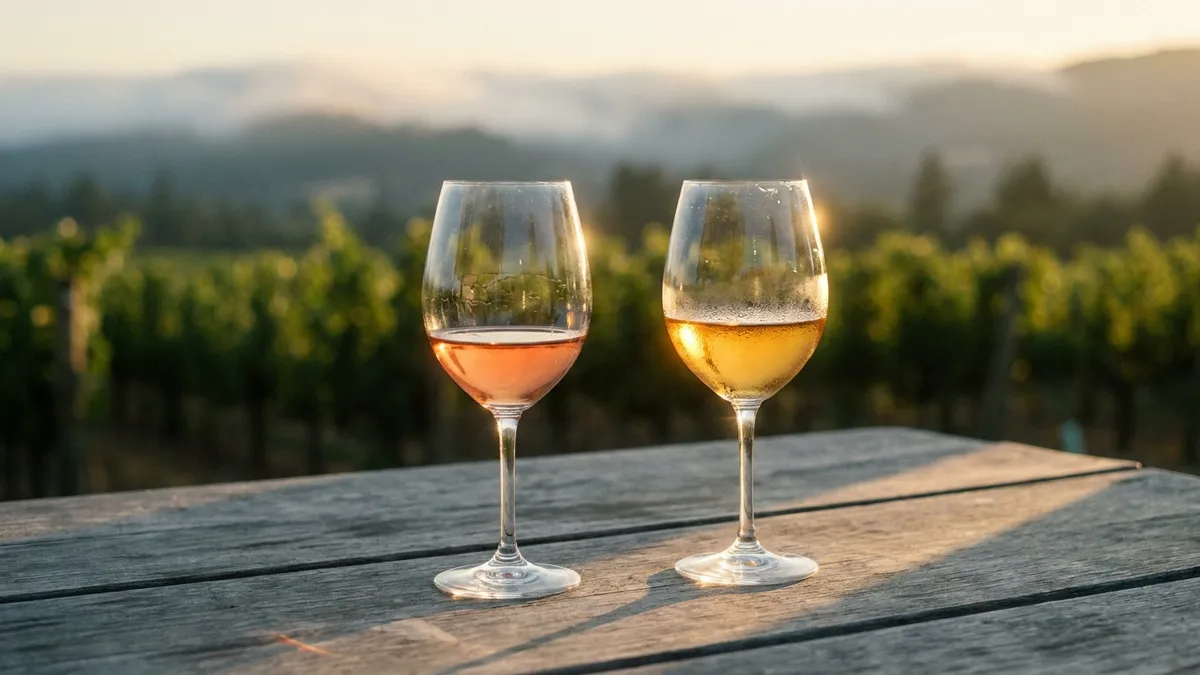
- Taste cool against warm. Open a Russian River Valley Pinot Noir beside a Dry Creek Valley Zinfandel. One is elegant, red-fruited, and savory; the other is bold, dark, and peppery. Same county, opposite ends of the fog map — the single most instructive pairing in Sonoma.
- Meet the white range. Compare a lean Sonoma Coast Chardonnay with a richer Chalk Hill one to feel how fog and warmth pull the same grape in different directions.
- Try the gateway Cabernet. An Alexander Valley Cabernet Sauvignon shows California red with softer tannins than Napa — an easy bridge into structured wine without the wait.
- Read the AVA on the label. Let the appellation tell you the climate before you taste. A coastal AVA promises freshness; an inland one promises power. Match the name to the style.
- Build the tasting habit. Note the color, the acidity, and whether the wine leans elegant or ripe. Our guide to how to taste wine gives the step-by-step method, and understanding tannins, acidity, and body explains the structure that separates a cool-coast Pinot from a Rockpile Zinfandel.
Sommy turns these comparisons into guided exercises — naming the aromas, scoring the structure, and building the vocabulary to describe what you sense. You can start practicing free at sommy.wine, then bring the method to your next Sonoma bottle.
Sonoma Among the Great Cool-Climate Regions
Sonoma is one of the clearest examples of how the New World — wine regions outside Europe — can master cool-climate elegance, not just sun-ripened power. Its coastal Pinot Noir and Chardonnay sit comfortably alongside the great cool-climate regions emerging worldwide. If that style draws you, the Yarra Valley wine guide covers Australia's own fog-and-altitude cool-climate answer, and the Washington State wine guide explores another diverse Pacific-influenced corner of American wine.
It also helps to know which grapes anchor any region you explore. Sonoma plays host to several of the noble grapes — the small handful of varieties that built fine wine worldwide — and the way it expresses each one is a study in how place shapes a grape.
The Reward of Learning Sonoma
Sonoma asks a learner to think about climate before grape, and it rewards that habit better than almost any region. The fog map is the key that unlocks everything: where the marine air reaches, you find elegance; where the hills hold it back, you find power. Once that single idea clicks, a Sonoma label stops being a jumble of unfamiliar valley names and becomes a precise forecast of what is in the glass.
Start small, taste across the cool-warm divide, and let each AVA reveal itself one bottle at a time. The Sommy app is built to make that habit stick — turning each glass into a short, guided lesson so the next Sonoma wine you open is a little clearer than the last.
Sources
Frequently Asked Questions
What is Sonoma County known for in wine?
Sonoma is known for diversity. Cool, fog-influenced coastal areas like the Russian River Valley and Sonoma Coast make elegant Pinot Noir and Chardonnay, while warmer inland valleys produce old-vine Zinfandel in Dry Creek and Rockpile and structured Cabernet Sauvignon in Alexander Valley. No single grape defines it, which sets Sonoma apart from Napa.
How is Sonoma different from Napa Valley?
Sonoma County is larger, cooler, and far more varied than Napa Valley. Napa concentrates on Cabernet Sauvignon in a single warm valley, while Sonoma spans many microclimates from foggy coast to sunny inland ridges. That range lets Sonoma grow elegant cool-climate Pinot and Chardonnay alongside bold Zinfandel and Cabernet, all within one county.
What grapes grow best in Sonoma?
It depends on the spot. Pinot Noir and Chardonnay thrive in cool coastal zones cooled by Pacific fog, especially the Russian River Valley and Sonoma Coast. Zinfandel does best in warm, old-vine sites like Dry Creek Valley and Rockpile. Cabernet Sauvignon ripens in the sun-warmed inland heart of Alexander Valley.
How many AVAs does Sonoma County have?
Sonoma County contains around 19 American Viticultural Areas, the official boundaries that define where grapes are grown. They range from large county-wide zones to small, climate-specific districts like the Russian River Valley, Sonoma Coast, Dry Creek Valley, Alexander Valley, and Chalk Hill. Each AVA reflects a different combination of fog, slope, and soil.
Why is fog so important to Sonoma wine?
Pacific fog acts as natural air conditioning. It pours through gaps in the coastal hills overnight and burns off by midday, keeping grapes cool and stretching the growing season. That slow ripening preserves the bright acidity and elegance that make Sonoma's coastal Pinot Noir and Chardonnay so distinctive compared with warmer inland regions.
What does Russian River Valley wine taste like?
Russian River Valley Pinot Noir tends toward red cherry, cranberry, baking spice, and a savory, earthy edge, with bright acidity and silky tannins. Its Chardonnay shows ripe apple, citrus, and a creamy texture from oak and malolactic fermentation. Both styles balance ripe California fruit with the freshness that fog-cooled nights preserve.
Where should a beginner start with Sonoma wine?
Start by tasting one cool-climate and one warm-climate Sonoma wine side by side. A Russian River Valley Pinot Noir against a Dry Creek Valley Zinfandel shows the county's full range in two glasses. Note how fog-cooled elegance differs from sun-ripened power, then explore the AVAs that match the style you prefer.
Is Sonoma wine expensive?
Sonoma offers a wider price range than Napa. Top single-vineyard Pinot Noir and Cabernet can be costly, but the county's diversity means there are many honestly priced bottles too — especially Zinfandel from Dry Creek and entry-level Chardonnay. Beginners can taste authentic Sonoma character without chasing the most expensive labels.
Sommy Team
LinkedInFounder & Wine Educator
The Sommy Team is building the world's most approachable wine education app, helping beginners develop real tasting skills through structured courses and AI-guided practice.