Yarra Valley Wine Guide: Cool-Climate Pinot and Chardonnay

By the Sommy Team — AI-assisted, human-edited.
Updated Jun 17, 2026
Contents (9)
- What Is Yarra Valley Wine?
- The Cool Climate That Shapes Every Bottle
- The Two Grapes That Define the Yarra Valley
- Upper Valley vs Lower Valley: One Region, Two Climates
- Sparkling Wine: The Yarra Valley's Quiet Specialty
- Cool-Climate Shiraz: Pepper Instead of Jam
- How Australia's Regions Fit Together
- How a Beginner Should Start with the Yarra Valley
- The Reward of Learning the Yarra Valley
TL;DR
The Yarra Valley is Victoria's cool-climate wine region near Melbourne, famous for elegant Pinot Noir and restrained Chardonnay. Its cooler upper slopes and warmer valley floor also produce fine traditional-method sparkling and peppery cool-climate Shiraz. This Yarra Valley wine guide shows beginners which styles to taste first and why.
What Is Yarra Valley Wine?
This Yarra Valley wine guide begins with the single fact that explains the region: it is cool. The Yarra Valley lies in the state of Victoria, about an hour north-east of Melbourne, and ranks among Australia's coolest classic wine regions. That climate is why its great wines are elegant rather than blockbuster. The signatures are Pinot Noir, all red cherry and savory perfume, and a restrained, citrus-driven Chardonnay. The same cool conditions produce serious traditional-method sparkling wine and a lighter, peppery style of cool-climate Shiraz. Vineyards split between a warmer lower valley floor and a higher, cooler upper valley, and learning that one division unlocks much of what you taste in the glass.
The Cool Climate That Shapes Every Bottle
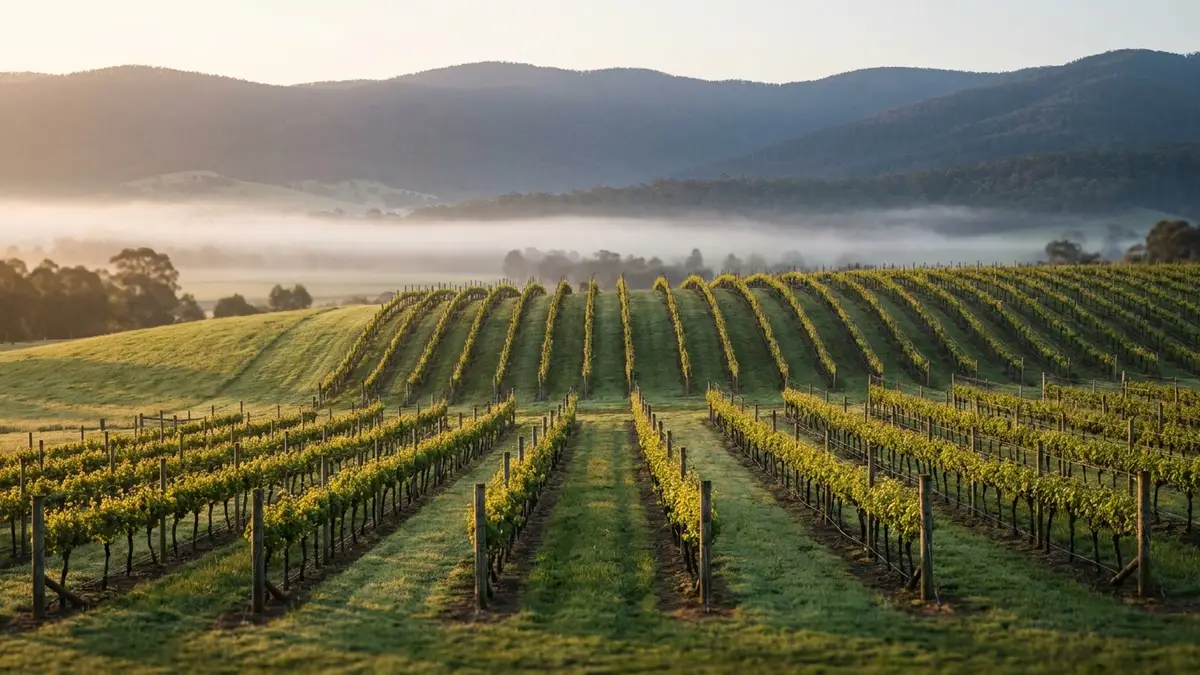
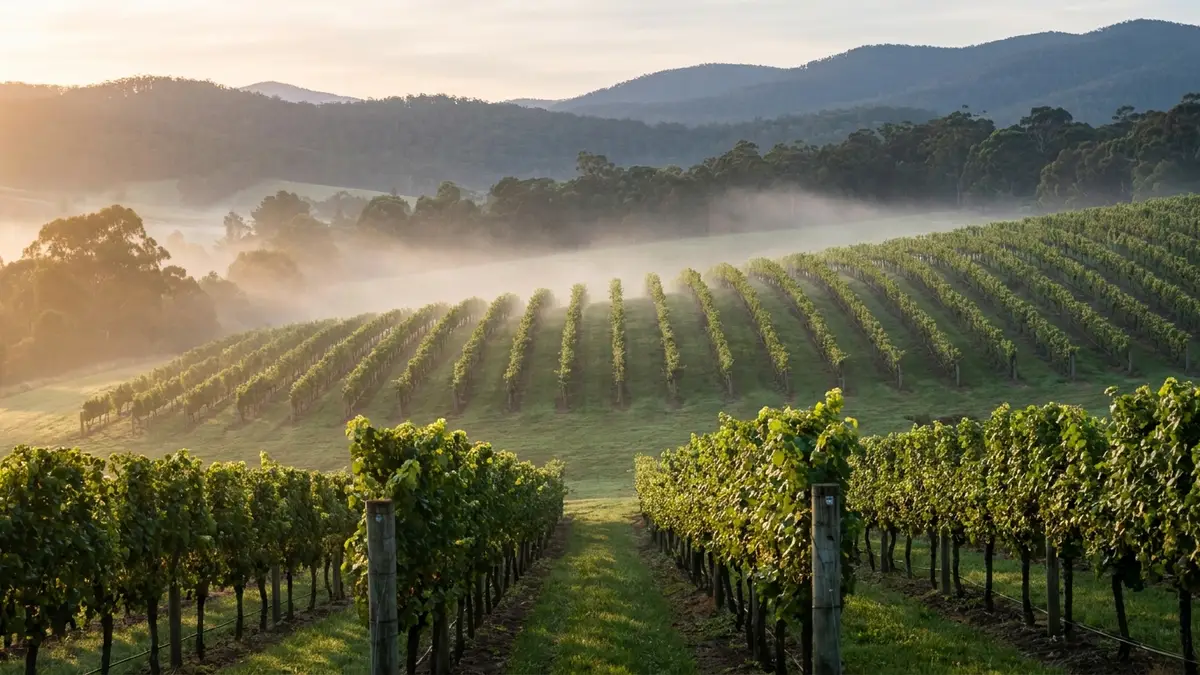
Most Australian wine regions are defined by heat. The Yarra Valley is defined by the lack of it. Tucked among forested ranges with cool air spilling down from the highlands and a maritime influence reaching in from the coast, the region ripens its grapes slowly over a long, gentle season.
That slow ripening is the whole story. When grapes ripen gradually, they hold on to their natural acidity (the crisp, mouthwatering tartness that keeps wine fresh) while still developing flavor. The result is wine with brightness, finer structure, and lower alcohol than the same grape grown somewhere hot.
This is the clearest lesson the Yarra Valley teaches a beginner: climate shapes style more than almost anything else. A Pinot Noir from here will feel lighter, fresher, and more savory than a big red from a warm region, even before you think about the winemaker. If the idea of one grape tasting different by place fascinates you, our piece on why grapes that look the same can taste different carries the thread well beyond Victoria.
The Two Grapes That Define the Yarra Valley
Like the great cool regions of the world, the Yarra Valley built its name on two grapes. Everything else is supporting cast.
Pinot Noir is the red signature. It is pale to medium ruby, perfumed, and savory rather than sweet. Typical aromas: red cherry, raspberry, rose, and a forest-floor, mushroom earthiness with age. On the palate it is medium-bodied with high acidity and fine, silky tannins. Body: light-to-medium (3/5) · Acidity: high (4/5) · Tannins: low-to-medium (2/5). It is one of wine's most rewarding grapes to learn, and our Pinot Noir guide covers how it behaves across the world's cool regions.
Chardonnay is the white signature, and the Yarra Valley style is deliberately restrained. Rather than the rich, buttery, heavily oaked Chardonnay that gave the grape a divisive reputation, here it leans taut and citrusy — grapefruit, white peach, a little struck-match flintiness, and only a light touch of oak. Body: medium (3/5) · Acidity: high (4/5). For the grape's full range from steely to opulent, see our Chardonnay wine guide. Both of these grapes also feature in our overview of the noble grapes every learner should meet first.
Here is the contrast that makes the region click, written as a quick comparison:
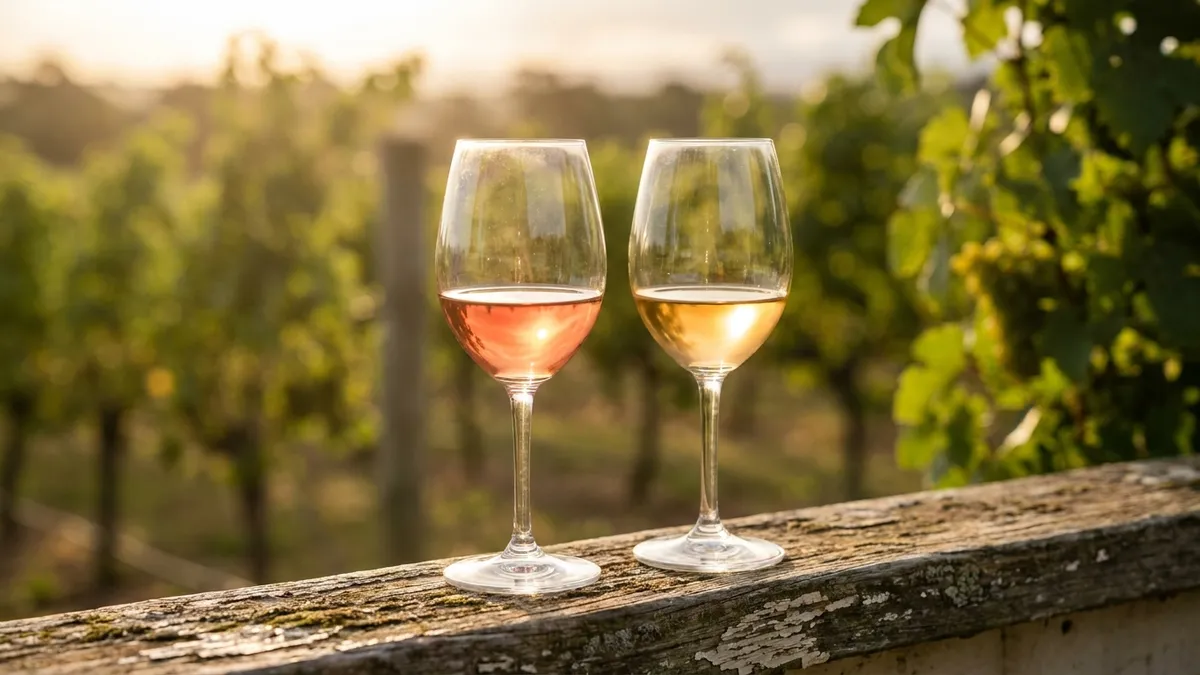
- Yarra Valley Pinot Noir: Color: pale-to-medium ruby · Body: light-to-medium · Acidity: high · Tannins: fine, low-to-medium · Signature: red cherry and savory forest floor.
- Yarra Valley Chardonnay: Color: pale-to-medium gold · Body: medium · Acidity: high · Oak: restrained · Signature: grapefruit, white peach, and flinty minerality.
The Sommy app turns exactly this kind of side-by-side into a guided exercise — naming the aromas and scoring the structure so the difference between the two grapes becomes muscle memory.
Upper Valley vs Lower Valley: One Region, Two Climates
The Yarra Valley is not uniform. The most useful way to read it is the split between the lower valley floor and the higher upper valley, because altitude here changes the wine in the glass.
- Lower Yarra Valley (the floor): Warmer, flatter, and home to many of the region's longest-established vineyards. Fruit ripens a touch more fully, giving Chardonnay a rounder, riper feel and Pinot Noir a little more flesh and weight. Reds here can show riper cherry and plum alongside the savory backbone.
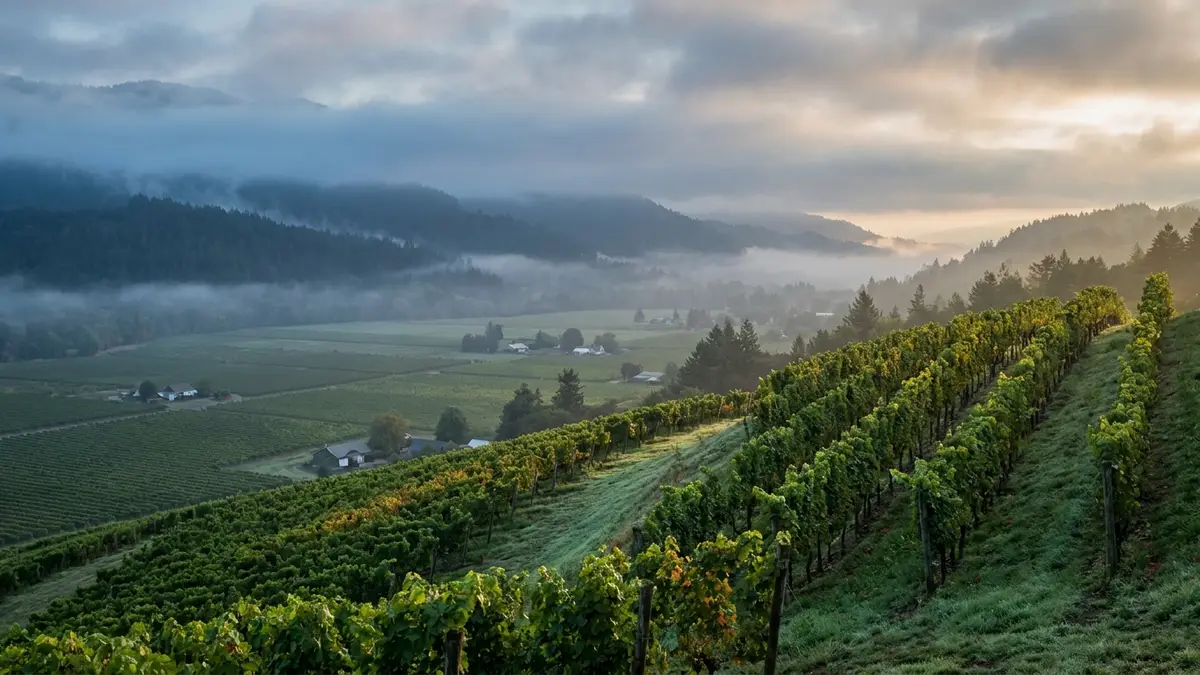
- Upper Yarra Valley (the hills): Higher, cooler, and wetter, with vineyards planted on slopes. The wines are more taut, perfumed, and high in acidity — Chardonnay turns leaner and more mineral, Pinot Noir more delicate and red-fruited. This cool, high ground also grows the finest base fruit for sparkling wine.
The pattern to remember: the higher and cooler the vineyard, the fresher and more delicate the wine. Tasting an upper-valley bottle beside a lower-valley one is the Yarra Valley's own little terroir lesson — the environment where the grapes grow, from altitude to soil, written into the flavor. It is the same principle that makes a region like Burgundy so endlessly studied, applied to a younger, warmer country.
Sparkling Wine: The Yarra Valley's Quiet Specialty
Cool climates and sparkling wine go hand in hand, and the Yarra Valley is one of Australia's best addresses for it. The reason is acidity. Traditional-method sparkling needs grapes picked early, while their acidity is still high and their sugar still modest, and a cool region delivers exactly that.
The best Yarra Valley fizz is made by the traditional method — the same process used in Champagne, where the wine undergoes a second fermentation inside the sealed bottle to trap its bubbles, then rests on its spent yeast (the lees) to build flavor. From Pinot Noir and Chardonnay, the same two grapes that anchor the still wines, it produces fine, persistent bubbles, fresh citrus and green-apple fruit, and a toasty, bready, biscuit complexity from that lees ageing.
For a beginner, sparkling is a wonderful way to feel how acidity carries a wine. To see how the grapes behind bubbles compare around the world, our guide to sparkling wine grapes lays out who does what and why cool climates matter so much.
A cool climate is a sparkling winemaker's best friend — it keeps the acidity high, and acidity is the spine that holds the bubbles together.
Cool-Climate Shiraz: Pepper Instead of Jam
Australia is famous for big, ripe, jammy Shiraz, so the Yarra Valley version surprises people. Here the grape makes a cool-climate Shiraz that is lighter, fresher, and unmistakably peppery — closer in spirit to the Syrah of France's northern Rhône than to the powerhouse style of warmer Australian regions.
- Warm-climate Shiraz (the familiar style): Full-bodied · ripe, jammy black fruit · high alcohol · soft, plush tannins · chocolate and sweet spice.
- Yarra Valley cool-climate Shiraz: Medium-bodied · red and black fruit with fresh acidity · lower alcohol · firmer, finer tannins · a distinctive black-pepper, savory-spice note.
That black-pepper character is the signature. It comes from a compound called rotundone that develops more readily in cooler conditions, and it is one of the most distinctive aromas a beginner can learn to spot. Tasting a Yarra Valley Shiraz next to a warm-region one is a fast, memorable way to feel how climate reshapes a single grape — the same lesson the region's Pinot and Chardonnay teach, in a bolder accent.
How Australia's Regions Fit Together
The Yarra Valley is one piece of a varied Australian wine map, and placing it helps a beginner orient. Australia spans hot inland regions that make rich, full reds and cool coastal or high-altitude pockets that make finer, fresher wines. The Yarra Valley sits firmly in the cool, elegant camp.
That makes it a useful counterweight to the country's blockbuster reputation. Where a warm region leads with power and ripeness, the Yarra Valley leads with freshness, perfume, and structure. Holding both styles in your head — and knowing which region gives which — is most of what it takes to shop Australian wine with confidence. The same skill of reading climate into a label applies everywhere, much as it does across the French wine regions that first defined these grapes.
How a Beginner Should Start with the Yarra Valley
You do not need a cellar or a big budget to understand the Yarra Valley. The smartest path is to taste its core styles deliberately and pay attention to the freshness that ties them together. Here is a practical order.
- Start with the two signatures together. Open a Yarra Valley Pinot Noir and a Yarra Valley Chardonnay side by side. Notice the shared high acidity and savory edge that mark cool-climate wine, then the way the red leans toward cherry and the white toward citrus.
- Add the sparkling. A traditional-method Yarra Valley sparkling shows you how the same two grapes behave with bubbles and lees age. Look for fine bubbles, green apple, and a toasty, bready note.
- Taste a cool-climate Shiraz. Hunt for the black-pepper character and the medium body. If you can, pour it beside a warm-region Shiraz to feel the climate difference in a single mouthful.
- Compare upper and lower valley. Two Pinot Noirs or two Chardonnays, one from the cooler hills and one from the warmer floor, make the altitude effect obvious — fresher and finer versus rounder and fuller.
- Build the tasting habit. Note the color, the high acidity, and the savory restraint that set these wines apart from riper New World styles. Our guide to how to taste wine gives you the step-by-step method, and understanding tannins, acidity, and body explains the structure that defines elegant cool-climate wine.
Sommy turns these comparisons into guided exercises — naming the aromas, scoring the structure, and building the vocabulary to describe what you sense. You can start practicing free at sommy.wine, then bring the method to your next Yarra Valley bottle.
The Reward of Learning the Yarra Valley
The Yarra Valley asks less of a beginner than a region like Burgundy, yet it teaches the same core lesson in a friendlier accent: cool climate makes elegant wine. Its Pinot Noir and Chardonnay are textbook examples of restraint, its sparkling shows why acidity matters, and its peppery Shiraz proves how far a single grape can travel in style.
Start with the two signatures, taste in pairs, and let the freshness reveal itself one glass at a time. The Sommy app is built to make that habit stick — turning each bottle into a short, guided lesson so the next Yarra Valley wine you open is a little clearer than the last.
Sources
Frequently Asked Questions
What is the Yarra Valley known for?
The Yarra Valley is best known for elegant, perfumed Pinot Noir and restrained, citrus-driven Chardonnay grown in a cool climate near Melbourne. It also makes some of Australia's finest traditional-method sparkling wine and a lighter, peppery style of Shiraz. The region prizes freshness, fine structure, and savory complexity over heavy ripeness and high alcohol.
Where is the Yarra Valley wine region?
The Yarra Valley sits in the state of Victoria in south-eastern Australia, about an hour's drive north-east of Melbourne. It is one of the country's coolest classic regions, shaped by the surrounding ranges, ocean influence, and altitude. Vineyards spread across a warmer lower valley floor and a noticeably cooler, higher upper valley with hillside plantings.
Is Yarra Valley Pinot Noir good for beginners?
Yes. Yarra Valley Pinot Noir is medium-bodied, high in acidity, and gentle on tannins, which makes it approachable and food-friendly. Its red-cherry, raspberry, and savory forest-floor character teaches a beginner what elegant, cool-climate red wine feels like. Tasting it beside a bigger, riper red is one of the clearest ways to understand climate's effect on style.
What is the difference between the upper and lower Yarra Valley?
The lower Yarra Valley has a warmer, flatter floor that ripens fruit a touch more fully, giving slightly rounder Chardonnay and Pinot Noir. The upper Yarra Valley sits higher and cooler, with hillside vineyards that produce taut, perfumed, high-acid wines and excellent sparkling base. The same grapes from each area can taste noticeably different in weight and freshness.
Does the Yarra Valley make sparkling wine?
Yes, and it is some of Australia's most respected sparkling. The cool climate ripens Pinot Noir and Chardonnay slowly, keeping the high acidity that traditional-method sparkling needs. Made in the same way as Champagne, with a second fermentation in the bottle, Yarra Valley sparkling shows fine bubbles, citrus and apple fruit, and toasty, bready complexity from time on the lees.
What style is Yarra Valley Shiraz?
Yarra Valley Shiraz is a cool-climate style, lighter and more peppery than the rich, jammy Shiraz of warmer Australian regions. Expect medium body, red and black fruit, fresh acidity, and a distinctive black-pepper, spice note. It sits closer in spirit to the Syrah of France's northern Rhône than to the full-bodied Barossa style most people picture.
How should a beginner start with Yarra Valley wine?
Start with a single Yarra Valley Pinot Noir and a Yarra Valley Chardonnay so you learn the region's two signatures side by side. Add a traditional-method sparkling and a cool-climate Shiraz to round out the picture. Note the high acidity and savory edge that mark cool-climate wine, and compare an upper-valley bottle with a lower-valley one.
Sommy Team
LinkedInFounder & Wine Educator
The Sommy Team is building the world's most approachable wine education app, helping beginners develop real tasting skills through structured courses and AI-guided practice.