Washington State Wine Guide: Walla Walla, Columbia Valley, and More

By the Sommy Team — AI-assisted, human-edited.
Updated Jun 17, 2026
Contents (9)
- What Is Washington State Wine?
- The High-Desert Climate East of the Cascades
- The Columbia Valley: One Giant Region
- The Signature Grapes of Washington State
- The Key Sub-AVAs Inside the Columbia Valley
- How Washington Compares to Other USA Regions
- What Makes Washington Wine Distinctive
- How a Beginner Should Start with Washington Wine
- The Reward of Learning Washington
TL;DR
Washington is the USA's second-largest wine state, with nearly all its vineyards in the vast Columbia Valley east of the Cascade Mountains. This high-desert region pairs hot days with cold nights to make balanced Cabernet Sauvignon, Merlot, Syrah, and Riesling. This guide shows beginners where to start.
What Is Washington State Wine?
This washington state wine guide begins with a fact that surprises most people: Washington is the second-largest wine-producing state in the USA, behind only California. Almost all of it grows in one enormous region, the Columbia Valley, which sprawls across the dry eastern half of the state, east of the Cascade Mountains. Inside it sit the famous sub-AVAs you will see on labels — Walla Walla, Red Mountain, Yakima Valley, and Horse Heaven Hills. The signature wines are bold, balanced reds from Cabernet Sauvignon, Merlot, and Syrah, plus crisp Riesling. The secret behind all of them is a high-desert climate of hot days and cold nights that ripens fruit fully while keeping it fresh.
The High-Desert Climate East of the Cascades
To understand Washington wine, picture the state split in two by a mountain wall. West of the Cascade Mountains, around Seattle, the climate is famously wet and cool — beautiful for forests, poor for ripening grapes. Almost no wine grows there.
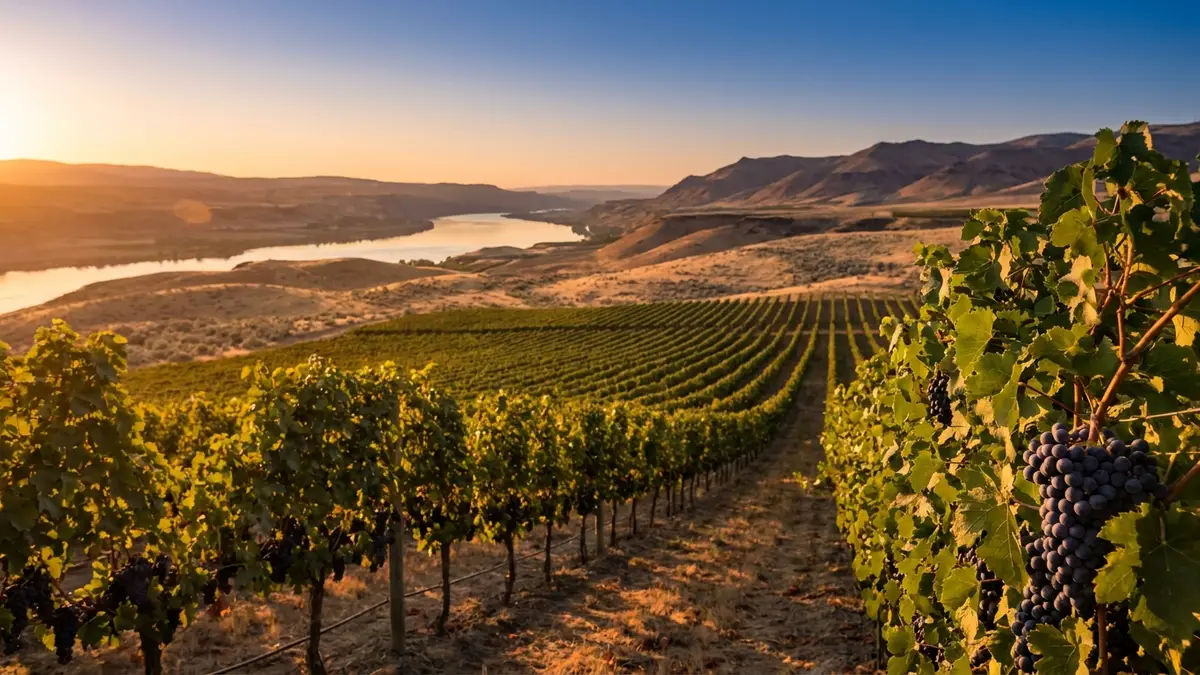
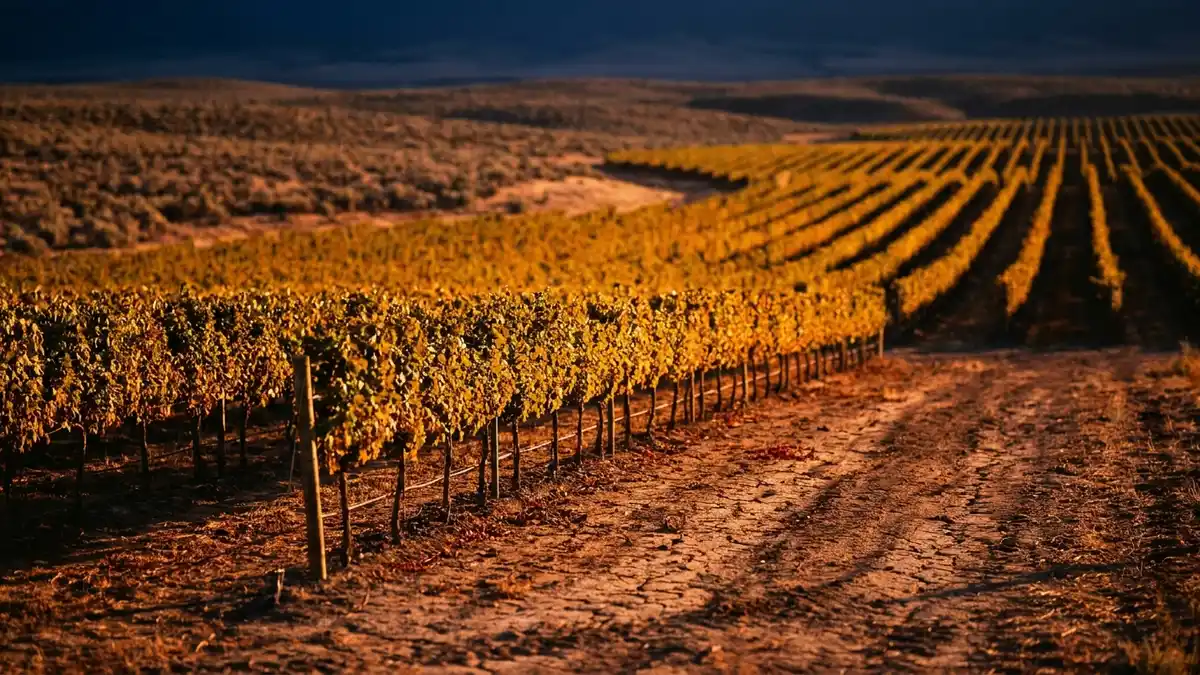
East of the mountains, everything changes. The Cascades catch the Pacific rain and cast a long dry shadow, so the Columbia Valley is a near-desert. Some areas see fewer than eight inches of rain a year, which means growers irrigate their vines using water from the mighty Columbia River.
This is high-desert farming at its most precise. Long summer days deliver intense sunlight at a northerly latitude, pushing grapes to full ripeness. Then the desert nights turn cold, often dropping more than 30°F after sunset.
That gap between hot days and cold nights is called diurnal variation (the daily swing between daytime high and nighttime low temperatures). It is the single most important fact about Washington wine. Warm days build ripe fruit flavor and sugar; cold nights preserve the grape's natural acidity (the tart, mouth-watering freshness that keeps a wine lively). The payoff is wine that tastes ripe and generous yet stays balanced and bright — rarely heavy or flat.
The Columbia Valley: One Giant Region
The first thing to learn in this washington state wine guide is that the Columbia Valley is the master region. It is one of the largest American Viticultural Areas (AVAs) in the country, covering roughly a third of the state's land, and almost every Washington vineyard sits within its boundaries.
An AVA (American Viticultural Area) is the United States system for defining a named, legally bounded grape-growing region — the American equivalent of a French appellation, though it regulates only the geography, not the grapes or methods. When a label simply reads "Columbia Valley," the grapes can come from anywhere across this vast zone.
Because the Columbia Valley is so big, it acts as an umbrella. Tucked inside it are smaller, more specific sub-AVAs, each with its own soils, slopes, and sun exposure. The more precise the AVA on the label, the more focused the wine tends to be — a pattern that mirrors how fine wine works almost everywhere.
For a beginner, this is good news. A bottle labelled "Columbia Valley" is the most affordable and widely available way to meet the state's house style: ripe, structured, fresh red wine. Once that style is familiar, the named sub-regions become the next step. Sommy's regional courses use exactly this broad-to-narrow approach so the map builds in your head one layer at a time.
The Signature Grapes of Washington State
Washington plays to its strengths. The hot days and cold nights suit grapes that need real ripeness but also keep their freshness, and four varieties carry the state's reputation.
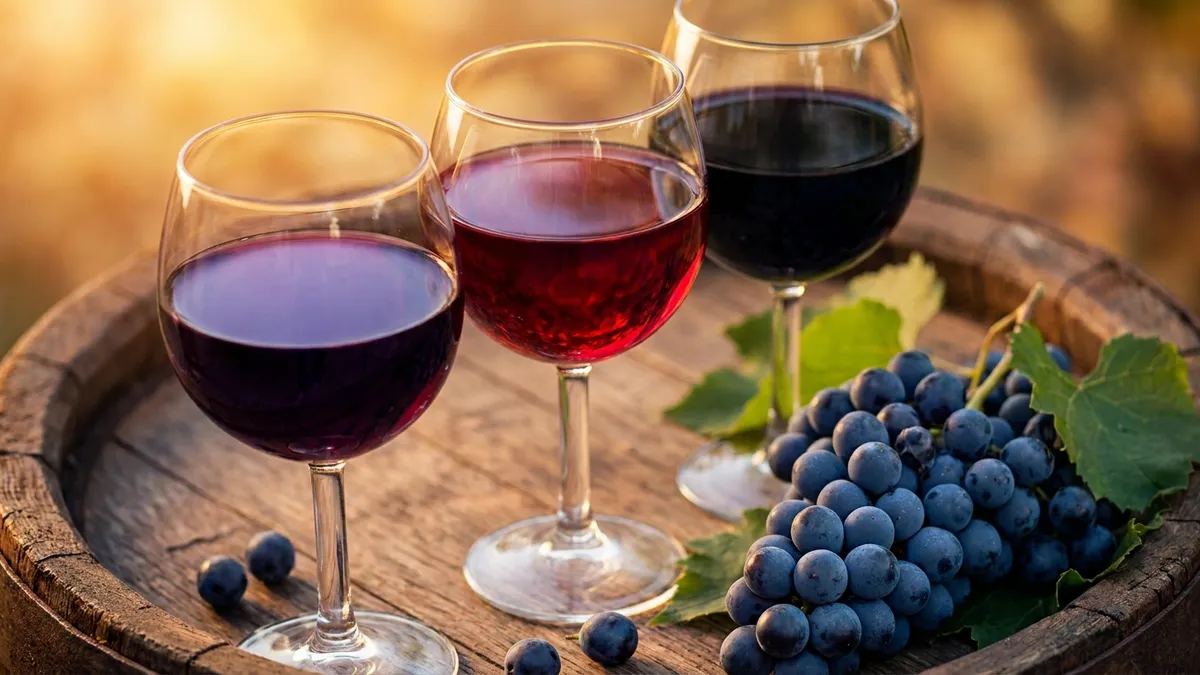
- Cabernet Sauvignon: The flagship red and the most planted grape. Typical aromas: black cherry, blackcurrant, plum, cocoa, dried herbs, and a dusty mineral edge. It is full-bodied with firm, ripe tannins and bright acidity. Body: full (4-5/5) · Acidity: medium-high (4/5) · Tannins: high but ripe (4/5). For how this grape behaves worldwide, see our Cabernet Sauvignon wine guide.
- Merlot: Washington helped prove Merlot could be world-class, not just soft. Typical aromas: ripe plum, black cherry, chocolate, and herbs. It is plush yet structured, a touch rounder than Cabernet but with the same fresh backbone. Our Merlot wine guide covers the grape's full range.
- Syrah: The state's rising star, with a savory, peppery character. Typical aromas: blackberry, black pepper, smoked meat, olive, and violet. Body: full (4/5) · Acidity: medium-high (4/5) · Tannins: medium-high (4/5). Washington Syrah leans more toward the savory, spicy style than the jammy one.
- Riesling: The leading white. Typical aromas: lime, green apple, white peach, and blossom, with mouth-watering acidity. Styles run from bone-dry to off-dry. Read our Riesling wine guide to learn how to read its sweetness levels.
Cabernet and Merlot lead by volume and often blend together in the Bordeaux style (a classic red blend built around those two grapes plus Cabernet Franc). All three reds are noble varieties — if you are still building your foundation, our overview of the noble grapes every learner should know first is a useful companion.
The Key Sub-AVAs Inside the Columbia Valley
Once the Columbia Valley clicks, the named sub-regions turn a single huge map into a set of distinct personalities. These are the four you will meet most often on a label.
- Walla Walla Valley: The most celebrated sub-AVA, straddling the southeast corner of the state and dipping into Oregon. It made Washington's reputation for serious red wine, producing benchmark Cabernet Sauvignon, Merlot, and especially acclaimed Syrah. Walla Walla reds show the state's signature mix of ripe fruit and firm structure, often with an extra savory, stony depth.
- Red Mountain: Tiny, hot, and intensely prized — one of the warmest spots in the state. Its iron-rich, sandy soils and relentless sun make some of Washington's most powerful, deeply structured Cabernet Sauvignon, with dense tannins built for aging. A small area, but a giant reputation.
- Yakima Valley: The oldest established sub-AVA and the workhorse heart of the state, growing a broad range from Cabernet and Merlot to Chardonnay and Riesling. Its slightly cooler pockets favor freshness, making it a reliable source of balanced, food-friendly wine across many styles.
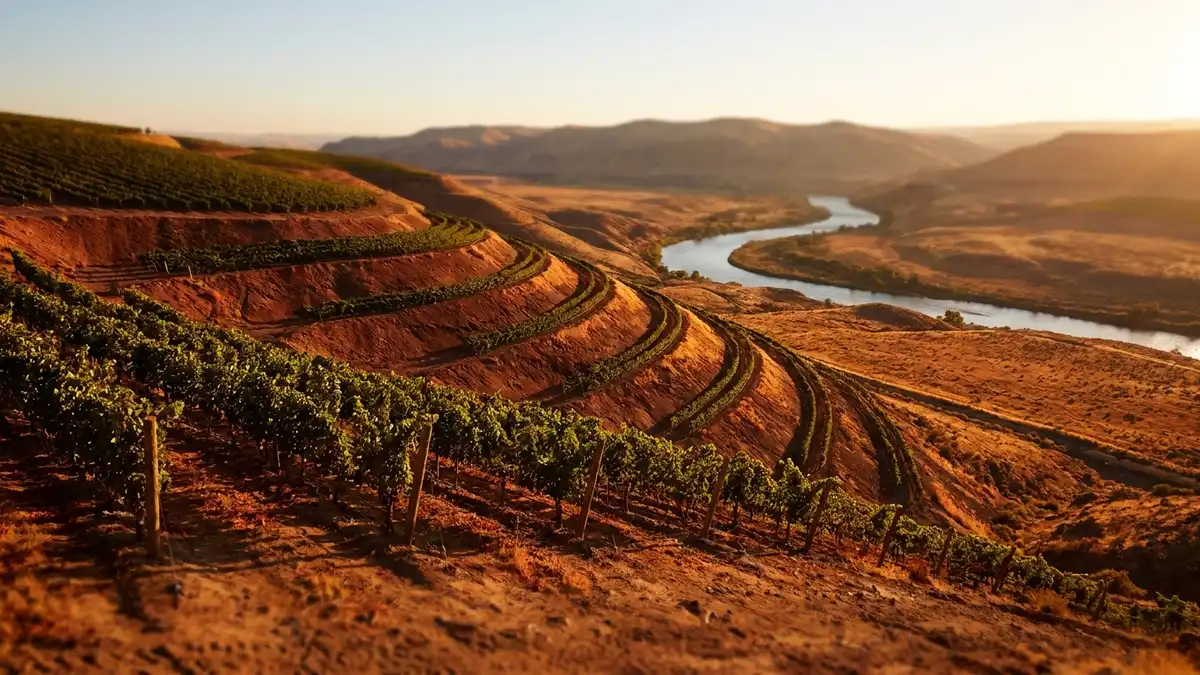
- Horse Heaven Hills: A windswept stretch of slopes running down toward the Columbia River. Constant breezes thicken grape skins, which deepens color and tannin, giving rich yet fresh Cabernet, Merlot, and Syrah. Many of the state's most respected vineyards sit here.
The pattern to remember mirrors the rest of fine wine: a label reading "Columbia Valley" is the broad, blended base, while a named sub-AVA like Walla Walla or Red Mountain points to a more specific, often more characterful wine. The Sommy app's regional lessons walk through real American labels so you can place any bottle on this map at a glance.
How Washington Compares to Other USA Regions
The clearest way to grasp Washington's style is to set it beside its better-known neighbors. The grapes overlap, but the climate writes a different signature into the glass.
- Washington vs Napa Valley: Grape: both built on Cabernet Sauvignon · Climate: Napa warmer and steadier, Washington a bigger day-night swing · Red style: Napa lush and opulent, Washington equally ripe but firmer and fresher · Value: Washington generally costs less. See our Napa Valley wine guide for the comparison.
- Washington vs Oregon: Grape focus: Washington favors Cabernet, Merlot, and Syrah, Oregon is famous for Pinot Noir · Climate: Washington hot and dry east of the Cascades, Oregon cool and damp in the Willamette Valley · Style: Washington bold reds, Oregon elegant and delicate. Our Oregon wine guide covers its cooler approach.
- Washington vs France's classics: Grape lineage: Washington's reds trace to Bordeaux's Cabernet and Merlot and the Rhône's Syrah · Climate: continental and sunny rather than maritime · Style: riper, more fruit-forward, with American clarity of flavor and reliable ripeness year to year.
This balance of ripeness and freshness, at fair prices, is why Washington has become one of the best-value quality regions in the United States. The state offers Napa-level Cabernet ambition with a brighter, fresher edge and a friendlier bottle price.
What Makes Washington Wine Distinctive
Several regions make good Cabernet. What sets Washington apart is the combination of factors that rarely line up together.
Ripeness and Freshness in the Same Glass
Most regions force a trade-off: warm climates give ripe, bold wine but can lose freshness, while cool climates keep acidity but struggle to ripen. Washington's high desert delivers both. The intense daytime sun builds full ripeness, and the cold nights lock in acidity, so the wines manage to be generous and lively at once. This is the heart of the state's appeal and a clear lesson in how climate shapes a wine.
Reliable Sunshine and Strong Value
Because the Columbia Valley is so sunny and dry, harvests are consistent year after year, with little of the rot and rain pressure that plague wetter regions. Steady conditions mean steady quality. Add a younger, less hyped reputation than California, and the result is dependable, well-made wine at prices that beat many famous neighbors — a rare combination for a beginner shopping for quality.
A Young Region Still Finding Its Voice
Washington's modern wine industry is only a few decades old, which makes it exciting to follow. Growers are still mapping which grapes suit which slopes, and Syrah in particular keeps gaining ground. That sense of a region in motion rewards curious tasters — the same grape from two sub-AVAs can already taste meaningfully different, a vivid example of why grapes that look the same can taste different once climate and soil get involved.
How a Beginner Should Start with Washington Wine
You do not need a rare single-vineyard bottle to understand Washington. The smartest path is to taste deliberately, moving from broad to specific and paying attention to what the cold nights add. Here is a practical order:
- Begin with a Columbia Valley red. A bottle simply labelled "Columbia Valley" — usually a Cabernet, Merlot, or a Bordeaux-style blend — is the most affordable and available introduction to the state's ripe-but-fresh house style.
- Step up to a named sub-AVA. Once the base style is familiar, try a Walla Walla red. It shows the same character with more depth and structure, and it is the benchmark most tasters use to judge Washington.
- Compare a Cabernet and a Syrah side by side. Open a Washington Cabernet next to a Washington Syrah. The Cabernet leans toward dark berry and cocoa; the Syrah toward pepper, smoke, and savory spice. Same place, different grape — a clear lesson in varietal character.
- Meet the whites with Riesling. A dry or off-dry Washington Riesling shows how the cold nights keep whites crisp and aromatic. It is a refreshing contrast to all that structured red.
- Build the tasting habit. Note the ripe fruit, then look for that bright, fresh lift on the finish. Our guide to how to taste wine gives you the step-by-step method, and understanding tannins, acidity, and body explains the structure that defines these bold, balanced reds.
Sommy turns these comparisons into guided exercises — naming the aromas, scoring the structure, and building the vocabulary to describe what you sense. You can start practicing free at sommy.wine, then bring the method to your next bottle from the Columbia Valley.
The Reward of Learning Washington
Washington asks less of a beginner than tangled Old World regions, and it gives back generously. The system is simple — one giant Columbia Valley umbrella, a handful of named sub-AVAs, and four grapes that do most of the work. Learn that frame, and a label stops being a wall of unfamiliar names and becomes a clear description of what is in the glass.
The deeper reward is the wine itself: that rare meeting of ripe, bold fruit and bright, fresh acidity, born of hot days and cold desert nights. Start with a Columbia Valley bottle, step toward Walla Walla, and let the sub-AVAs reveal themselves one glass at a time. The Sommy app is built to make that habit stick — turning each bottle into a short, guided lesson so the next Washington red you open is a little clearer than the last.
Sources
Frequently Asked Questions
Where is most Washington State wine made?
Nearly all of it comes from the Columbia Valley, a huge growing area in the dry eastern half of the state, east of the Cascade Mountains. Most famous sub-regions, including Walla Walla, Red Mountain, Yakima Valley, and Horse Heaven Hills, sit inside it. The rainy, cooler western side around Seattle grows very few grapes.
What grapes is Washington State known for?
Washington is best known for bold red wine from Cabernet Sauvignon, Merlot, and Syrah, plus crisp, aromatic Riesling among the whites. Cabernet and Merlot lead by volume and define the state's structured, fruit-forward red style, while Syrah shows a savory, peppery edge and Riesling ranges from dry to off-dry.
What makes the Columbia Valley climate special?
The Columbia Valley is a high desert with very hot, sunny days and cold nights. That large day-to-night temperature swing, called diurnal variation, lets grapes ripen fully while keeping fresh acidity. The result is wine that is ripe and bold yet still balanced. The Cascade Mountains block Pacific rain, so growers irrigate from the Columbia River.
What is the difference between Washington and Napa wine?
Both make excellent Cabernet, but the climate differs. Napa Valley is warmer and more even, giving lush, opulent reds. Washington's bigger day-to-night temperature swing tends to give reds with similar ripeness but firmer acidity and a brighter, fresher edge. Washington also offers strong value and more Syrah and Riesling than Napa.
Is Walla Walla a good place to start with Washington wine?
Yes. Walla Walla is one of Washington's most celebrated sub-AVAs, known for serious Cabernet Sauvignon, Merlot, and Syrah. Its wines show the state's signature balance of ripe fruit and firm structure. A Walla Walla red is an excellent benchmark, though a broad Columbia Valley bottle is the most affordable first taste.
What does Washington State Cabernet Sauvignon taste like?
Washington Cabernet typically shows black cherry, blackcurrant, and plum fruit alongside notes of cocoa, herbs, and sometimes a dusty, mineral edge. It is full-bodied with firm but ripe tannins and noticeably fresh acidity from the cold nights. Compared with warmer regions, it tends to feel structured and bright rather than soft and jammy.
Why is Washington wine often good value?
Washington is a younger, less famous region than California, so its land and grapes cost less and that saving reaches the bottle. The reliable, sunny climate also produces consistent ripe fruit year after year. Together this means a beginner can find well-made Cabernet, Merlot, and Syrah at fair prices, making it one of the best-value quality regions in the United States.
Does Washington State make white wine?
Yes. Riesling is the standout, ranging from bone-dry to off-dry with bright lime, green apple, and floral notes balanced by high acidity. Chardonnay is also widely planted, along with smaller amounts of aromatic whites like Sauvignon Blanc and Viognier. The cold nights of the Columbia Valley keep these whites crisp and lively rather than heavy.
Sommy Team
LinkedInFounder & Wine Educator
The Sommy Team is building the world's most approachable wine education app, helping beginners develop real tasting skills through structured courses and AI-guided practice.