What Does Vintage Mean on a Wine Bottle?

By the Sommy Team — AI-assisted, human-edited.
Updated Apr 16, 2026
Contents (9)
TL;DR
The vintage on a wine bottle is the year the grapes were harvested, not the year the wine was bottled or released. Good vintages produce riper, more concentrated grapes; difficult vintages produce leaner wines. Vintage matters most for age-worthy wines from variable climates like Burgundy and Bordeaux. For everyday wines, the most recent vintage is usually best.
What Wine Vintage Meaning Really Is
The wine vintage meaning is straightforward: it is the year the grapes were harvested. The four-digit number on a wine label — 2019, 2021, 2023 — tells you when the fruit was picked from the vine. That is all it technically means.
But what that number implies is far more interesting. The vintage year encodes information about the weather, the growing conditions, the challenges and triumphs of a particular harvest — and for certain wines, that information directly affects what you will taste in the glass. A 2019 Burgundy and a 2021 Burgundy can taste meaningfully different from the same producer, same vineyard, same grape variety, because the weather was different in those two years.
This guide explains when vintage matters, when it does not, and how to use vintage information practically — without falling into the trap of treating every number on a label like a code that needs cracking.
Why the Harvest Year Matters
Weather Shapes the Grape
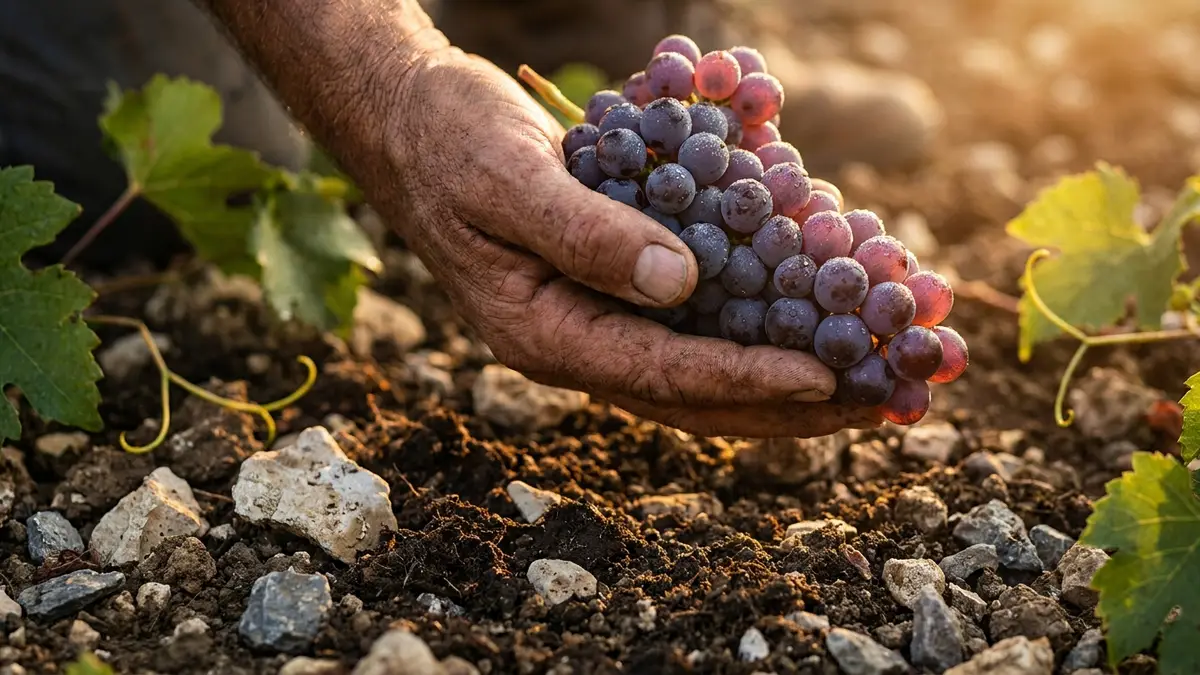
Grapes are agricultural products, and like all agriculture, they are shaped by the weather. A vine experiences an entire growing season — from bud break in spring through harvest in autumn — and the weather during those months determines what the grapes contain when they are picked.
In a warm, sunny year:
- Grapes accumulate more sugar (which becomes more alcohol)
- Skins develop deeper color and more tannin
- Fruit flavors lean toward ripe, dark, and concentrated
- Acidity tends to be lower
In a cool, rainy year:
- Grapes accumulate less sugar
- Skins develop less color and tannin
- Fruit flavors lean toward tart, green, and herbal
- Acidity tends to be higher
In an ideal year:
- Warm days ripen the fruit, cool nights preserve acidity
- Moderate rainfall at the right times sustains the vine without diluting the grapes
- Dry conditions at harvest prevent rot and allow the winemaker to pick at optimal ripeness
This weather variation is why wines from the same producer can taste different from year to year. The grapes simply contain different raw material depending on what the growing season delivered.
Where Vintage Matters Most
Vintage variation is most significant in regions with variable climates — places where the weather changes substantially from year to year.
High vintage variation:
- Burgundy — small production, cool climate, Pinot Noir's sensitivity to conditions; a great vintage vs. a difficult one can mean the difference between transcendent and forgettable
- Bordeaux — maritime climate with unpredictable rain; vintage strongly affects tannin structure, ripeness, and aging potential
- Northern Rhone — continental climate with variable heat; Syrah can range from lean and peppery to rich and concentrated
- Champagne — marginal climate where ripening is never guaranteed; vintage Champagne is only declared in exceptional years
Low vintage variation:
- Napa Valley — reliably warm and sunny; vintages are more consistent, with less dramatic year-to-year variation
- Barossa Valley — similar reliability; warm Australian conditions deliver consistent ripeness
- Most of Spain — hot, dry conditions produce relatively uniform vintages
- Southern France (Languedoc) — abundant sunshine smooths out variation
For a deeper look at how climate and geography shape wine, our terroir guide explains the environmental factors that create these regional differences.
When Vintage Does Not Matter
For the vast majority of wine people drink, vintage is the least important piece of information on the label. Here is why.
Everyday Wine Is Designed for Consistency
Wines under $15-20 are typically blended from large areas, multiple vineyards, and sometimes adjusted during winemaking (with acid additions, sugar additions, or blending) to hit a consistent flavor profile year after year. The winemaker's goal is not to express a vintage but to deliver a reliable product.
If you enjoy a particular brand of Sauvignon Blanc, the 2024 will taste very similar to the 2023. The vintage number on these wines primarily tells you one thing: how old it is. For the styles where an older vintage can taste better, see which wines age well.
Freshness Trumps Vintage for Most Wines
For whites, roses, light reds, and most wines meant to be drunk young, the most useful vintage advice is simply: buy the newest available. These wines are built around fresh fruit, bright acidity, and aromatic intensity — qualities that fade with time regardless of how good the vintage was.
A 2022 Vinho Verde on the shelf in 2026 is four years old. Even if 2022 was a great vintage in Portugal, the wine has lost the freshness that defines it. The 2025 from a mediocre vintage will taste better because it is fresh.
Non-Vintage Wines
Some wines deliberately omit a vintage because they are blended from multiple years:
- Non-Vintage Champagne — the backbone of every Champagne house; a blend of reserve wines from several years, designed to taste consistent
- Sherry — the solera system blends wines spanning decades; no single vintage applies
- Port (Tawny with age statement) — "20-year tawny" is an average age, not a specific year
- Many sparkling wines — Prosecco, Cava, and Cremant are often non-vintage blends
For these wines, the absence of a vintage is a feature, not a limitation. The producer has chosen consistency over variability.
How to Use Vintage Information Practically
For Wines Under $20
Ignore the specific vintage. Just check that the wine is recent:
- White wine and rose — within 1-2 years of the vintage date
- Light red wine — within 2-3 years
- Full red wine — within 3-5 years
If a white wine on the shelf is from three or four years ago, it is probably past its best. Pick a newer one.
For Wines $20-50
Vintage starts to matter modestly in this range. Wines at this price point often come from specific regions and reflect their growing conditions more clearly. A quick search for the vintage quality in that region can help you pick between two bottles on the shelf — but do not overthink it. At this price, the winemaker has enough skill and resources to produce good wine in most years.
For Wines Over $50
This is where vintage genuinely matters. Premium wines from classic regions express their vintage strongly. The difference between a 2016 and a 2017 Bordeaux, or a 2018 and a 2019 Burgundy, can be significant in terms of structure, flavor profile, and aging trajectory.
At this level, consulting a vintage chart or reading about the specific year in that region is worthwhile — not because bad vintages produce bad wine (they usually do not at this price), but because different vintages produce different styles of wine that suit different preferences and aging timelines.
Vintage Charts: Useful but Limited
Vintage charts rate each year's growing conditions for major wine regions. They typically use a numerical score (80-100 or 1-5 stars) to summarize whether the weather was favorable or challenging.
What Vintage Charts Tell You
- General quality level — was it a good, average, or difficult year?
- Wine style — a hot vintage produces richer, more concentrated wines; a cool vintage produces leaner, more acidic wines
- Aging potential — great vintages with balanced structure tend to age longer
What Vintage Charts Do Not Tell You
- Individual producer quality — a skilled winemaker in a poor vintage often outperforms a mediocre winemaker in a great vintage
- Value — lesser vintages are often cheaper, and many offer excellent drinking despite lower scores
- Personal preference — some drinkers prefer the freshness and acidity of cooler vintages over the power of warm ones
Sommelier tip: Do not avoid a wine solely because the vintage chart rates it 85 instead of 95. Some of the most charming, food-friendly, and immediately enjoyable wines come from "average" vintages. The lower concentration means they are approachable sooner, and the higher acidity often makes them better at the dinner table.
Vintage and Wine Aging
Vintage is most relevant when you are buying wine to age. The vintage determines not just what the wine tastes like today but how it will develop over years and decades.
Great Vintages for Aging
A "great" aging vintage typically combines:
- Enough warmth for full ripeness (concentrated fruit and tannin)
- Good acidity retention (the backbone for long aging)
- Health of the grapes (no rot or disease that shortens shelf life)
These vintages produce wines with the structural balance — tannin, acidity, fruit concentration — to evolve gracefully over 15-30+ years.
Difficult Vintages for Aging
Challenging years produce wines with:
- Less concentration and tannin (less aging framework)
- Higher acidity (which can be appealing young but does not compensate for missing structure)
- Lighter fruit that fades faster
These wines are often better drunk young — within 5-10 years — rather than cellared for decades. They can be delightful at the table even if they are not cellar candidates.
For guidance on storing wine properly once you have invested in age-worthy bottles, our guide on how to store wine at home covers temperature, humidity, and positioning.
Reading the Vintage on a Label
Where to Find It
The vintage year typically appears on the front label, often prominently. Some labels integrate it into the design (a large "2019" as part of the artwork), while others list it small near the bottom. If you cannot find it on the front, check the back label — some non-standard labels place it there.
If there is no year anywhere, the wine is non-vintage (NV).
What It Does Not Tell You
The vintage is the harvest year, not the:
- Bottling year — wine may be bottled months or years after harvest (Barolo, for example, is aged in barrel for 2+ years before bottling)
- Release year — some wines are held back for years before being sold (Gran Reserva Rioja is released 5+ years after harvest)
- Best-by date — there is no expiration date on wine; when to drink it depends on the style and storage conditions
For a complete guide to decoding everything on a wine label, see our article on how to read a wine label.
The Vintage Experiment
The best way to understand what vintage means in practice is to taste two vintages of the same wine side by side. Buy two bottles from the same producer, same vineyard, but different years — for example, a 2020 and a 2022 of the same Chianti or Burgundy.
Taste them together and notice what is different. One might be richer and more concentrated. The other might be brighter and more acidic. Both are the same wine from the same place — the vintage is the only variable.
This single experiment teaches you more about vintage than any amount of reading, and it is one of the most eye-opening wine tasting exercises you can do at home. The Sommy app includes comparative tasting exercises like this that build your understanding of how external factors shape wine character.
Practical Vintage Advice
For most wine drinkers most of the time, vintage can be summarized in three rules:
- Buy recent for everyday wine — freshness matters more than vintage quality for wines under $20
- Check vintage charts for premium wine — when spending $50+, a quick look at the year's reputation in that region helps you set expectations
- Do not let vintage prevent you from buying — a wine you want from an "average" vintage is almost always better than a wine you do not want from a "great" vintage
The Sommy app helps you develop the tasting skills to assess wine quality independently of vintage reputation — because ultimately, what matters is what is in your glass, not what a chart says about the weather five years ago. Learning to taste wine with your own palate is the most reliable way to judge whether a specific bottle is worth drinking, regardless of the number on the label.
Frequently Asked Questions
What does vintage mean on a wine bottle?
The vintage is the year the grapes were harvested. A bottle labeled '2022' means the grapes were picked during the 2022 harvest season (autumn in the Northern Hemisphere, early spring in the Southern Hemisphere). It does not indicate when the wine was bottled or released — those dates can be months or years later.
Does vintage matter for everyday wine?
For most wines under $20, vintage matters very little. These wines are designed to be consistent year to year and are meant to be drunk young. The most useful vintage information for affordable wine is simply how old it is — buy the most recent vintage for whites, rosés, and light reds, since freshness is their strength.
What is a good vintage year?
A good vintage is a year with favorable growing conditions — enough sun for ripeness, enough rain at the right times, no destructive frost or hail. Good vintages produce riper grapes with more concentration and balance. But 'good' varies by region — 2019 might be outstanding in Burgundy and average in Rioja.
Why do some wines not have a vintage year?
Non-vintage (NV) wines are blends of multiple harvest years. This is common in Champagne, Sherry, and Port, where blending across vintages ensures consistency. Most non-vintage Champagne is a blend of three or more years, designed to maintain the house's signature style regardless of individual year quality.
Should you buy old vintage wine?
Only if the wine was designed to age. Most wine — roughly 90% of what is produced — is meant to be consumed within 1-3 years. Old does not mean better; it usually means the wine has passed its peak. Wines that benefit from aging include top Bordeaux, Burgundy, Barolo, vintage Champagne, and premium Riesling.
Is a newer vintage always better?
For most wines, yes — freshness is a virtue, and newer means fresher. But for age-worthy wines, a newer vintage is not necessarily better; it may simply be less developed. A 2024 Barolo is probably too young to enjoy at its best, while a 2015 might be approaching its peak. Context matters more than recency.
How do you read a vintage chart?
Vintage charts rate each year's growing conditions for a specific region on a numerical scale (often 1-100 or 1-5 stars). They provide a general quality indicator but should be used as guidelines, not rules. Many excellent wines are made in 'average' vintages by skilled producers, and some wines disappoint even in great years.
Sommy Team
LinkedInFounder & Wine Educator
The Sommy Team is building the world's most approachable wine education app, helping beginners develop real tasting skills through structured courses and AI-guided practice.