Herbaceous Green Wine Faults: When Unripe Grapes Take Over

By the Sommy Team — AI-assisted, human-edited.
Updated Sep 25, 2026
Contents (11)
- Herbaceous Green Wine Fault, in One Paragraph
- Is a Green or Vegetal Taste a Wine Fault?
- What Causes Green Flavours in Wine?
- Why Does Red Wine Taste Like Green Pepper?
- How Do You Spot Green Character in the Glass?
- How Do You Pick a Bottle if Green Bothers You?
- Why Does Cool-Climate Wine Taste Greener?
- Does Green Always Mean the Grapes Were Unripe?
- How Do Winemakers Keep Green Out of the Wine?
- Is Green Wine the Same as Ladybird Taint?
- What Should You Pour Tonight?
TL;DR
Green flavours in wine come from two sources. Methoxypyrazines give green pepper and fade as grapes ripen in sun and warmth. Crushed leaves and stems give cut grass. A trace is a recognised style in Cabernet and Sauvignon Blanc; it becomes a fault only when the green buries the fruit.
Herbaceous Green Wine Fault, in One Paragraph
A herbaceous green wine fault is a green smell strong enough to bury the fruit, and it has two very different sources. The green pepper, asparagus and tomato-leaf family comes from methoxypyrazines, compounds that grow inside grapes such as Cabernet Sauvignon and Sauvignon Blanc and break down as the fruit ripens in sun and warmth. The cut-grass and crushed-leaf family comes from green leaf volatiles, made the moment leaves, stems or unripe berries are crushed with the harvest.
People can smell methoxypyrazines at around 2 to 16 nanograms per litre, so a small amount of shade or an early pick shows in the glass. At a moderate level, green pepper in Cabernet is a recognised style. It becomes a fault when no fruit sits under it, or when it arrives with harsh, drying tannin from unripe skins and stems.
Is a Green or Vegetal Taste a Wine Fault?
Usually not. At a moderate level, green pepper in Cabernet Sauvignon is not considered a wine fault, only a flavour some drinkers dislike. The line is crossed when the green is the loudest thing in the glass and the fruit has gone missing, or when harsh tannin comes with it.
That puts green in the same box as other borderline smells covered in wine fault vs style: the dose and the grape decide. A Loire Cabernet Franc that smells of blackcurrant with a green pepper edge is doing what that grape does in a cool place. The same edge in a Grenache would be out of character, because Grenache carries almost none of these compounds.
Vegetal is the word tasters use when the green tips over into cooked or tinned vegetables: boiled asparagus, canned green beans, stewed peas. Herbaceous is the fresher end: snapped pepper, cut grass, tomato leaf. Herbaceous can be style. Vegetal almost always marks fruit that never ripened.
If the green sits on top of ripe blackcurrant or passion fruit, call it style; if you can find no fruit under it, call it a fault.
What Causes Green Flavours in Wine?
Two separate chemical families make wine taste green, and they come from different places. Methoxypyrazines are made by the grape itself and fall as it ripens in the sun. Green leaf volatiles are made at harvest, when leaves, stems or hard berries get crushed with the fruit.
Green leaf volatiles are small six-carbon compounds such as hexanal and (Z)-3-hexenal. Hexanal smells like freshly cut grass. A plant makes them through an enzyme chain that starts the moment its tissue is damaged, which is why a lawn smells green after mowing. In a winery the same chain runs when leaves, stems and hard green berries go into the crusher with the ripe fruit.
A third green signal is a feel rather than a smell. Tannin is the drying grip on your gums, and unripe fruit makes it harsh. Tannin from unripe fruit is the dry, puckery feeling you know from a green banana or strong tea.
| Green signal | Smells or feels like | Where it comes from | Typical wines | What to do |
|---|---|---|---|---|
| Methoxypyrazines | Green bell pepper, asparagus, gooseberry, tomato leaf | Inside the grape; they fade as it ripens in sun and warmth | Cool-site Cabernet Sauvignon, Cabernet Franc, Carménère, Sauvignon Blanc | Style if fruit shows underneath; pick a warmer region to get less |
| Green leaf volatiles | Freshly cut grass, crushed leaf, snapped stem | Leaves, stems or green berries crushed with the harvest | Any grape, even in a ripe year, if sorting was rushed | Fault if it smells like a lawn and nothing else |
| Unripe tannin | Harsh, drying, puckery grip on the gums | Skins, seeds and stems that did not ripen | Young reds from cool or rushed vintages | Pair with fatty food, or skip that vintage |
| Ladybird taint | Green pepper, rancid peanut butter, bitter | Asian lady beetles crushed with the grapes | Any grape, including Riesling and Pinot Noir | Fault; return it if the grape should not smell green |
For the herbs that are welcome in wine, such as dried sage in Grenache or eucalyptus in Australian Cabernet, see herbal notes in wine.
Why Does Red Wine Taste Like Green Pepper?
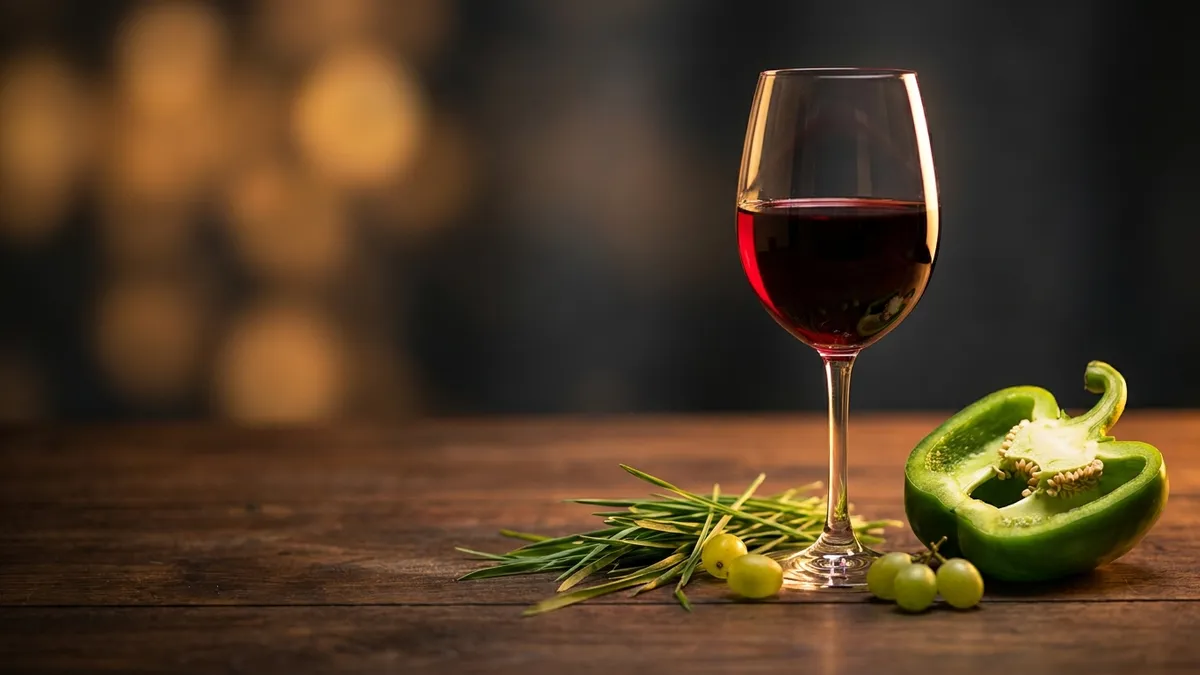
Every Cabernet Sauvignon grape carries methoxypyrazines, and sun and warmth during ripening break them down. When too little sun reaches the bunch, or the grapes are picked early, enough survives to smell as green bell pepper in the finished red wine.
The numbers show how little it takes. People can detect the compound at about 1 to 2 nanograms per litre in white wine, roughly two parts per trillion, and at 10 to 16 in red. At veraison (the point in midsummer when grapes soften and change colour), Cabernet carries around 30 ng/L. The ripening months have to bring that down by half or more before the green pepper drops below what a taster can smell.
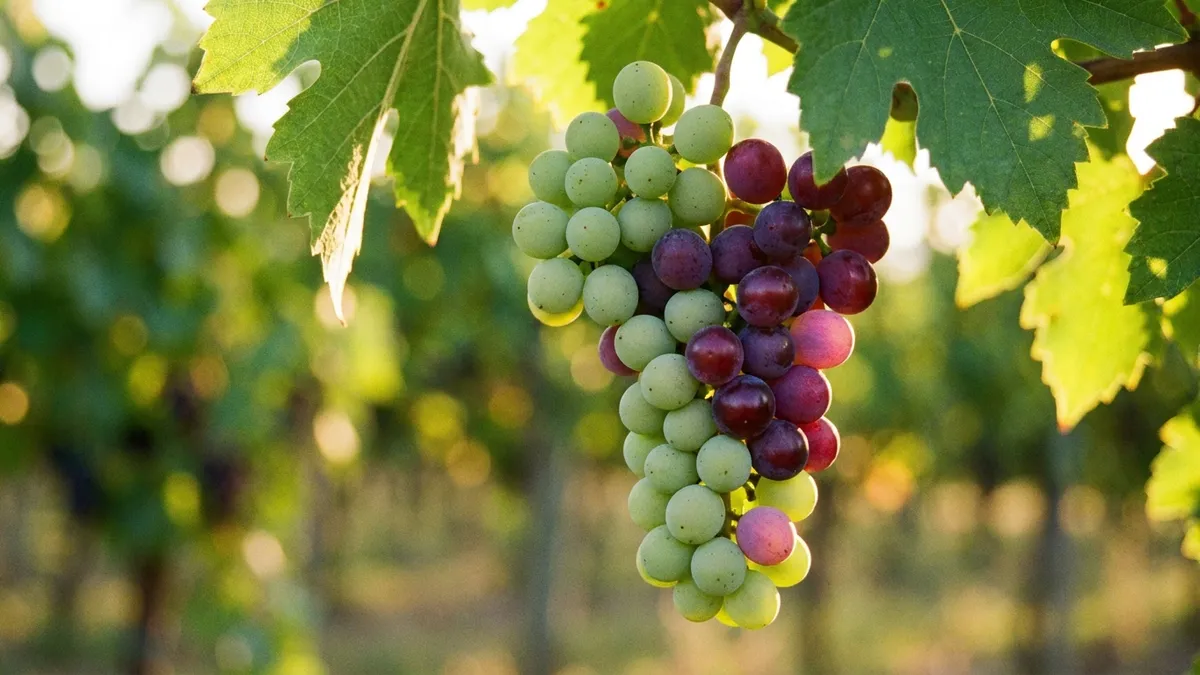
Cabernet shares the trait with its relatives. Cabernet Franc and Carménère show green pepper even more readily, and Merlot shows it less. The Cabernet Sauvignon wine guide covers how the grape tastes when it does ripen fully: blackcurrant and cedar, with the pepper faded to a faint leafy edge.
How Do You Spot Green Character in the Glass?
Smell for the kind of green first, then check whether fruit sits underneath it, then feel your gums for drying tannin. Those three checks take under a minute. They tell you which source you have and whether it has crossed the line into a fault.
Start with the nose. Snapped bell pepper or asparagus points to methoxypyrazines. A freshly mown lawn or a crushed leaf points to green leaf volatiles. Boiled or tinned vegetables mean the fruit was badly unripe.
Then look for fruit. Swirl the glass and sniff again after a minute. In a sound cool-climate Cabernet, blackcurrant comes through behind the pepper. In a faulty one, the second sniff smells as green as the first.
Last, take a sip and hold it. If the inside of your cheeks feels scraped and dry, the skins or stems were unripe as well. How to identify wine faults by smell covers the other off-smells you might meet on the way.
How Do You Pick a Bottle if Green Bothers You?
If green bothers you, buy warm-climate Cabernet and Sauvignon Blanc, and treat cool-region or cool-vintage labels as the greener bets. The grape name matters too. Grenache and Zinfandel carry few of these compounds and rarely show green pepper at all, even from cooler sites.
Read the region before the grape. A cool climate makes wine tarter and lighter; a warm one makes it riper and stronger. Among Sauvignon Blancs, cool Loire and New Zealand bottles smell most of gooseberry and asparagus, and warmer regions push the same grape toward melon and ripe citrus. The Sauvignon Blanc wine guide maps those regions, and climate and wine flavour explains the pattern across grapes.
If you like green, the same map works in reverse. A cool-climate Cabernet Franc with fatty food is a classic pairing, because fat softens the grip of the tannin and the pepper echoes grilled vegetables on the plate.
If a label names a cool region and a vintage known for rain, expect more green; if you want less, pick the same grape from a warmer valley.
Why Does Cool-Climate Wine Taste Greener?
Cool weather slows ripening and pushes the vine into growing leaves. Less sunlight reaches the grapes, and more methoxypyrazine survives to harvest. In cooler climates, ripening Cabernet Sauvignon fully enough for the pepper to drop below detection is difficult, even in a good year.
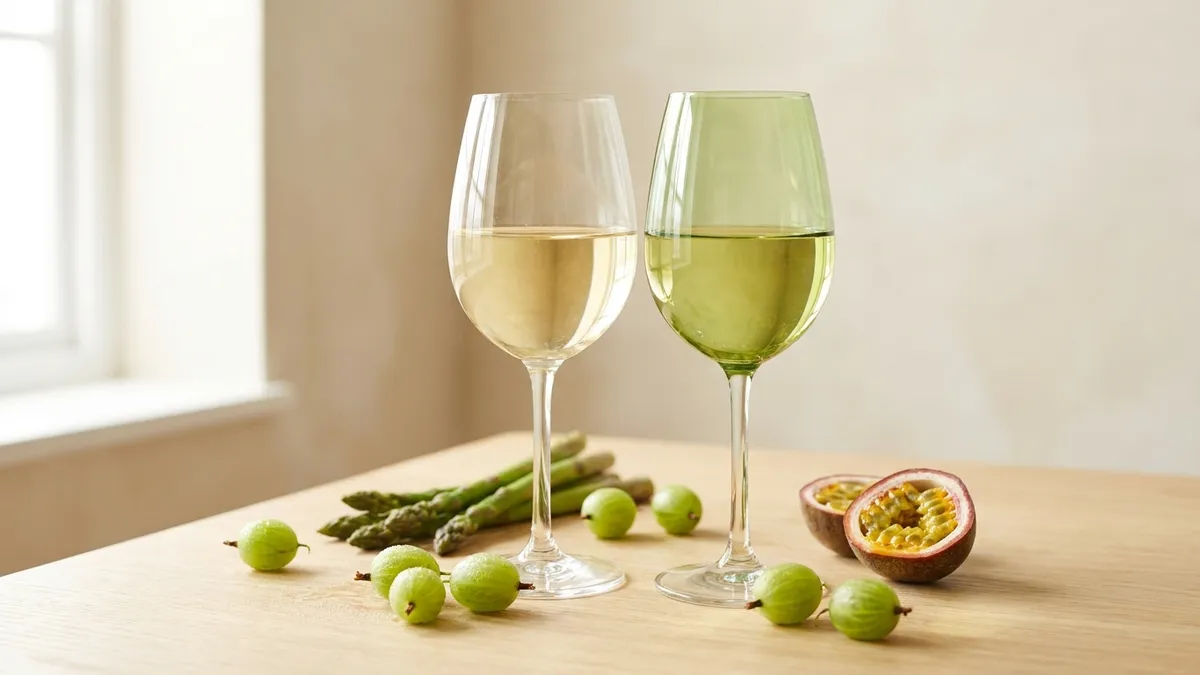
Sauvignon Blanc shows the same pattern in white. Its asparagus, gooseberry and green flavours come from methoxypyrazines, and they grow stronger and more concentrated in cooler regions. Those are the flavours most often linked to New Zealand Sauvignon Blanc.
Soil moves the needle as well. Heavier soils make Sauvignon Blanc ripen late and taste more herbaceous. Stonier soils warm up faster and ripen the grapes earlier.
In the late twentieth century, California's Monterey region was known for Cabernet Sauvignon so full of green pepper that the wines were nicknamed "Monterey veggies". The label word to watch is the place: a cool coastal region names a greener wine.
Does Green Always Mean the Grapes Were Unripe?
No. The bell pepper compound is in the grape long before harvest, and ripening removes it. A grape picked early keeps what a riper grape has already lost. So green pepper is a sign of too little sun as much as too little time.
After veraison, three things move together. Malic acid, the sharp apple-skin acid behind a wine's acidity (the tartness that makes your mouth water), falls. Sugar builds up. Methoxypyrazines break down. Science has not settled whether the fruit smells appear because the green fades and unmasks them, or because they develop later on their own.
The practical point: a wine can taste of ripe blackcurrant and still show a green pepper edge, if those bunches sat in shade. Ripe vs green fruit in wine maps the full ripeness spectrum from green pepper to jam.
How Do Winemakers Keep Green Out of the Wine?
Growers let sunlight onto the bunches and cut part of the crop so the rest ripens. Winemakers sort out leaves, stems and green bunches before crushing. The vineyard work lowers methoxypyrazines, and the sorting keeps grassy green leaf volatiles out of the tank.
Canopy management means trimming and positioning a vine's leaves to control how much sun hits the fruit. In cool conditions vines spend more energy on leaves than on grapes, so growers prune hard. In New Zealand's Hawke's Bay, Cabernet growers removed excess foliage to give the grapes more sun, specifically to cut the vegetal taste.
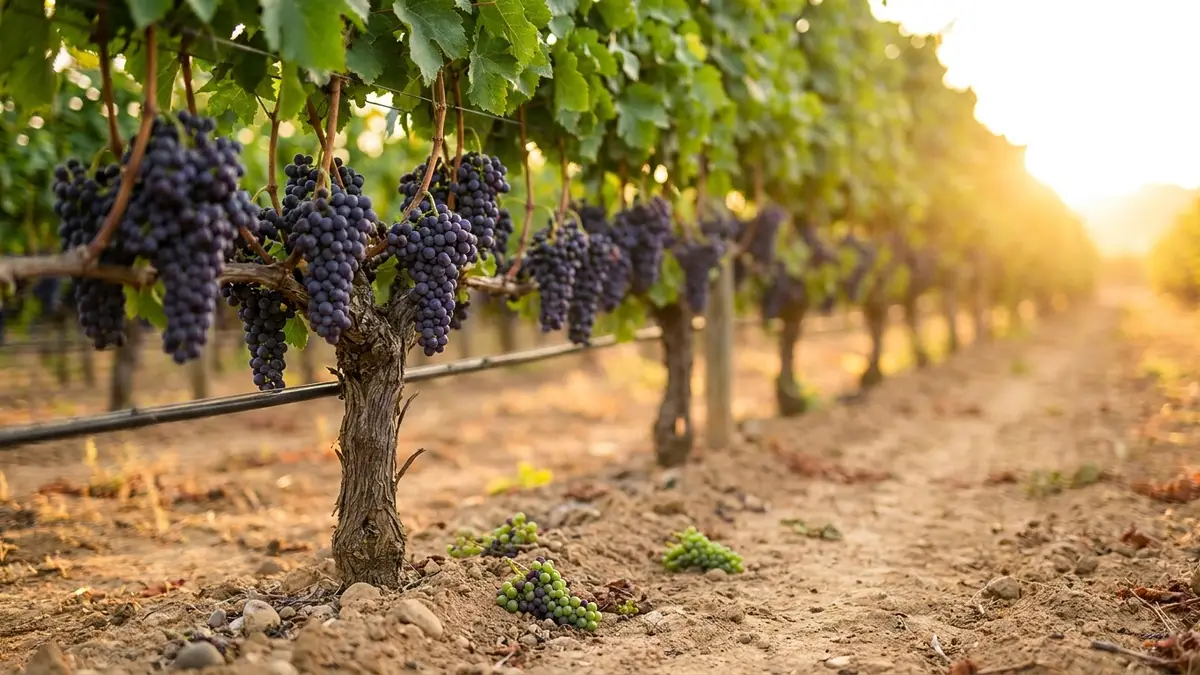
A green harvest is the removal of immature bunches in summer. With fewer bunches, the vine puts its energy into the ones left. Without it, a vigorous vine can produce dilute, unripe grapes. It is most common where rules cap how much wine an area may produce.
Some producers use green on purpose. In New Zealand and Chile, Sauvignon Blanc is picked at several points in the season and blended. The least ripe fruit is high in malic acid and adds sharpness and green notes to the riper parcels.
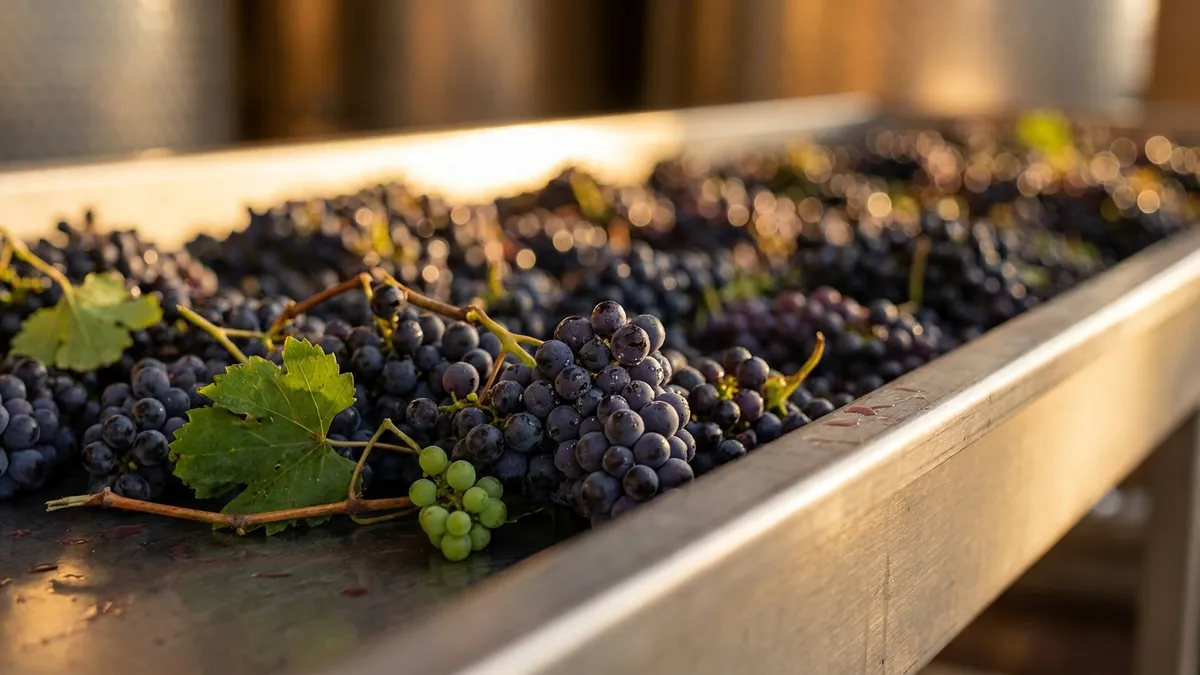
At the winery, the sorting table is the last defence. Any leaf or stem that reaches the crusher releases green compounds, even in a ripe year. If a wine from a warm, ripe vintage still smells of cut grass, suspect the sorting rather than the weather.
Is Green Wine the Same as Ladybird Taint?
No. Ladybird taint comes from Asian lady beetles that end up in the press with the grapes. When disturbed, the beetles release a defensive compound called isopropyl methoxypyrazine. It smells of rancid peanut butter or green bell pepper, or simply makes the wine taste bitter.
The compound is a close cousin of the one found in Sauvignon grapes. That is how the taint can make a Riesling taste like a Sauvignon Blanc. The grape tells you which problem you have. Green pepper in Cabernet or Sauvignon Blanc is expected. The same smell in Riesling or Pinot Noir, with a nutty, oily edge, points to insects in the harvest. Treat that bottle as faulty and return it.
For the full set of off-smells and when to send a bottle back, the wine faults hub collects every guide in one place.
What Should You Pour Tonight?
Pour a cool-climate Sauvignon Blanc next to one from a warmer region and smell them side by side. The cool one should show more gooseberry, asparagus or snapped pepper. The warm one should lean toward melon, ripe citrus and passion fruit.
If the cool one smells of snapped pepper or asparagus and the warm one of passion fruit, you have found methoxypyrazine without reading a label. Log both glasses in the Sommy app, then taste them again after ten minutes to see whether the green in the cool one fades or holds.
Sources
- Wikipedia: Cabernet Sauvignon (pyrazines, detection threshold, veraison levels, canopy management)
- Wikipedia: Sauvignon blanc (methoxypyrazines, climate, soils, harvest timing)
- Wikipedia: Green leaf volatiles (C6 aldehydes and how they form)
- Wikipedia: Green harvest
- Wikipedia: Wine fault (ladybird taint)
- Biomolecules (2021): Prevalence and management of alkyl-methoxypyrazines in a changing climate
- Molecules (2019): 3-alkyl-2-methoxypyrazines from grapes to wine (thresholds, storage)
Frequently Asked Questions
Why does my red wine taste like green pepper?
The green pepper smell comes from methoxypyrazines, compounds present in every Cabernet Sauvignon grape. They break down as the grapes ripen in sun and warmth. People can smell them at around 2 to 16 nanograms per litre, so grapes picked from a cool site, a cool year or a shaded vine often keep enough to show. Cabernet Franc, Carménère and Merlot carry the same family of compounds.
Is a green or vegetal taste in wine a fault?
Usually not. At a moderate level, green pepper in Cabernet or cut grass in Sauvignon Blanc is a recognised style that some drinkers enjoy and others avoid. It becomes a fault when the green is so strong you cannot find fruit under it, or when it comes with harsh, drying tannin that points to unripe skins and stems.
What is the difference between green pepper and cut grass in wine?
They come from different chemistry. Green pepper, asparagus and gooseberry come from methoxypyrazines, which grow in the grape and fall as it ripens in the sun. Cut grass and crushed leaf come from green leaf volatiles such as hexanal, which form when leaves, stems or unripe berries are crushed with the fruit. Stems carry methoxypyrazines too, so the two overlap and a grassy note is a clue, not proof.
Can winemakers fix a green, unripe-tasting wine?
Most of the fix happens before the wine exists. Growers strip leaves so sunlight reaches the bunches and cut away part of the crop so the rest ripens fully. At harvest, sorting out leaves, stems and green bunches keeps grassy compounds out of the tank. Once a finished wine smells strongly of green pepper, time in bottle lowers the compound only slowly.
Is ladybird taint the same as a green wine?
No. Ladybird taint comes from Asian lady beetles that end up in the press with the grapes. When disturbed they release isopropyl methoxypyrazine, which smells of green pepper, rancid peanut butter or simply tastes bitter. It can make a Riesling smell like Sauvignon Blanc. The difference is the grape: green pepper in Cabernet is expected, while in Riesling it signals insects.
Why does cool-climate wine taste more herbal or grassy?
Cool weather slows ripening and pushes vines to grow leaves instead of ripening fruit. Shaded, slow-ripening bunches keep more of their methoxypyrazines, so the finished wine smells greener. That is why cool-climate Sauvignon Blanc smells of asparagus and gooseberry, and why cool-region Cabernet Sauvignon is harder to ripen past its green pepper stage than Cabernet from a warm valley.
Sommy Team
LinkedInFounder & Wine Educator
The Sommy Team is building the world's most approachable wine education app, helping beginners develop real tasting skills through structured courses and AI-guided practice.