From Casual Drinker to Serious Taster: A 30-Day Plan

By the Sommy Team — AI-assisted, human-edited.
Updated Apr 29, 2026
Contents (11)
TL;DR
A 30-day wine plan turns casual drinking into deliberate tasting. Week one builds the senses with daily smell drills and structure baselines. Week two installs a tasting method and structured notes. Week three runs three side-by-side flights. Week four hosts a tasting and a small blind. Thirty minutes a day, three to four wines a week.
TLDR
A 30-day wine plan turns casual drinking into deliberate tasting. Week one builds the senses with daily smell drills and structure baselines. Week two installs a tasting method and structured notes. Week three runs three side-by-side flights. Week four hosts a tasting and a small blind. Thirty minutes a day, three to four wines a week.
The 30-Day Wine Plan, in One Paragraph
A structured 30-day wine plan can transform casual drinking into deliberate tasting. Week one is sense building — daily five-minute smell exercises and structure baseline tastings of acid, sweet, and bitter solutions. Week two installs method — applying the WSET Systematic Approach or deductive tasting to seven wines and writing structured notes. Week three is comparison — three side-by-side flights covering same-grape-two-regions, vertical, and blind. Week four is integration — host a small tasting, blind-identify four wines, and write a quality-judgment note. Thirty minutes a day, three to four wines a week, and a written journal at every step. By day thirty you will think about wine differently — not perfectly, but methodically.
Why This Plan Exists
Most "improve your palate" advice fails for the same reason. It tells you to drink more wine, read more about wine, and wait. Volume without structure is just drinking.
The path from casual to serious taster is not about volume. It is about installing four habits in a specific order — senses, method, comparison, integration. Each week builds on the previous one. Skip the order and the gains evaporate.
By day thirty you will hold opinions you can defend, taste blind with reasonable accuracy, and write notes that future-you can still read. That is the floor of "serious" — reachable in a month. For background reading, the develop your wine palate guide covers why short structured drills outperform passive drinking, and common wine tasting mistakes lists the traps that derail beginners.
Week 1: Sense Building (Days 1-7)
The goal of week one is simple — wake up your nose and calibrate your tongue. Most beginners taste with the wrong tools because the tools were never trained. This week fixes that without touching a wine note.
Time commitment: thirty minutes a day, including five minutes of smell drills and one short structure tasting on three of the seven days.
Wines to buy: two whites (one crisp, one rounded), two reds (one light, one structured). Total: four bottles. They will carry you through the week.
Day 1: Aroma Library Setup
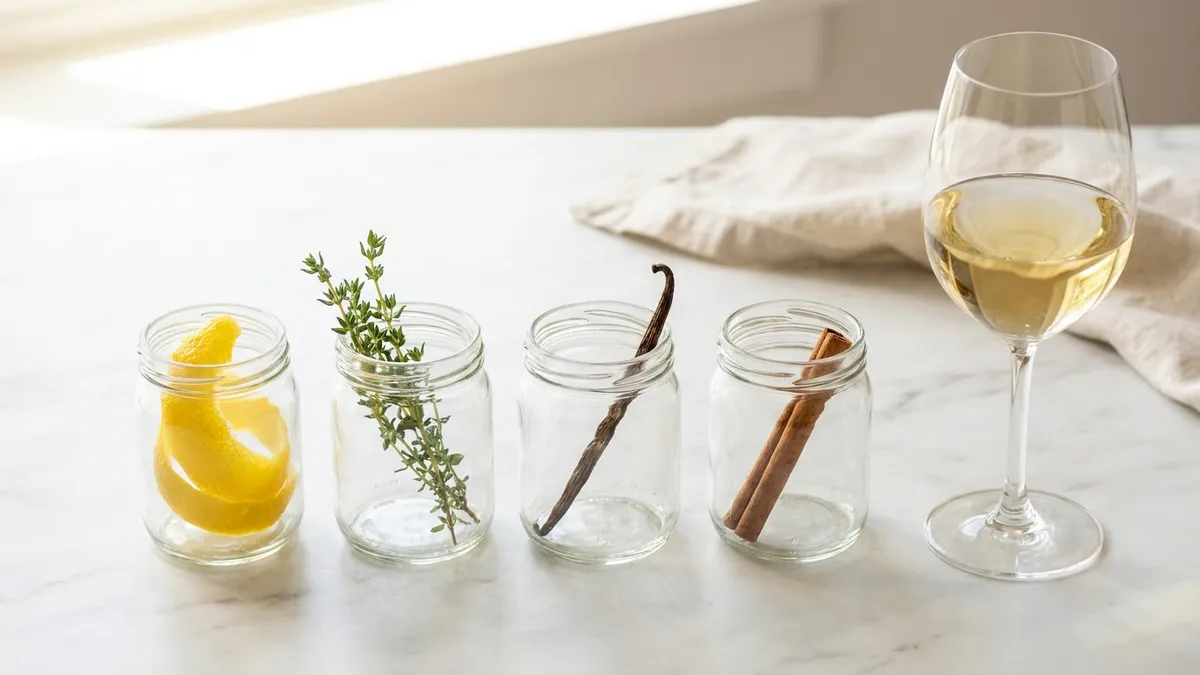
Pull five aromas from your kitchen — fresh lemon zest, whole black peppercorns, a sprig of mint, a coffee bean, and a vanilla pod. Place each in a small unmarked container. Eyes closed, smell each one and say the name out loud. Repeat three times.
This is your scent library, and it is the highest-leverage drill in the entire plan. The bottleneck for most beginners is not the nose but the words attached to it. The olfactory reference kit guide expands this into a twenty-aroma starter set.
Days 2-3: Structure Baselines
Make three glasses of water. Add a quarter teaspoon of lemon juice to one, a half teaspoon to another, leave the third plain. Sip each and notice where acidity lands — the sides of the tongue, the back of the jaw, the saliva response.
Repeat the next day with sugar (sweet) and strong black tea (bitter, which approximates tannin). Sweet hits the front of the tongue. Bitter and tannin grip the gums and inside of the cheeks. Wine acidity, sweetness, and tannin land on the same receptors. Knowing what medium and high feel like in water means you can recognise them instantly in a glass.
Days 4-6: First Wine Smell Drills
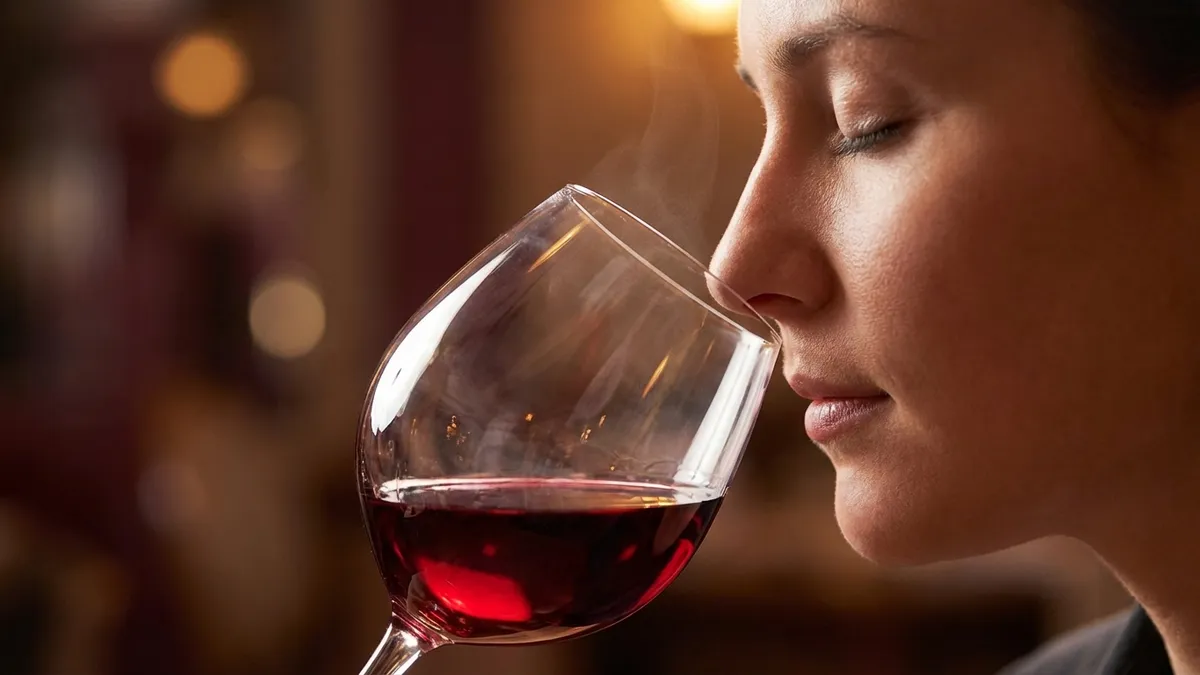
One wine per evening — crisp white, then rounded white, then light red. Do not sip first. Smell for thirty seconds. Name three aromas out loud, even vague ones (citrus, something herbal, something floral). Write them down. Smell again. Sip once.
The contrast between crisp and rounded white lands in the nose before the mouth. The shift to a light red is mouthfeel — tannin shows up as a structural element rather than vague dryness. The how to smell wine guide covers the swirl-pause-sniff technique.
Day 7: Review
Re-read the week's notes. Circle any aroma you named twice. Write one sentence summarising your starting vocabulary. The week-one review is not about insight. It is about admitting where you are starting from.
Common mistake: rushing past the structure baselines because they feel silly. The acid-and-sweet drills look like a child's science fair. They are also the only way most beginners ever calibrate what medium acidity actually means in their own mouth.
Week 2: Method (Days 8-14)
Week one woke up the senses. Week two gives them a template.
Time commitment: thirty minutes a day. Three full method tastings during the week, four short journal entries on off days.
Wines to buy: seven wines total — two unoaked whites, two oaked whites, two reds of contrasting style, and one wildcard (rosé, off-dry Riesling, or sparkling). One wine per method session, one for each off-day journal entry.
Pick One Method
You have two reasonable choices: the WSET Systematic Approach to Tasting (used in formal certification) or the deductive method (used by sommeliers in restaurant service). Both walk through sight, smell, and palate in a fixed order. The WSET systematic tasting approach and deductive wine tasting method guides cover each in full. Pick one and stick with it for the month — switching mid-plan resets the learning curve.
The Method in Brief
Whichever you pick, the shape is similar:
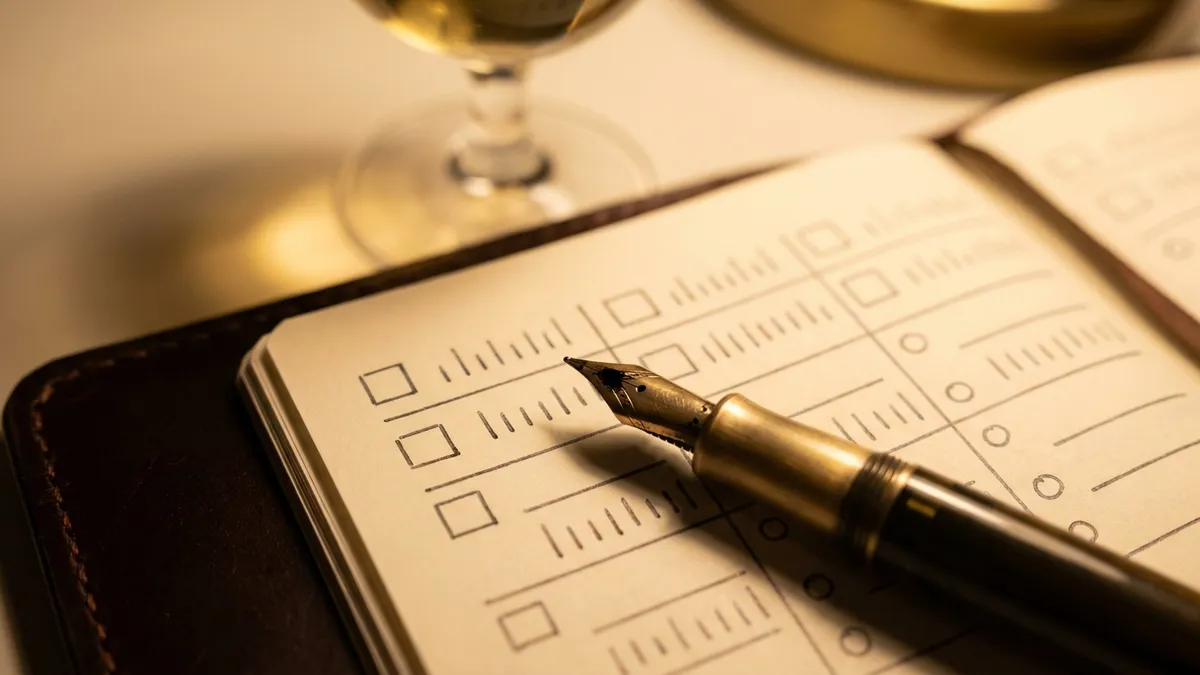
- Sight — clarity, intensity, hue, rim
- Nose — intensity, aroma categories (fruit, floral, spice, earth, oak)
- Palate — sweetness, acidity, tannin, body, alcohol, finish
- Conclusion — quality, style, possible origin
Days 8-13: One Method Tasting Per Day
Apply the method to one wine each evening — work through the unoaked whites, the oaked whites, the reds, and the wildcard across the six tasting nights. Fifteen to twenty minutes per session. Write everything down using the same template. The first session will feel slow. By day thirteen the shape of high acid medium body will start repeating across white grapes, and the gravelly tannin of certain reds will become recognisable.
The wine tasting notes template covers the field-by-field structure.
Day 14: Review and Compare
Re-read all seven method entries side by side. Underline any aroma you named in three or more wines. Those are your anchor aromas — the smells your nose finds reliably. They are the foundation of week three.
Common mistake: writing for an audience. Most week-two journals collapse into florid prose by day eleven. Write medium acid, light tannin, red cherry, earth, eight-second finish — not a delicate dance of red fruit on the palate. Plain language survives review. Label-copy does not.
Week 3: Compare (Days 15-21)
Week three is where the plan compounds. Single-wine tastings teach you what a wine is. Side-by-side flights teach you what a wine is not, which is faster.
Time commitment: three flights, sixty to ninety minutes each. Two short journal nights between.
Wines to buy: six bottles total, organised into three flights of two. Plus a couple of singletons for the off nights.
Flight 1 (Day 16): Same Grape, Two Regions
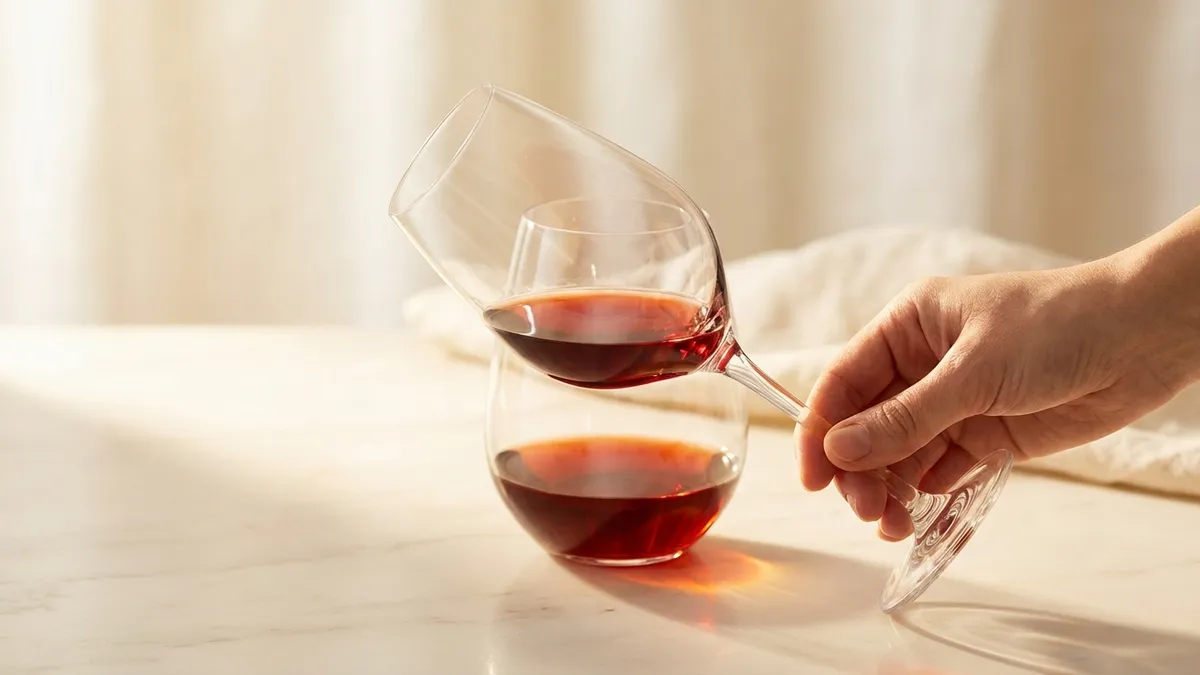
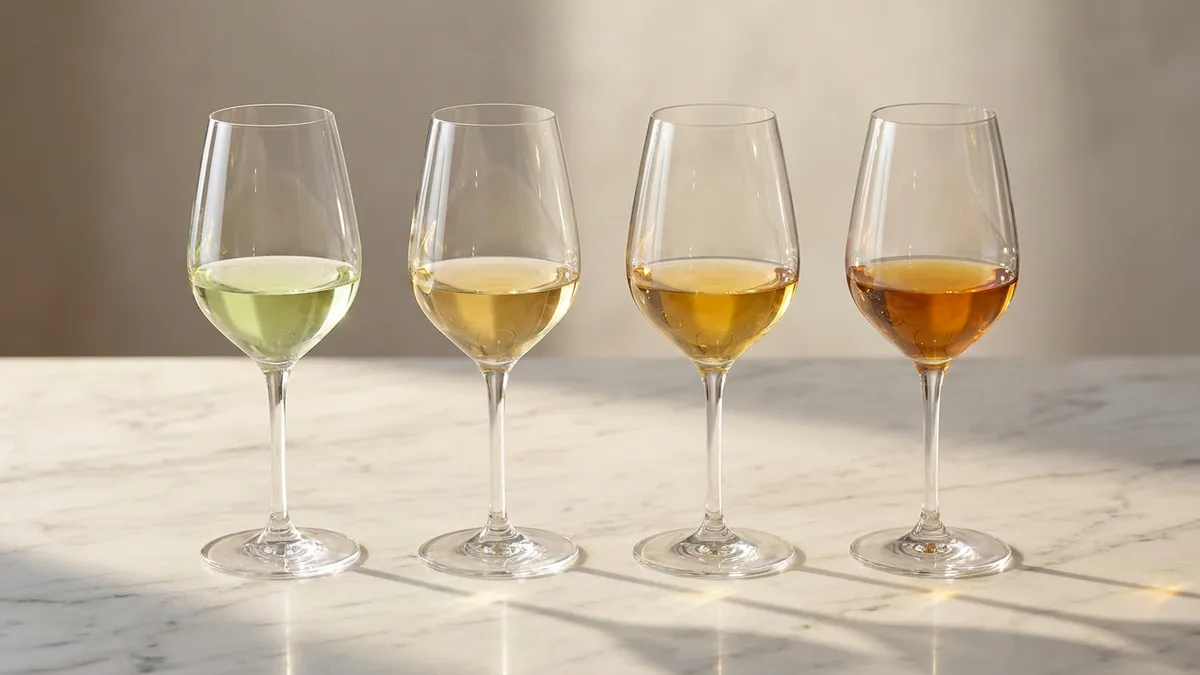
Pick a grape that grows in two contrasting climates. Sauvignon Blanc from Marlborough versus Sancerre. Pinot Noir from Burgundy versus Oregon. Chardonnay unoaked versus oaked. Pour both at the same time, in identical glasses, and run the method on each. Write one paragraph at the end forcing a contrast: These two are both [grape], but A is... and B is... The how to compare two wines guide covers pour size, glass spacing, and palate-cleansing rules.
Flight 2 (Day 18): Vertical
Two vintages of the same wine, ideally three to five years apart. The contrast is subtle but legible: fruit fades, savoury notes rise, structure softens. The vertical wine tasting guide covers how to set one up cheaply.
Flight 3 (Day 20): Blind
Two wines, hidden by a partner or under a bag. Run the method on each before either is revealed. Try to call red or white, body, acidity level, and Old World or New World. Reveal and compare guesses honestly.
You will be wrong on several. That is the entire point. The shock of being wrong burns the pattern into memory faster than any other drill in the plan. The tasting wine blind vs sighted guide covers what to expect from a first blind attempt.
Days 17, 19, 21: Off-Night Drills
Short five-minute method on a single wine. The flights are heavy lifting; off-nights keep the daily habit alive.
Common mistake: running the flights alone. Side-by-side tastings benefit hugely from a partner. Articulating the contrast out loud, then writing it down, doubles the learning. Do not talk before you write, though — group-think contaminates the practice.
Week 4: Integration (Days 22-30)
The first three weeks were inputs. Week four is output. You do not really know a skill until you can teach it, host it, and judge it.
Time commitment: thirty minutes a day plus one longer evening for hosting.
Wines to buy: four wines for the host event, plus two singletons for the rest of the week.
Days 22-24: Method on a New Style
Push your method onto unfamiliar territory. If week two skipped fortified wine, taste a fortified now. If you avoided sparkling, taste one. The how to taste fortified wine and how to taste sparkling wine guides cover the structural quirks.
Day 25: Host a Tasting
Invite two to four friends. Pour four wines — two whites, two reds — and walk the group through your method on the first wine before they taste freely. Hosting is the brutal filter. Everything you actually understand will hold up under explanation. Everything you only half-understand will collapse the moment a friend asks a clarifying question. The wine tasting party guide and wine tasting etiquette guides cover the setup.
Day 27: Blind Identify Four Wines
Have a partner pour four wines blind, in identical glasses, in random order. Try to identify grape variety (or category), approximate climate, approximate age, and whether the wine appeared earlier in the plan. Reveal one at a time. Two of four right at this stage is solid. The blind wine tasting tips and how to evaluate wine quality guides cover what to listen for in a blind context.
Day 30: The Quality Judgment Note
Pick one wine — ideally one you have written about earlier in the plan — and write a quality judgment. Not a like-or-dislike note. A reasoned assessment of:
- Balance — do acidity, tannin, body, and alcohol agree with each other?
- Length — how long does the finish last, pleasantly or harshly?
- Intensity — concentrated or diluted?
- Complexity — how many distinct aromas and flavours appear?
- Typicity — does it taste like the grape and region it claims to be?
The wine judging criteria guide covers each criterion in detail. Six lines is enough. The point is to write a note a stranger could read and say yes, this person has actually thought about this wine.

Common mistake: treating day thirty as a finish line. The plan is a foundation, not a graduation.
What Day 31 Looks Like
The plan is not designed to last forever. After thirty days, drop the daily drill to three or four sessions a week, keep the journal alive, and add one new region or grape each month.
A reasonable month-two cadence:
- Two weekday method tastings (fifteen minutes each)
- One weekend flight (sixty minutes)
- Fifteen-minute weekly journal review
The wine tasting journal tips guide covers the long-term journal habit, and wine memory training pairs naturally with month two onward — re-tasting wines you have already entered and comparing notes is one of the fastest ways to deepen recall.
The Sommy app structures all four weekly arcs into guided lessons with feedback at each step. Whether you use the app or run the plan on paper, the framework is the same.
What Improvement Actually Feels Like
Skill gains during a 30-day wine plan are not linear. The first ten days feel like effort with no payoff. Then around day twelve a switch flips — you smell a wine and your nose finds cherry before your conscious mind asks. By day twenty most beginners can taste a wine and accurately call its acid and body level. By day thirty most can hold a structured opinion through a dinner-party conversation without reaching for label copy.
Signs the plan is working:
- You smell a wine and name an aroma before sipping.
- You disagree with a back label and your reasoning holds up.
- You know which wines you reach for and why — not just I like this one.
None of those require credentials. They require thirty days of structured practice and the willingness to write things down even when uncertain.
Sommelier note: the journal is the engine. Without writing, the daily drills become drinking. With writing, every wine teaches you something about every other wine.
The Bottom Line
A 30-day wine plan is achievable for any curious drinker with thirty minutes a day, three to four bottles a week, and a notebook. The four-week arc — sense, method, comparison, integration — is the structure that converts casual drinking into deliberate tasting. You will not become a sommelier in a month. You will become someone who thinks about wine methodically, with vocabulary attached to real sensations and opinions you can defend.
FAQ
Can you really become a better wine taster in just 30 days?
You can become a much better wine taster in thirty days, though not a sommelier. With a structured plan of about thirty minutes a day, three to four wines a week, and a written journal, most beginners measurably improve aroma recall, structure recognition, and confidence describing wine. You will not master every region, but you will think about wine differently — methodically, with vocabulary attached to real sensations rather than borrowed from back labels.
How much wine do I need to buy for a 30-day wine plan?
Plan on three to four bottles a week — twelve to sixteen across the month. That covers the daily five-minute drill, the side-by-side flights in week three, and the host-and-blind exercise in week four. Stick to grape varieties and styles rather than chasing producers. Two unoaked whites, two oaked whites, two light reds, two structured reds, and a few wildcards (rosé, sparkling, fortified) is a balanced budget that exposes you to most of the structure spectrum.
Do I need expensive wine to follow this plan?
No. A fifteen-dollar bottle teaches the same structural lessons as a hundred-dollar bottle. The plan is built around recognising acidity, tannin, body, sweetness, and a handful of aromas — all of which show up clearly in everyday wines. Spend on variety rather than price. A thirty-dollar splurge once a week, paired with cheaper bottles for the daily drill, is a sensible budget that keeps the practice sustainable past day thirty.
What if I miss a day of the plan?
Skip the day, do not skip the week. The structure that matters is the weekly arc — sense, method, comparison, integration — not the perfect daily streak. If you miss a daily drill, pick it up the next evening and keep moving. Two missed days in a row is the warning signal. Three missed days means restart the week, not the plan. Consistency over four weeks beats perfection over one.
Should I follow a tasting method like WSET or the deductive system?
Yes, in week two. A method gives every entry the same shape, which is what makes patterns visible later. Either WSET's Systematic Approach to Tasting or the deductive method used by sommeliers works — both start with sight, move through smell, and finish with structure on the palate. The plan does not require certification, just a consistent template. Pick one method and stick with it for the full month.
Can I do this 30-day plan with a partner or friend?
Yes, and it usually works better. A partner forces you to articulate aromas and structure out loud, which is the highest-leverage drill in the whole plan. Schedule the side-by-side flights in week three together, and run the host-and-blind exercise in week four for friends. The only rule: write your notes independently before comparing. Group-think contaminates the practice if you talk before you write.
What happens after the 30 days are over?
On day thirty-one, drop the daily drill to three sessions a week, keep the journal, and add one new region or style each month. The four-week plan is a foundation, not a finish line. Most people who complete it report that wine starts to feel three-dimensional — they notice acidity, body, and aroma in real time without thinking. Continued practice deepens that, but the bulk of the cognitive shift happens in the first month.
Do I need any special equipment to follow this plan?
Almost nothing. Six identical wine glasses for side-by-side tastings, a small notebook, a kitchen scale or measuring jug for consistent pours, and a few pantry items for the smell drills (whole spices, citrus zest, fresh herbs, a coffee bean). A neutral wine glass — INAO-style or a basic Bordeaux shape — is the only purchase that meaningfully changes results. Skip aerators, decanters, and tasting kits for the first month.
Frequently Asked Questions
Can you really become a better wine taster in just 30 days?
You can become a much better wine taster in thirty days, though not a sommelier. With a structured plan of about thirty minutes a day, three to four wines a week, and a written journal, most beginners measurably improve aroma recall, structure recognition, and confidence describing wine. You will not master every region, but you will think about wine differently — methodically, with vocabulary attached to real sensations rather than borrowed from back labels.
How much wine do I need to buy for a 30-day wine plan?
Plan on three to four bottles a week — twelve to sixteen across the month. That covers the daily five-minute drill, the side-by-side flights in week three, and the host-and-blind exercise in week four. Stick to grape varieties and styles rather than chasing producers. Two unoaked whites, two oaked whites, two light reds, two structured reds, and a few wildcards (rosé, sparkling, fortified) is a balanced budget that exposes you to most of the structure spectrum.
Do I need expensive wine to follow this plan?
No. A fifteen-dollar bottle teaches the same structural lessons as a hundred-dollar bottle. The plan is built around recognising acidity, tannin, body, sweetness, and a handful of aromas — all of which show up clearly in everyday wines. Spend on variety rather than price. A thirty-dollar splurge once a week, paired with cheaper bottles for the daily drill, is a sensible budget that keeps the practice sustainable past day thirty.
What if I miss a day of the plan?
Skip the day, do not skip the week. The structure that matters is the weekly arc — sense, method, comparison, integration — not the perfect daily streak. If you miss a daily drill, pick it up the next evening and keep moving. Two missed days in a row is the warning signal. Three missed days means restart the week, not the plan. Consistency over four weeks beats perfection over one.
Should I follow a tasting method like WSET or the deductive system?
Yes, in week two. A method gives every entry the same shape, which is what makes patterns visible later. Either WSET's Systematic Approach to Tasting or the deductive method used by sommeliers works — both start with sight, move through smell, and finish with structure on the palate. The plan does not require certification, just a consistent template. Pick one method and stick with it for the full month.
Can I do this 30-day plan with a partner or friend?
Yes, and it usually works better. A partner forces you to articulate aromas and structure out loud, which is the highest-leverage drill in the whole plan. Schedule the side-by-side flights in week three together, and run the host-and-blind exercise in week four for friends. The only rule: write your notes independently before comparing. Group-think contaminates the practice if you talk before you write.
What happens after the 30 days are over?
On day thirty-one, drop the daily drill to three sessions a week, keep the journal, and add one new region or style each month. The four-week plan is a foundation, not a finish line. Most people who complete it report that wine starts to feel three-dimensional — they notice acidity, body, and aroma in real time without thinking. Continued practice deepens that, but the bulk of the cognitive shift happens in the first month.
Do I need any special equipment to follow this plan?
Almost nothing. Six identical wine glasses for side-by-side tastings, a small notebook, a kitchen scale or measuring jug for consistent pours, and a few pantry items for the smell drills (whole spices, citrus zest, fresh herbs, a coffee bean). A neutral wine glass — INAO-style or a basic Bordeaux shape — is the only purchase that meaningfully changes results. Skip aerators, decanters, and tasting kits for the first month.
Sommy Team
LinkedInFounder & Wine Educator
The Sommy Team is building the world's most approachable wine education app, helping beginners develop real tasting skills through structured courses and AI-guided practice.