Vertical Wine Tasting: What It Is and How to Host One

By the Sommy Team — AI-assisted, human-edited.
Updated Apr 17, 2026
Contents (11)
TL;DR
A vertical wine tasting pours the same wine across multiple vintages in one session. It is the single fastest way to understand how wine ages, how vintage variation shows in the glass, and how your palate responds to young versus mature examples. A three-vintage vertical at home reveals more than a dozen random tastings.
TLDR
A vertical wine tasting pours the same wine across multiple vintages in one session. It is the single best way to learn how a wine ages, how vintage variation shows in the glass, and how your palate responds to young versus mature examples. A simple three-vintage vertical at home reveals more about wine than a dozen random tastings.
What a Vertical Tasting Is
A vertical wine tasting compares bottles of the same wine from different years. The producer and wine stay constant. The vintage changes. Everything you taste is a direct result of the weather, the vineyard conditions, and the time the wine has spent in bottle.
This is different from a horizontal tasting, where the vintage stays constant and the producer changes. Verticals isolate the variable of time. Horizontals isolate the variable of winemaker and terroir. Both are educational; verticals are arguably the more dramatic of the two because the age differences can be startling.
A vertical can cover two vintages or twenty. Most home verticals live between three and six. Commercial tastings can stretch to ten-plus wines over several hours with a structured break pattern.
Why Verticals Are Powerful Teachers
A single bottle of wine is a snapshot. A vertical is a time-lapse. You see:
- How primary fruit fades — from fresh cherry to dried cherry to fig over decades
- How tannin softens — from grippy young structure to silk over 5 to 20 years
- How acidity outlasts fruit — acidity stays stable while fruit fades, which shifts the wine's balance
- How oak integrates — obvious vanilla and toast on young wines disappear into the background in aged ones
- How tertiary character develops — leather, forest floor, truffle, and dried herbs show up over time
- How vintage character shows up — a warm year looks different from a cool year even decades later
Our primary, secondary, and tertiary aromas in wine explained guide covers the underlying categories that verticals put on clear display.
Verticals are also the single clearest demonstration of why some wines deserve cellaring and others do not. After one good vertical, you stop wondering whether a wine will age and start wondering how much longer a wine already aged has.
How to Plan a Vertical at Home
A three- or four-bottle vertical is a great first attempt. Rules of thumb:
Pick a wine that actually ages
Not every wine is built for aging. Light fresh whites, everyday reds, and inexpensive rosés are designed to be drunk young and will not show meaningful vertical character. Good candidates:
- Classified Bordeaux — any Cru Bourgeois, classified growth, or serious Right-Bank producer
- Barolo and Brunello di Montalcino
- Hermitage, Côte-Rôtie, or Châteauneuf-du-Pape
- Rioja Gran Reserva or Riserva-level Rioja Reserva
- German Riesling (Kabinett, Spätlese, Auslese)
- Aged Champagne (vintage or prestige cuvée)
- White Burgundy (Grand Cru or Premier Cru level)
- Napa or classified California Cabernet
A simple entry point: three vintages of a single producer, typically 3, 7, and 12 years old, if you can find them.
Choose a tight spread or a wide spread
Two planning modes:
- Tight spread — three consecutive vintages (2018, 2019, 2020). Teaches you about vintage variation in one producer.
- Wide spread — vintages 5 to 15 years apart (2020, 2015, 2010). Teaches you about aging evolution.
Tight spreads are easier to source. Wide spreads are more dramatic. Neither is more educational in an absolute sense; they teach different things.
Serve in order, oldest to youngest or youngest to oldest?
Both protocols exist. The traditional approach is oldest first — the most delicate, evolved wine gets your freshest palate. This is what most sommelier exams and serious tastings use.
The alternative is youngest first, which emphasizes the progression of aging and is more intuitive as a narrative. Either works. The oldest-first protocol is more accurate; the youngest-first is more dramatic. Our blind wine tasting tips guide explains the logic behind flight ordering in more detail.
Serve all wines at the same temperature
This is critical. Serving one wine colder than the others distorts the comparison. All reds at 15 to 17 °C (59 to 63 °F). All whites at 11 to 13 °C (52 to 55 °F). Use a thermometer if you are serious.
Use the same glass for every wine
Another critical rule. Different glass shapes subtly change aroma release. Use identical glasses — a standard tulip works for all reds and most whites. Six of one shape beats three of two different shapes.
Plan modest pours
A 2-oz pour (60 ml) per wine per person is plenty. A 750 ml bottle shared across four people gives three pours per person for a three-wine vertical — enough to taste, re-taste, and revisit. Larger pours invite fatigue and alcohol accumulation.
Tasting Protocol
Once the wines are poured, a structured protocol gets more out of the tasting than free-form drinking.
1. Look at all three at once
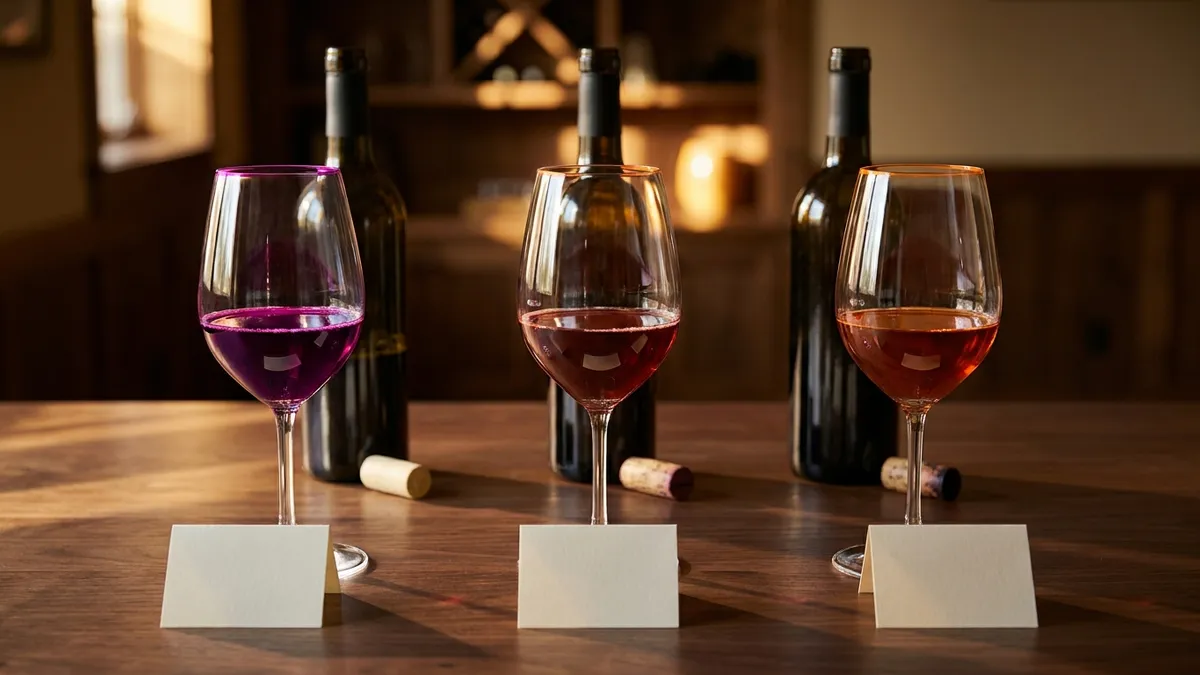
Line up the glasses and compare their colors before smelling anything. Even in the same wine, older vintages are typically paler (whites go toward gold and amber; reds go toward garnet and brick). Color drift is a clean visual record of aging.
2. Smell all three before sipping
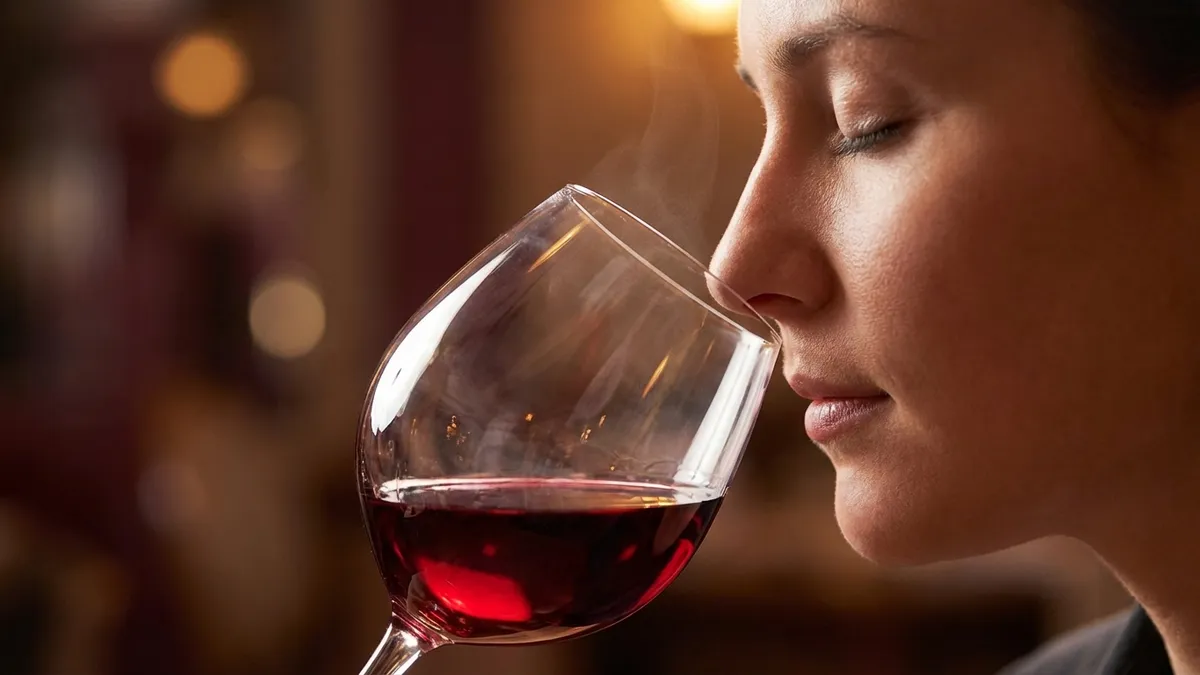
Smell each wine in sequence without sipping any. You are building a mental map of the nose differences. Young wines smell of fresh fruit and new oak. Older wines smell of dried fruit, tobacco, and forest floor.
3. Then sip each one
Tasting on the palate after smelling builds a richer impression because the brain has already loaded aroma expectations. Sip each one, spit or swallow, and move to the next.
4. Go back through the flight a second time
One pass is rarely enough. The second round often reveals layers missed the first time, especially in the oldest wine whose tertiary notes benefit from an open decanter or 15 to 20 minutes of air.
5. Compare specific variables between vintages
Instead of just writing general notes, track specific dimensions across the vintages:
- How did the color change from oldest to youngest?
- How did tannin soften or stay firm?
- How did acidity perception shift?
- Did new aromas appear in the older wines?
- Which vintage is drinking best right now?
- Which has the most life ahead of it?
This structured comparison is where verticals earn their reputation as faster teachers than any other tasting format. Our wine finish meaning guide has more on how the finish specifically evolves across vintages.
What You Will Typically Observe
Patterns that show up in nearly every vertical:
Color drift
Reds move from purple-dominant to garnet-dominant to brick-orange as they age. Whites move from pale lemon-green to gold to amber. The speed of the drift varies by wine, but the direction is consistent.
Tannin softening
Young reds often show firm or grippy tannin on the finish. The same wine at 10 years shows the tannin as a framework that supports the palate rather than dominates it. By 20 years, tannin is often silk.
Fruit evolution
Fresh cherry at 2 years. Cherry preserves at 8 years. Dried cherry and stewed cherry at 15 years. Prune and fig at 25 years. The trajectory is predictable in well-made wines.
Finish lengthening
The finish of a young, tight wine often seems shorter than the finish of the same wine matured. The primary fruit exits quickly while tertiary character hangs on. A great aged wine has a finish that changes three times on the way out.
Typicity consolidation
A young wine often tastes "like itself but louder." The same wine aged tastes more specifically like its grape and place. Brunello tastes more like Sangiovese-from-Tuscany at 15 years than at 5. This consolidation is one of the main reasons serious collectors age wines.
Sommelier note: Not every vertical shows improvement. Some producers and vintages peak earlier than expected and decline visibly. Recognizing decline is as valuable as recognizing improvement.
Common Verticals Worth Trying
Some producers are famous enough that their verticals are a widely accepted education in themselves. A starter list:
- Château Lynch-Bages (Bordeaux) — showcases classical claret aging
- Biondi-Santi Brunello di Montalcino — textbook Italian long aging
- Giacomo Conterno Monfortino — Barolo as a time machine
- Dom Pérignon — Champagne at multiple disgorgement dates
- Château Climens (Sauternes) — great sweet wine vertical
- Paul Jaboulet Aîné La Chapelle Hermitage — iconic Northern Rhône vertical
- Dr. Loosen Ürziger Würzgarten Spätlese (Mosel) — Riesling aging masterclass
- Ridge Monte Bello — New World Cabernet aging
You do not need to own all of these. Wine bars, tasting clubs, and specialty retailers often host verticals of major producers; joining one is easier and cheaper than assembling your own.
Mistakes That Sabotage Verticals
Five common errors flatten the experience:
Serving at inconsistent temperatures
The single biggest killer of a vertical. A slightly warmer glass of older wine seems more "open" than the younger ones, distorting the comparison.
Using different glass shapes
Even a small difference in bowl width changes aroma release. Use identical glasses.
Not decanting older wines
Older wines often need 15 to 20 minutes in a decanter to fully open. Pouring directly from the bottle can make the older wine seem thinner than it is.
Tasting more than 6 wines
Palate fatigue sets in fast. Six is a strong upper limit for a productive vertical. Ten-wine verticals are commercial events with a break halfway through; they require discipline to evaluate accurately.
Treating all vintages as equal
A great year can mask a bad year's flaws; a bad year can be valuable for showing what vintage variation does to a producer's signature. Plan accordingly and know the reputation of the years you are pouring.
Verticals for the Rest of Us
You do not need a famous producer or a deep cellar to run a useful vertical. Three budget-friendly approaches:
1. The three-vintage entry-level vertical
Buy three vintages of an entry-level serious producer — say, a Cru Bourgeois Bordeaux or a Rioja Reserva. Pay $30 to $50 per bottle. The vintages will often be 2, 5, and 8 years old. You learn most of what a $500 vertical teaches for a tenth the cost.
2. The two-vintage mini-vertical
Two bottles is still a vertical. A 2019 and a 2022 Chianti Classico side by side reveals early aging changes cleanly. Run this monthly with different grapes and you have an ongoing aging education.
3. The community vertical
Organize a tasting group where everyone brings a different vintage of the same wine. A group of six contributing one bottle each can put a meaningful six-bottle vertical on the table for the cost of one bottle per person.
The Sommy app's tasting journal captures each wine in a vertical as a separate entry with a vintage field, so you can re-read old verticals years later and compare how your notes on the same producer have shifted over time.
FAQ
How many bottles should I use for my first vertical?
Three is the sweet spot. Two feels too limited to show real evolution; four or more adds complexity faster than it adds learning. Three bottles spaced about 3 to 5 years apart will teach you more than most formal classes.
Is a vertical tasting only for red wines?
No. Verticals work beautifully for age-worthy whites (Chablis, Mosel Riesling, top Burgundy), for Champagne (especially vintage cuvées), and for sweet wines like Sauternes. Any wine designed to age benefits from a vertical format.
What is the difference between a vertical and a horizontal tasting?
A vertical compares the same wine across different years. A horizontal compares different wines from the same year. Verticals isolate time; horizontals isolate producer and terroir. Both are educational and they are different exercises.
Do I need to decant the wines in a vertical?
Older wines benefit, younger wines usually do not. For a vertical, treat each wine on its own terms — decant the older ones 20 to 30 minutes ahead, pour the younger ones directly. Consistency is less important than giving each wine what it needs to show its best.
How old should the oldest wine be?
For a first vertical, 5 to 10 years is a useful maximum. This shows meaningful evolution without requiring a serious cellar. Older verticals (15 to 25 years) are dramatic but harder to source and can include bottle variation that confuses the comparison.
Can I host a vertical with only two vintages?
Yes. A two-vintage tasting is a legitimate mini-vertical and still reveals aging character. Many wine bars run two-wine verticals as an accessible format.
Should I taste blind in a vertical?
Blind tasting in a vertical is a fun advanced exercise — cover the labels and guess the order from youngest to oldest based on color and nose. For most home tastings, revealed is fine; the comparison itself is the education.
The Bottom Line
A vertical wine tasting is the single fastest way to understand how wine ages. Three bottles of the same wine at three ages, served at identical temperature in identical glasses, teach more in one evening than most people learn from a dozen random tastings. Start with a serious but reasonably priced producer, space the vintages 2 to 5 years apart, and keep notes you can re-read years later when you run another vertical of the same wine.
Ready to capture your next vertical in a format that holds up over years? Sommy's tasting journal logs each wine with its vintage, producer, and full tasting note, so a vertical you run today becomes a reference when you taste the same producer again in five years.
Frequently Asked Questions
What is a vertical wine tasting?
A vertical wine tasting compares bottles of the same wine from different years, with producer and cuvée held constant and only the vintage changing. Everything you notice between glasses traces to the weather, the vineyard conditions, and the time each wine has spent in bottle. It isolates aging and vintage variation as the only real variables.
How many bottles should I use for my first vertical?
Three is the sweet spot for a first vertical. Two feels too limited to show real evolution, while four or more adds complexity faster than it adds learning. Three bottles spaced three to five years apart teaches most of what verticals are capable of teaching without overwhelming your palate or requiring a large group.
What is the difference between a vertical and a horizontal tasting?
A vertical compares the same wine across different vintages. A horizontal compares different wines from the same vintage. Verticals isolate time and show how one wine ages. Horizontals isolate producer and terroir, showing how different winemakers handle the same year. Both formats are educational, but they are answering different questions about a region or style.
Is vertical tasting only for red wines?
No. Verticals work beautifully for age-worthy whites like Chablis, Mosel Riesling, and top white Burgundy, for Champagne and especially vintage cuvées, and for sweet wines like Sauternes. Any wine style designed to age benefits from a vertical format. Light fresh whites and everyday reds rarely show meaningful vertical character because they are meant for early drinking.
In what order should I pour the wines?
Both orders exist. The traditional approach is oldest first, so the most delicate and evolved wine gets your freshest palate. Most sommelier exams and serious tastings use this protocol. The alternative is youngest to oldest, which emphasizes the progression of aging and is more intuitive as a narrative. Oldest-first is more accurate, youngest-first more dramatic.
Do I need to decant the wines in a vertical?
Older wines often benefit from fifteen to twenty minutes of decanting, while younger wines usually do not. Treat each wine on its own terms instead of forcing a single protocol across the flight. Consistency matters less than giving each bottle what it needs to show its best, so older bottles get the decanter and younger ones go straight to the glass.
How old should the oldest wine in my vertical be?
For a first vertical, five to ten years is a useful upper limit. That range shows meaningful evolution without requiring a serious cellar or exposing you to bottle variation. Older verticals covering fifteen to twenty-five years are dramatic but harder to source, and inconsistent storage across bottles can confuse the comparison rather than clarify it.
Sommy Team
LinkedInFounder & Wine Educator
The Sommy Team is building the world's most approachable wine education app, helping beginners develop real tasting skills through structured courses and AI-guided practice.