Wine Tasting Etiquette: The Unwritten Rules

By the Sommy Team — AI-assisted, human-edited.
Updated Apr 29, 2026
Contents (10)
- TLDR
- The Seven Universal Rules of Wine Tasting Etiquette
- Why the Rules Exist (Briefly)
- The Seven Rules in Detail
- Context Layers — Etiquette by Setting
- Host Etiquette — How to Pour for Others
- Common Faux Pas to Avoid
- Tipping, Buying, and Saying Thank You
- How Sommy Helps You Practice the Rules at Home
- The Bottom Line
TL;DR
Wine tasting etiquette is mostly invisible until you break it. Hold the glass by the stem, smell before you sip, spit during long flights, skip strong perfume, pour two to three ounces, stop performing your palate, and compliment when something is good. Context layers — restaurant, winery, dinner — sit on top of those seven basics.
TLDR
Wine tasting etiquette is mostly invisible until you break it. Hold the glass by the stem, smell before you sip, spit during long flights, skip strong perfume, pour two to three ounces, stop performing your palate, and compliment when something is good. Context layers — restaurant, winery, dinner — sit on top of those seven basics.
The Seven Universal Rules of Wine Tasting Etiquette
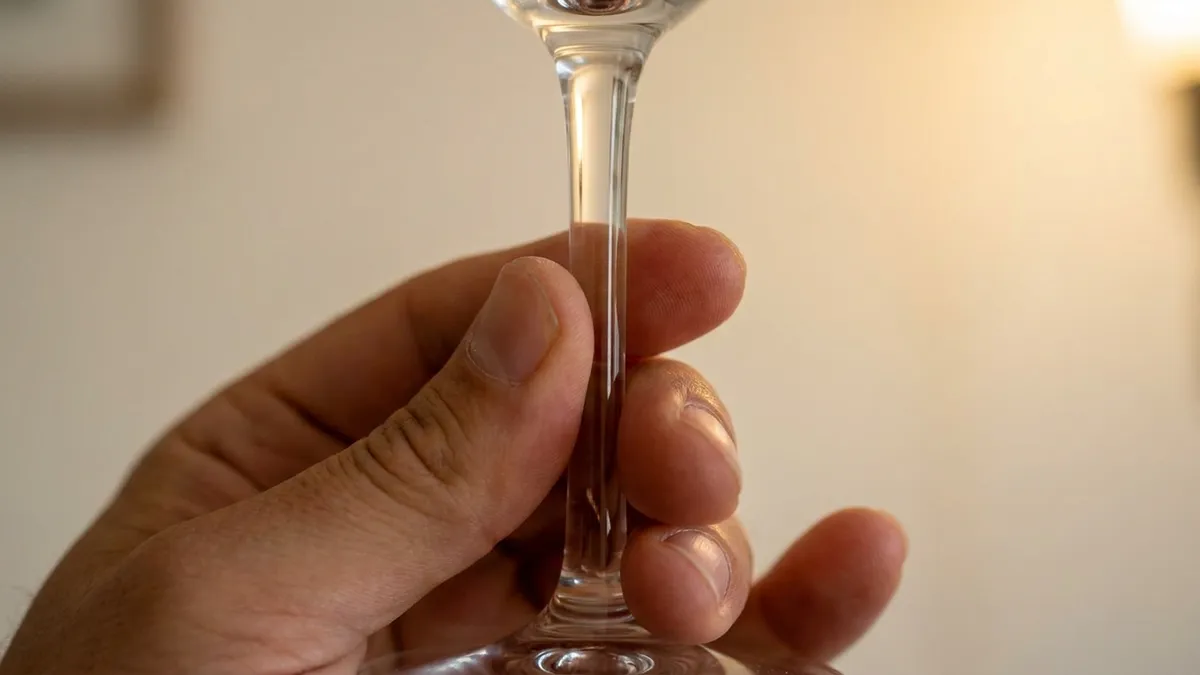
The core of wine tasting etiquette comes down to seven habits that work in every context. First, hold the glass by the stem — the thin part below the bowl — to keep your hand from warming the wine and smudging the glass. Second, smell before you sip; rushing the nose is the most common giveaway of a beginner. Third, spit when offered, especially in flights of four or more. Fourth, leave strong perfume and cologne at home. Fifth, pour tasting measures of two to three ounces, not full glasses. Sixth, stop performing your palate. Seventh, compliment when something is good and stay quiet when it is not. Everything else is context.
Why the Rules Exist (Briefly)
Most wine etiquette feels arbitrary until you understand the reason behind it. The reasons are practical, not aesthetic.
Stem grips protect serving temperature. Spitting protects your palate over a long flight. The no-perfume rule protects everyone's nose, not just yours. Small pours give you enough wine to evaluate without dulling your senses by glass three. Honest comments build conversation; performances kill it.
Once the reason clicks, the rule sticks. You stop following etiquette because someone told you to, and start following it because the alternative ruins the wine.
The Seven Rules in Detail
1. Hold the glass by the stem
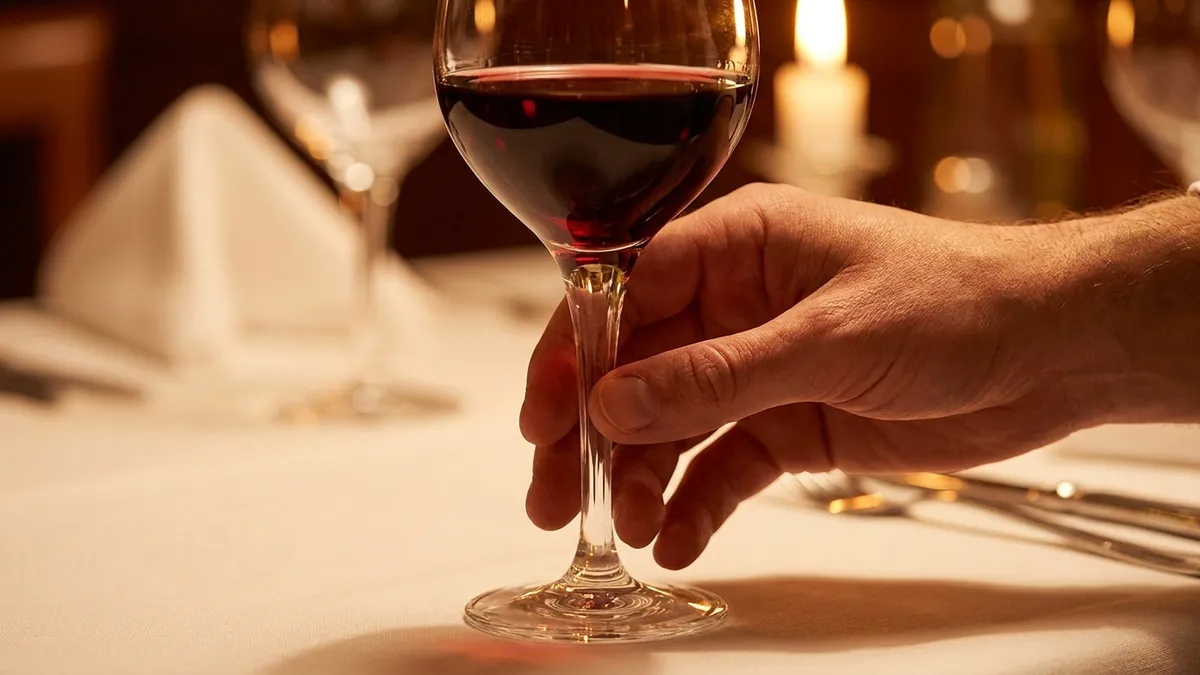
The bowl of a wine glass is for the wine. The stem is for your hand. Wrapping your palm around the bowl warms a chilled white in under a minute and leaves smears that hide the wine's color. Both matter when the host is pouring carefully chilled glasses for a comparison.
The cradle grip — thumb and two fingers on the stem just below the bowl — is the safest. The pinch grip — thumb and index finger on the base — is what sommeliers use during professional tastings. Either is fine. Anything that touches the bowl is not. The grip for each glass, from flute to snifter, is set out in how to hold a wine glass.
2. Smell before you sip
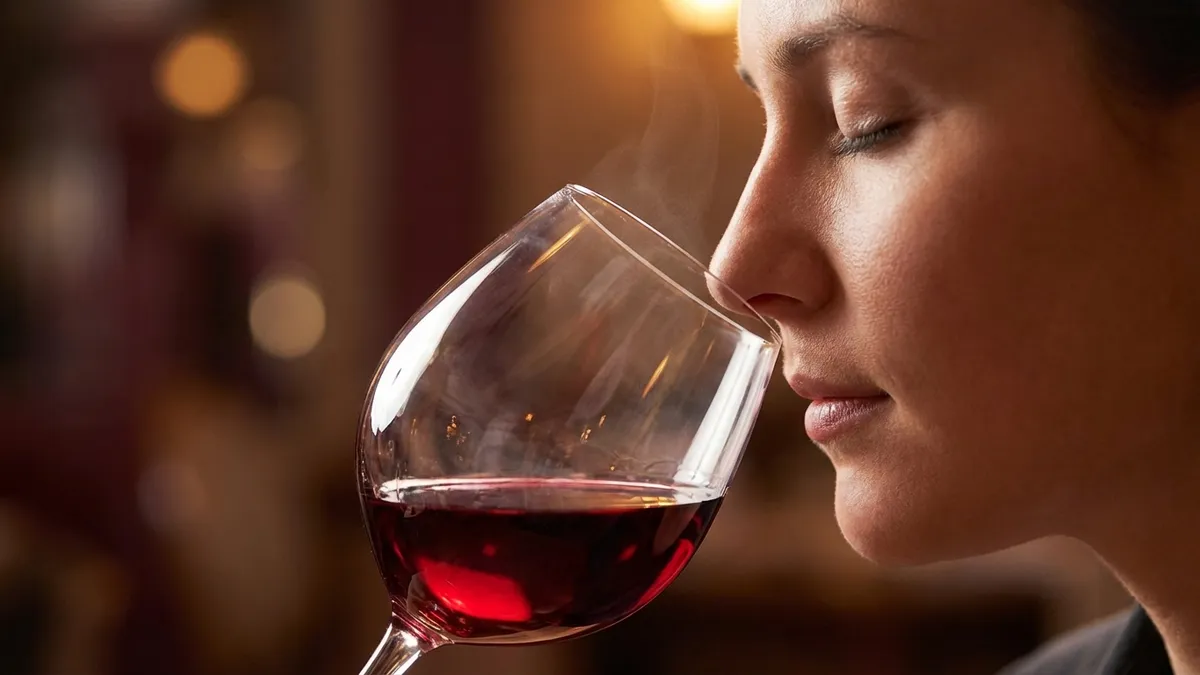
The most common beginner mistake is sipping first and sniffing second, or skipping the smell entirely. Most of what we call flavor — the perception that combines taste and aroma — is actually smell. Skipping the nose throws away three-quarters of the information.
Lower your nose into the glass. Inhale gently for one or two seconds. Pull back, think about what you smelled, and then sip. The host will notice the pause. So will the wine.
3. Spit during long flights
Tasting flights of four or more wines add up fast. Six two-ounce pours equals about a glass and a half of wine. Drink all of it across an hour-long tasting and the last two wines blur into the first two. Spitting protects your palate.
Lean forward, bring the dump bucket close to your chin, and release the wine in a controlled stream through pursed lips. Practice in the sink at home if it feels awkward. Our how to spit at a wine tasting guide walks through the mechanics in detail.
4. Skip strong perfume and cologne
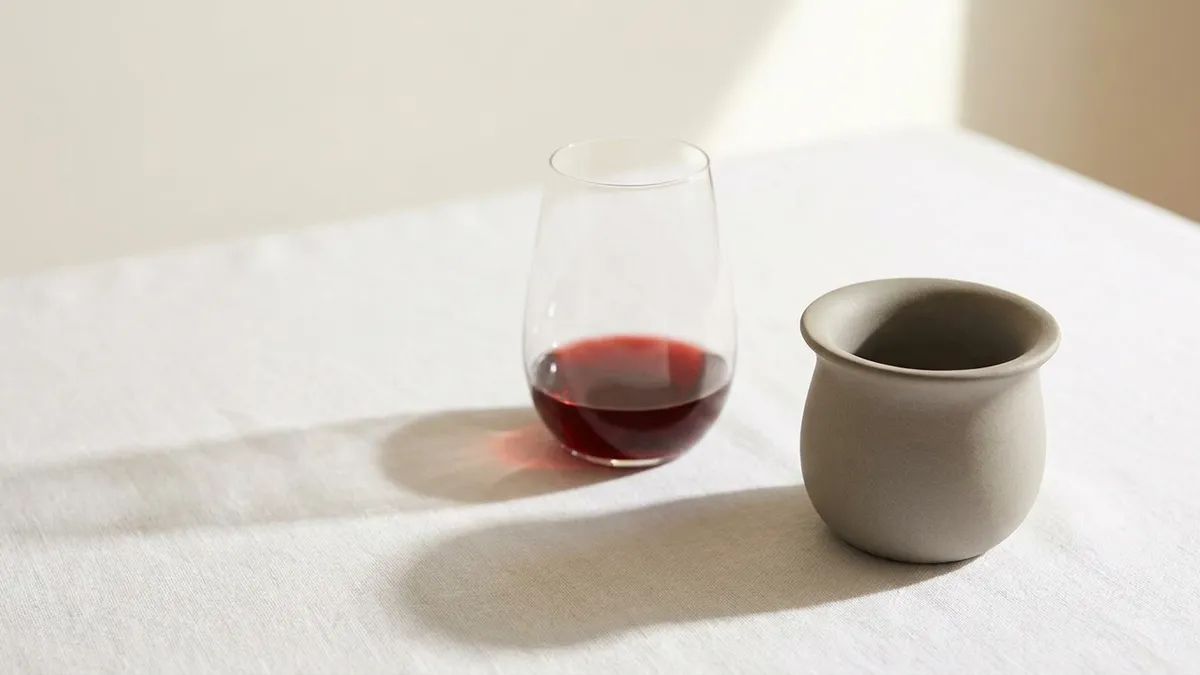
Heavy scent is the single most disruptive thing you can wear to a tasting. It interferes with your own ability to smell the wine and also with the noses of everyone within a few feet of you. Hosts notice immediately. Other guests will not say anything but will quietly resent you.
Skip perfume, cologne, scented lotion, and aggressive hair products on tasting days. A neutral deodorant is fine. Wash your hands before arriving — coffee and citrus residues on fingers can transfer to the glass.
5. Pour tasting measures, not full glasses
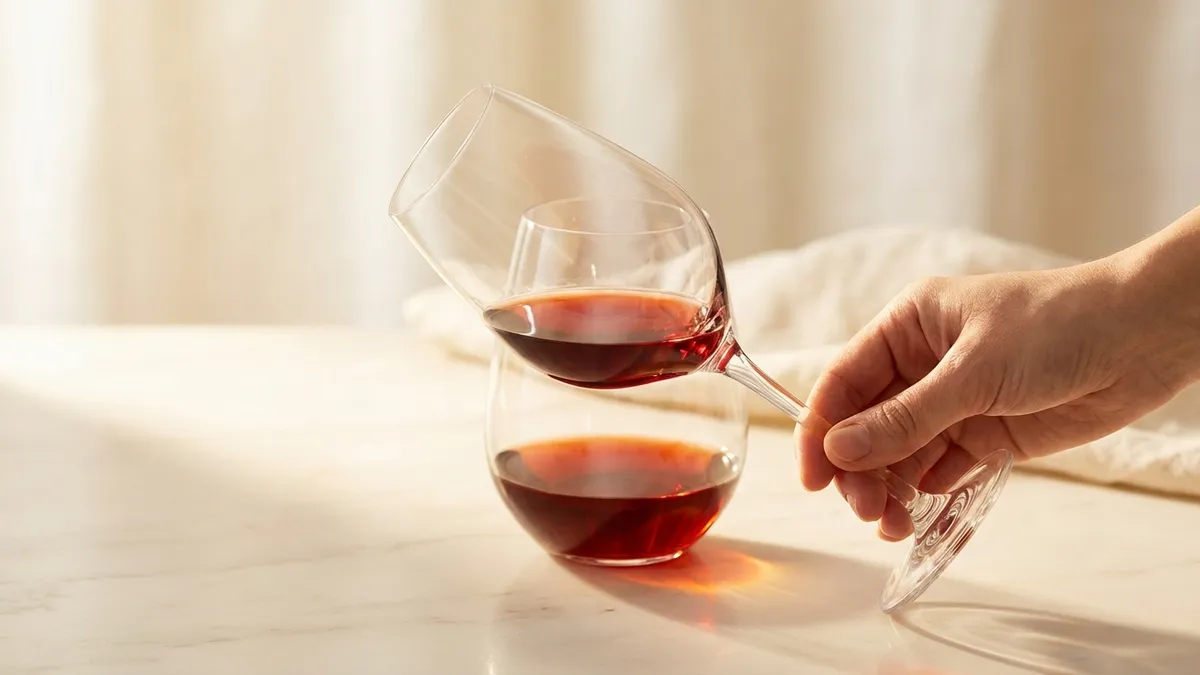
Tasting pours are two to three ounces. That is roughly a quarter of a standard wine glass. The shape of the pour matters: it should not rise above the widest part of the bowl, because the empty space above the wine is where the aromas — volatile compounds released by the wine — collect when you swirl.
Filling a tasting glass to the brim is the move of someone who does not understand what the glass is for. Hosts pour small. Guests should pour small. Do not refill yourself or your neighbour past the right line at a tasting.
6. Stop performing your palate
The fastest way to mark yourself as inexperienced is to perform expertise. Every tasting room host, sommelier, and serious wine drinker can spot the performance within ten seconds — the borrowed vocabulary, the dramatic swirls, the loud verdicts on every pour. The real experts taste quietly and ask questions.
Honest reactions work better. "This one reminds me of green apple." "It's fuller than I expected." "I cannot tell what I am smelling — what should I notice?" Those phrases open conversation. A confident verdict on a wine you have known for ninety seconds closes it.
If you want to deepen your tasting voice without sounding fake, our wine tasting vocabulary cheat sheet gives you plain-language anchors instead of borrowed sommelier adjectives.
7. Compliment when good, stay quiet when not
Hosts and home cooks pour wine because they want you to enjoy it. When something is good, say so — specifically and sincerely. "The acidity on this is gorgeous, I can taste lemon zest" is a real compliment. "This is amazing!" is filler.
When a wine disappoints, you have two polite options: stay quiet, or ask a question. Loud criticism is rude in a way the quiet dump is not. Pour the rest into the bucket, smile, and move on. Nobody is owed your praise; everyone is owed your manners.
Context Layers — Etiquette by Setting
The seven rules above apply everywhere. Each setting adds its own layer.
At a restaurant
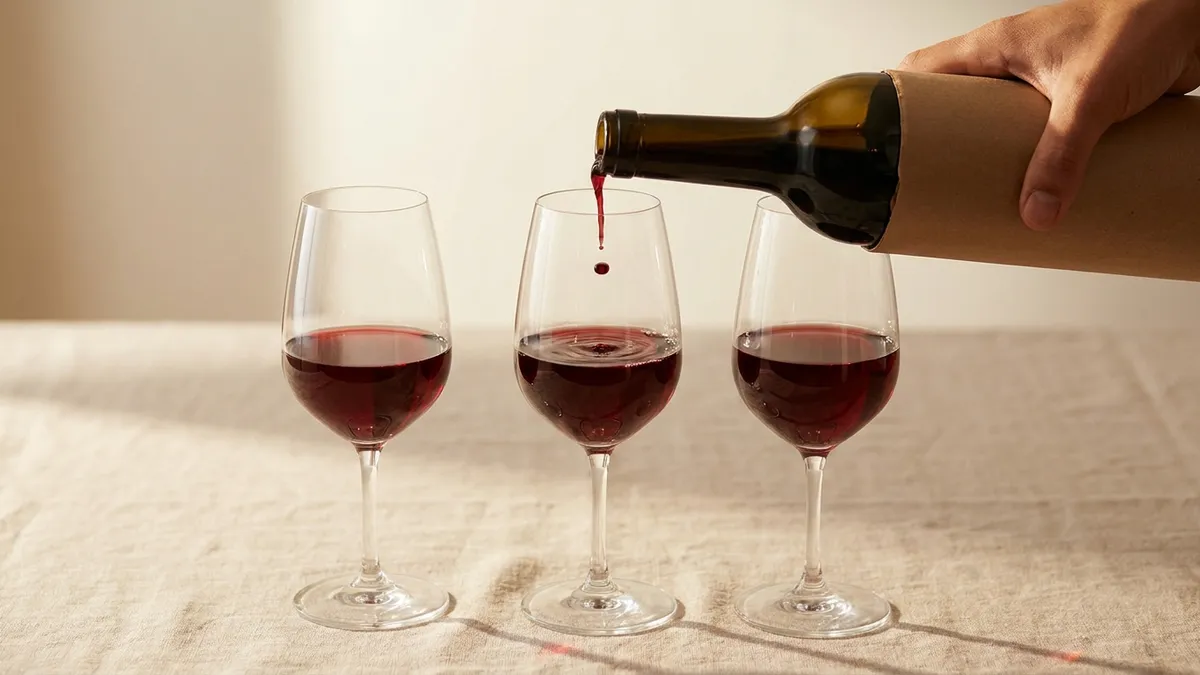
When the bottle arrives, the server pours a small taste for whoever ordered. That sip is not for you to judge whether you like the wine — it is to confirm the wine is not flawed. Cork taint — a musty, wet-cardboard smell from contaminated cork — and oxidation — a flat, sherry-like character from air exposure — are the two faults to listen for. If neither is present, nod and let the server pour. Sending a wine back because you changed your mind on the style is not done.
If you suspect a fault, say so plainly. "I think this might be corked — could you take a look?" The server will smell it themselves and either agree or bring the sommelier. No drama, no defense of your palate. Our how to tell if a wine is corked guide walks through the smell test.
Pass the bottle to the right at a sit-down table when serving yourself. Refill your immediate neighbours before you refill your own glass. Leave wine in the glass when you are done — an empty glass at a long dinner reads as a request for more.
At a winery tasting room
Booking ahead is the new standard at most estates. Arrive five minutes early, not thirty. Tip if the service was personal and tipping is customary in that country — ten to twenty percent on the tasting fee in the United States, generally not expected in most of Europe. Buy a bottle if a wine moved you, but never feel obliged to buy something you did not love.
Our wine tasting at wineries guide is the dedicated walkthrough for cellar-door visits, including pacing across multiple stops and how to talk to a host without faking knowledge.
At a formal dinner
The host pours, the host leads. Wait for the host to raise the first glass before you drink. At more traditional tables, the toast comes before the first sip — making eye contact with the host during the toast is the small detail people remember.
Do not switch glasses or pour your own from a different bottle. Do not photograph other guests. Eat the food the wine was chosen for; declining a course because you are watching carbs at a wine-paired dinner is the wrong room for that conversation. If you genuinely cannot drink, decline the entire pairing politely at the start, not glass by glass through the evening.
At a casual friend's home
The rules relax but do not disappear. Bring a bottle as a gift; do not insist your host opens it that night. The host has likely already chosen the wines for the meal, and a guest's bottle disrupts the pairing plan.
When asked your opinion, give it honestly and kindly. "I really love this one — what is it?" beats "Oh, it's fine." For more questions that keep a table talking, see these wine conversation starters. If you brought the bottle yourself, do not make a long speech about why you chose it. Let the wine introduce itself.
At a blind tasting
Blind tasting flips the etiquette. The point is to evaluate the wine without knowing what it is, so commenting on the bottle, the producer, or the price is a violation. Keep your guesses to yourself until the reveal — broadcasting your guess pulls the rest of the room toward your bias.
If you want the structured version of this exercise, our blind wine tasting tips and deductive wine tasting method walk through how to think about a glass when you have no label to lean on.
Host Etiquette — How to Pour for Others
Hosting a tasting at home reverses every rule. Now you are the one setting pace and pour size.
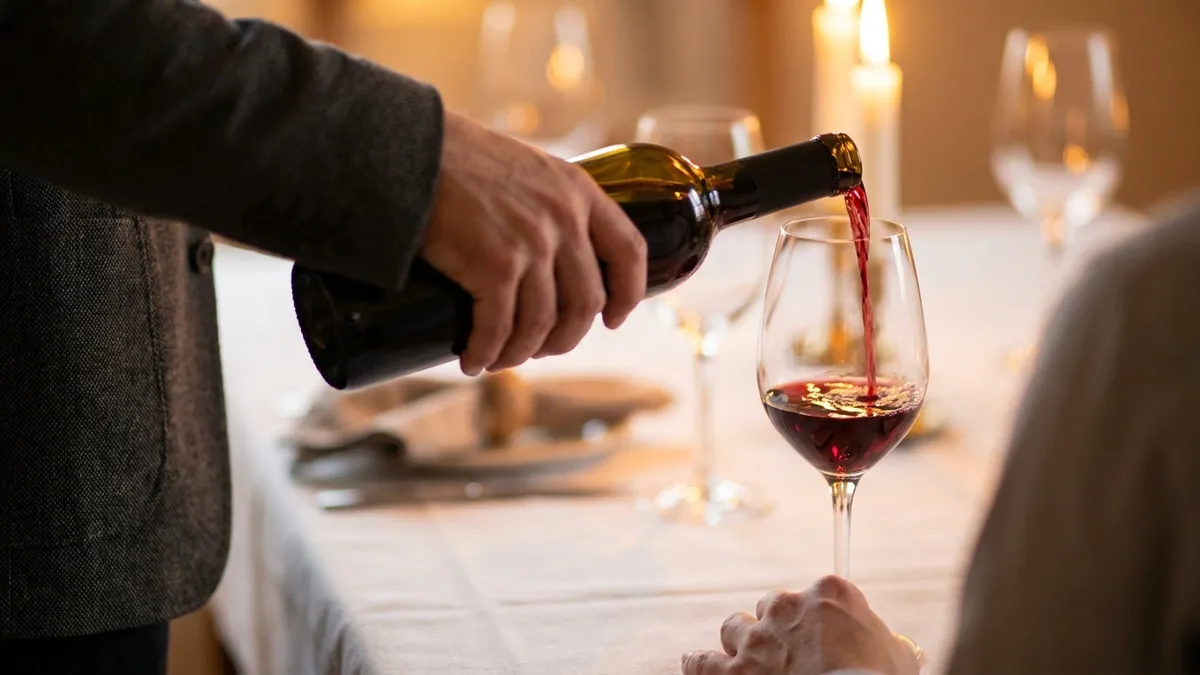
- Pour two to three ounces per glass for tastings. Save the bigger pours for casual drinking.
- Open whites at least an hour before guests arrive and chill to the right temperature. Reds usually want a small amount of breathing time, not hours.
- Provide water on the table from the start. Plain crackers or unsalted bread sit on the side as palate cleansers.
- Pace the tasting at one wine every twelve to fifteen minutes. Faster, and guests cannot keep up. Slower, and the room flattens.
- Pour for each guest one at a time, always from the right, with a small twist of the bottle at the end of the pour to catch the drop.
If you want help structuring the flight itself — light to heavy, white to red, dry to sweet — our wine tasting order guide covers the logic. For a full party plan, wine tasting party guide handles the bigger picture.
Common Faux Pas to Avoid
A few specific things mark a tasting as gone wrong.
- Wearing strong perfume to a serious tasting. Already covered. Worth repeating because it ruins the room.
- Holding the glass by the bowl during a flight. The temperature drift on a chilled white is visible within a minute.
- Loud verdicts on every wine. Either real expertise stays quiet, or curiosity stays curious. The middle ground — confident criticism without the depth to back it — is what people remember.
- Asking the host for a wine that is not on the flight. The lineup was designed; deviating from it disrupts the pacing for everyone else.
- Photographing other guests, the host, or sommeliers without permission.
- Treating the tasting fee as an all-you-can-drink ticket and finishing every pour. Spit. Dump. Pace yourself.
- Bringing your own bottle to a winery tasting room. This is a serious breach in any region.
Tipping, Buying, and Saying Thank You
Tipping varies wildly by country. In the United States, ten to twenty percent on a tasting fee is appreciated when service was attentive. In most of Europe, tipping a tasting host is not expected and can feel awkward. In Australia and New Zealand, it is rare. When in doubt, ask the reservation team when you book — checking ahead is normal.
Buying is never required. Hosts at well-run estates are trained not to push. If a wine genuinely moved you, buying a bottle or joining a wine club is the gracious move. If nothing did, a sincere thank-you and a follow on the winery's social channels is enough. The host remembers the guest who was curious and present, not the guest who bought the most.
A short message of thanks after a private dinner — a text the next day, a postcard from the road — is the kind of detail that gets you invited back.
How Sommy Helps You Practice the Rules at Home
The best way to make this etiquette feel natural is to do it in your own kitchen long before you sit at a tasting counter. The Sommy app at sommy.wine walks you through structured tasting sessions one wine at a time — the swirl, the smell, the sip, the spit, the note — until the rituals stop feeling like rules and start feeling like the way wine actually wants to be tasted.
If you want to deepen the technique side, how to taste wine covers the full sequence and develop your wine palate covers the long-term habits. Both pair naturally with the etiquette here.
The Bottom Line
Wine tasting etiquette is not a code for the elite. It is a short set of small habits that protect the wine, your palate, and the people around you. Hold the glass by the stem. Smell first. Spit when the flight is long. Skip the perfume. Pour small. Stop performing. Compliment what you love, stay quiet about what you do not.
Do those seven things and the rest of the room will assume you belong there — because at that point, you do.
Frequently Asked Questions
What is the most important rule of wine tasting etiquette?
Hold the glass by the stem and not the bowl. It keeps the wine at its serving temperature, keeps fingerprints off the glass during a comparison, and signals to a host that you understand how to treat the pour. If you remember nothing else from any guide, remember that single gesture and most people will assume the rest.
Is it polite to spit wine during a tasting?
Yes, especially in flights of four or more, at trade tastings, or any time you want to stay clear-headed. Hosts and sommeliers spit constantly. The dump bucket on the counter is there for that exact reason. Spitting is a signal that you are taking the wine seriously, not that you dislike it.
Can I refuse a wine I do not like at a tasting?
Yes — politely and quietly. Pour the rest into the dump bucket without a long speech about why. Saying 'this one is not for me, thank you' is enough. Loud public criticism is the rude move, not the dump itself. Hosts pour hundreds of wines a week and have heard every reaction.
Do I need to compliment every wine I am served?
No. Genuine reactions are more useful than empty praise. Compliment what you actually like, ask a question about wines that puzzle you, and stay quiet about wines that disappoint. Hosts and home cooks both prefer honest curiosity to hollow approval. Lying about a wine you dislike is the version of politeness that backfires.
Is it rude to swirl wine aggressively?
It is more clumsy than rude. A gentle three-rotation swirl with the glass on the table releases enough aroma. Lifting the glass and whipping it through the air at a tightly packed counter risks splashing other guests and looks like performance. Save the dramatic swirl for your kitchen and keep it small in public.
Should I wear perfume or cologne to a wine tasting?
No. Strong scent interferes with your own ability to smell the wine and also with everyone else around you. Skip perfume, cologne, scented lotion, and heavily fragranced hair products on tasting days. A neutral deodorant is fine. Tasting rooms and serious dinners take this seriously, and the courteous move is to arrive scent-free.
Is it okay to take photos at a wine tasting?
A quick photo of your own glass or the bottle label is usually fine. Photographing other guests, the pouring host, or a sommelier without asking is not. At a private dinner, a single discreet shot of the table early in the evening is the limit. Constant phone use breaks the conversation that tastings are built around.
How do I gracefully decline more wine without being rude?
Cover the glass briefly with two fingers as the host approaches, smile, and say 'I am good for now, thank you.' At a sit-down dinner, leaving wine in your glass is the universal sign that you do not want a top-up. Hosts read both signals immediately. No one is offended when you stop drinking.
Sommy Team
LinkedInFounder & Wine Educator
The Sommy Team is building the world's most approachable wine education app, helping beginners develop real tasting skills through structured courses and AI-guided practice.