Full-Bodied Red Wine: The Big Reds, Grape by Grape (Chart)
By the Sommy Team — AI-assisted, human-edited.
Updated Nov 3, 2026
Contents (11)
- What Makes a Red Wine Full-Bodied, in One Paragraph?
- Which Red Grapes Make Full-Bodied Wine?
- What Are the Three Dials Behind a Big Red?
- Is Cabernet Sauvignon the Benchmark Big Red?
- Why Are Zinfandel, Mourvèdre and Amarone So Strong?
- Which Big Reds Run on Tannin?
- Can a Pale Red Be Full-Bodied?
- Why Is the Same Grape Bigger in One Place Than Another?
- Does 14% or 15% Alcohol Mean It Will Taste Heavy?
- What Food Goes With a Full-Bodied Red?
- How Do You Serve a Big Red and Ease Into Them?
TL;DR
A full-bodied red wine is big because alcohol, tannin or concentration is turned up. Zinfandel and Amarone run on alcohol, Tannat and Nebbiolo on tannin, Cabernet Sauvignon on small thick-skinned berries. Place moves the dials: Malbec from Cahors and Tannat from Madiran carry more grip than versions from Argentina or Uruguay.
A full-bodied red wine feels heavy and mouth-filling because at least one of three dials is turned up: alcohol, tannin or concentration. The grape decides which dial it turns. The place it grows, and what the winemaker does, decide how far. Malbec from Argentina tastes plush, while Malbec from Cahors in south-west France grips the gums hard.
What Makes a Red Wine Full-Bodied, in One Paragraph?
Body is the weight of wine in your mouth, like whole milk next to skimmed. The concept is covered in what wine body is. A red becomes full-bodied in three ways. Heat ripens grapes to more sugar, which ferments into more alcohol, often 14% and up. Thick skins add tannin (the drying grip on your gums). Small berries and dried grapes concentrate flavour into less juice. Zinfandel, Mourvèdre and Amarone lean on alcohol. Tannat, Nebbiolo and Petite Sirah lean on tannin. Cabernet Sauvignon turns all three.
Which Red Grapes Make Full-Bodied Wine?
Eight grapes make most of the well-known big reds, plus Amarone, which is big because of a method. Most of the eight have small, thick-skinned berries or need a long, hot season to ripen. The chart shows which dial each one turns and when to reach for it.
| Grape or wine | Main dial | Tastes of | Biggest from | Pick it if |
|---|---|---|---|---|
| Cabernet Sauvignon | Tannin and concentration | Blackcurrant, cedar | Warm, sunny sites | You want the classic steak red |
| Syrah / Shiraz | Alcohol when hot, tannin when cooler | Blackberry, black pepper | Hot regions such as Barossa | You like pepper and ripe fruit |
| Malbec | Concentration and alcohol | Ripe plum, blackberry | Mendoza (soft), Cahors (firm) | You want a big red with a soft edge |
| Zinfandel / Primitivo | Alcohol, often over 15% | Blackberry jam, raisin | California, Puglia | You like fruit ripe enough to seem sweet |
| Mourvèdre / Monastrell | Tannin and alcohol | Blackberry, meat, dried herbs | Bandol, south-east Spain | You want savoury depth for lamb |
| Petite Sirah | Tannin and colour | Blueberry, black pepper | California | You want the darkest wine on the shelf |
| Tannat | Tannin, very high | Black plum, strong tea | Madiran (firm), Uruguay (softer) | The plate has fatty meat |
| Nebbiolo | Tannin and acidity, pale colour | Cherry, roses, tar | Barolo, Barbaresco | You want grip without a dark glass |
| Amarone | Concentration and alcohol from dried grapes | Raisin, dried cherry, cocoa | Valpolicella, near Verona | The dish is slow-cooked |
Each grape has its own full guide: Cabernet Sauvignon, Malbec, Tannat, Petite Sirah and the rest are linked below.
Quick check
One question on what you just read
A young Nebbiolo looks pale in the glass. What should you expect when you sip it?
Tap an answer to see how you did.
What Are the Three Dials Behind a Big Red?
Alcohol comes from heat, tannin from skins, and concentration from small berries or dried grapes. Most big reds lean hard on one dial and lightly on the others. So two wines of similar weight can feel very different: one warm and round, the other dry and gripping.
Alcohol adds weight and warmth. Grapes grown in hot climates build more sugar, and yeast turns that sugar into alcohol. Researchers still argue over how much ethanol alone adds to body: early studies said a lot, later ones found less. Glycerol, often credited with thickness, showed no detectable effect on viscosity below 25 grams per litre in the research summarised by a 2019 study. Those tests were mostly on white or model wine, so the case for red wine is still open.
Tannin comes from skins, seeds and oak. Small, thick-skinned berries give more of it. Tannin feels like grip, not weight, so a tannic wine can still be medium in body. Research ties it mainly to astringency (the drying, puckering feel on gums and tongue).
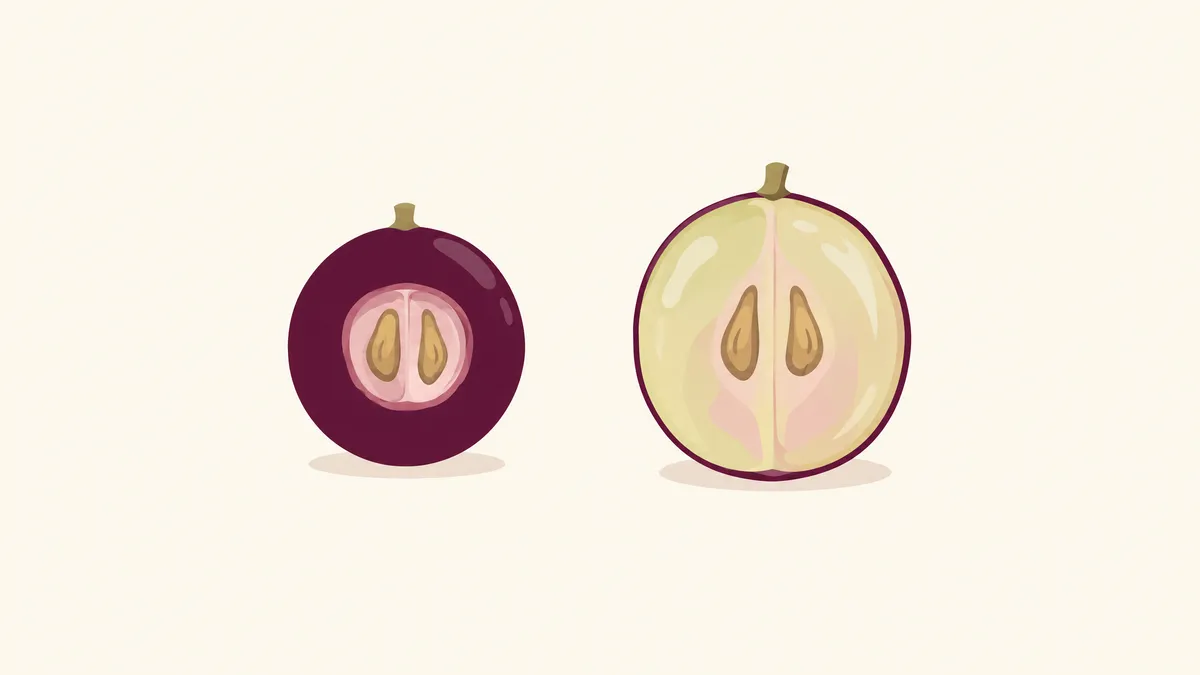
Concentration, sometimes called extract (the solids left once water and alcohol are gone), rises when there is less juice per berry. Small berries do it on the vine. Drying grapes after harvest does it in a loft, which is the Amarone route. For the scale from light to full, wine body explained walks through each step.
Is Cabernet Sauvignon the Benchmark Big Red?
Yes. Cabernet Sauvignon's classic profile is a full-bodied wine with high tannin, because its berries are small and thick-skinned. A lot of skin and little juice means plenty of colour and grip in every glass. DNA typing in 1996 showed the grape is a cross of Cabernet Franc and Sauvignon Blanc.
Warm sites turn the alcohol dial up as well, adding riper blackcurrant. Cool sites keep the tannin but lose some weight. Merlot is the grape people most often compare it with, and sources disagree on whether Merlot is medium or full. Ripeness decides: a warm-climate Merlot at 14% feels full, a cooler one at 13% sits in the middle, and both have softer tannin than Cabernet. The Cabernet Sauvignon vs Merlot side by side covers the rest.
Why Are Zinfandel, Mourvèdre and Amarone So Strong?
All three are big on alcohol, and the alcohol comes from extra sugar in the grapes. Zinfandel gets it from uneven ripening, Mourvèdre from a long, hot season, and Amarone from drying the grapes after harvest. Mourvèdre and Amarone then add tannin or concentration on top of that alcohol.
- Zinfandel ripens unevenly, so some berries in a bunch shrivel while others catch up. Its sugar can ferment past 15% alcohol, and Primitivo, the same grape in Puglia, reaches 16%. See the Zinfandel guide and the Primitivo guide.
- Mourvèdre, called Monastrell in Spain, buds and ripens very late. It needs long heat to ripen, and ripens most reliably in warm Bandol in Provence. Its small, thick-skinned berries add tannin on top of alcohol, covered in the Mourvèdre guide.
- Amarone uses appassimento (drying picked grapes for months before fermenting). The shrivelled grapes concentrate sugar, and the law sets a minimum of 14% alcohol. Many bottles pass 15%. The Amarone guide explains the drying lofts.
If the label on any of these reads 15% or more, pour smaller glasses and serve the wine cooler than room temperature, so the alcohol does not dominate.
Which Big Reds Run on Tannin?
Tannat, Petite Sirah and cooler-climate Syrah feel big mainly through grip. All three release a lot of tannin from their skins during fermentation, and that dry, rough feel on the gums reads as weight even when the alcohol is modest.
Tannat is known for very high tannin, which is why producers in Madiran often blend it to soften it. Micro-oxygenation (bubbling tiny amounts of oxygen through wine in tank) was developed in Madiran to tame that grip.
Petite Sirah is a cross of Syrah and Peloursin. "Petite" refers to the size of its berries. The wines are dark, inky and relatively acidic, so they taste fresher than their colour suggests.
Syrah splits in two. In cooler places such as the northern Rhône it makes medium to full-bodied wines with firm tannin and black pepper. In hot Barossa, labelled Shiraz, it is fuller, softer in tannin and jammier. The Syrah vs Shiraz page sets the two side by side.
Can a Pale Red Be Full-Bodied?
Yes. Nebbiolo is light in colour and still one of the most tannic, high-acid reds there is. Young Nebbiolo is light ruby, smells of tar and roses, and dries the mouth hard. With age it turns a brick-orange at the rim.
Colour shows how much pigment came out of the skins, not how heavy the wine is. Nebbiolo has thin pigment and a lot of tannin, so it looks like a light red and drinks like a big one. Barolo and Barbaresco, both 100% Nebbiolo, are the classic examples, compared in Barolo vs Barbaresco.
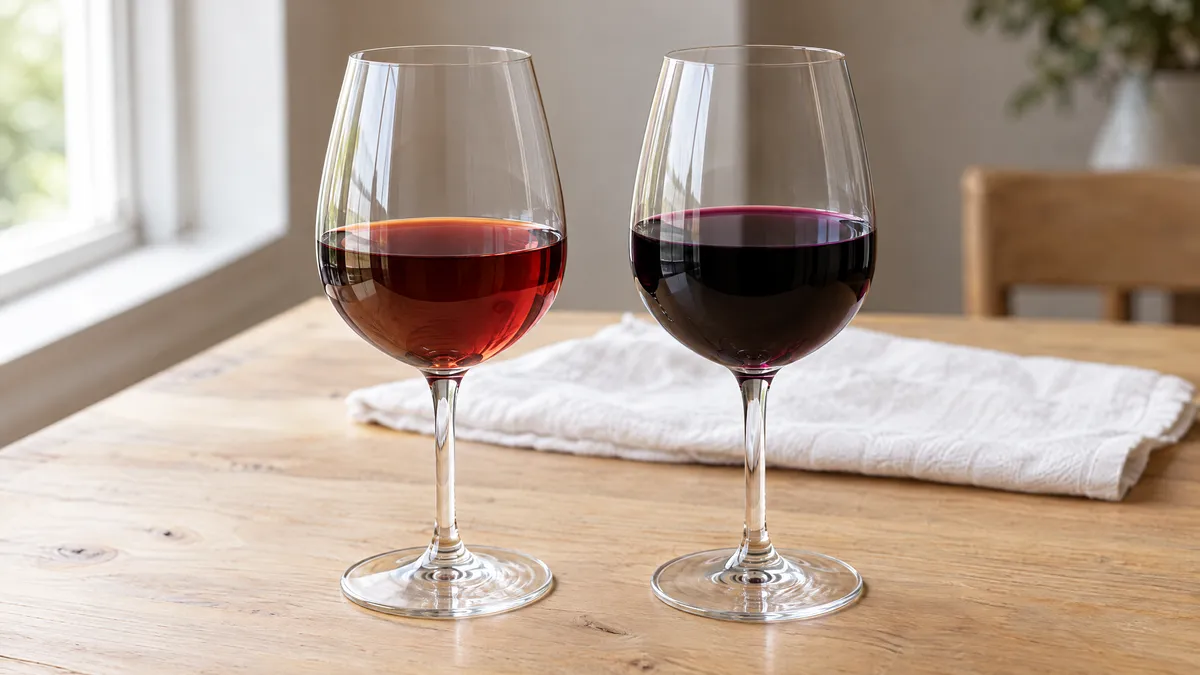
If a red looks pale but the label says Nebbiolo, Barolo or Barbaresco, plan food with fat and protein, as for a Cabernet.
Why Is the Same Grape Bigger in One Place Than Another?
Because heat, altitude and winemaking change how ripe the grapes get and how much tannin goes into the wine. Tannat and Malbec show it clearly, because each grows both in south-west France and in South America, and the two homes make wines of clearly different weight.
Tannat from Uruguay is lighter in body and lower in tannin than Tannat from Madiran. Malbec from Cahors in south-west France is darker and more tannic, while Argentine Malbec is plusher and lacks that tannic structure. The best Mendoza vineyards sit at 800 to 1,500 metres in the Andes foothills.
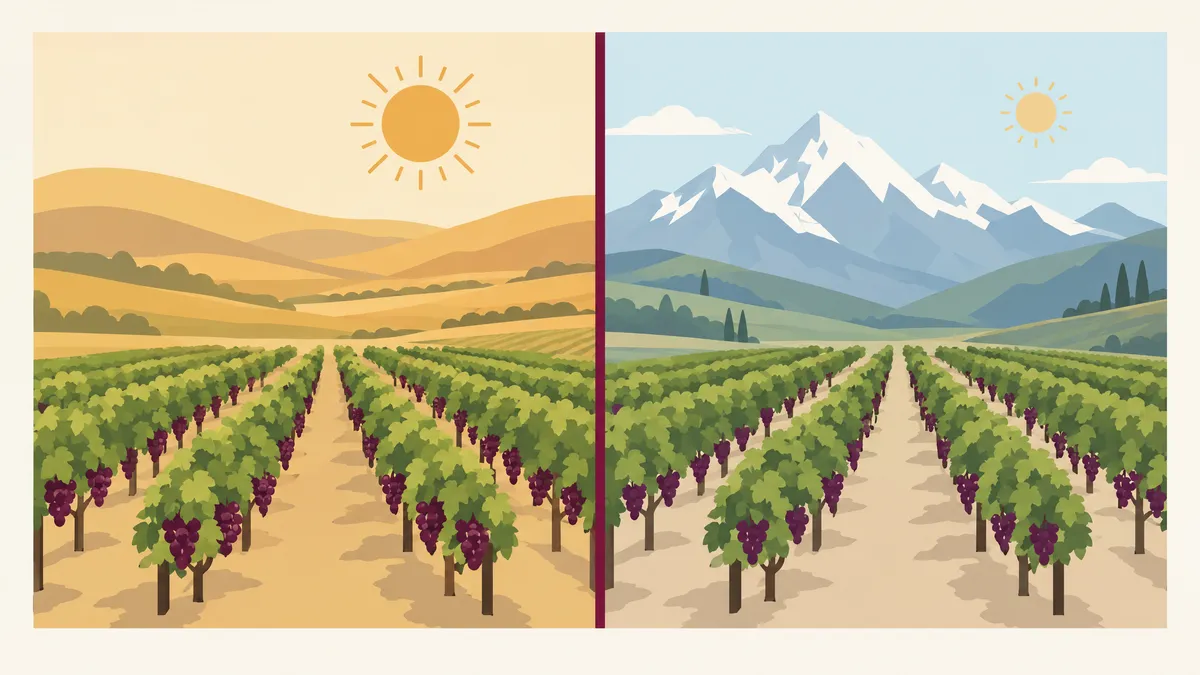
A warm climate (riper and stronger wine) turns the alcohol dial up. A cool climate (tarter and lighter wine) or a high site holds it back. The Malbec vs Cabernet Sauvignon comparison shows where Argentine Malbec lands next to Cabernet.
If the label says Cahors or Madiran, expect firm grip and pick a fatty dish. If it says Mendoza or Uruguay, expect softer tannin and a red you can drink on its own.
Does 14% or 15% Alcohol Mean It Will Taste Heavy?
Usually heavier, though not always. Wine Folly puts the line at 14%: wines at that strength and up feel richer. Other sources draw it at 13.5%, so read any single number as a rough guide. Acidity and tannin shift how the alcohol feels.
A high-acid Nebbiolo at 14% feels lifted; a low-acid Zinfandel at 15% feels round and warm. Alcohol levels by style are charted in alcohol in wine by type.
If the label reads 14.5% or more and the region is warm, expect a big red. If it reads under 13.5% from a cool or high site, expect medium body, even from a grape on the chart above.
What Food Goes With a Full-Bodied Red?
Fat and protein. They soften the drying grip of tannin, so the wine tastes rounder and the food tastes richer. Grilled steak, braised beef, lamb, aged hard cheese and mushroom dishes all work. Light fish and green salads vanish next to a big red.
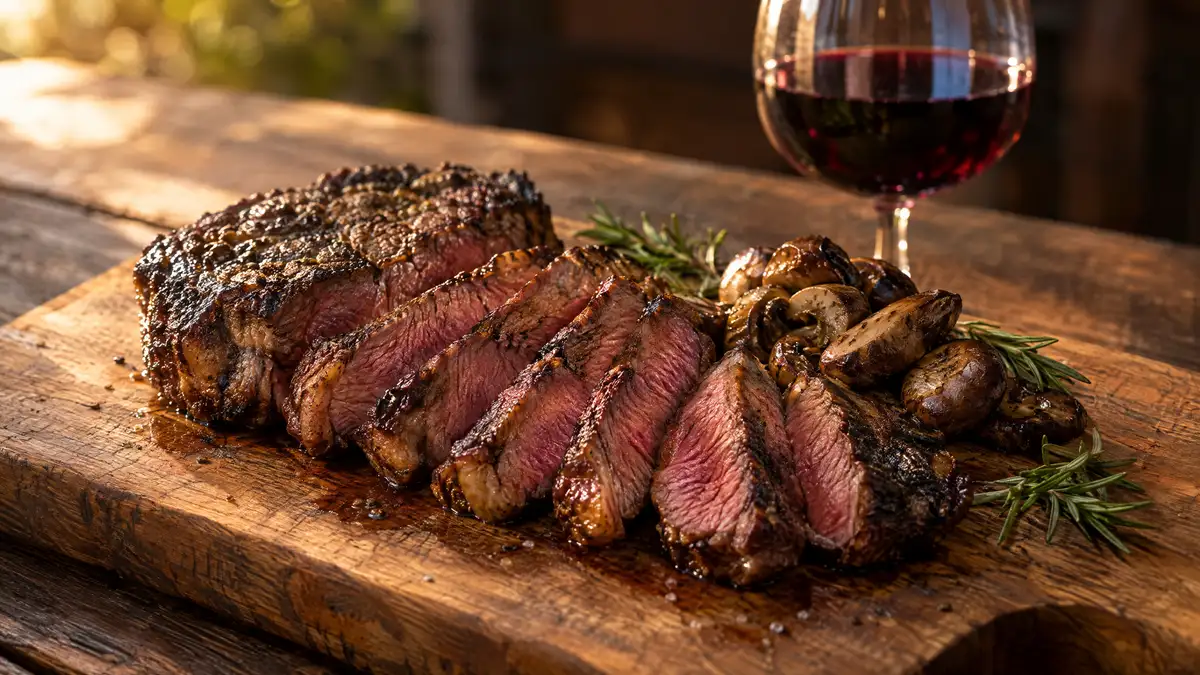
If the red is very tannic, like Tannat or young Nebbiolo, give it the fattiest dish on the table. If the dish carries chilli heat, choose a red under 14% with soft tannin, because chilli and alcohol make each other burn harder; spicy red wines covers that case. Cut by cut, wine with steak matches the big reds to the meat, and wine with BBQ handles smoke and sweet sauces.
How Do You Serve a Big Red and Ease Into Them?
Serve it at the cool end of room temperature and give young bottles air. Warm wine makes alcohol stand out, so 15 minutes in the fridge helps a bottle that has sat in a warm kitchen. The wine serving temperature chart gives the range.
If the bottle is young and tannic, pour it into a jug or decanter an hour before dinner. If it is old, decant just before serving to leave any sediment behind. How to decant wine covers both.
More styles sit together in the wine styles hub. Sommy, the wine-education app at sommy.wine, has bite-sized courses and an AI-guided tasting mode that walks you through look, smell and taste and saves your notes to a tasting journal. Buy one Malbec from Mendoza and one from Cahors tonight, pour them side by side, and note which one dries your gums first.
Sources
Frequently Asked Questions
What is the most full-bodied red wine?
No single grape wins every time, because body depends on where the grapes grow and how the wine is made. The usual contenders are Amarone, made from dried grapes and legally at least 14% alcohol, Zinfandel and Primitivo, which can pass 15%, and very tannic Tannat from Madiran. Petite Sirah is often the darkest, inkiest wine on the shelf.
Is Cabernet Sauvignon full-bodied?
Yes. Cabernet Sauvignon's classic profile is a full-bodied wine with high tannin. Its berries are small with thick skins, so the juice picks up a lot of tannin and colour. Versions from warm, sunny sites add riper fruit and more alcohol. Cooler sites make a firmer, leaner style that still feels weighty because of the tannin.
Is Merlot full-bodied or medium-bodied?
Sources disagree, because Merlot changes a lot with ripeness. Some lists put it among the full-bodied reds, others call it medium. A ripe Merlot from a warm region at 14% or more feels full, while a cooler-climate one at around 13% sits in the middle. It almost always has softer tannin than Cabernet Sauvignon.
Are full-bodied red wines dry?
Most are dry, meaning there is no sugar you can taste. Ripe fruit and high alcohol can make a big red such as Zinfandel or Amarone seem sweet, but Amarone's rules cap its sugar to keep it dry. The sweet big reds are separate styles, such as Recioto della Valpolicella or fortified wines like Port, and their labels say so.
What is the difference between full-bodied and tannic?
Body is the weight of the wine in your mouth. Tannin is the drying grip it leaves on your gums. Research links tannin mainly to that drying feeling, called astringency. A wine can be tannic and medium in weight, like many young Nebbiolos, or full and soft, like a ripe Barossa Shiraz with high alcohol and gentle tannin.
What food goes with full-bodied red wine?
Food with fat and protein: grilled or braised red meat, lamb, hard aged cheeses and mushroom dishes. Fat and protein soften the drying grip of tannin, so the wine tastes rounder. Avoid chilli heat with reds above 14%, because chilli and alcohol make each other burn harder. Light fish and salads disappear next to a big red.
What is a good full-bodied red for someone who drinks light reds?
Start with Argentine Malbec or a ripe Merlot. Both are big in fruit and alcohol but soft in tannin, so the step up from Pinot Noir feels gentle. Once that feels easy, move to Cabernet Sauvignon or Syrah, then to the very tannic grapes such as Tannat and Nebbiolo, ideally with food.
Sommy Team
LinkedInFounder & Wine Educator
The Sommy Team is building the world's most approachable wine education app, helping beginners develop real tasting skills through structured courses and AI-guided practice.