Barolo vs Barbaresco: Side by Side, and Which to Open

By the Sommy Team — AI-assisted, human-edited.
Updated Oct 29, 2026
Contents (6)
TL;DR
Barolo and Barbaresco are both 100% Nebbiolo from the Langhe hills around Alba. Barolo ages at least 38 months before sale, Barbaresco 26, and Barbaresco's tannin usually softens sooner. Open Barbaresco or a La Morra Barolo first; keep a Serralunga Barolo for twelve years or more.
Barolo vs Barbaresco is a choice between two wines from one grape, Nebbiolo, grown on neighbouring hills in Piedmont. Barbaresco may reach shops a year sooner, and its tannin tends to soften sooner. Barolo waits longer by law and usually needs more years in the bottle. Open Barbaresco first; give Barolo time.
Barolo vs Barbaresco, in One Paragraph
Barolo and Barbaresco are both DOCG (Italy's top tier of protected wine names, with the strictest rules) reds made from 100% Nebbiolo in the Langhe hills around Alba. Barolo must age at least 38 months before sale, 18 of them in wood. Barbaresco needs 26 months, 9 in wood. Both clocks start on 1 November of the harvest year, so the familiar "three years against two" is a rounding. Both wines are pale garnet and high in acidity and tannin (the drying grip on your gums). Barbaresco's tannin usually softens sooner.
| Barolo | Barbaresco | Open it if | |
|---|---|---|---|
| Grape | 100% Nebbiolo | 100% Nebbiolo | You want to learn Nebbiolo: either |
| Minimum ageing | 38 months, 18 in wood | 26 months, 9 in wood | You want it ready sooner: Barbaresco |
| Earliest sale | 1 January, 4th year after harvest | 1 January, 3rd year after harvest | The shelf holds only young vintages: Barbaresco |
| Riserva | 62 months | 50 months | You will cellar it for a decade: Barolo Riserva |
| Minimum alcohol | 13% | 12.5% | Alcohol decides nothing here: look at the village |
| Vineyards (2021) | 2,057 ha in 11 communes | 712 ha in 3 communes plus part of Alba | You want the most choice: Barolo |
| Tannin when young | High, slow to soften | High, softens sooner | Dinner tonight with a recent vintage: Barbaresco |
How Do Barolo and Barbaresco Taste Different?
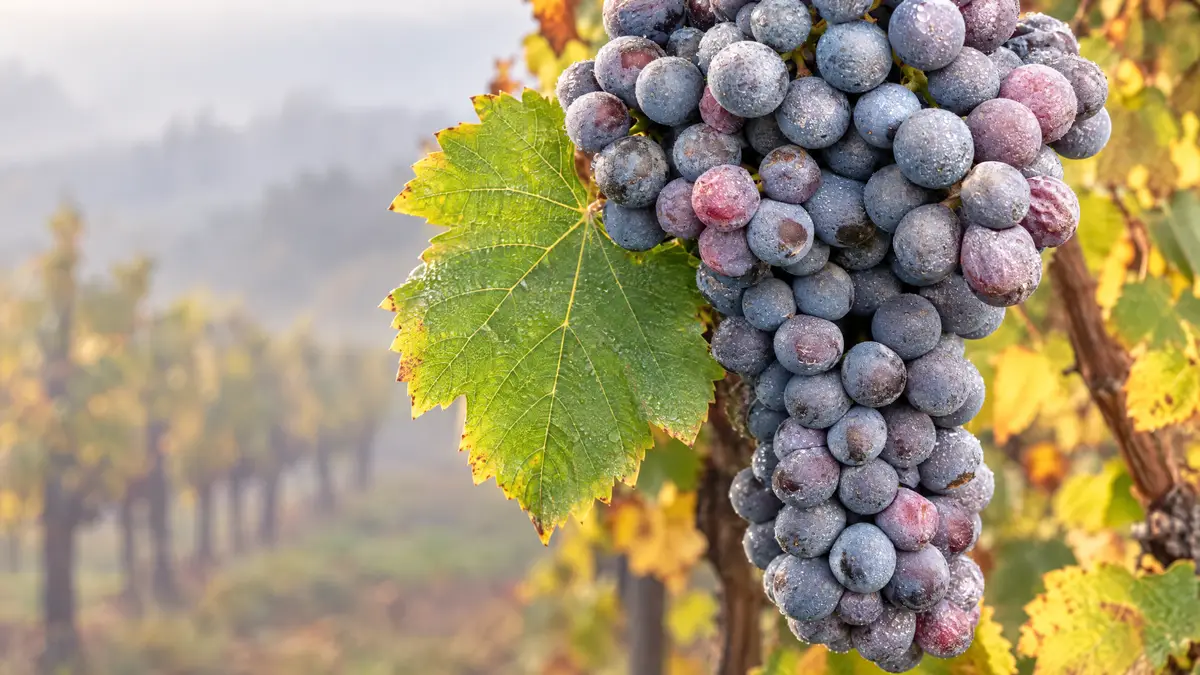
Barbaresco's tannin tends to soften sooner, but the village on a Barolo label can matter more than the zone name. Most vineyards in both zones grow on similar soil: layers of sand and bluish-grey marl (a crumbly mix of clay and limestone).
Barbaresco gets a slight maritime influence, and Nebbiolo there tends to ripen a little earlier than in Barolo. Its tannin also softens more quickly in the bottle. A Barbaresco usually feels less drying than a Barolo of the same vintage, and the tannin explainer has a simple test to practise that feeling first.
The old shorthand calls Barolo masculine and Barbaresco feminine. The village is the better guide. Barolo and La Morra give softer, more aromatic wines; Serralunga d'Alba and Monforte d'Alba give more structured wines that need longer to mature. So a La Morra Barolo can feel lighter than a firm Barbaresco. The Nebbiolo guide covers the grape's smells and its other zones.

Quick check
One question on what you just read
Same vintage, both Nebbiolo. Which one usually feels less drying when young?
Tap an answer to see how you did.
Which Should You Open First?
Open Barbaresco first: the law lets it reach shops a year before Barolo, and its tannin settles sooner. A Barbaresco may be sold from 1 January of the third year after its harvest; a Barolo waits until 1 January of the fourth. So a 2022 Barbaresco can be on sale in January 2025, and a 2022 Barolo in January 2026.
The legal date is the earliest a bottle can leave the cellar. Barolos from La Morra and Barolo village are often ready 8 to 10 years after the harvest. Those from Serralunga d'Alba need at least 12 to 15.
If you plan to drink it within a few years of release, pick Barbaresco or a Barolo from La Morra or Barolo village. If the label names Serralunga d'Alba, buy it to keep. Tasting young vs aged wine shows what those extra years change in the glass.
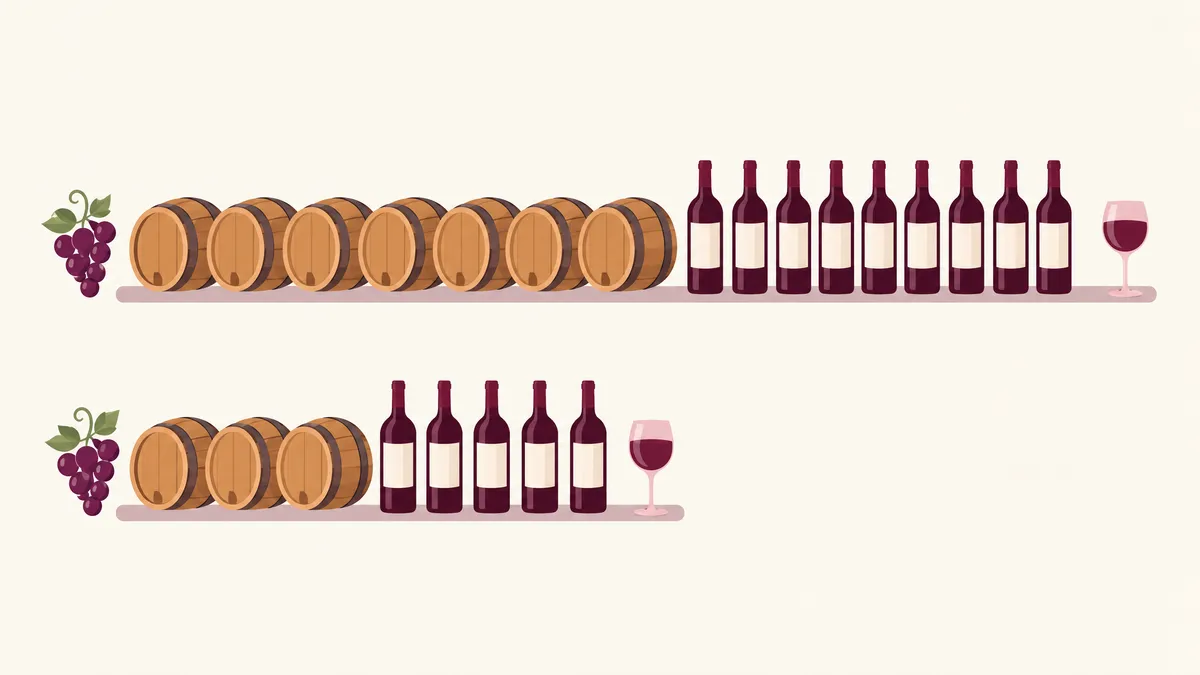
To decant is to pour the wine into a jug or decanter so air reaches it before dinner. Air softens the first sip of a young, tannic red. Serve both a little below room temperature; the wine serving temperature chart gives the range, and how to decant wine covers the pour.
How Do You Read a Barolo or Barbaresco Label?
Read three things: the zone, the word Riserva, and any village or vineyard name below them. Riserva marks a longer-aged version: at least 62 months for Barolo and 50 for Barbaresco. If the label says Riserva, the wine waited at least two years longer than the standard bottle.
A village or vineyard name on the label is an MGA (menzione geografica aggiuntiva, an officially mapped place name). Barolo has 181, including its 11 commune names; Barbaresco has 66. Barbaresco's zone covers three communes, Barbaresco, Neive and Treiso, plus a slice of Alba, which is why some pages count four. If the label names only the zone, the grapes were blended from across it. If it names a vineyard, they came from one mapped hillside.
If the budget stops short of both, buy Langhe Nebbiolo. This wider regional name requires at least 85% Nebbiolo and sets no minimum ageing, so it reaches shops young and usually costs less. The Piedmont wine guide places it among the region's other reds, and how to read a wine label explains the DOCG wording.
What Food Goes With Barolo and Barbaresco?
Both need fat and protein to soften their tannin; give the firmer wine the richer dish. If the plate is braised beef or aged hard cheese, open Barolo: long-cooked meat and salty fat stand up to its grip. If it is egg pasta with butter and mushrooms, or roast chicken, open Barbaresco, whose softer tannin suits a lighter plate.
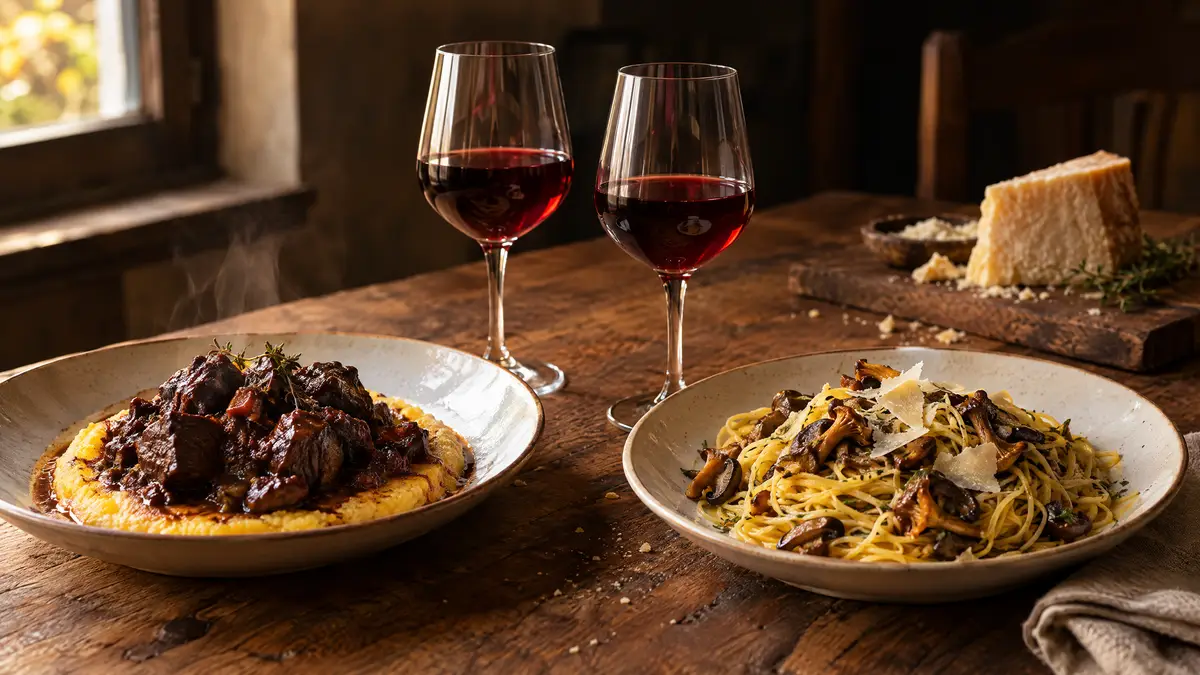
If the dish carries shaved truffle or porcini, either works, because their earthy smell meets the dried-rose and mushroom smells of older Nebbiolo. Wine with truffles and wine with mushrooms give the details. If it is light fish or a salad, open neither: young Nebbiolo tannin turns harsh with nothing to grip. The Barolo vs Chianti page covers the tomato-sauce side of Italian reds.
Where Are They Made, and Why Do the Rules Differ?
The two zones sit less than 10 miles apart: Barolo about 11 km southwest of Alba, Barbaresco just east of it beside the Tanaro river. Barolo is the larger, with 2,057 hectares of vineyard in 2021 against 712. It makes about 106,600 hectolitres a year against Barbaresco's 32,800, so the shelf usually carries more Barolo.
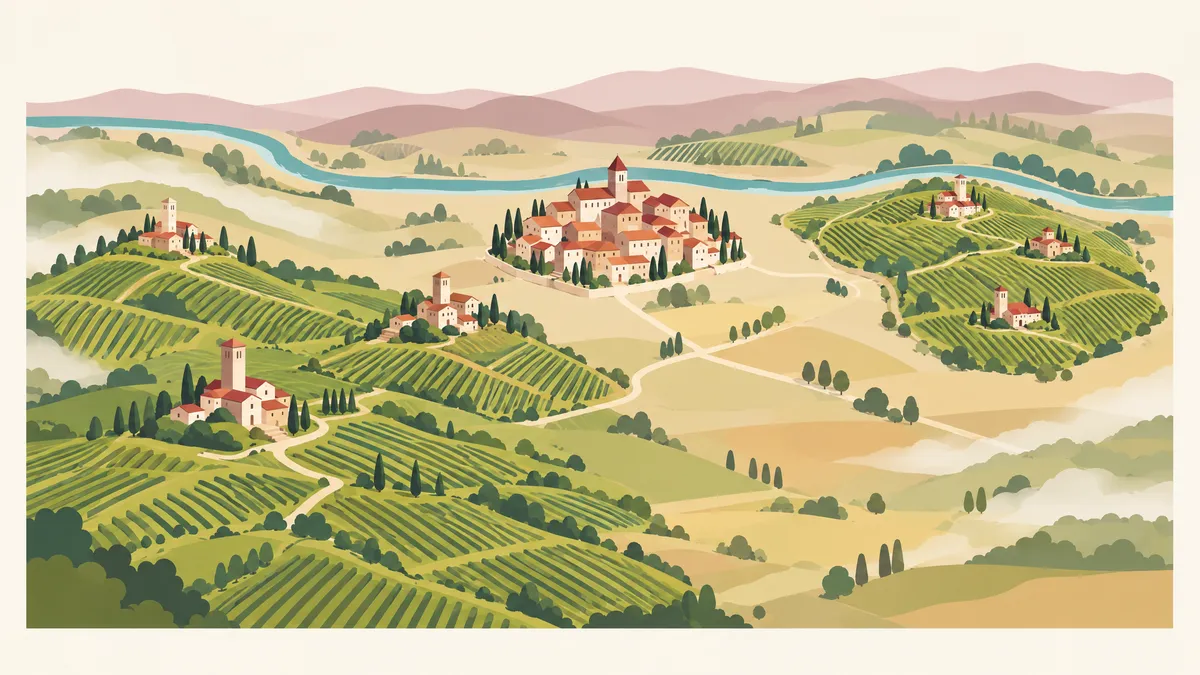
Barolo's zone was first mapped in 1896, around five villages still named on its labels: Barolo, La Morra, Castiglione Falletto, Serralunga d'Alba and northern Monforte d'Alba. Barbaresco became a label name later: before a cooperative cellar opened there in 1894, most of its Nebbiolo was sold to Barolo producers. Both became DOC in 1966 and DOCG in 1980. A 1990s petition to allow 10% of other grapes in Barolo was defeated, so Barolo is still pure Nebbiolo. The Italian wine guide and the wine regions hub place both zones in the wider map.
Sommy at sommy.wine has a bite-sized Italy course and an AI-guided tasting mode that walks through look, smell and taste. Buy one Barbaresco and one Barolo from the same vintage tonight and pour them side by side. Photograph each label in Sommy, then score each wine's tannin and save both notes to your tasting journal.
Sources
Frequently Asked Questions
What is the main difference between Barolo and Barbaresco?
Time and place, not grape. Both are 100% Nebbiolo from the Langhe hills in Piedmont. Barolo must age at least 38 months before sale, 18 in wood, and comes from a zone of about 2,057 hectares. Barbaresco needs 26 months, 9 in wood, from about 712 hectares just east of Alba. Barbaresco's tannin usually softens sooner, so it is often ready to drink earlier.
Is Barbaresco lighter than Barolo?
Often, but not always. Barbaresco ripens a little earlier and its tannin tends to soften more quickly, so it usually feels less drying when young. Yet the village matters as much as the zone: a Barolo from La Morra or Barolo village is softer and more aromatic than one from Serralunga d'Alba, and can feel lighter than a firm Barbaresco.
Are Barolo and Barbaresco both made from Nebbiolo?
Yes. The rules for both wines require 100% Nebbiolo, with no other grape allowed. A 1990s petition to let Barolo include 10% of other grapes was defeated. The wider Langhe Nebbiolo name is the one that allows blending, with a minimum of 85% Nebbiolo, which is one reason it is a cheaper way to taste the grape.
How long should Barolo and Barbaresco age before drinking?
The law sets the minimum: Barbaresco may be sold from 1 January of the third year after harvest, Barolo from the fourth. Drinking windows run longer. Barolos from the softer villages, La Morra and Barolo, are often ready 8 to 10 years after the harvest; those from Serralunga d'Alba need at least 12 to 15. Barbaresco usually softens sooner than Barolo of the same vintage.
Why is Barolo called the king of wines?
The nickname comes from the nineteenth century, when Barolo was popular with the nobility of Turin and the House of Savoy, Italy's royal family. It was described as the wine of kings and the king of wines. The phrase is history and marketing; it does not mean Barolo is a better wine than Barbaresco, which comes from the same grape a few miles away.
Is Barbaresco cheaper than Barolo?
Not as a rule. Barbaresco is the smaller zone, making roughly a third as much wine as Barolo, so being the second name does not make it the budget option. Prices depend far more on the producer, the vintage and whether a single vineyard is named. For Nebbiolo at a lower price, look for Langhe Nebbiolo, which has no minimum ageing rule.
Can you drink Barbaresco young?
More easily than Barolo. Barbaresco reaches shops a year earlier and its tannin tends to soften faster, so a bottle a few years past release is often pleasant with food. Young Barbaresco still has firm tannin, though. Pour it into a jug or decanter an hour before dinner and serve it with fat and protein, such as roast meat or egg pasta with butter.
Sommy Team
LinkedInFounder & Wine Educator
The Sommy Team is building the world's most approachable wine education app, helping beginners develop real tasting skills through structured courses and AI-guided practice.