Amarone Wine Guide: Italy's Dried-Grape Red, Explained

By the Sommy Team — AI-assisted, human-edited.
Updated Sep 24, 2026
Contents (9)
- What Is Amarone della Valpolicella, in One Paragraph?
- How Does Drying the Grapes Change the Wine?
- Which Valpolicella Wine Should You Buy?
- Is Amarone a Sweet Wine?
- What Grapes Go Into Amarone?
- How Long Does Amarone Age Before Release?
- Why Is Amarone So Expensive?
- What Food Pairs Best With Amarone?
- How Should You Serve Amarone?
TL;DR
Amarone della Valpolicella is a dry red from near Verona made from grapes dried for about 120 days, which lose up to 45% of their weight. The law sets a 14% alcohol floor, two years of aging, and a sugar cap. That drying explains its richness, its strength and its price.
Amarone wine starts with the grapes for a light, cherry-scented red. They dry for about four months until they shrivel, and then every last bit of the concentrated sugar is fermented into alcohol. The result is a red that tastes of raisins and dried cherries yet is legally dry, starts at 14% alcohol, and costs far more than the everyday wine grown on the same hills.
What Is Amarone della Valpolicella, in One Paragraph?
Amarone della Valpolicella is a DOCG (Italy's top tier of protected wine names, with the strictest rules) dry red. It comes from the Valpolicella hills in the province of Verona, in the Veneto region of northern Italy. The blend is led by Corvina and Corvinone (45 to 95%) with Rondinella (5 to 30%). The law requires at least 14% alcohol, a sugar cap of 9 grams per litre at that strength, and at least two years of aging. In practice most bottles pass 15% alcohol and many are released around five years after the vintage.
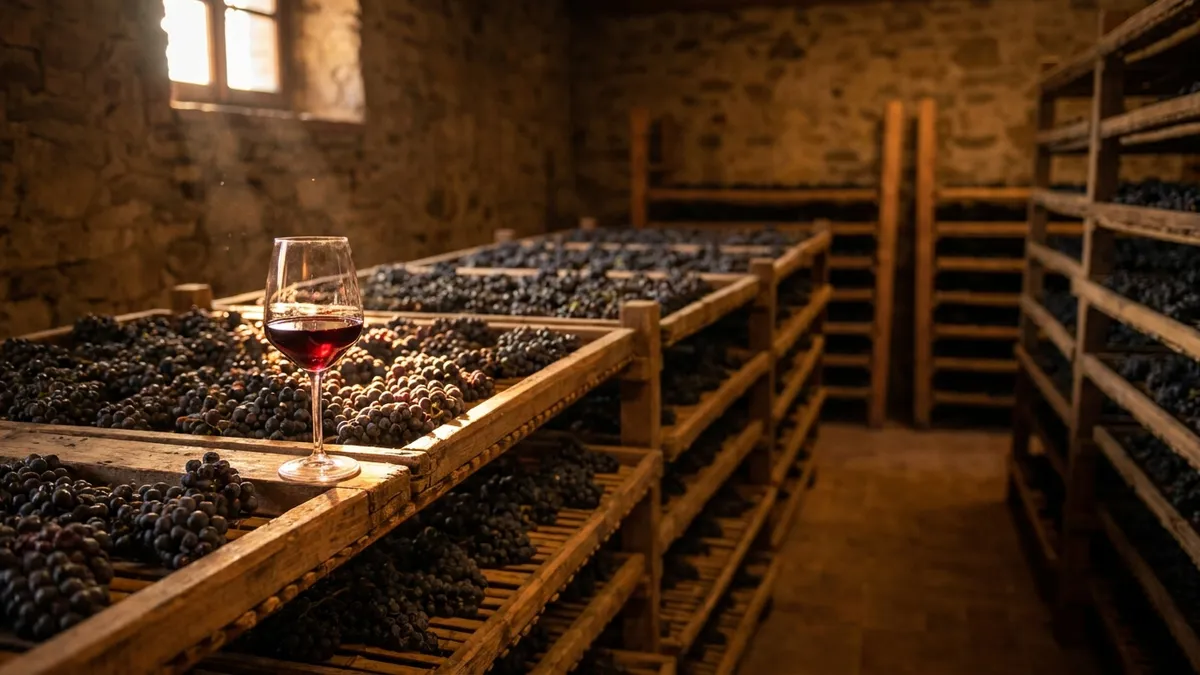
The method is appassimento (drying freshly picked grapes before fermenting them). Clusters rest in ventilated lofts for about 120 days and lose 27 to 45% of their weight, depending on the grape. They cannot be crushed before 1 December.
How Does Drying the Grapes Change the Wine?
Drying removes water and leaves almost everything else behind. As the berries shrivel over roughly 120 days, sugar, colour, tannin and flavour compounds become more concentrated in less juice. Corvina loses 35 to 45% of its weight, Rondinella 27 to 40%. The rules demand that the dried grapes reach a potential alcohol of at least 14%.
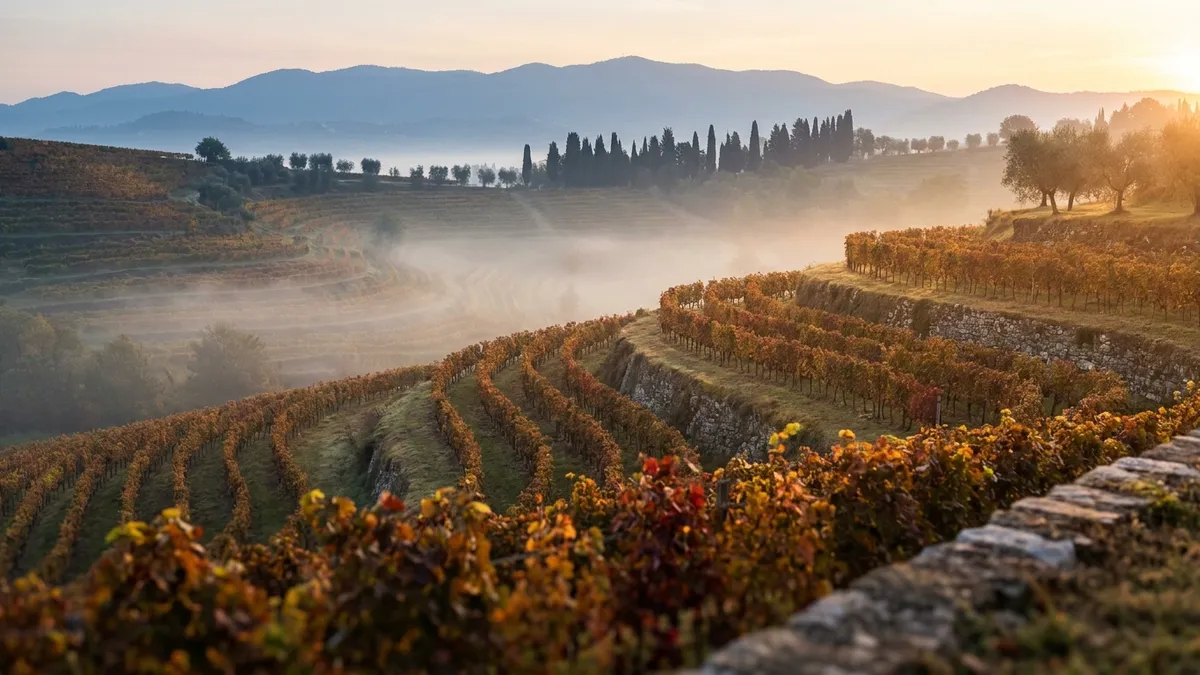
The process starts at harvest in the hillside vineyards. The rules cap vineyard yields at 12 tonnes per hectare and require the fresh grapes to carry at least 11% potential alcohol. That number matters, because 11% grapes would make a perfectly normal red. The drying is what lifts them past 14%.
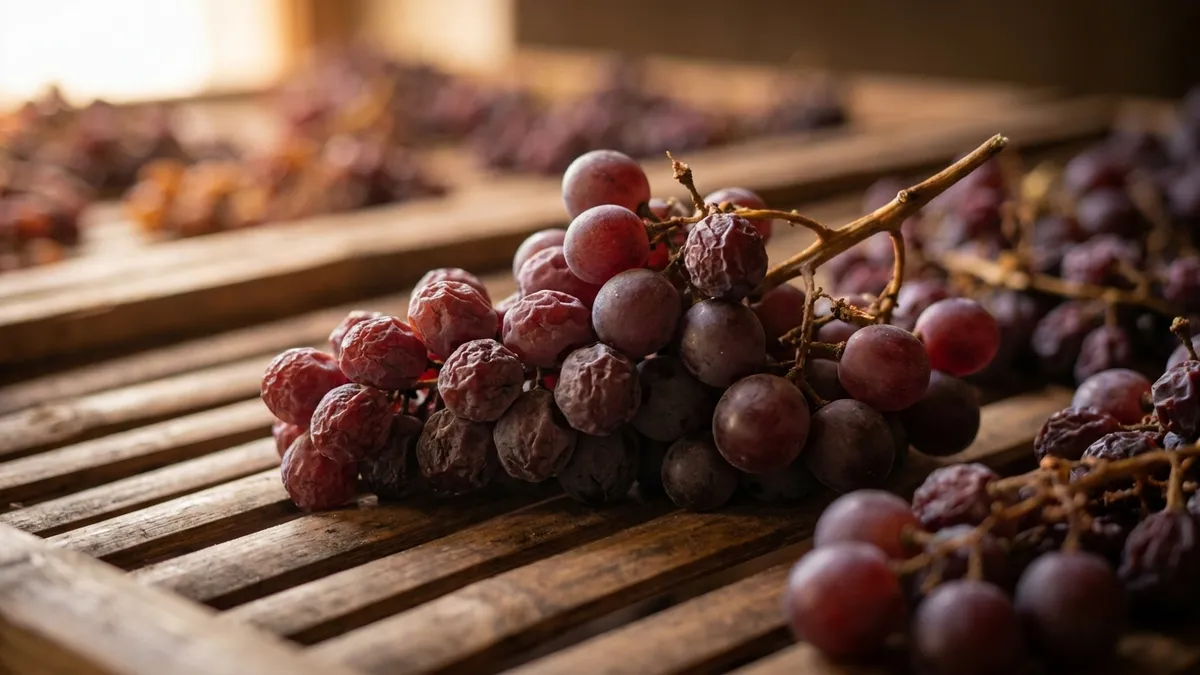
Loose, healthy bunches go into drying rooms called fruttai (lofts built or converted for drying fruit), laid on slatted racks or in shallow crates so air can move around every cluster. Traditional lofts rely on open windows and the dry autumn air. The rules allow climate systems, but only ones that work at temperatures similar to traditional drying; any dehumidifier that uses heat is banned.
Drying changes more than concentration. The grapes are still alive in the loft, so their chemistry shifts slowly: fresh cherry turns to dried cherry, prune and fig, and the wine gains a savoury, bitter-almond and cocoa edge.
Crushing cannot start before 1 December, unless the Veneto region grants an exception in a difficult year. Fermentation then runs slowly through the cold winter, because yeast struggles in juice this sweet. The goal is to convert nearly all of that sugar. Corvina's path from fresh grape to dried is traced in the Corvina grape guide.
Which Valpolicella Wine Should You Buy?
The zone makes a family of reds from the same grapes, and the difference between them is how the grapes are treated. Fresh grapes make light Valpolicella. Fresh wine passed over leftover dried-grape skins makes Ripasso. Fully dried grapes fermented dry make Amarone. Dried grapes stopped sweet make Recioto.
Ripasso (Italian for "passed again") takes finished Valpolicella and lets it rest on the pomace (the pressed skins and seeds left after fermentation) from Amarone or Recioto. The skins still hold colour, tannin and some sugar, so the Valpolicella picks up a deeper colour, more grip and some dried-fruit flavour. Its base is still wine from fresh grapes; only the skins have seen the loft.
| Wine | Grapes | Method | Sweetness | Best for |
|---|---|---|---|---|
| Valpolicella | Fresh | Normal fermentation | Dry | Pizza, pasta, charcuterie, lightly chilled on warm days |
| Valpolicella Superiore | Fresh | Normal fermentation, longer aging | Dry | Weeknight dinners that need a bit more body |
| Valpolicella Ripasso | Fresh, then passed over dried-grape skins | Second contact with Amarone or Recioto pomace | Dry | Roast chicken, sausages, hearty pasta, good value |
| Amarone della Valpolicella | Dried about 120 days | Fermented slowly to dryness, 14% alcohol minimum | Dry (max 9 g/l at 14%) | Braised meats, game, aged cheese, special occasions |
| Recioto della Valpolicella | Dried | Fermentation stopped early | Sweet | Dark chocolate, blue cheese, dessert |
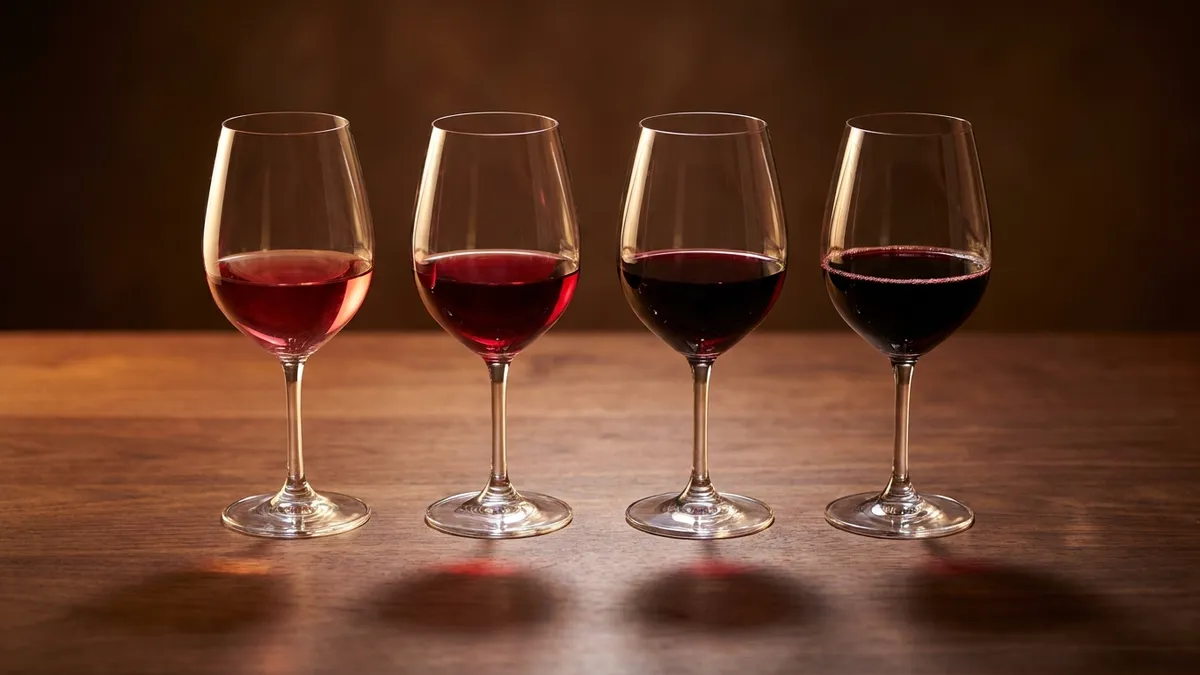
If the meal is everyday or light, buy Valpolicella. If a Tuesday dinner calls for a richer red at a moderate price, buy Ripasso: it carries some of the dried-grape style without the full weight. If the food is slow-cooked, the evening long or the bottle meant for aging, buy Amarone. If dessert is next, buy Recioto for a sweet red to finish the meal. Soave, Prosecco and the rest of the region are mapped in the Veneto wine guide.
Is Amarone a Sweet Wine?
No. Amarone is a dry red by law, even though it smells of raisins. The rules allow at most 9 grams of residual sugar (grape sugar left unfermented) per litre in a 14% wine. The cap rises a little with alcohol: 0.1 g/l for every 0.1% above 14%, which reaches 11 grams per litre at 16%.
Above 16% the cap rises slightly faster. That is still dry territory. Your brain reads "raisin" and expects sugar. What you get is concentrated fruit and alcoholic warmth, which the tongue can mistake for sweetness. Our explainer on sweet vs dry wine breaks down why ripe fruit and high alcohol fool the palate this way.
The sweet wine exists too, and it is where Amarone came from. Recioto della Valpolicella is made from the same dried grapes, but fermentation stops early and leaves real sweetness in the glass. Amarone's name, roughly "the great bitter", was chosen to set it apart from Recioto. The bitter part means dry.
The popular origin story says a barrel of Recioto was forgotten in a cellar in the 1930s and fermented all the way to dryness, and someone tasted the mistake and liked it. It is a well-known trade story, repeated by producers and retailers, but no archival source confirms the details. Treat it as legend. What is certain is that Recioto is the older wine, and dry Amarone grew out of it.
If the bottle says Amarone, expect dry. If it says Recioto, expect a dessert red.
What Grapes Go Into Amarone?
Mostly Corvina. The rules require 45 to 95% Corvina and Corvinone combined (Corvinone is a separate local grape), 5 to 30% Rondinella, and allow up to 25% of other approved local red grapes. Molinara, once treated as a fixed third grape in the blend, is not named in the current rules. It can still be used within that optional share.
Each grape brings something to the drying loft:
- Corvina gives sour cherry, almond, fresh acidity and thick enough skins to dry well without rotting.
- Corvinone adds body and colour, and the rules let producers count it inside the same share as Corvina.
- Rondinella adds colour and a floral note, and it dries reliably.
- Molinara, now optional, brings lightness and acidity.
A common myth says more Corvina always means better Amarone. The 45 to 95% range is a legal band, not a quality scale. A producer at 70% Corvina with a great hillside site can make a finer wine than one at 95% from the valley floor. Site, drying skill and aging choices matter more than the percentage.
How Long Does Amarone Age Before Release?
Standard Amarone must age at least two years, counted from 1 January after the harvest. Riserva must age at least four years, counted from 1 November of the harvest year. Most producers go beyond the minimum, and many bottles are released about five years after the vintage.
The rules say nothing about the vessel. Producers choose between large old casks, which keep the fruit in front and soften the tannin slowly, and smaller newer barrels, which add vanilla and toast. That choice shapes style more than any law does. Riserva also has to meet a higher threshold for dry extract (the solid matter left once water and sugar are removed). Dry extract is a rough measure of concentration, so Riserva must be denser as well as older.
After release, Amarone keeps changing in the bottle. The dried-fruit notes fade toward leather, tobacco, dried mushroom and damp leaves. Those are tertiary aromas (flavours that come from age rather than from the grape or fermentation), and our guide to primary, secondary and tertiary aromas shows how to recognise them. If you can, taste a young and an older Amarone side by side, as described in tasting young vs aged wine. The colour shift from deep ruby toward garnet at the rim tells the same story.
Why Is Amarone So Expensive?
Because each bottle costs far more grapes, space and time than a normal red. Drying removes up to 45% of the grape weight. The rules then cap the finished wine at 40% of the weight of the grapes picked. The wine sits in the cellar for at least two years, often closer to five.
Put the numbers together. A normal red might turn most of its grape weight into wine. For Amarone, at most 40 litres or so of wine come from every 100 kilograms of fresh grapes. The rest is water lost in the loft and skins left in the press. Those grapes also have to be the healthiest bunches, picked by hand and handled gently, because a rotten berry in a crowded rack spreads mould for months.
Then there is space. A drying loft holds grapes for about four months and produces nothing sellable in that time. The cellar holds the wine for years. A Ripasso borrows the skins after the fact and skips the loft for its own grapes, so it sells for a fraction of the price.
The method sets a real cost floor. If an Amarone is priced like a normal red, the wine probably cut corners somewhere, and a good Ripasso at the same price will usually taste better.
What Food Pairs Best With Amarone?
Match its weight. Amarone has at least 14% alcohol, firm tannin and concentrated dried fruit, so it needs rich, slow-cooked food with fat and protein to meet it. Braised beef, game stews, mushroom risotto and aged hard cheeses are the classic matches in Verona. Light dishes vanish next to it.
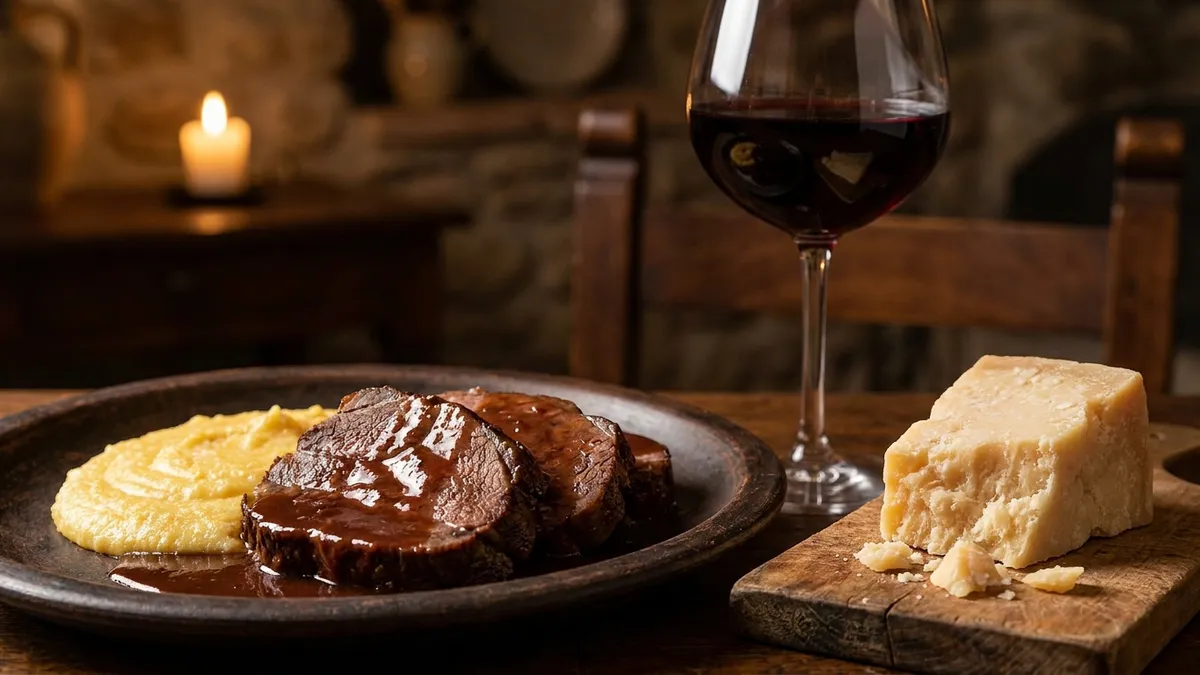
The logic behind the classic matches:
- Braised and stewed red meat. Long cooking makes meat soft and rich, and the fat and protein tame the tannin. Beef braised in Amarone itself is a regional dish. For more on pairing big reds with beef, see wine with steak.
- Game and mushrooms. Venison, wild boar, porcini and truffle echo the earthy, savoury notes that develop in an aged bottle.
- Aged hard cheeses. Salty, crystalline cheeses stand up to the alcohol. The same logic runs through our wine and cheese pairing guide.
- Risotto and polenta. Starchy, buttery dishes give the wine something rich to rest on.
If the dish carries chilli heat, open a different wine: alcohol makes spice burn harder, and the burn makes the alcohol taste hotter. Skip delicate white fish and salads too, which the wine overwhelms. Amarone also works without food: in Verona it is often poured on its own after dinner, a vino da meditazione (a wine for slow, thoughtful sipping).
How Should You Serve Amarone?
Serve it at the cool end of room temperature, give it air before the meal, and pour smaller glasses than you would of a normal red. A young Amarone is tight and alcoholic straight from the bottle, so opening it early or decanting it helps the fruit and savoury notes come forward.
Temperature matters more than usual here. Too warm, and the alcohol dominates the smell and the finish. If a bottle has been kept in a warm room, a short spell in the fridge before serving brings it back into balance; our wine serving temperature chart gives the target range for full-bodied reds. Use a large glass with room to swirl, and remember that a pour of 15% wine carries more alcohol than the same pour of a 12.5% red. Our guide to alcohol in wine by type puts Amarone at the top of the unfortified range.
Decanting does two jobs with Amarone. For young bottles it adds air and softens the first impression. For older bottles it separates the wine from any sediment. Our step-by-step on how to decant wine covers both. Once opened, a concentrated, high-alcohol red like Amarone tends to hold up better than a light red, but keep it stoppered and cool; how long wine lasts after opening sets out the general rules.
Italy's other great age-worthy reds, from Barolo to Brunello, are placed in context in the Italian wine guide. Styles built on drying, fortifying and aging sit together in the wine styles hub. The Sommy app at sommy.wine includes a bite-sized Italy course and an AI-guided tasting mode. Tonight, pour a glass, photograph the label, then taste it through the look, smell and taste steps.
Sources
Frequently Asked Questions
Is Amarone wine sweet or dry?
Amarone is a dry wine. The rules cap its leftover sugar at 9 grams per litre for a 14% wine, rising slightly as alcohol climbs, which is dry territory. It can taste sweet because drying concentrates ripe, raisined fruit and the high alcohol feels warm and round. The sweet wine from the same dried grapes is Recioto della Valpolicella, where fermentation stops early.
What is the difference between Amarone and Ripasso?
Amarone is made entirely from grapes dried for months before fermenting. Ripasso starts as regular Valpolicella from fresh grapes, then is passed over the leftover skins from Amarone making, which adds colour, tannin and some dried-fruit character. Ripasso borrows a little of the Amarone effect at a fraction of the effort, so it is lighter, less alcoholic and usually far cheaper.
Why is Amarone so expensive?
Because it takes far more grapes, time and space per bottle than a normal red. The grapes lose up to 45% of their weight while drying for months in lofts, the rules cap the finished wine at 40% of the grape weight, and the wine must age at least two years before sale. Many producers hold it for about five years.
How long does Amarone need to age?
By law, standard Amarone ages at least two years from 1 January after the harvest, and Riserva at least four years from 1 November of the harvest year. In practice many bottles reach shops around five years after the vintage. Its concentration, alcohol and tannin let good examples keep developing in the bottle for years beyond release.
What grapes are used to make Amarone?
Corvina leads the blend. Corvina and the separate local grape Corvinone together must make up 45 to 95%, Rondinella 5 to 30%, and other approved local red grapes up to 25%. Molinara, once treated as a fixed part of the blend, is now simply one of those optional local grapes. The share of Corvina is a stylistic choice, not a quality ranking.
What food goes with Amarone?
Match its weight. Amarone's alcohol, tannin and concentrated fruit want rich, slow-cooked food with fat and protein: braised beef, game stews, mushroom risotto and aged hard cheeses. Avoid delicate fish, light salads and fiery chilli, which the high alcohol makes taste hotter. It also works on its own after dinner, like a meditation wine.
What does Amarone mean?
Amarone means roughly 'the great bitter' in Italian. The name was chosen to set the dry wine apart from Recioto, the older, sweet red made from the same dried grapes in the same hills. The bitter in the name refers to that dryness, though many tasters also find a faint bitter-almond or cocoa note on the finish.
Sommy Team
LinkedInFounder & Wine Educator
The Sommy Team is building the world's most approachable wine education app, helping beginners develop real tasting skills through structured courses and AI-guided practice.